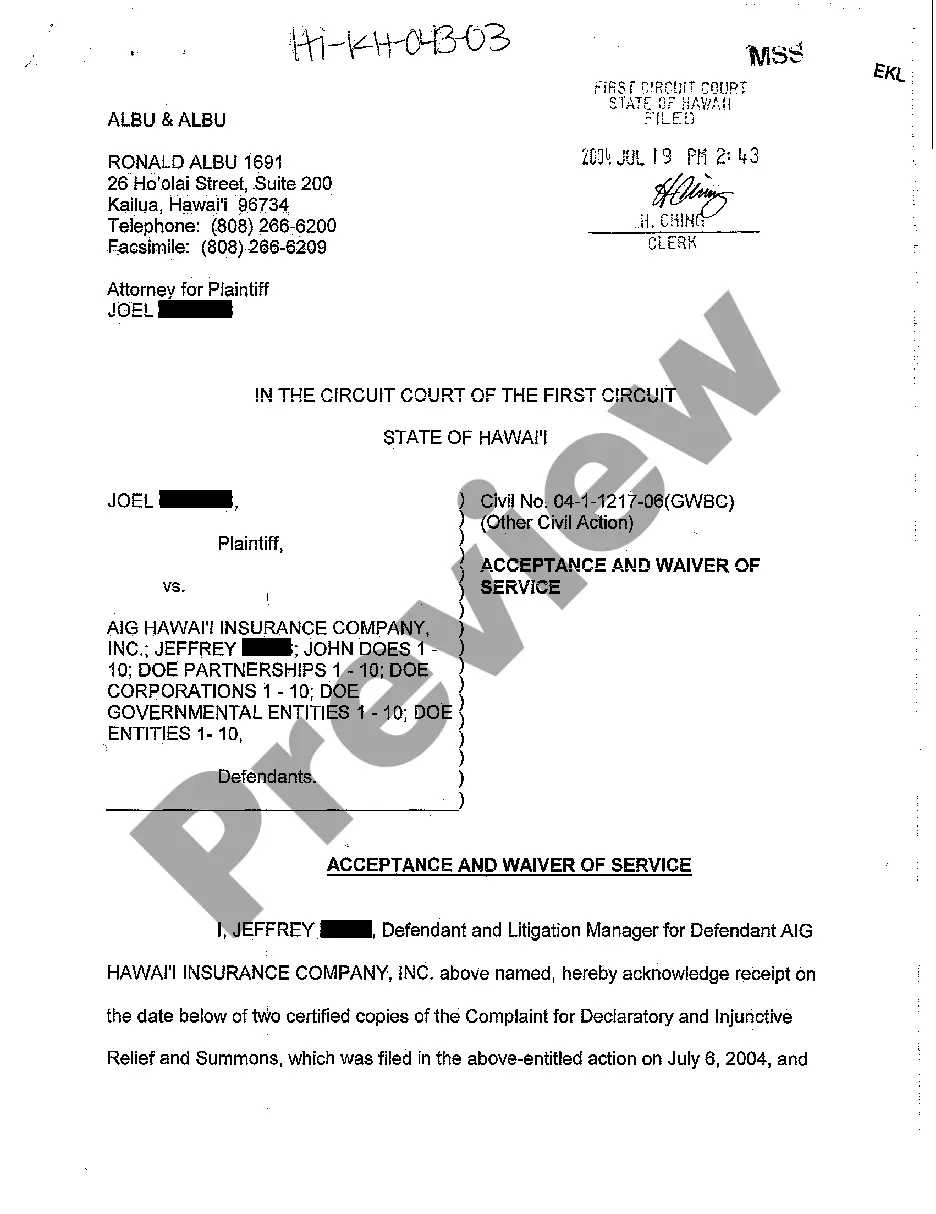
Oregon Living Trust for Individual Who is Single, Divorced or Widow (or Widower) with Children
What is this form?
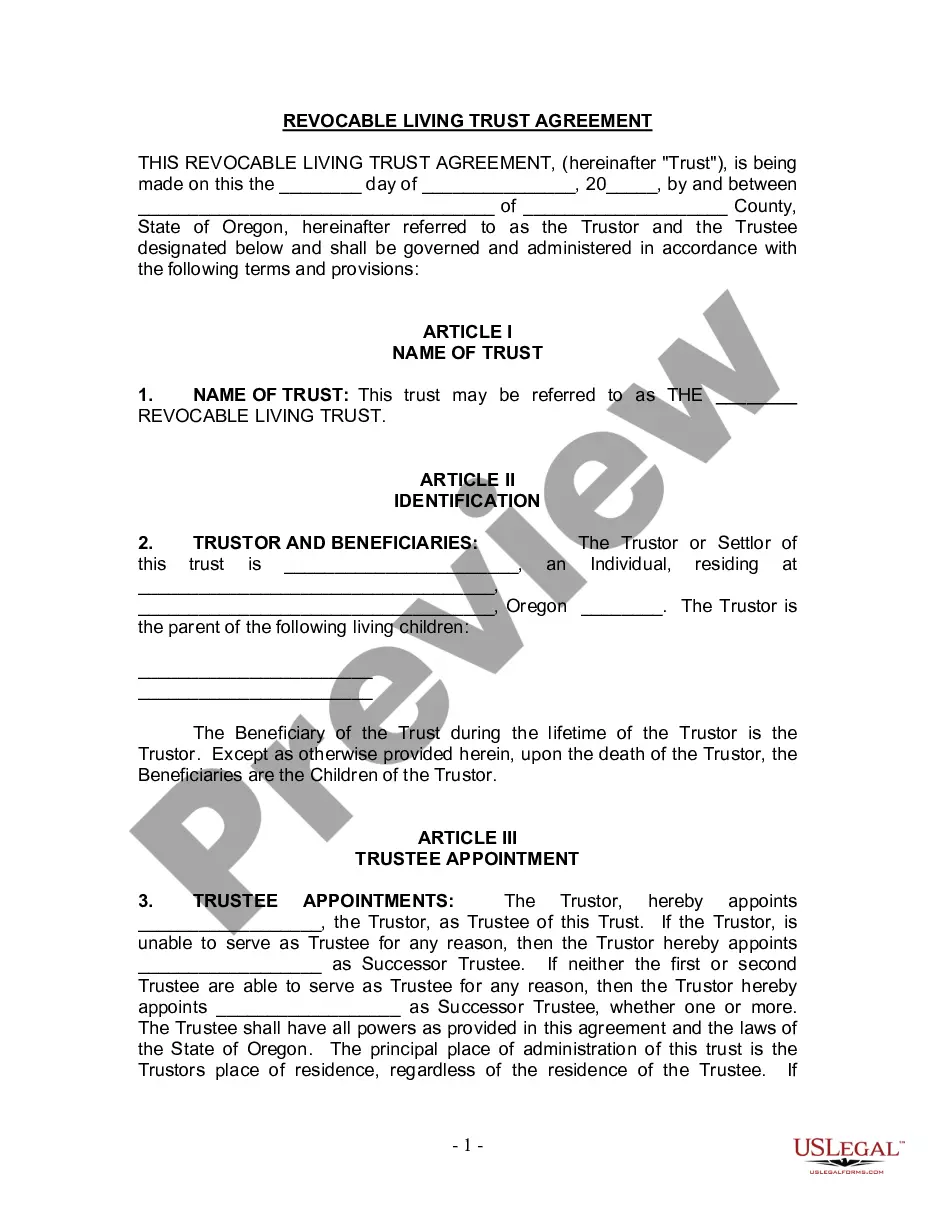
This is a Living Trust for individuals who are single, divorced, or widowed with children. Unlike a will, this trust allows you to manage your assets during your lifetime and ensures they are distributed to your beneficiaries without going through probate upon your death. This form is specifically designed for your state, guiding you through the creation of a legally binding document that addresses your family's needs and circumstances.
Main sections of this form
- Identification of the Trustor and Beneficiaries
- Appointment of a Trustee, including Successor Trustees
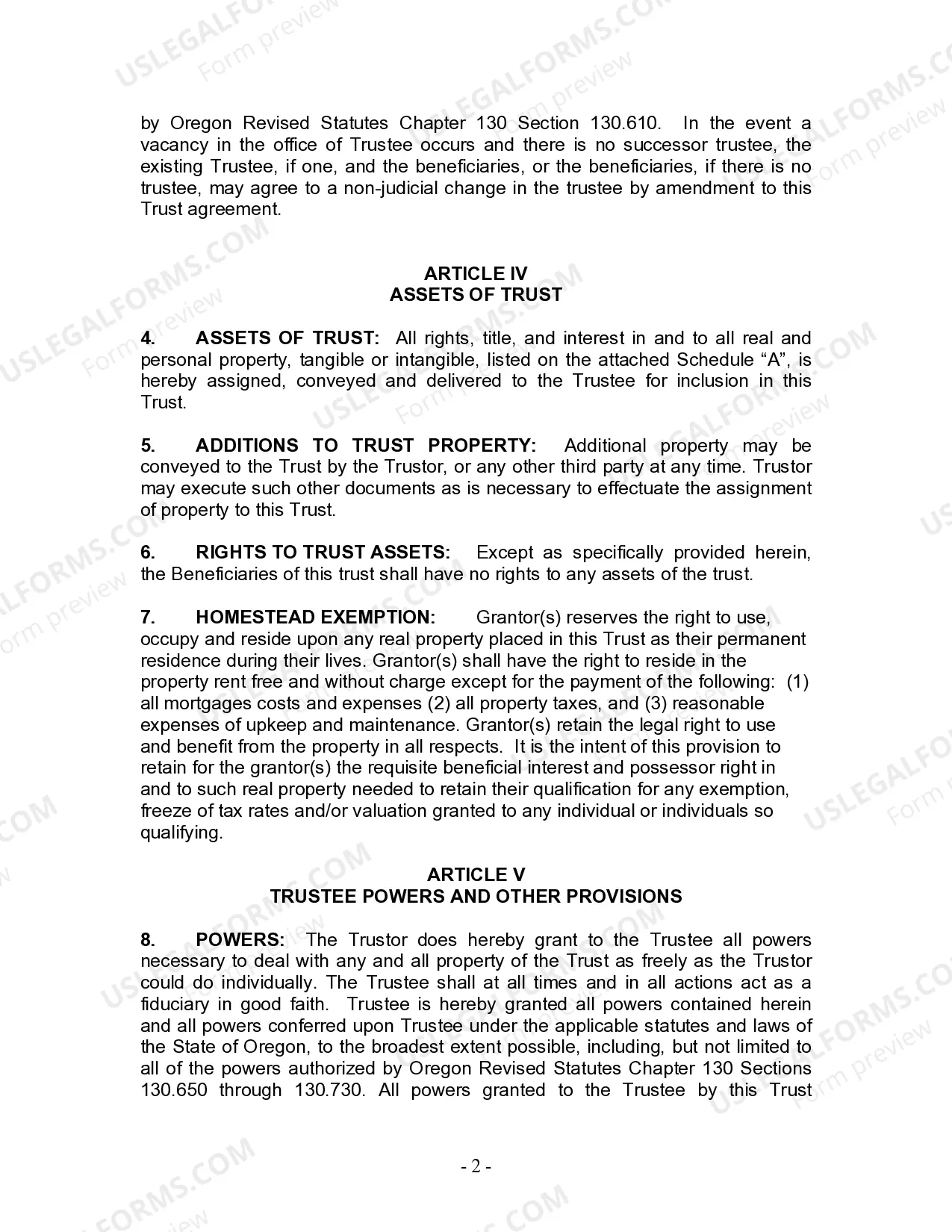
- Assignment of trust assets, including real and personal property
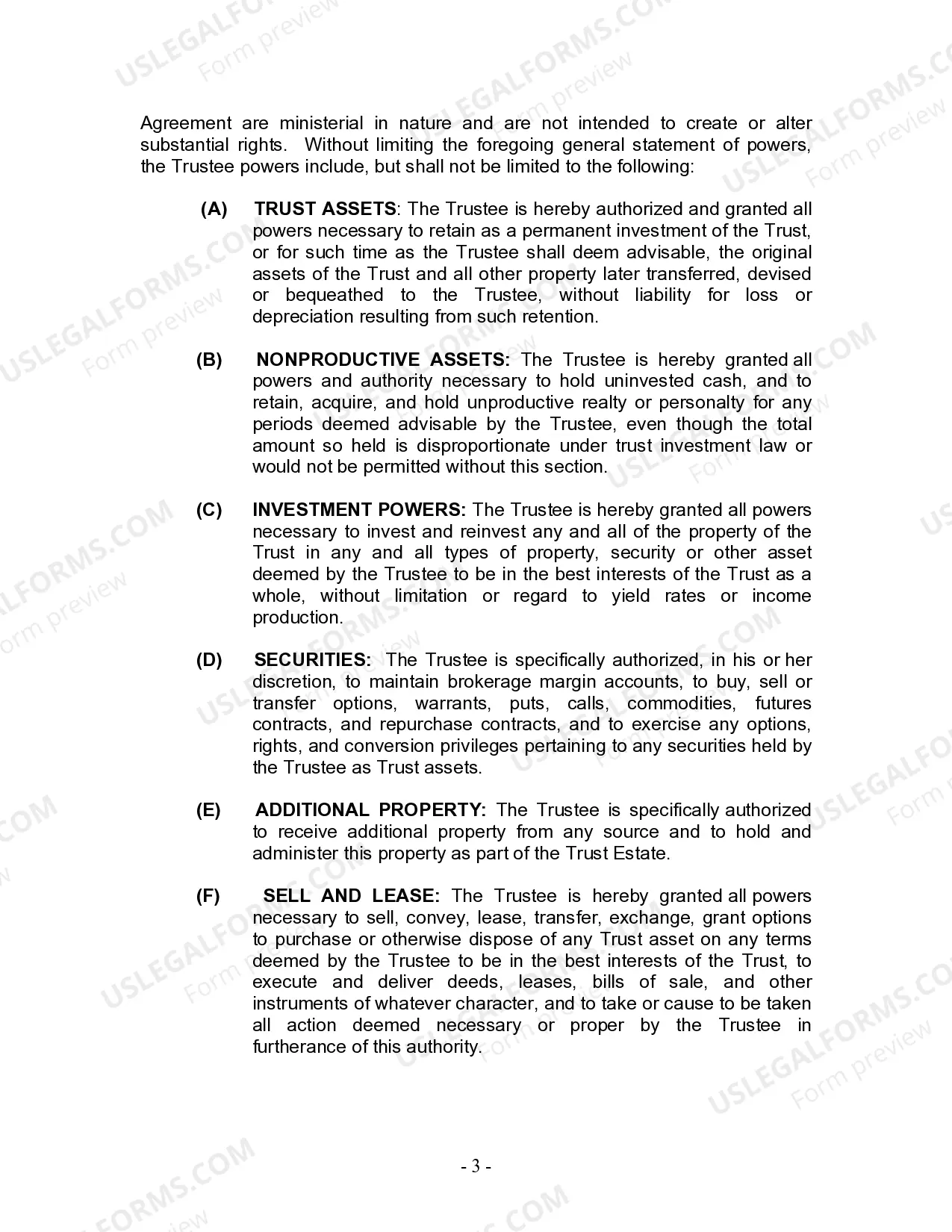
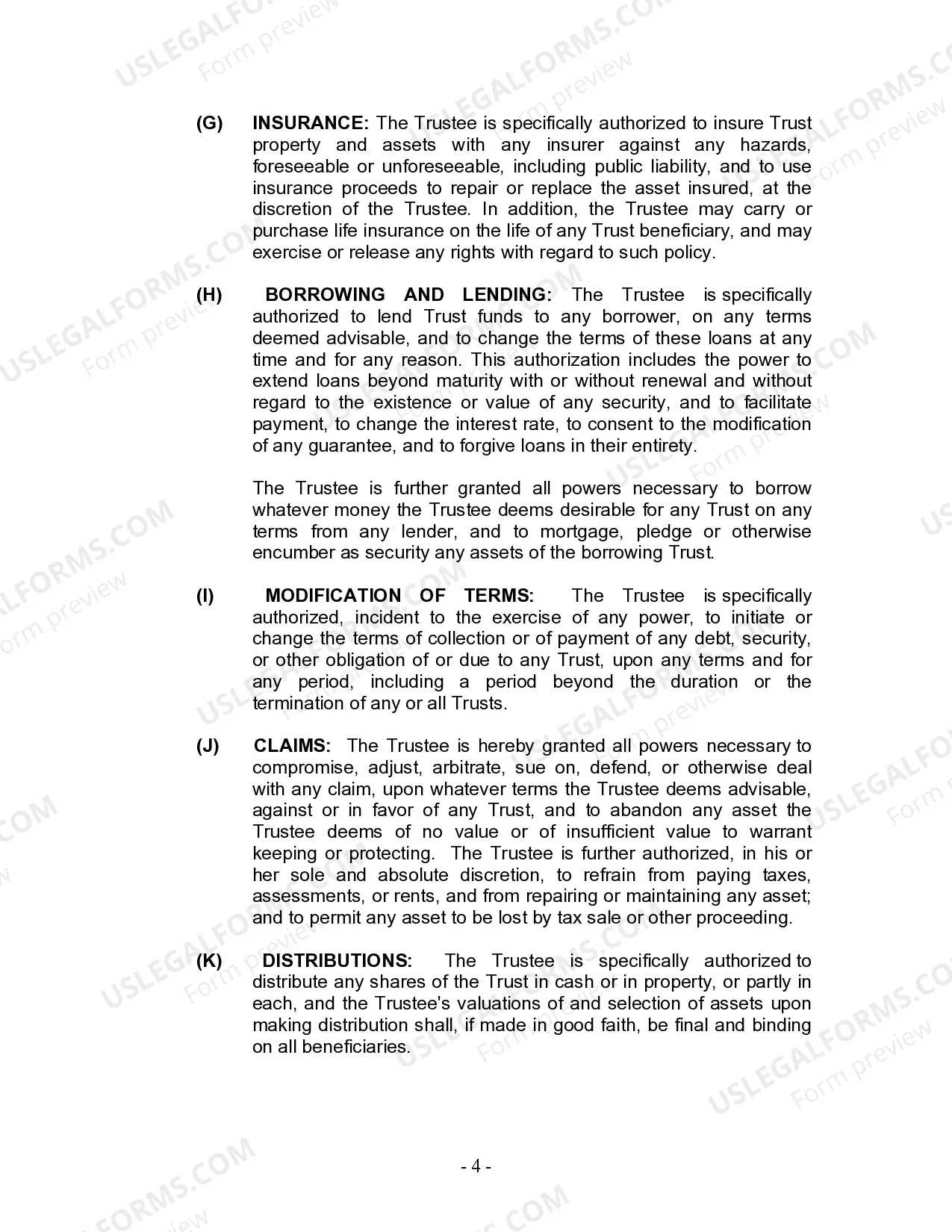
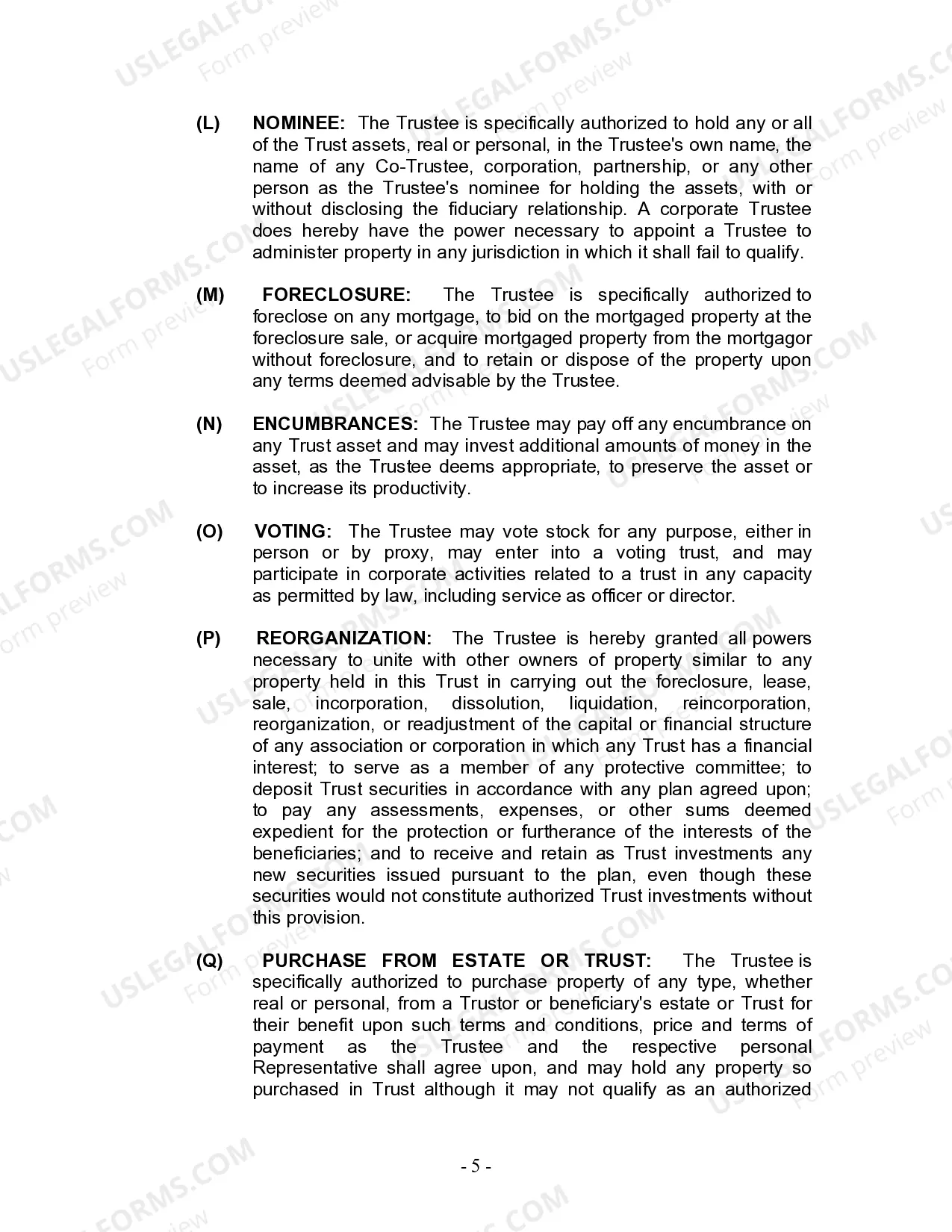
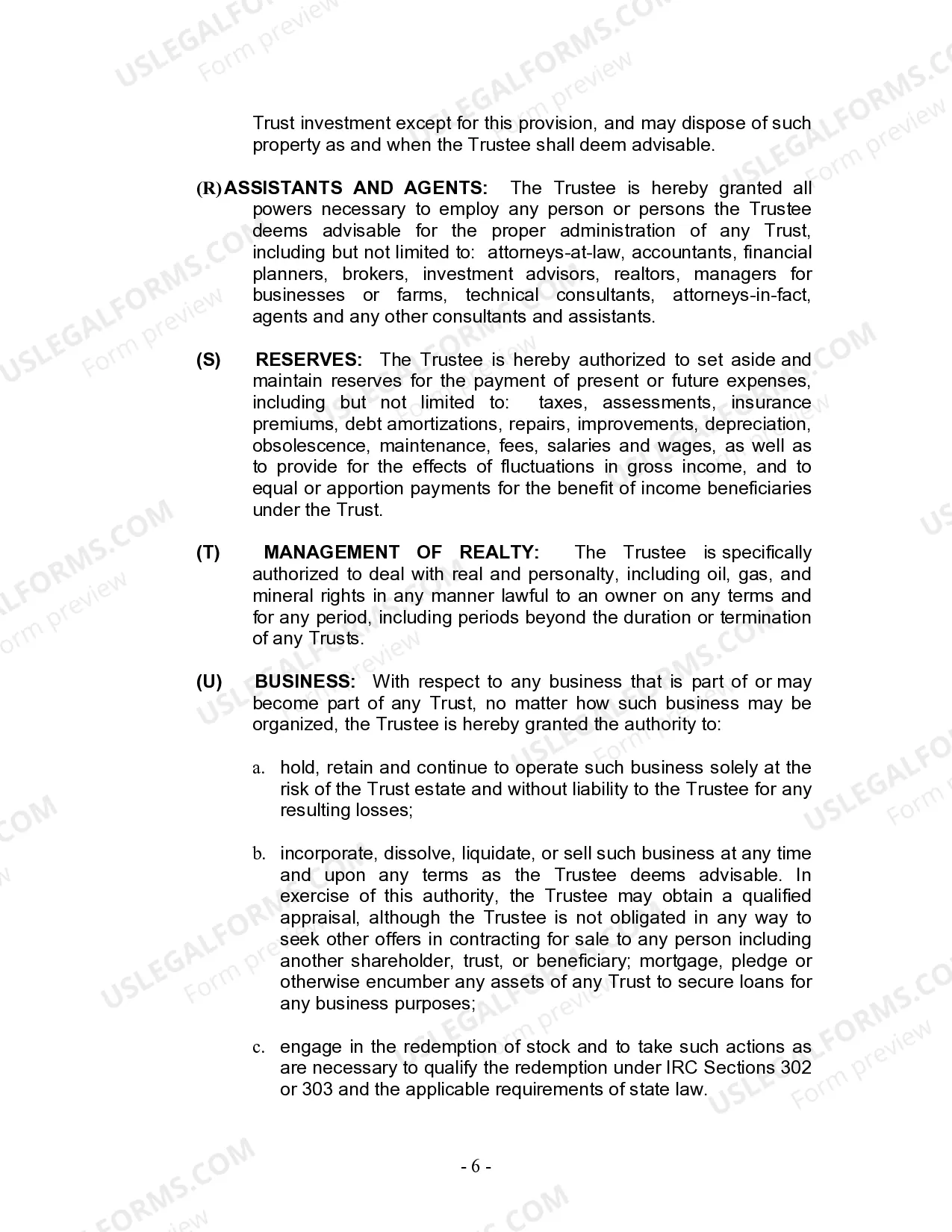
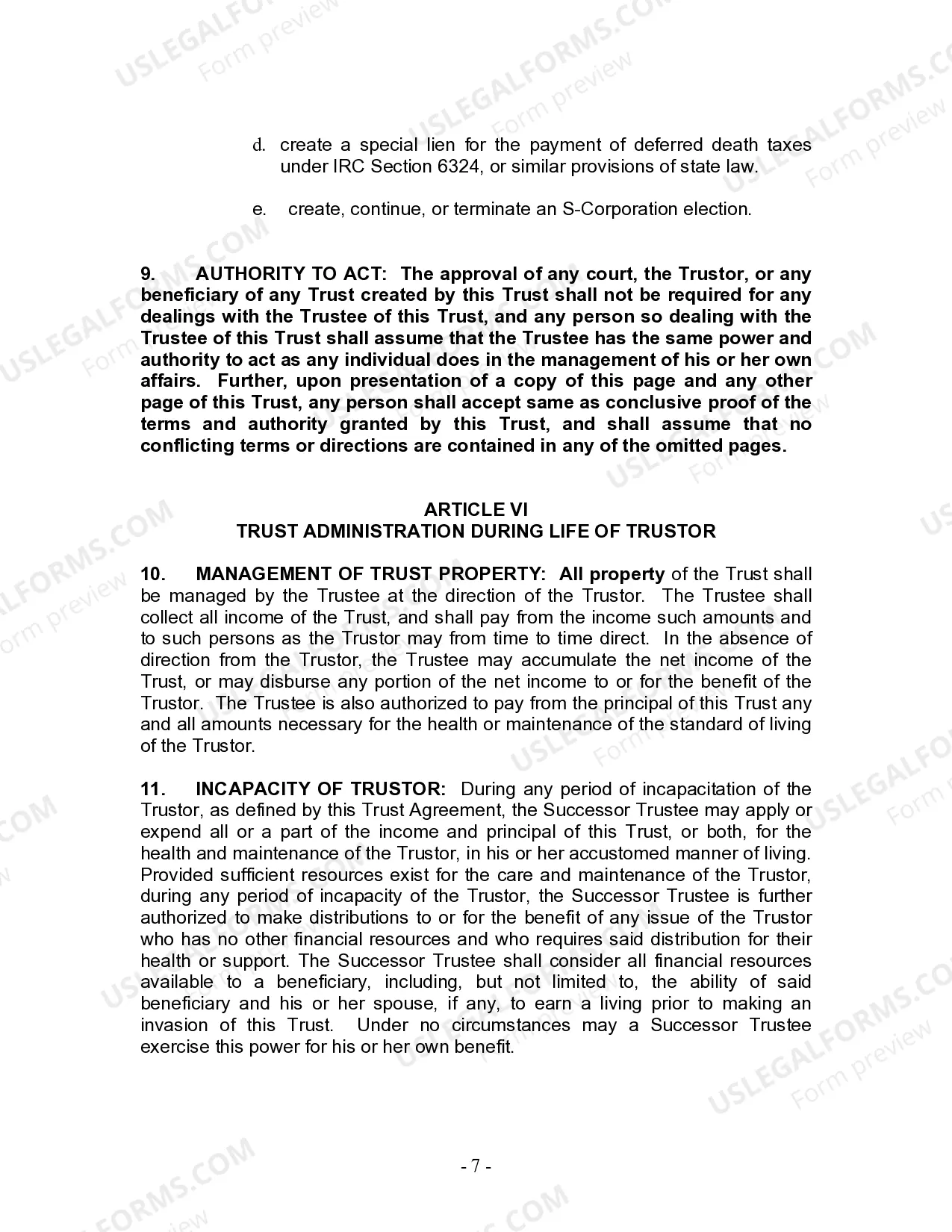
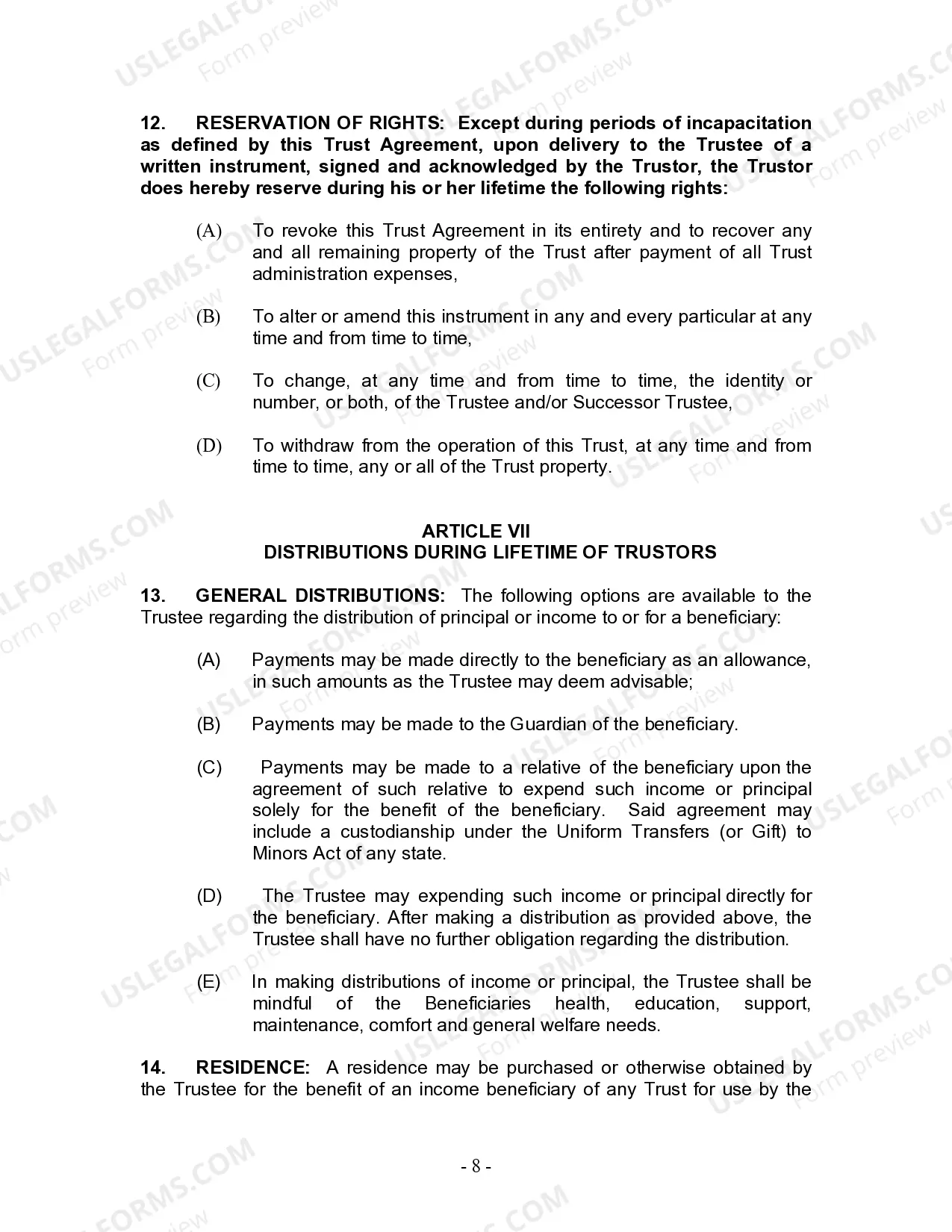
- Trustee powers and responsibilities outlined in detail
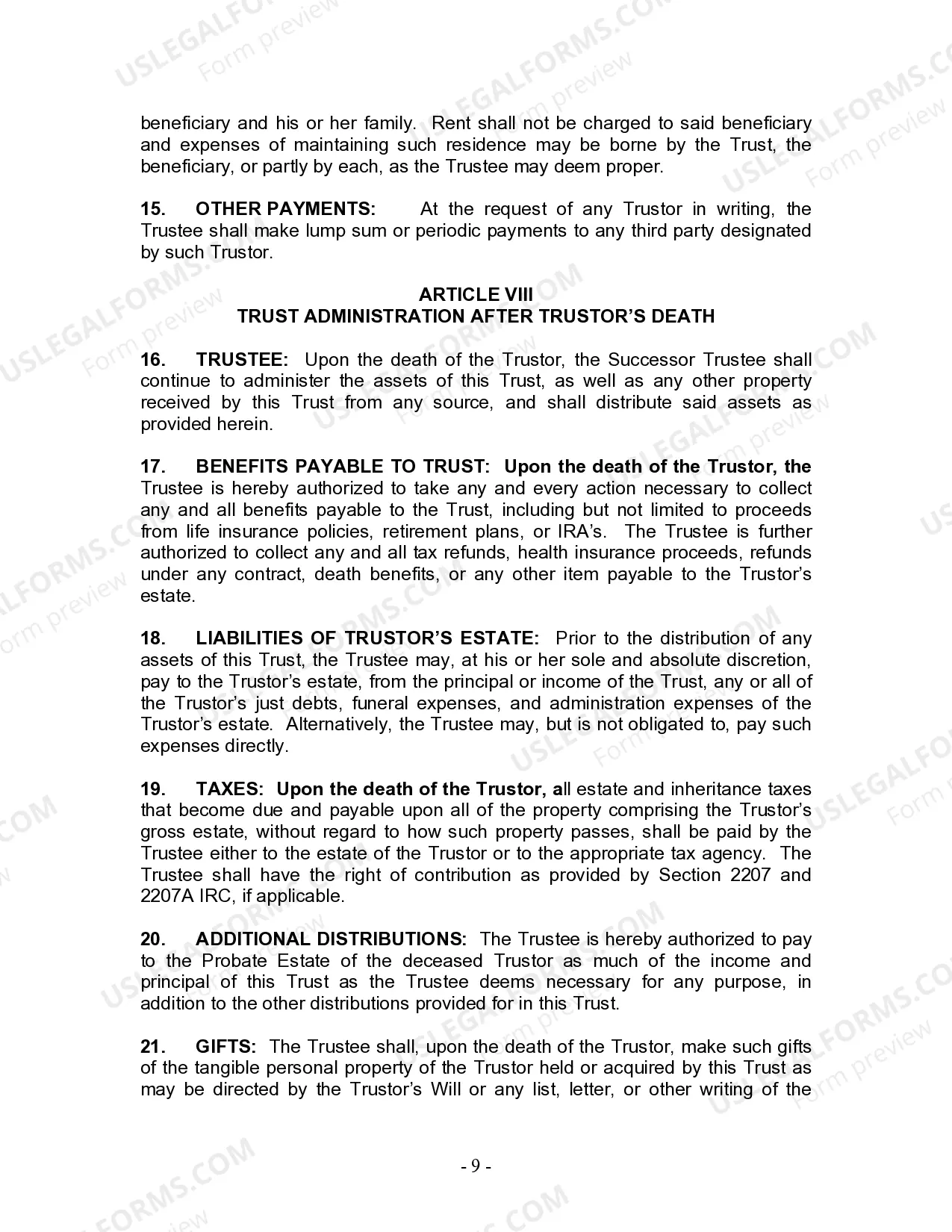
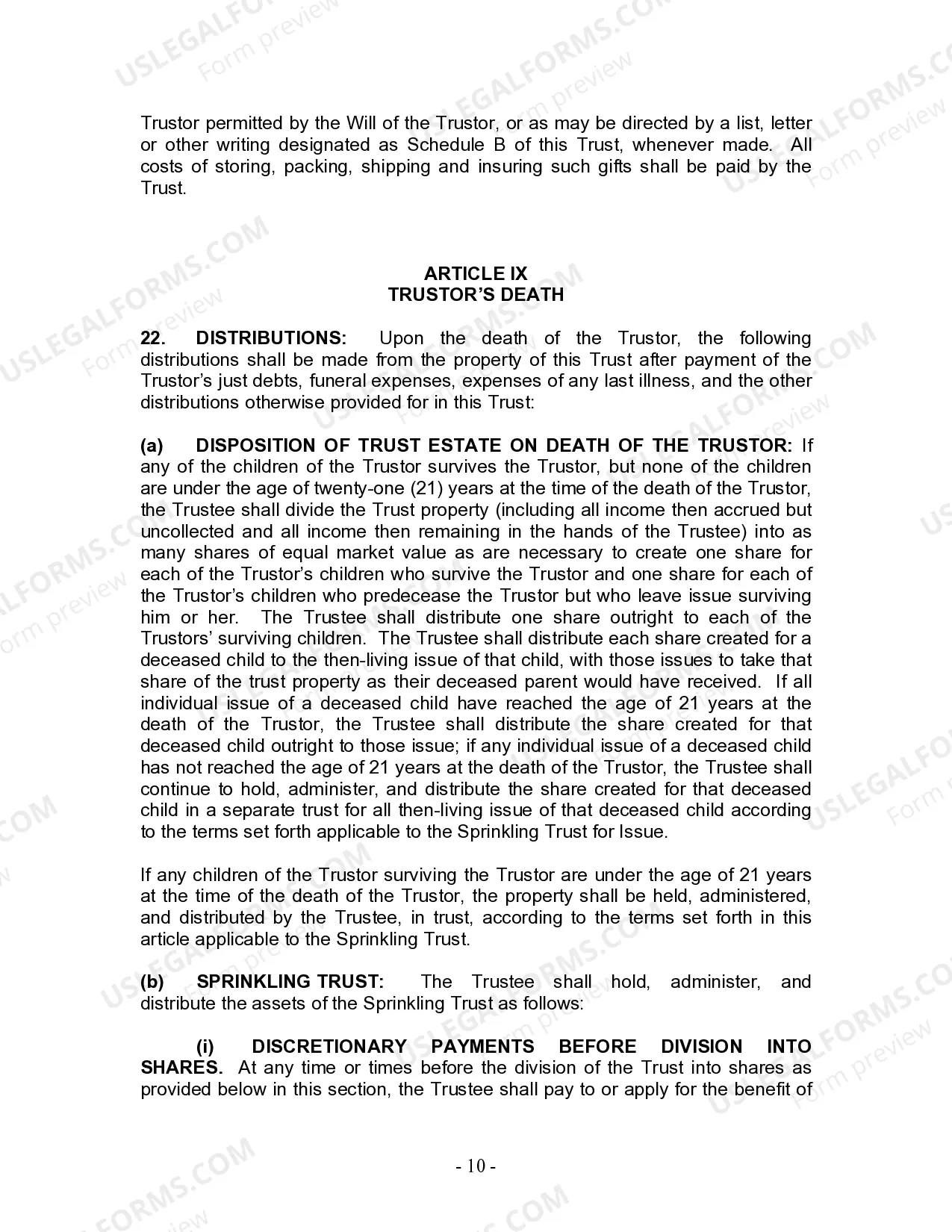
- Distribution plans for beneficiaries upon the Trustorâs death



Situations where this form applies
This form should be used when an individual who is single, divorced, or widowed with children wants to establish a living trust for comprehensive estate planning. It is particularly helpful to avoid probate delays and simplify the transfer of assets to beneficiaries after death, thereby ensuring your children or other designated beneficiaries receive their inheritance quickly and efficiently.
Intended users of this form
The following individuals should consider using this form:
- Single parents wanting to secure their children's financial future
- Divorced individuals with dependent children
- Widows or widowers who wish to manage their assets and provide for their children
- Those looking to simplify their estate plan and avoid probate complications
How to prepare this document
- Identify the Trustor by providing full name and address.
- Designate the Trustee, who will manage the trust during and after your lifetime.
- List all assets you wish to include in the trust, such as real estate and personal belongings.
- Specify your children or other beneficiaries who will inherit the trust assets.
- Sign and date the document in the presence of a notary if required.
Is notarization required?
This form does not typically require notarization unless specified by local law. However, having it notarized can strengthen its legal standing and help avoid complications in the future.
Get your form ready online
Our built-in tools help you complete, sign, share, and store your documents in one place.
Make edits, fill in missing information, and update formatting in US Legal Forms—just like you would in MS Word.
Download a copy, print it, send it by email, or mail it via USPS—whatever works best for your next step.
Sign and collect signatures with our SignNow integration. Send to multiple recipients, set reminders, and more. Go Premium to unlock E-Sign.
If this form requires notarization, complete it online through a secure video call—no need to meet a notary in person or wait for an appointment.
We protect your documents and personal data by following strict security and privacy standards.

Make edits, fill in missing information, and update formatting in US Legal Forms—just like you would in MS Word.

Download a copy, print it, send it by email, or mail it via USPS—whatever works best for your next step.

Sign and collect signatures with our SignNow integration. Send to multiple recipients, set reminders, and more. Go Premium to unlock E-Sign.

If this form requires notarization, complete it online through a secure video call—no need to meet a notary in person or wait for an appointment.

We protect your documents and personal data by following strict security and privacy standards.
Mistakes to watch out for
- Failing to properly identify all beneficiaries.
- Omitting key assets from the trust.
- Not reviewing the document for accuracy before signing.
- Neglecting to update the trust after life changes, such as marriage or divorce.
Why complete this form online
- Immediate access to customizable legal documents drafted by licensed attorneys.
- The ability to easily make edits or updates without needing a lawyer visit.
- Clear and concise guidance throughout the completion process.
- Secure storage of your documents for future reference.
Legal use & context
- This trust allows for the management of your assets while you are alive and ensures a clear distribution plan after your death.
- It is designed to meet the requirements of Oregon law, providing legal enforceability and protection for your beneficiaries.
Main things to remember
- A living trust helps manage your assets during your life and facilitates distribution after death, avoiding probate.
- This form is ideal for individuals who are single, divorced, or widowed with children.
- Properly completing the trust ensures that your assets are handled according to your wishes.
Looking for another form?
Form popularity
FAQ
A joint revocable living trust is a trust that is set up by two people (joint grantors) and funded with joint or separate property.
A basic trust plan may run anywhere from $2,000 to $3,000 or more, depending on complexity. There are additional costs for making changes and administration costs after your death. Different types of trusts and trustees can require different fees for administration and wealth management.
The main purpose of a living trust is to oversee the transfer of your assets after your death. Under the terms of the living trust, you are the grantor of the trust, and the person you designate to distribute the trust's assets after your death is known as the successor trustee.
What happens in this type of trust is that the trust is a joint revocable trust when both spouses are alive. When one of the spouses dies, the trust will then split into two trusts automatically. Each trust will have half the assets of the trust along with the separate property of the spouse.
No, you don't need a lawyer to set up a trust, but it might be a good idea to seek legal advice to ensure the trust is set up correctly and that you have considered all long-term financial and estate planning aspects of the trust.Some living trusts are revocable, which means the trust can be changed at any time.
Wills and Trusts FAQs Deciding between a will or a trust is a personal choice, and some experts recommend having both. A will is typically less expensive and easier to set up than a trust, an expensive and often complex legal document.
Paperwork. Setting up a living trust isn't difficult or expensive, but it requires some paperwork. Record Keeping. After a revocable living trust is created, little day-to-day record keeping is required. Transfer Taxes. Difficulty Refinancing Trust Property. No Cutoff of Creditors' Claims.
A living trust in Oregon allows you to have use and control of your assets while they remain in trust for your beneficiaries. A revocable living trust (sometimes known as an inter vivos trust) is a popular estate planning option with a variety of benefits.