Oregon Letter from Landlord to Tenant as Notice to tenant to repair damage caused by tenant
Overview of this form
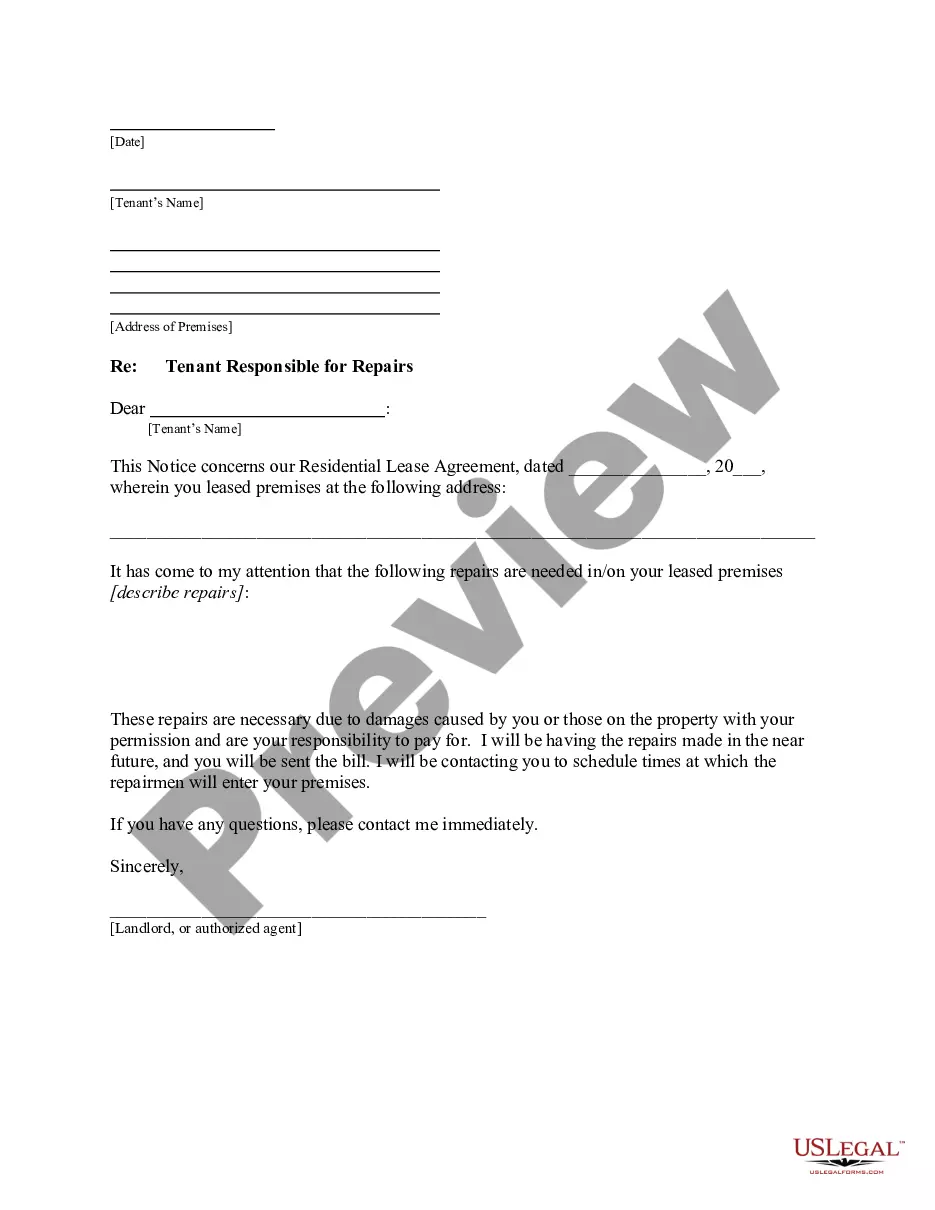
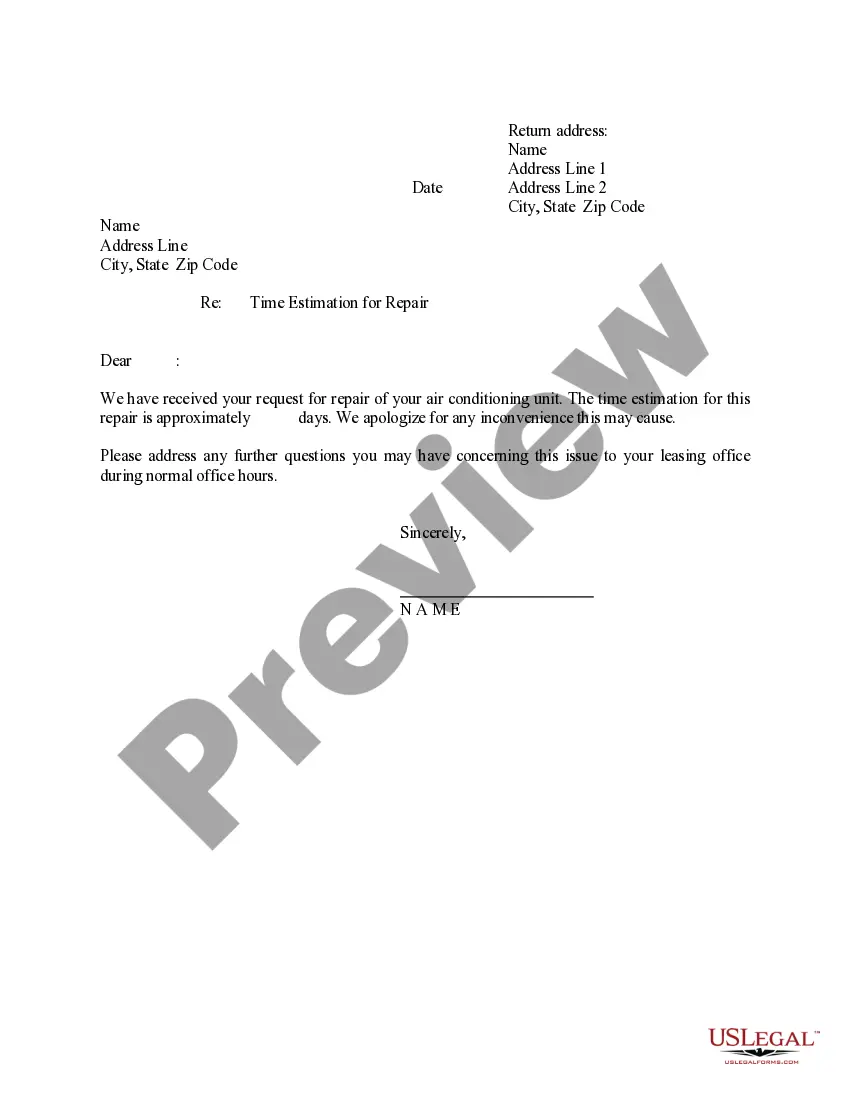
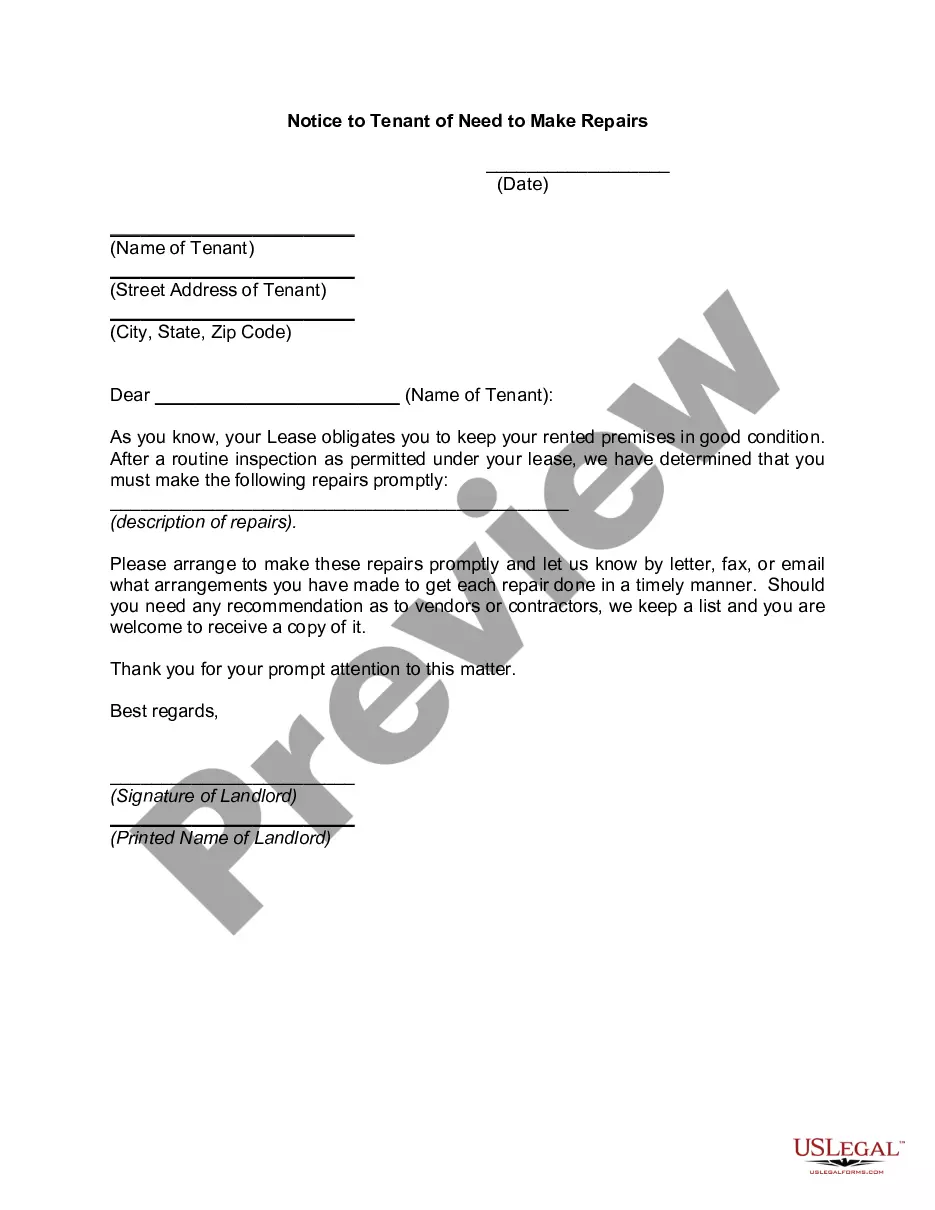
This letter from the landlord to the tenant serves as a formal notice requiring the tenant to address specific damages caused during the lease period. Unlike other rental correspondence, this letter specifies the tenant's responsibility for the repairs and outlines the next steps regarding scheduling repairs, thus making it a crucial tool in landlord-tenant relationships.
Main sections of this form
- Identification of the lease agreement involved.
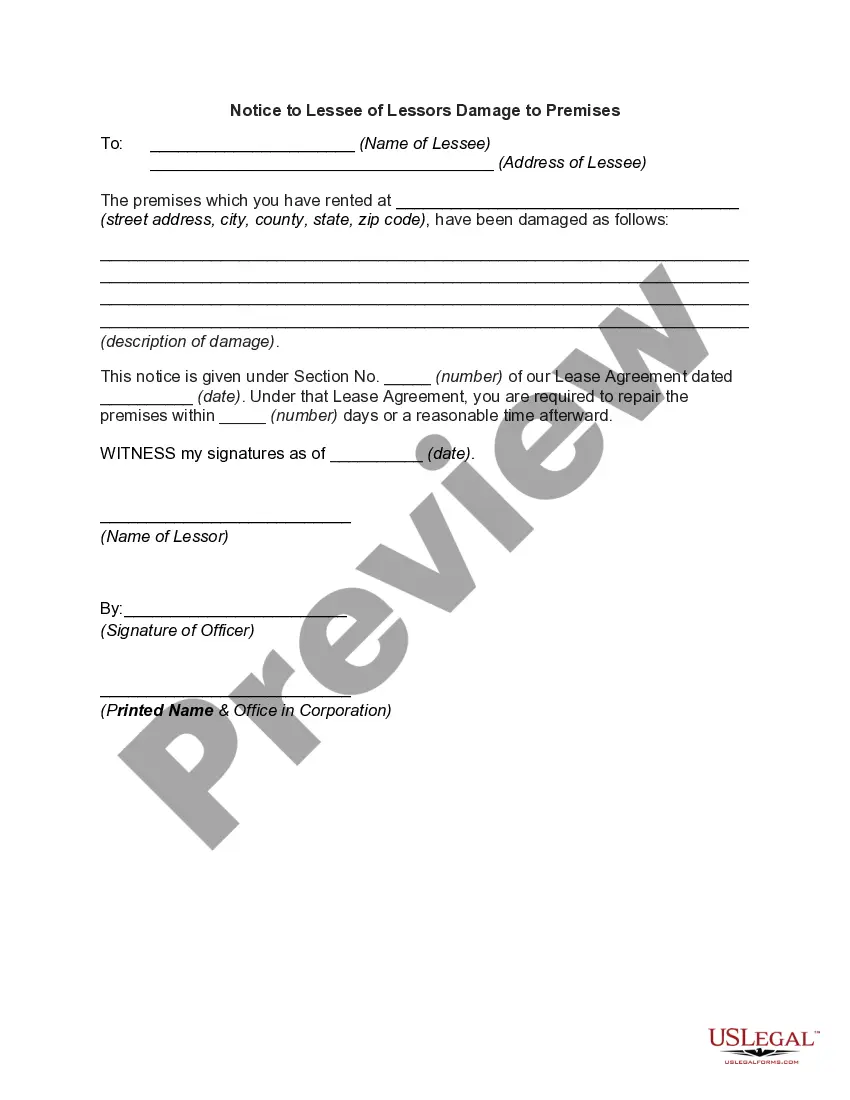
- Description of the required repairs due to tenant-caused damage.
- Instructions for the tenant to reach out with questions.
- Landlord's signature or that of an authorized agent.
When to use this document
This form is needed when a landlord identifies damage in a rental unit caused by the tenant or by individuals permitted by the tenant. It is essential for communicating repair obligations clearly and formally documenting issues that may arise during the tenancy.
Who this form is for
- Landlords who need to notify tenants of necessary repairs.
- Property managers handling tenant issues related to property damage.
- Tenants responsible for repairs due to their actions or those under their authority.
Completing this form step by step
- Identify and fill in the parties involved, including the landlord and tenant.
- Specify the address of the leased property.
- Clearly describe the repairs needed in the unit.
- Sign the letter to validate the notice.
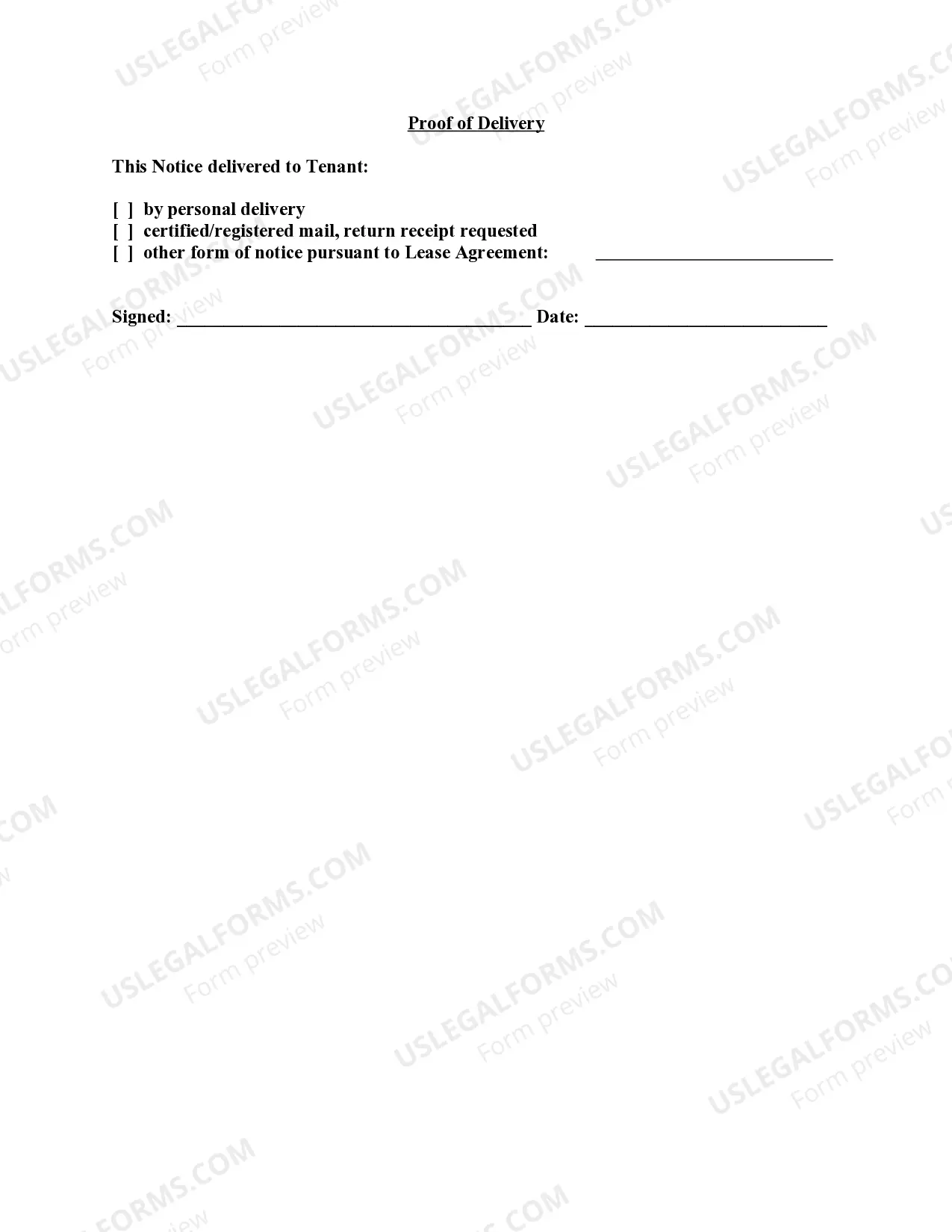
- Choose the method of delivery for the notice, such as personal delivery or certified mail.
Is notarization required?
This form does not typically require notarization to be legally valid. However, some jurisdictions or document types may still require it. US Legal Forms provides secure online notarization powered by Notarize, available 24/7 for added convenience.
Get your form ready online
Our built-in tools help you complete, sign, share, and store your documents in one place.
Make edits, fill in missing information, and update formatting in US Legal Forms—just like you would in MS Word.
Download a copy, print it, send it by email, or mail it via USPS—whatever works best for your next step.
Sign and collect signatures with our SignNow integration. Send to multiple recipients, set reminders, and more. Go Premium to unlock E-Sign.
If this form requires notarization, complete it online through a secure video call—no need to meet a notary in person or wait for an appointment.
We protect your documents and personal data by following strict security and privacy standards.
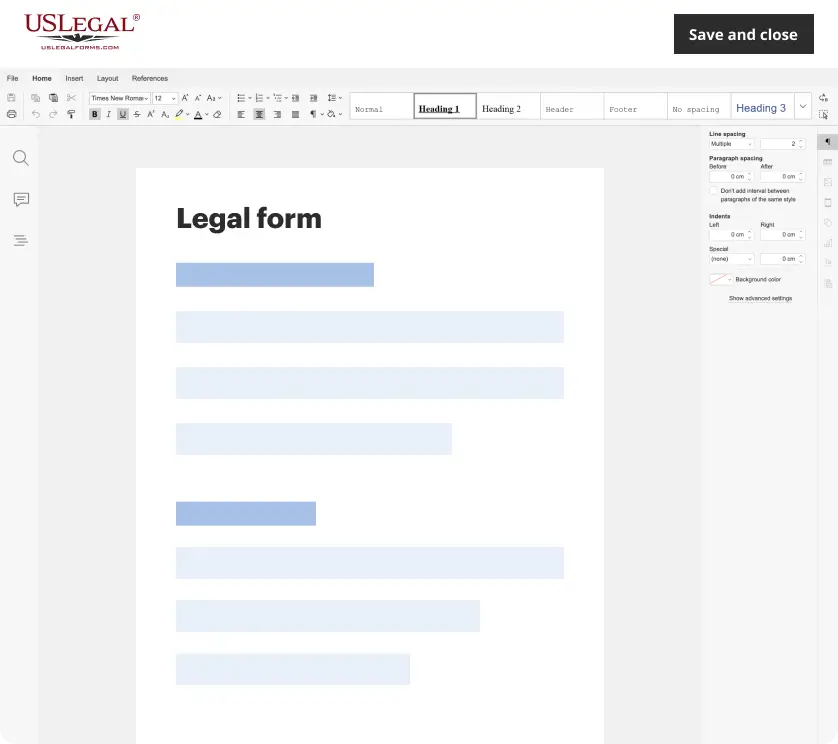
Make edits, fill in missing information, and update formatting in US Legal Forms—just like you would in MS Word.
Download a copy, print it, send it by email, or mail it via USPS—whatever works best for your next step.
Sign and collect signatures with our SignNow integration. Send to multiple recipients, set reminders, and more. Go Premium to unlock E-Sign.

If this form requires notarization, complete it online through a secure video call—no need to meet a notary in person or wait for an appointment.
We protect your documents and personal data by following strict security and privacy standards.
Common mistakes to avoid
- Failing to clearly describe the damages in question.
- Not including a deadline for repairs.
- Neglecting to provide contact information for follow-up questions.
Why complete this form online
- Easy access to professionally drafted templates that save time.
- Editable formats to suit your specific situation.
- Reliable and legally sound documents prepared by licensed attorneys.
Legal use & context
- This notice serves as a formal communication to tenants regarding their responsibilities.
- Properly completing and delivering this form can help protect the landlord's rights.
- This notice can be used as evidence in disputes regarding property damage and repairs.
Summary of main points
- This form is essential for notifying tenants about necessary repairs they are responsible for.
- Clear communication through this letter can prevent potential disputes.
- Landlords should be aware of state-specific regulations regarding property maintenance and repairs.
Looking for another form?
Form popularity
FAQ
Step 1: Mention the Reason for Giving a Notice. Step 2: Use Formal Language. Step 3: Mention the Date for Vacating. Step 4: Address the Formalities to Be Taken Care Of. Step 5: Proofread the Letter.
Dear (Name of landlord or manager), This letter constitutes my written (number of days' notice that you need to give based on your lease agreement)-day notice that I will be moving out of my apartment on (date), the end of my current lease. I am leaving because (new job, rent increase, etc.)
Write the title for your pay or quit notice across the top of the letter. If not included in the title, the number of days for the notice must be specified. Include the names of each of the tenants. Specify the address of the rental property.
Dear (Name of landlord or manager), This letter constitutes my written (number of days' notice that you need to give based on your lease agreement)-day notice that I will be moving out of my apartment on (date), the end of my current lease. I am leaving because (new job, rent increase, etc.)
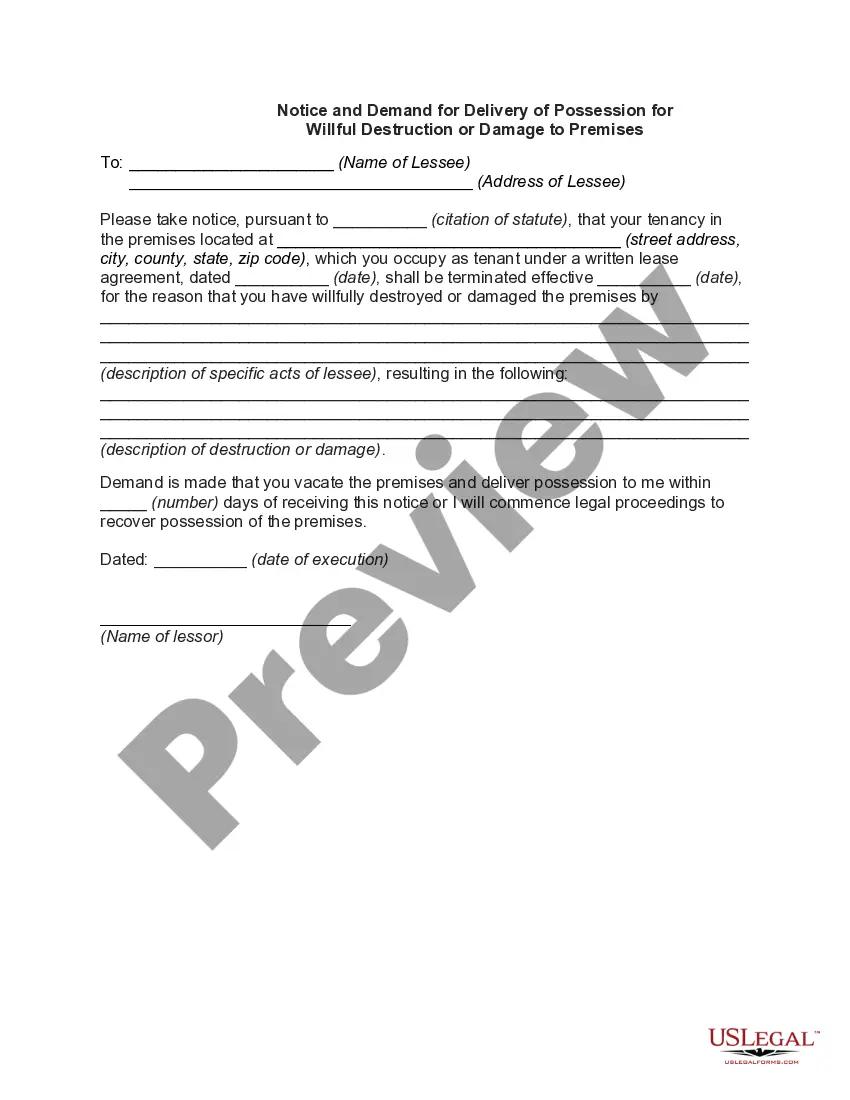
Be in writing, Say the full name of the tenant or tenants, Have the address the notice is about, Say everything that the tenant did to break the lease or deserve a 3 day notice to leave, and include details and dates, Say clearly that the tenant has to move out as soon as the 3 days are up, and.
In a month-to-month tenancy, that time period is 7 days for essential services such as water, plumbing and heat, and 30 days for all other kinds of repairs. In a week-to-week tenancy, your notice must give the landlord 7 days to repair the problem. The notice period starts when the landlord receives the notice.
For 2020, the maximum rent increase is 9.9%. Between tenants, there is no limit to how much the rent can go up (except if a short-term tenant was just evicted from the unit, a provision that discourages a revolving door of tenants for rent increases.)
Landlord Rights When Tenant Destroys PropertyIf the tenant is evicted or already abandoned the property the landlord can deduct money from the security deposit. If the damages exceed the funds in the security deposit the landlord can sue the tenant in small claims court.
Your landlord has to do anything your tenancy agreement says they have to do. Your landlord is also generally responsible for keeping in repair: the structure and exterior of your home, for example, the walls, roof, foundations, drains, guttering and external pipes, windows and external doors.