Oregon Flooring Contract for Contractor
What is this form?
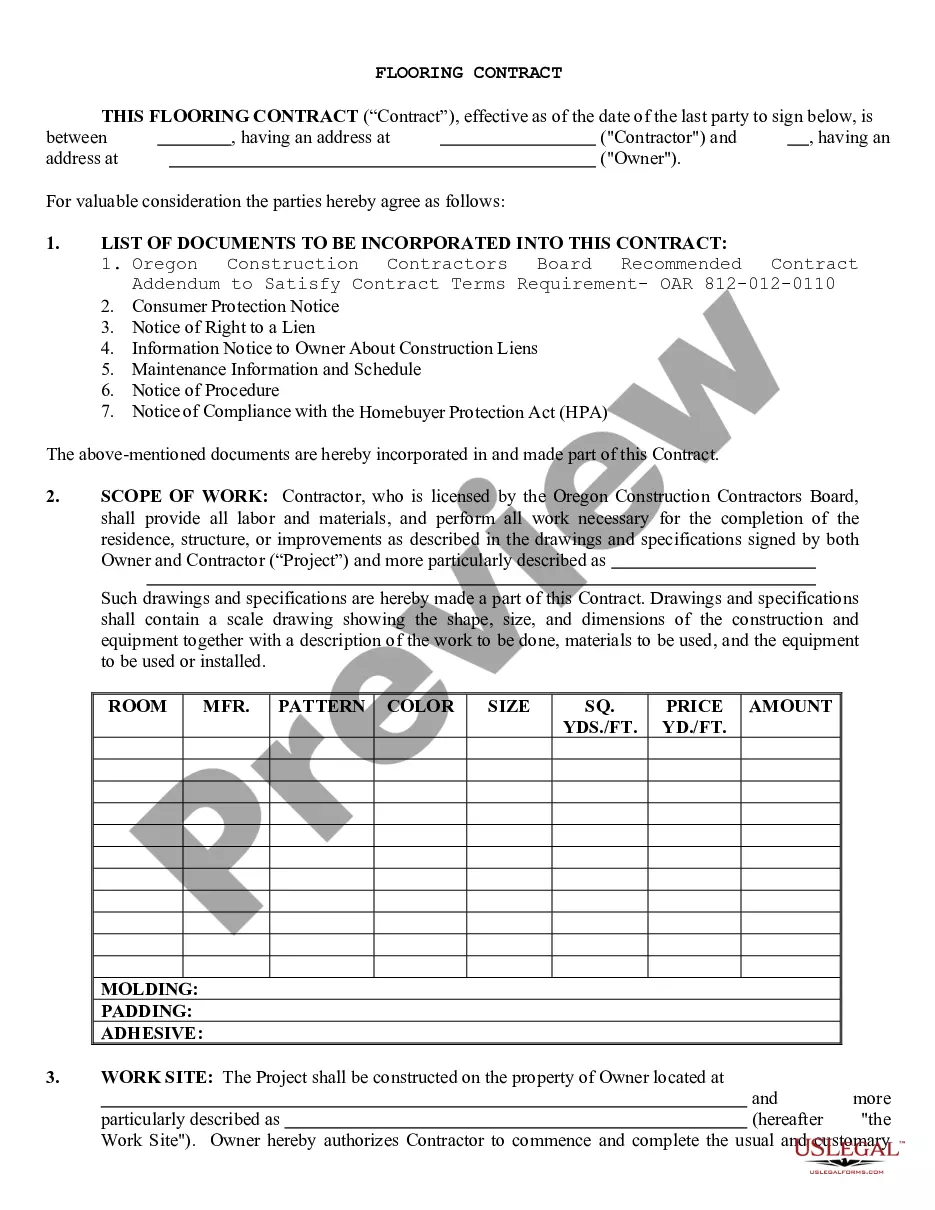
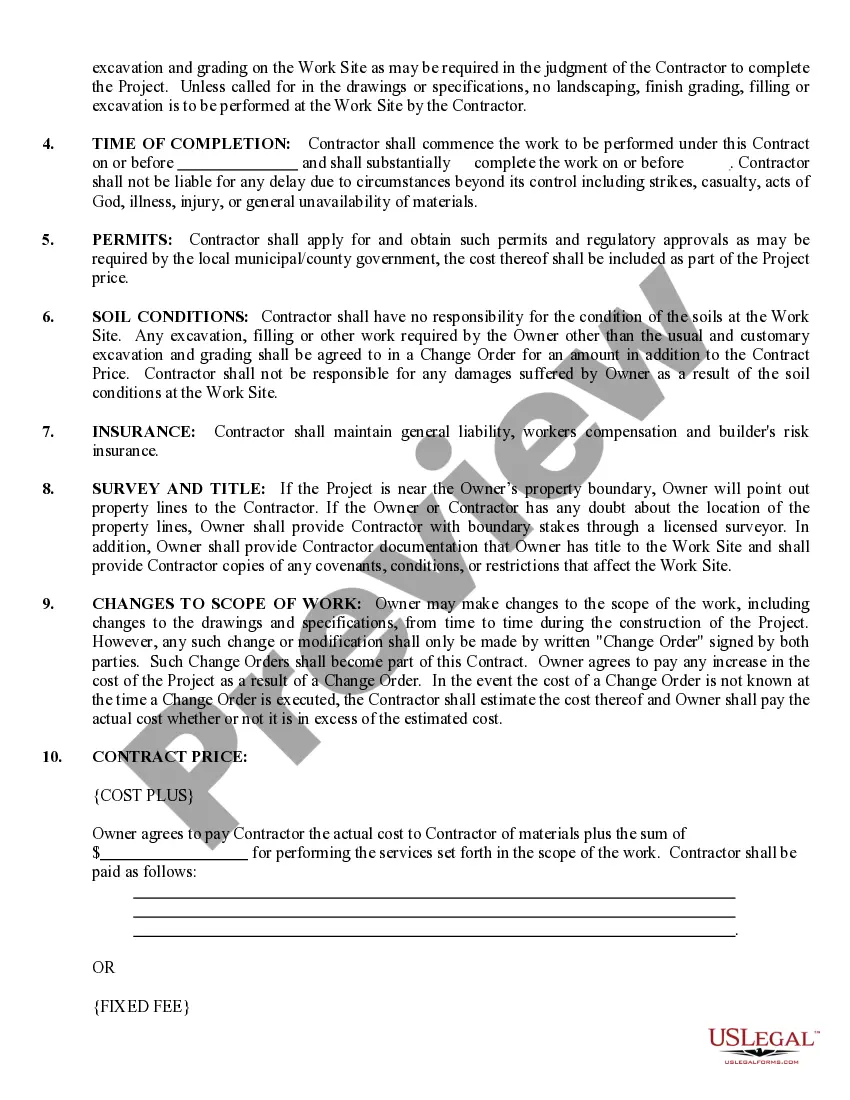
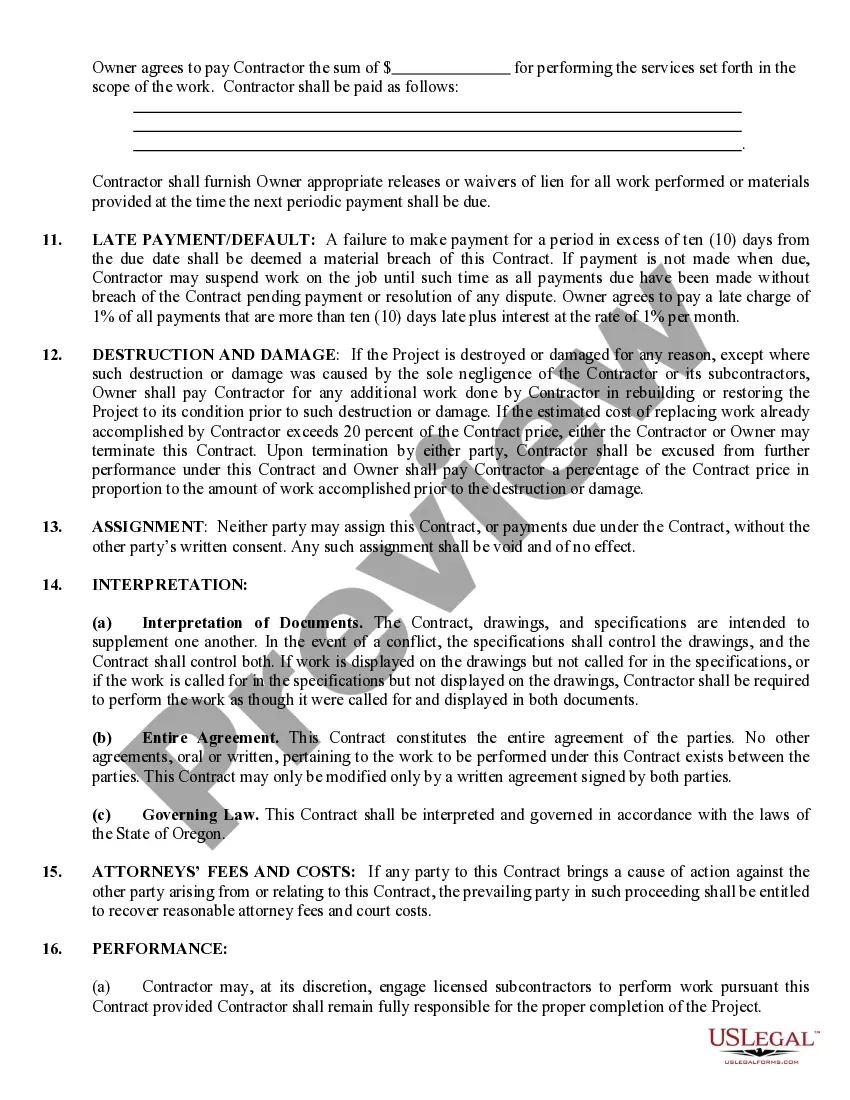
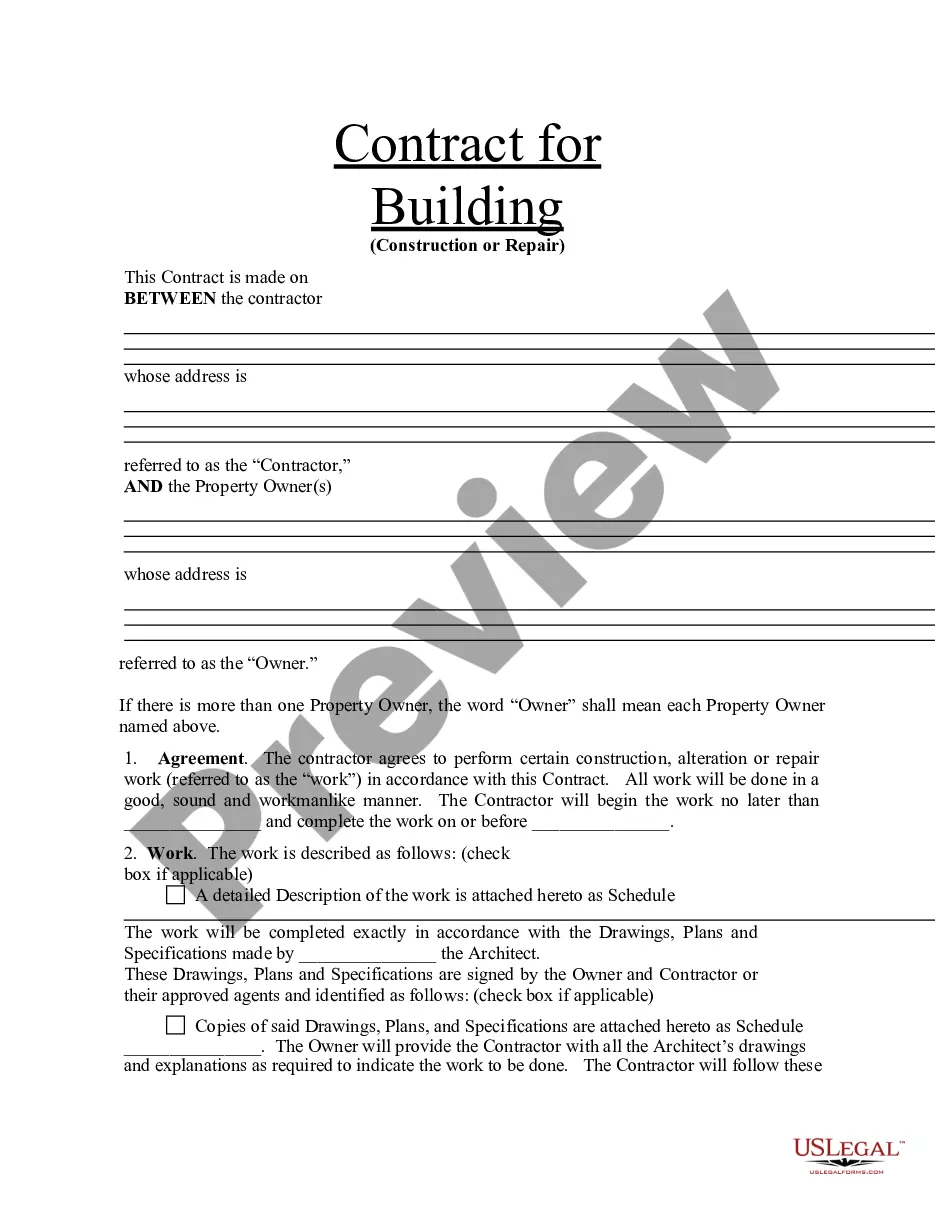
The Flooring Contract for Contractor is a legal document that solidifies the agreement between a flooring contractor and a property owner. This contract can be executed under either a cost plus or fixed fee payment arrangement and covers essential components such as change orders, warranty, insurance, and work site information. It is specifically drafted to comply with Oregon state laws, making it a reliable choice for parties engaged in flooring projects in the state.
Key parts of this document
- Payment arrangementsâchoosing between cost plus or fixed fee structures.
- Change order procedures for amending project scope.
- Insurance requirements for contractors and liability coverage.
- Conditions regarding permits and local government regulations.
- Liability for soil conditions at the work site.
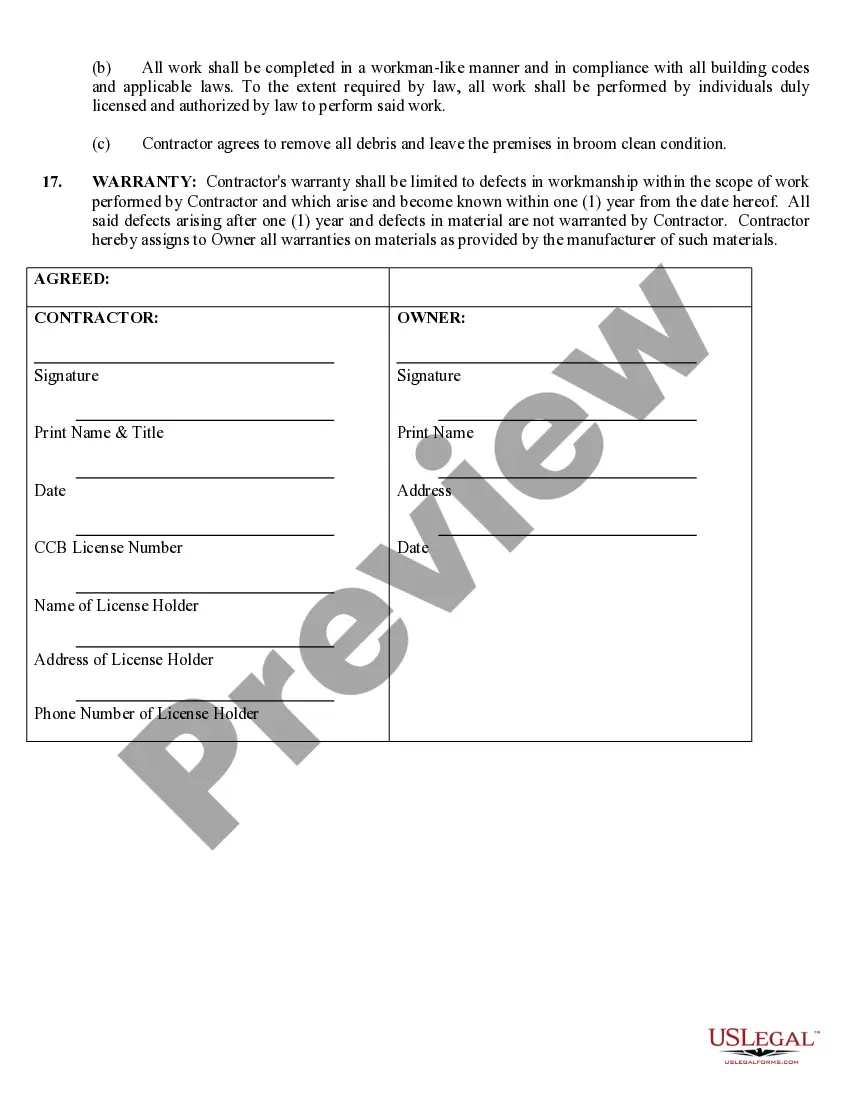
- Warranties on workmanship and material from the contractor.
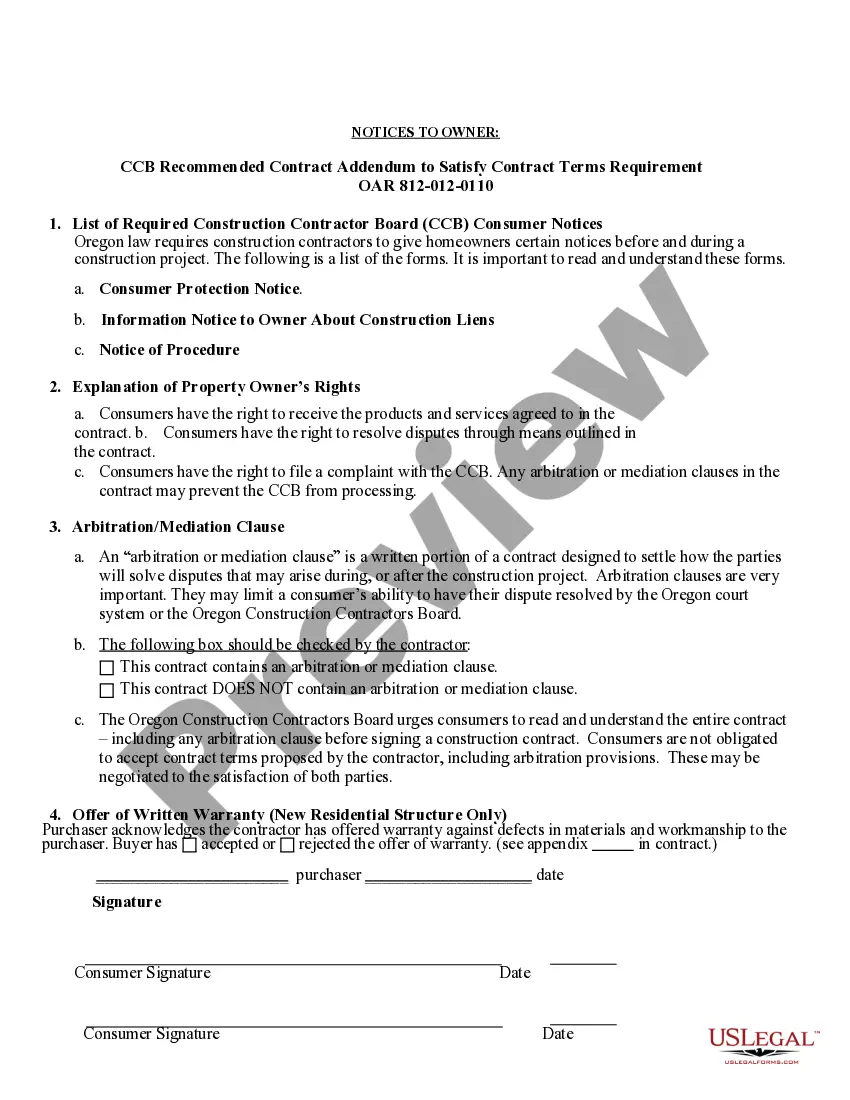
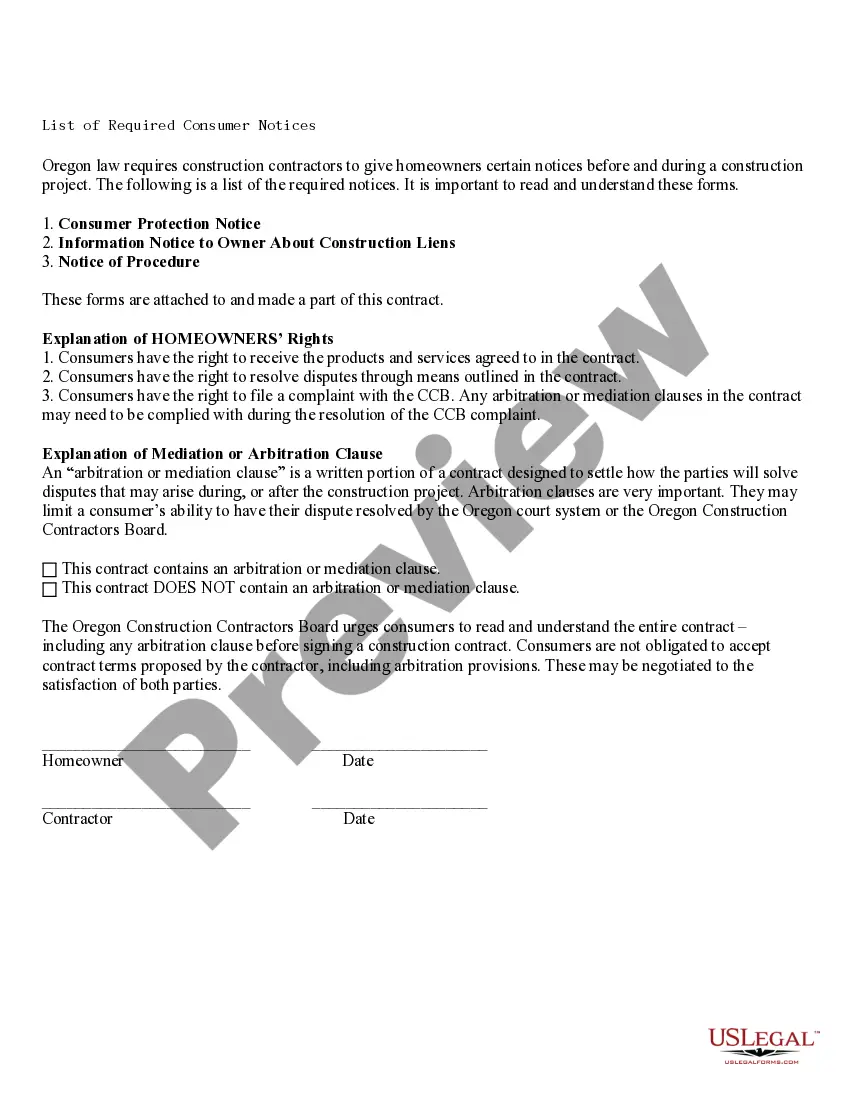
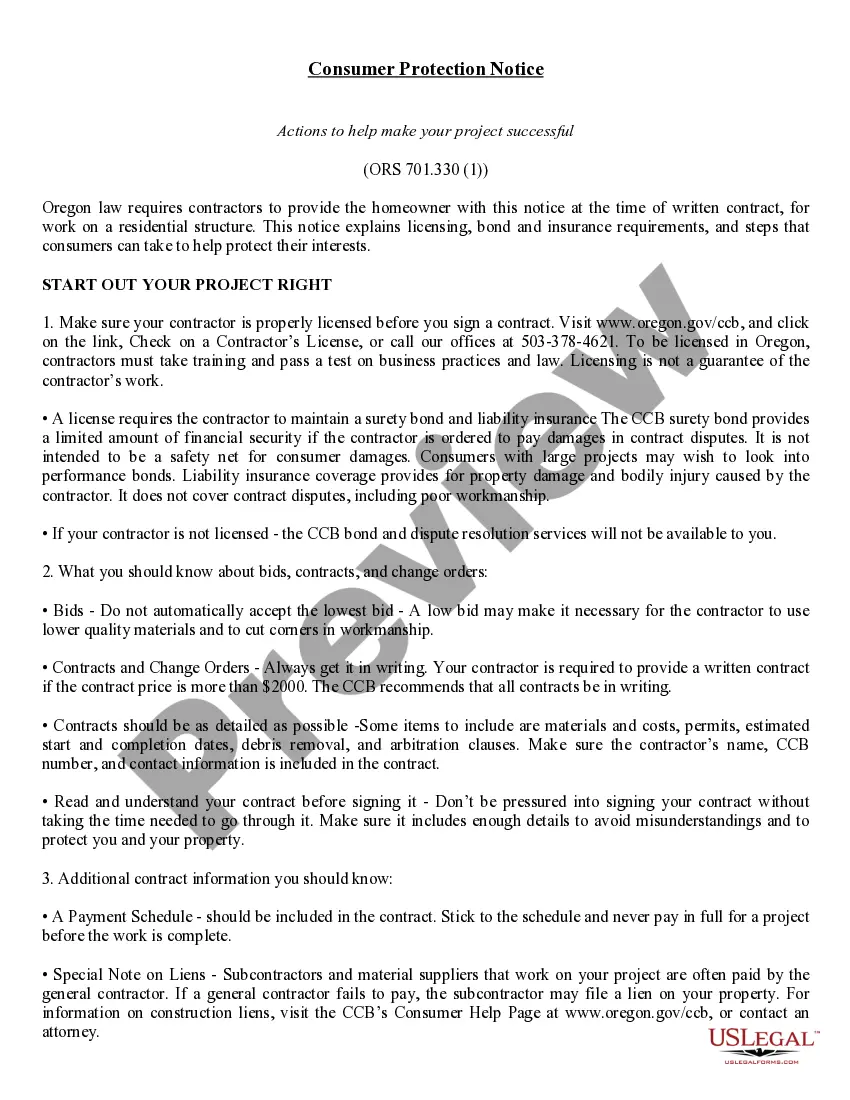
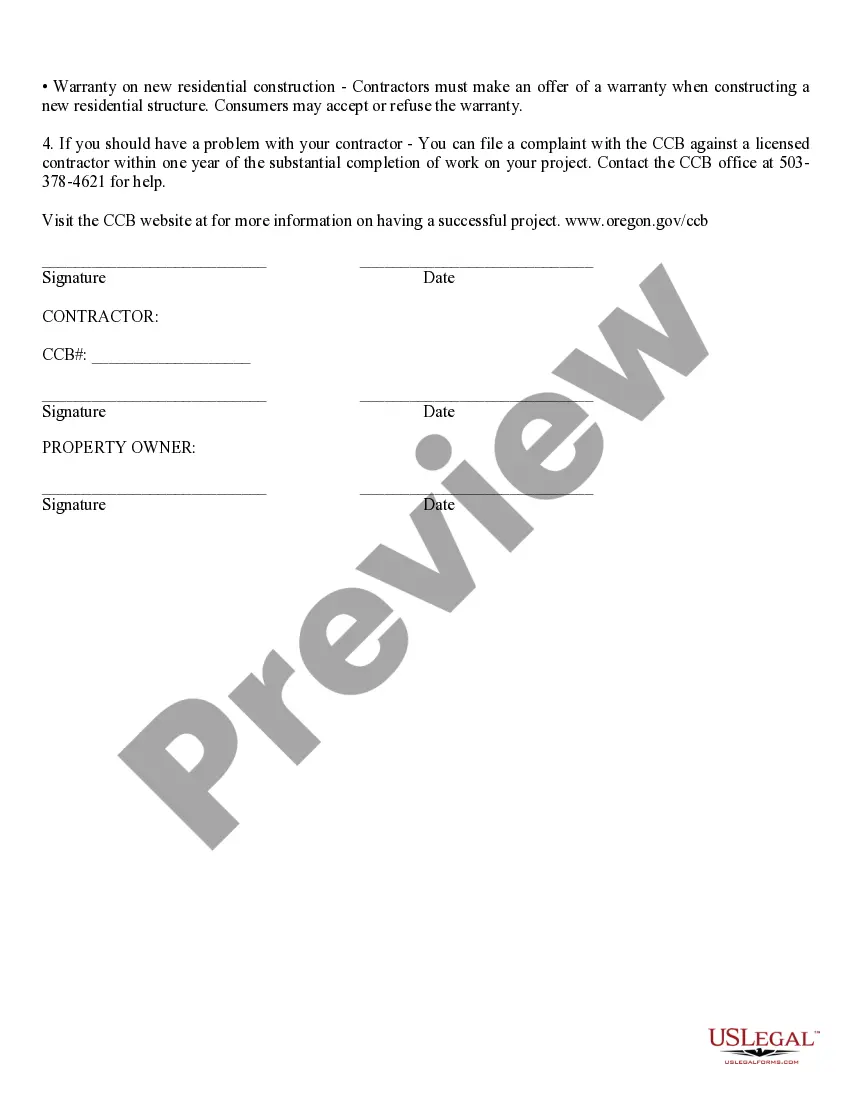
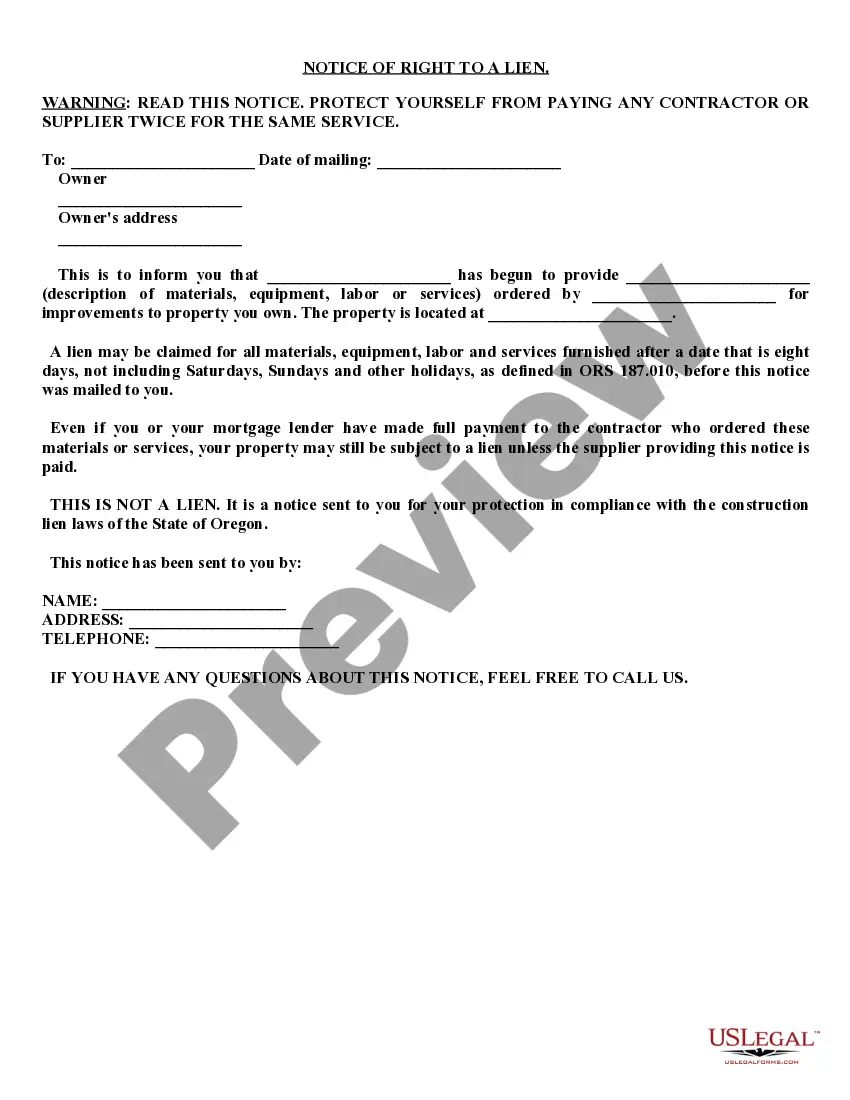
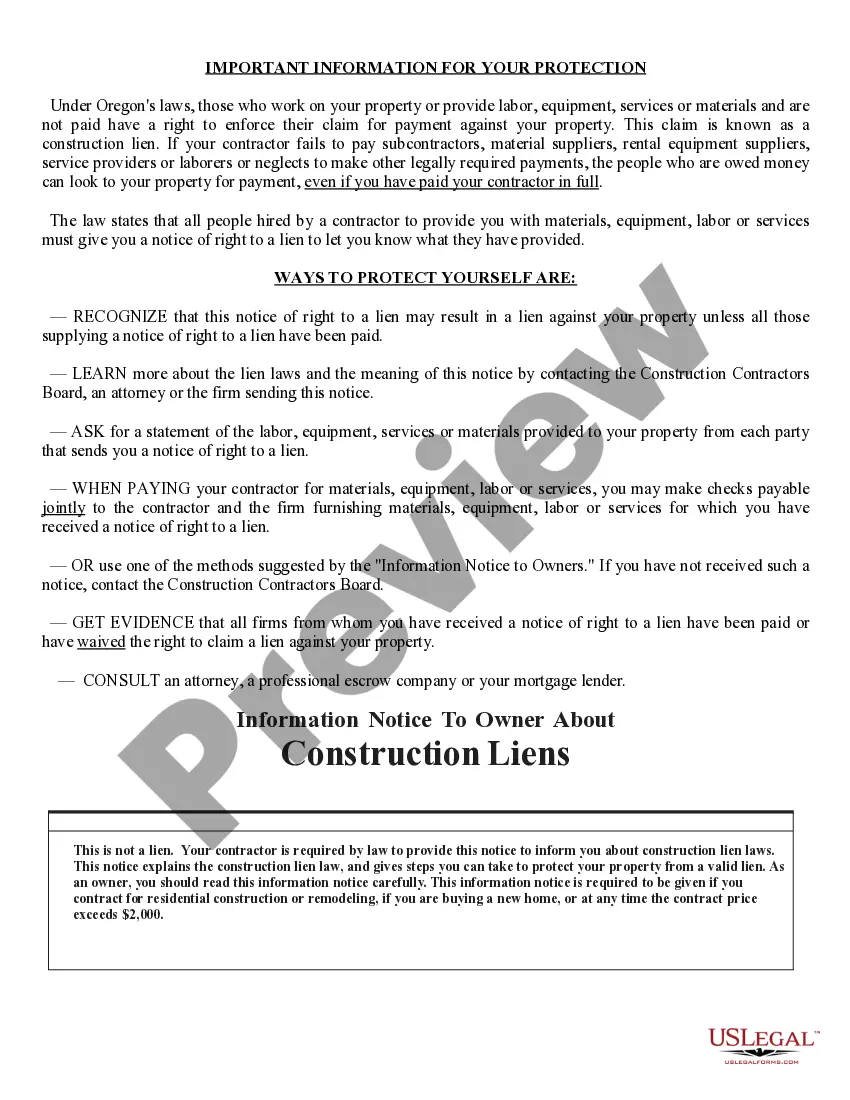
- Details regarding liens and consumer protection rights.



When to use this document
This form should be used when a property owner wants to hire a flooring contractor to perform work on their property. It is useful in various situations, such as renovating residential spaces, installing new flooring in a commercial property, or any project involving significant floor work that exceeds standard maintenance tasks.
Who this form is for
- Property owners looking to engage a flooring contractor for projects.
- Flooring contractors seeking a standardized contract for their services.
- Homeowners and businesses in Oregon wanting to ensure compliance with state regulations.
How to prepare this document
- Identify the parties involved: enter the contractor's and property owner's names and contact information.
- Specify the project details: describe the scope of work and materials to be used.
- Choose the payment structure: determine whether the contract will be cost plus or fixed fee.
- Outline any additional requirements: include clauses about change orders, warranties, and insurance.
- Sign and date the agreement: ensure both parties include their signatures and the date of execution.
- Provide any additional notices required by Oregon law, ensuring compliance throughout the contract process.
Does this document require notarization?
This form does not typically require notarization unless specified by local law. It is recommended to keep a signed copy for your records, ensuring that both parties have a clear agreement in place.
Get your form ready online
Our built-in tools help you complete, sign, share, and store your documents in one place.
Make edits, fill in missing information, and update formatting in US Legal Forms—just like you would in MS Word.
Download a copy, print it, send it by email, or mail it via USPS—whatever works best for your next step.
Sign and collect signatures with our SignNow integration. Send to multiple recipients, set reminders, and more. Go Premium to unlock E-Sign.
If this form requires notarization, complete it online through a secure video call—no need to meet a notary in person or wait for an appointment.
We protect your documents and personal data by following strict security and privacy standards.

Make edits, fill in missing information, and update formatting in US Legal Forms—just like you would in MS Word.

Download a copy, print it, send it by email, or mail it via USPS—whatever works best for your next step.

Sign and collect signatures with our SignNow integration. Send to multiple recipients, set reminders, and more. Go Premium to unlock E-Sign.

If this form requires notarization, complete it online through a secure video call—no need to meet a notary in person or wait for an appointment.

We protect your documents and personal data by following strict security and privacy standards.
Typical mistakes to avoid
- Failing to include a clear description of the work to be completed.
- Not specifying the payment terms clearly, leading to misunderstandings.
- Ignoring local permit requirements that could impact the project.
- Not reviewing the entire agreement thoroughly before signing.
- Missing signatures or dates, which may invalidate the contract.
Why complete this form online
- Convenience of downloading and customizing the form from anywhere.
- Access to expert-drafted templates that ensure legal compliance.
- Easy editing to fit specific project requirements without needing a lawyer.
- Fast turnaround time, allowing for immediate use in your flooring project.
Legal use & context
- This contract outlines the responsibilities and rights of both the contractor and the property owner.
- It serves as a binding agreement that can be enforced in court if disputes arise.
- The form incorporates important legal notices required by Oregon law to protect consumers.
What to keep in mind
- The Flooring Contract for Contractor is crucial for formalizing agreements between contractors and property owners.
- Understanding your rights and obligations under Oregon law is essential to avoid potential disputes.
- Clear communication and documentation within the contract can prevent misunderstandings and protect interests.
- Change Order: A written document that alters the scope of work or contract price.
- Warranty: A guarantee covering defects in workmanship for a specified period.
- Insurance Requirement: A contractor's legal obligation to hold certain types of insurance to protect themselves and clients.
- Consumer Rights Notice: Formal communication to inform homeowners of their rights and protections under applicable laws.
Looking for another form?

Form popularity
FAQ
For most types of projects you hire an independent contractor (IC) to do, the law does not require you to put anything in writing. You can meet with the IC, agree on the terms of your arrangement, and have an oral contract or agreement that is legally binding. Just because you can doesn't mean you should, however.
Contract Types Overview. Express and Implied Contracts. Unilateral and Bilateral Contracts. Unconscionable Contracts. Adhesion Contracts. Aleatory Contracts. Option Contracts. Fixed Price Contracts.
Bidding Documents. Construction Contractor Agreement. Architectural Drawings. Specifications. Bill of Quantities. Schedule. Work Orders. Subcontractor Application.
Both parties should sign the contract, and both should be bound by the terms and conditions spelled out in the agreement. In general that means the contractor will be obliged to provide specified materials and to perform certain services for you. In turn, you will be required to pay for those goods and that labor.
Identifying/Contact Information. Title and Description of the Project. Projected Timeline and Completion Date. Cost Estimate and Payment Schedule. Stop Work Clause and Stop Payment Clause. Act of God Clause. Change Order Agreement. Warranty.
Make sure the contractor obtains a permit if the job requires one. Ask for a copy of the contractor's license and proof of insurance. Pay by check and get a receipt. Document any changes to the contract in writing.
Yes, absolutely. Starting work without a signed contract means that your position isn't clear, or even worse it's weak.It also means that the contract is legally enforceable and will be able to support you if you decide to take legal action.
Begin with the Date and the Address of the Other Party. Start with the Basic Details of the Planned Work. Include Special Stipulations. State Whether There Will be a Further Agreement. Create an Area for Signatures. Sign and Date the Contract Letter.
If you run a small business that hires 1099 contractors, also known as independent contractors, it is vital that you have them sign an independent contractor contract. This is because there is a significant gray area between who is classified as an independent contractor and who is classified as an employee.