Oklahoma Last Will and Testament for Divorced Person Not Remarried with No Children
Understanding this form
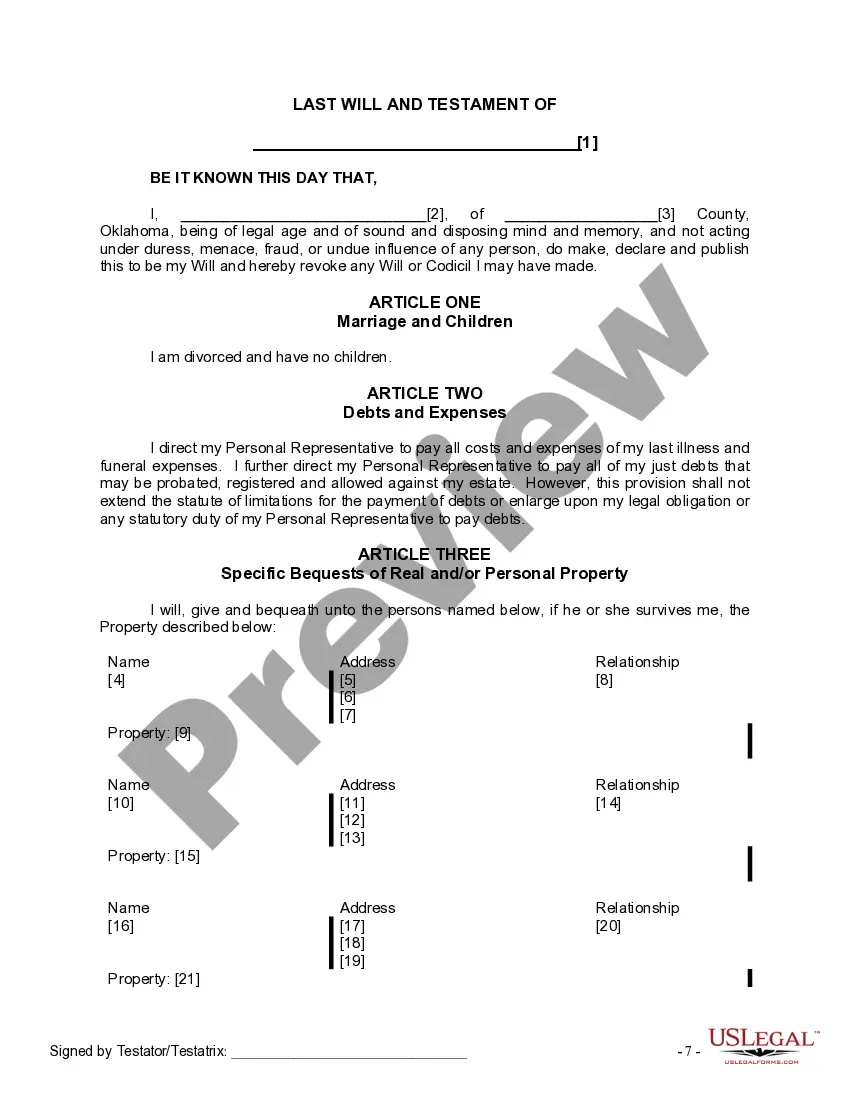
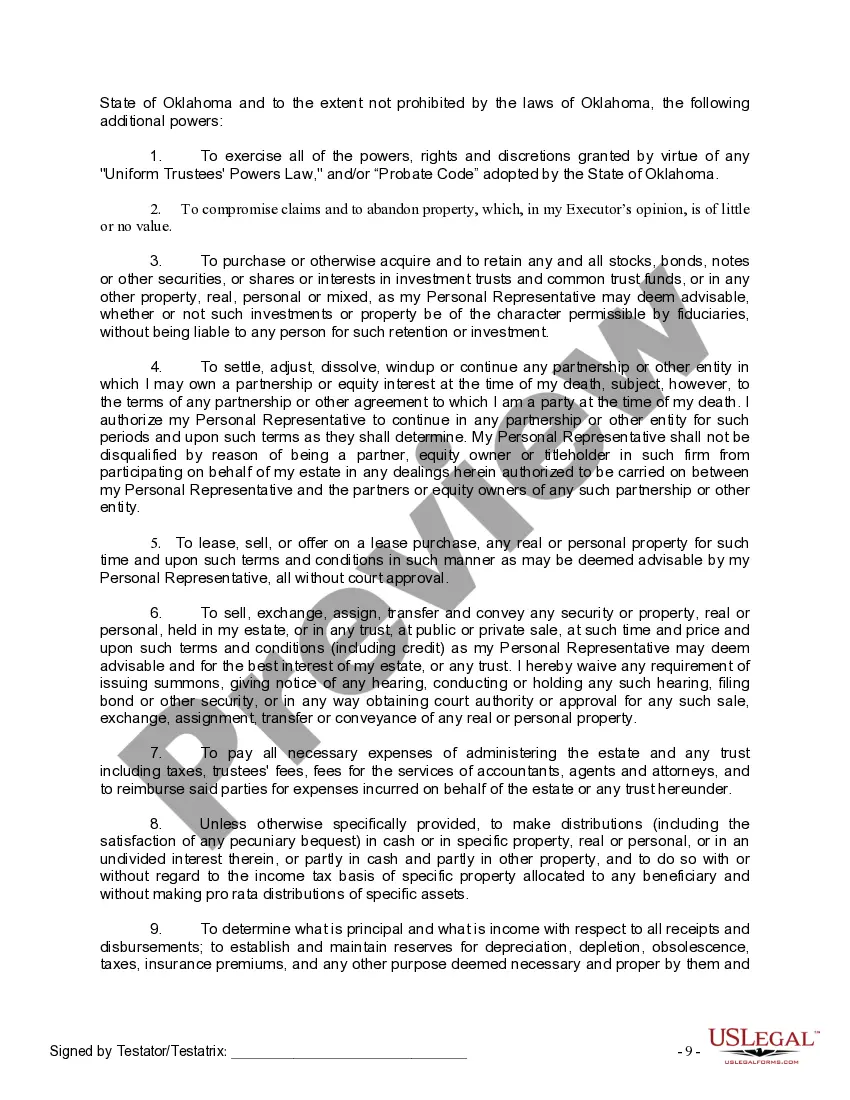
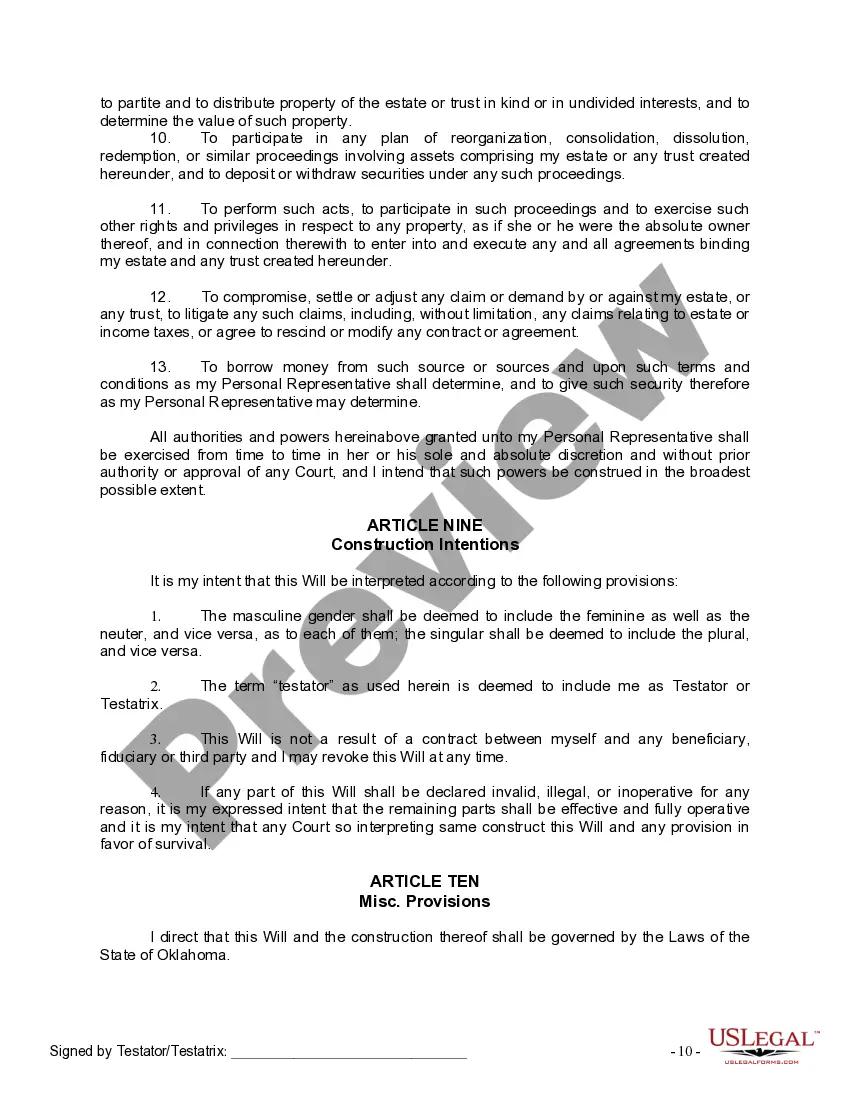
The Last Will and Testament for a Divorced Person Not Remarried with No Children is a legal document that outlines how an individual wishes their property and assets to be distributed after their death. This specific will is tailored for those who are divorced, have no children, and have not remarried. It allows the testator to appoint an executor, designate beneficiaries, and make specific bequests while complying with state laws regarding wills.
Key parts of this document
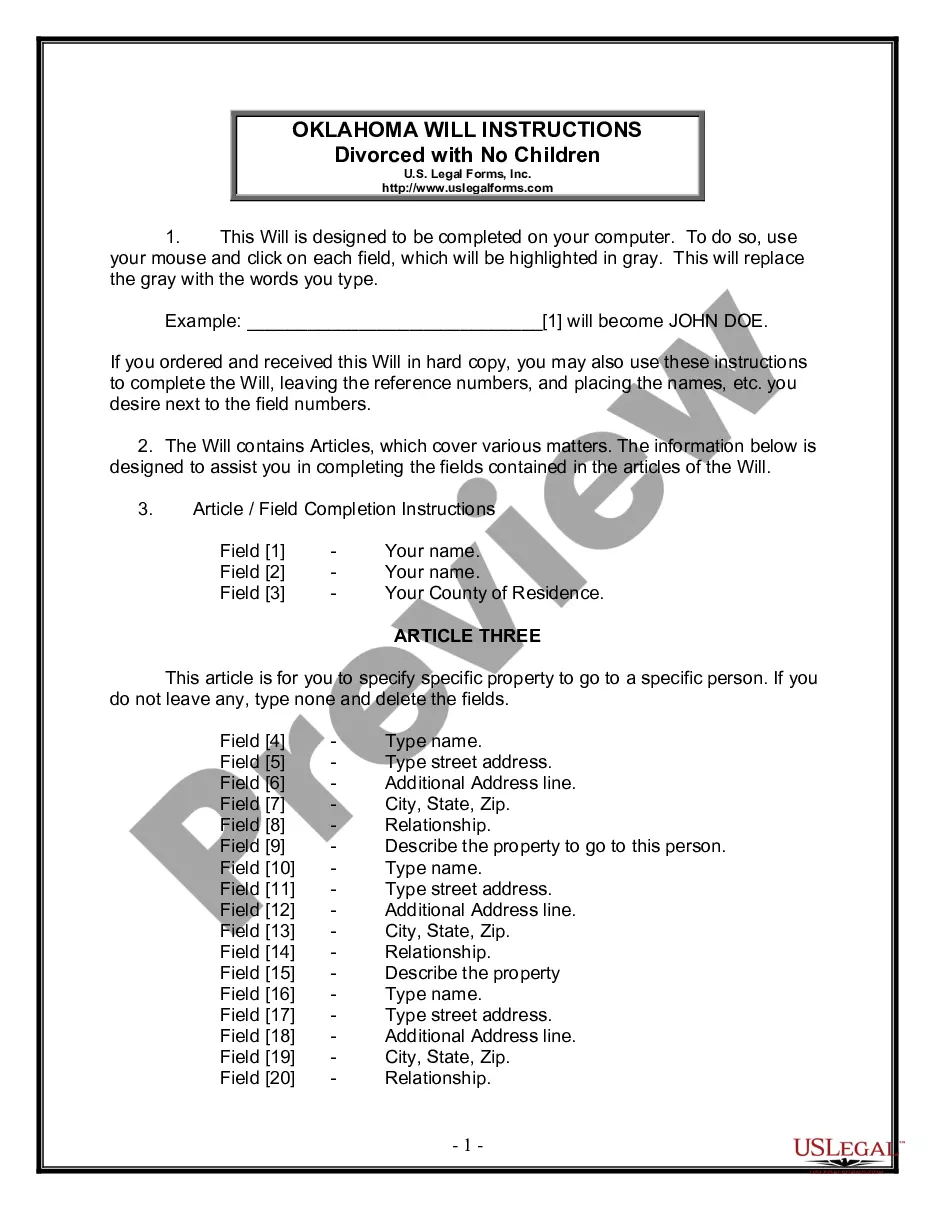
- Personal information: Includes the testator's name, county of residence, and a revocation of previous wills.
- Specific bequests: Provisions for the distribution of specific property to named individuals.
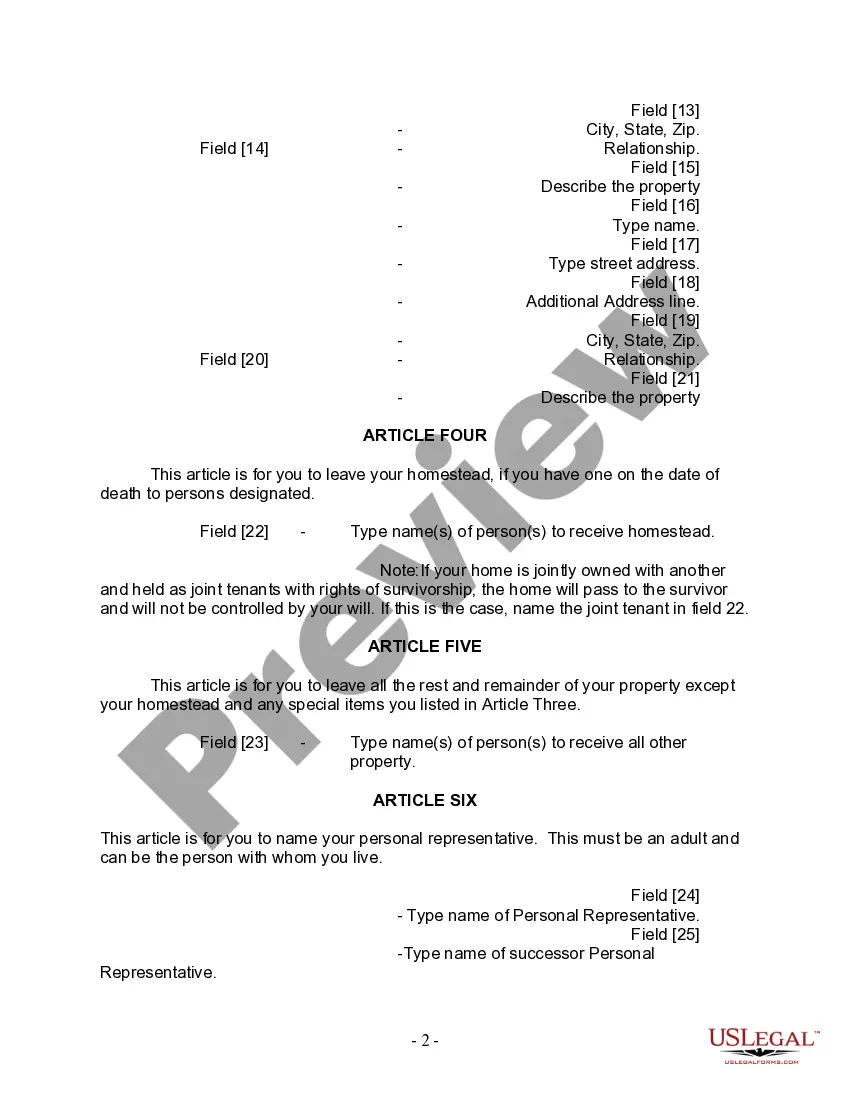
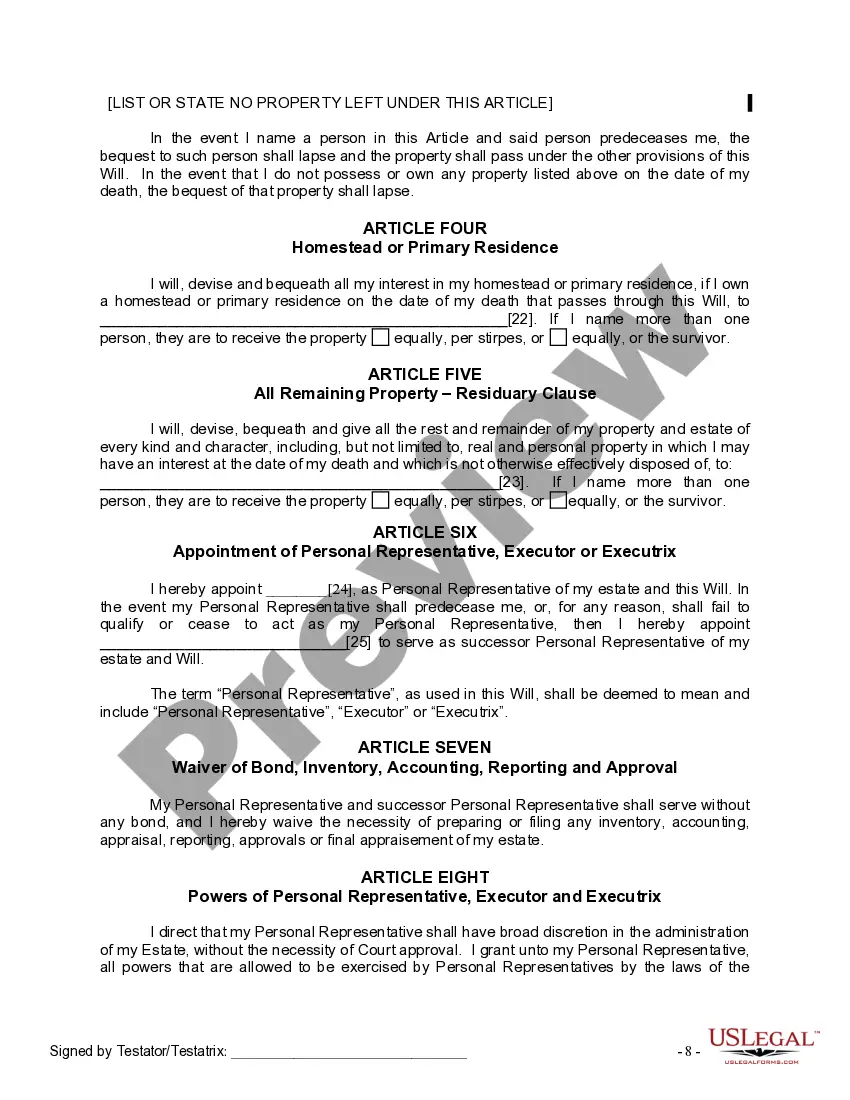
- Homestead designation: Allows for the transfer of the primary residence to specific individuals.
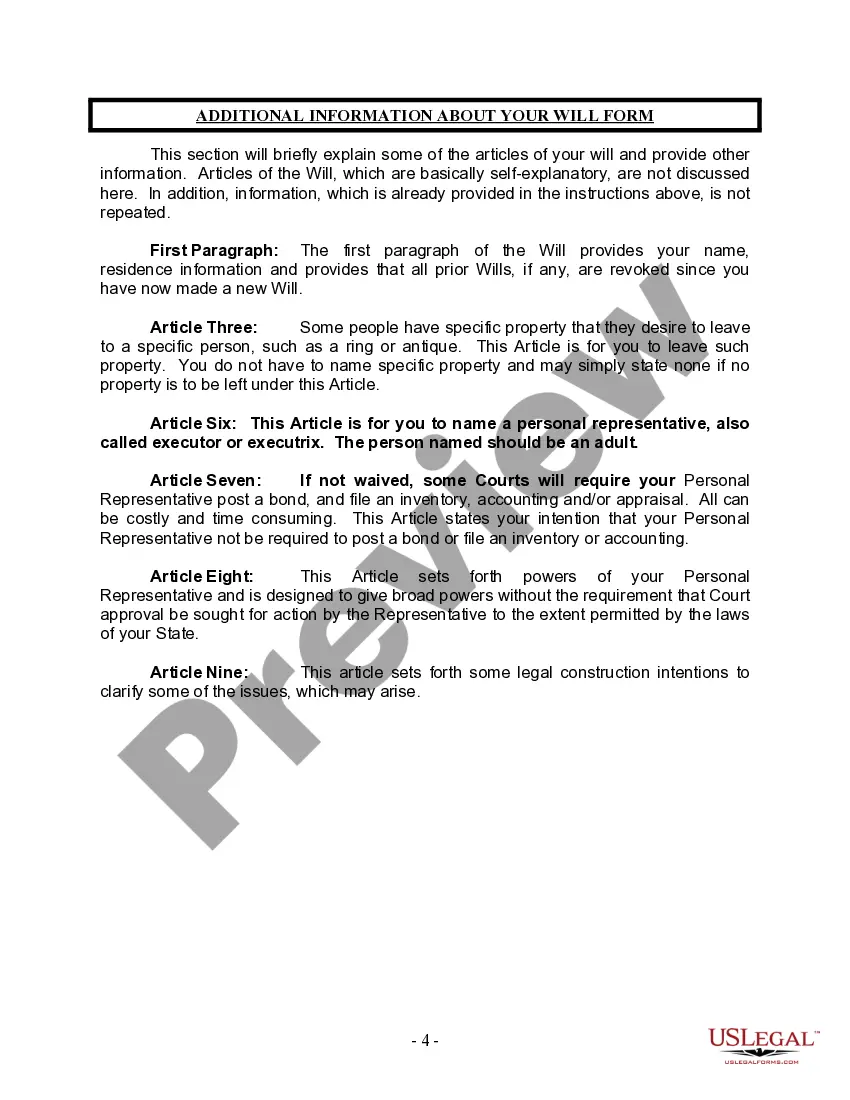
- Appointment of a personal representative: Names an executor who will manage the estate's affairs.
- Waiver of bond: Specifies that the personal representative may serve without posting a bond for their duties.
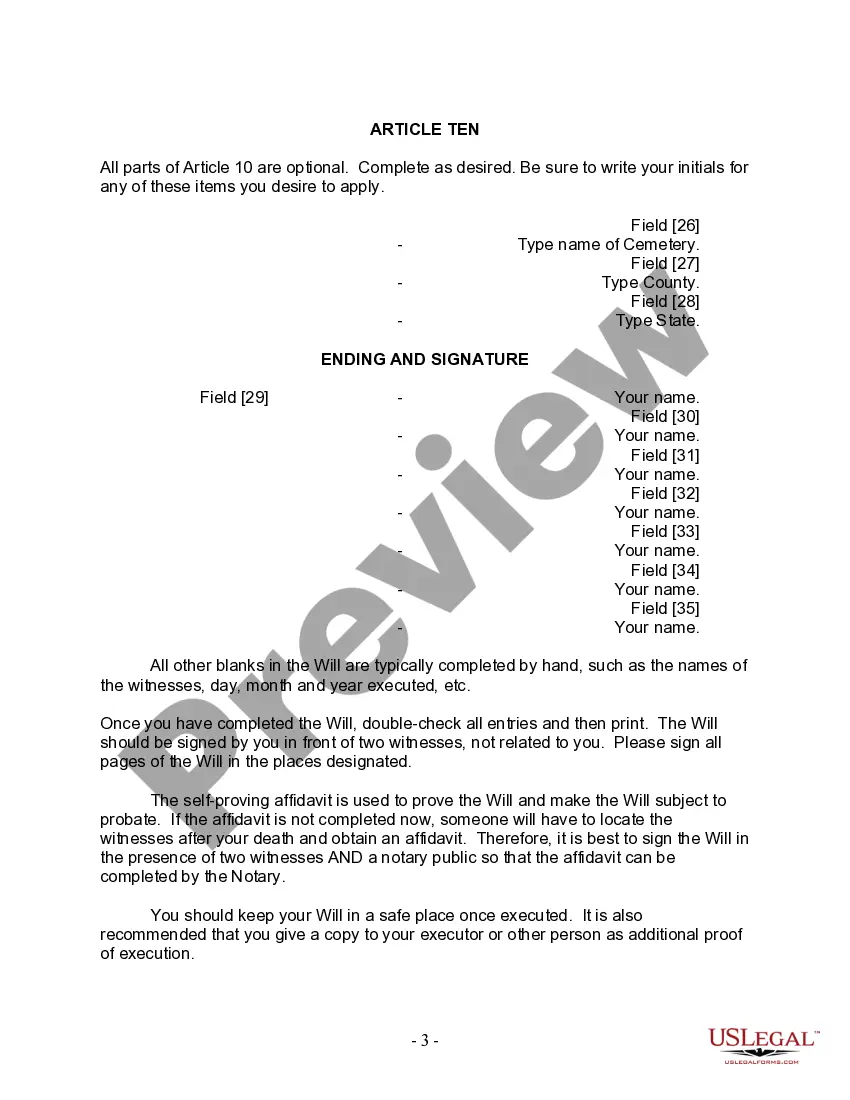
- Miscellaneous provisions: Includes optional clauses related to burial wishes and specific handling of debts.


When to use this form
This form should be used when a divorced individual without children wants to ensure their assets are distributed according to their wishes after their death. It is essential if you have specific beneficiaries in mind or unique property that you wish to grant to particular individuals. This form is also suitable for those looking to appoint an executor to manage their estate efficiently.
Intended users of this form
This form is intended for:
- Divorced individuals who have not remarried.
- Those with no dependents or children.
- Anyone wishing to specify how their property should be distributed after their death.
Completing this form step by step
- Enter your name and county of residence in the applicable fields.
- Designate beneficiaries for specific property and detailed descriptions of each bequest.
- Identify the personal representative you wish to appoint and any successors.
- Review and initial any optional clauses that you wish to include.
- Sign the will in the presence of two witnesses who are not related to you.
Notarization requirements for this form
Notarization is required for this form to take effect. Our online notarization service, powered by Notarize, lets you verify and sign documents remotely through an encrypted video session, available 24/7.
Get your form ready online
Our built-in tools help you complete, sign, share, and store your documents in one place.
Make edits, fill in missing information, and update formatting in US Legal Forms—just like you would in MS Word.
Download a copy, print it, send it by email, or mail it via USPS—whatever works best for your next step.
Sign and collect signatures with our SignNow integration. Send to multiple recipients, set reminders, and more. Go Premium to unlock E-Sign.
If this form requires notarization, complete it online through a secure video call—no need to meet a notary in person or wait for an appointment.
We protect your documents and personal data by following strict security and privacy standards.

Make edits, fill in missing information, and update formatting in US Legal Forms—just like you would in MS Word.

Download a copy, print it, send it by email, or mail it via USPS—whatever works best for your next step.

Sign and collect signatures with our SignNow integration. Send to multiple recipients, set reminders, and more. Go Premium to unlock E-Sign.

If this form requires notarization, complete it online through a secure video call—no need to meet a notary in person or wait for an appointment.

We protect your documents and personal data by following strict security and privacy standards.
Mistakes to watch out for
- Failing to have the will signed in front of two witnesses.
- Not properly identifying property or beneficiaries.
- Overlooking the need to keep the will in a safe place.
- Neglecting to notify the executor about their appointment.
Benefits of completing this form online
- Convenience of completing the form from home at your own pace.
- Editability allows you to easily make changes as your situation evolves.
- Access to sample language drafted by licensed attorneys ensures accuracy.
Looking for another form?
Form popularity
FAQ
Yes, and no. Yes, a spouse can be disinherited.The laws vary from state to state, but in a community property state like California, your spouse will have a legal right to one-half of the estate assets acquired during the marriage, otherwise known as community property.
An adult can make a valid will without notifying their wife or husband. Not telling a spouse would be unusual, but not illegal.
Community Property in California Inheritance LawsCalifornia is a community property state, which is a policy that only applies to spouses and domestic partners.The only property that doesn't become community property automatically are gifts and inheritances that one spouse receives.
You and your spouse may have one of the most common types of estate plans between married couples, which is a simple will leaving everything to each other. With this type of plan, you leave all of your assets outright to your surviving spouse. The kids or other beneficiaries only get something after you are both gone.
In most states, if you have a will while you are married and then end the marriage, the will is automatically revoked. It's possible to leave an inheritance to your ex, but you have to write a new will that specifically states you are doing so. Disinheriting your spouse.
If you are not family and were never named in a previous will, you have no standing to contest the will. If the testator (the deceased) discussed an inheritance with you previously, write down as much as you can remember. Using this, estimate the dollar value (whether money or possessions).
You can make your own will in Oklahoma, using Nolo's do-it-yourself will software or online will programs. However, you may want to consult a lawyer in some situations. For example, if you think that your will might be contested or if you want to disinherit your spouse, you should talk with an attorney.
Include personal identifying information. Include a statement about your age and mental status. Designate an executor. Decide who will take care of your children. Choose your beneficiaries. List your funeral details. Sign and date your Last Will and Testament.
A trust does not pass through the court for the probate process and cannot be contested in most cases. Revocable living trusts remain private, so if someone is not listed in it, they are not privy to the details of it.