Oklahoma Temporary Construction Easement Corporate or Partnership
What is this form?
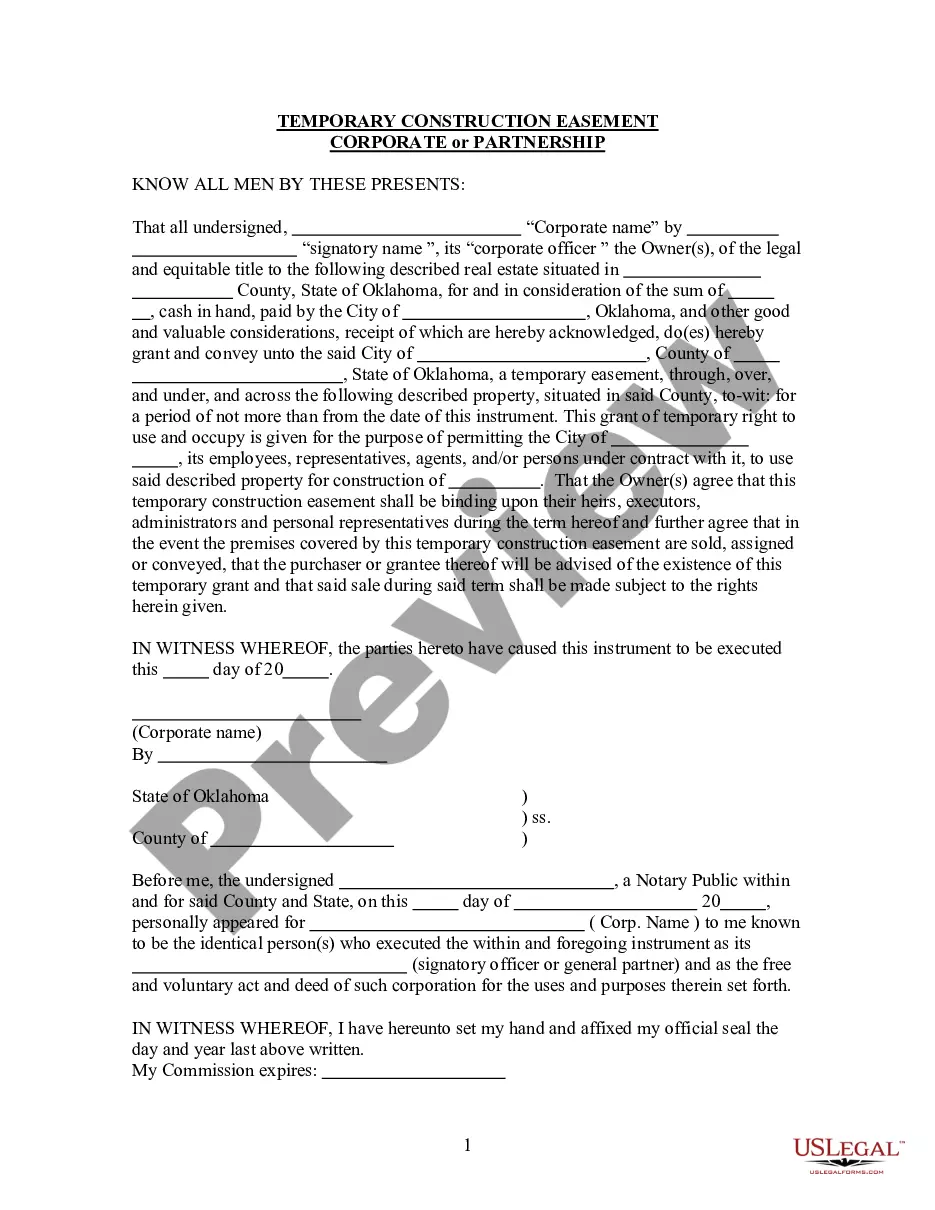
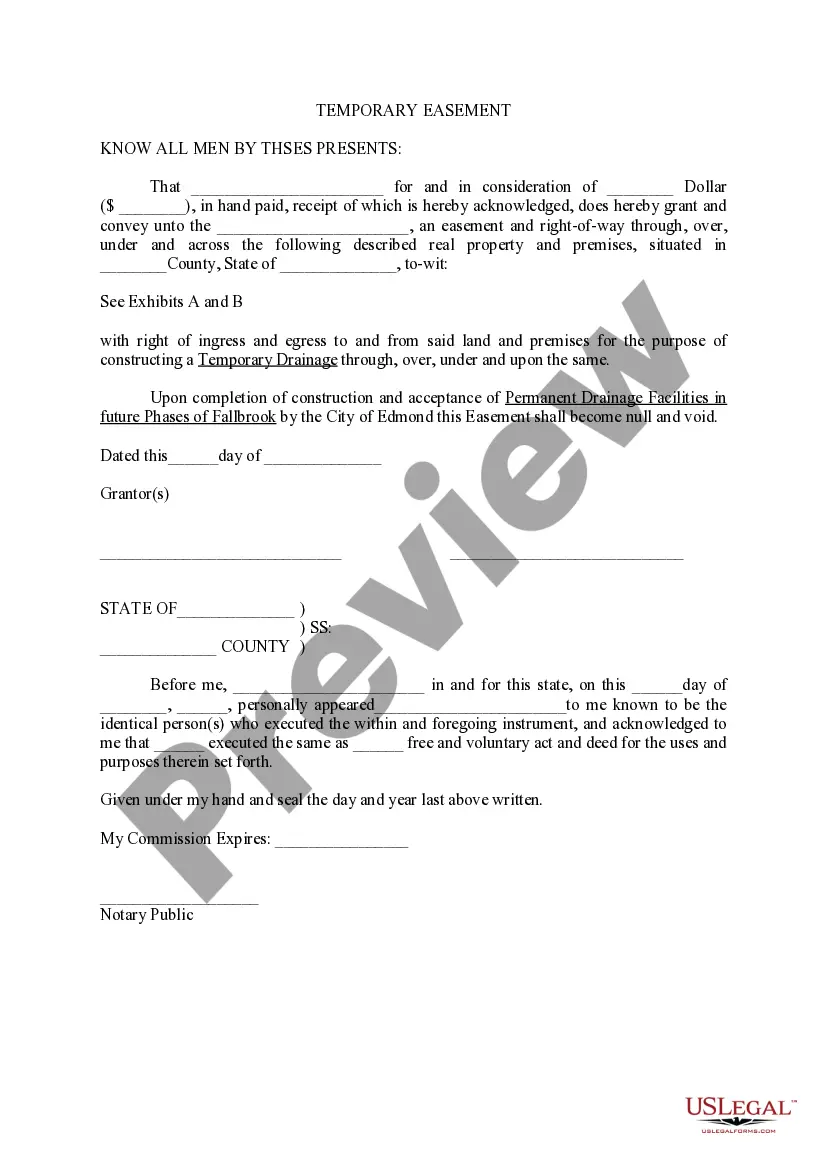
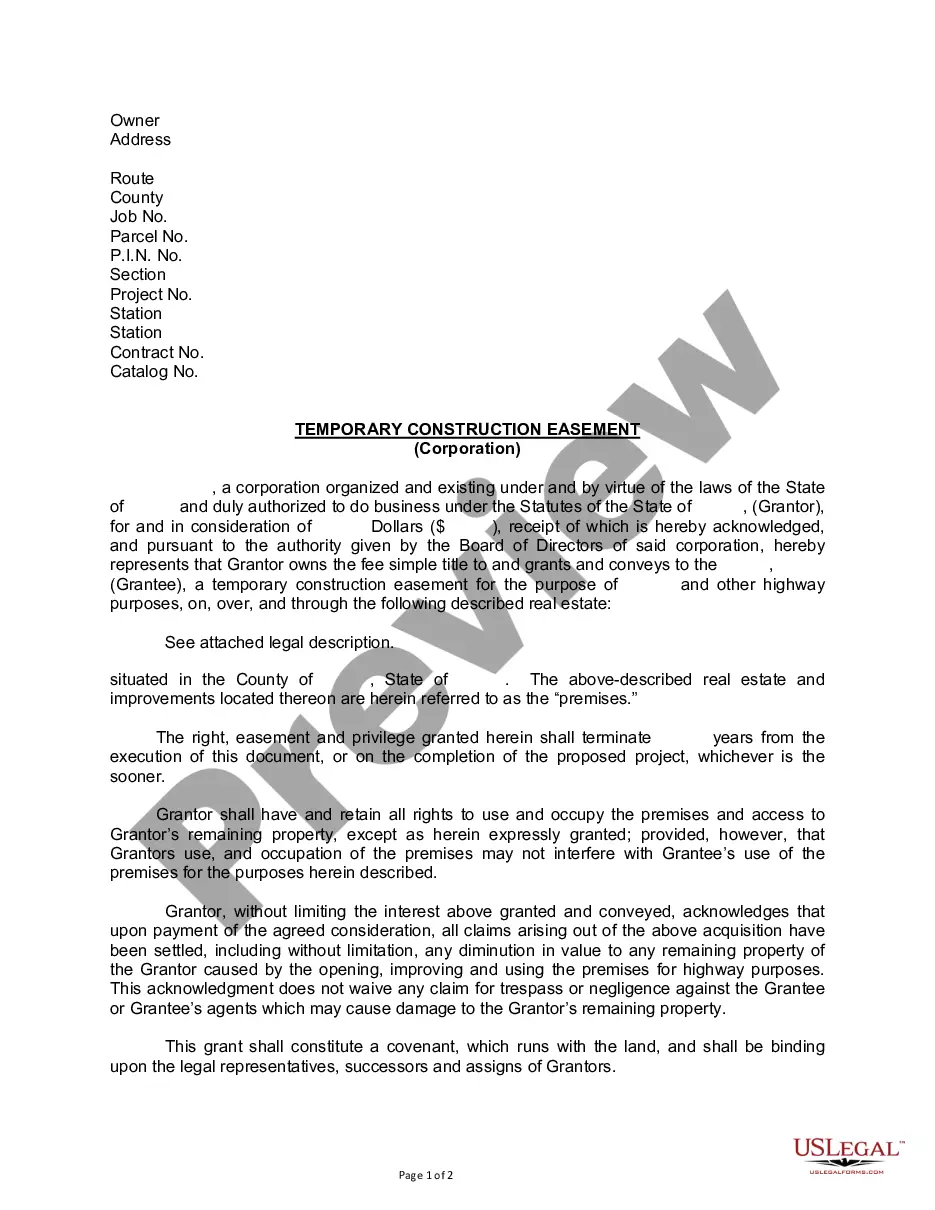
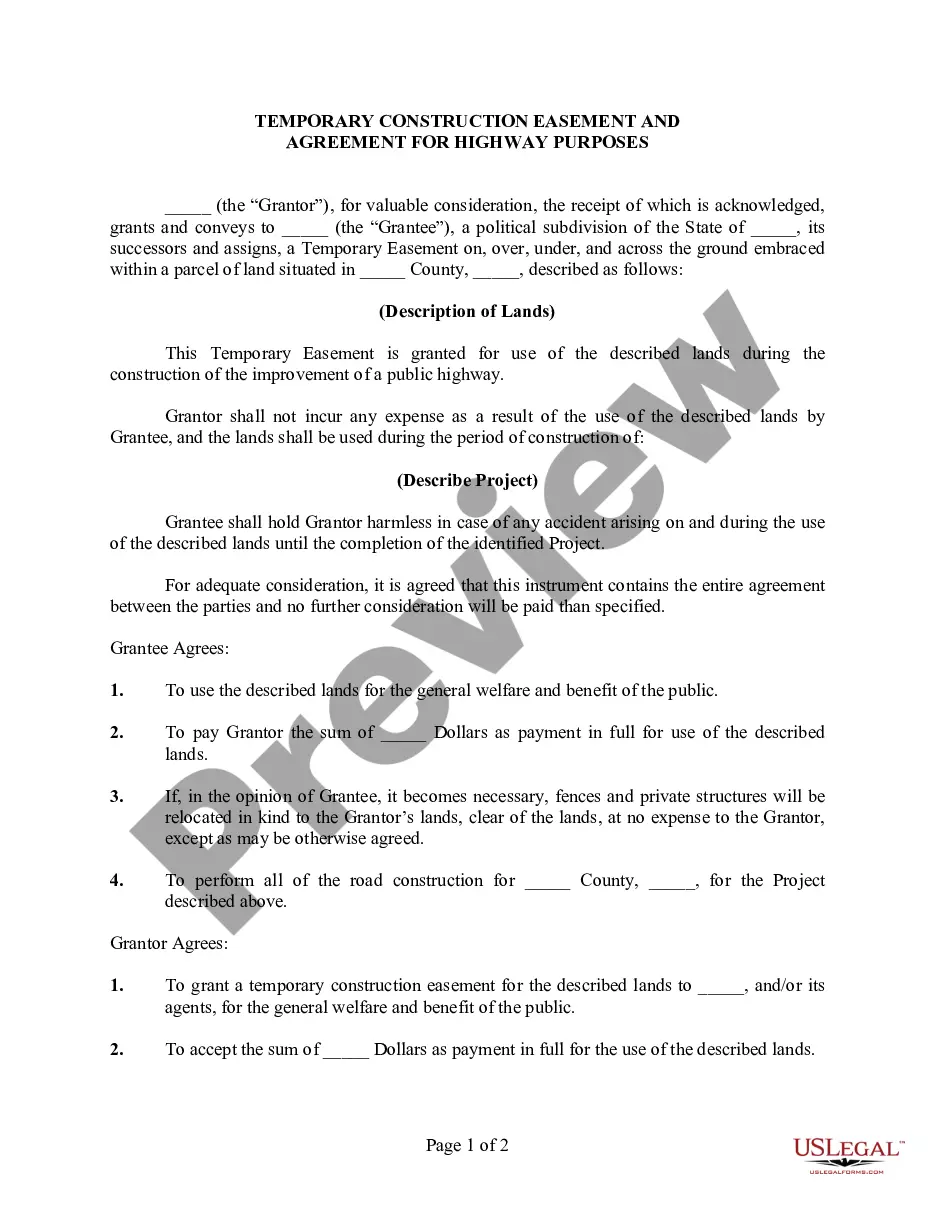
The Temporary Construction Easement form provides legal permission for a city or entity to access and use a designated area of an individual's property temporarily. This type of easement primarily differs from permanent easements, as it is limited in duration and specific in purpose related to construction activities. Users may find this form necessary when construction projects require access to private land for purposes such as roadway upgrades or utility installation.
Main sections of this form
- Identification of the property involved in the easement.
- Definition of the purpose of the easement, including specific construction activities allowed.
- Duration of the easement, stating the start and end dates.
- Conditions for the property owner regarding usage during the construction period.
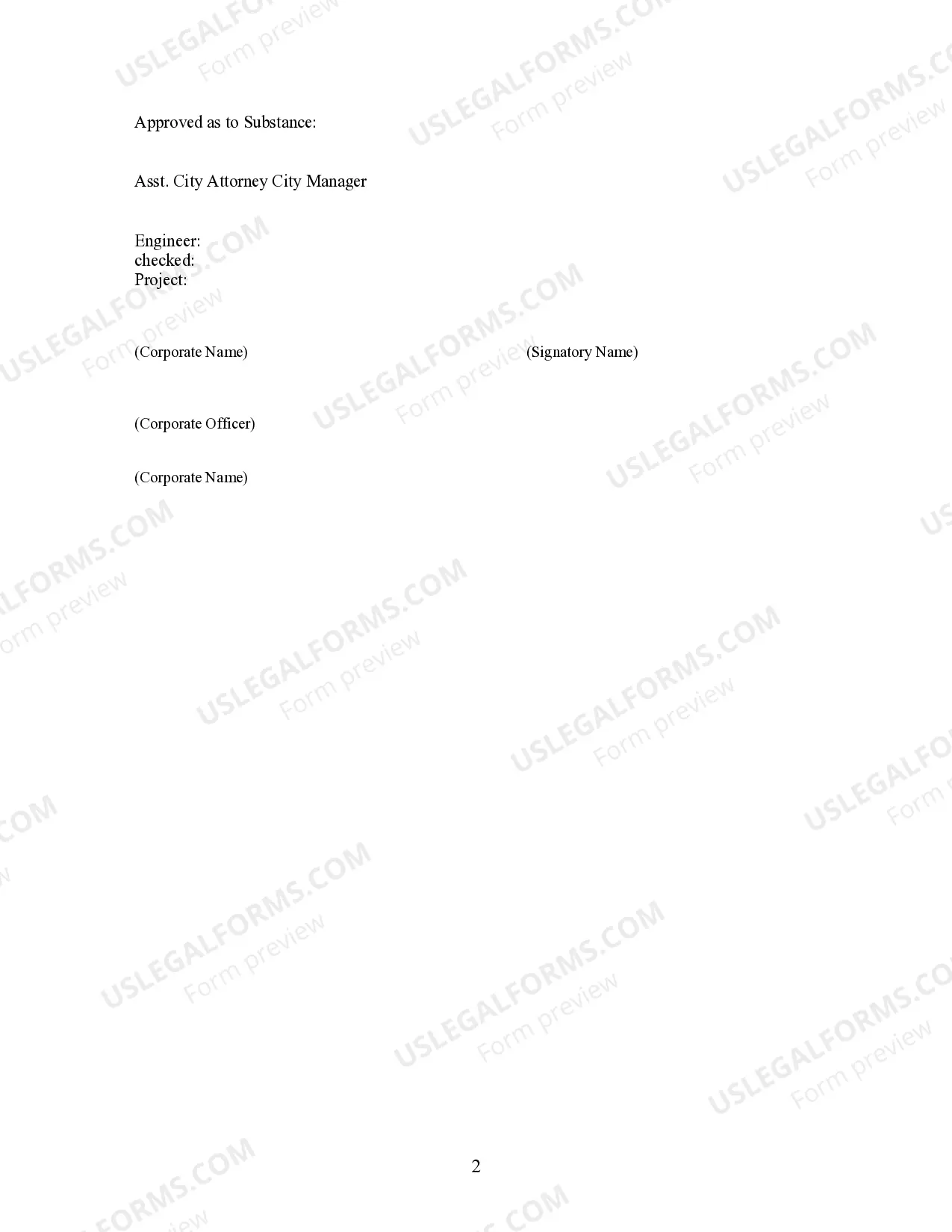
- Signatures of all parties involved, indicating consent.
When to use this form
This form is needed in practical scenarios such as when a city plans to undertake construction projects, like road improvements, where temporary access to neighboring private property is essential. It may also be relevant when utility companies must temporarily access land to install or repair infrastructure such as water mains or electrical lines.
Who needs this form
- Property owners who need to grant temporary access for construction purposes.
- Cities or construction companies looking to legally access private property for project completion.
- Utility companies requiring access to conduct necessary construction or repairs.
Steps to complete this form
- Identify the parties involved, including property owner and the entity requesting the easement.
- Specify the property by providing the legal description and address.
- Clearly define the purpose of the easement and outline any activities permitted.
- Enter the start and end dates for the temporary easement.
- Obtain signatures from all relevant parties to affirm agreement.
Is notarization required?
Notarization is required for this form to take effect. Our online notarization service, powered by Notarize, lets you verify and sign documents remotely through an encrypted video session, available 24/7.
Get your form ready online
Our built-in tools help you complete, sign, share, and store your documents in one place.
Make edits, fill in missing information, and update formatting in US Legal Forms—just like you would in MS Word.
Download a copy, print it, send it by email, or mail it via USPS—whatever works best for your next step.
Sign and collect signatures with our SignNow integration. Send to multiple recipients, set reminders, and more. Go Premium to unlock E-Sign.
If this form requires notarization, complete it online through a secure video call—no need to meet a notary in person or wait for an appointment.
We protect your documents and personal data by following strict security and privacy standards.

Make edits, fill in missing information, and update formatting in US Legal Forms—just like you would in MS Word.

Download a copy, print it, send it by email, or mail it via USPS—whatever works best for your next step.

Sign and collect signatures with our SignNow integration. Send to multiple recipients, set reminders, and more. Go Premium to unlock E-Sign.

If this form requires notarization, complete it online through a secure video call—no need to meet a notary in person or wait for an appointment.

We protect your documents and personal data by following strict security and privacy standards.
Common mistakes
- Failing to specify the exact duration of the easement.
- Not including all necessary parties' signatures.
- Incomplete legal description of the property.
- Neglecting to detail the specific construction activities allowed.
Why complete this form online
- Convenient access to legal forms that can be downloaded and completed at your pace.
- Editability allows for customization based on specific needs or circumstances.
- Reliability from forms drafted by licensed attorneys, ensuring legal validity.
Key takeaways
- The Temporary Construction Easement allows specific access to property for a limited time.
- It is essential to include all necessary information and signatures for validity.
- Always check state requirements prior to finalizing the form to ensure compliance.
Looking for another form?
Form popularity
FAQ
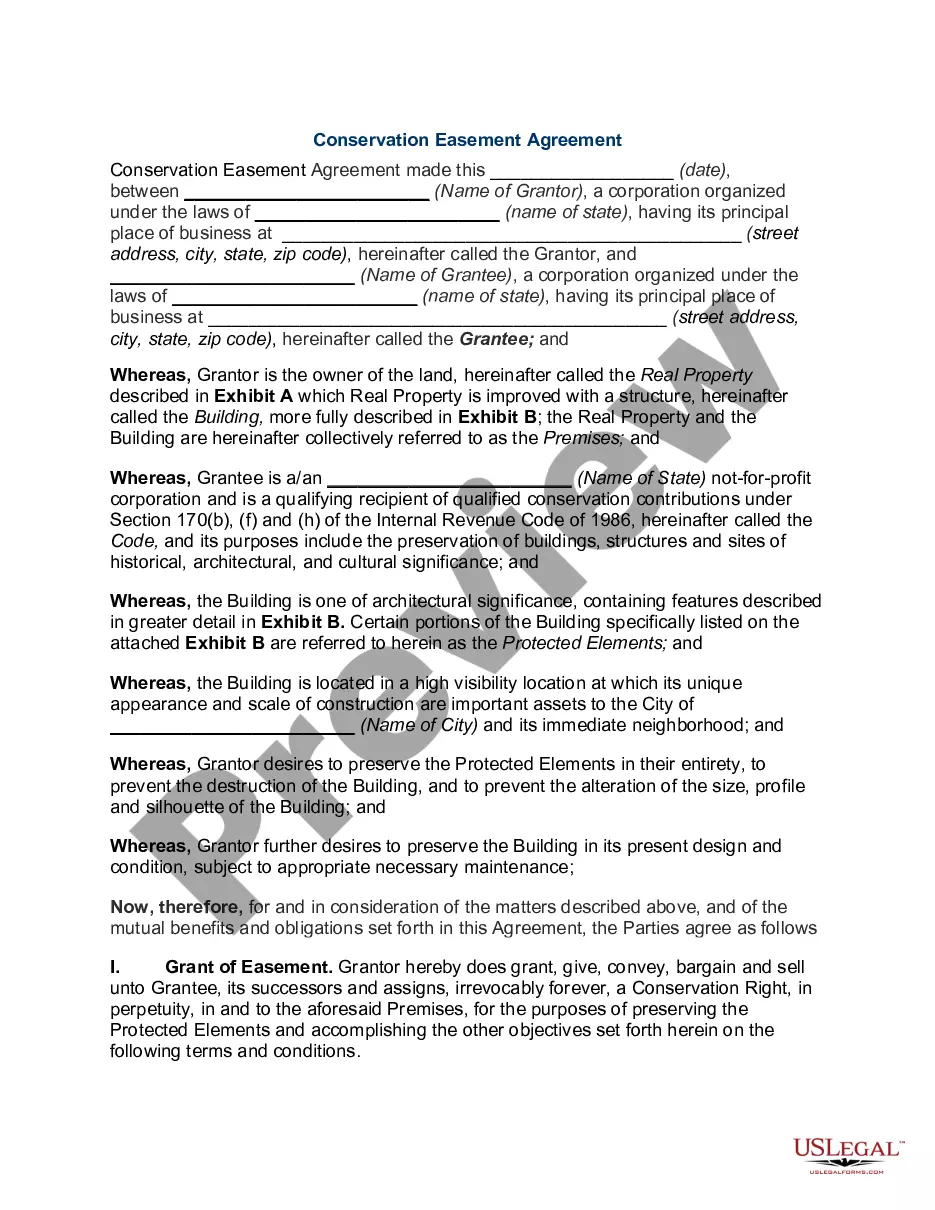
An easement is a limited right to use another person's land for a stated purpose. Examples of easements include the use of private roads and paths, or the use of a landowner's property to lay railroad tracks or electrical wires.
There must be a dominant and a servient tenement; The easement must accommodate the dominant tenement, that is, be connected with its enjoyment and for its benefit; The dominant and servient owners must be different persons; The right claimed must be capable of forming the subject-matter of a grant.
Types of Easements An easement may be classified as either an easement appurtenant or an easement in gross. Easement Appurtenant. An easement appurtenant is an easement that benefits one parcel of land, known as the dominant tenement, to the detriment of another parcel of land, known as the servient tenement.
¶10 An easement by prescription is an easement obtained by adverse possession for the prescriptive period, which in Oklahoma is fifteen years. Permissive use of a way over the land of another will not ripen into an easement, regardless of the number of years of use.
There are four types of easement Section. 5 of Easement Act deals with the types of easement. It provides that the easements are either continuous or discontinuous ,apparent or non apparent. A continuous easement is one whose enjoyment is, or may be, continual without the act of man.
Prescription: Oklahoma allows a third, less common type of implied easement known as an easement by prescription. In order for a court to approve or recognize an easement by prescription, the party using the land they do not own has to show they consistently used the land to their benefit for at least 15 years.
Benefits the owner of adjacent land. The easement is thus appurtenant to the holder's land. The benefited land is called the dominant tenementThe land that benefits from an easement., and the burdened landthat is, the land subject to the easementis called the servient tenement.
An easement would give you, and any subsequent buyers, the right to have your well on the neighbor's property and to access the property in order to maintain the well. An easement can be created without the need to involve surveyors and the county.
Express Grant by Instrument. An express grant by written instrument is the most common source of an easement. Implied. The owner of a large tract of land splits up the land with one or more parcels that do not abut a public highway or road. Necessity. Dedication.