Oklahoma Mineral Deed - Trust to Three Individuals
Overview of this form
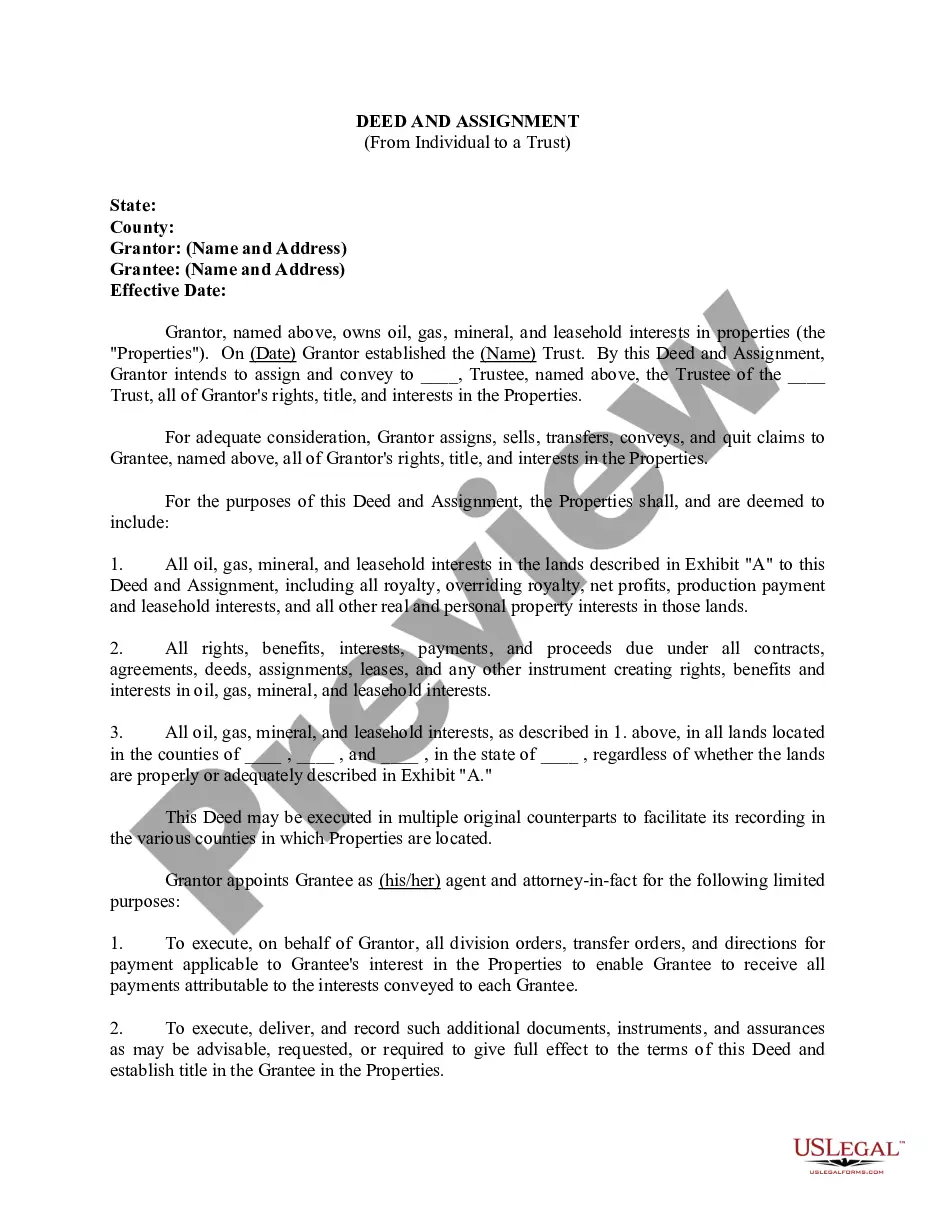
The Mineral Deed - Trust to Three Individuals is a legal document that allows a trust (the Grantor) to transfer mineral rights or interests to three individuals (the Grantees). This form ensures that the Grantees hold the property either as joint tenants with the right of survivorship or as tenants in common. It is essential for clarifying the ownership rights to mineral properties and complies with state statutory laws.
Main sections of this form
- Grantor information: Details about the trust acting as the Grantor.
- Grantee information: Names and details of the three individuals receiving the mineral interests.
- Property description: A precise legal description of the mineral rights being transferred.
- Joint tenancy or tenancy in common declaration: Specifies ownership type for the Grantees.
- Signature block for the Trustee: Where the Trustee will sign and date the deed.


When this form is needed
This form should be used when a trust needs to convey mineral rights or interests to three individuals. Situations may include the distribution of assets to beneficiaries or when a trust is dissolving and needs to transfer its mineral holdings. It is particularly relevant in estate planning or when individuals wish to clarify ownership and ensure rights are legally recognized.
Who can use this document
- Trustees managing a trust that owns mineral interests.
- Beneficiaries of a trust who are set to receive mineral rights.
- Individuals involved in estate planning involving mineral properties.
- Parties seeking to clarify ownership of mineral rights among multiple individuals.
How to complete this form
- Identify the parties involved: Fill in the details of the trust (Grantor) and the three individuals (Grantees).
- Specify the property: Provide a detailed legal description of the mineral rights being conveyed.
- Decide on the method of ownership: Indicate whether the Grantees will hold the property as joint tenants or tenants in common.
- Enter dates and signatures: The Trustee must sign and date the form to validate the transfer of rights.
Does this document require notarization?
This form does not typically require notarization unless specified by local law. Be sure to check the specific requirements for your jurisdiction to ensure compliance.
Get your form ready online
Our built-in tools help you complete, sign, share, and store your documents in one place.
Make edits, fill in missing information, and update formatting in US Legal Forms—just like you would in MS Word.
Download a copy, print it, send it by email, or mail it via USPS—whatever works best for your next step.
Sign and collect signatures with our SignNow integration. Send to multiple recipients, set reminders, and more. Go Premium to unlock E-Sign.
If this form requires notarization, complete it online through a secure video call—no need to meet a notary in person or wait for an appointment.
We protect your documents and personal data by following strict security and privacy standards.

Make edits, fill in missing information, and update formatting in US Legal Forms—just like you would in MS Word.

Download a copy, print it, send it by email, or mail it via USPS—whatever works best for your next step.

Sign and collect signatures with our SignNow integration. Send to multiple recipients, set reminders, and more. Go Premium to unlock E-Sign.

If this form requires notarization, complete it online through a secure video call—no need to meet a notary in person or wait for an appointment.

We protect your documents and personal data by following strict security and privacy standards.
Typical mistakes to avoid
- Failing to include a complete legal description of the mineral rights.
- Not specifying the correct method of ownership (joint tenancy vs. tenancy in common).
- Omitting signatures or dates required from the Trustee.
- Using outdated forms that may not comply with current state laws.
Benefits of using this form online
- Convenience: You can download and complete the form from anywhere at any time.
- Editability: Fill in form fields digitally to ensure accuracy before printing.
- Compliance: Forms are drafted by licensed attorneys to ensure legal validity.
Looking for another form?

Form popularity
FAQ
Once you obtain a transfer-on-death deed, complete the form to name a beneficiary. The transfer deed will ask you to name the person(s) you wish to inherit your property. You can name multiple people as the beneficiary, as well as an organization. List the beneficiary's complete name and avoid titles.
After a divorce, mineral rights can be transferred by submitting the divorce decree and conveyances to the county (where the minerals are located) for recording. They usually go to the same agency that records titles and property deeds. The county will return the recorded original documents to the new owner.
Call the county where the minerals are located and ask how to transfer mineral ownership after death. They will probably advise you to submit a copy of the death certificate, probate documents (if any), and a copy of the will (or affidavit of heirship if there is no will).
Oklahoma law allows for certain mineral interests to be transferred by filing an affidavit in the county real estate records.
A: Mineral rights are the legal rights to the minerals in a property. Whoever owns a property's mineral rights has full legal rights to mine for and profit from those minerals.
A mineral owner's rights typically include the right to use the surface of the land to access and mine the minerals owned. This might mean the mineral owner has the right to drill an oil or natural gas well, or excavate a mine on your property.
If you want to sell the mineral rights to another person, you can transfer them by deed. You will need to create a mineral deed and have it recorded. You should check with the county Recorder of Deeds in the county where the land is located and ask if a printed mineral deed form is available to use.
A deed that names the seller/donor and the purchaser/donee. It states and describes the rights being sold or given. Filing of the notarized conveyance in the county government office which is generally the county clerk's office.