Oklahoma Warranty Deed to Child Reserving a Life Estate in the Parents
Overview of this form
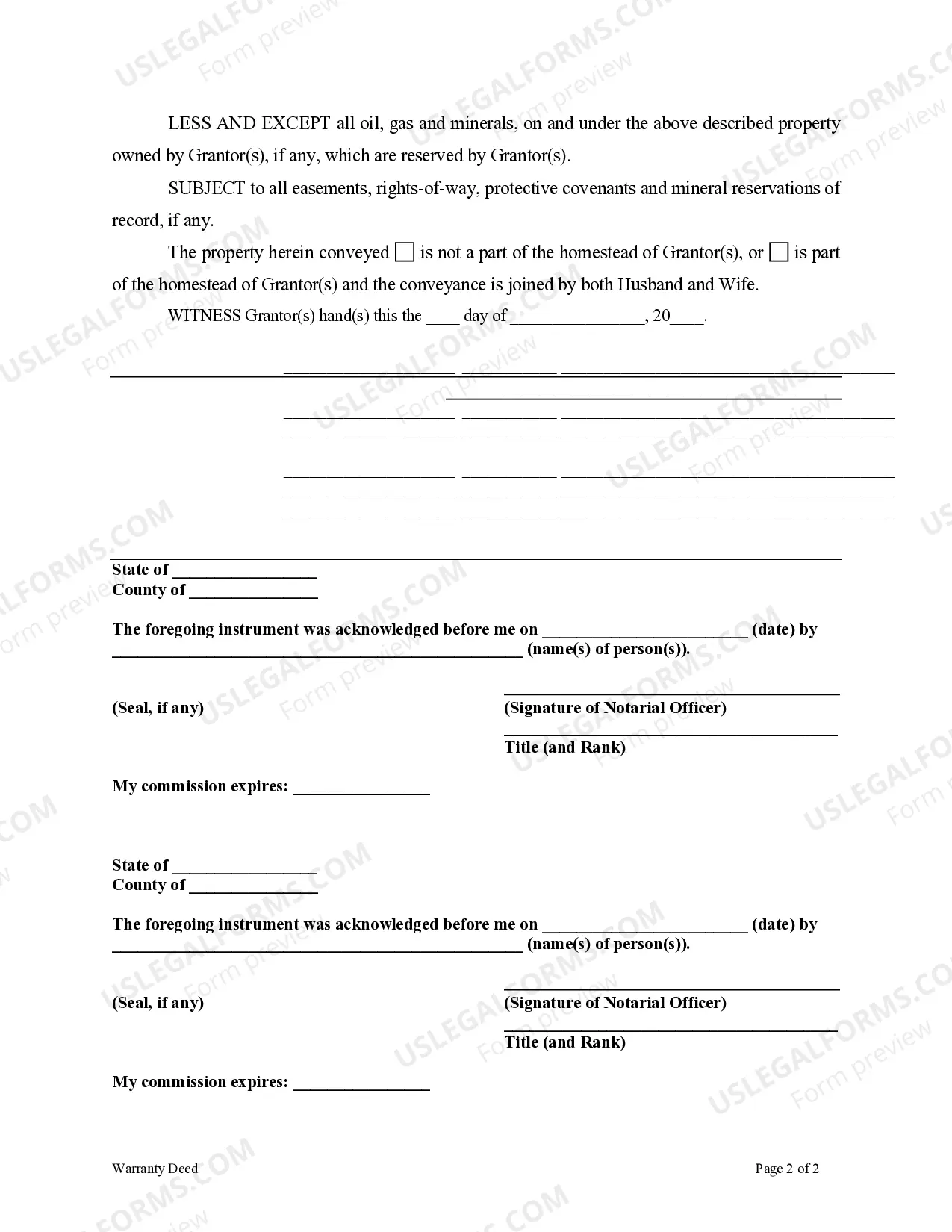
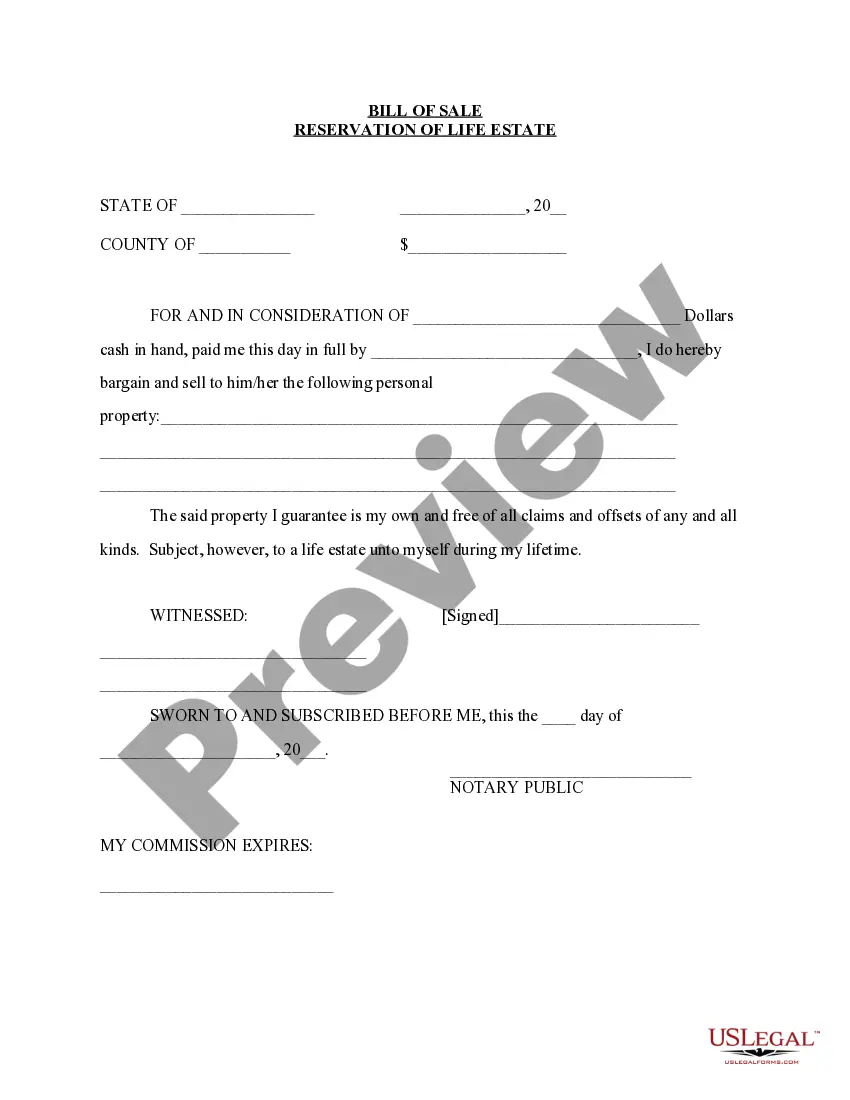
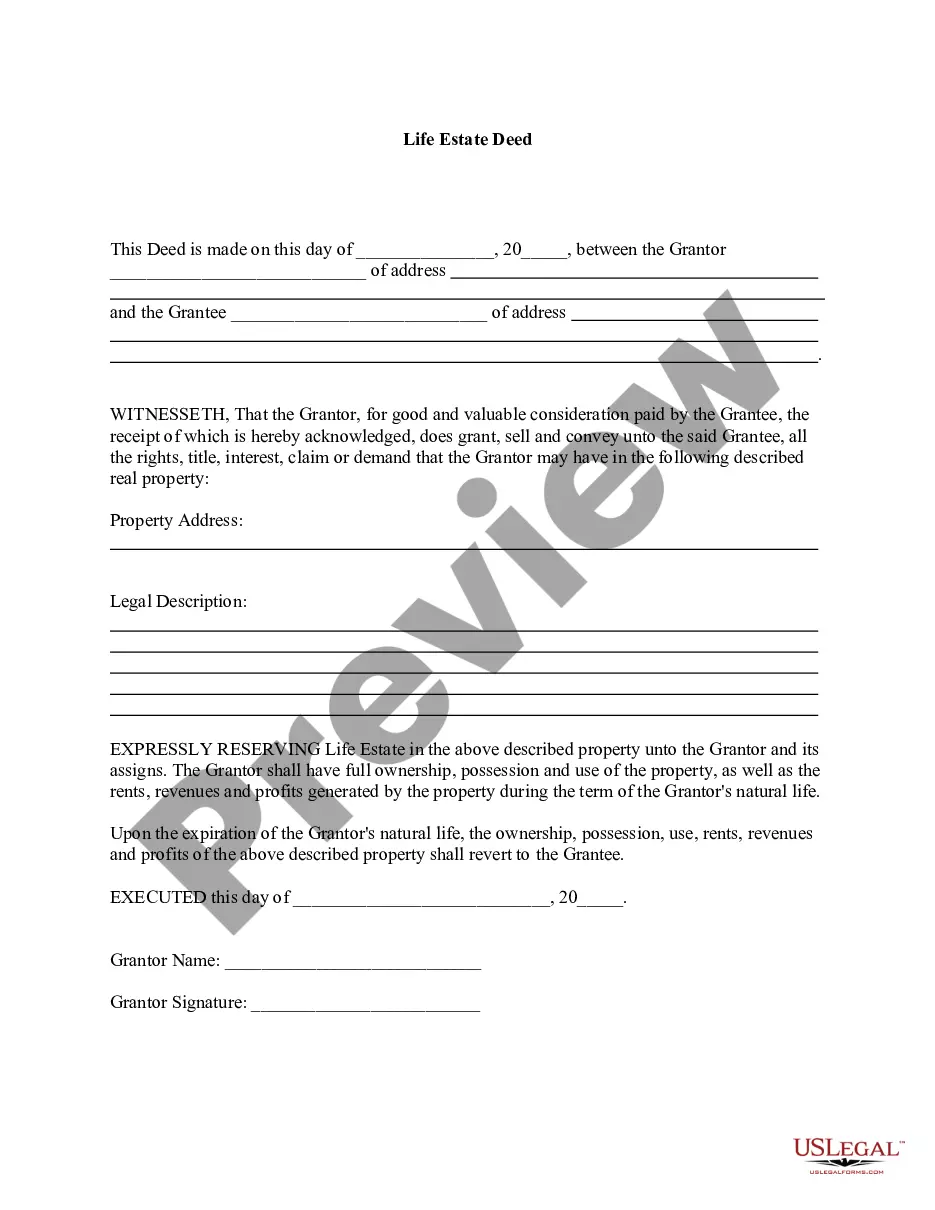
This Warranty Deed to Child Reserving a Life Estate in the Parents is a legal document that allows parents to transfer ownership of property to their child while retaining the right to live on and use the property for the rest of their lives. This form is specifically designed for families, ensuring that the parents can keep their home and pass ownership smoothly to their child upon their death. It differs from other forms of deed as it includes a reservation of life estate, which provides specific rights to the parents.
Main sections of this form
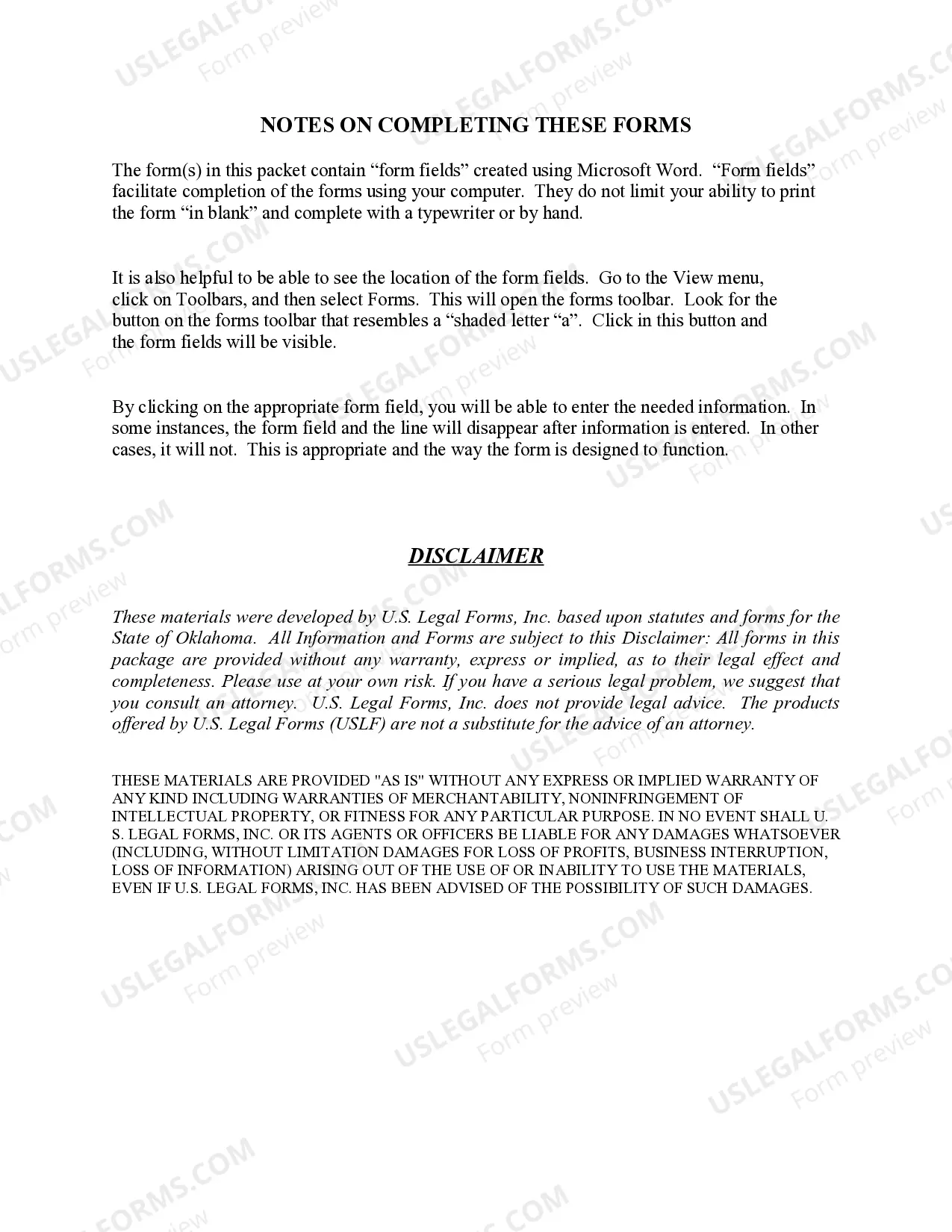
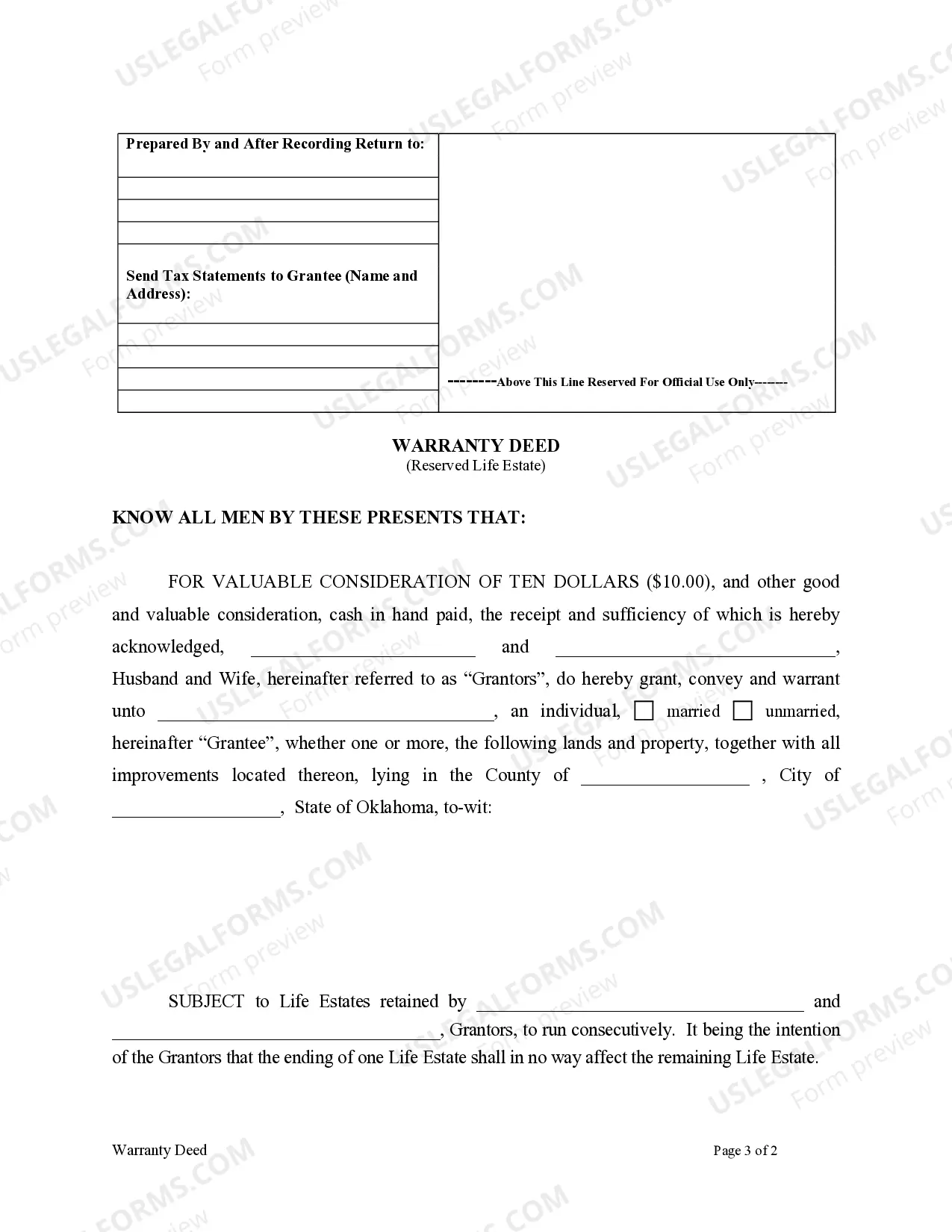
- Grantor and Grantee Information: Includes names and addresses of the parents (grantors) and the child (grantee).
- Property Description: Specifies the property being transferred with complete addresses and legal descriptions.
- Life Estate Reservation: Clearly states that the parents reserve the right to live in the property for their lifetime.
- Signatures: Requires the signatures of the grantors and the notary public for validation.
- Recordation Instructions: Guidance on how to file the deed with the appropriate county office.




Situations where this form applies
This form is beneficial in scenarios where parents wish to ensure that their property automatically transfers to their child upon their passing while retaining the right to use the property during their lifetime. This can be a strategic estate planning decision to avoid probate and clarify intentions among family members about property ownership.
Who can use this document
- Parents who want to transfer their property to their children while retaining living rights.
- Families looking to simplify estate planning and avoid future disputes about property ownership.
- Individuals who are estate planning and want to ensure a smooth transfer of property after death.
How to prepare this document
- Identify the parties involved by entering the names and addresses of the parents and the child.
- Specify the property by including its address and legal description in the designated section.
- Indicate the date of the transfer by filling in the day and year the document will be executed.
- Both parents must sign the form, printing their names next to their signatures.
- Have the form notarized by a certified notary public to ensure its legal validity.
Does this document require notarization?
This form needs to be notarized to ensure legal validity. US Legal Forms provides secure online notarization powered by Notarize, allowing you to complete the process through a verified video call, available anytime.
Get your form ready online
Our built-in tools help you complete, sign, share, and store your documents in one place.
Make edits, fill in missing information, and update formatting in US Legal Forms—just like you would in MS Word.
Download a copy, print it, send it by email, or mail it via USPS—whatever works best for your next step.
Sign and collect signatures with our SignNow integration. Send to multiple recipients, set reminders, and more. Go Premium to unlock E-Sign.
If this form requires notarization, complete it online through a secure video call—no need to meet a notary in person or wait for an appointment.
We protect your documents and personal data by following strict security and privacy standards.

Make edits, fill in missing information, and update formatting in US Legal Forms—just like you would in MS Word.

Download a copy, print it, send it by email, or mail it via USPS—whatever works best for your next step.

Sign and collect signatures with our SignNow integration. Send to multiple recipients, set reminders, and more. Go Premium to unlock E-Sign.

If this form requires notarization, complete it online through a secure video call—no need to meet a notary in person or wait for an appointment.

We protect your documents and personal data by following strict security and privacy standards.
Common mistakes
- Failing to include a complete legal description of the property.
- Not obtaining notarization, which is essential for the validity of the deed.
- Leaving out any signature or failing to properly print names beside signatures.
Benefits of using this form online
- Convenience: Complete the form from the comfort of your home at your own pace.
- Editability: Easily make revisions if needed before finalizing the document.
- Reliability: Access state-specific legal forms prepared by experienced attorneys.
Legal use & context
- This form creates a legally binding transfer that maintains the parents' rights to the property for their lifetime.
- Individuals should ensure the deed is properly recorded with the appropriate county recorder's office to protect their interests.
- Consulting with a legal professional is advisable to fully understand implications and ensure compliance with local regulations.
Summary of main points
- The Warranty Deed to Child Reserving a Life Estate in the Parents allows for a smooth transfer of property to children while retaining rights for parents.
- Ensure all sections are completed accurately and notarized for legal validity.
- Understand state-specific requirements and consider consulting a legal professional for comprehensive estate planning.
Looking for another form?
Form popularity
FAQ
A life estate deed permits the property owner to have full use of their property until their death, at which point the ownership of the property is automatically transferred to the beneficiary.
A person owns property in a life estate only throughout their lifetime. Beneficiaries cannot sell property in a life estate before the beneficiary's death. One benefit of a life estate is that property can pass when the life tenant dies without being part of the tenant's estate.
A life estate deed allows you to transfer property while reserving an interest during your lifetime or during the lifetime of someone else. Once the person who holds the life estate passes away, the Grantee fully owns the property.
This life estate deed is a document that transfers ownership of real property, while reserving access and use of the property for the duration of the grantor's life. It allows the original owner (grantor) to remain on the premises with full access to and benefits from the property.
The two types of life estates are the conventional and the legal life estate. the grantee, the life tenant. Following the termination of the estate, rights pass to a remainderman or revert to the previous owner.
Reservation of the present interest allows the owner to retain ownership for a period of time measured by the life of one or more individuals, by a term of years, or by a combination of the two.
A warranty deed guarantees that: The grantor is the rightful owner of the property and has the legal right to transfer the title.The title would withstand third-party claims to ownership of the property. The grantor will do anything to ensure the grantee's title to the property.
This life estate deed is a document that transfers ownership of real property, while reserving access and use of the property for the duration of the grantor's life. It allows the original owner (grantor) to remain on the premises with full access to and benefits from the property.