Oklahoma Renunciation And Disclaimer of Property received by Intestate Succession
What this document covers
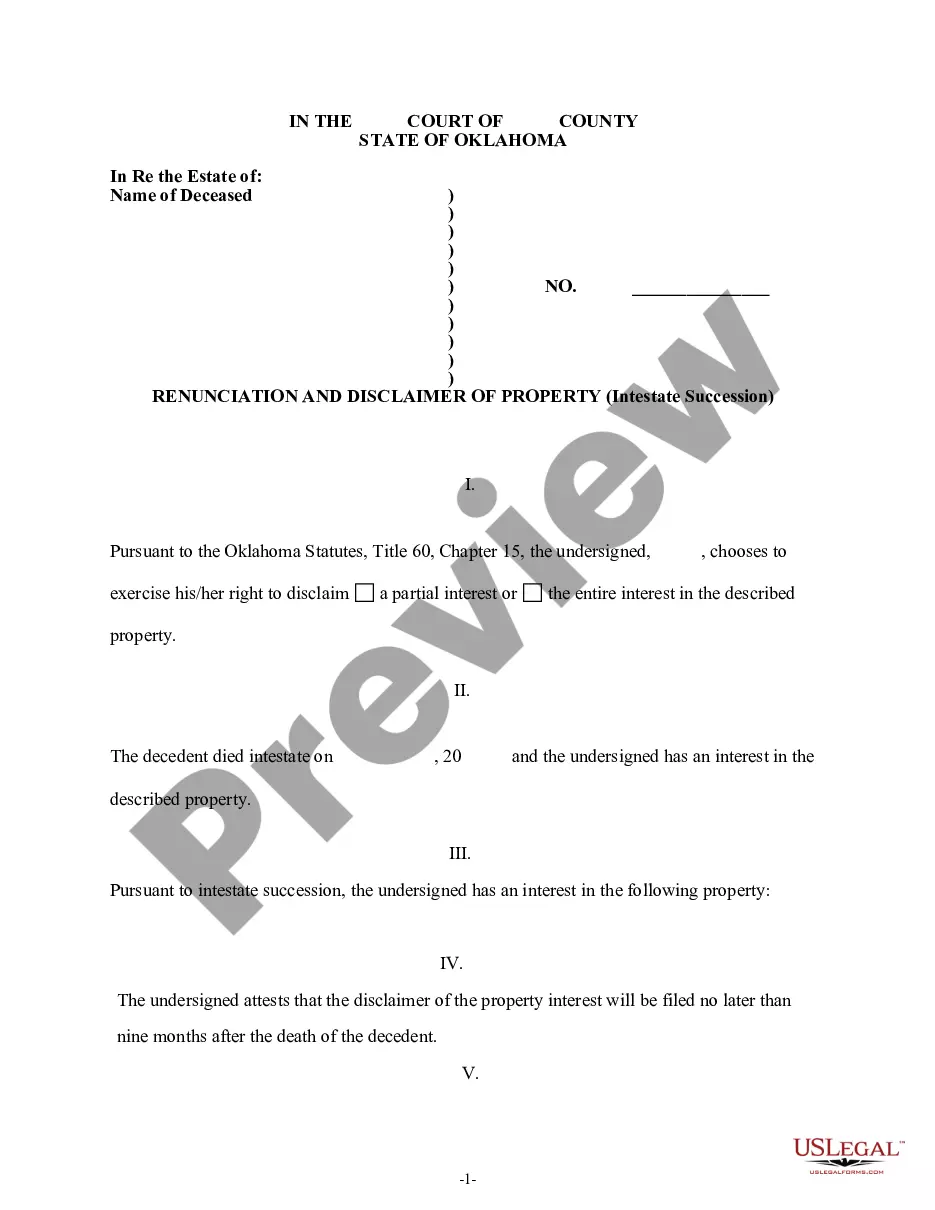
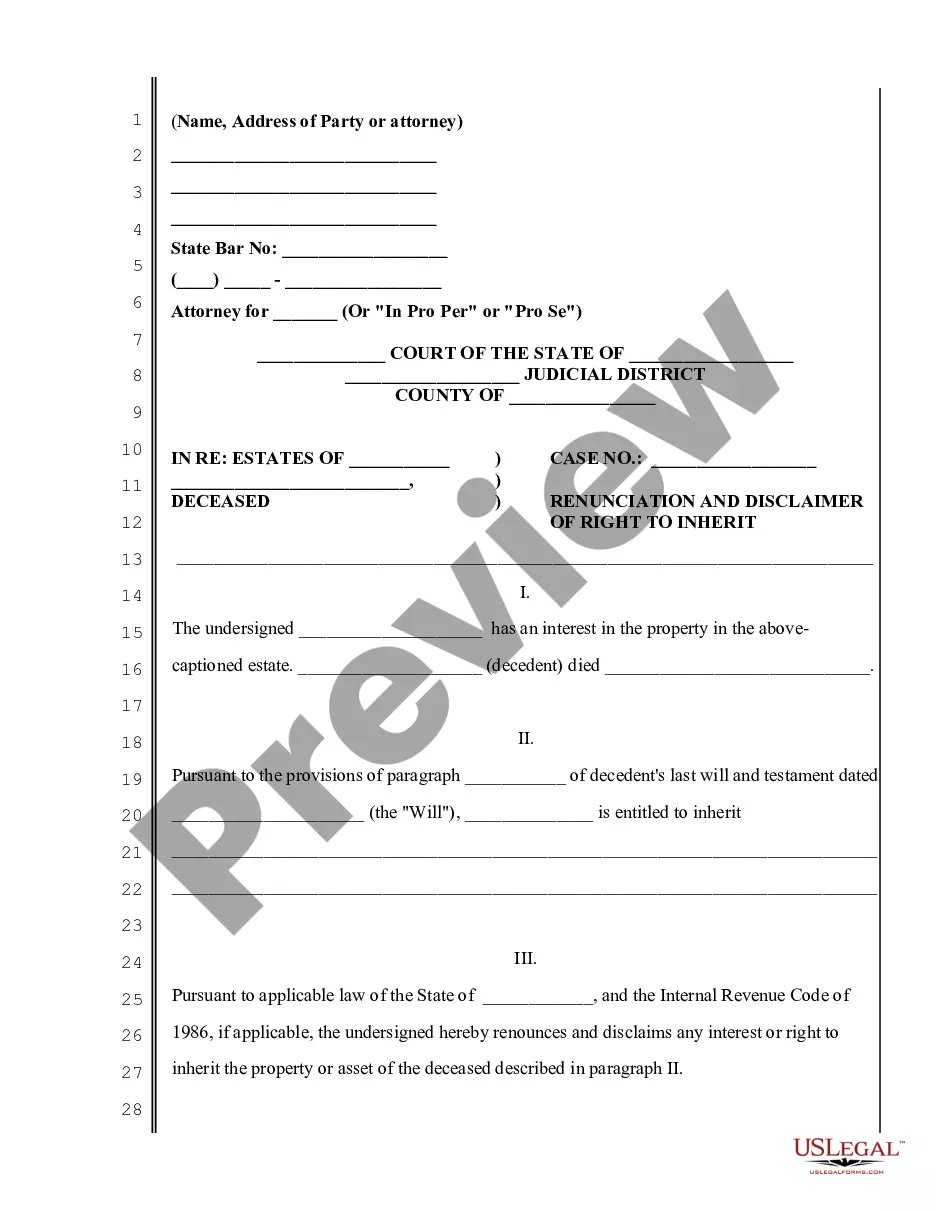
The Renunciation and Disclaimer of Property received by Intestate Succession is a legal document used when a beneficiary chooses to refuse their inheritance from a decedent who died without a will (intestate). This form allows the beneficiary to formally disclaim all or part of their interest in the property, ensuring the property passes to other heirs according to state law. It serves as an important tool to manage inheritance and estate distribution effectively.
Form components explained
- Identification of the decedent and the beneficiary.
- Details of the property being disclaimed.
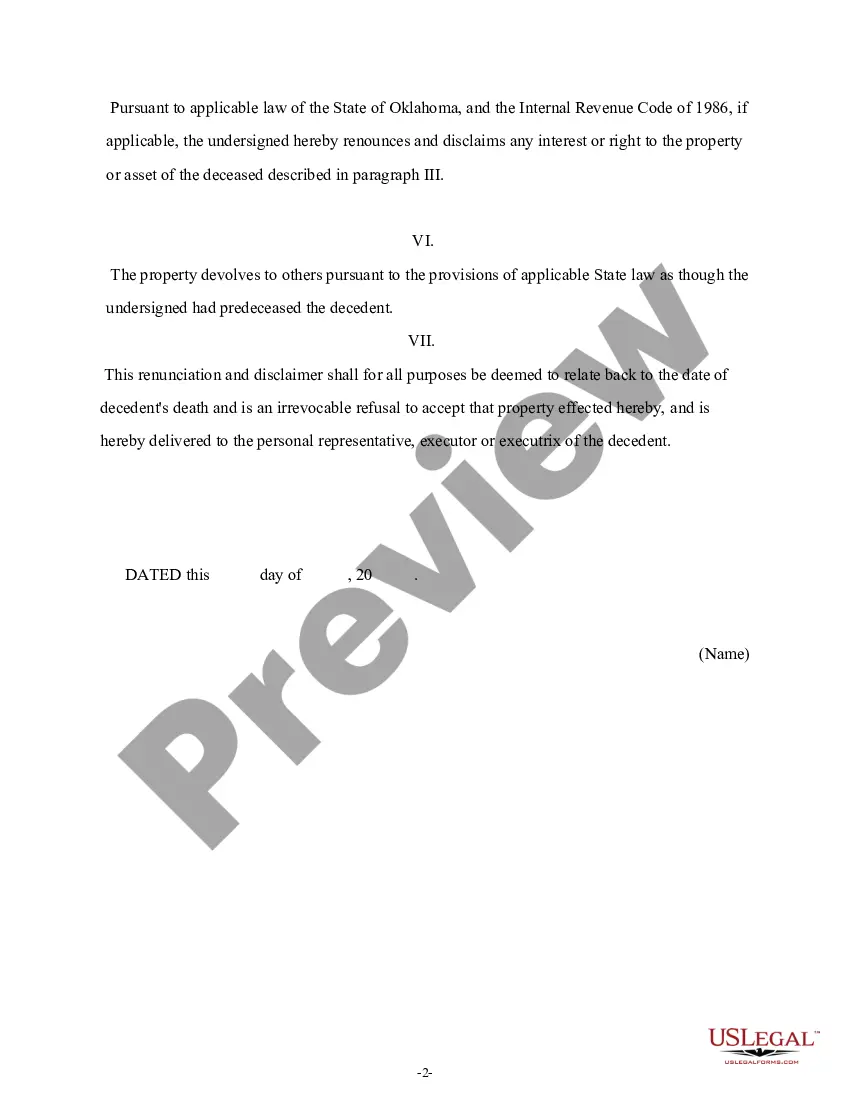
- A statement of irrevocable refusal to accept the property.
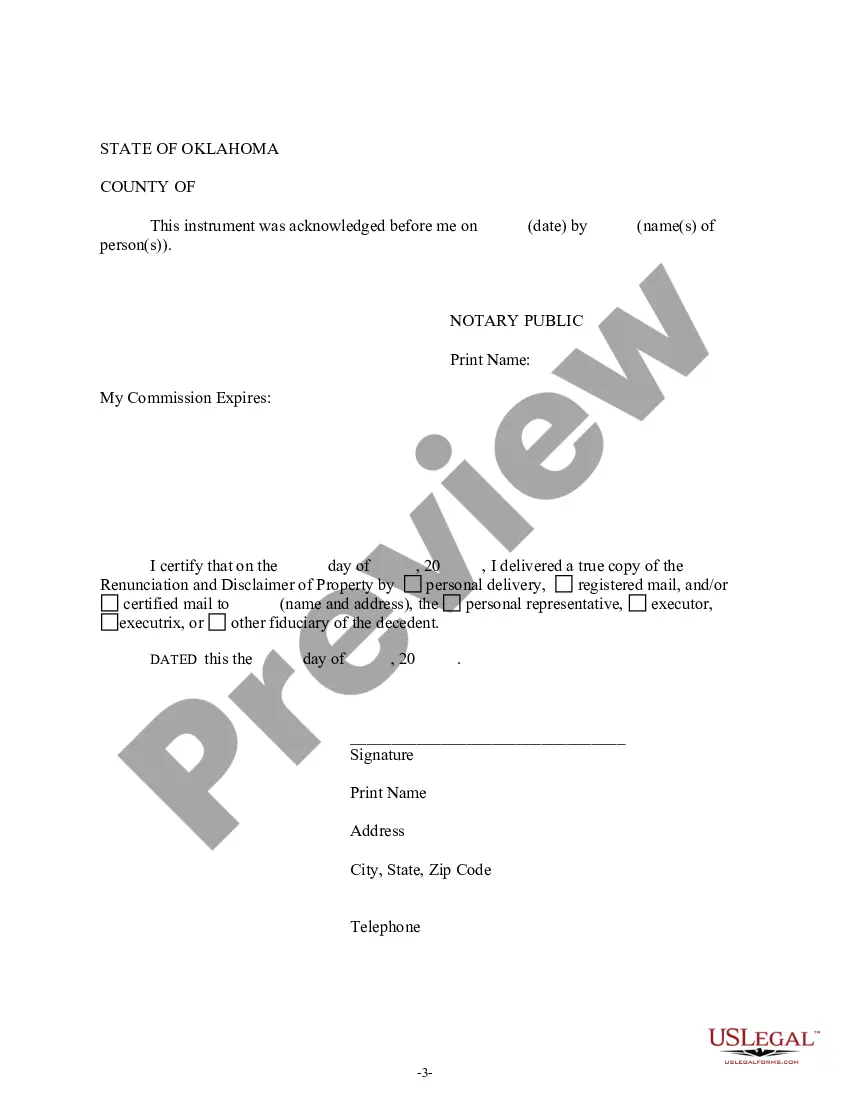
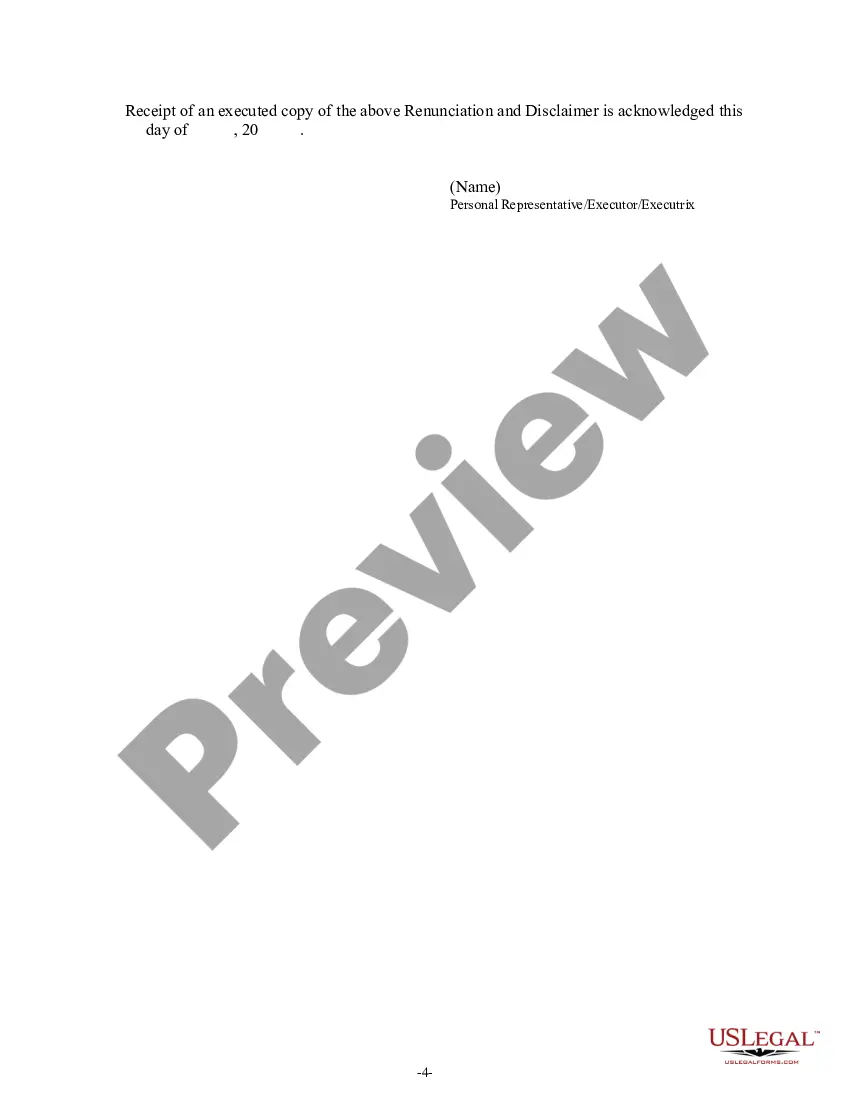
- Certification of the delivery of the document.
- State-specific acknowledgment to comply with local laws.

Situations where this form applies
This form is applicable in situations where an individual is a beneficiary of an estate but does not wish to accept their inheritance due to personal or financial reasons. For instance, a beneficiary may want to avoid tax implications or debts associated with the property. The form must be filed within nine months of the decedent's death to be effective.
Who can use this document
- Beneficiaries who have received property through intestate succession.
- Individuals seeking to decline part or all of their inheritance.
- Anyone needing to manage potential estate tax liabilities related to inherited property.
- Heirs wanting to ensure that their inheritance will pass to other designated heirs.
How to complete this form
- Identify the parties involved, including the decedent and the beneficiary.
- Specify the property that is being disclaimed.
- Complete the statement indicating the irrevocable refusal of the inheritance.
- Sign and date the document to validate it.
- File the completed form with the appropriate authority within the specified timeframe.
Does this form need to be notarized?
This form does not typically require notarization unless specified by local law. However, confirm the specific requirements for your situation to ensure the form's validity.
Get your form ready online
Our built-in tools help you complete, sign, share, and store your documents in one place.
Make edits, fill in missing information, and update formatting in US Legal Forms—just like you would in MS Word.
Download a copy, print it, send it by email, or mail it via USPS—whatever works best for your next step.
Sign and collect signatures with our SignNow integration. Send to multiple recipients, set reminders, and more. Go Premium to unlock E-Sign.
If this form requires notarization, complete it online through a secure video call—no need to meet a notary in person or wait for an appointment.
We protect your documents and personal data by following strict security and privacy standards.

Make edits, fill in missing information, and update formatting in US Legal Forms—just like you would in MS Word.

Download a copy, print it, send it by email, or mail it via USPS—whatever works best for your next step.

Sign and collect signatures with our SignNow integration. Send to multiple recipients, set reminders, and more. Go Premium to unlock E-Sign.

If this form requires notarization, complete it online through a secure video call—no need to meet a notary in person or wait for an appointment.

We protect your documents and personal data by following strict security and privacy standards.
Mistakes to watch out for
- Failing to submit the form within the nine-month deadline after the decedent's death.
- Not fully understanding the extent of the property being disclaimed.
- Omitting necessary signatures or dates, which can render the form invalid.
- Filing without proper acknowledgment specific to the state requirements.
Advantages of online completion
- Convenience of downloading the form instantly without needing to visit a lawyer's office.
- Editability of the form before final submission to ensure accuracy.
- Access to forms drafted by licensed attorneys, providing peace of mind regarding legal compliance.
Legal use & context
The Renunciation and Disclaimer of Property serves to legally effectuate a beneficiary's decision to decline inheritance. This form should be used carefully, as once completed and filed, the disclaimer is irrevocable, and the property will pass to other heirs as if the disclaiming beneficiary had predeceased the decedent.
What to keep in mind
- The form allows beneficiaries to renounce inherited property received through intestate succession.
- It must be filed within nine months of the decedent's death for it to be valid.
- It is specific to Oklahoma law and includes necessary legal provisions and acknowledgments.
Looking for another form?
Form popularity
FAQ
1a : a denial or disavowal of legal claim : relinquishment of or formal refusal to accept an interest or estate. b : a writing that embodies a legal disclaimer. 2a : denial, disavowal. b : repudiation.
Disclaimer of interest, in the law of inheritance, wills and trusts, is a term that describes an attempt by a person to renounce their legal right to benefit from an inheritance (either under a will or through intestacy) or through a trust. A disclaimer of interest is irrevocable.
The answer is yes. The technical term is "disclaiming" it. If you are considering disclaiming an inheritance, you need to understand the effect of your refusalknown as the "disclaimer"and the procedure you must follow to ensure that it is considered qualified under federal and state law.
If you refuse to accept an inheritance, you will not be responsible for inheritance taxes, but you'll have no say in who receives the assets in your place. The bequest passes either to the contingent beneficiary listed in the will or, if that person died without a will, according to your state's laws of intestacy.
Put the disclaimer in writing. Deliver the disclaimer to the person in control of the estate usually the executor or trustee. Complete the disclaimer within nine months of the death of the person leaving the property.
What is a Deed of Disclaimer? A Deed of Disclaimer is a document that you can execute if you wish to Disclaim an inheritance due via the Rules of Intestacy and you are not applying for probate. A typical example of this is if a spouse of a deceased would prefer the estate passes to the children.
Disclaim, in a legal sense, refers to the renunciation of an interest in, or an acceptance of, inherited assets, such as property, by way of a legal instrument. A person disclaiming an interest, right, or obligation is known as a disclaimant.
In law, a disclaimer is a statement denying responsibility intended to prevent civil liability arising for particular acts or omissions. Disclaimers are frequently made to escape the effects of the torts of negligence and of occupiers' liability towards visitors.
Put the disclaimer in writing. Deliver the disclaimer to the person in control of the estate usually the executor or trustee. Complete the disclaimer within nine months of the death of the person leaving the property. Do not accept any benefit from the property you're disclaiming.