Ohio Mutual Wills package with Last Wills and Testaments for Married Couple with No Children
The Mutual Wills package with Last Wills and Testaments for Married Couples with No Children is a comprehensive legal document set designed to help couples specify their final wishes for property distribution upon death. Unlike standard wills, these mutual wills are uniquely crafted to reflect the joint intentions of both spouses, ensuring that their assets are managed according to their agreed-upon terms. This package includes two separate willsâone for each spouseâalong with clear instructions for completion and execution.
- Personal representative or executor appointment for asset management.
- Property designation indicating who receives specific assets.
- Provisions for the surviving spouse, ensuring they are cared for.
- Instructions for signatory requirements, including witness regulations.
- Options for self-proving affidavits, if applicable in the state.
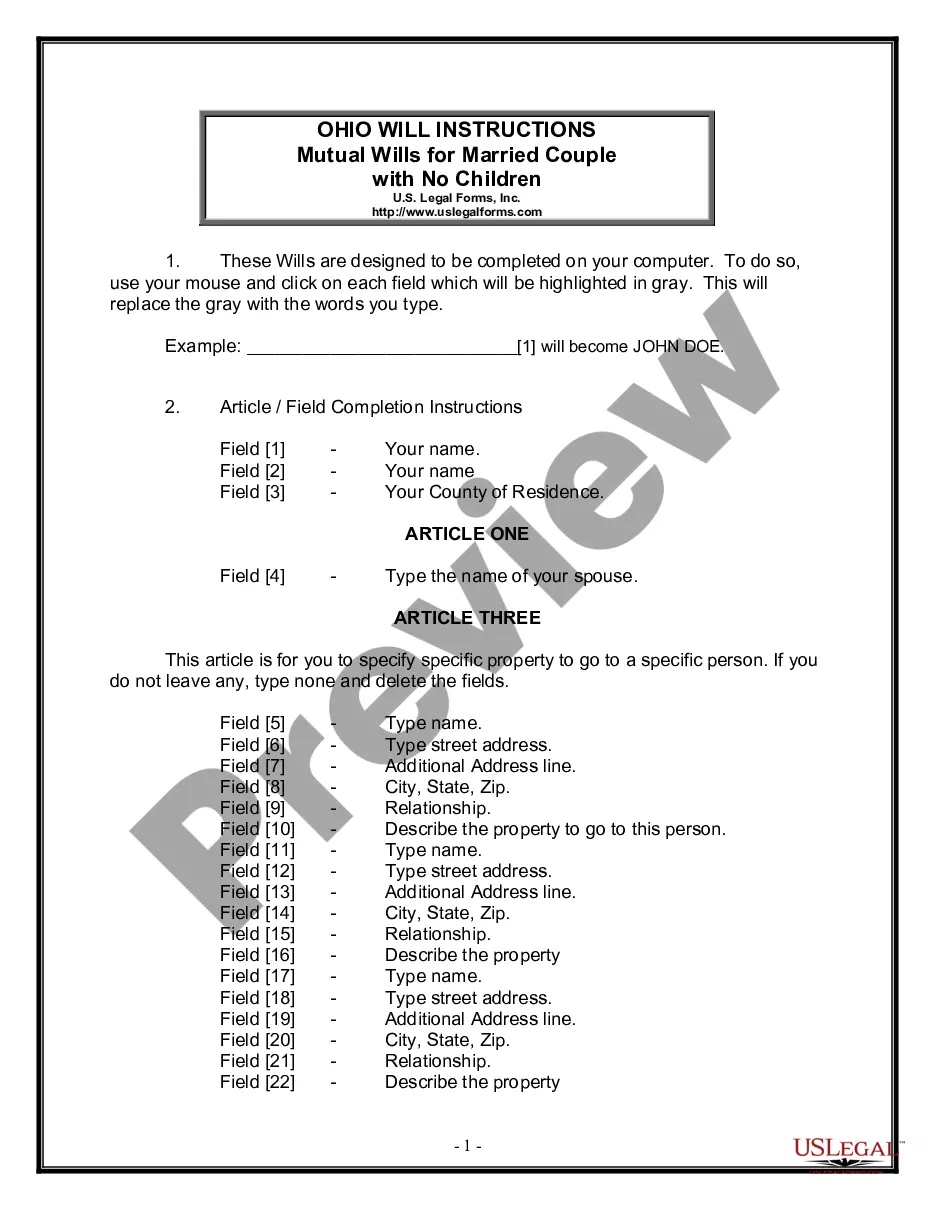
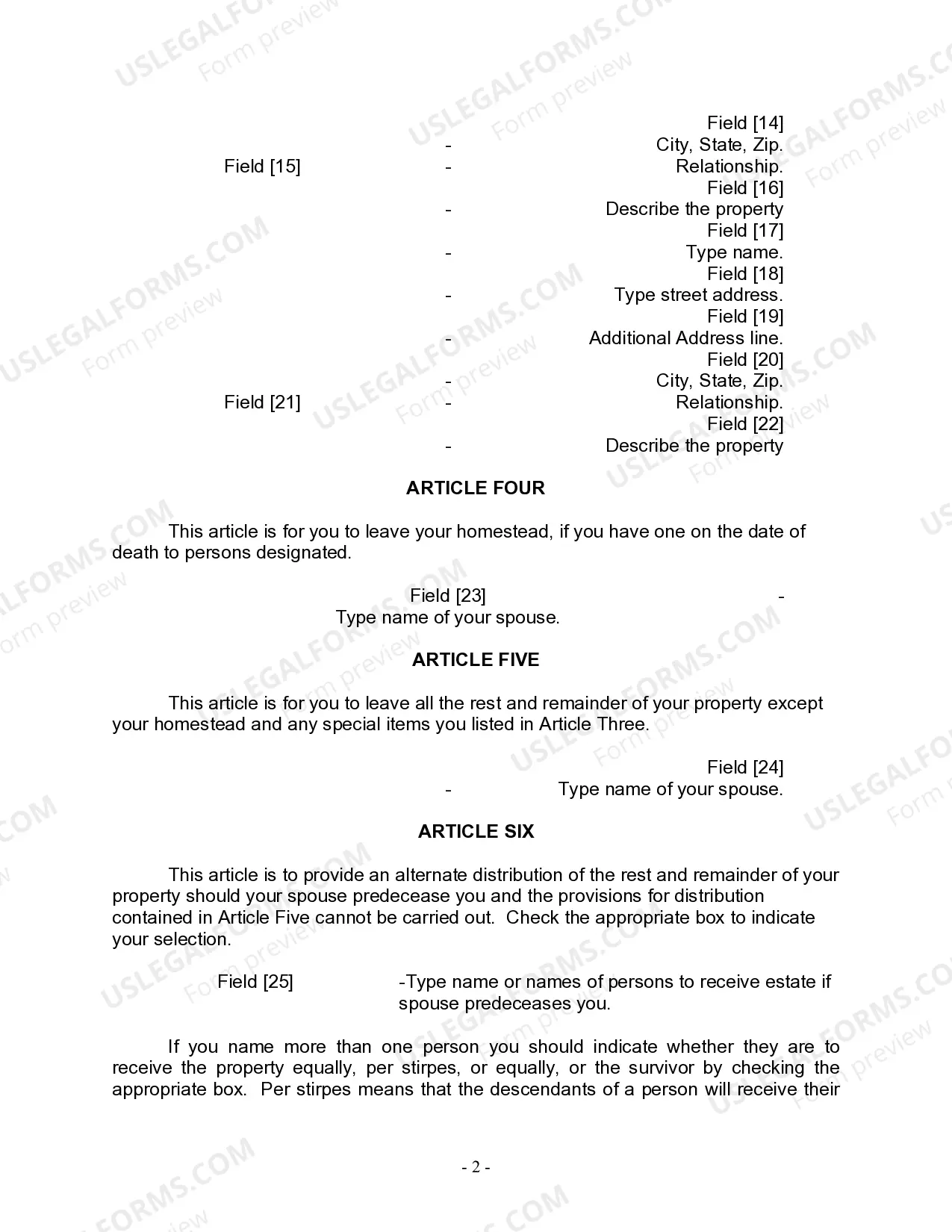

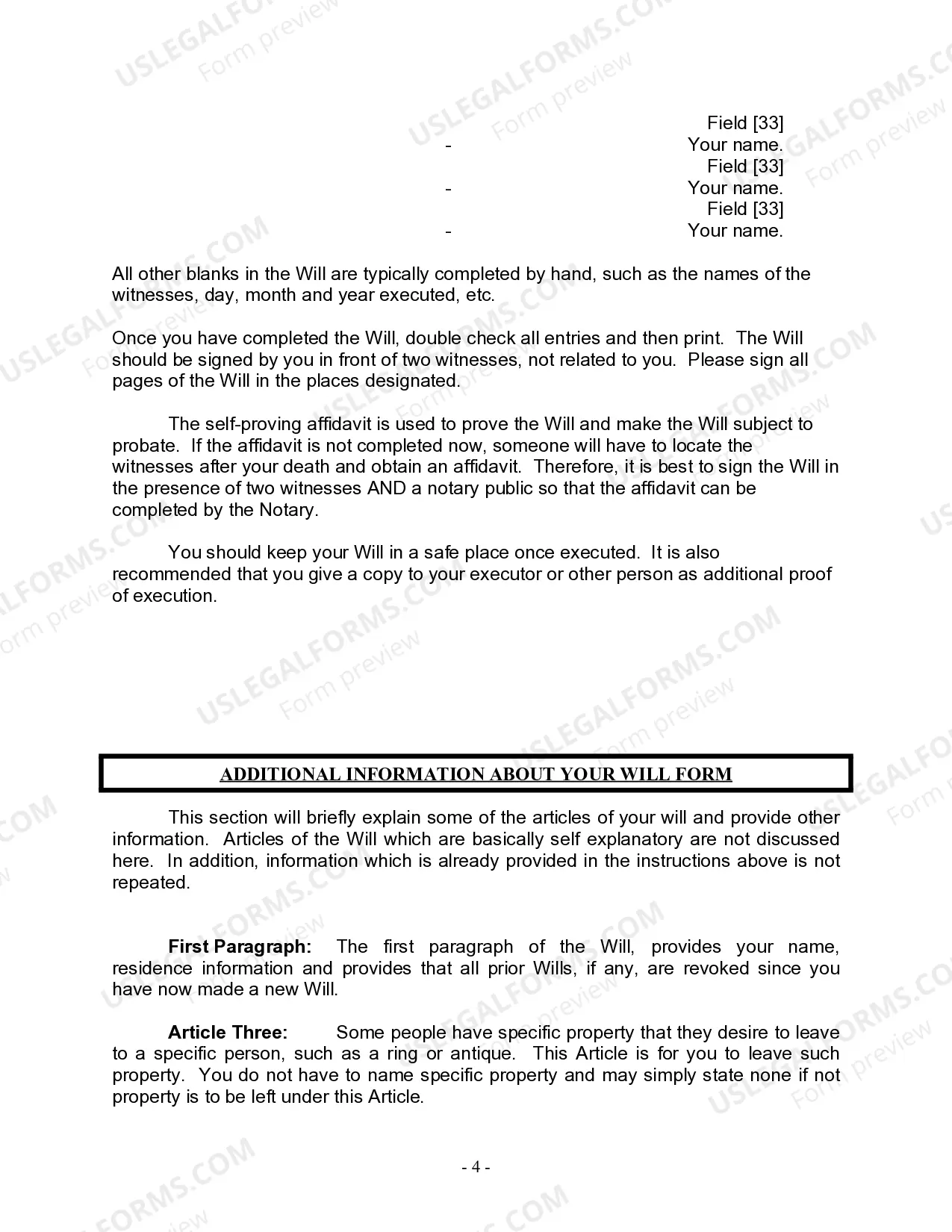

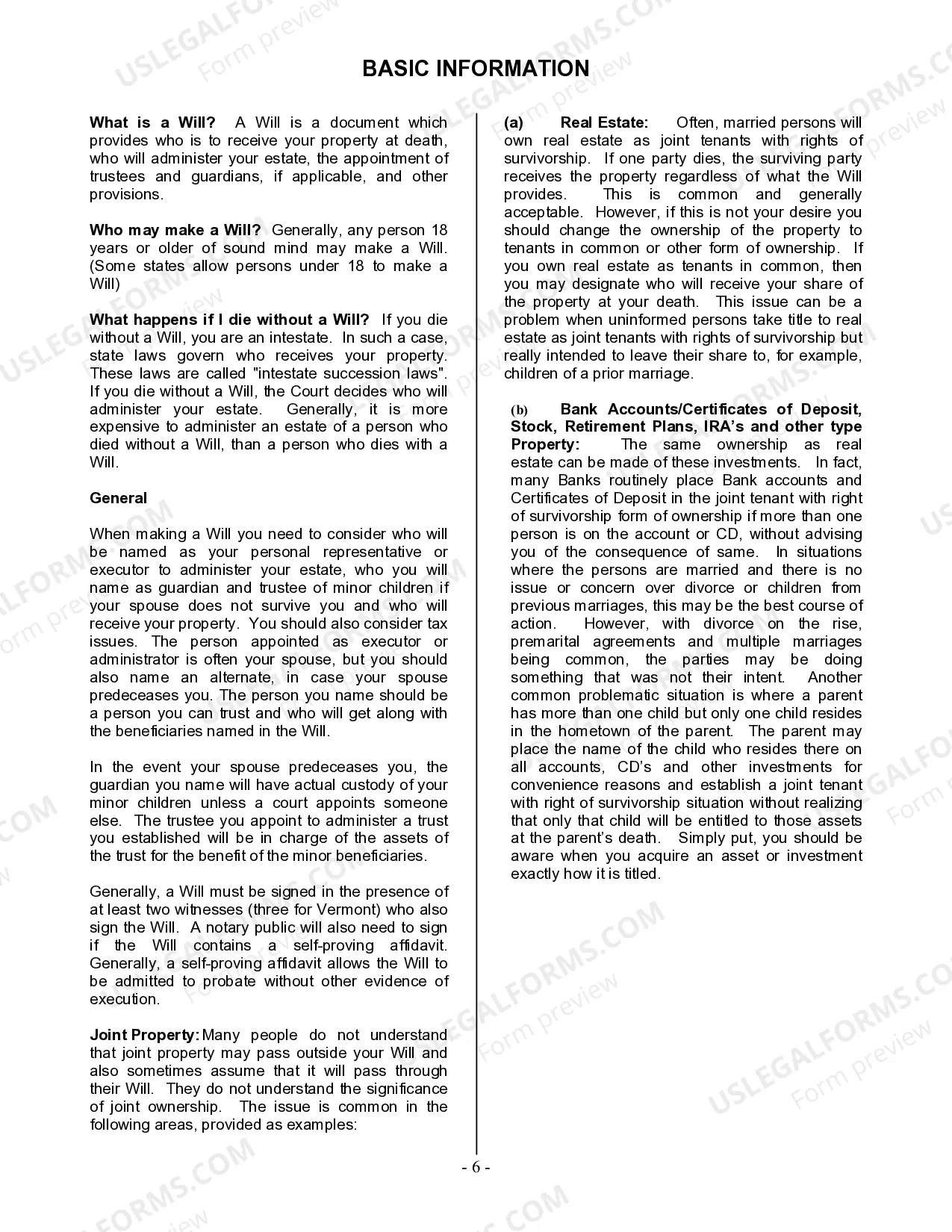

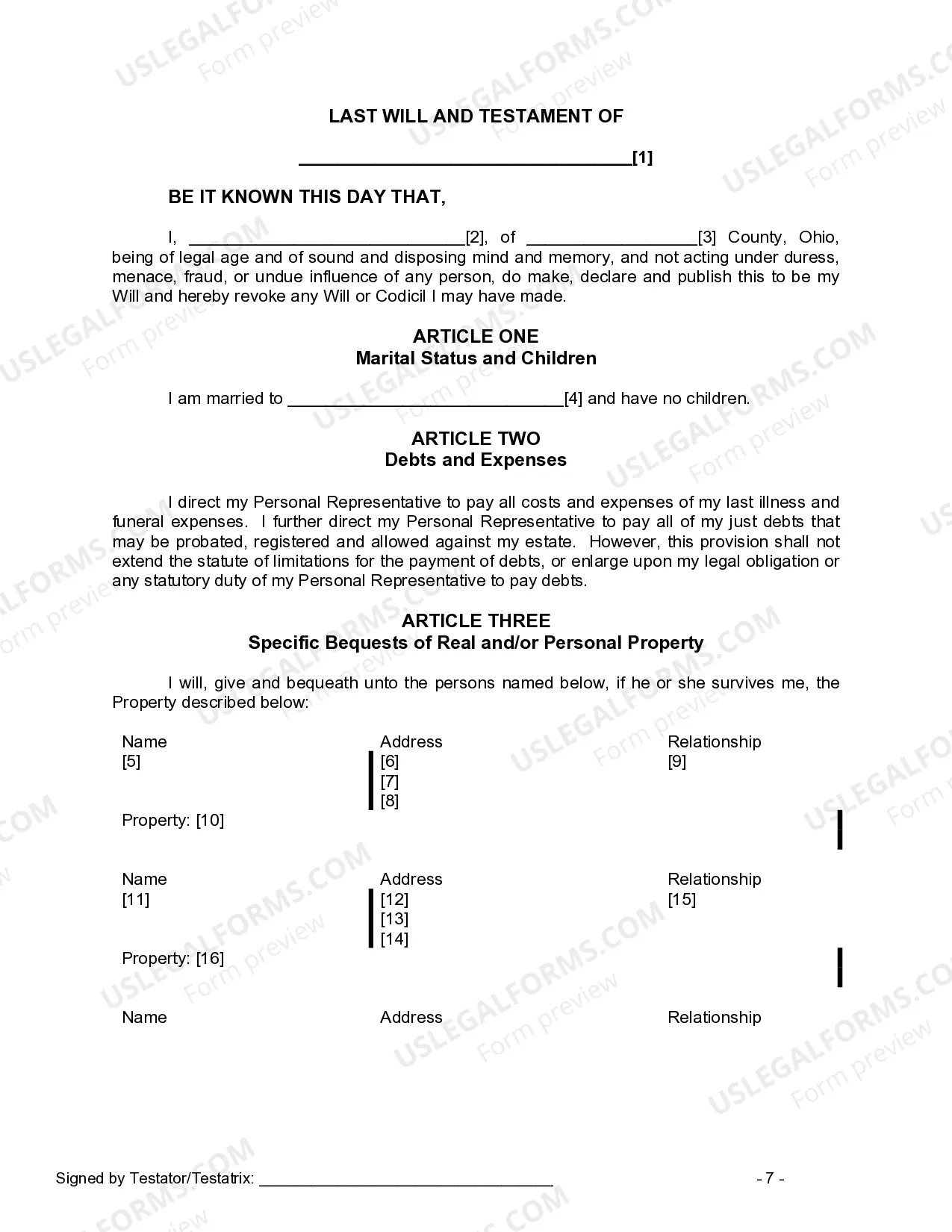
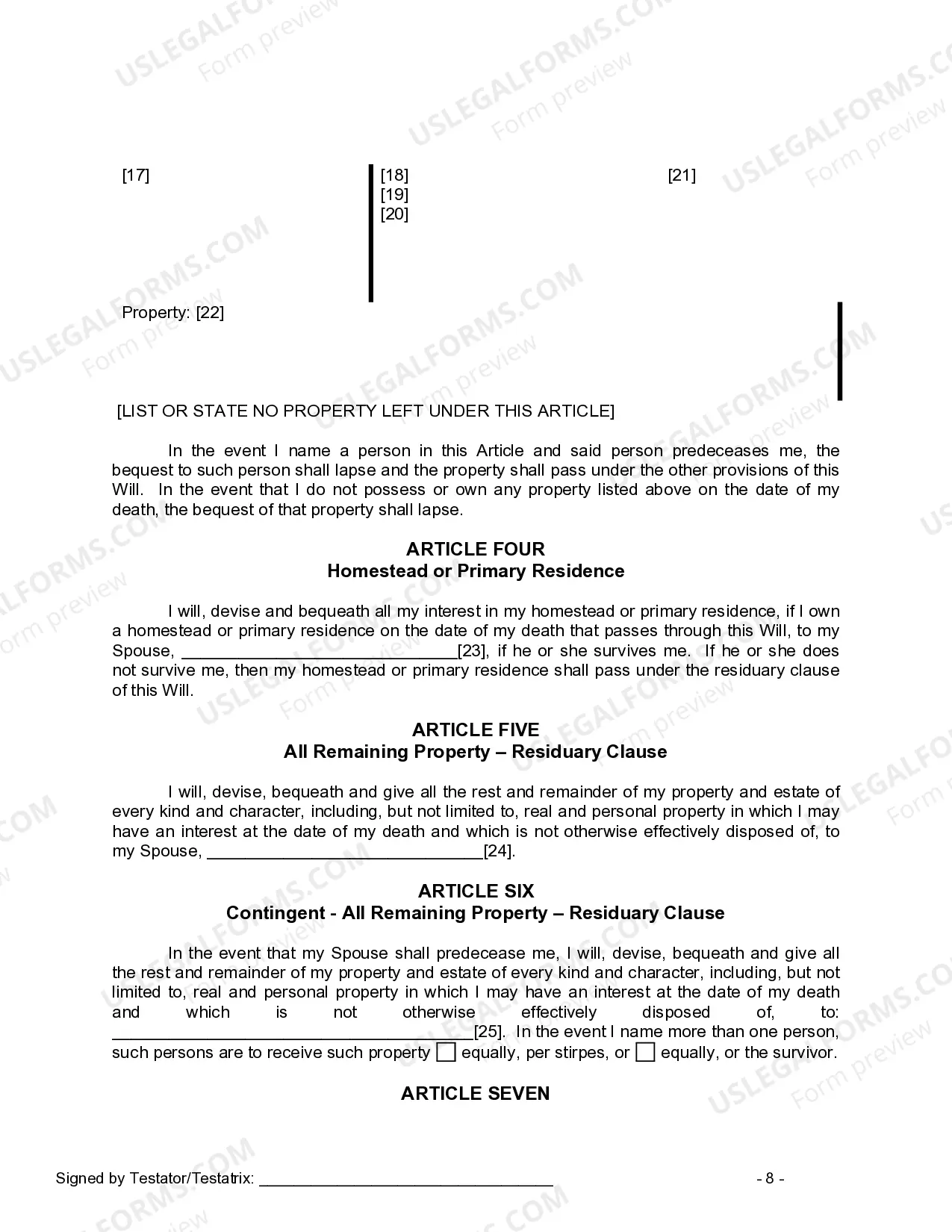
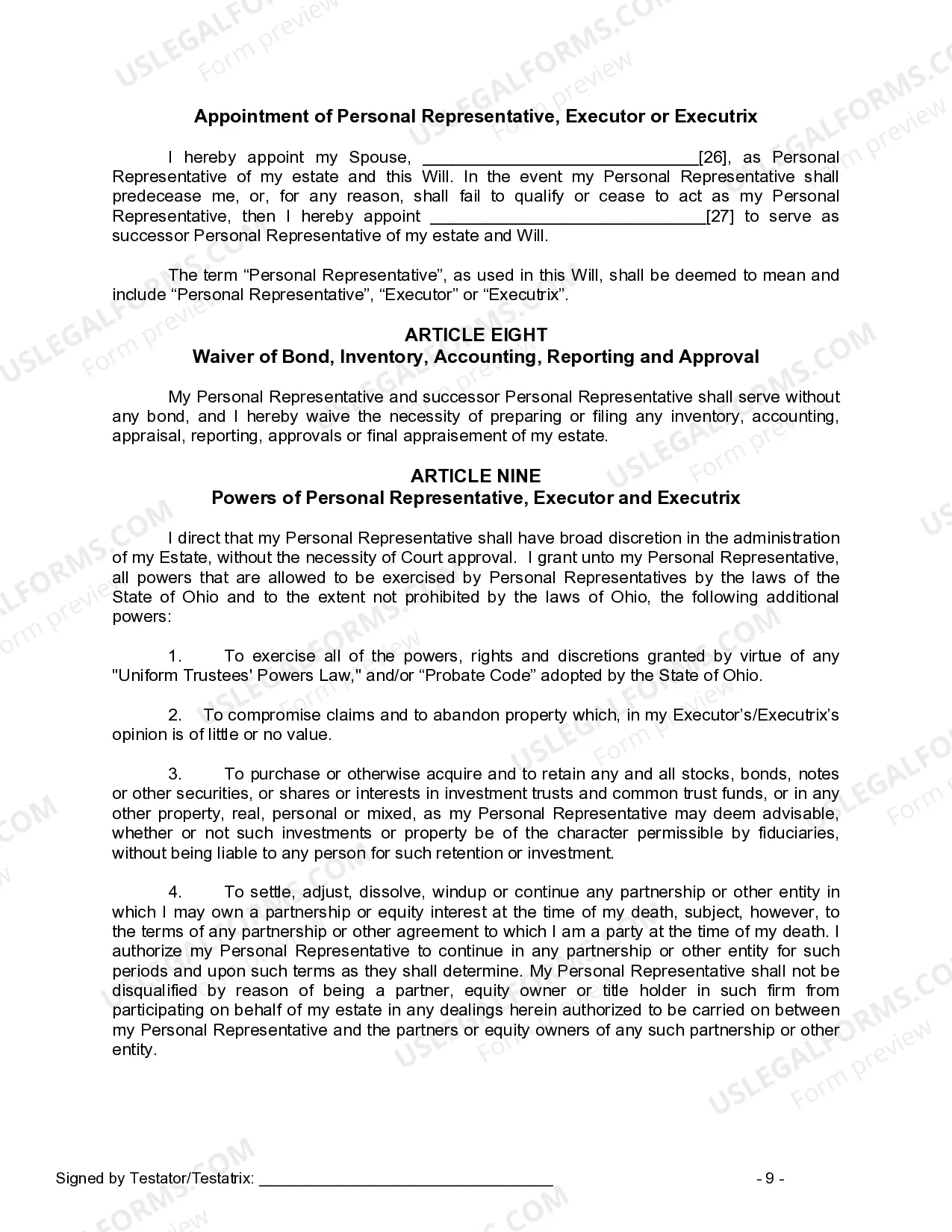

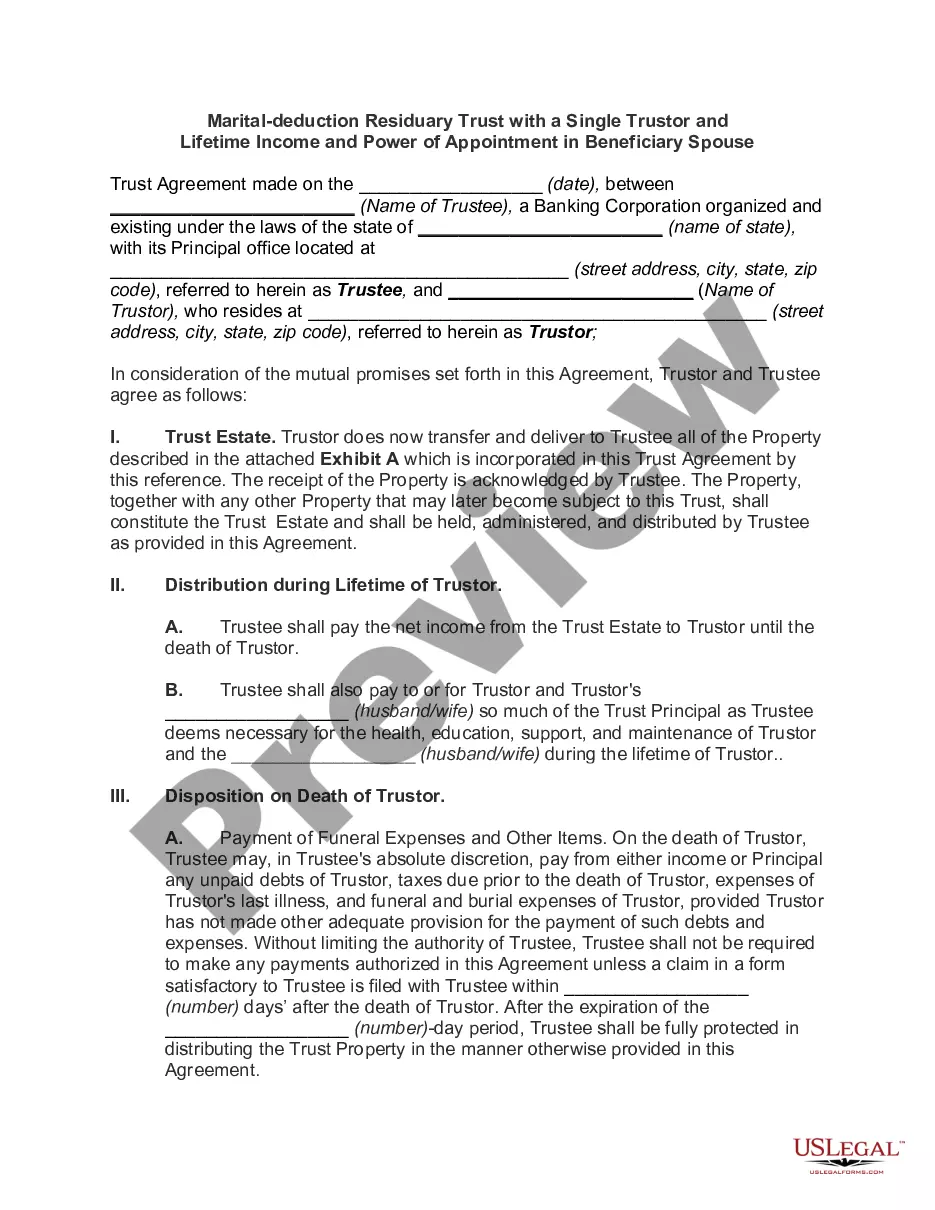


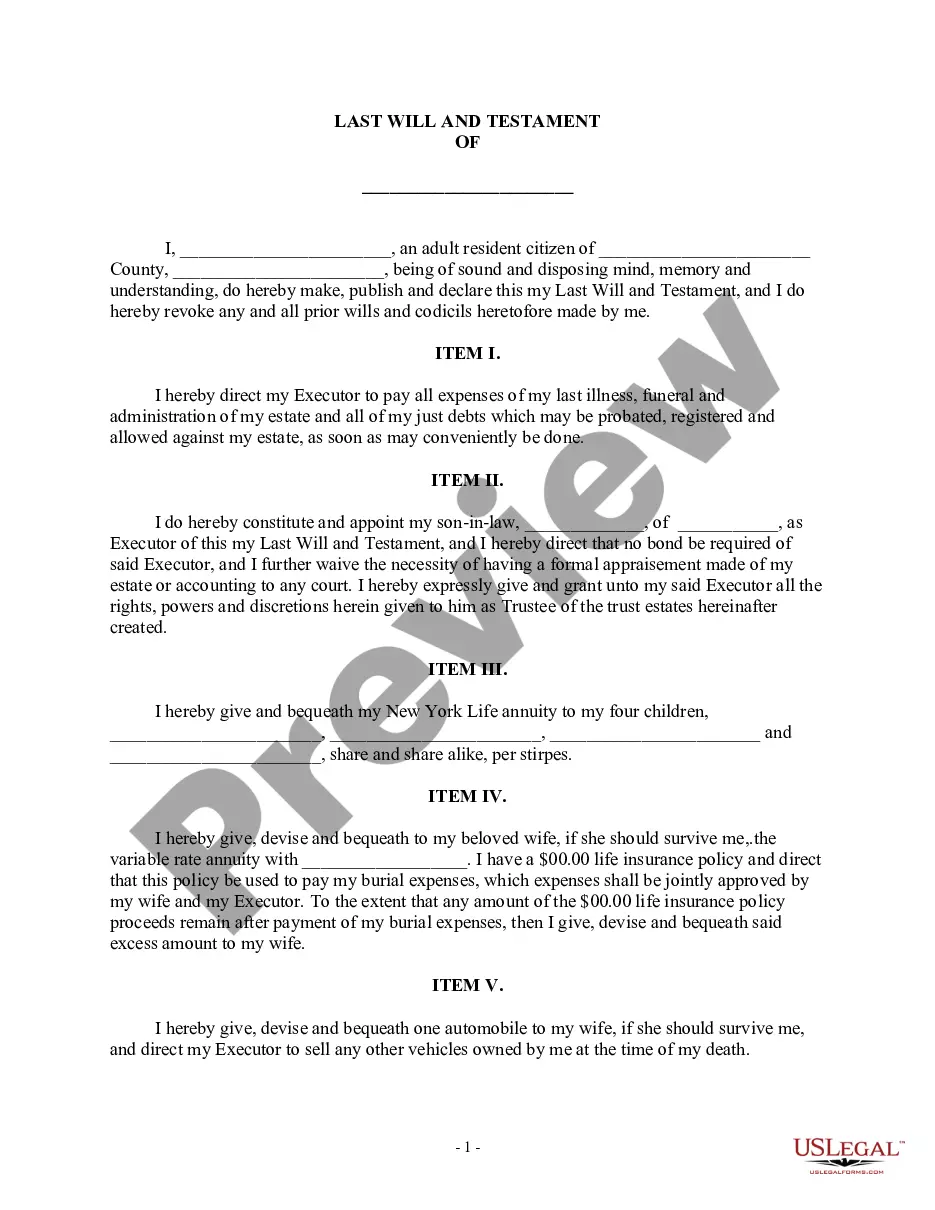

This form is needed when a married couple without children wants to establish clear instructions regarding the distribution of their assets after death. It is particularly useful for ensuring that both spouses' wishes are respected and legally documented, especially in the event of an unexpected passing. Utilizing mutual wills can also help to simplify the probate process and prevent potential conflicts among surviving family members.
This form is suitable for:
- Married couples with no children who wish to secure their property wishes.
- Couples looking to ensure mutual financial security for one another.
- Individuals seeking to simplify estate management for their spouse.
- Those who want to avoid complications during the probate process.
Steps to complete this form:
- Identify the parties by entering your names and addresses where indicated.
- Specify how you would like to designate your property and any specific bequests.
- Appoint a personal representative who will manage your estate after death.
- Include any provisions for alternate beneficiaries in case your spouse predeceases you.
- Sign the will in the presence of at least two witnesses who are not related to you.
Yes, this form must be notarized to be legally valid. The mutual wills package includes a notary provision that allows you to complete the notarization process easily, ensuring that your wills comply with local legal requirements.
Get your form ready online
Our built-in tools help you complete, sign, share, and store your documents in one place.
Make edits, fill in missing information, and update formatting in US Legal Forms—just like you would in MS Word.
Download a copy, print it, send it by email, or mail it via USPS—whatever works best for your next step.
Sign and collect signatures with our SignNow integration. Send to multiple recipients, set reminders, and more. Go Premium to unlock E-Sign.
If this form requires notarization, complete it online through a secure video call—no need to meet a notary in person or wait for an appointment.
We protect your documents and personal data by following strict security and privacy standards.

Make edits, fill in missing information, and update formatting in US Legal Forms—just like you would in MS Word.

Download a copy, print it, send it by email, or mail it via USPS—whatever works best for your next step.

Sign and collect signatures with our SignNow integration. Send to multiple recipients, set reminders, and more. Go Premium to unlock E-Sign.

If this form requires notarization, complete it online through a secure video call—no need to meet a notary in person or wait for an appointment.

We protect your documents and personal data by following strict security and privacy standards.
- Failing to have the wills signed by required witnesses.
- Not updating the wills if personal circumstances change.
- Leaving out critical details like specific property descriptions.
- Not considering the implications of joint property ownership.
- Convenience: Downloadable forms allow for quick access and completion from home.
- Editability: Forms can be filled out directly on your computer for easy corrections.
- Professional design: Created by licensed attorneys to ensure legal compliance.
- Clear instructions: Step-by-step guidance simplifies the process of creating your mutual wills.
- The Mutual Wills package provides a legal framework for married couples to protect each other's interests after death.
- Clear and detailed instructions help users navigate the completion of their wills effectively.
- Completing and executing mutual wills can prevent disputes regarding asset distribution, benefiting both spouses.
Looking for another form?



Form popularity
FAQ
The reason is that making it impossible for the surviving spouse to change the terms of the will can turn out to be a very bad result. The survivorwho may live years or decades after the first spouse's deathcannot react to changed life circumstances, and the family may suffer as a result.
Mirror wills are based on the idea that married or unmarried couples will likely have the same wishes regarding their estate. No matter which spouse dies first, the estates are handled the same way. The basic structure of a mirror will is similar to an individual last will.
Here are our top 5 reasons why it is better to have a separate Will for each spouse. When someone dies, their Will becomes locked in since they can no longer express a change to their wishes. This means that if one spouse passes away, the joint Will would become locked and difficult to update for the surviving spouse.
Making one will for two people is usually not advisable because it's irrevocable after the first spouse's death.Even though married couples often have the same goals in mind when making their estate plan, most attorneys advise against joint wills.
Create the initial document. Start by titling the document Last Will and Testament" and including your full legal name and address. Designate an executor. Appoint a guardian. Name the beneficiaries. Designate the assets. Ask witnesses to sign your will. Store your will in a safe place.
The reality is, however, that both you and your spouse should each have your own will, and it should be planned as soon as possible. Some couples think that they can have one joint will together, but this is not a sound approach.
Joint wills are usually created by married couples. They often state that: After one spouse has died, all the couple's property will be left to the surviving spouse; and. After the surviving spouse dies, the remaining property will be left to the couple's children.
It is a customary estate planning practice for each spouse to have his or her own will. While some practitioners may draft a joint will for a married couple, it is not recommended.
Joint wills are usually created by married couples. They often state that: After one spouse has died, all the couple's property will be left to the surviving spouse; and. After the surviving spouse dies, the remaining property will be left to the couple's children.