Ohio Last Will and Testament for Single Person with Adult and Minor Children
What this document covers
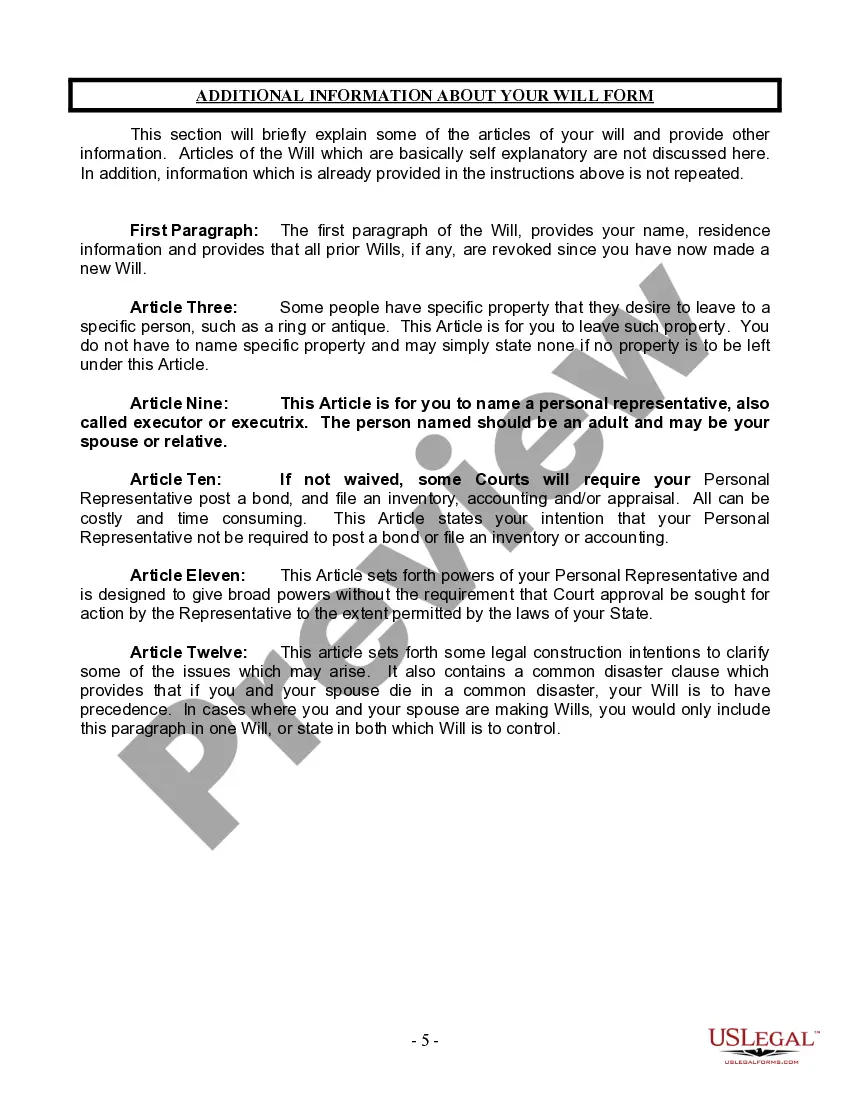
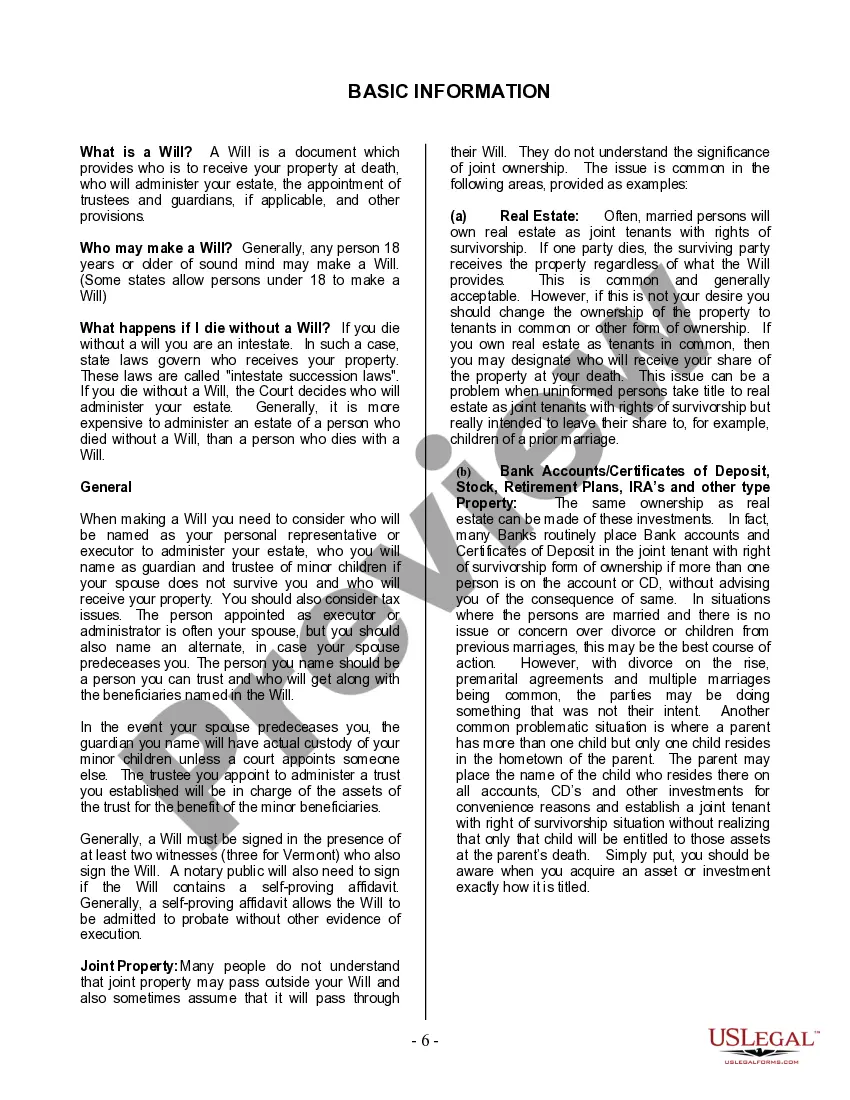
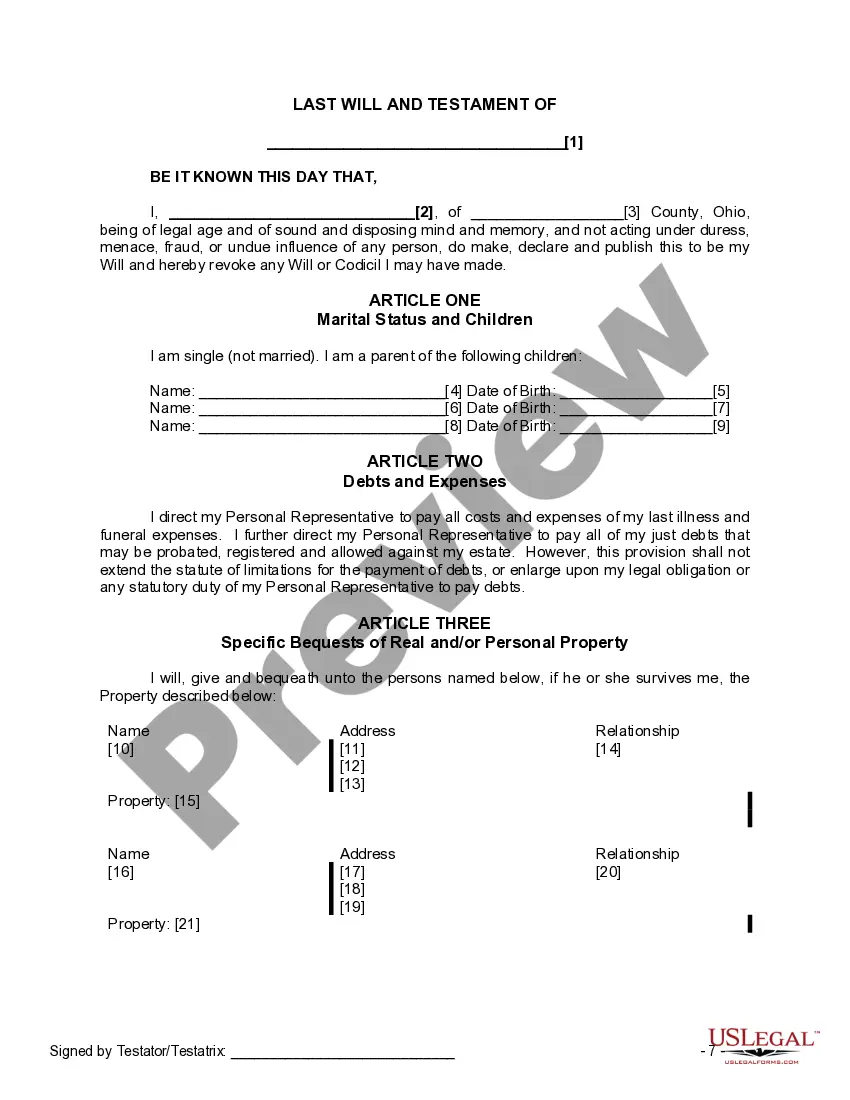
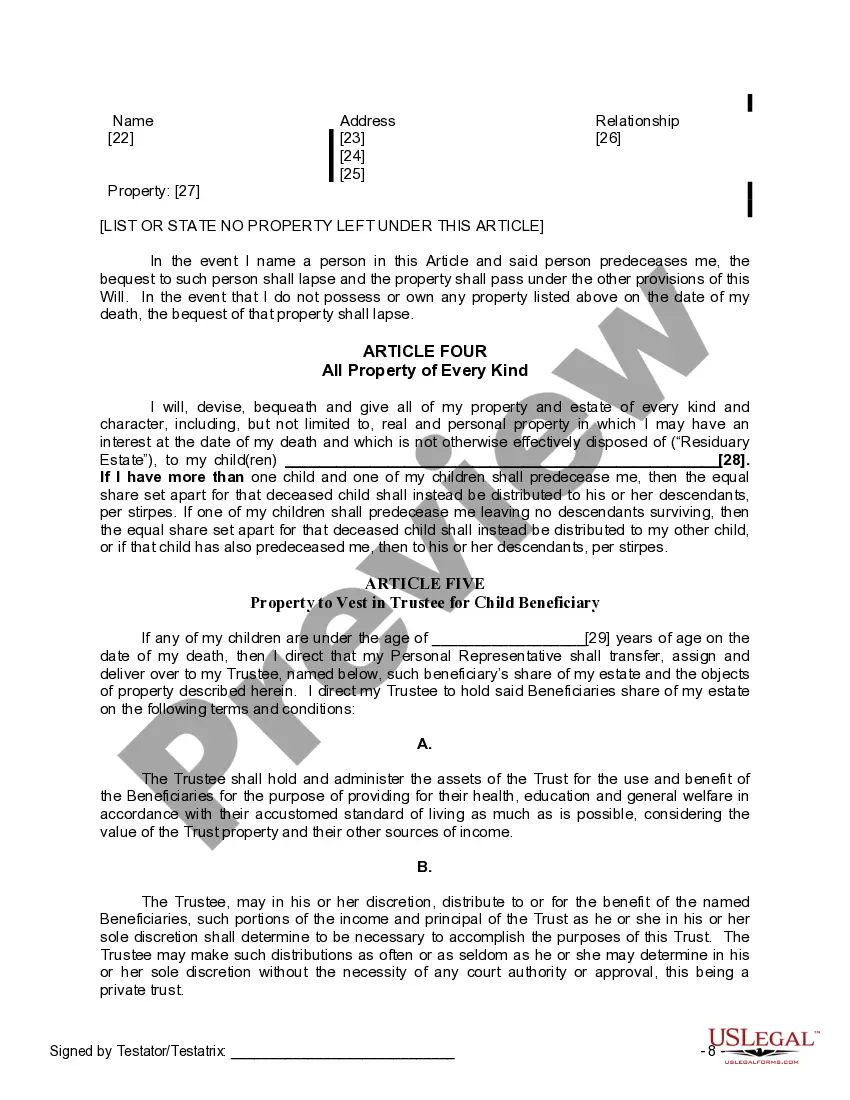
The Last Will and Testament for a single person with adult and minor children is a legal document that designates how your assets will be distributed upon your death, who will manage your estate, and any guardianship arrangements for your minor children. This specific will is tailored for single individuals and includes provisions for both adult and minor heirs, differentiating it from other wills that may not cater specifically to individuals with dependent children.
Form components explained
- Appointment of a personal representative or executor who will manage your estate.
- Designations for property distribution among adult and minor children.
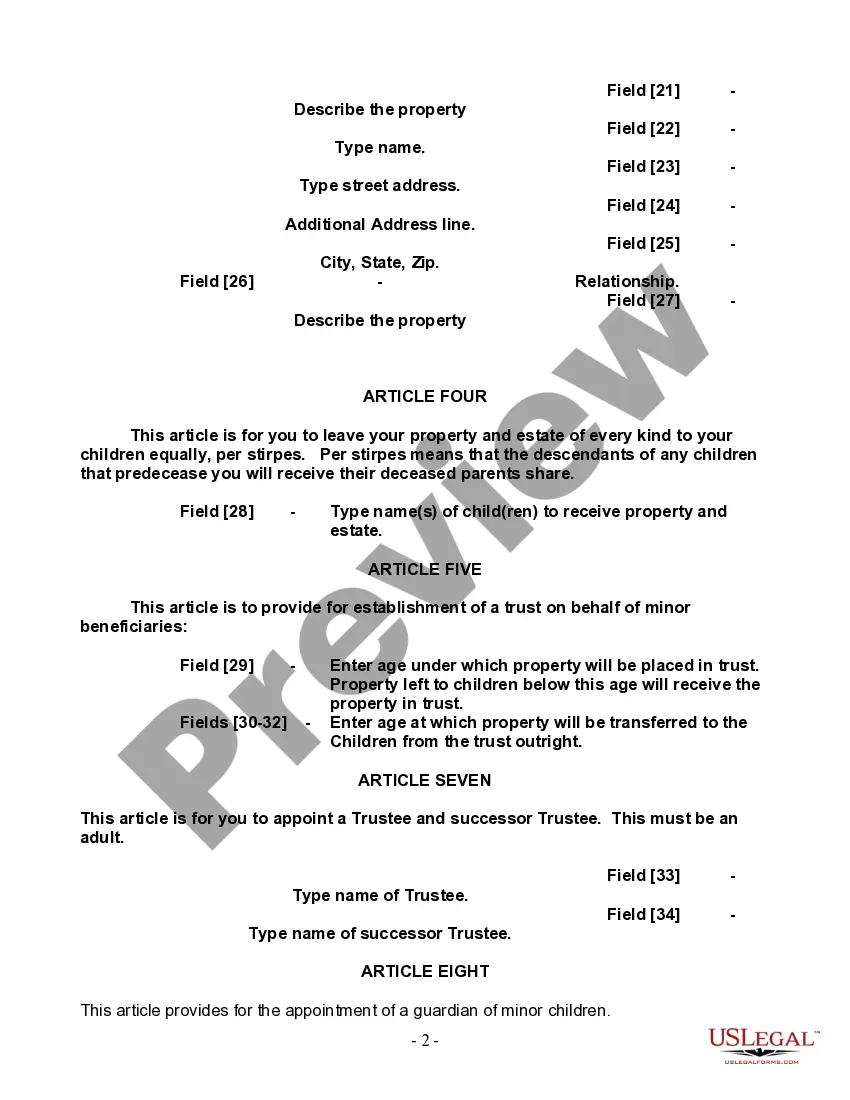
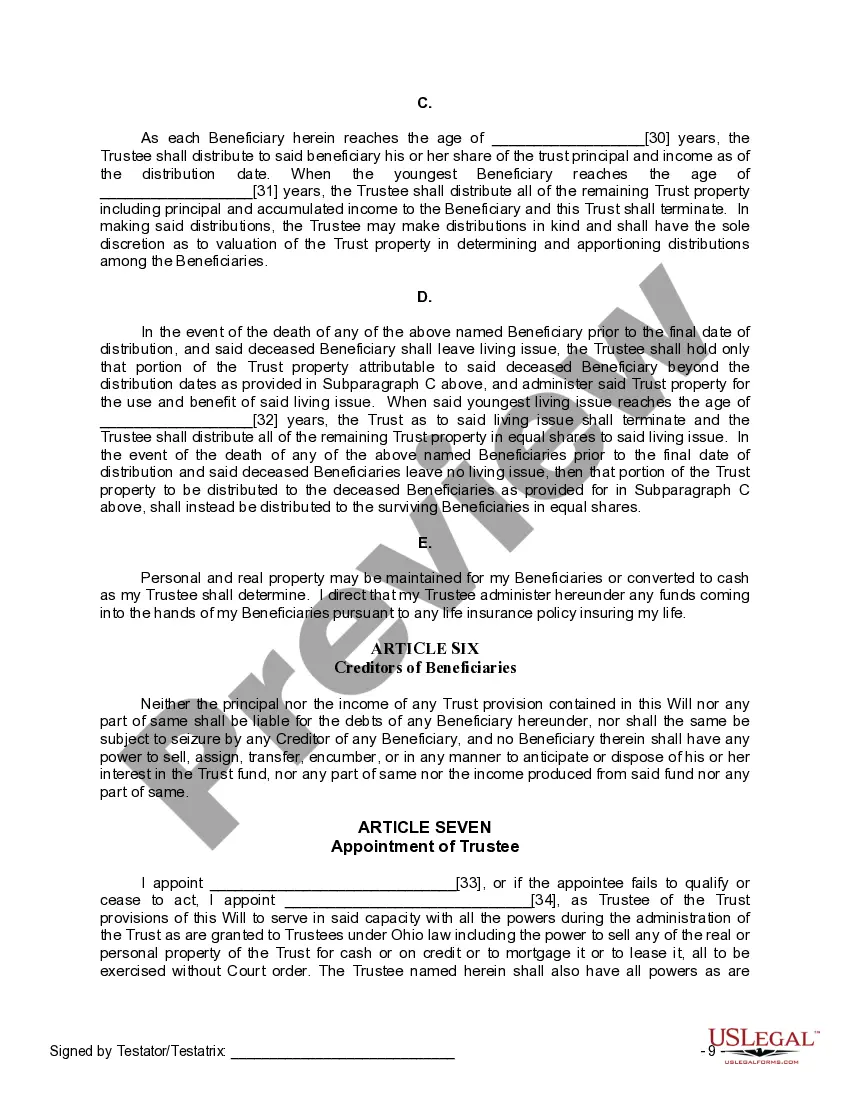
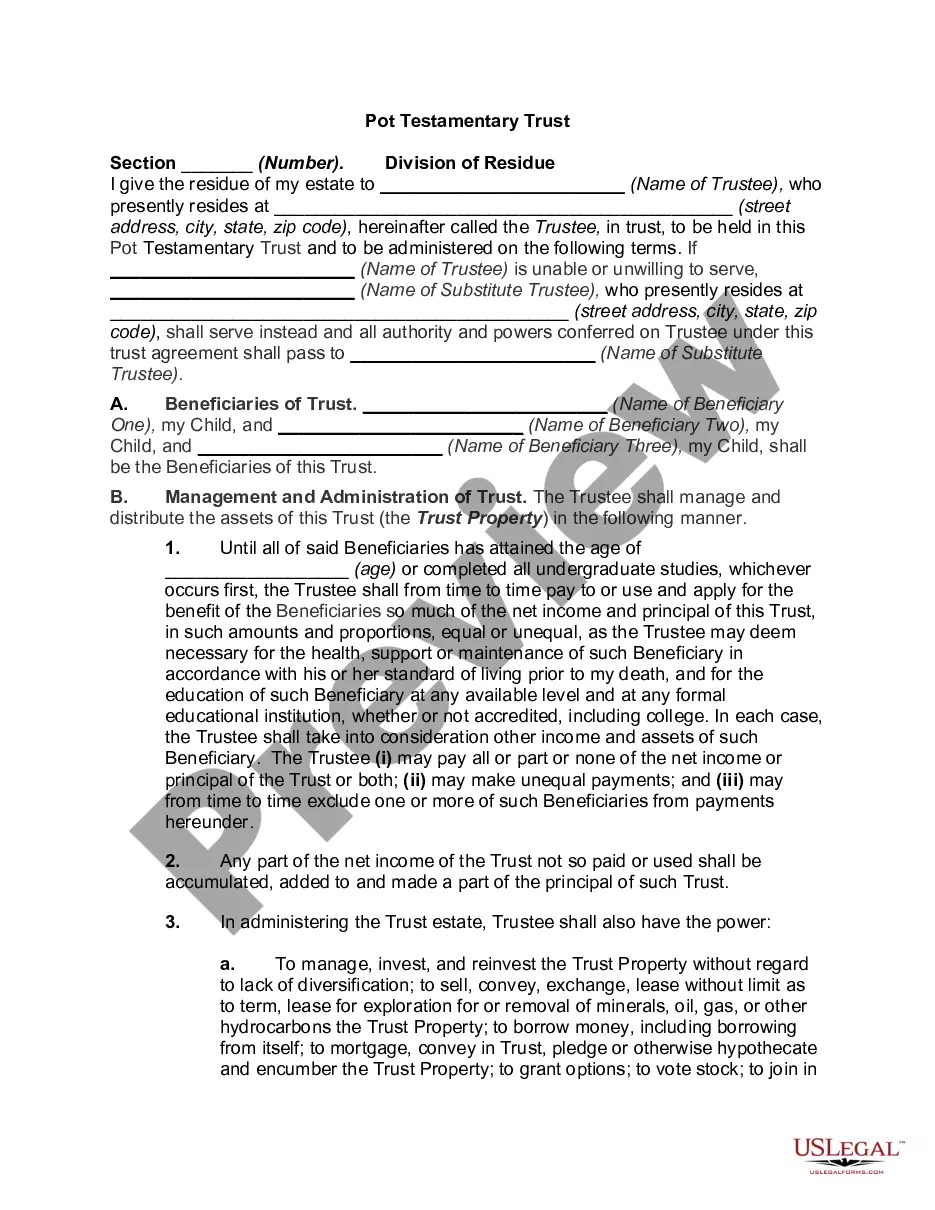
- Provisions for establishing trusts for minor children until they reach a specified age.
- Appointment of a guardian for minor children in the event of the parent's death.
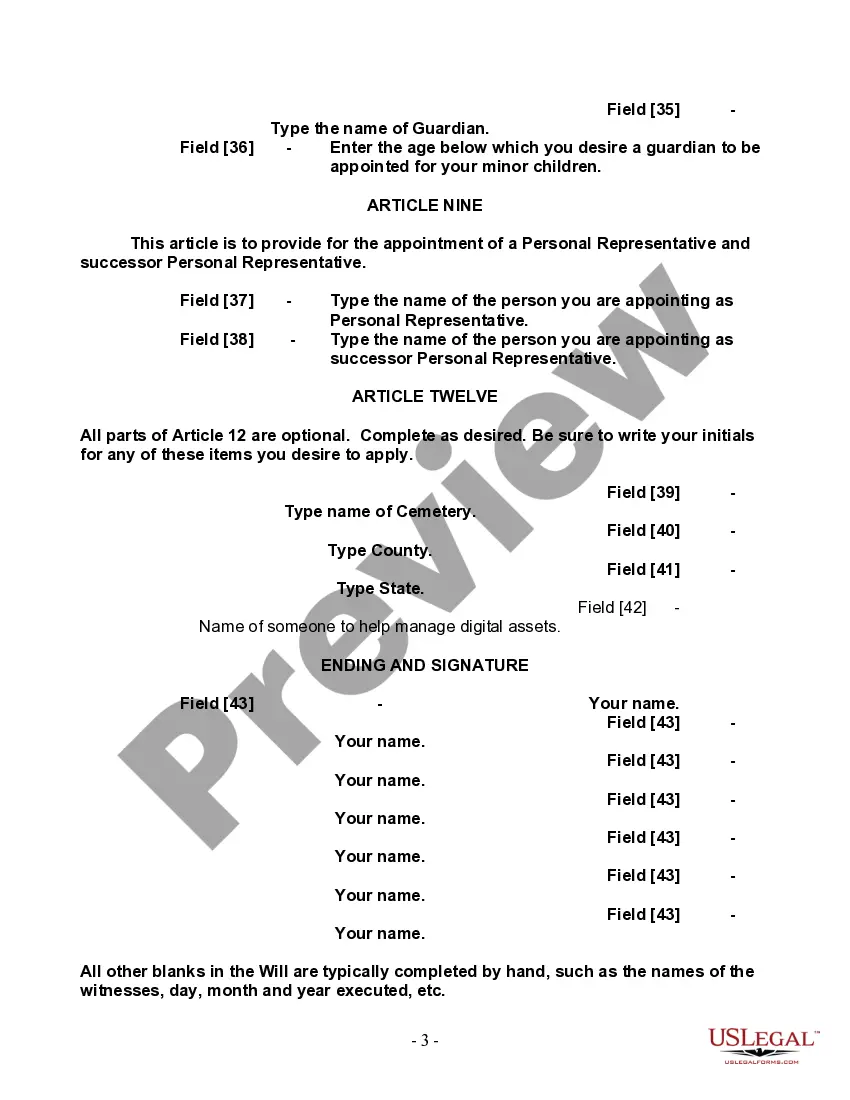
- Witness requirements, including signing in front of two unbiased witnesses.






Situations where this form applies
This form is necessary when a single parent wishes to ensure that their assets are distributed according to their wishes after their death, particularly if they have minor children. It is useful when establishing guardianships for children and defining who will manage any trusts set up for them. Any single individual with children should consider creating a Last Will and Testament to protect their family's future.
Who can use this document
- Single parents with both adult and minor children.
- Individuals who want to specify guardianship for their minor children.
- Those needing to designate an executor for their estate.
- Anyone looking to ensure their property is distributed according to their wishes after their death.
Steps to complete this form
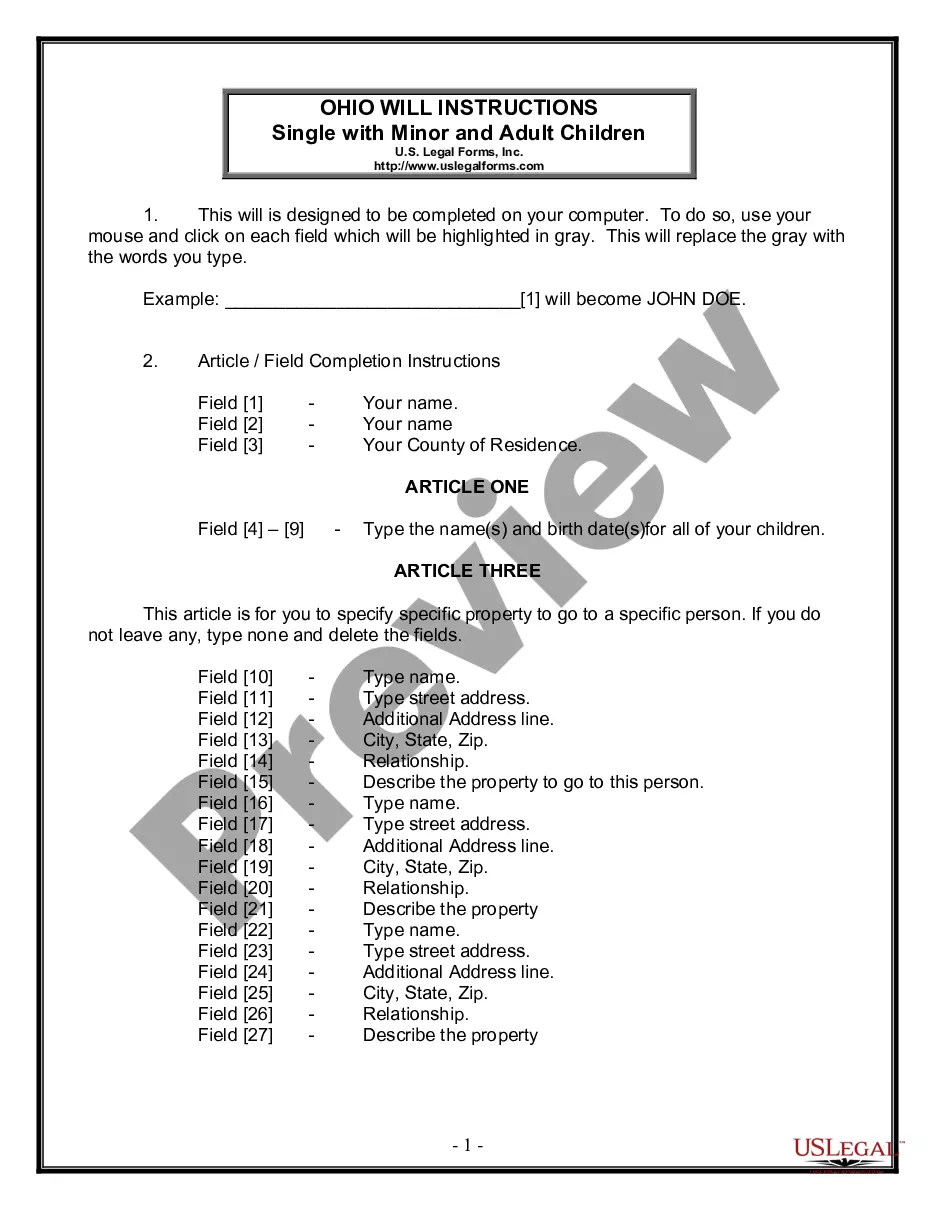
- Identify yourself by entering your full name and county of residence.
- List the names and birth dates of all your children in the designated fields.
- Specify any specific bequests of property to individuals if applicable.
- Complete the sections related to the establishment of trusts for minor children.
- Sign the will in front of two witnesses and consider having it notarized for added security.
Notarization guidance
Notarization is required for this form to take effect. Our online notarization service, powered by Notarize, lets you verify and sign documents remotely through an encrypted video session, available 24/7.
Get your form ready online
Our built-in tools help you complete, sign, share, and store your documents in one place.
Make edits, fill in missing information, and update formatting in US Legal Forms—just like you would in MS Word.
Download a copy, print it, send it by email, or mail it via USPS—whatever works best for your next step.
Sign and collect signatures with our SignNow integration. Send to multiple recipients, set reminders, and more. Go Premium to unlock E-Sign.
If this form requires notarization, complete it online through a secure video call—no need to meet a notary in person or wait for an appointment.
We protect your documents and personal data by following strict security and privacy standards.

Make edits, fill in missing information, and update formatting in US Legal Forms—just like you would in MS Word.

Download a copy, print it, send it by email, or mail it via USPS—whatever works best for your next step.

Sign and collect signatures with our SignNow integration. Send to multiple recipients, set reminders, and more. Go Premium to unlock E-Sign.

If this form requires notarization, complete it online through a secure video call—no need to meet a notary in person or wait for an appointment.

We protect your documents and personal data by following strict security and privacy standards.
Typical mistakes to avoid
- Failing to have the will signed in front of the required number of witnesses.
- Not clearly designating a guardian for minor children.
- Neglecting to specify how assets should be divided if one of your children predeceases you.
- Omitting the notarization process if needed in your state, which may complicate probate.
Benefits of completing this form online
- Convenient access to legal documents from anywhere, at any time.
- Editable templates that can be customized according to personal needs.
- Instant download allows you to complete and execute the will promptly.
- Guidance provided throughout the form helps ensure all necessary details are included.
Legal use & context
- A will serves as a legal declaration of your wishes regarding asset distribution after death.
- Proper execution of the will, including notarization and witness signatures, is crucial for its validity.
- The form accommodates various family structures and ensures specific provisions for minor children.
Key takeaways
- This Last Will and Testament ensures that your wishes regarding guardianship and property distribution are respected.
- It is essential for single parents to address the future care and support of their minor children.
- Follow state-specific guidelines for signing and witnessing to validate your will.
- Utilizing a templated digital format can simplify the process of creating a legally compliant will.
Glossary of terms used in this form
- Executor: The person responsible for administering the estate according to the wishes expressed in the will.
- Beneficiaries: Individuals or entities designated to receive property or assets from the estate.
- Testator: The person who creates and executes the will.
- Trust: A legal arrangement allowing a third party (the trustee) to hold assets on behalf of beneficiaries.
Looking for another form?


Form popularity
FAQ
Most single people should have a will. A will can help you determine who will get your property (including your home, business, pets, and digital assets), name guardians for your children, and name an executor. A will also puts your wishes in writing so there's no confusion about your intentions.
Bank accounts. Brokerage or investment accounts. Retirement accounts and pension plans. A life insurance policy.
In Ohio, probate attorneys sometimes serve as witnesses to both written and oral wills. Does a Last Will and Testament Need to be Notarized to be Valid? No, your last will and testament does not need to be notarized.
Create the initial document. Start by titling the document Last Will and Testament" and including your full legal name and address. Designate an executor. Appoint a guardian. Name the beneficiaries. Designate the assets. Ask witnesses to sign your will. Store your will in a safe place.
Include personal identifying information. Include a statement about your age and mental status. Designate an executor. Decide who will take care of your children. Choose your beneficiaries. List your funeral details. Sign and date your Last Will and Testament.
Drafting the will yourself is less costly and may put you out about $150 or less. Depending on your situation, expect to pay anywhere between $300 and $1,000 to hire a lawyer for your will. While do-it-yourself will kits may save you time and money, writing your will with a lawyer ensures it will be error-free.
If you've got a life partner but no marriage (or civil union or domestic partnership) certificate, estate planning is a must. Without it, neither of you will inherit from each otherand neither of you will have a say in the other's end-of-life medical care.
Contrary to popular belief, you do not need to have an attorney draft a will for you. Anyone can write this document on their own, and as long as it meets all of the legal requirements of the state, courts will recognize one you wrote yourself.