Ohio Revocation of Power of Attorney for Care of Child or Children
Understanding this form
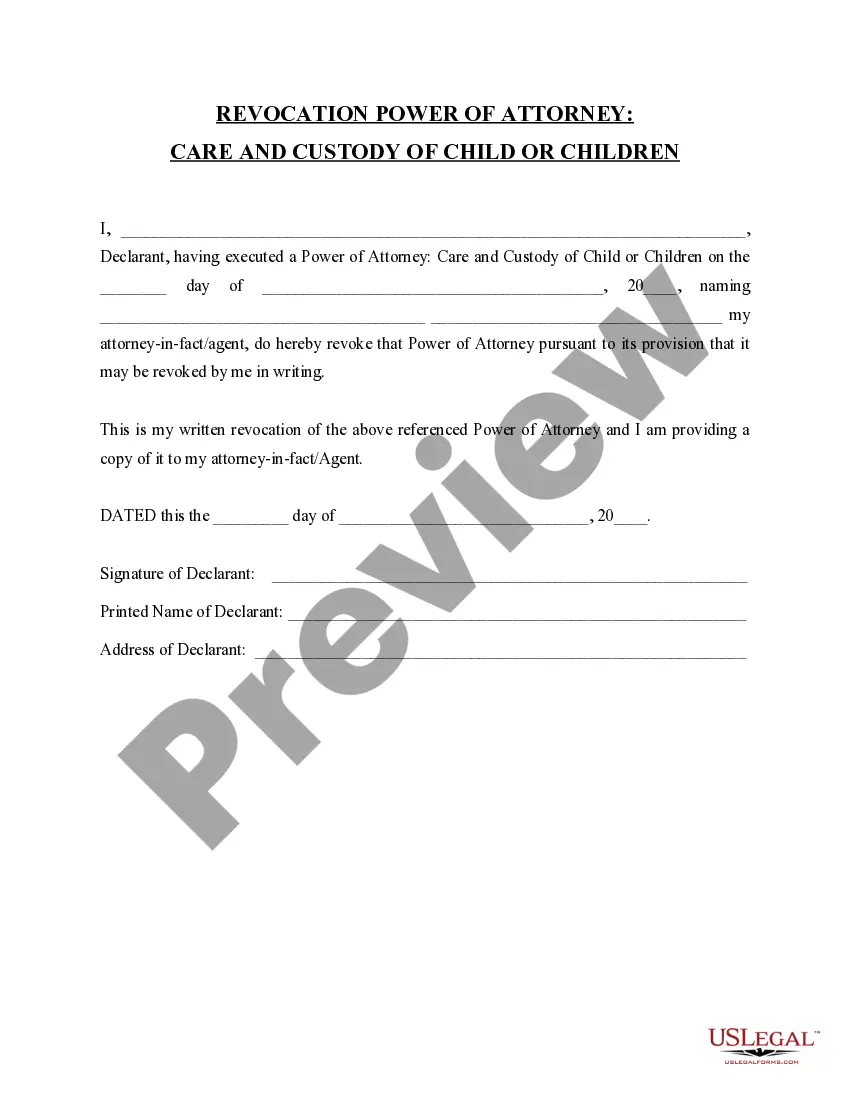
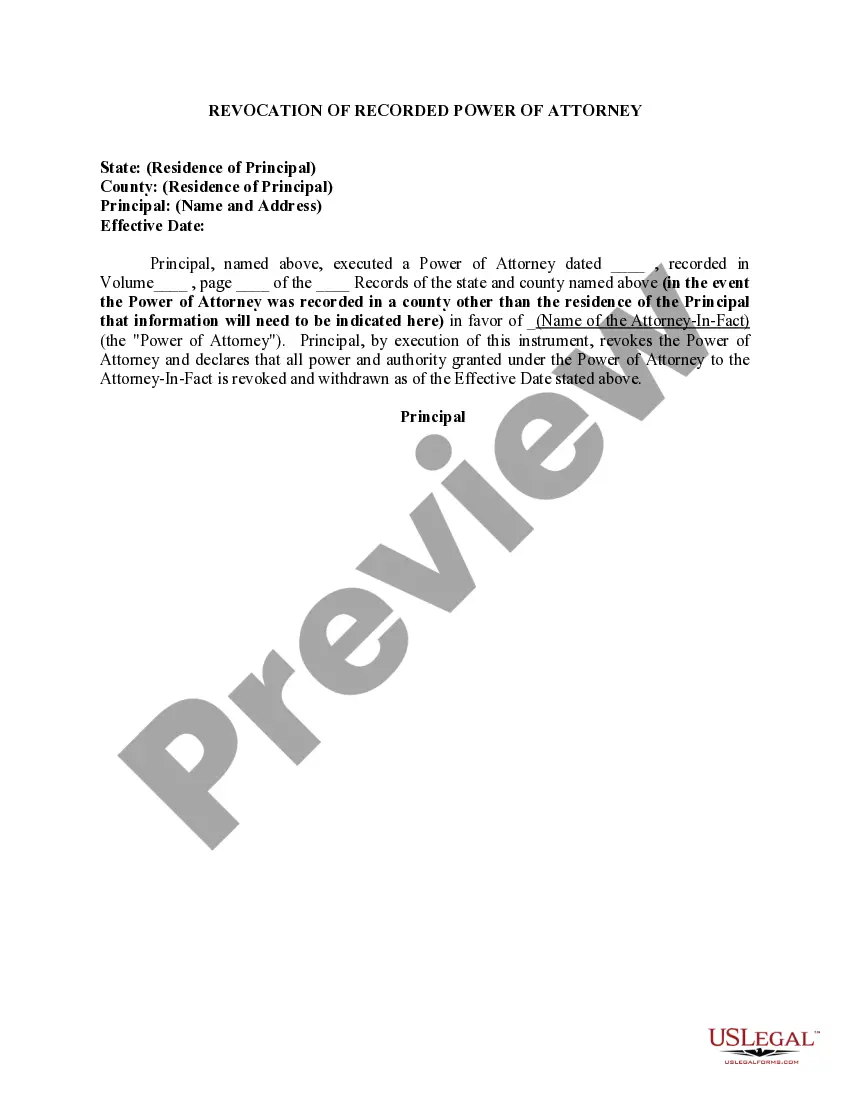
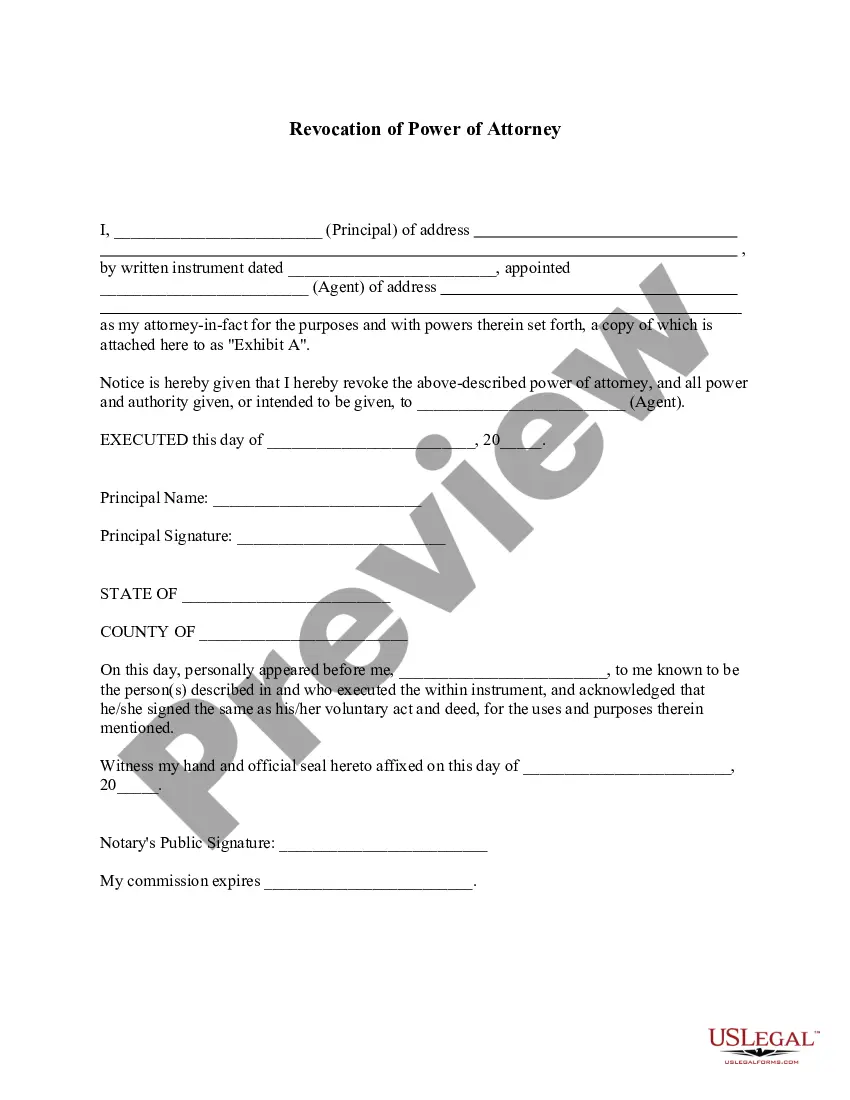
The Revocation of Power of Attorney for Care of Child or Children is a legal document that allows a parent or guardian to cancel an existing power of attorney regarding the care and custody of their child or children. This form is essential for individuals who wish to terminate a previously granted authority to another person, ensuring that the custody decisions revert back to them. Unlike similar forms, this revocation is specifically designed to address the care of minors, keeping in mind the legal requirements set by state law.
Key parts of this document
- Declarant's details: Name and contact information of the individual revoking the power of attorney.
- Date of original power of attorney: The date when the initial power of attorney was executed.
- Name of the attorney-in-fact: The person who previously had the authority to act on behalf of the declarant regarding the child.
- Revocation statement: A clear declaration that the previous power of attorney is revoked.
- Signature and date: The declarant must sign and date the document to validate the revocation.
Common use cases
This form should be used when a parent or guardian decides to revoke a previous power of attorney that granted someone else the authority to care for their child or children. Situations may arise where the initial arrangement is no longer appropriate, such as the parent regaining custody, a change in personal circumstances, or a loss of trust in the attorney-in-fact. By completing this form, the declarant ensures that decision-making power reverts entirely back to them.
Who needs this form
This form is intended for:
- Parents or legal guardians who have previously executed a power of attorney for the care of their child or children.
- Individuals who find it necessary to revoke that authority for personal or legal reasons.
- Any party seeking to ensure that they have complete custody and care rights over their child or children.
How to prepare this document
- Identify yourself as the declarant by filling in your name and address at the beginning of the form.
- Enter the date on which the original power of attorney was executed.
- Specify the name of the attorney-in-fact whose power is being revoked.
- Clearly state that you are revoking the power of attorney in the designated section.
- Sign and date the document to finalize the revocation.
Does this form need to be notarized?
This form does not typically require notarization unless specified by local law. However, it is a good practice to consult with a legal professional to confirm specific requirements in your state.
Get your form ready online
Our built-in tools help you complete, sign, share, and store your documents in one place.
Make edits, fill in missing information, and update formatting in US Legal Forms—just like you would in MS Word.
Download a copy, print it, send it by email, or mail it via USPS—whatever works best for your next step.
Sign and collect signatures with our SignNow integration. Send to multiple recipients, set reminders, and more. Go Premium to unlock E-Sign.
If this form requires notarization, complete it online through a secure video call—no need to meet a notary in person or wait for an appointment.
We protect your documents and personal data by following strict security and privacy standards.

Make edits, fill in missing information, and update formatting in US Legal Forms—just like you would in MS Word.

Download a copy, print it, send it by email, or mail it via USPS—whatever works best for your next step.

Sign and collect signatures with our SignNow integration. Send to multiple recipients, set reminders, and more. Go Premium to unlock E-Sign.

If this form requires notarization, complete it online through a secure video call—no need to meet a notary in person or wait for an appointment.

We protect your documents and personal data by following strict security and privacy standards.
Common mistakes to avoid
- Failing to date the revocation, which may lead to confusion about its validity.
- Not providing a copy of the revocation to the former attorney-in-fact, which is crucial for effective communication.
- Omitting necessary information, such as the original power of attorney date or the attorney-in-factâs name.
Advantages of online completion
- Convenience: Access the form anytime and download it from anywhere.
- Editability: Make changes easily to ensure all information is accurate before submission.
- Reliability: Forms provided by licensed attorneys ensure that all legal requirements are met.
Legal use & context
- The revocation is legally binding upon completion and delivery to all relevant parties.
- Ensures that the former attorney-in-fact cannot make decisions about the child's care after revocation.
- Valid in all states, but may be subject to specific local requirements.
Main things to remember
- This form allows for the revocation of a previously granted power of attorney for child custody.
- It is essential for parents or guardians who wish to regain control over their child's care.
- Completing and properly delivering this form ensures that all parties are aware of the changes in authority.
Looking for another form?
Form popularity
FAQ
A power of attorney over a child is a document signed and notarized by a parent giving a non- parent authority to make decisions for a minor child.It can be used to authorize the person to obtain medical treatment for a child or sign up a child for an activity or for other significant decisions.
A Power of Attorney might be used to allow another person to sign a contract for the Principal. It can be used to give another person the authority to make health care decisions, do financial transactions, or sign legal documents that the Principal cannot do for one reason or another.
Grandparents should get a power of attorney, also called a POA, granting them the legal authority to address the child's medical and other needs, particularly in an emergency when the child's parents can't be reached. This can be as simple as having the parent sign a notarized form and submitting it to the court.
In order for your parent to grant you Power of Attorney, they must be of sound mind.If the parent is of sound mind, they may sign over Power of Attorney. If your parent is already mentally incapacitated, they may have already granted you (or another person) Power of Attorney in a Living Will.
A power of attorney over a child is a document signed and notarized by a parent giving a non- parent authority to make decisions for a minor child.It can be used to authorize the person to obtain medical treatment for a child or sign up a child for an activity or for other significant decisions.
1 attorney answer But no, a power of attorney is not somehow going to constitute or override a custody order, and as a non-parent, he doesn't have any standing to contest custody unless your daughter's been with him (and him alone, not with her mom...
Keep proper accounts and records of how the attorney handles your money and assets. The NSW Trustee & Guardian, or anyone interested in your welfare, can require the attorney to produce these accounts and records. If the attorney does not carry out the obligations properly, they may have to compensate you.
A power of attorney for the conveyance, mortgage, or lease of an interest in real property must be recorded in the office of the county recorder of the county in which such property is situated, previous to the recording of a deed, mortgage, or lease by virtue of such power of attorney.
An agent under a financial power of attorney should not have the right to bar a sibling from seeing their parent. A medical power of attorney may give the agent the right to prevent access to a parent if the agent believes the visit would be detrimental to the parent's health.