Ohio Affidavit of Confirmation of Beneficiaries of Transfer on Death Designation Affidavit
Understanding this form
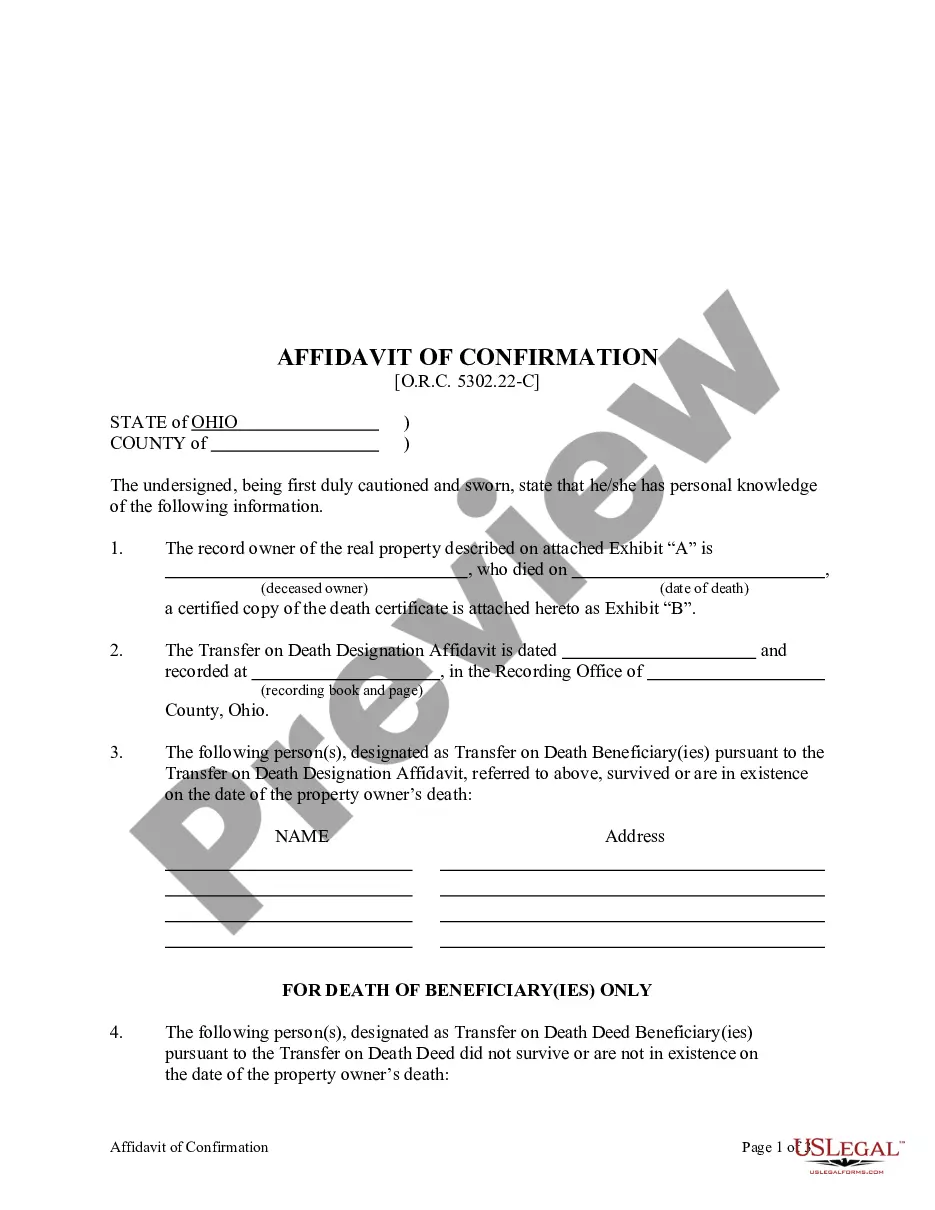
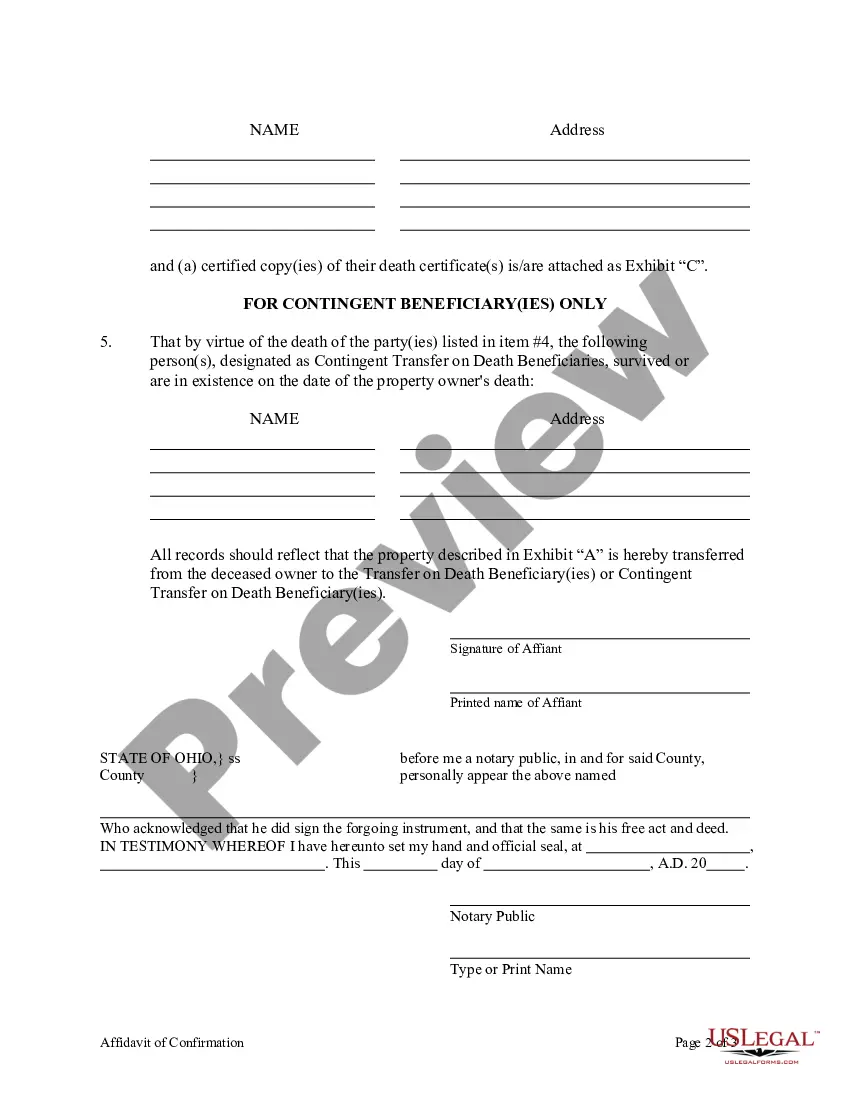
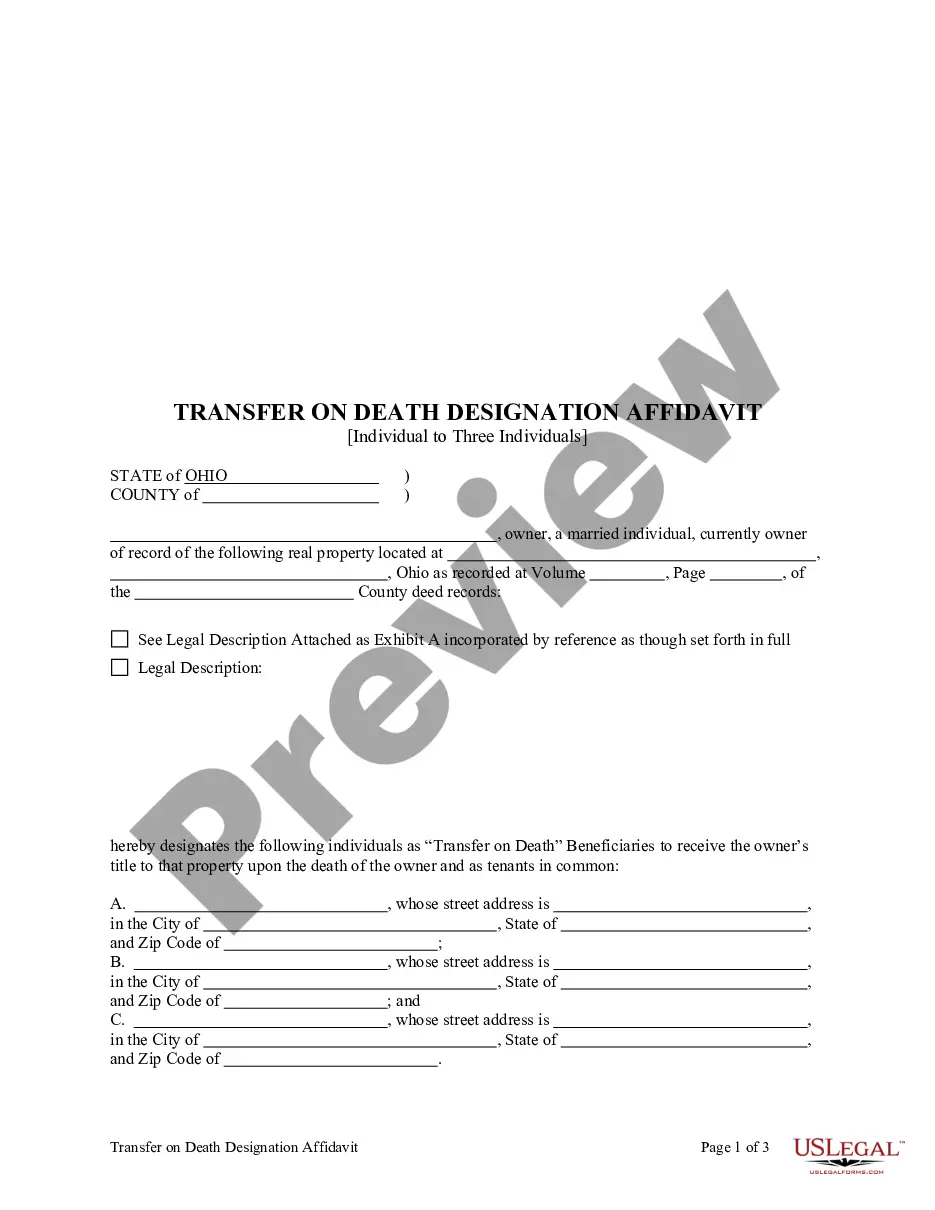
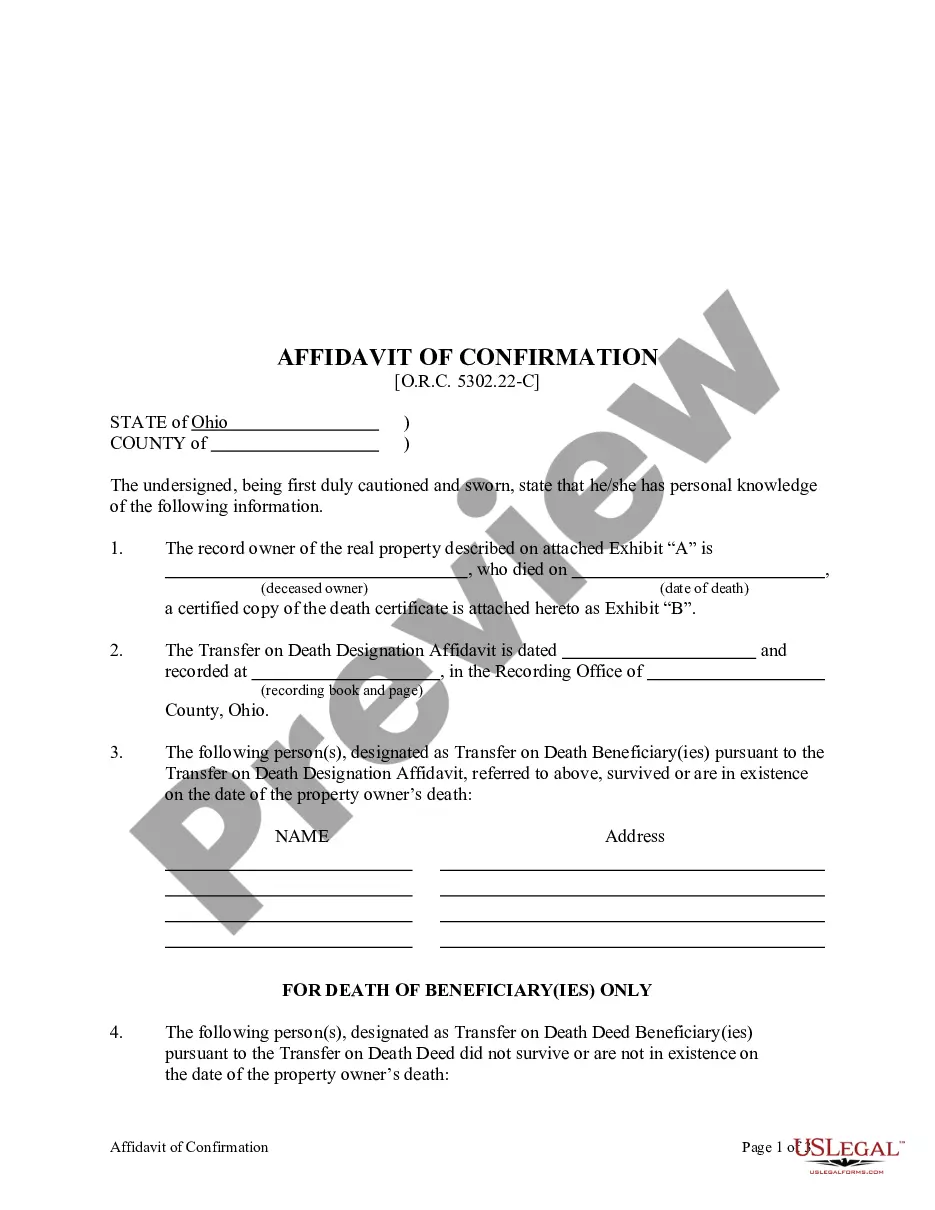
The Affidavit of Confirmation of Beneficiaries of Transfer on Death Designation Affidavit is a legal document that confirms the beneficiaries entitled to an interest in property after the ownerâs death. Unlike other beneficiaries' affidavits, this form specifically pertains to property designated for transfer on death, making it distinct in function and usage.
Key parts of this document
- Identification of the Affiant/Owner and their beneficiaries.
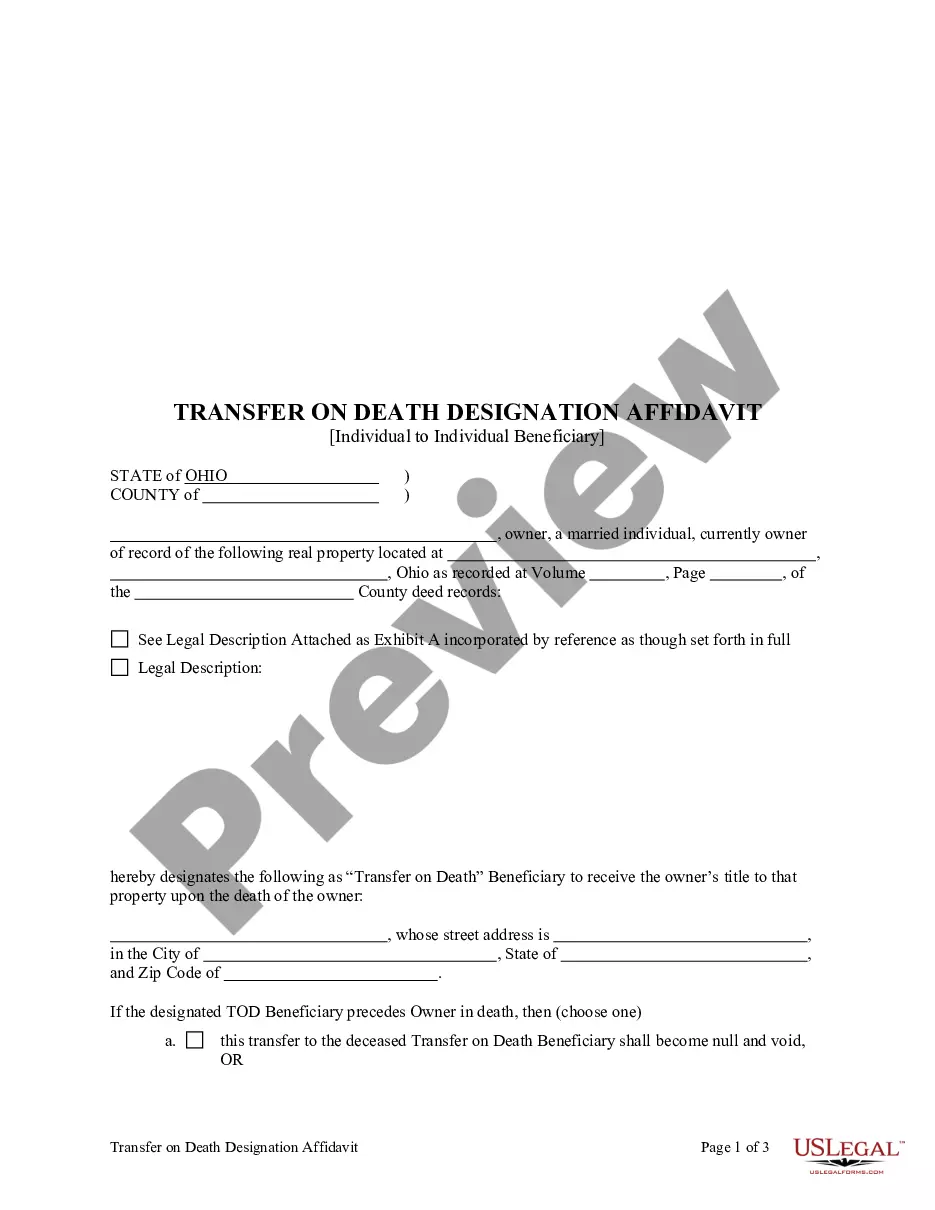
- Reference to the Transfer on Death Designation Affidavit, including Book and Page details.
- Submission of the Death Certificate of the Affiant/Owner.
- Inclusion of a completed Medicare Estate Recovery form.


When to use this document
This form is needed when an owner of property passes away, and it is necessary to confirm the beneficiaries who will inherit that property. It is typically used in situations involving the transfer of property designated with a transfer on death designation and ensures lawful transfer to the correct heirs.
Who can use this document
This form is intended for:
- Individuals who have designated beneficiaries for their property upon their death.
- Heirs seeking to confirm their rights and interests in the property of a deceased owner.
- Estate administrators or representatives handling property transfers for deceased owners.
How to prepare this document
- Identify the parties involved by entering the names of the Affiant/Owner and the beneficiaries.
- Locate and reference the Transfer on Death Designation Affidavit by providing the Book and Page details.
- Attach a copy of the Death Certificate of the Affiant/Owner to the affidavit.
- Complete the Medicare Estate Recovery form as required.
- Sign and date the affidavit in the presence of a notary, if necessary.
Notarization requirements for this form
This form does not typically require notarization unless specified by local law. However, it is advisable to check state guidelines to ensure compliance.
Get your form ready online
Our built-in tools help you complete, sign, share, and store your documents in one place.
Make edits, fill in missing information, and update formatting in US Legal Forms—just like you would in MS Word.
Download a copy, print it, send it by email, or mail it via USPS—whatever works best for your next step.
Sign and collect signatures with our SignNow integration. Send to multiple recipients, set reminders, and more. Go Premium to unlock E-Sign.
If this form requires notarization, complete it online through a secure video call—no need to meet a notary in person or wait for an appointment.
We protect your documents and personal data by following strict security and privacy standards.

Make edits, fill in missing information, and update formatting in US Legal Forms—just like you would in MS Word.

Download a copy, print it, send it by email, or mail it via USPS—whatever works best for your next step.

Sign and collect signatures with our SignNow integration. Send to multiple recipients, set reminders, and more. Go Premium to unlock E-Sign.

If this form requires notarization, complete it online through a secure video call—no need to meet a notary in person or wait for an appointment.

We protect your documents and personal data by following strict security and privacy standards.
Typical mistakes to avoid
- Failing to include the required death certificate.
- Not referencing the Transfer on Death Designation Affidavit correctly.
- Omitting to complete the Medicare Estate Recovery form.
- Not having the affidavit notarized if required by state law.
Benefits of completing this form online
- Immediate access to downloadable legal form templates.
- Convenience of completing the form at your own pace.
- Reliability of forms drafted by licensed attorneys.
Legal use & context
- This affidavit confirms the entitlement of beneficiaries according to the law.
- Ensures clarity in the transfer of a deceased personâs property.
- Must be filled out accurately to avoid disputes among beneficiaries.
Summary of main points
- Confirmation of beneficiaries is crucial for smooth property transfer after an owner's death.
- The affidavit must reference the Transfer on Death Designation and include essential documents.
- Completing the form accurately helps avoid potential disputes among heirs.
Looking for another form?





Form popularity
FAQ
Ohio Eliminates Transfer on Death Deeds.Effective December 28, 2009, Ohio eliminated transfer on death deeds and replaced that deed with a TRANSFER ON DEATH DESIGNATION AFFIDAVIT.
Using an Affidavit of Death to Claim Real Estate from a California Transfer on Death Deed. Transfer on death deeds allow individual landowners to transfer their real estate when they die, without a will or the need for probate distribution.
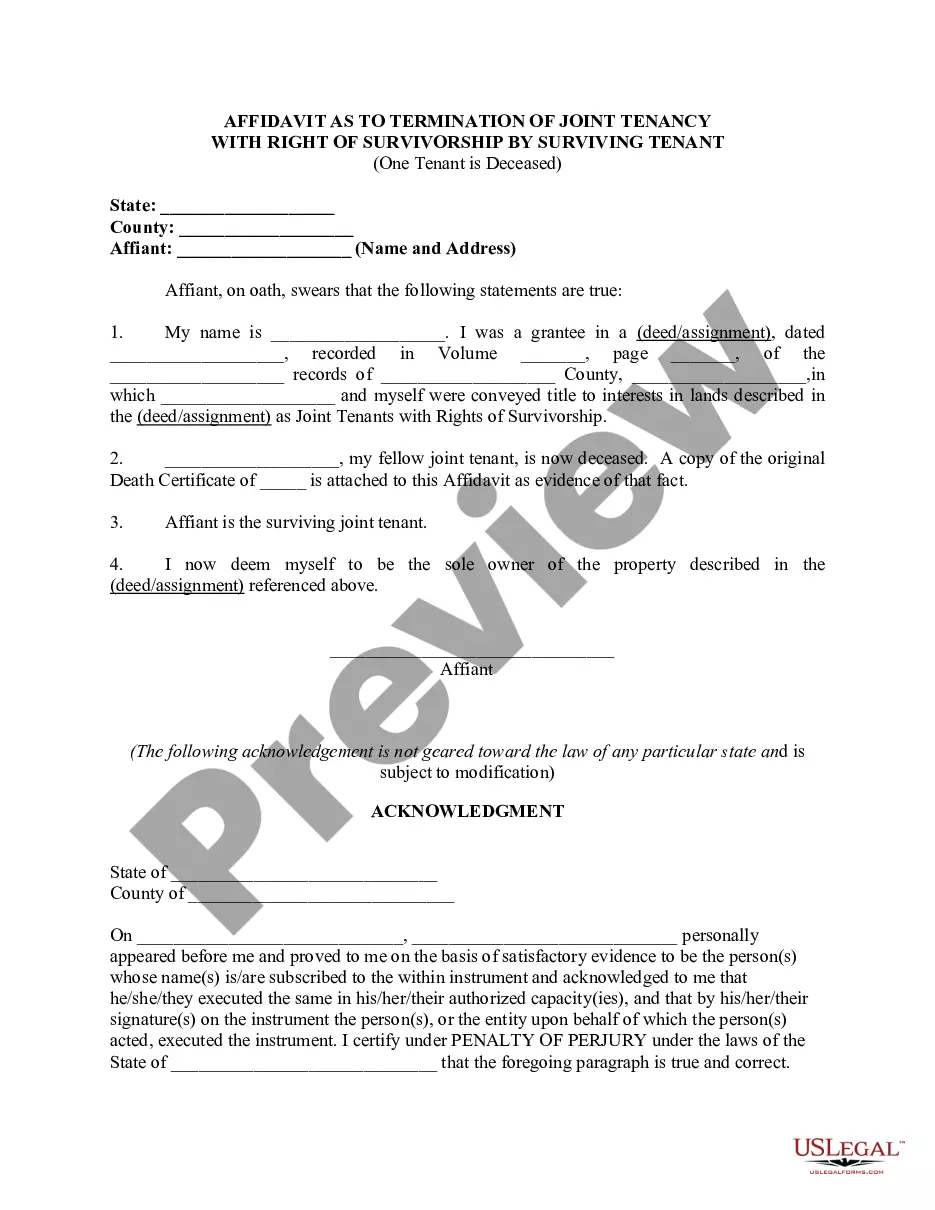
Survivorship Deeds contain special language that enables the property to transfer to the surviving owner(s) upon the deceased owner's death.A Transfer-On-Death Designation Affidavit allows the owner of Ohio real estate to designate one or more beneficiaries of the property.
Some assets, such as investment accounts with transfer on death (TOD) designations and retirement accounts, allow beneficiaries to be named.If there is a TOD on the account, the assets will only go to the beneficiary if both joint owners pass away. In either case, the asset will not likely go through probate.
Fill in information about you and the TOD beneficiary. provide a description of the property. check over the completed deed. sign the deed in front of a notary public, and.
If you'd like to avoid having your property going through the probate process, it's a good idea to look into a transfer on death deed. A transfer on death deed allows you to select a beneficiary who will receive your property, but only when you've passed away.
Yes. Ohio law allows individuals who do not need the estate administration benefits of a trust agreement to avoid Probate on the transfer of real property by executing a legal document called a Transfer-On-Death (TOD) Designation Affidavit.
A revocable TOD deed does not avoid the owner's creditors. Creditors may seek collection against the designated beneficiaries as to secured and unsecured obligations of the original owner.
A transfer on death deed (TOD) lets a property owner pass land or real estate to a designated beneficiary outside of the probate process. A transfer on death deed can be a helpful estate planning tool but it is not permitted in every state.