Ohio Quitclaim Deed from Husband to Himself and Wife
What this document covers
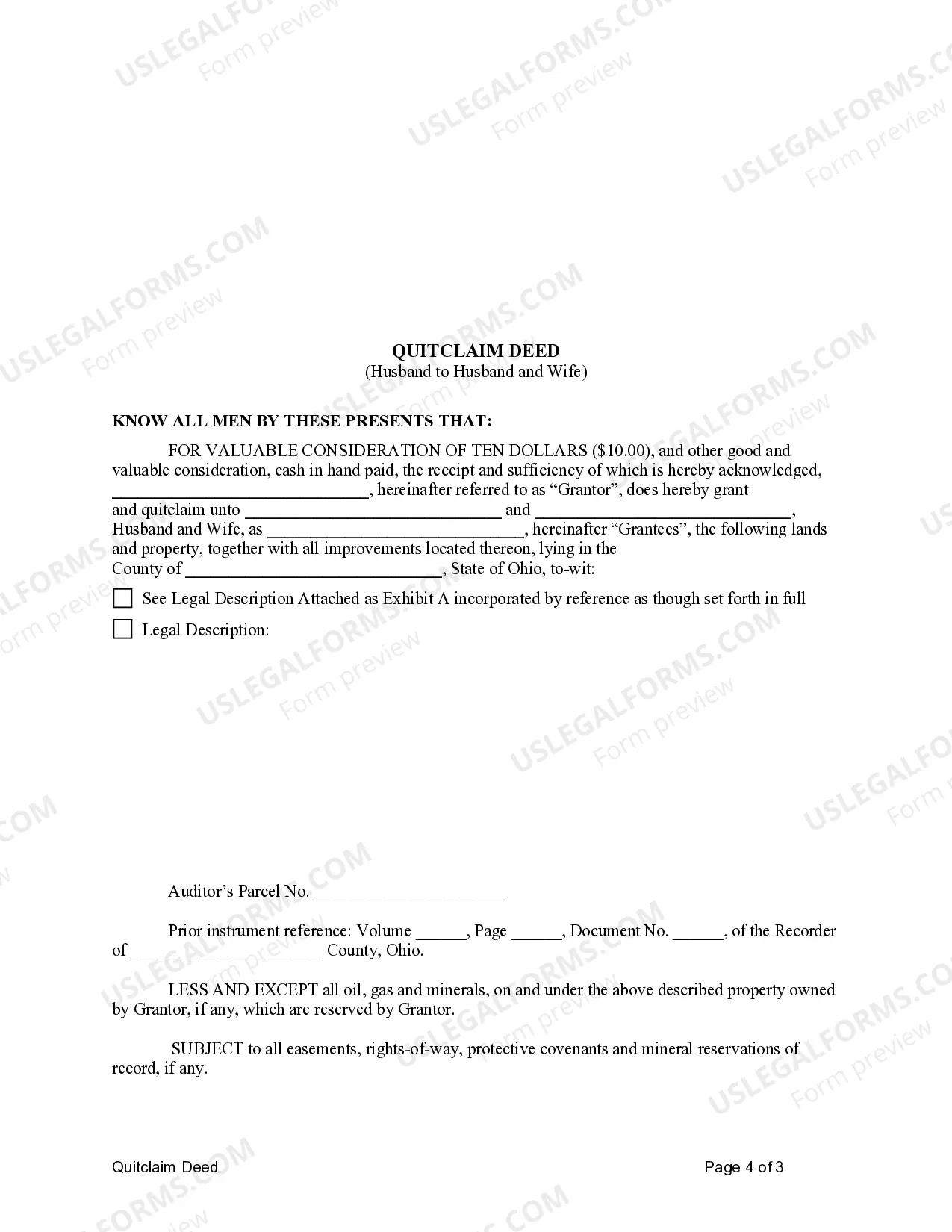
The Quitclaim Deed from Husband to Himself and Wife is a legal document that allows a husband (the Grantor) to transfer ownership of property to himself and his wife (the Grantees). Unlike a warranty deed, a quitclaim deed does not guarantee the quality of the title being transferred. This form is useful for establishing joint ownership between spouses without the complexities of a sale or financing involvement.
Form components explained
- Identification of the Grantor and Grantees.
- Description of the property being transferred.
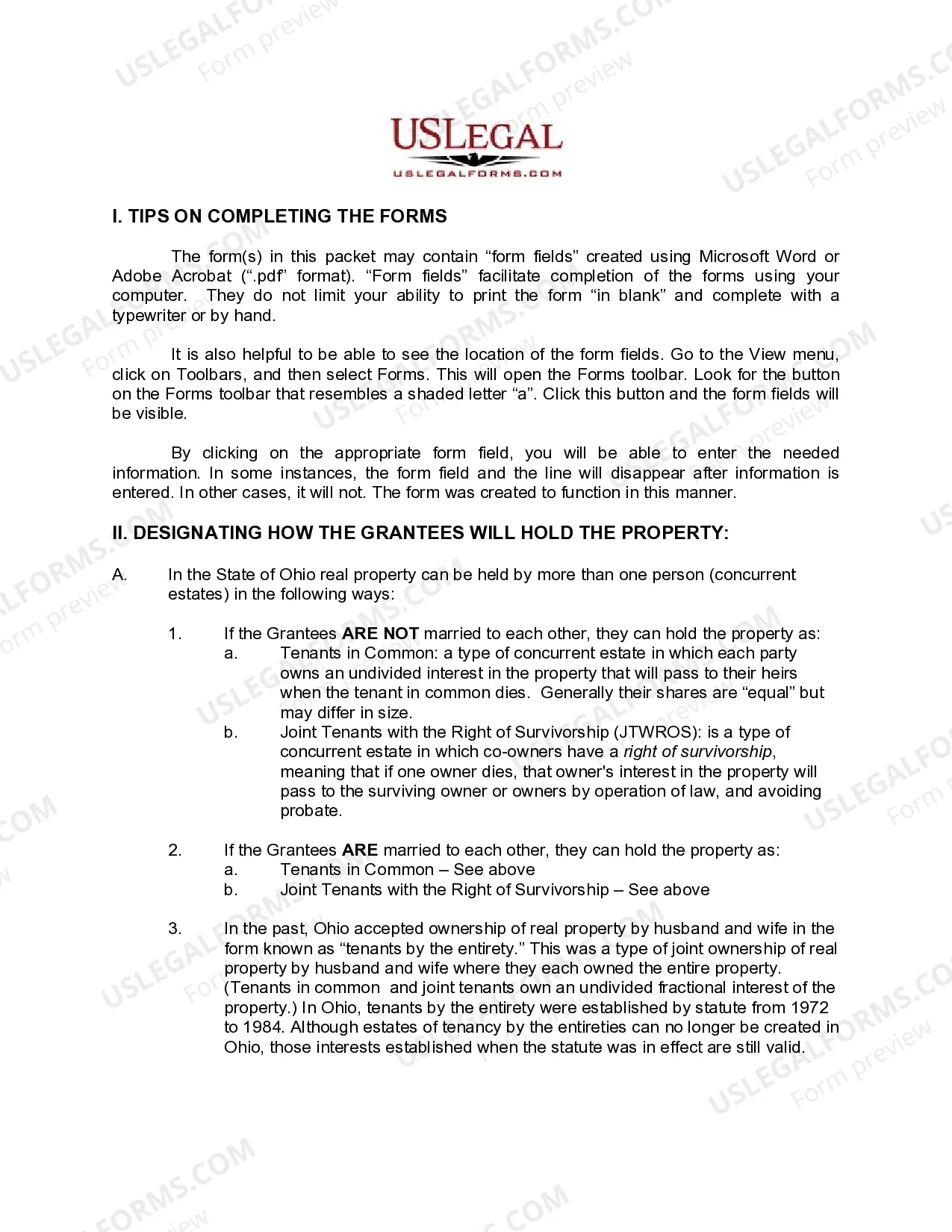
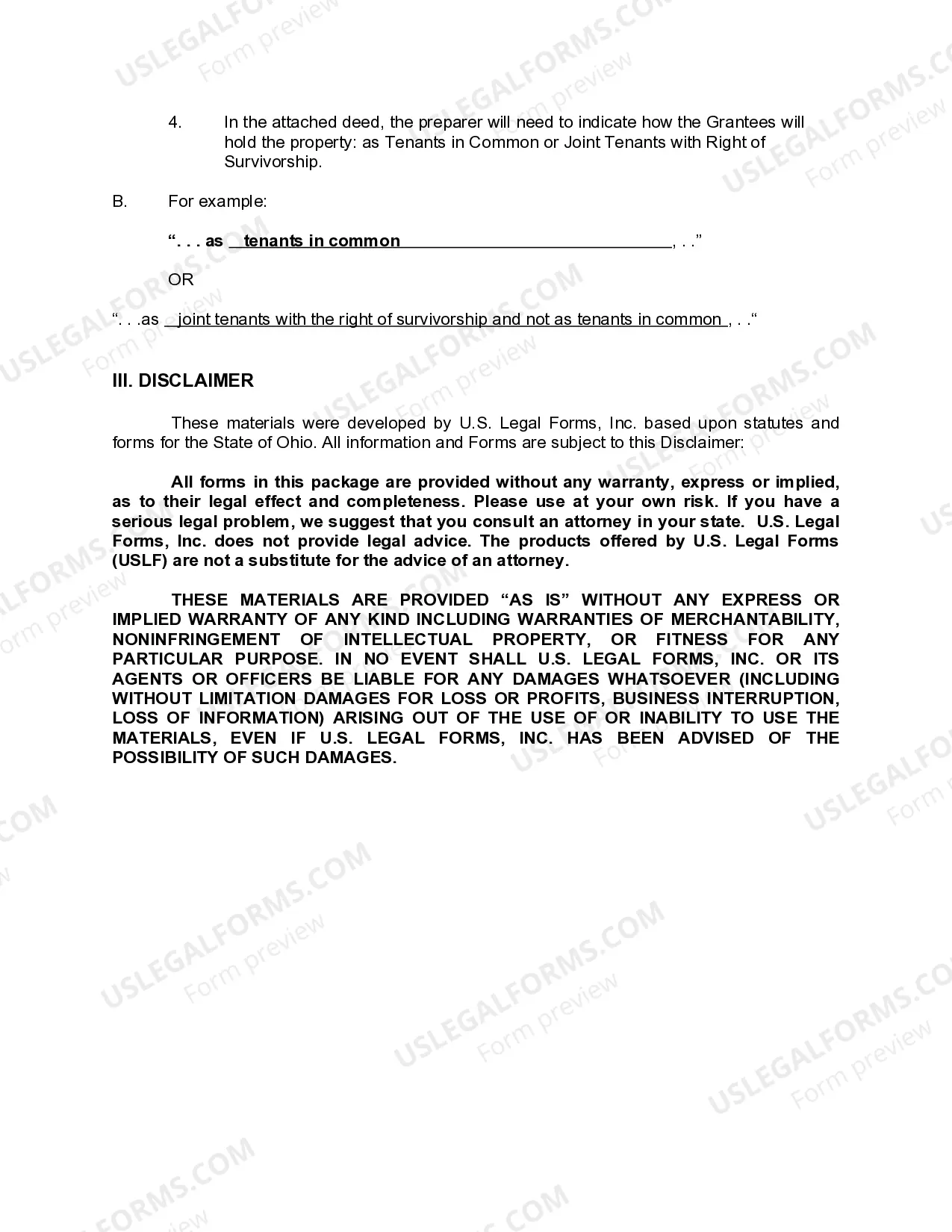
- Explanation of how the Grantees will hold the property (as tenants in common or joint tenants with right of survivorship).
- Provisions for mineral rights and easements, if applicable.
- Spaces for signatures and dates to validate the transfer.







When to use this document
This quitclaim deed should be used when a husband wishes to transfer property ownership to himself and his wife, either to clarify ownership, participate in estate planning, or simply to formalize existing arrangements. It is particularly suited for situations involving marital property, where the couple wishes to simplify their title holdings.
Who should use this form
This form is suitable for:
- Married couples wishing to establish joint ownership of property.
- Individuals looking to clarify property ownership within their marriage.
- Homeowners considering estate planning options related to property transfer.
How to complete this form
- Identify the Grantor (the husband) and Grantees (the husband and wife).
- Provide a complete description of the property, including its location.
- Specify how the Grantees will hold the property (as tenants in common or joint tenants with right of survivorship).
- Ensure all relevant parties sign the document in the presence of a notary public, if required.
- Record the deed with the local county recorder's office to make the transfer official.
Does this form need to be notarized?
Yes, this form must be notarized to be legally valid. U.S. Legal Forms offers integrated online notarization services, available 24/7, allowing you to complete the process through a secure video call without the need for travel.
Get your form ready online
Our built-in tools help you complete, sign, share, and store your documents in one place.
Make edits, fill in missing information, and update formatting in US Legal Forms—just like you would in MS Word.
Download a copy, print it, send it by email, or mail it via USPS—whatever works best for your next step.
Sign and collect signatures with our SignNow integration. Send to multiple recipients, set reminders, and more. Go Premium to unlock E-Sign.
If this form requires notarization, complete it online through a secure video call—no need to meet a notary in person or wait for an appointment.
We protect your documents and personal data by following strict security and privacy standards.

Make edits, fill in missing information, and update formatting in US Legal Forms—just like you would in MS Word.

Download a copy, print it, send it by email, or mail it via USPS—whatever works best for your next step.

Sign and collect signatures with our SignNow integration. Send to multiple recipients, set reminders, and more. Go Premium to unlock E-Sign.

If this form requires notarization, complete it online through a secure video call—no need to meet a notary in person or wait for an appointment.

We protect your documents and personal data by following strict security and privacy standards.
Mistakes to watch out for
- Failing to include a complete legal description of the property.
- Not specifying how the Grantees will hold the property.
- Omitting signatures or dates from the document.
- Not properly notarizing the deed when required.
Advantages of online completion
- Easy access to customizable legal templates created by licensed attorneys.
- Editability allows for quick adjustments to suit specific needs.
- Downloadable forms that can be printed or filled out electronically.
Summary of main points
- The Quitclaim Deed is an efficient tool for husbands transferring property to themselves and their wives.
- This form is specific to Ohio and adheres to state laws regarding property transfer.
- Notarization is essential for the deed to be legally binding, ensuring the legitimacy of the transaction.
Looking for another form?
Form popularity
FAQ
Transfer property quickly and easily using this simple legal form. You can use a quitclaim deed to:transfer property you own by yourself into co-ownership with someone else. change the way owners hold title to the property.
But you might be wondering if an owner can transfer a deed to another person without a real estate lawyer. The answer is yes. Parties to a transaction are always free to prepare their own deeds.A quitclaim deed, for example, is far simpler than a warranty deed.
Once you sign a quitclaim deed and it has been filed and recorded with the County Clerks Office, the title has been officially transferred and cannot be easily reversed. In order to reverse this type of transfer, it would require your spouse to cooperate and assist in adding your name back to the title.
A quitclaim deed is dangerous if you don't know anything about the person giving you the property. You should be sure that a person actually has rights to a property before signing it over with a quitclaim deed.
Unlike a general warranty deed, there's no guarantee made as to the ownership. There's no title search completed and no title insurance issued. Lenders wouldn't accept a quitclaim deed being used to purchase a property.
The drawback, quite simply, is that quitclaim deeds offer the grantee/recipient no protection or guarantees whatsoever about the property or their ownership of it. Maybe the grantor did not own the property at all, or maybe they only had partial ownership.
Contesting A Quitclaim Deed Contesting the validity of a quitclaim deed must prove that one of the stipulations described above is invalid, that the deed was filed under false pretenses (e.g., the grantor's signature was forged) or that the grantor signed the deed under duress.
An Ohio quit claim deed is a legal document that adheres to state law, and legally transfers the ownership interest of a property from one person to the next. This form of transfer comes with no warranties or guarantees that the property title is clear, and the seller has the authority to sell the property.
Quitclaim deeds are most often used to transfer property between family members.Examples include when an owner gets married and wants to add a spouse's name to the title or deed, or when the owners divorce and one spouse's name is removed from the title or deed.