Ohio General Notice of Default for Contract for Deed
Understanding this form
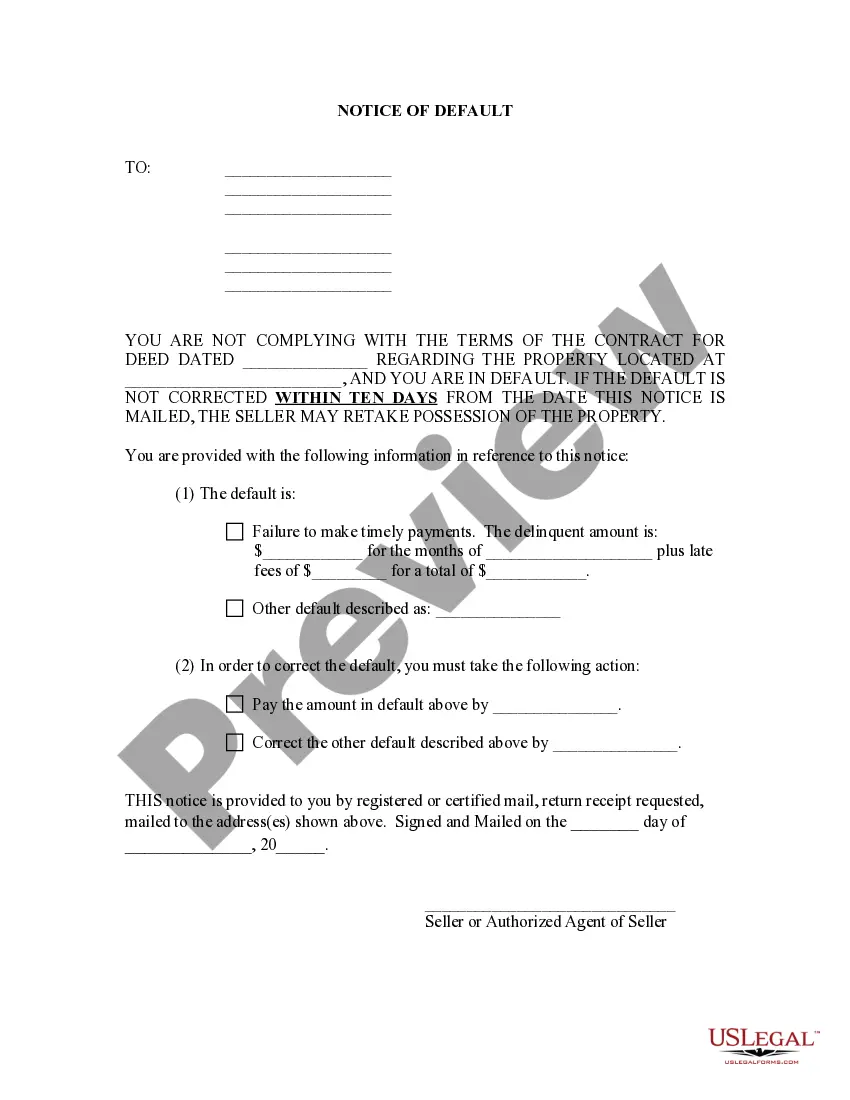
The General Notice of Default for Contract for Deed is a legal document used by the Seller to notify the Purchaser that they are in default of the contract for deed. This form clearly outlines the reasons for the default, specifies the actions required to remedy the situation, and communicates the Seller's intended course of action if the Purchaser fails to correct the default. It serves to formally document the default, which is crucial for any potential legal proceedings that may arise from the contract.
Form components explained
- Identification of the parties involved in the contract.
- Description of the default and the specific terms that have been violated.
- Outline of the performance required by the Purchaser to cure the default.
- The Seller's specified remedies if the Purchaser does not address the default.
- Deadlines for curing the default and any applicable penalties.
Situations where this form applies
This form is necessary when a Seller needs to inform the Purchaser that they have failed to meet the obligations of the contract for deed. This might occur due to non-payment, late payments, or other breaches of contract terms. Utilizing this notice helps establish a record of the default, which is essential for any further legal action or negotiations between the parties.
Who can use this document
- Real estate sellers who have entered into a contract for deed with a buyer.
- Purchasers who may be in default under the terms of their contract.
- Attorneys assisting clients in real estate transactions involving contracts for deed.
How to prepare this document
- Identify the Seller and Purchaser, including their legal names and addresses.
- Clearly state the specific reasons for the default, referencing the relevant terms of the contract.
- Specify the actions the Purchaser must take to remedy the default, including any applicable deadlines.
- Detail the Seller's planned remedies if the performance is not cured.
- Ensure that both parties sign and date the notice to establish a record of communication.
Does this document require notarization?
This form needs to be notarized to ensure legal validity. US Legal Forms provides secure online notarization powered by Notarize, allowing you to complete the process through a verified video call, available anytime.
Get your form ready online
Our built-in tools help you complete, sign, share, and store your documents in one place.
Make edits, fill in missing information, and update formatting in US Legal Forms—just like you would in MS Word.
Download a copy, print it, send it by email, or mail it via USPS—whatever works best for your next step.
Sign and collect signatures with our SignNow integration. Send to multiple recipients, set reminders, and more. Go Premium to unlock E-Sign.
If this form requires notarization, complete it online through a secure video call—no need to meet a notary in person or wait for an appointment.
We protect your documents and personal data by following strict security and privacy standards.

Make edits, fill in missing information, and update formatting in US Legal Forms—just like you would in MS Word.

Download a copy, print it, send it by email, or mail it via USPS—whatever works best for your next step.

Sign and collect signatures with our SignNow integration. Send to multiple recipients, set reminders, and more. Go Premium to unlock E-Sign.

If this form requires notarization, complete it online through a secure video call—no need to meet a notary in person or wait for an appointment.

We protect your documents and personal data by following strict security and privacy standards.
Avoid these common issues
- Failing to include specific details of the default.
- Not specifying a reasonable time frame for curing the default.
- Inadequately identifying the parties involved in the contract.
Benefits of completing this form online
- Convenient access to legal forms that can be downloaded immediately.
- Editable forms that allow for customization according to specific needs.
- Reliable documentation that is drafted by licensed attorneys to ensure legal compliance.
What to keep in mind
- The General Notice of Default for Contract for Deed is crucial for formally notifying a Purchaser of their default.
- It helps prevent further legal complications by documenting the Seller's claims and intended remedies.
- Completing the form accurately and within deadlines is essential for its enforceability.
Looking for another form?
Form popularity
FAQ
In the first instance, if your deed is not recorded, there is nothing in the public record to stop the seller from conveying the property to another person.The second situation could happen if your seller fails to pay his or her debts and the seller's creditors file liens or judgments against your property.
Purchase price. Down payment. Interest rate. Number of monthly installments. Responsibilities of the buyer and seller. Legal remedies for the seller if the buyer does not make payments.
A disadvantage to the seller is that a contract for deed is frequently characterized by a low down payment and the purchase price is paid in installments instead of one lump sum.The legal fees and time frame for this process will be more extensive than a standard Power of Sale foreclosure.
In order to cancel a contract for deed, a seller needs to complete a form called a notice of cancellation of contract for deed, and have the notice personally served on the buyer.A seller can cancel a contract for deed for buyer's default in making the monthly payments.
Contact the other party and ask whether they are willing to negotiate the cancellation of the contract. Offer the other party an incentive to cancel the contract for deed.
The buyer must record the contract for deed with the county recorder where the land is located within four months after the contract is signed. Contracts for deed must provide the legal name of the buyer and the buyer's address.
What Is A Deed Of Termination? A Deed of Termination is a document signed by parties to confirm that a legally binding contract previously entered into is to be terminated. This typically relates to the ending of a commercial relationship between two parties prior to the natural expiration of the contract between them.
The buyer should record the contract for deed with the county recorder where the land is located and does so normally within four months after the contract is signed, though the time may vary depending on state law.
In order for the seller to legally cancel the land contract, the seller must bring an action in court for forfeiture of the buyer's rights in the land contract and for restitution of the property.