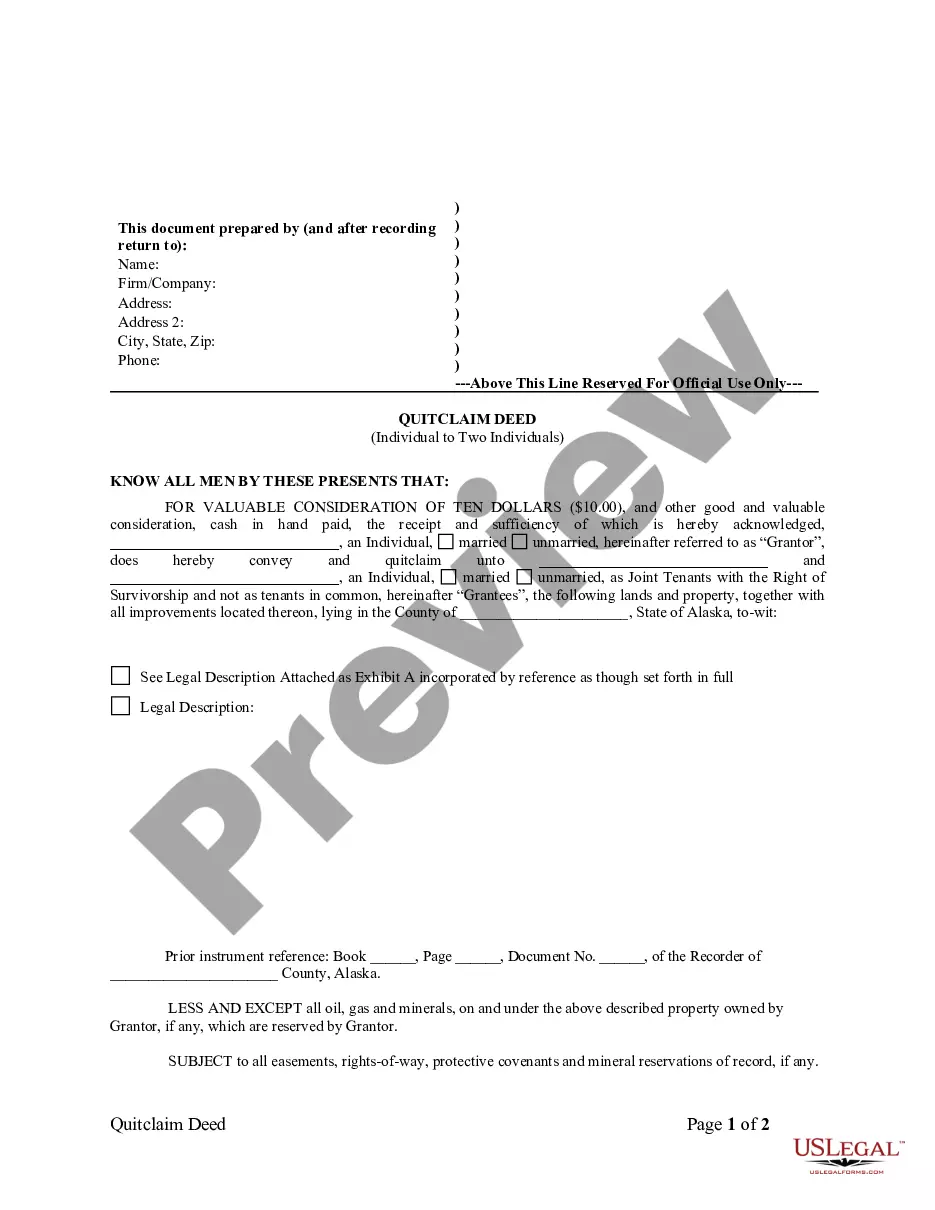
New York Last Will and Testament for other Persons
Understanding this form
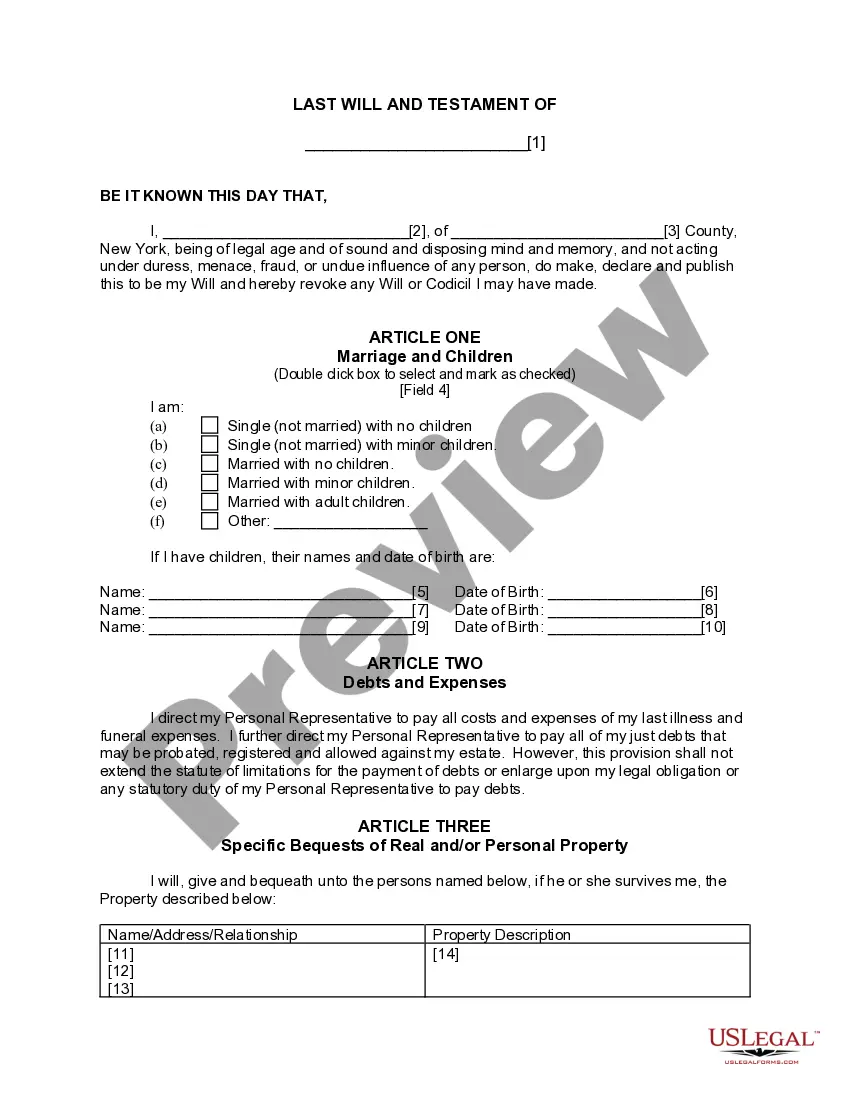
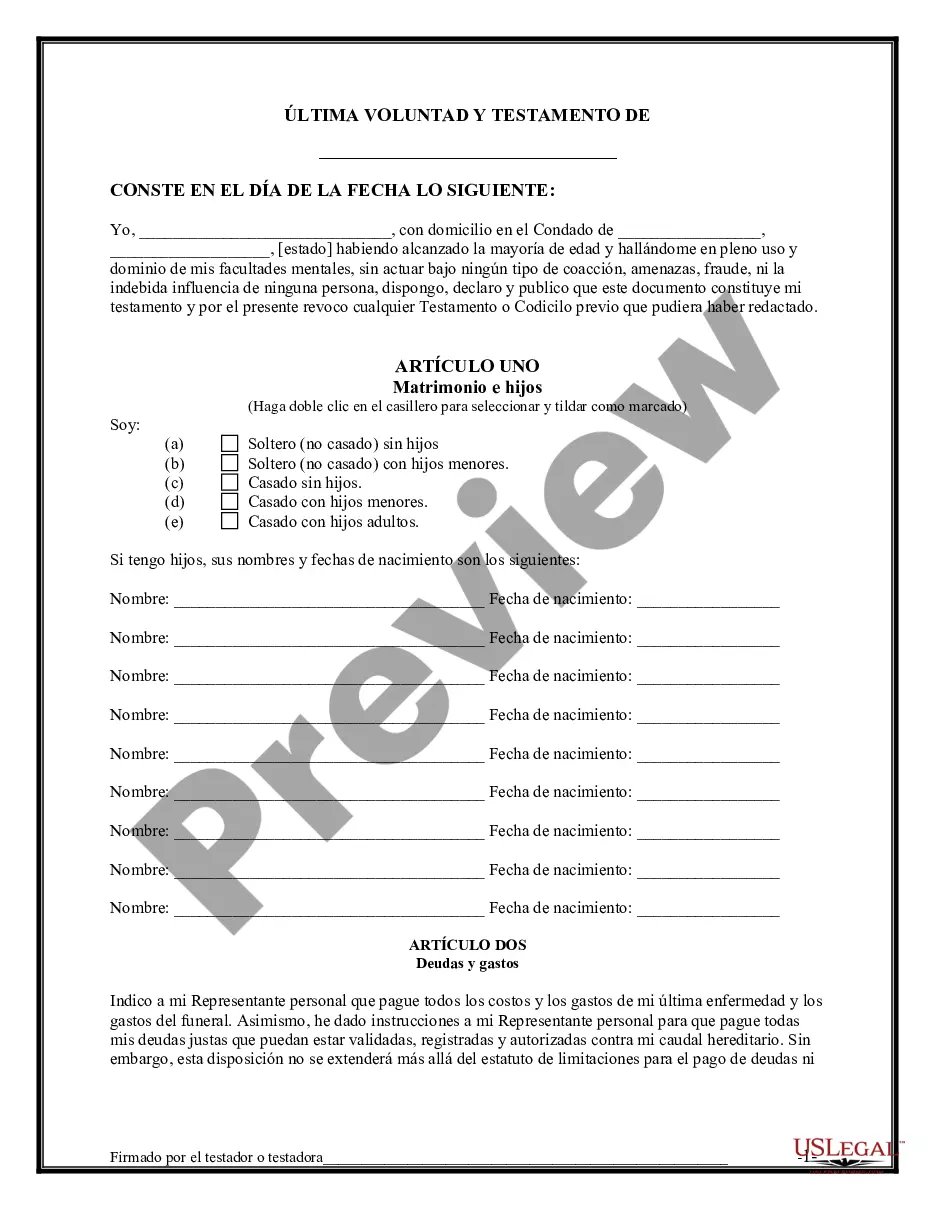
The Last Will and Testament for Other Persons is a legal document designed to outline how your assets will be distributed upon your death. It allows you to specify who will receive your property, appoint an executor, and designate guardians for minor children if applicable. This form is particularly tailored for residents of New York and is intended for those who need a comprehensive will but cannot find an appropriate template for their situation.
Key components of this form
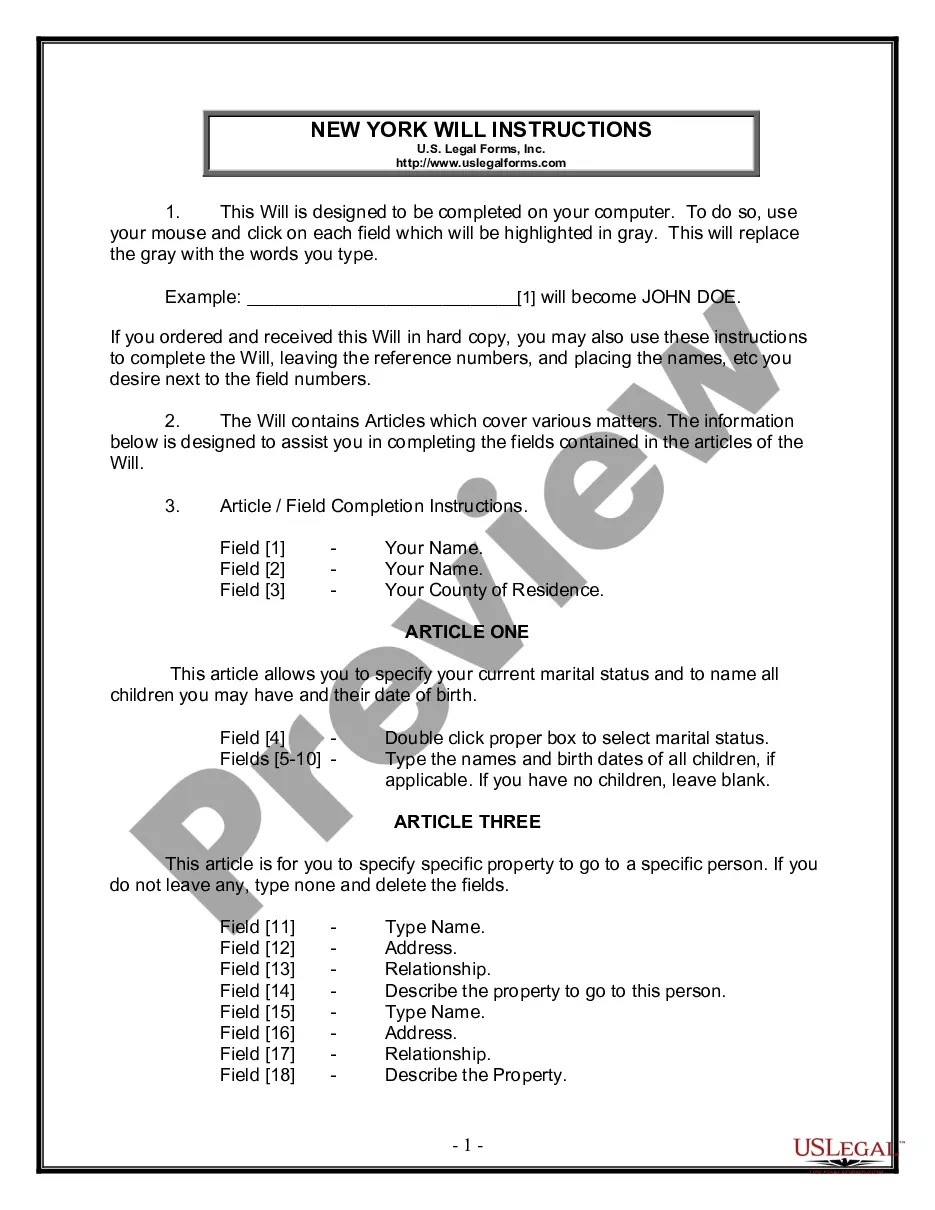
- Personal information: Your name and county of residence.
- Marital status and details about children: Specify your marital status and list your children and their birth dates.
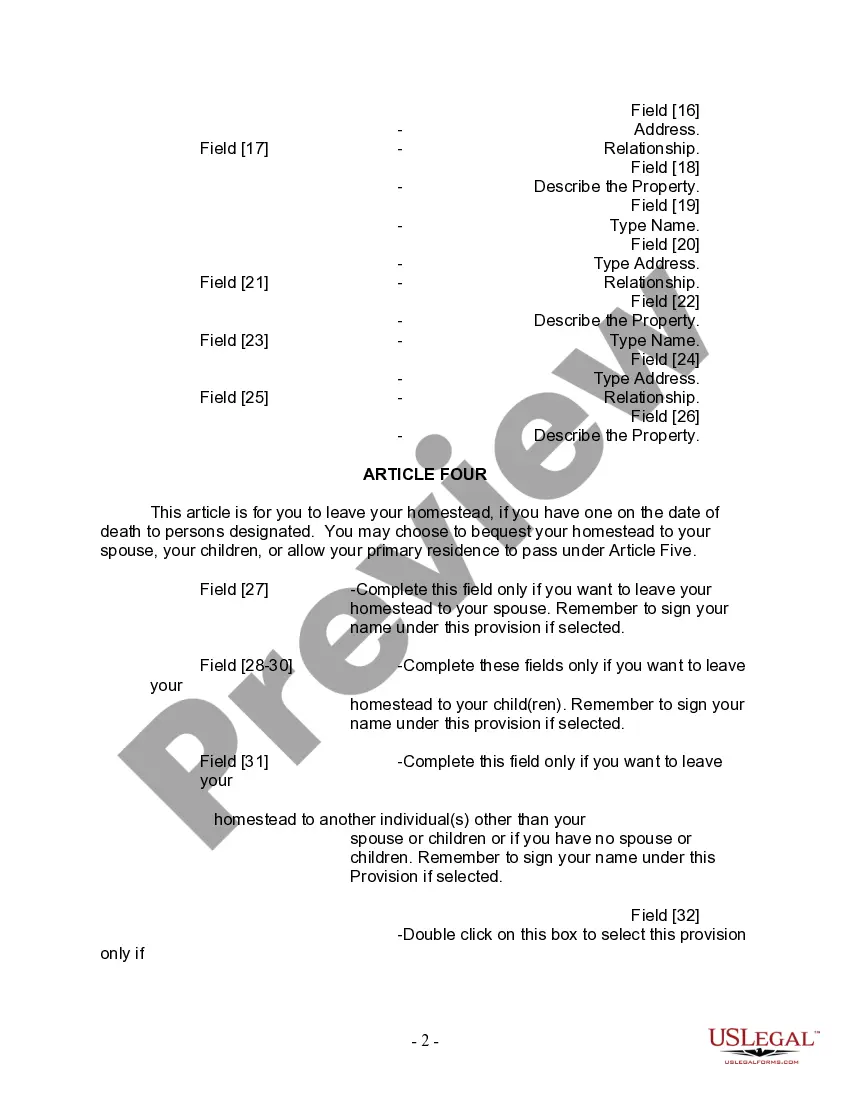
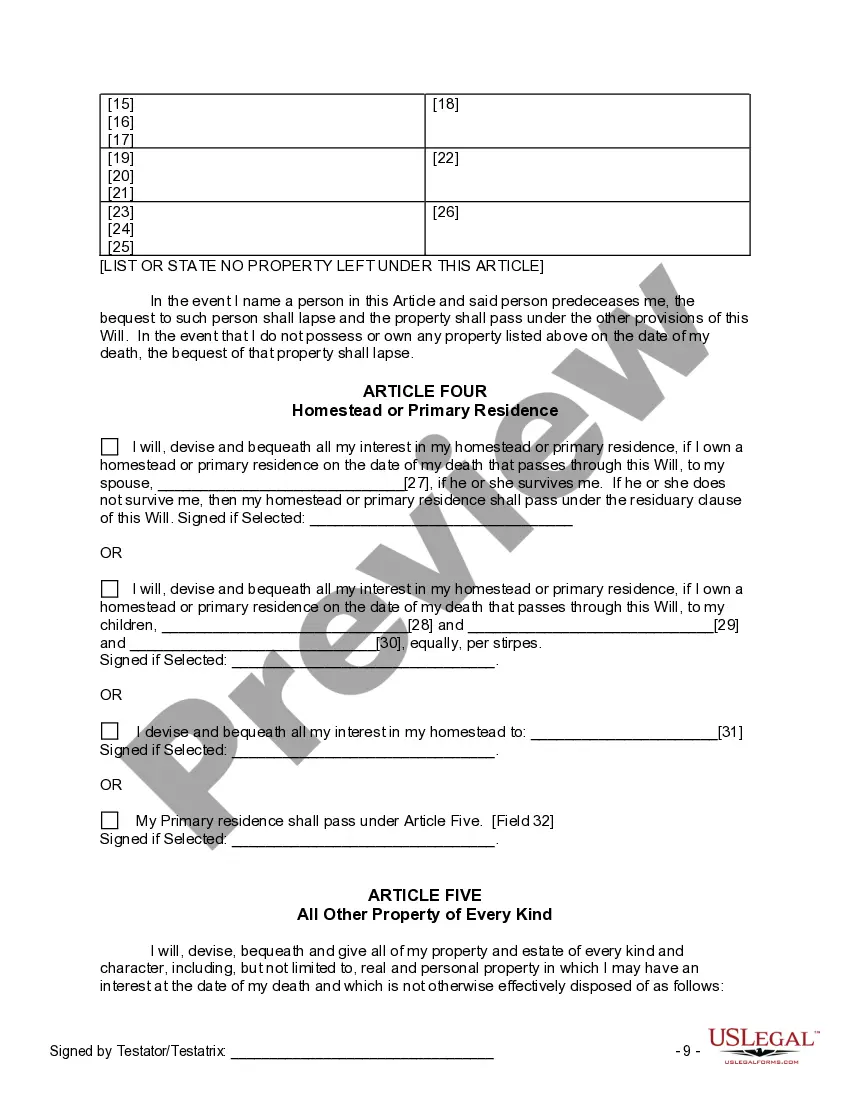
- Specific bequests: Designate particular property to specific individuals.
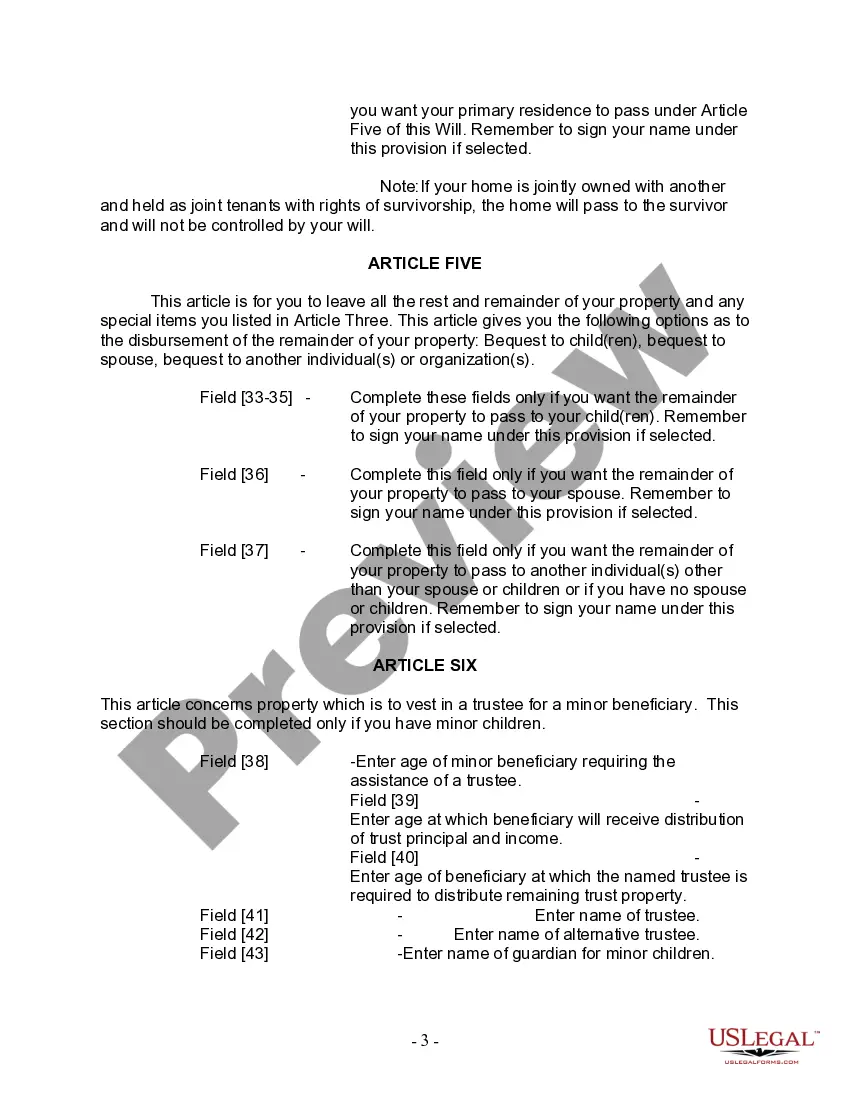
- Homestead provisions: Decide how your primary residence will be dealt with posthumously.
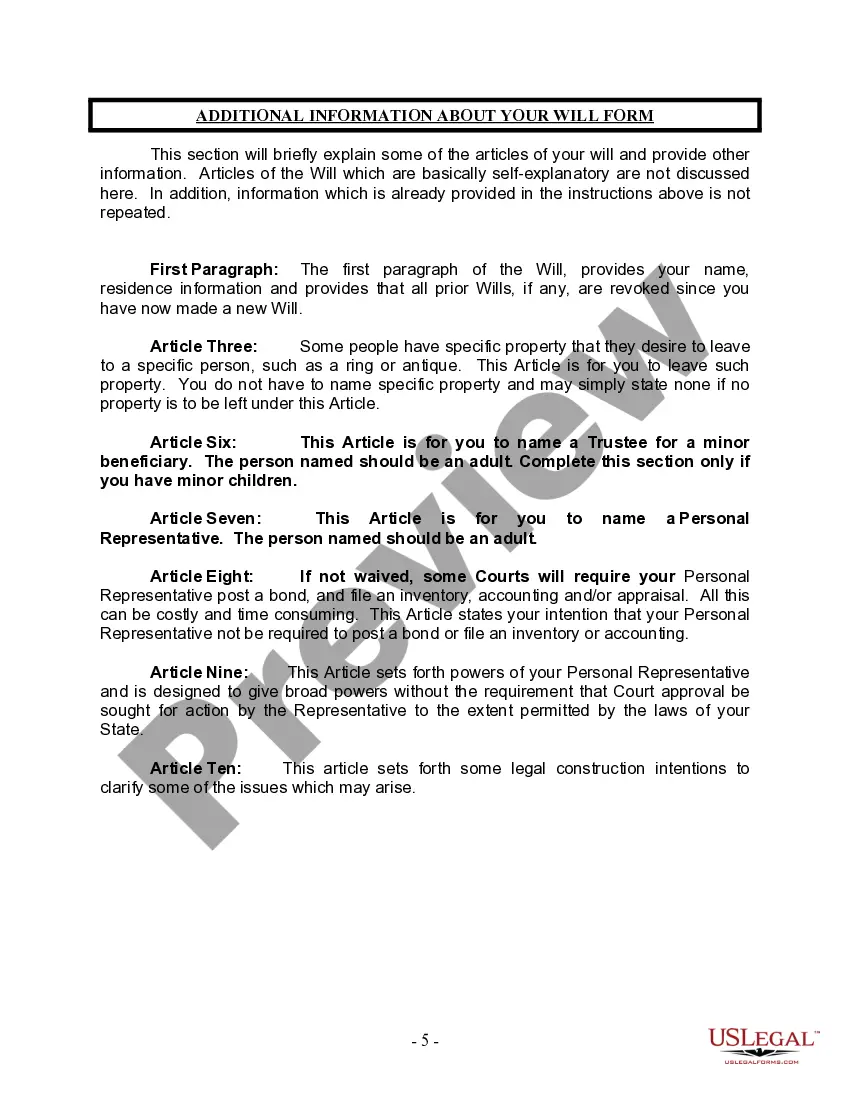
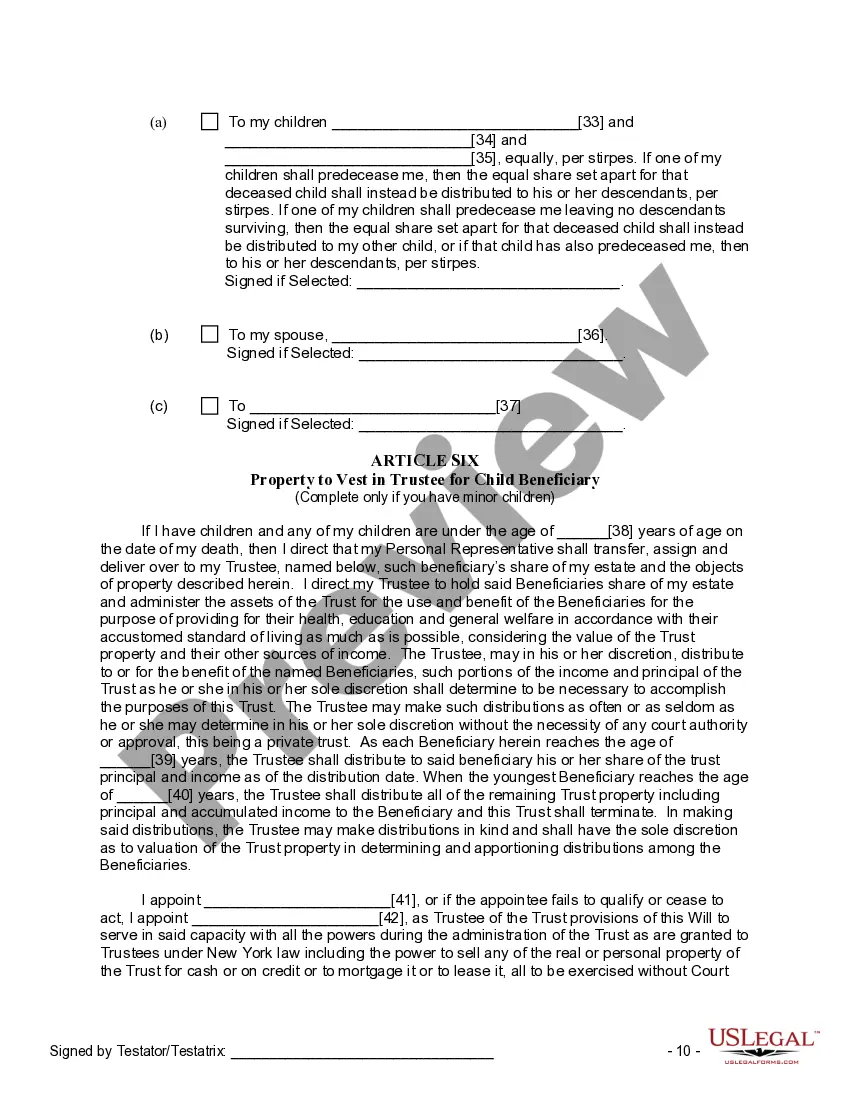
- Appointment of a trustee: For minor beneficiaries, specify who will manage their inheritance.
- Executor assignment: Name your personal representative for estate administration.




Common use cases
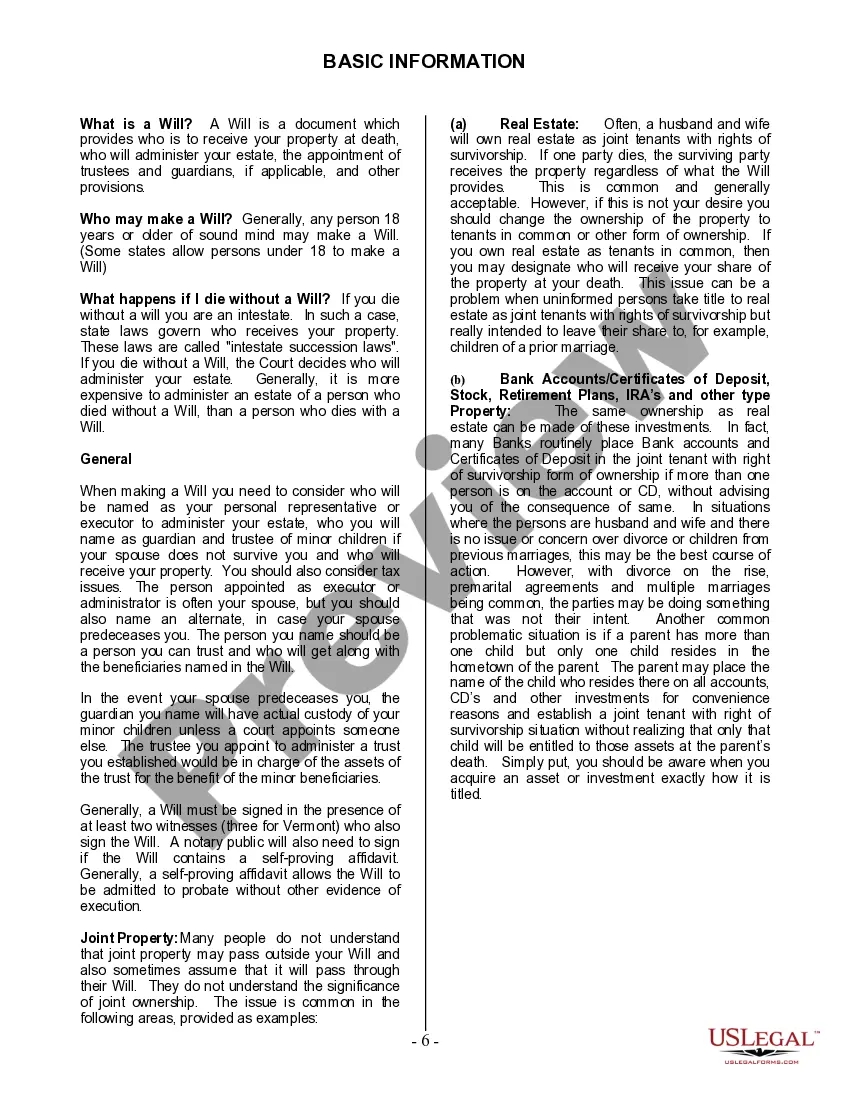
This form is necessary when you wish to create a legally binding document detailing your final wishes concerning property distribution. Use this will if you have specific assets to bequeath, wish to appoint guardians for dependents, or want to ensure that your estate is administered according to your preferences. It is also advisable to use this form if you do not currently have a valid will in place.
Who should use this form
- Individuals who are at least 18 years old and of sound mind.
- Residents of New York looking to create or update their last will and testament.
- Parents or guardians who need to designate caretakers for minor children.
- Anyone with specific wishes regarding property distribution after their death.
Instructions for completing this form
- Start by entering your name and county of residence in the designated fields.
- Specify your marital status and list the names and birth dates of your children.
- Detail any specific property you wish to leave to individuals, including their names and relationship to you.
- Complete the homestead provision if you want to bequeath your primary residence to certain individuals.
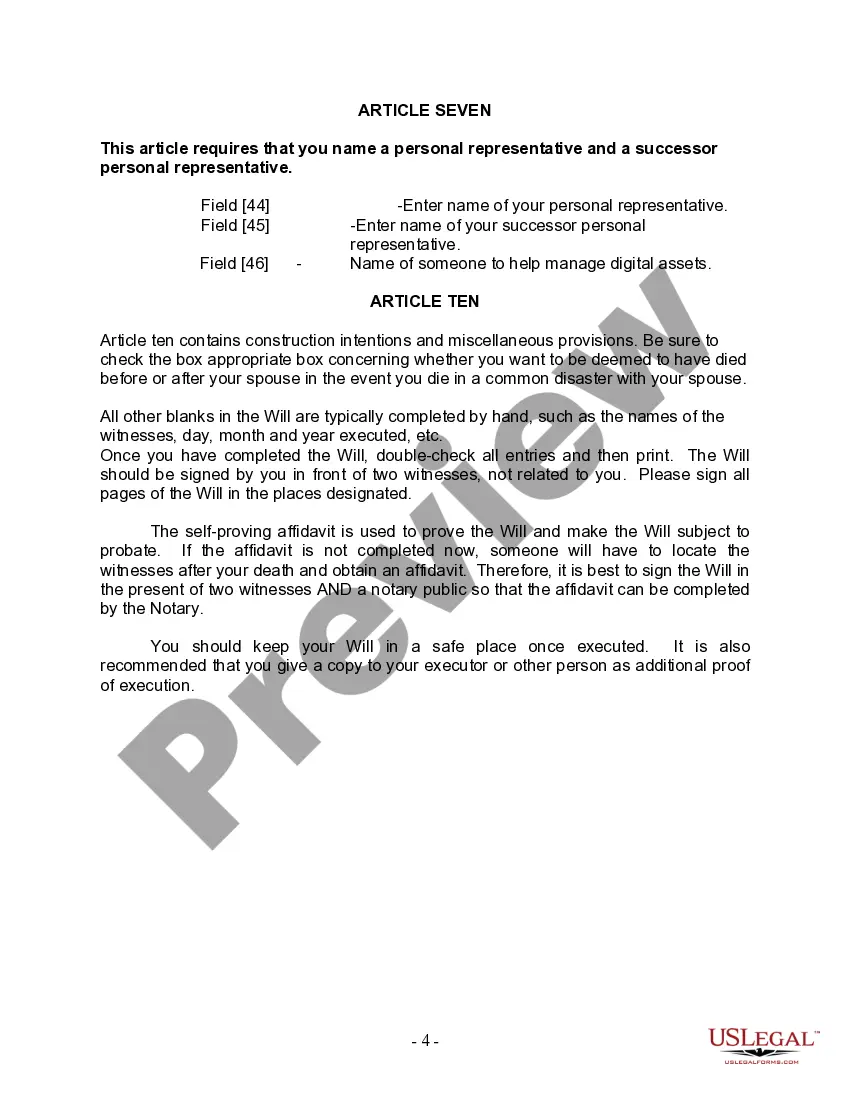
- Designate your personal representative and successor for estate administration.
Is notarization required?
This document requires notarization to meet legal standards. US Legal Forms provides secure online notarization powered by Notarize, allowing you to complete the process through a verified video call, available 24/7.
Get your form ready online
Our built-in tools help you complete, sign, share, and store your documents in one place.
Make edits, fill in missing information, and update formatting in US Legal Forms—just like you would in MS Word.
Download a copy, print it, send it by email, or mail it via USPS—whatever works best for your next step.
Sign and collect signatures with our SignNow integration. Send to multiple recipients, set reminders, and more. Go Premium to unlock E-Sign.
If this form requires notarization, complete it online through a secure video call—no need to meet a notary in person or wait for an appointment.
We protect your documents and personal data by following strict security and privacy standards.

Make edits, fill in missing information, and update formatting in US Legal Forms—just like you would in MS Word.

Download a copy, print it, send it by email, or mail it via USPS—whatever works best for your next step.

Sign and collect signatures with our SignNow integration. Send to multiple recipients, set reminders, and more. Go Premium to unlock E-Sign.

If this form requires notarization, complete it online through a secure video call—no need to meet a notary in person or wait for an appointment.

We protect your documents and personal data by following strict security and privacy standards.
Typical mistakes to avoid
- Failing to have the will signed in front of witnesses.
- Not specifying beneficiaries clearly, which can lead to confusion or disputes.
- Omitting necessary details about property and assets.
Benefits of using this form online
- Convenient completion on your computer, allowing for easy editing as needed.
- Access to a form prepared by licensed attorneys familiar with New York law.
- Immediate download for easy storage and printing whenever needed.
Looking for another form?
Form popularity
FAQ
California law requires a valid will to be in writing, either handwritten or typed. Anyone over 18 and of sound mind can make one.The witnesses must further attest that they understand that the document they are signing is intended to be the testator's will.
Although a state's laws might not technically require the filing of a will, the probate process cannot beginand thus any heirs or beneficiaries cannot inherit any of the deceased individual's assetsuntil someone submits the document to the probate court.
Locate the death certificate and the will. Locate the court that has jurisdiction. Request the relevant documents. Inventory the estate's assets. Submit a Petition for Probate and other relevant documents.
A handwritten Will without witnesses is valid in New York only under very limited circumstances and is not recommended. To be valid at all times, a Will must be in writing, dated and signed by the maker of the Will with two witnesses signing and adding their addresses under their signature.
A handwritten Will without witnesses is valid in New York only under very limited circumstances and is not recommended. To be valid at all times, a Will must be in writing, dated and signed by the maker of the Will with two witnesses signing and adding their addresses under their signature.
How much does it cost to make a will in NYC? Typically, about $1,200. It could cost more if one of the following is a factor: a large estate.
No. You can make your own will in New York, using Nolo's do-it-yourself will software or online will programs. However, you may want to consult a lawyer in some situations. For example, if you think that your will might be contested or if you want to disinherit your spouse, you should talk with an attorney.
The Will must be filed in Surrogate's Court and admitted for probate before the wishes of the person who died can be followed. If the person who died had less than $50,000 of personal property, then a small estate (also called a voluntary administration) can be filed instead.