New York - Outside New York City - Landlord Tenant Eviction / Unlawful Detainer Forms Package
What is this form package?
This New York landlord tenant eviction form package contains all the necessary state-specific forms needed to initiate the eviction of a tenant. Unlike generic forms, these documents comply with New York laws outside of New York City, offering landlords the necessary tools to navigate the eviction process effectively and legally.
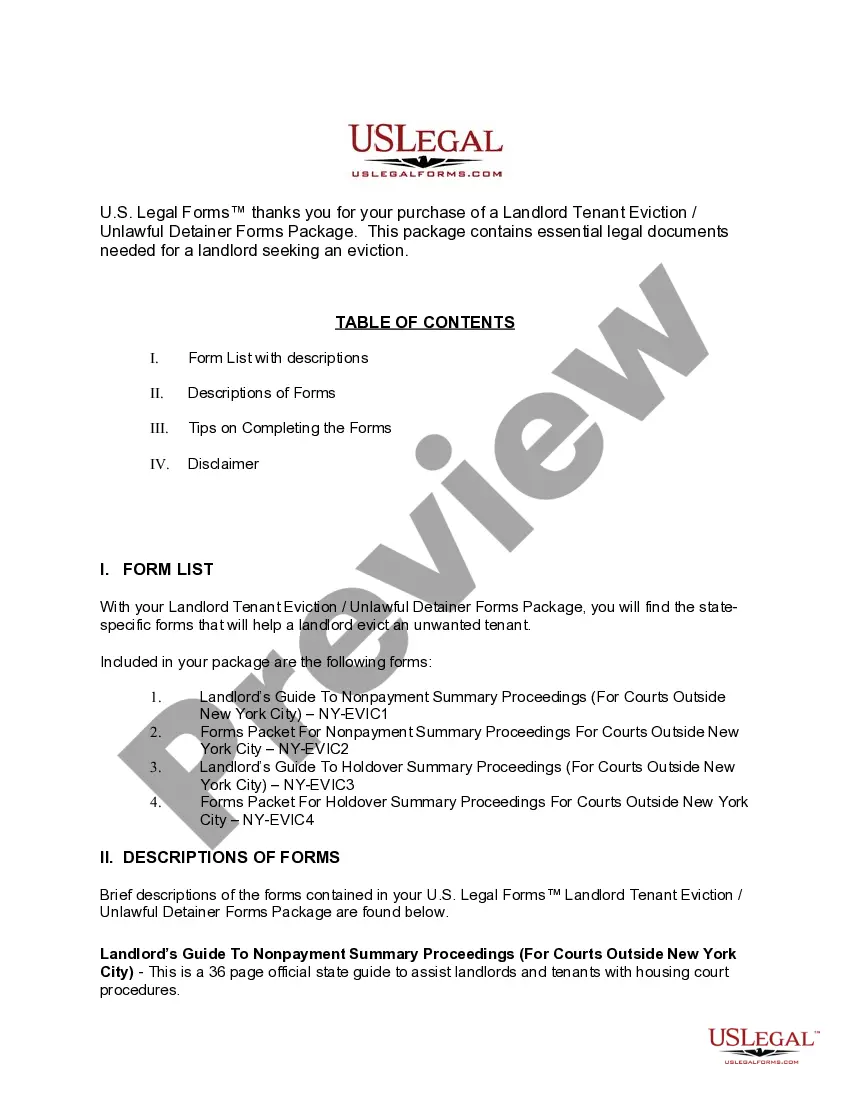
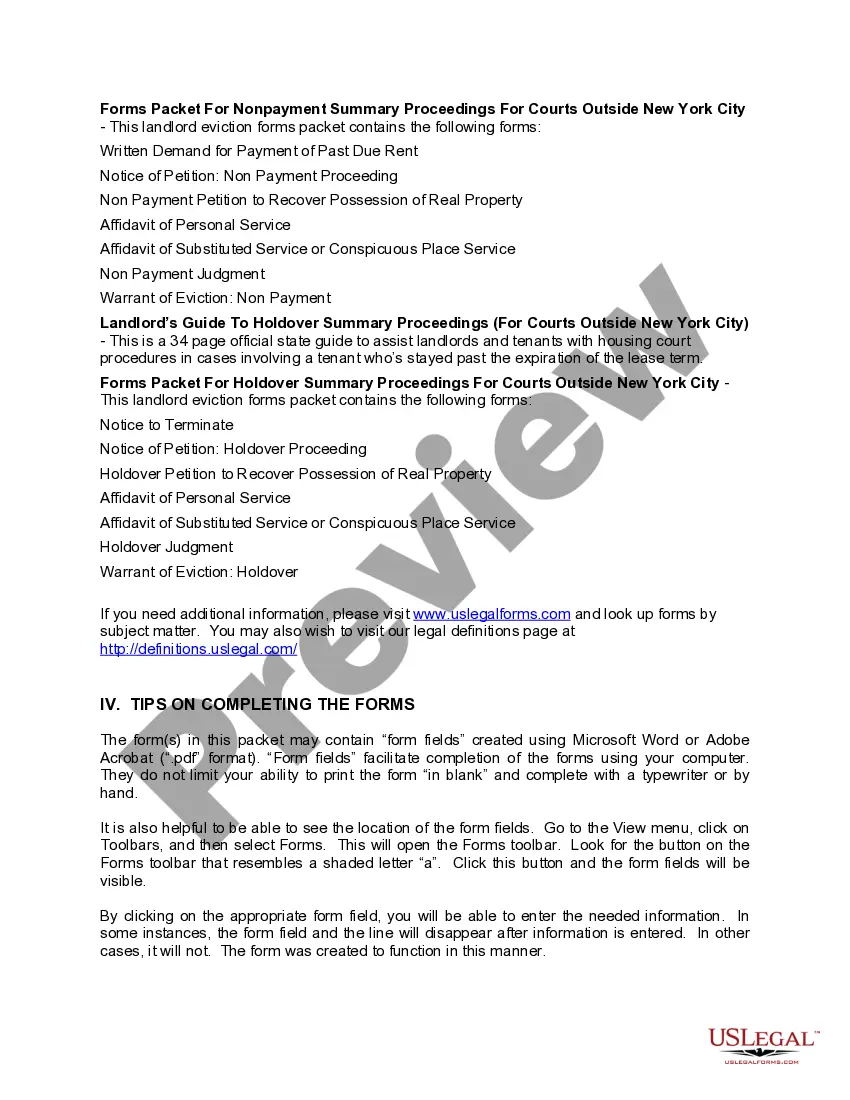
What’s included in this form package
- Tenant Questions and Answers in Nonpayment Eviction Cases for Courts Outside New York City
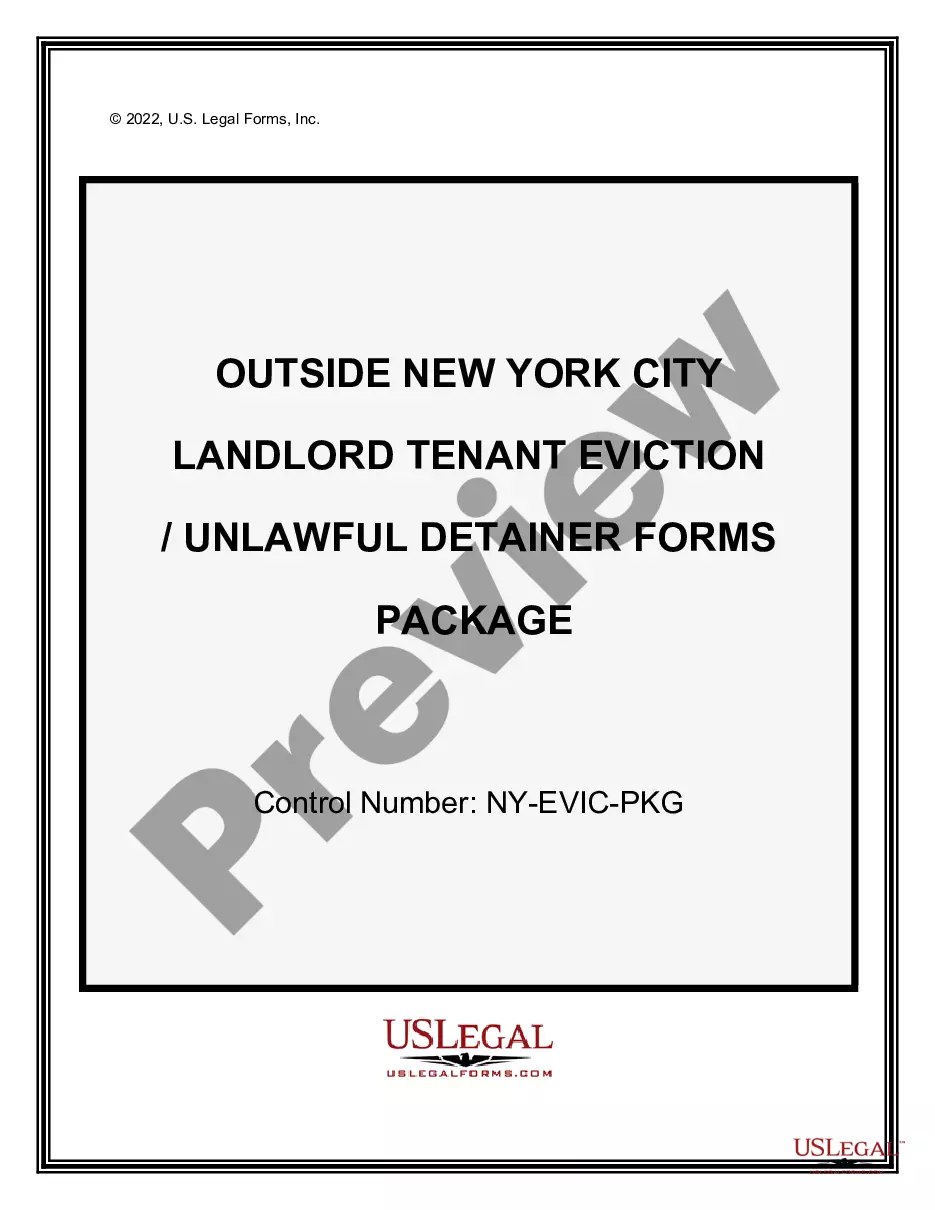
- Landlord's Guide to Nonpayment Eviction Proceedings For Courts Outside New York City
- Landlord's Guide To Holdover Eviction Proceedings for Courts Outside New York City
- Tenant's Questions and Answers in Holdover Eviction Cases for Courts Outside New York City
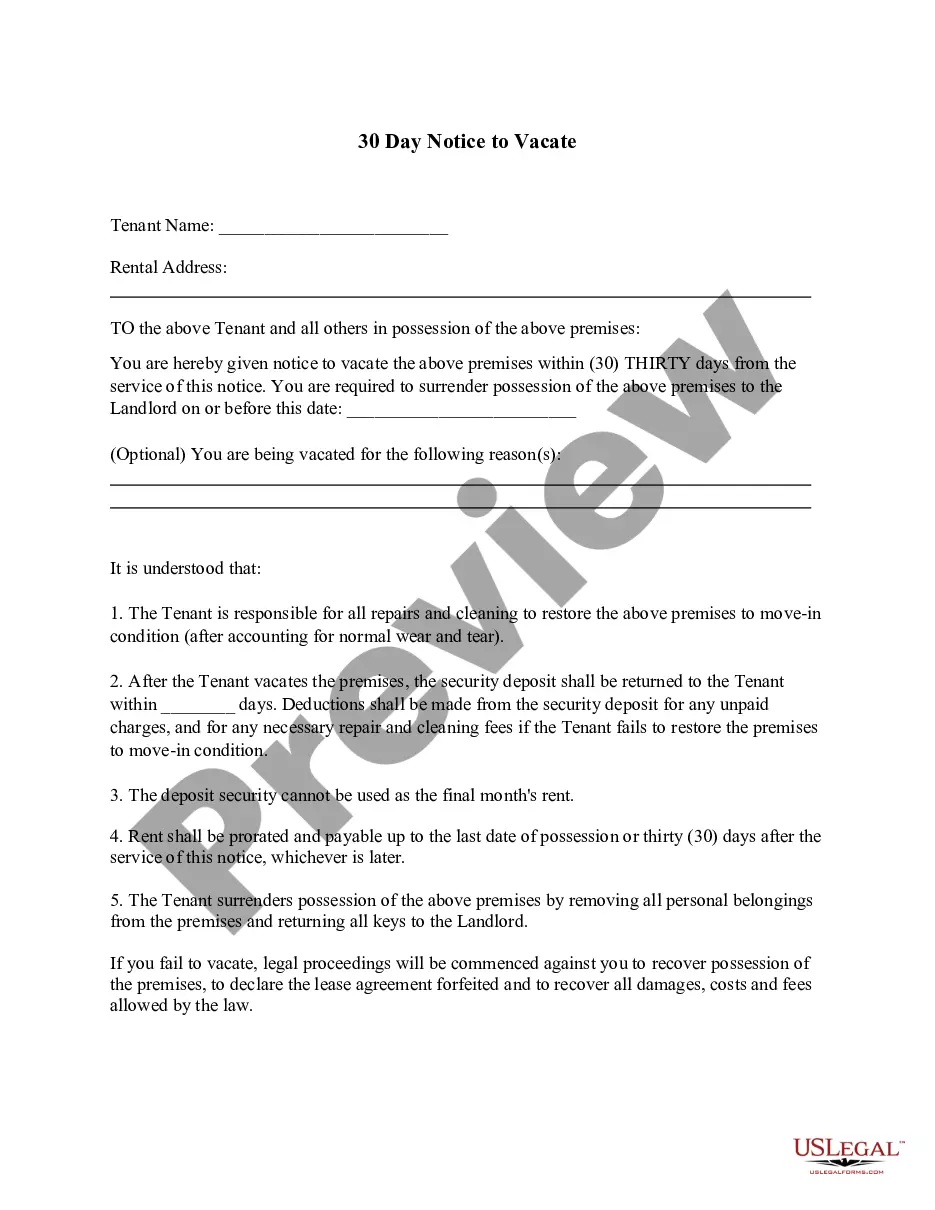
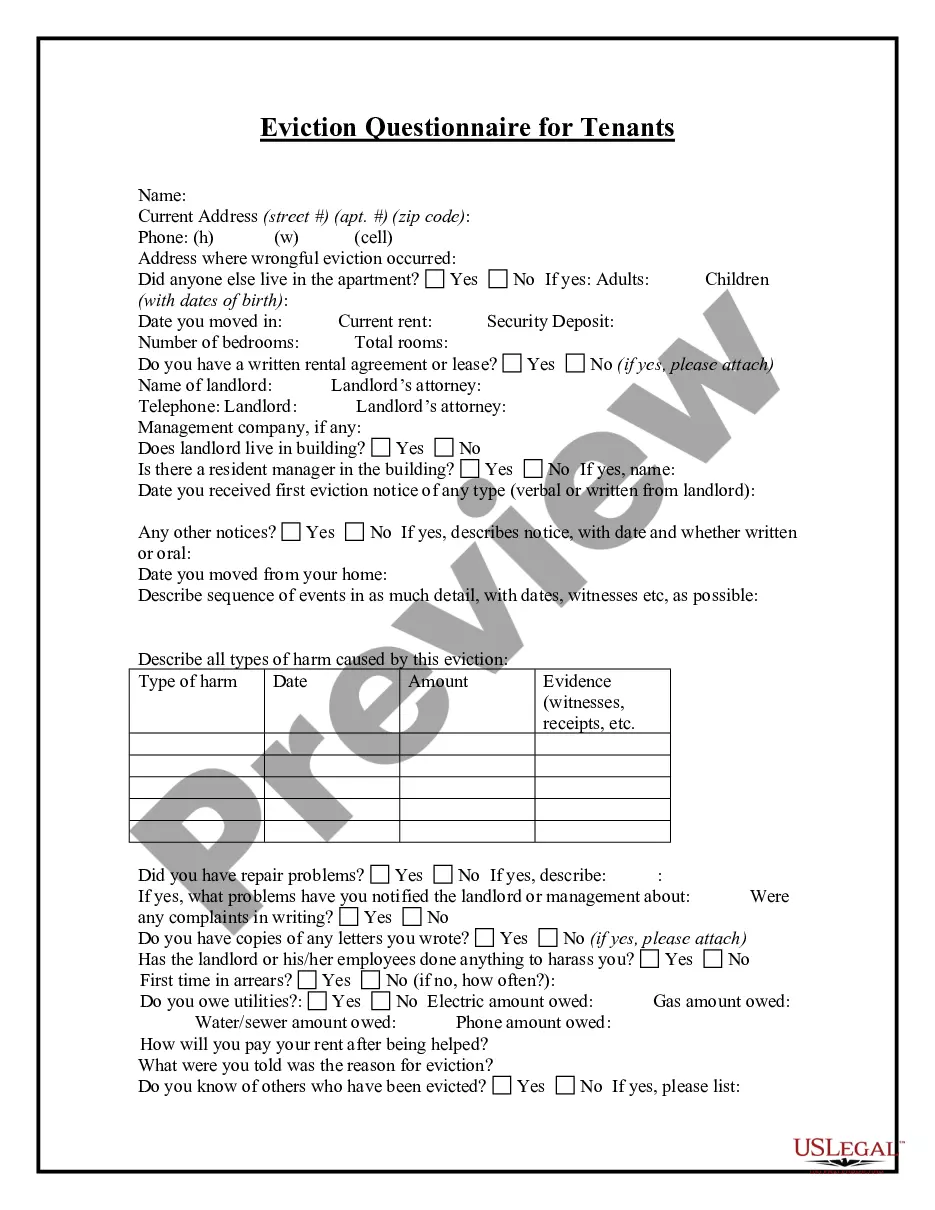
When to use this form package
This form package is useful in situations such as:
- Your tenant has not paid rent and you need to initiate a non-payment eviction.
- You have a tenant who has overstayed their lease and you need to file for a holdover eviction.
- You want to ensure you follow the proper legal procedures to avoid potential delays in the eviction process.
Who can use this document
- Residential landlords seeking to evict tenants for non-payment of rent.
- Landlords looking to reclaim possession of their property from tenants who have overstayed their lease.
- Property managers who need to navigate the eviction process according to New York regulations.
Steps to complete these forms
- Review the included forms and guides to understand the eviction process.
- Identify the parties involved, including your information and that of the tenant.
- Fill in the required details such as dates and amounts due.
- Sign the required forms where indicated and prepare for filing.
- File the forms with the appropriate court as per state regulations.
Do documents in this package require notarization?
Some included forms must be notarized to ensure validity. US Legal Forms provides secure online notarization powered by Notarize, allowing you to complete the process through a verified video call anytime.
Get your form ready online
Our built-in tools help you complete, sign, share, and store your documents in one place.
Make edits, fill in missing information, and update formatting in US Legal Forms—just like you would in MS Word.
Download a copy, print it, send it by email, or mail it via USPS—whatever works best for your next step.
Sign and collect signatures with our SignNow integration. Send to multiple recipients, set reminders, and more. Go Premium to unlock E-Sign.
If this form requires notarization, complete it online through a secure video call—no need to meet a notary in person or wait for an appointment.
We protect your documents and personal data by following strict security and privacy standards.

Make edits, fill in missing information, and update formatting in US Legal Forms—just like you would in MS Word.

Download a copy, print it, send it by email, or mail it via USPS—whatever works best for your next step.

Sign and collect signatures with our SignNow integration. Send to multiple recipients, set reminders, and more. Go Premium to unlock E-Sign.

If this form requires notarization, complete it online through a secure video call—no need to meet a notary in person or wait for an appointment.

We protect your documents and personal data by following strict security and privacy standards.
Avoid these common issues
- Failing to properly serve notice to the tenant before filing for eviction.
- Using the wrong forms or outdated versions.
- Not keeping copies of all documents for your records.
- Overlooking deadlines for filing paperwork in court.
Benefits of completing this package online
- Convenience of accessing and downloading forms from anywhere.
- Editability allows for quick updates and corrections to your documents.
- Reliable forms drafted by licensed attorneys to ensure compliance with state laws.
Legal use & context
- These forms are legally designed for use in eviction proceedings as per New York laws.
- They provide a structured process to follow, reducing the likelihood of errors that could invalidate the eviction.
- Consulting with a legal professional may enhance the effectiveness of your documentation.
Key takeaways
- This package includes essential forms and guides for landlords outside NYC.
- It is vital for landlords to follow proper eviction procedures to avoid legal complications.
- Completing the forms correctly and filing them promptly is key to a successful eviction.
Looking for another form?



Form popularity
FAQ
Know Your Rights. It goes without saying, but take some time to know your rights as a tenant. Keep Good Records. Make Sure Notice is Proper. Service of the Unlawful Detainer. Talking to an Attorney. Managing Partner Lipton Legal Group, A PC Beverly Hills, CA.
Courts commonly refer to eviction actions as "forcible entry and detainer" or "unlawful detainer" actions. The legal theory is that the landlord alleges the tenant unlawfully continues to have use and possession of the rental property, and the landlord seeks the assistance of the court to have the tenant removed.
An unlawful detainer is an eviction lawsuit. This won't be reported to the credit bureaus unless you are actually evicted.Much like losing a lawsuit, unlawful-detainer suits are reported to the credit bureaus.
No. The landlord must go to court, must win the case, and then must pay a fee to have a law enforcement officer properly evict you.
Know Your Rights. It goes without saying, but take some time to know your rights as a tenant. Keep Good Records. Make Sure Notice is Proper. Service of the Unlawful Detainer. Talking to an Attorney. Managing Partner Lipton Legal Group, A PC Beverly Hills, CA.
If you file an eviction (unlawful detainer) case and you decide you do not want to move forward, you can ask the court to dismiss the case.You included more than one tenant in your eviction case but have decided you only want to evict one or some of them, so you dismiss the case as to the others.
A landlord cannot legally evict you without a court order, whether or not you have a lease.) How long does it take for a landlord to evict a tenant? A landlord can evict a tenant only by going through a formal eviction proceeding, which can take a few weeks from start to finish.
At the trial, the landlord will put on her case.The landlord will talk about the Notice of Termination that was sent to the tenant and her reasons for wanting to evict the tenant. The landlord may present other witnesses to support her claims against the tenant.