New York Owner's or Seller's Affidavit of No Liens
About this form
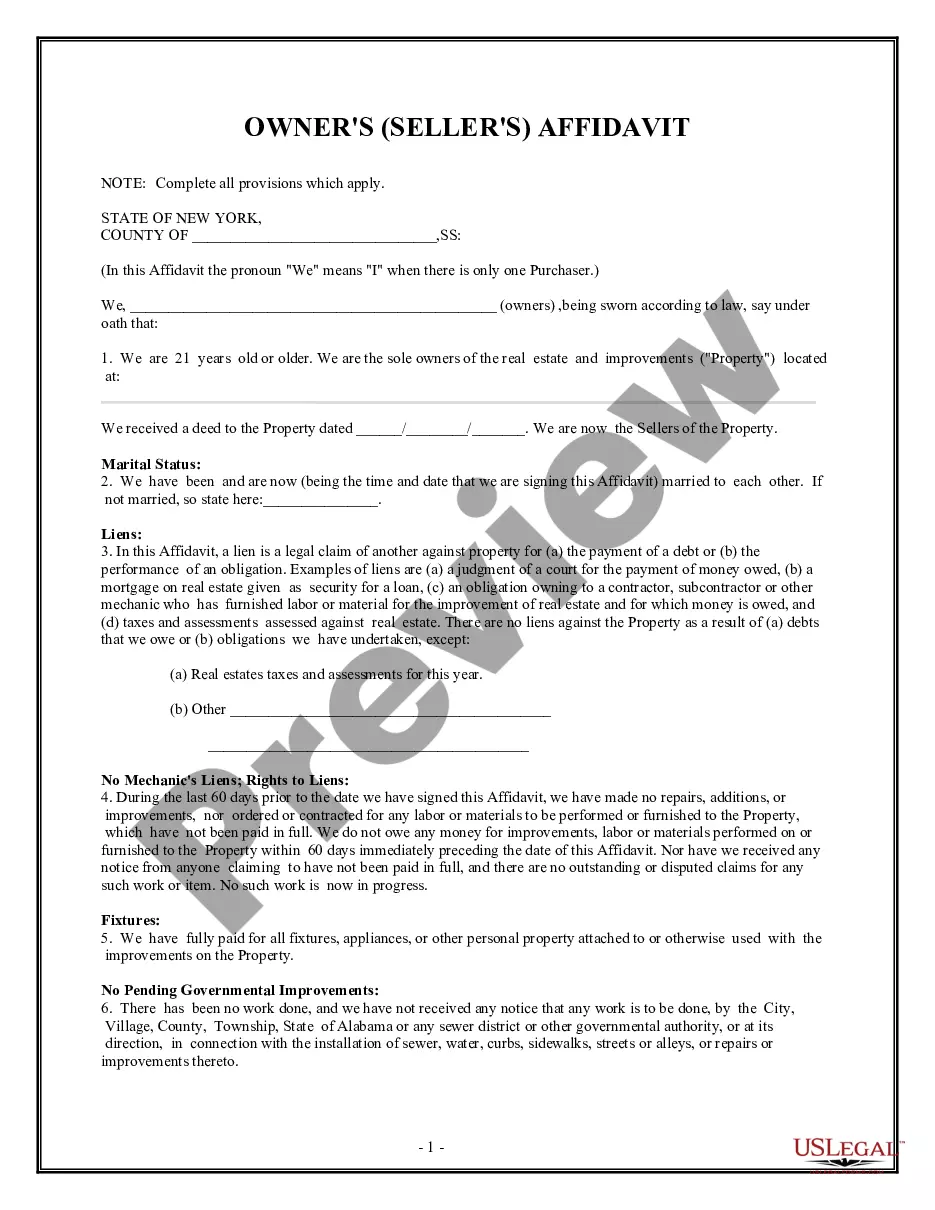
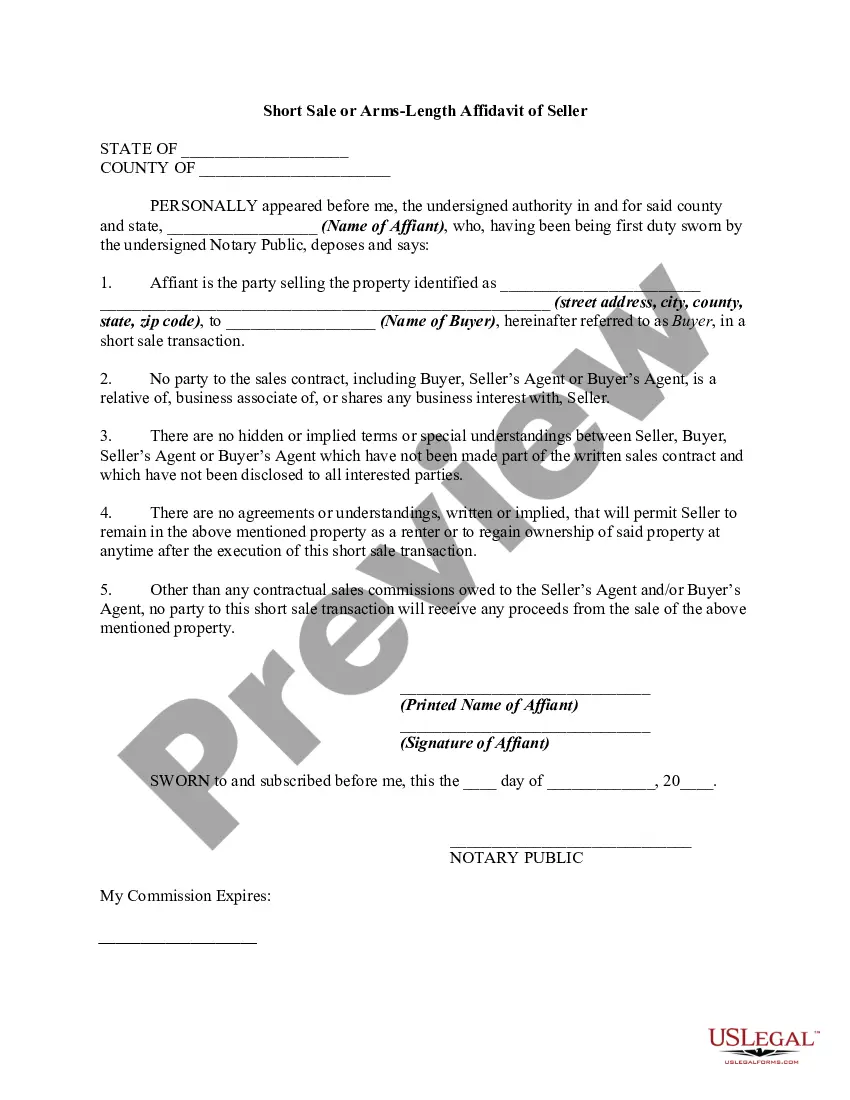
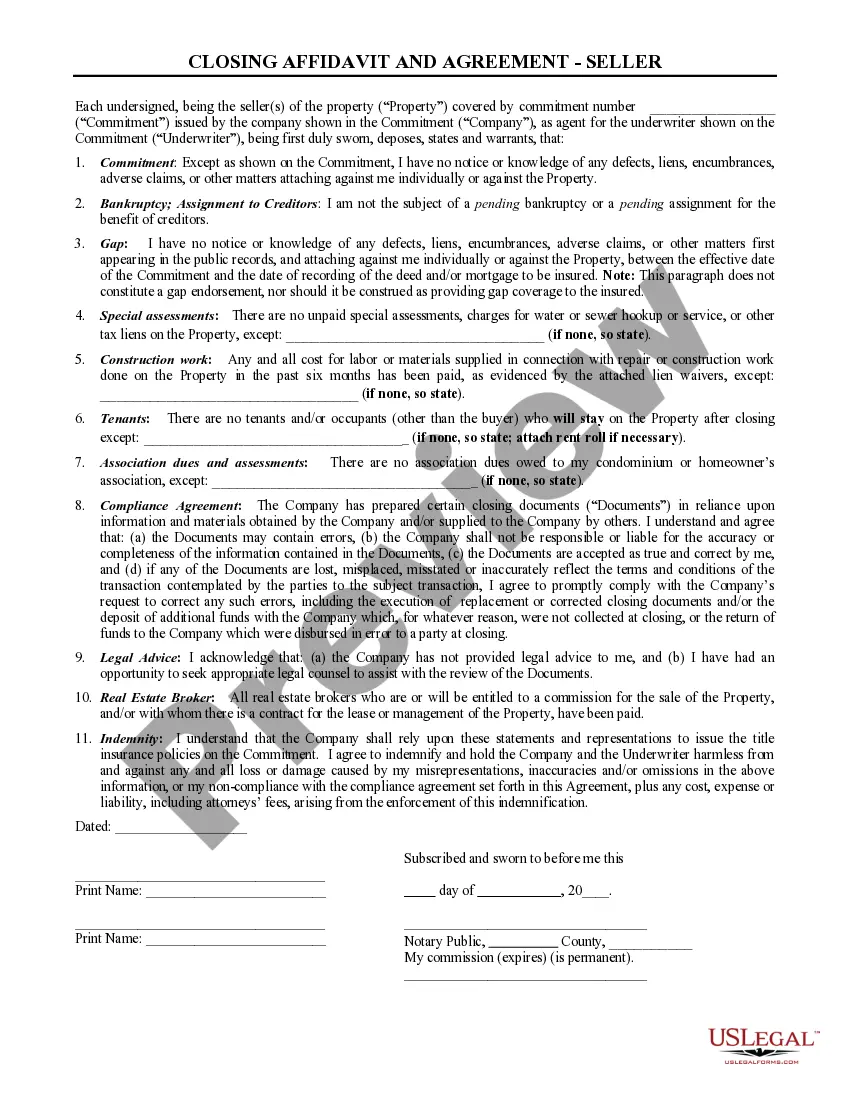
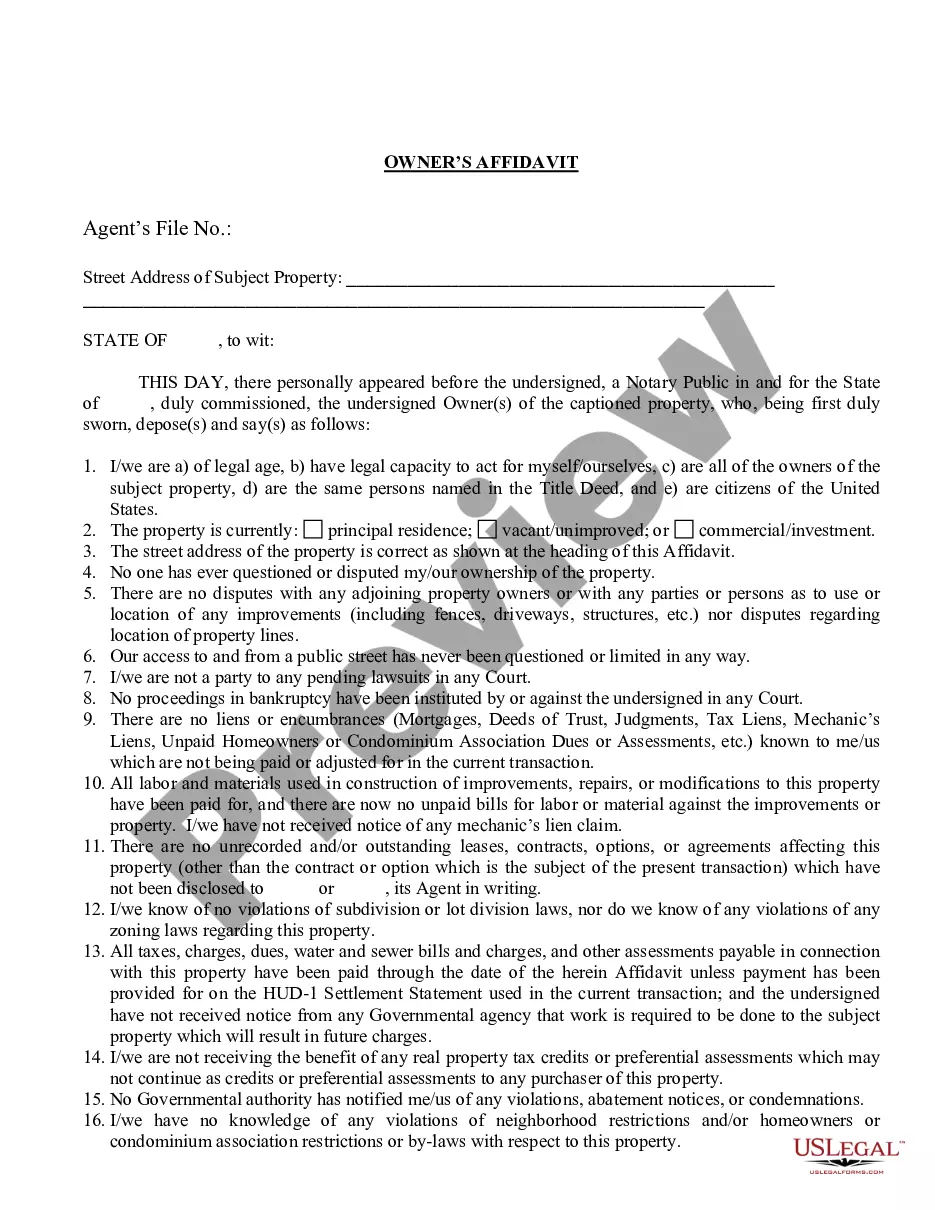
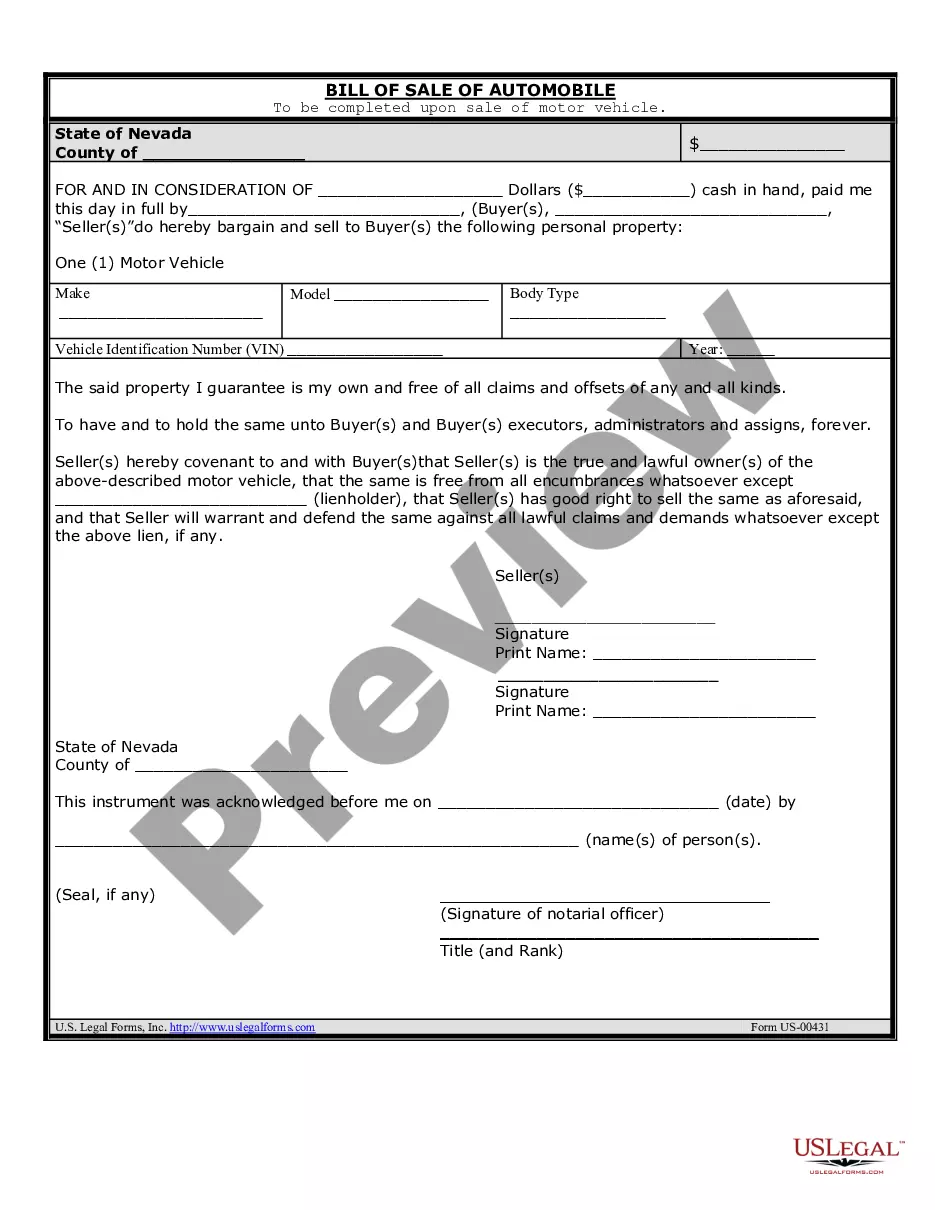
The Owner's or Seller's Affidavit of No Liens is a legal document used by sellers during the closing of a property sale. It certifies that the seller owns the property and affirms that there are no outstanding liens or claims against it. This form provides assurances regarding the absence of mechanic's liens, pending lawsuits, and other financial obligations that could affect the transaction, setting it apart from other real estate forms. It helps ensure a smoother closing process by protecting both the buyer and the lender's interests.
Key parts of this document
- Statement of ownership and property details.
- Confirmation of marital status of the owners.
- Declaration of no existing liens except for certain exceptions.
- Affirmation of no pending repairs or contractor claims.
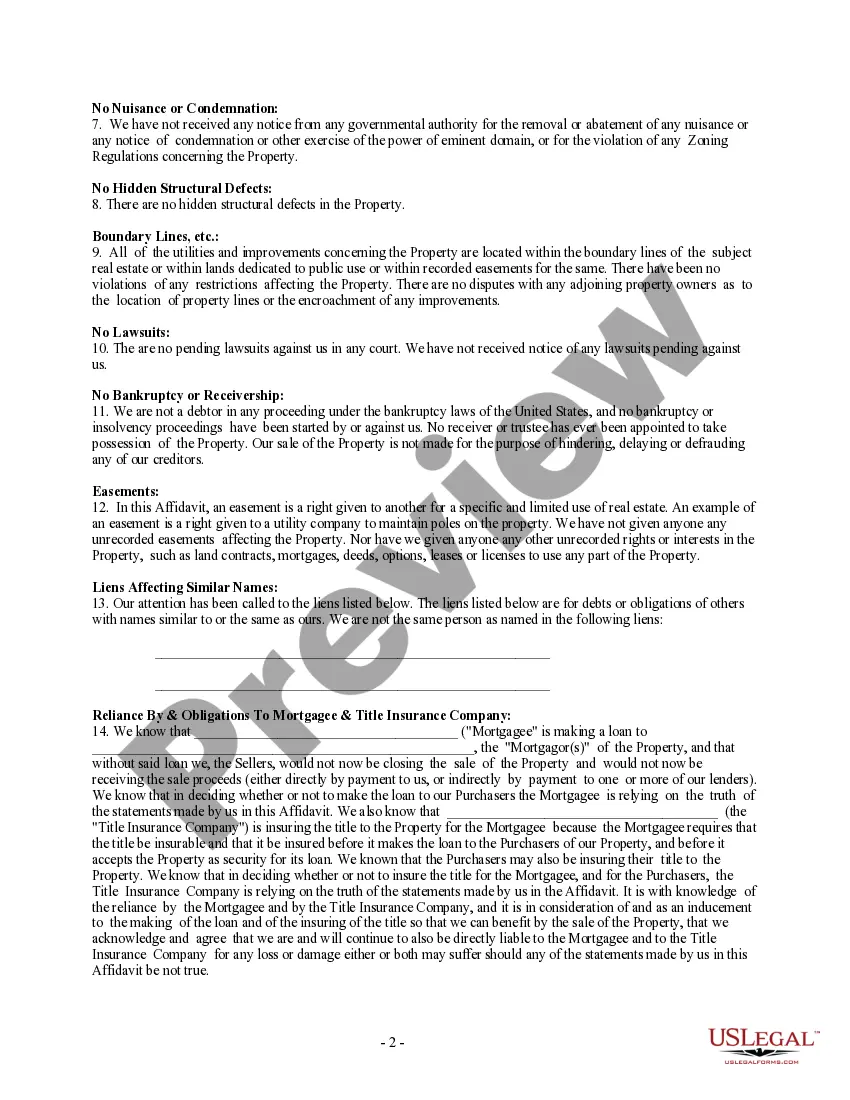
- Certification of no ongoing lawsuits or bankruptcy proceedings.
- Acknowledgment of reliance by the mortgagee and title insurance company on the truthfulness of the affidavit.

When to use this document
This form should be used when a property seller is preparing for the closing of a real estate transaction. It is essential when transferring ownership to confirm that the property is free from any liens or legal claims that could hinder the sale. It helps ensure that buyers can acquire a clean title, thus protecting their investment in the property.
Intended users of this form
This form is intended for:
- Property owners who are selling their real estate.
- Real estate attorneys assisting with property transactions.
- Mortgage lenders seeking guarantees about the propertyâs title.
Steps to complete this form
- Identify the names of all property owners and their marital status.
- Specify the property's legal description and the date of the deed.
- Disclose any known liens or obligations and confirm absence of mechanicâs liens.
- Include a declaration of no pending lawsuits or bankruptcy.
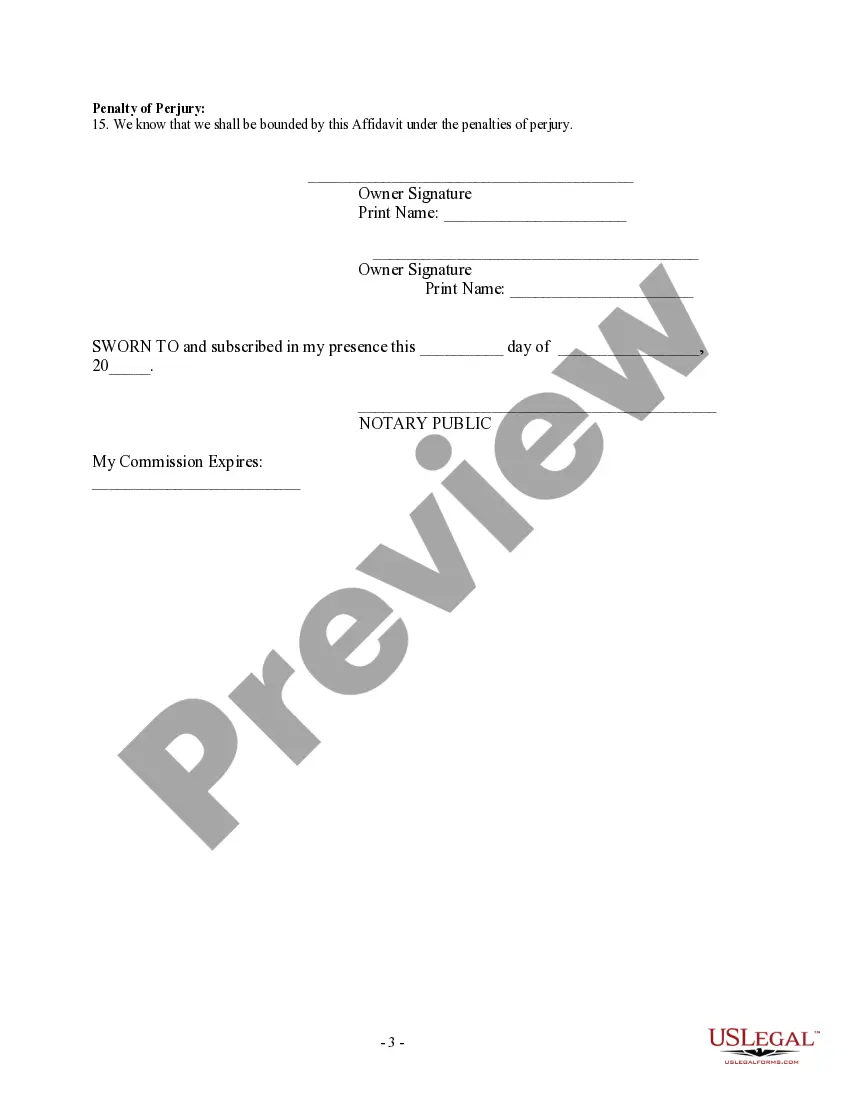
- Provide signatures from all owners in the presence of a notary public.
Is notarization required?
Yes, this form must be notarized to be legally valid. A notary public must witness the signatures of the owners, ensuring that the identities of the signers are verified. This enhances the trustworthiness of the document, providing additional security for the transaction.
Get your form ready online
Our built-in tools help you complete, sign, share, and store your documents in one place.
Make edits, fill in missing information, and update formatting in US Legal Forms—just like you would in MS Word.
Download a copy, print it, send it by email, or mail it via USPS—whatever works best for your next step.
Sign and collect signatures with our SignNow integration. Send to multiple recipients, set reminders, and more. Go Premium to unlock E-Sign.
If this form requires notarization, complete it online through a secure video call—no need to meet a notary in person or wait for an appointment.
We protect your documents and personal data by following strict security and privacy standards.

Make edits, fill in missing information, and update formatting in US Legal Forms—just like you would in MS Word.

Download a copy, print it, send it by email, or mail it via USPS—whatever works best for your next step.

Sign and collect signatures with our SignNow integration. Send to multiple recipients, set reminders, and more. Go Premium to unlock E-Sign.

If this form requires notarization, complete it online through a secure video call—no need to meet a notary in person or wait for an appointment.

We protect your documents and personal data by following strict security and privacy standards.
Mistakes to watch out for
- Failing to accurately disclose all liens or obligations can lead to legal issues.
- Not completing all relevant sections, leaving important questions unanswered.
- Omitting signatures or not having the affidavit notarized.
Advantages of online completion
- Convenience of downloading the form at any time, avoiding travel to legal offices.
- Editability allows for quick updates to reflect the accurate property and owner information.
- Access to templates drafted by attorneys ensures compliance with legal standards.
Legal use & context
- The affidavit serves as a legal declaration, making the seller liable for any false statements.
- It provides assurances to buyers and lenders, which can be crucial for mortgage approvals.
- Failure to comply with the terms set forth in the affidavit may expose the seller to legal actions.
Quick recap
- The Owner's or Seller's Affidavit of No Liens certifies that the property is free of liens.
- It is necessary for a smooth real estate transaction at closing.
- This form must be notarized to ensure its validity.
Looking for another form?
Form popularity
FAQ
An affidavit is a written statement that is considered made under oath. It is only valid when made voluntarily and without coercion. When you sign an affidavit, you are asserting that the information is true and that you have personal knowledge of the facts contained in the affidavit.
An affidavit is a sworn statement, made in front of a notary or other officer authorized to administer oaths. An affidavit of deed confirms delivery and acceptance of a deed by the grantee, and thereby its validity.If the grantor is protected by an affidavit of deed, these issues are generally easier to resolve.
The Importance of Being Truthful in an Affidavit Saying something that is not true in an affidavit is technically a violation of the law and you can be fined or even imprisoned for committing perjury. It is just like lying on the stand in a court proceeding.
An affidavit is a type of verified statement or showing, or in other words, it contains a verification, which means that it is made under oath on penalty of perjury, and this serves as evidence for its veracity and is required in court proceedings.
A mortgage affidavit is a written statement signed by a party in a real estate transaction under penalties of perjury that attests to certain conditions of the property.
An Owner Affidavit is a document used by title and closing agencies to ensure that the current owner of a property is in ownership of the property free and clear of any encumbrances.The Owner Affidavit places the seller on the hook for any claims that may arise that are not covered by the title insurance policy.
In the sentence, the person writing the statement must state that he or she is stating that the information is accurate. (Example: I, Jane Doe, solemnly swear that the contents of this document are true and correct, and that I agree to abide by the terms in this affidavit.)
Address of the property; Full names of the owner and the transferee, who will receive the property; Personal details of both parties; All costs the new proprietor assumes.