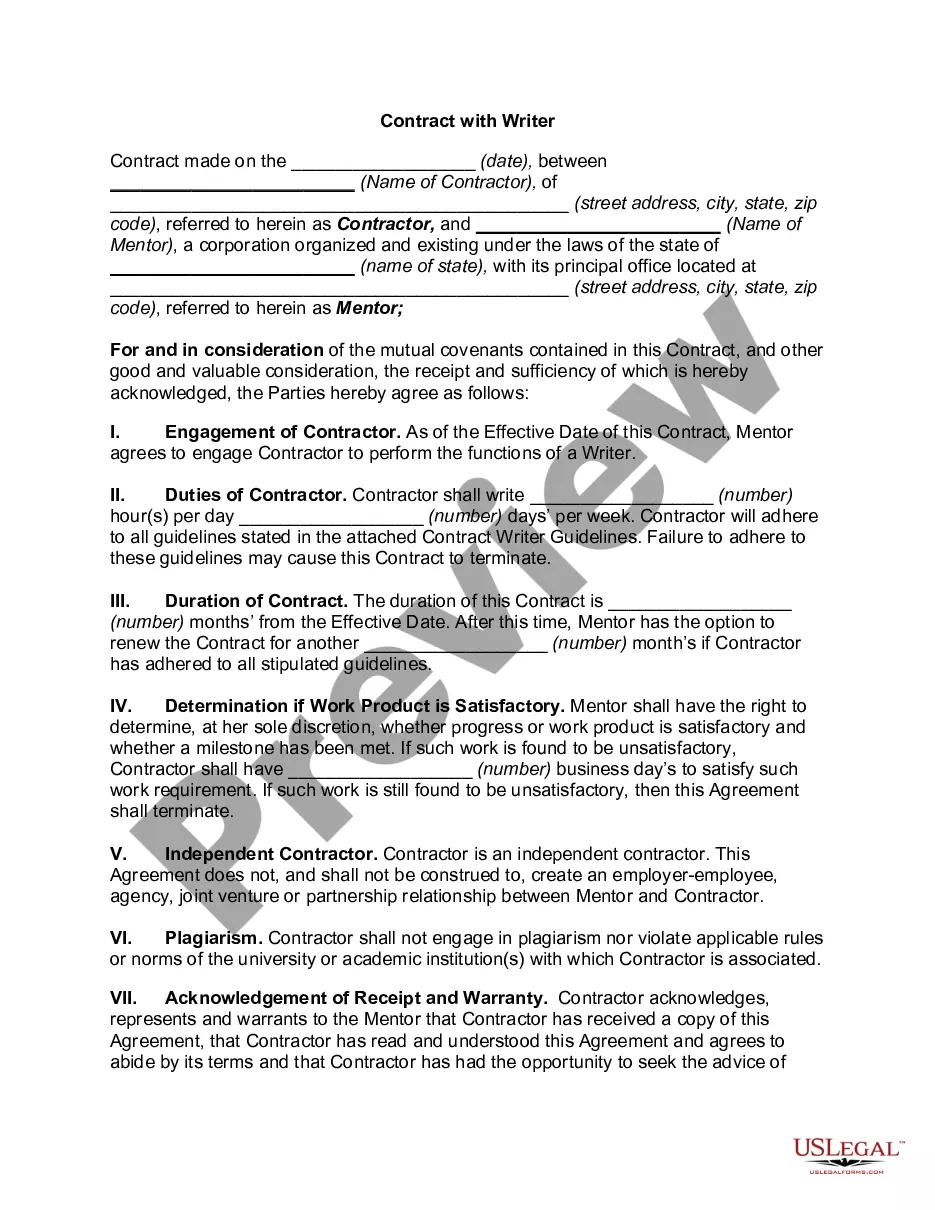
New York Commercial Sublease
Overview of this form
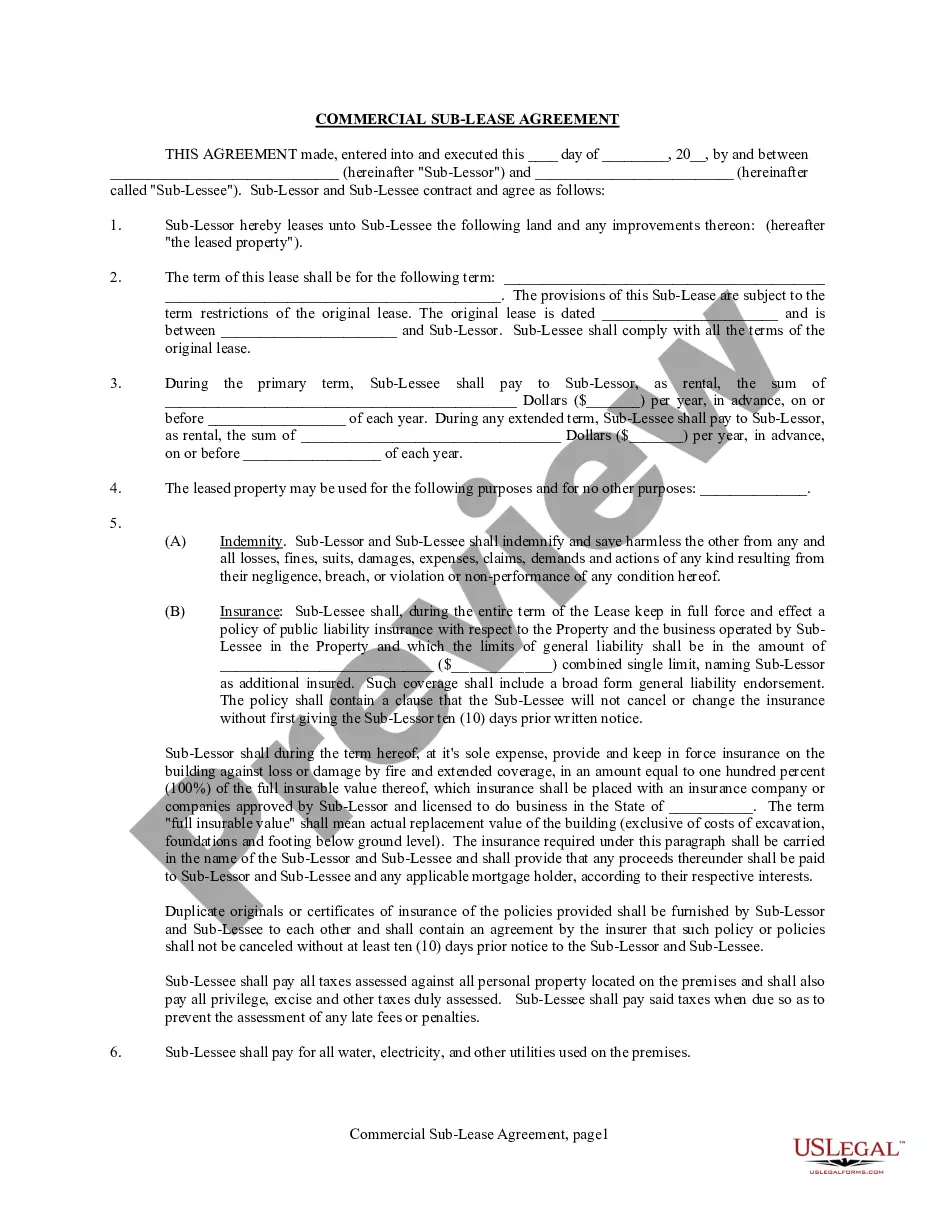
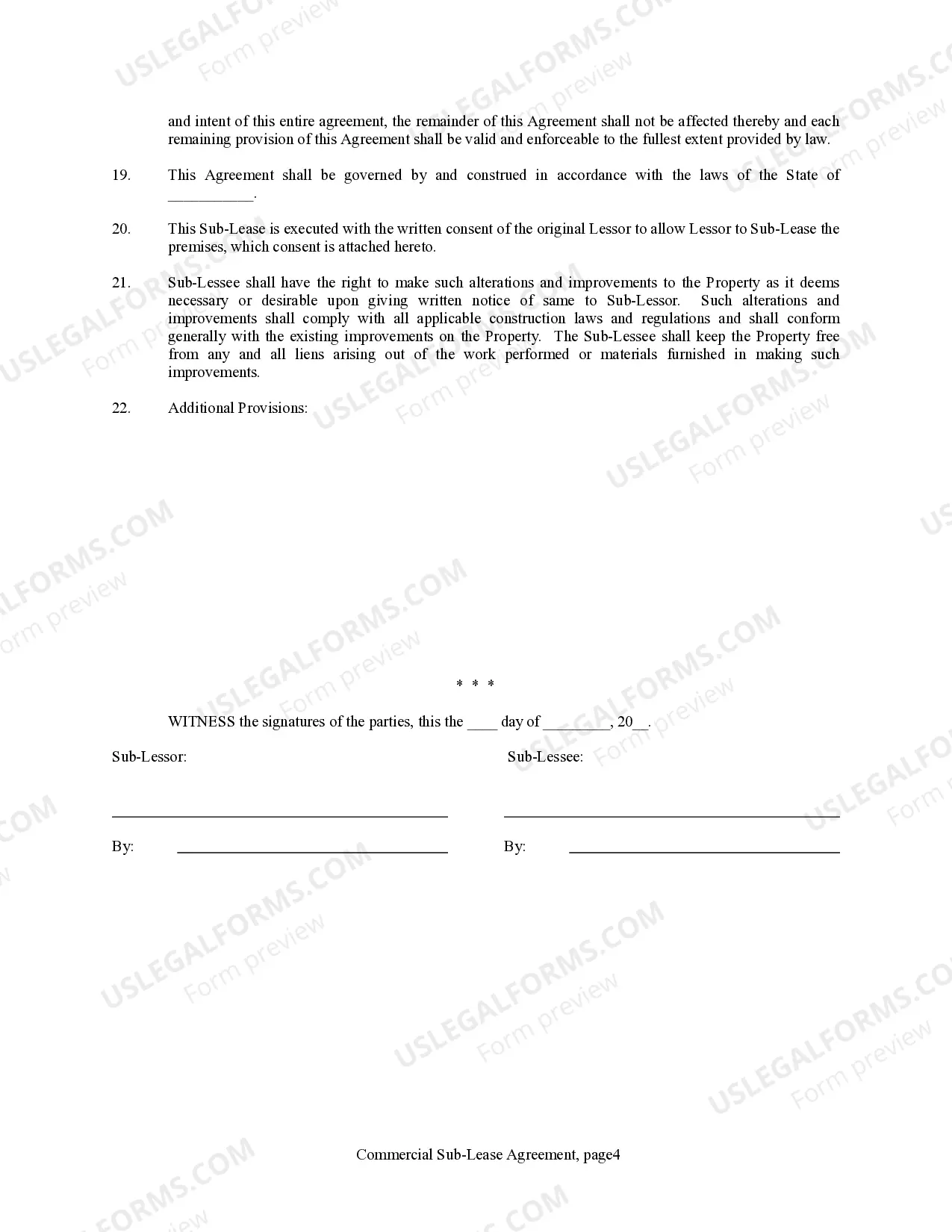
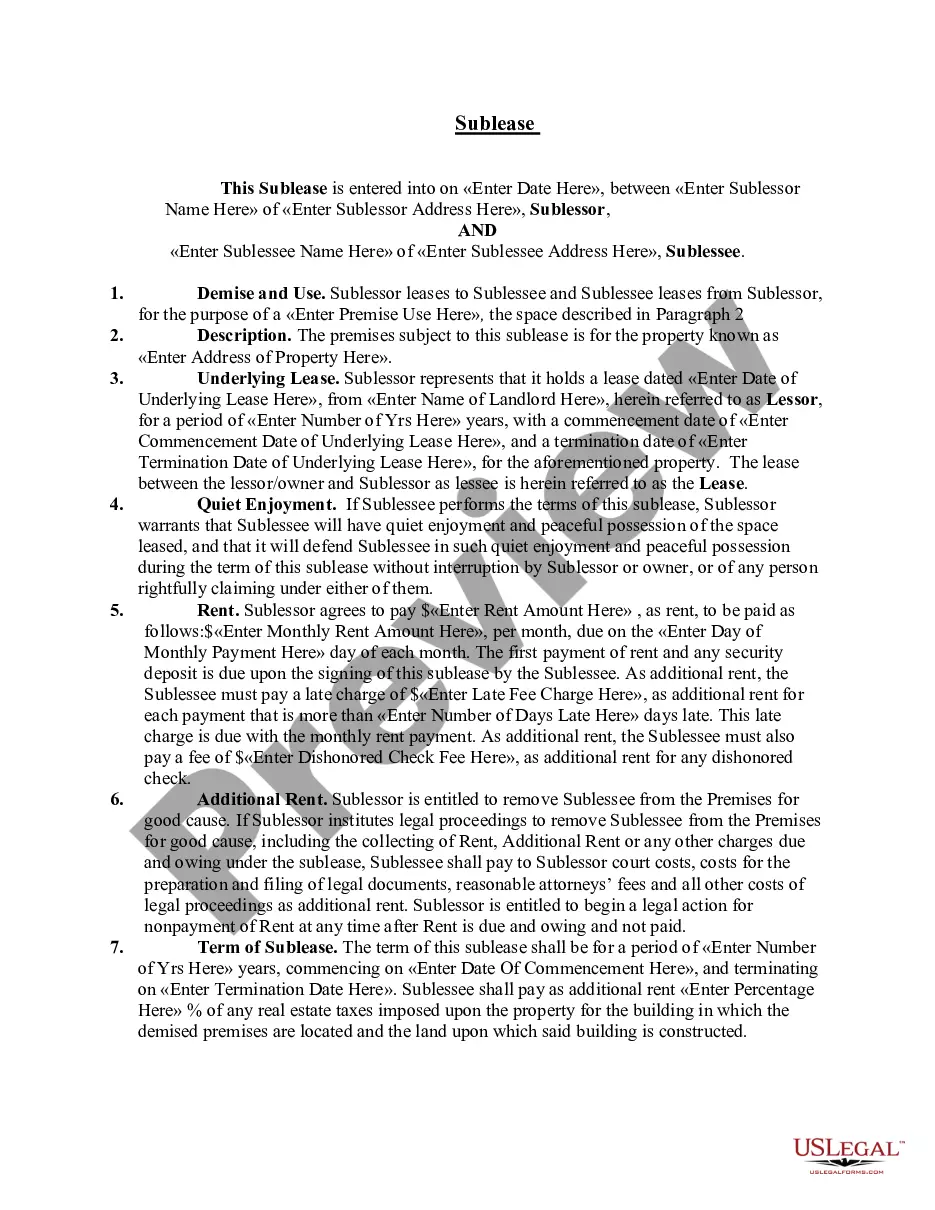
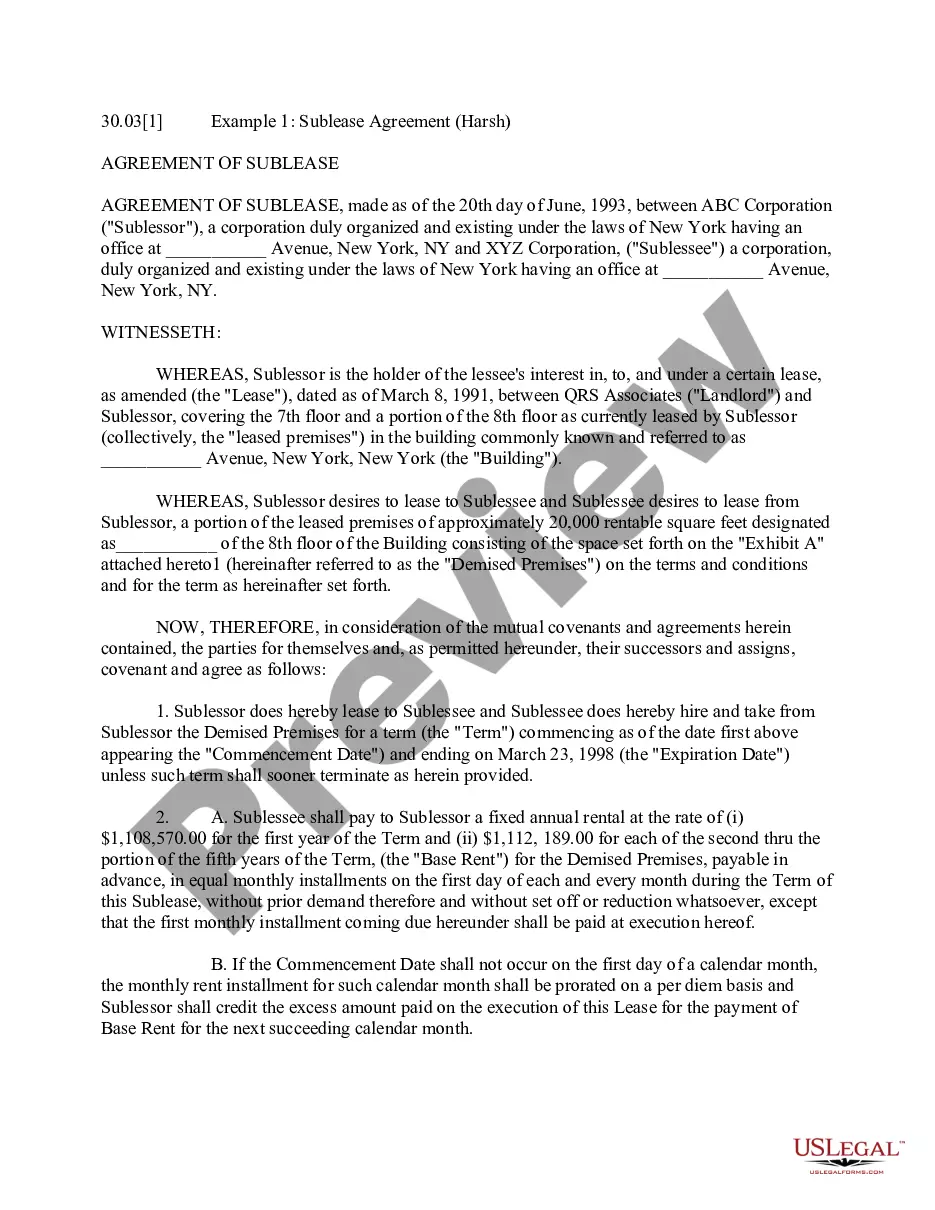
The Commercial Sublease form is a legal agreement that allows a current tenant, known as the Sub-Lessor, to lease their leased commercial property to a new tenant, referred to as the Sub-Lessee. This document ensures that the Sub-Lessee complies with the terms of the original lease while outlining the specific rights and responsibilities regarding the use of the property. Unlike a standard lease agreement, this sublease specifically acknowledges the original lease's terms, making it crucial for both parties to understand their obligations under the existing contract.
Key parts of this document
- Identification of parties: Includes the names of the Sub-Lessor and Sub-Lessee.
- Description of the property: Specifies the leased land and any improvements thereon.
- Lease term: Outlines the duration of the sublease.
- Rental payments: Details the annual rent amount and payment schedule.
- Insurance requirements: Asserts that the Sub-Lessee must maintain liability insurance.
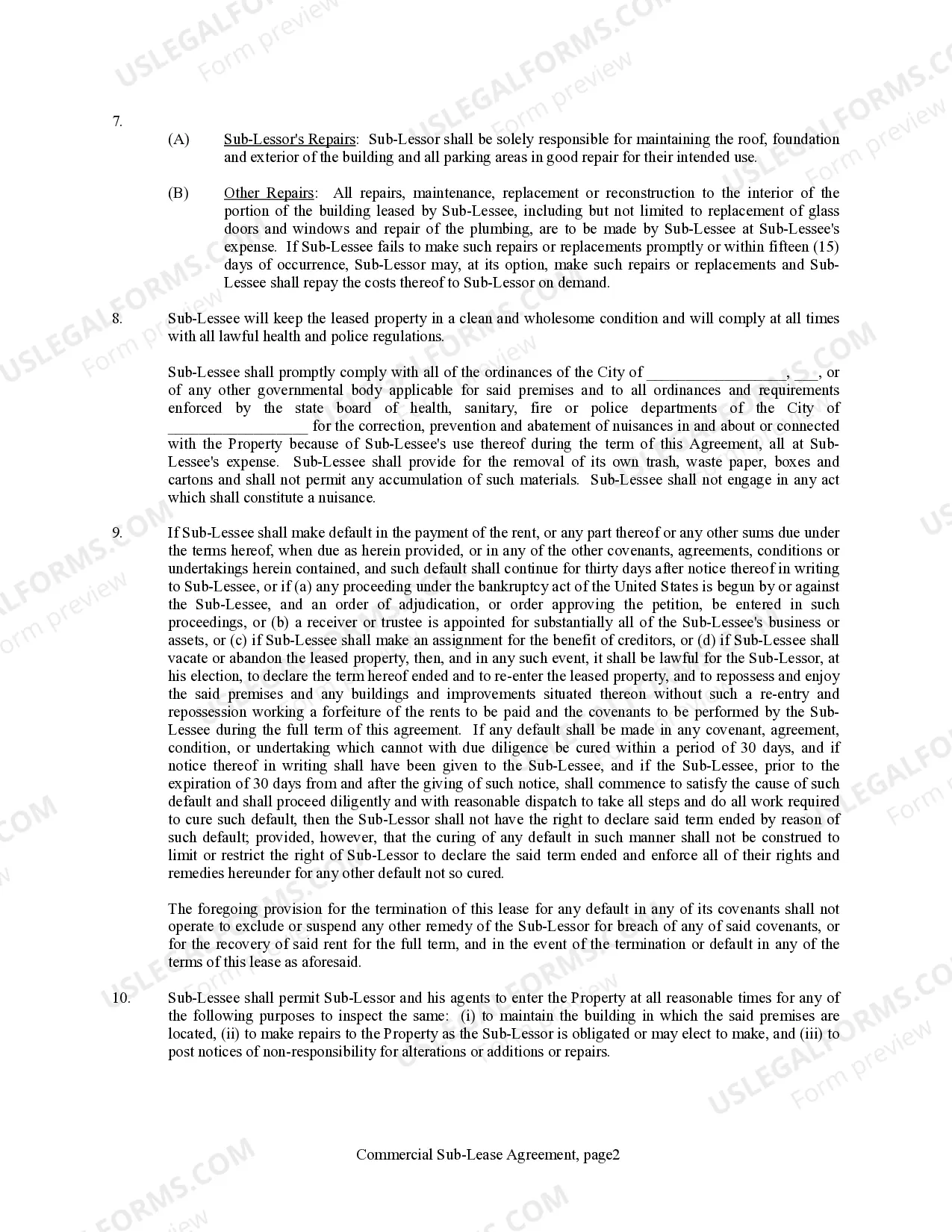
- Maintenance responsibilities: Differentiates between Sub-Lessor's and Sub-Lessee's repair obligations.
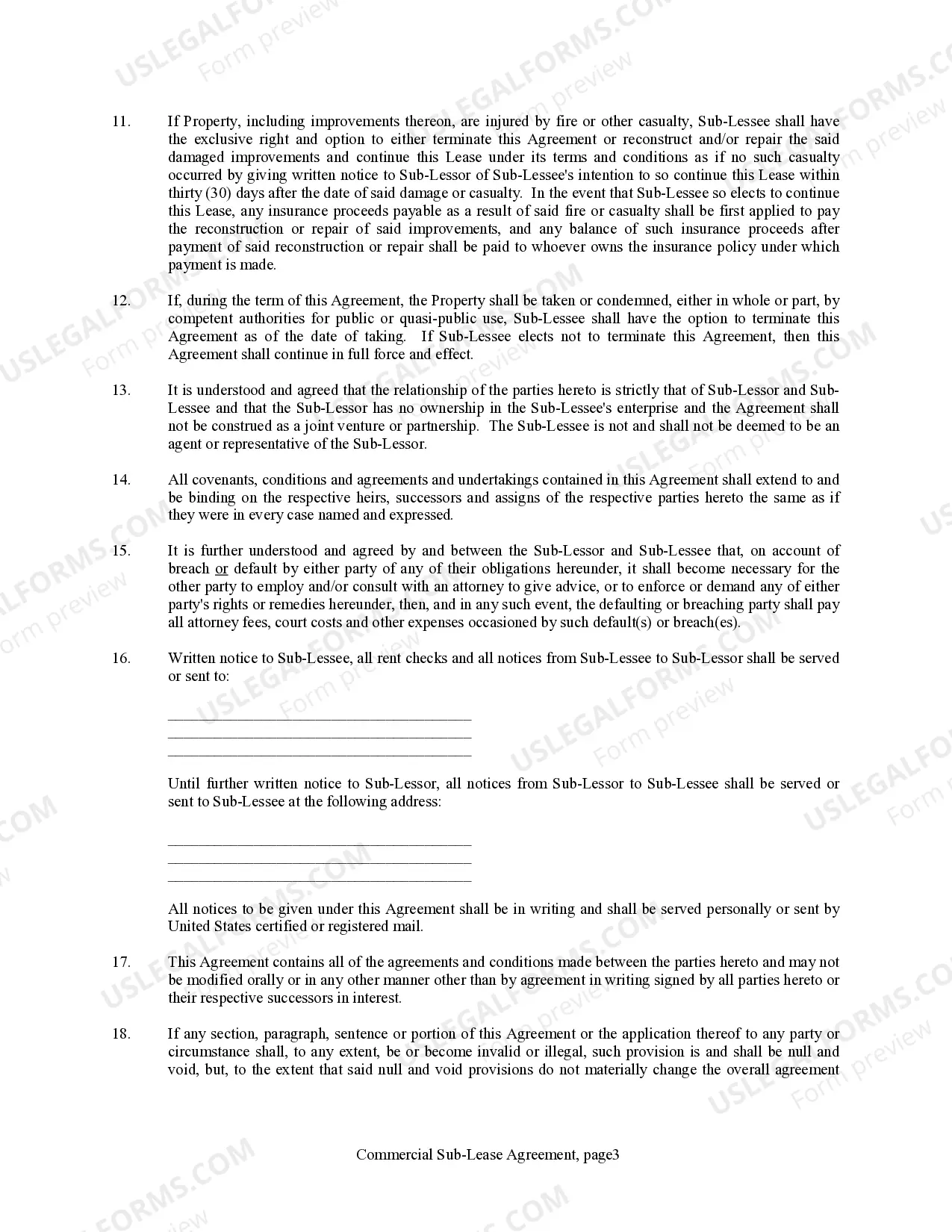
- Default clauses: Specifies consequences of failing to meet payment deadlines or other lease obligations.
Common use cases
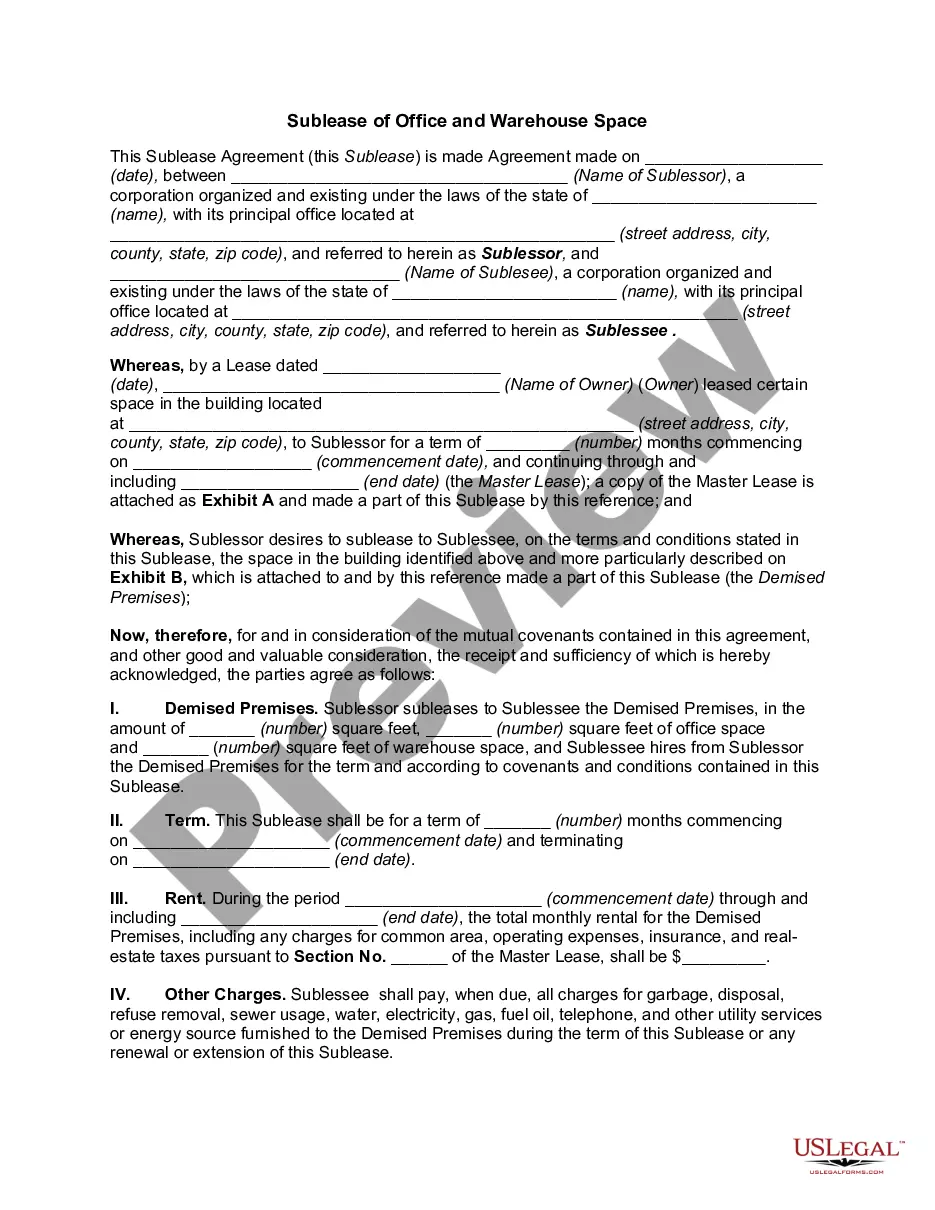
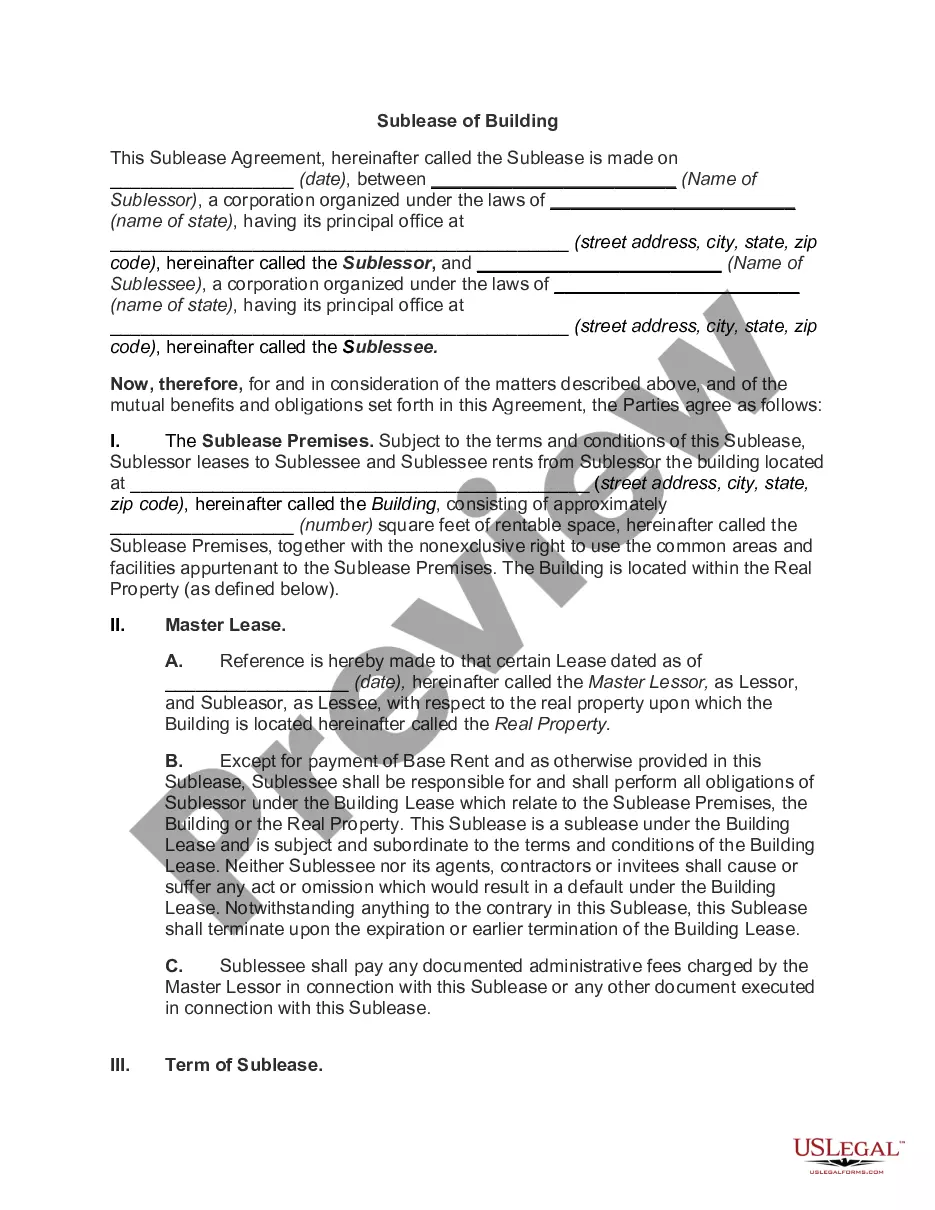
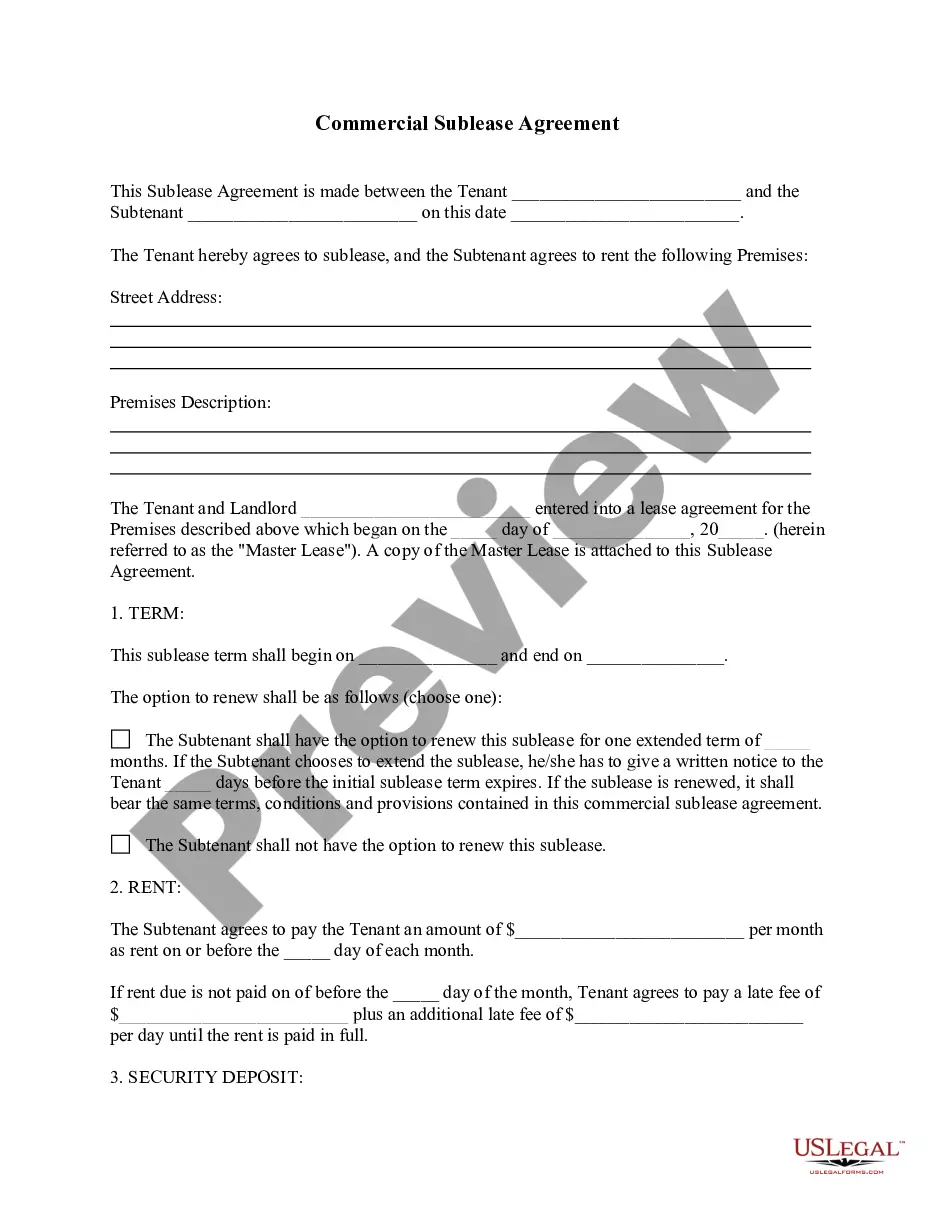
The Commercial Sublease form is typically used when a tenant intends to lease out their rented commercial space to another party. This situation may arise when the original tenant needs to relocate, downsize, or otherwise vacate the property while still obligated under the existing lease agreement. It is essential to legally document this arrangement to protect both parties and ensure compliance with the original lease terms.
Who needs this form
- Current tenants who wish to sublease their commercial property.
- Businesses needing to temporarily transfer their lease obligations.
- New tenants looking for a space to operate their business without negotiating a new lease.
- Landlords seeking to ensure compliance with original lease terms during subleasing situations.
Steps to complete this form
- Identify the parties: Enter the names of the Sub-Lessor and Sub-Lessee at the beginning of the form.
- Specify the property: Clearly describe the lease property being subleased, including any associated improvements.
- Set the lease term: Indicate the start and end dates of the sublease agreement.
- Determine rental amounts: Fill in the annual rental fees and the due dates for payments.
- Address maintenance obligations: Clarify who is responsible for property repairs and upkeep.
- Sign the agreement: Both parties must sign and date the document to make it legally binding.
Does this form need to be notarized?
This form does not typically require notarization unless specified by local law. However, it's always a good practice to confirm with local regulations or legal counsel to ensure compliance.
Get your form ready online
Our built-in tools help you complete, sign, share, and store your documents in one place.
Make edits, fill in missing information, and update formatting in US Legal Forms—just like you would in MS Word.
Download a copy, print it, send it by email, or mail it via USPS—whatever works best for your next step.
Sign and collect signatures with our SignNow integration. Send to multiple recipients, set reminders, and more. Go Premium to unlock E-Sign.
If this form requires notarization, complete it online through a secure video call—no need to meet a notary in person or wait for an appointment.
We protect your documents and personal data by following strict security and privacy standards.

Make edits, fill in missing information, and update formatting in US Legal Forms—just like you would in MS Word.

Download a copy, print it, send it by email, or mail it via USPS—whatever works best for your next step.

Sign and collect signatures with our SignNow integration. Send to multiple recipients, set reminders, and more. Go Premium to unlock E-Sign.

If this form requires notarization, complete it online through a secure video call—no need to meet a notary in person or wait for an appointment.

We protect your documents and personal data by following strict security and privacy standards.
Mistakes to watch out for
- Failing to obtain the original Lessor's consent for the sublease, which could invalidate the agreement.
- Not specifying the property details accurately, which may lead to disputes later.
- Omitting important terms from the original lease that the Sub-Lessee needs to follow.
- Neglecting to clarify repair responsibilities, leading to confusion regarding maintenance duties.
- Inaccurately completing the rent and payment schedule, which could affect enforceability.
Why complete this form online
- Convenience: Quickly access and fill out the form from anywhere, at any time.
- Editability: Easily make changes to fit specific needs without starting over.
- Guidance: Additional resources and instructions provided to help users complete the form correctly.
- Security: Protects sensitive information during the process of form completion.
- Legal validity: Ensures that the form meets current legal standards and requirements.
Looking for another form?

Form popularity
FAQ
A commercial sublease is an agreement between a tenant currently leasing a property, a new tenant looking for space, and the property owner. When you sublease your space you are the sublessor (or sublandlord) and your new tenant is the sublessee (or subtenant).
According to the NYC Rent Guidelines Board, renters are entitled to request permission to sublet from the owner, and the owner may not unreasonably refuse such permission. But the guidelines further state that the renter must inform the owner by certified mail, return receipt requested, no less than 30 days prior to
Check the over-lease. This refers to the lease that was signed by the tenant from whom you're sub-leasing. Note the condition of your room. Get in touch with the management company. Make all payments in person. Ask for a deposit receipt. Comments.
Name the parties. A simple rental agreement form needs to name the parties signing the lease and where they live. Describe the premises. Define the term of the lease. Set how much rent is owed. Assign a security deposit amount. Finalize the lease.
Subleasing occurs when the tenant transfers a part of their legal tenancy to a third-party as a new tenant.That means that if a new subtenant does not pay rent for three months, the original tenant that subleased the property is liable to the landlord for the overdue rent amount and any late fees.
Writing Your Sublease. State the name of the parties and the date of the contract. Identify the full names of each party and what their role is in the contract. The original leaseholder of the property is the Tenant and the person subletting the property is the Subtenant.
Writing Your Sublease. State the name of the parties and the date of the contract. Identify the full names of each party and what their role is in the contract. The original leaseholder of the property is the Tenant and the person subletting the property is the Subtenant.
A Residential Sublease is a legally binding contract made between the original tenant of a rental property (sublandlord) and a new tenant (also known as a subtenant or a sublessee). The sublease gives the subtenant the right to share or to take over the rented premises from the original tenant.
The Introduction. The beginning of the lease agreement should contain the name of the landlord and tenant, as well as a statement of the agreement into which they are entering. Rent. Deposit. Taxes. Property Insurance. Utilities and Amenities. Remodeling and Improvements. Repairs and Maintenance.