New York Notice of Intent Not to Renew at End of Specified Term from Landlord to Tenant for Residential Property
What this document covers
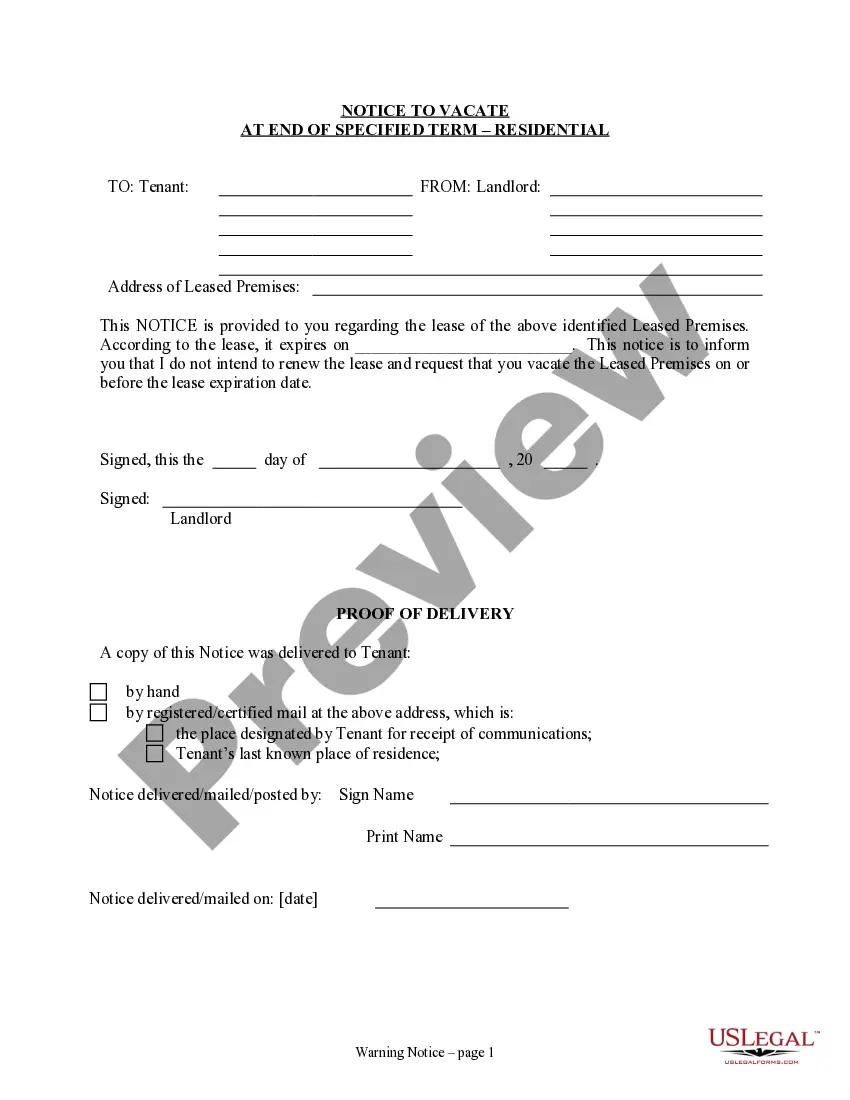
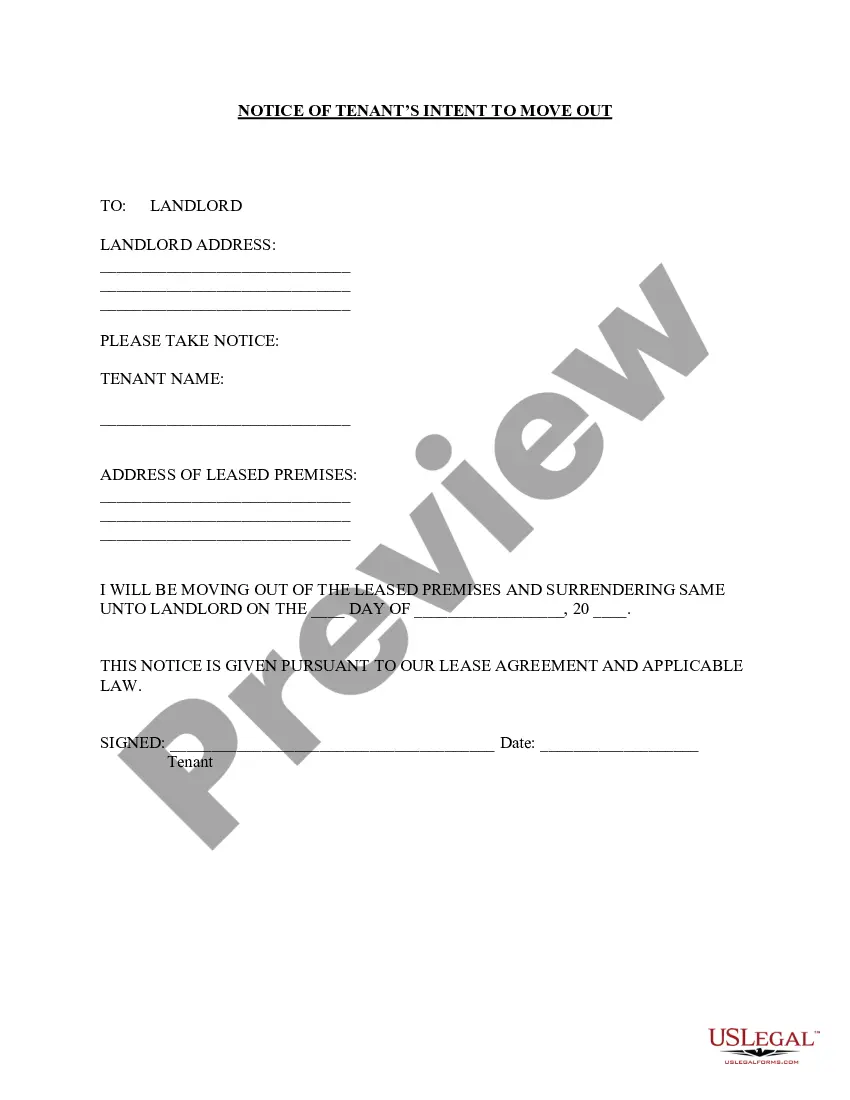
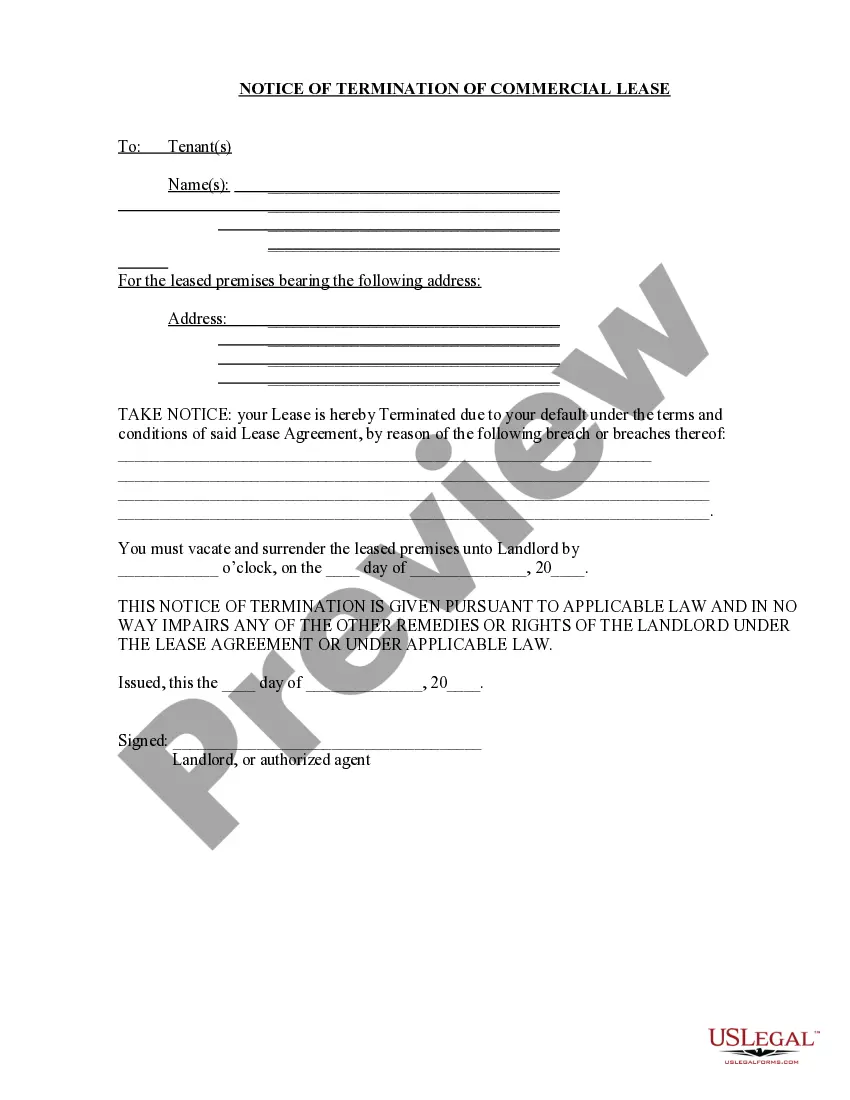
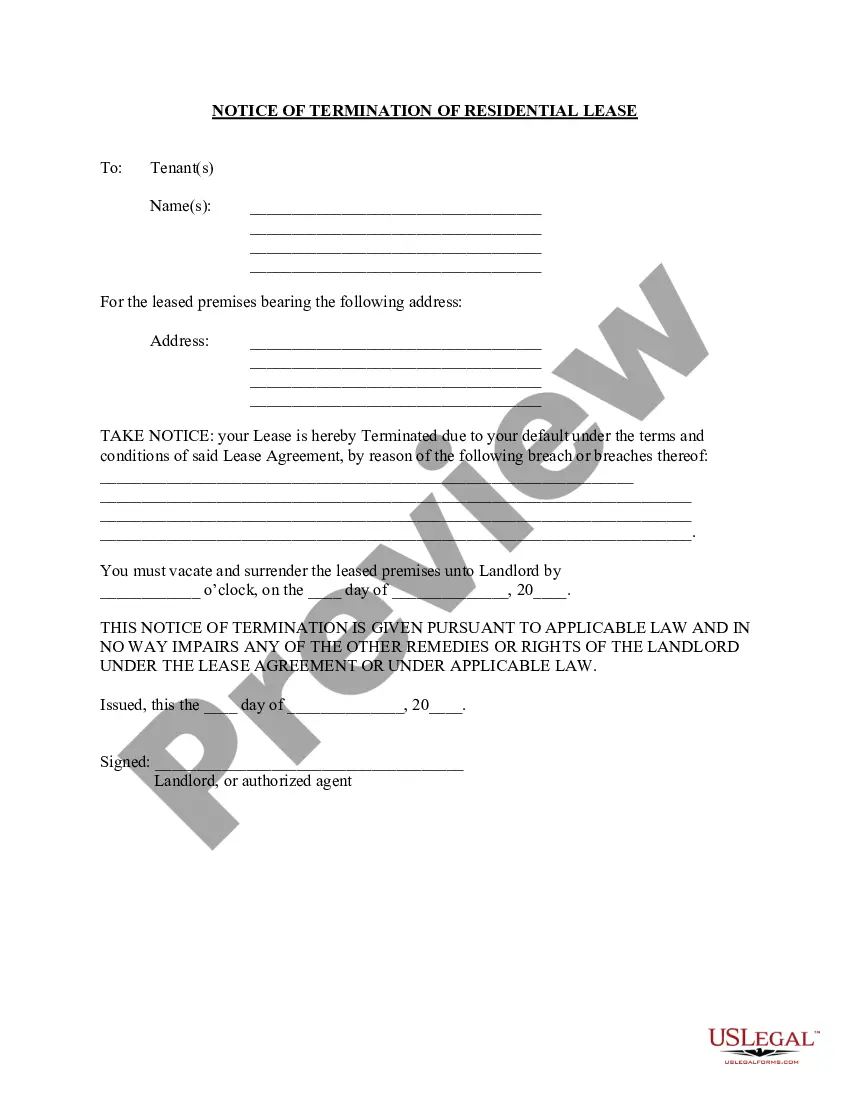
The Notice of Intent Not to Renew at End of Specified Term from Landlord to Tenant for Residential Property is a legal form that allows a landlord to inform a tenant that their lease agreement will not be renewed once it reaches its expiration date. This form streamlines the termination process by clearly stating the landlord's intent, helping both parties understand their obligations. It differs from other lease termination notices since it specifically applies to leases set to end on a predetermined date, eliminating the need for prolonged notice periods typically required for month-to-month agreements.
Form components explained
- Identification of the parties involved: landlord and tenant information.
- Address of the leased premises where the lease is applicable.
- Expiration date of the lease, clearly indicated for reference.
- Statement of intent not to renew the lease.
- Signature of the landlord to validate the notice.
- Proof of delivery section to confirm the tenant has received the notice.
When to use this form
This form should be used when a landlord wishes to terminate a lease that is set to expire on a specific date and does not intend to renew it. It is essential in scenarios such as when the landlord wants to prepare for new tenants, plans to sell the property, or simply does not wish to continue renting to the current tenant after the lease term ends. By utilizing this notice, the landlord ensures compliance with legal requirements while providing clear communication to the tenant.
Intended users of this form
- Landlords of residential properties.
- Property managers acting on behalf of landlords.
- Tenants who are nearing the end of their lease and want to ensure they understand their landlord's intentions.
Instructions for completing this form
- Identify the address of the leased premises and enter it in the designated field.
- State the expiration date of the lease clearly.
- Include a statement confirming that you do not intend to renew the lease.
- Sign and date the form to validate the notice.
- Complete the proof of delivery section to confirm how the tenant received this notice.
Is notarization required?
This form does not typically require notarization unless specified by local law. It is essential to check the state requirements for any additional stipulations regarding lease termination notices.
Get your form ready online
Our built-in tools help you complete, sign, share, and store your documents in one place.
Make edits, fill in missing information, and update formatting in US Legal Forms—just like you would in MS Word.
Download a copy, print it, send it by email, or mail it via USPS—whatever works best for your next step.
Sign and collect signatures with our SignNow integration. Send to multiple recipients, set reminders, and more. Go Premium to unlock E-Sign.
If this form requires notarization, complete it online through a secure video call—no need to meet a notary in person or wait for an appointment.
We protect your documents and personal data by following strict security and privacy standards.

Make edits, fill in missing information, and update formatting in US Legal Forms—just like you would in MS Word.

Download a copy, print it, send it by email, or mail it via USPS—whatever works best for your next step.

Sign and collect signatures with our SignNow integration. Send to multiple recipients, set reminders, and more. Go Premium to unlock E-Sign.

If this form requires notarization, complete it online through a secure video call—no need to meet a notary in person or wait for an appointment.

We protect your documents and personal data by following strict security and privacy standards.
Common mistakes
- Failing to provide sufficient notice beyond the lease expiration date.
- Not signing the notice, making it legally unenforceable.
- Omitting the expiration date or incorrectly stating it.
- Not including proof of delivery, which can lead to disputes about notification.
Benefits of using this form online
- Convenience of immediate download and access to a lawyer-drafted form.
- Editability allows landlords to customize the form as needed.
- Reliability ensured by usage of standardized legal language and format.
- Quick completion saves time compared to manually drafting the notice.
Legal use & context
- Serves as a formal notification, reducing the likelihood of disputes.
- Helps establish a clear timeline for both landlord and tenant.
- Utilized in adherence to regulations concerning lease terminations.
Key takeaways
- This form is essential for landlords intending to not renew a residential lease.
- Completing the form accurately helps avoid misunderstandings with tenants.
- Always check state-specific laws to ensure compliance.
Looking for another form?

Form popularity
FAQ
At-will tenancy is subject to the will of both the tenant and the landlord (hence the name). In other words, the tenant can choose to leave and stop paying rent at any time, and the landlord can choose to stop accepting rent and ask the tenant to leave at any time.
Can An Apartment Refuse To Renew A Lease? In most states, it is up to the property owner and manager to determine whether or not they want to extend their lease agreement with a tenant. If they do not want to continue to rent to that tenant for some reason, it is within their rights to do so.
The Tenant Consistently Fails To Pay Rent or Pays Late. A tenant that cannot fulfill their obligation to pay rent on time may face non-renewal. Property Damage or Violations of Policy. Selling or Renovating the Property. Discrimination or Retaliation Are Unlawful.
Renewal Leases However, a lease may contain an automatic renewal clause. In such case, the landlord must give the tenant advance notice of the existence of this clause between 15 and 30 days before the tenant is required to notify the landlord of an intention not to renew the lease. (General Obligations Law § 5-905).
While some jurisdictions may have provisions that allow consumers to change their minds with no consequences, generally there is no cooling-off period for leasing real property. Once the landlord and tenant sign a lease and a copy is delivered to the both parties, it becomes a valid contract.
A termination notice has to give the tenant 14 clear days before the tenant has to leave the residential premises. The day the notice is served on the tenant and the day the tenant moves out do not count as part of the 14 days.
If you have lived there less than one year, the landlord must provide at least 30 days' notice. If you have lived there more than one year, but less than two years, the landlord must provide at least 60 days' notice. If you have lived there more than two years, the landlord must provide at least 90 days' notice.
Explain the Situation Tell your tenant in straightforward terms what the problem is, and explain that they cannot stay on the property any longer. Describe the Consequences Calmly explain that they will be evicted with necessary court orders if they remain on the property.
Depending on your state's laws, you may be entitled to remain in your apartment or rental home on a month-to-month basis after your lease expires, even if your landlord wants you out. If the landlord doesn't accept your decision, he'll have to go to court to evict you.