New York Seller's Disclosure of Forfeiture Rights for Contract for Deed
What this document covers
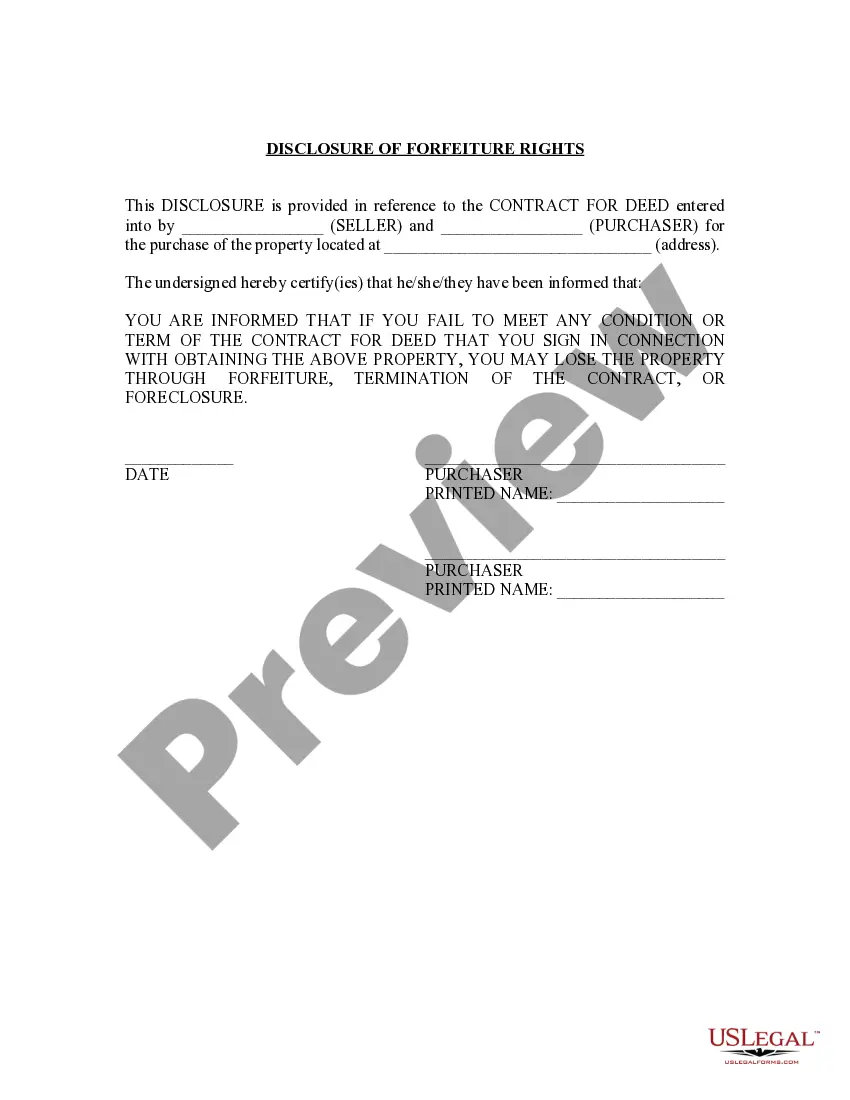
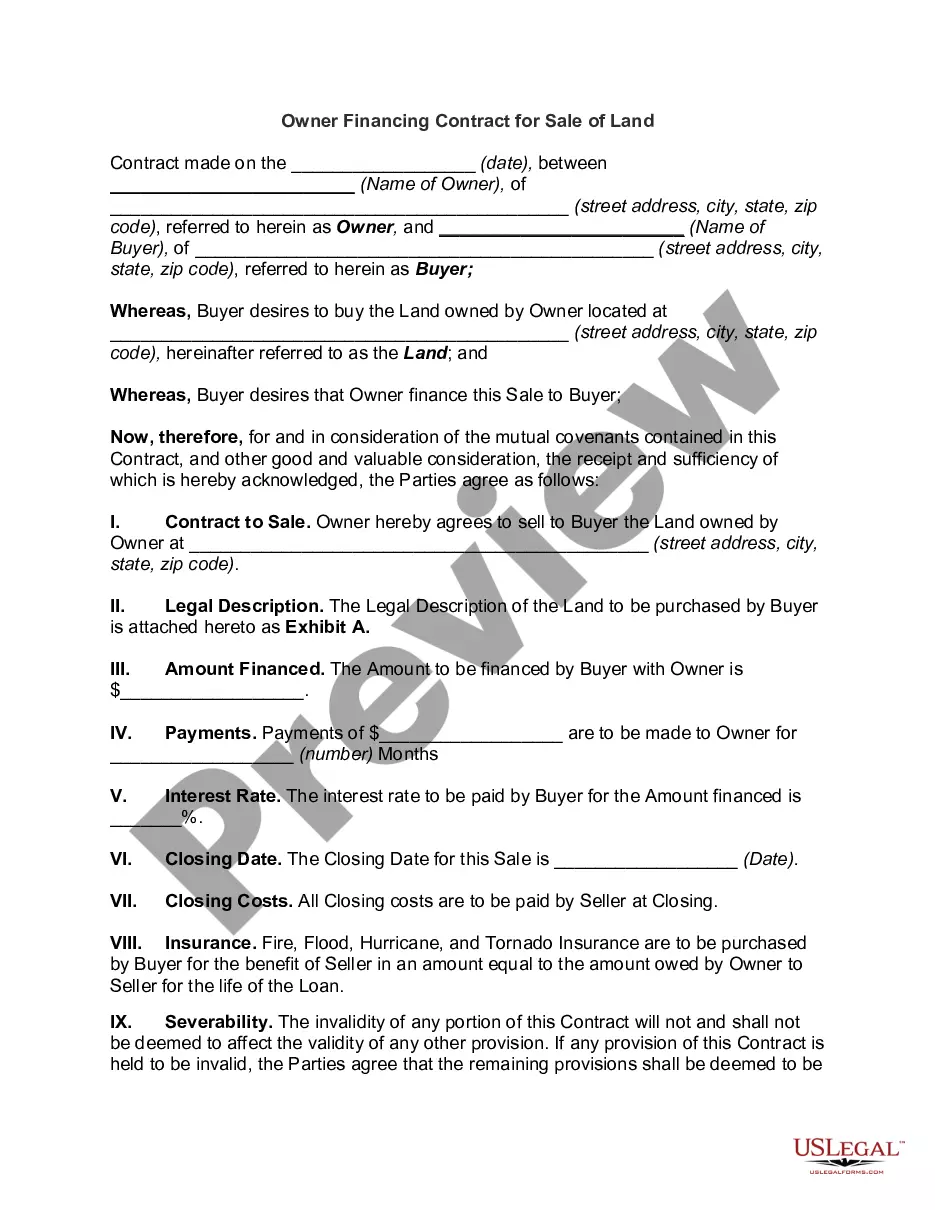
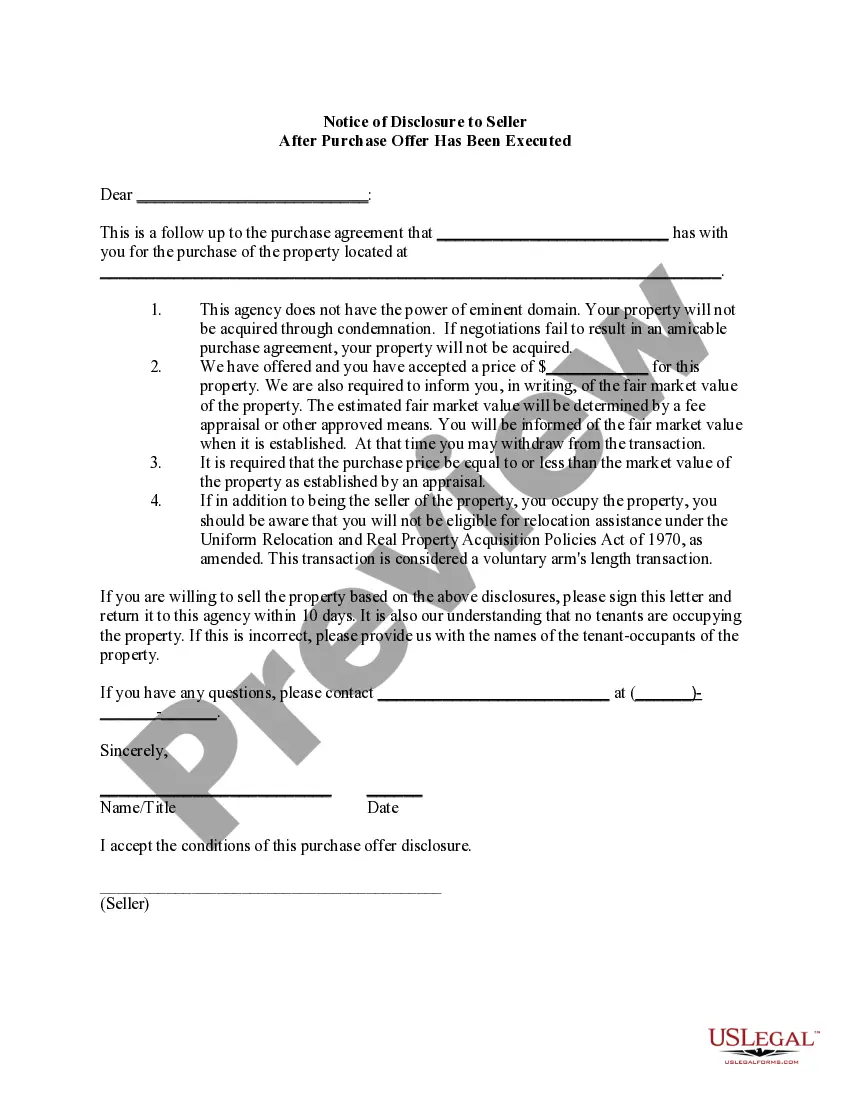
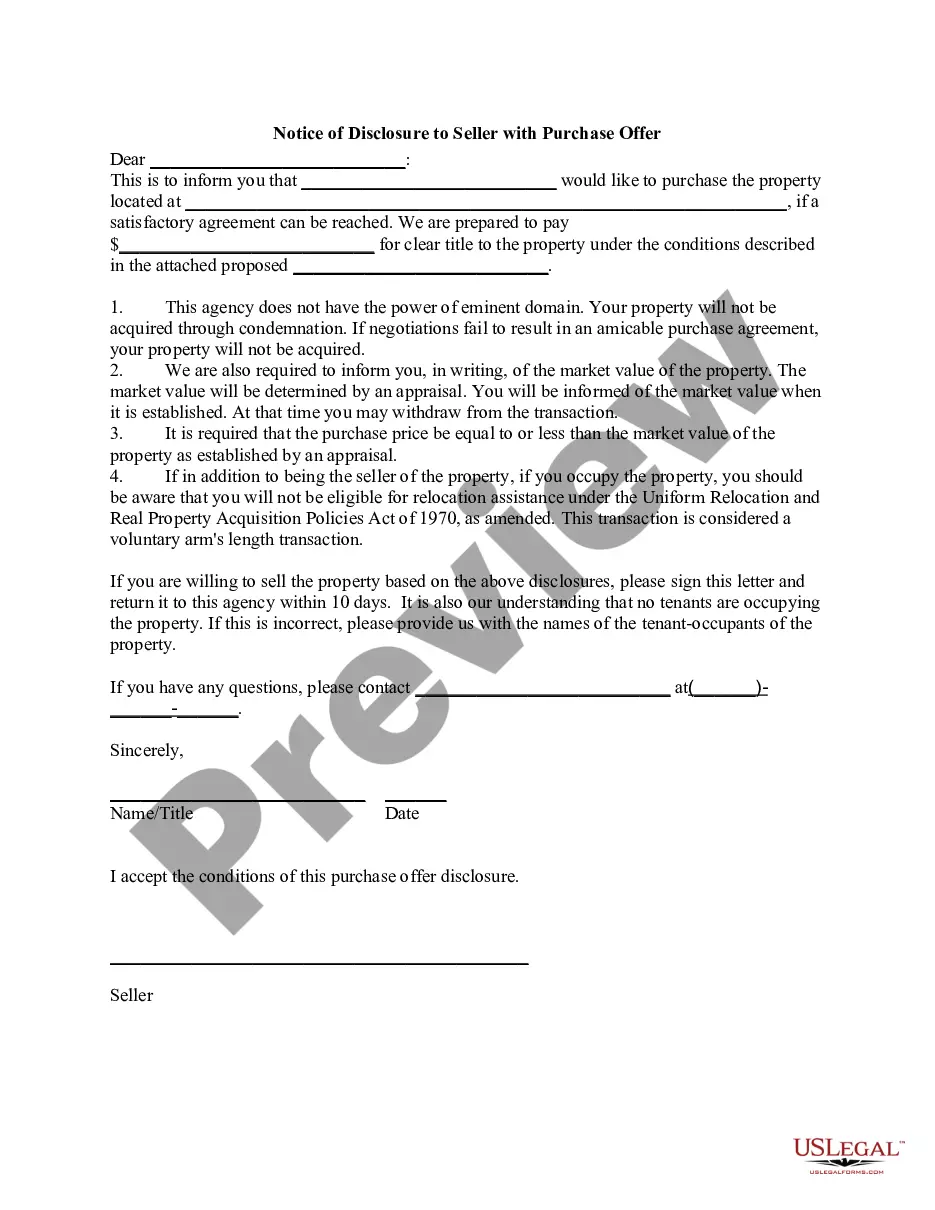
The Seller's Disclosure of Forfeiture Rights for Contract for Deed is a legal document that informs the purchaser about their forfeiture rights regarding a property deal. This form clarifies the potential consequences of failing to meet the terms of the contract, including the risk of losing the property. While not always mandatory, it provides crucial information that helps both parties understand their responsibilities and rights under the contract, distinguishing it from other real estate forms.
Key parts of this document
- Certification from the seller regarding the purchaser's understanding of forfeiture rights.
- Clear statement of the consequences of defaulting on the contract for deed.
- Identification of key terms and conditions linked to property acquisition.
When to use this document
This form should be used during the signing of a Contract for Deed, especially when a seller wants to ensure that the purchaser understands the implications of potential forfeiture. It is particularly important in scenarios where financing and payment terms may be challenging for the purchaser, as it prepares them for the seriousness of maintaining contractual obligations.
Who can use this document
This form is intended for:
- Sellers of real estate who are offering a Contract for Deed.
- Purchasers who are entering into a Contract for Deed agreement.
- Real estate agents and attorneys involved in drafting or reviewing contract deals.
Completing this form step by step
- Identify the parties involved: seller and purchaser.
- Provide details of the property being purchased under the Contract for Deed.
- Clearly state the conditions of the contract that must be met to avoid forfeiture.
- Have the seller and purchaser sign the document to confirm understanding.
Does this form need to be notarized?
In most cases, this form does not require notarization. However, some jurisdictions or signing circumstances might. US Legal Forms offers online notarization powered by Notarize, accessible 24/7 for a quick, remote process.
Get your form ready online
Our built-in tools help you complete, sign, share, and store your documents in one place.
Make edits, fill in missing information, and update formatting in US Legal Forms—just like you would in MS Word.
Download a copy, print it, send it by email, or mail it via USPS—whatever works best for your next step.
Sign and collect signatures with our SignNow integration. Send to multiple recipients, set reminders, and more. Go Premium to unlock E-Sign.
If this form requires notarization, complete it online through a secure video call—no need to meet a notary in person or wait for an appointment.
We protect your documents and personal data by following strict security and privacy standards.

Make edits, fill in missing information, and update formatting in US Legal Forms—just like you would in MS Word.

Download a copy, print it, send it by email, or mail it via USPS—whatever works best for your next step.

Sign and collect signatures with our SignNow integration. Send to multiple recipients, set reminders, and more. Go Premium to unlock E-Sign.

If this form requires notarization, complete it online through a secure video call—no need to meet a notary in person or wait for an appointment.

We protect your documents and personal data by following strict security and privacy standards.
Avoid these common issues
- Failing to ensure both parties sign the form, which may lead to misunderstandings in the future.
- Neglecting to clearly define the terms of the contract that will affect forfeiture rights.
- Not providing a copy of the signed form to the purchaser for their records.
Advantages of online completion
- Convenient access to downloadable forms at any time.
- Editable templates allow for customized agreements specific to individual situations.
- Reliability in obtaining documents prepared by licensed attorneys.
Legal use & context
- This form may be enforceable as a binding agreement once signed by both parties.
- Failure to provide this disclosure may affect the seller's position in a legal dispute.
- The document serves as evidence that the purchaser was informed of their rights and potential forfeiture risks.
What to keep in mind
- The Seller's Disclosure of Forfeiture Rights is essential for clarity in contract for deed transactions.
- Both seller and purchaser must understand the implications of forfeiture.
- Proper completion and signing of the form can help prevent legal disputes in the future.
Looking for another form?
Form popularity
FAQ
If a seller fails to disclose, or actively conceals, problems that affect the value of the property; they are violating the law, and may be subject to a lawsuit for recovery of damages based on claims of fraud and deceit, misrepresentation and/or breach of contract.
This means that if you default and can?t make your payments, you lose the property and all of the money you have already paid into it (often including repairs and improvements). Unlike a traditional mortgage, a defaulting buyer in a contact for deed may only have 30-60 days to cure the default or move out.
Dictionary of Business Terms for: agency disclosure. agency disclosure. a written explanation, to be signed by a prospective buyer or seller of real estate, explaining to the client the role that the broker plays in the transaction.
Backing out of a home sale can have costly consequences A home seller who backs out of a purchase contract can be sued for breach of contract. A judge could order the seller to sign over a deed and complete the sale anyway. The buyer could sue for damages, but usually, they sue for the property, Schorr says.
As a local homeowner myself, I recommend that you get familiar with this form, and remember it is not a contract, just simply a disclosure.
In a nutshell, California real estate law now requires that a residential listing or selling agent give a very specific agency disclosure form to the seller and to potential buyers.The disclosure form explains that a broker can represent a seller alone, a buyer alone, or both at the same time, known as dual agency.
Monetary Damages If the Seller decides to breach the contract and keep their home, they may do so, but the court may order the Buyer receive money for the resulting breach. Generally, the money owed to Buyer may include reimbursing the Buyer with: The buyer's temporary housing costs.
To recap, the agency disclosure process has three parts: disclose, elect, and confirm. And always remember that only the employing broker can be a Listing Agent or Selling Agent.
If a seller defaults, he must return all deposits, plus added reasonable expenses, to the buyer. The other party may also seek to compel the erring party to complete the deal under specific performance. From a buyer's point of view, it is advisable to get the sale agreement registered.