Nevada Marital Domestic Separation and Property Settlement Agreement for persons with no Children, no Joint Property, or Debts Effective Immediately
Understanding this form
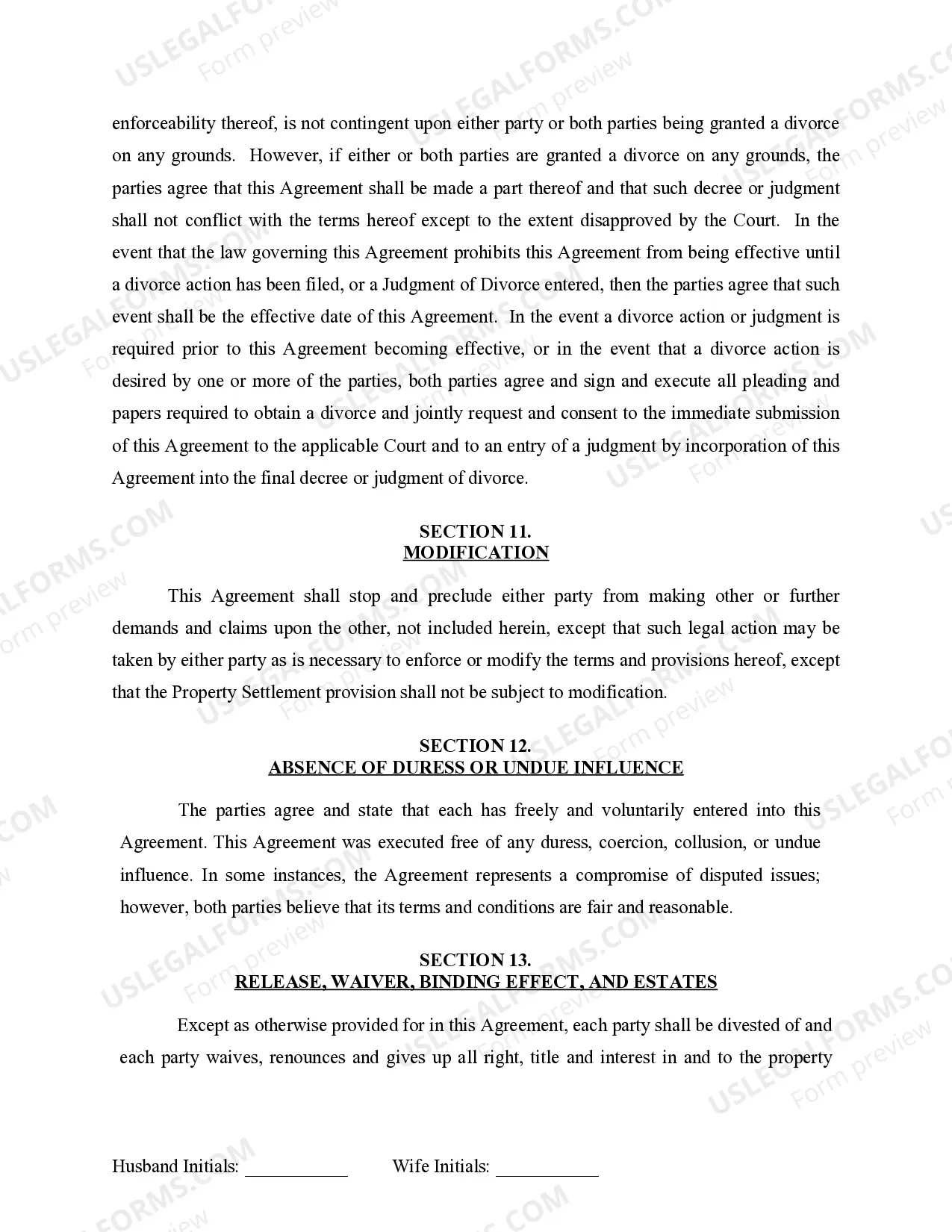
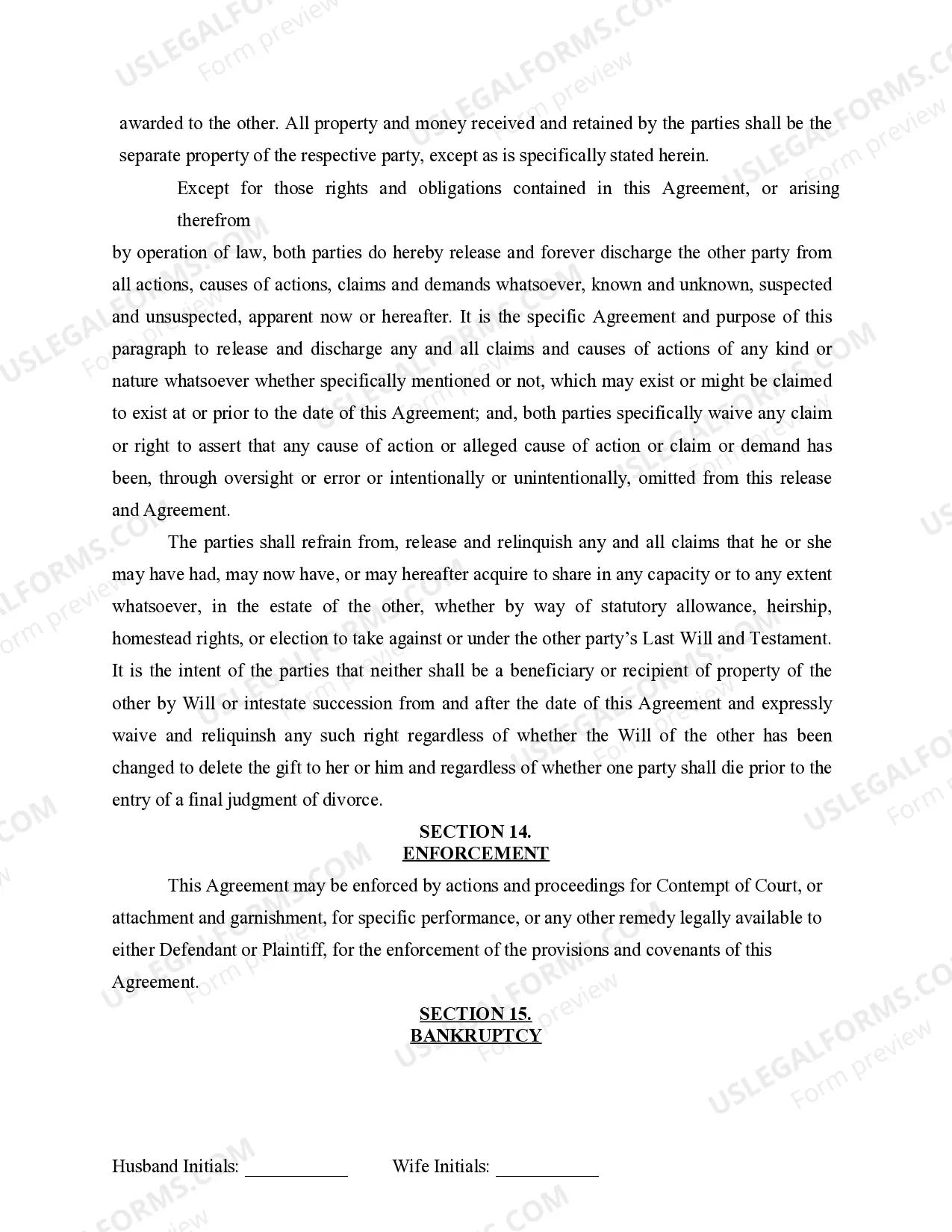
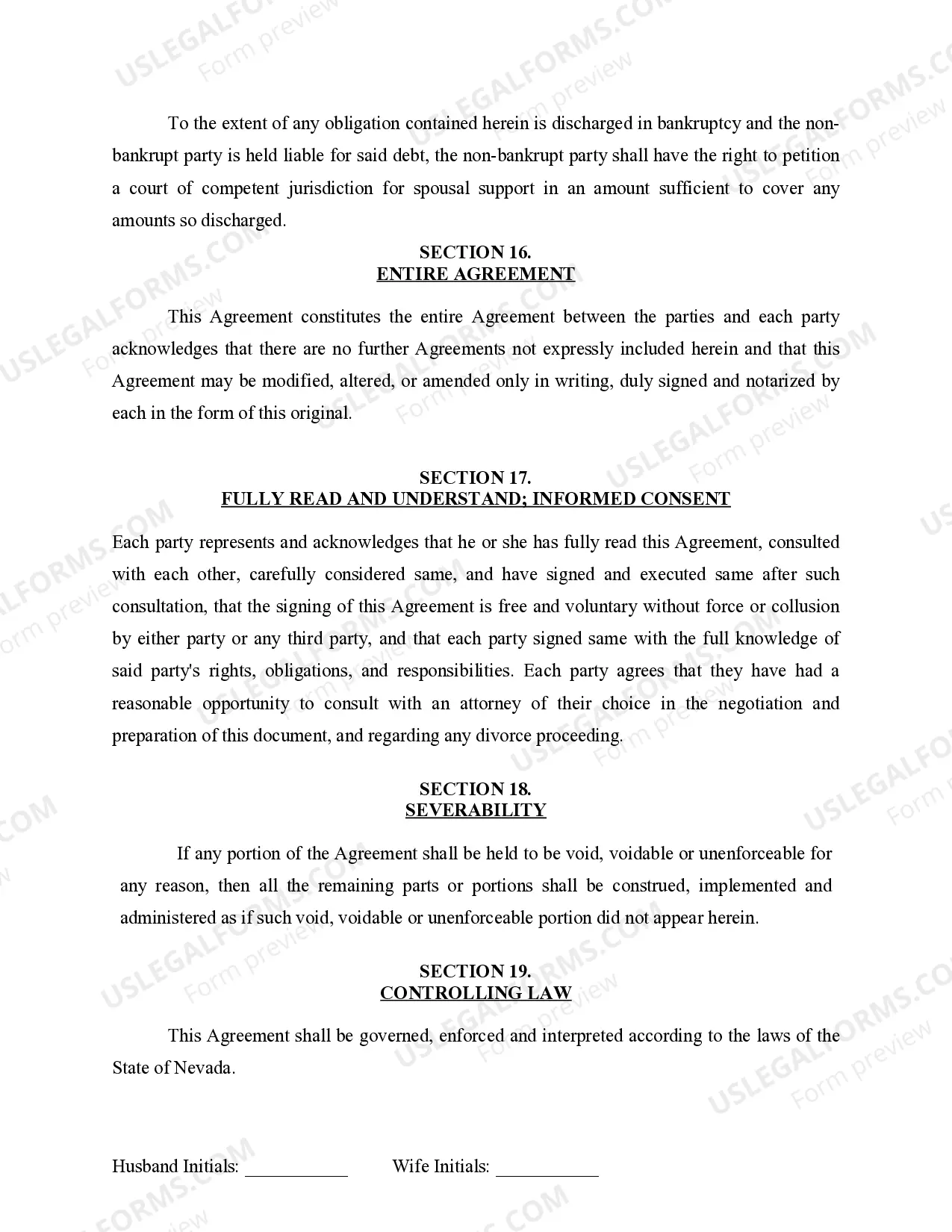
The Marital Domestic Separation and Property Settlement Agreement is a legal document designed for married individuals who wish to formalize their separation without filing for divorce. This form is specifically for couples with no children, joint property, or outstanding debts, enabling them to outline their rights and obligations effectively. It serves a crucial role in managing the financial and personal implications of separation while maintaining clarity for both parties involved.
Form components explained
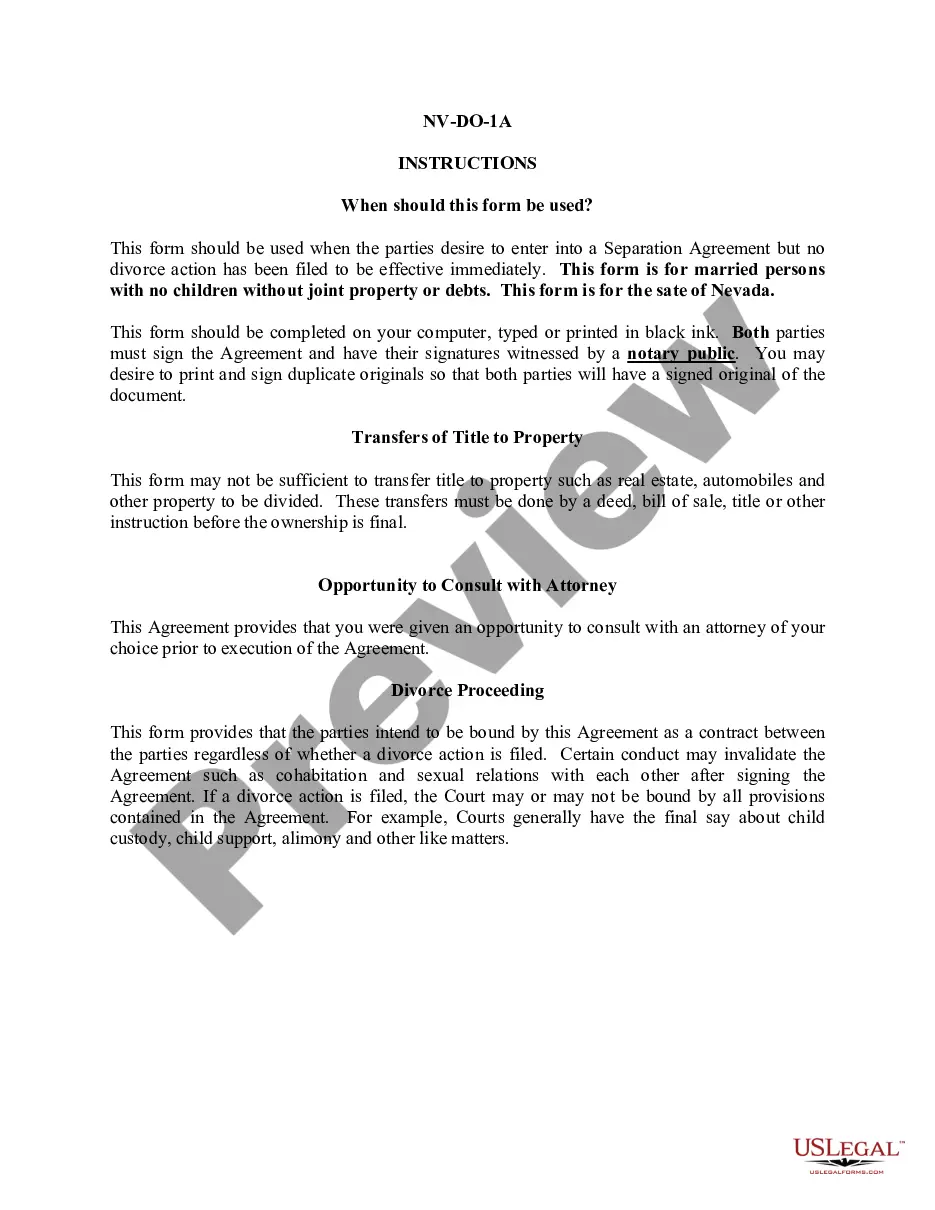
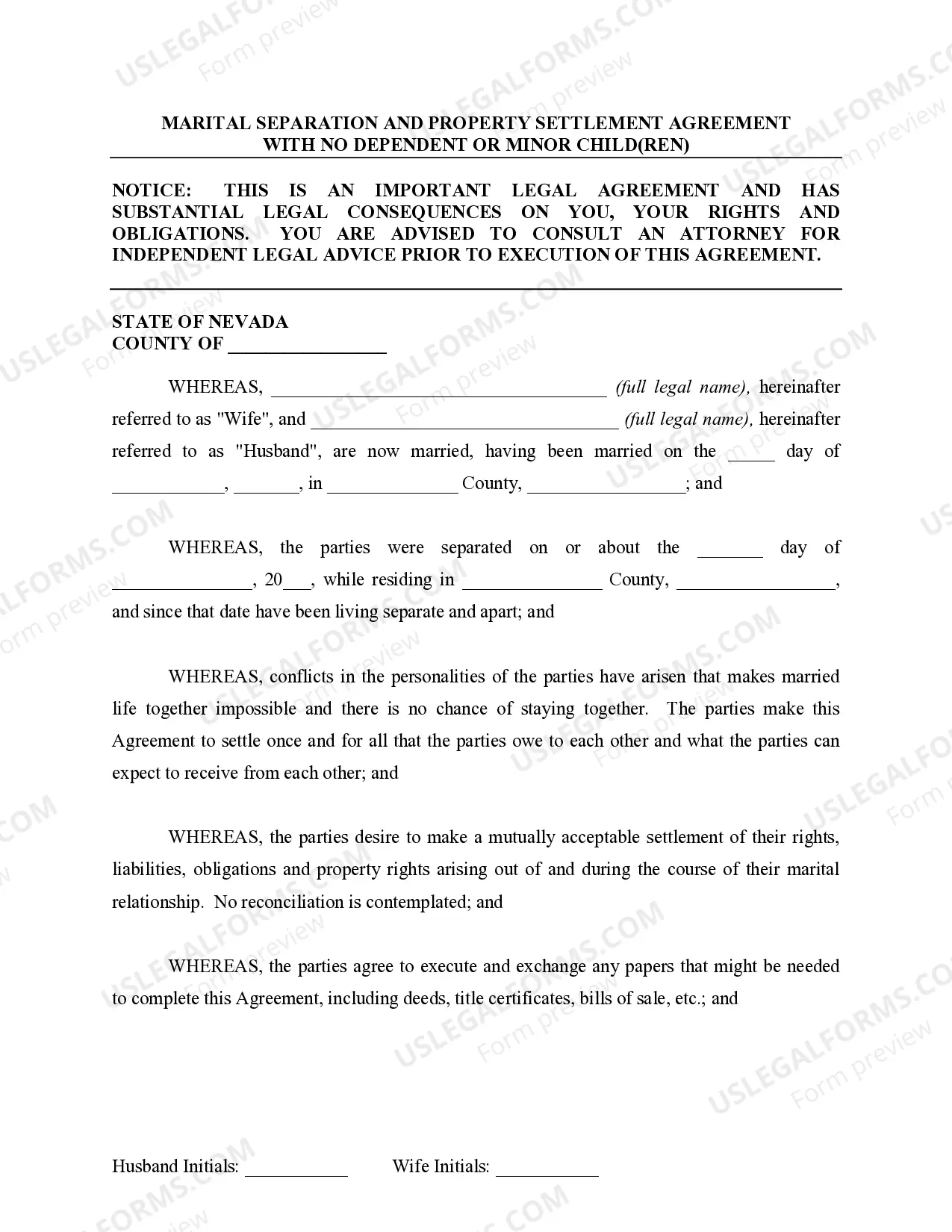
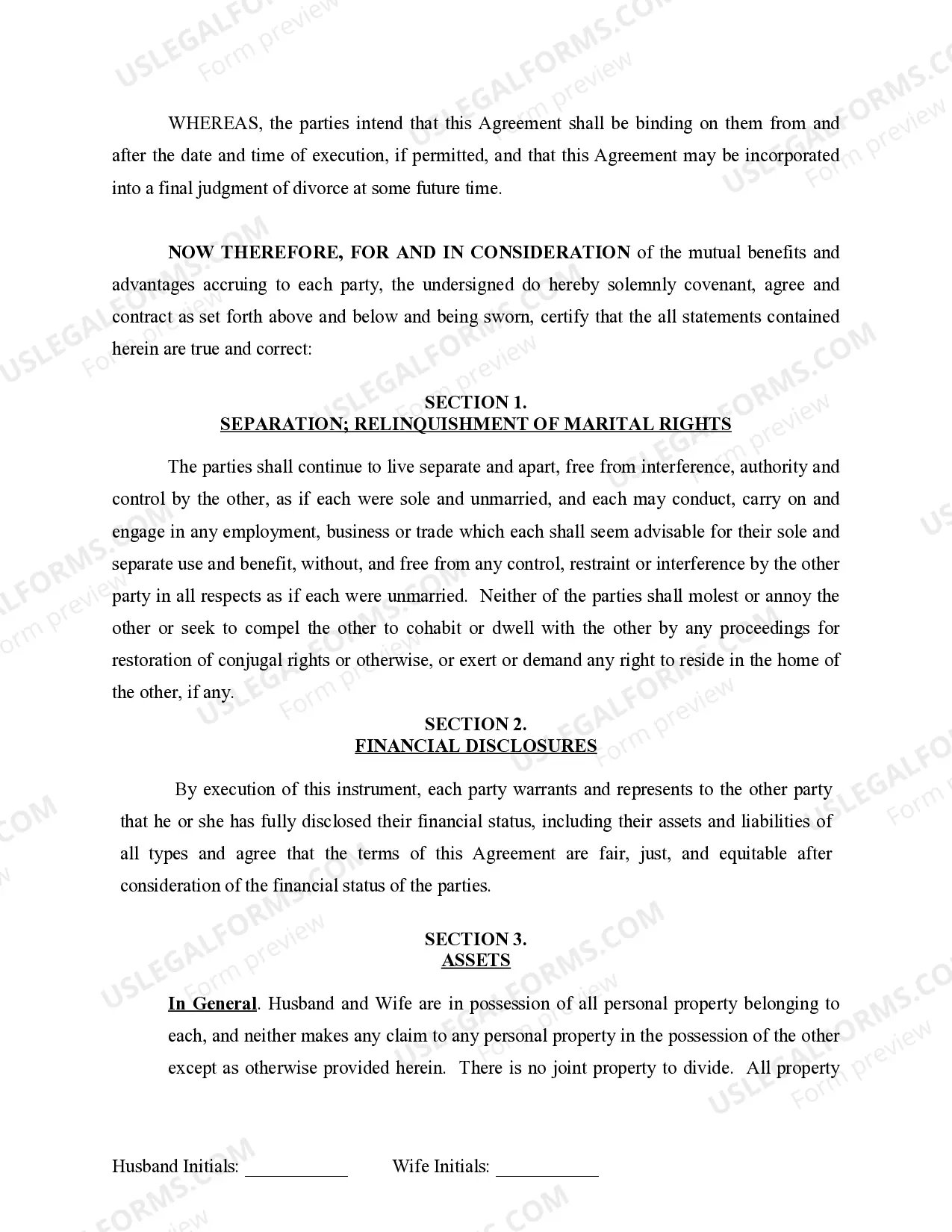
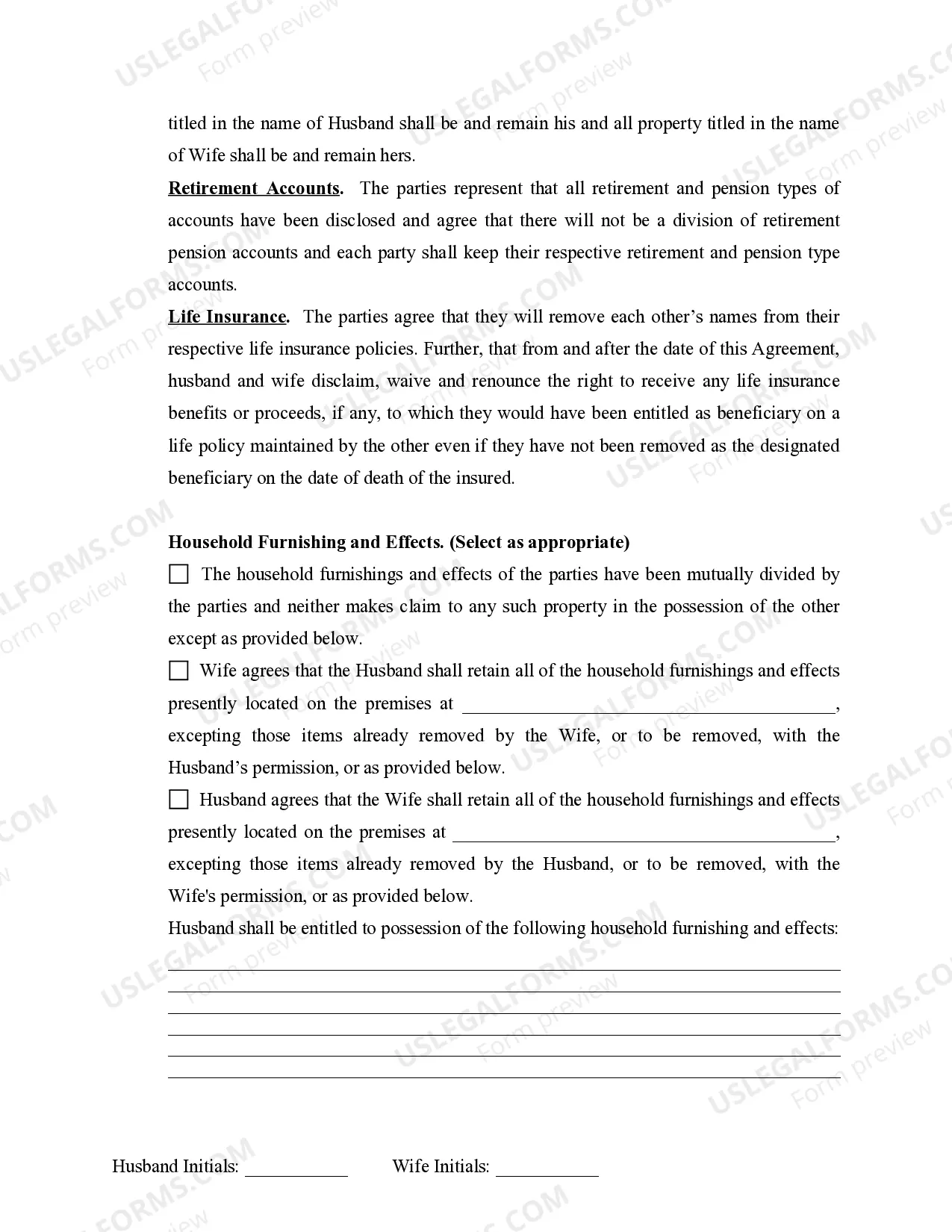
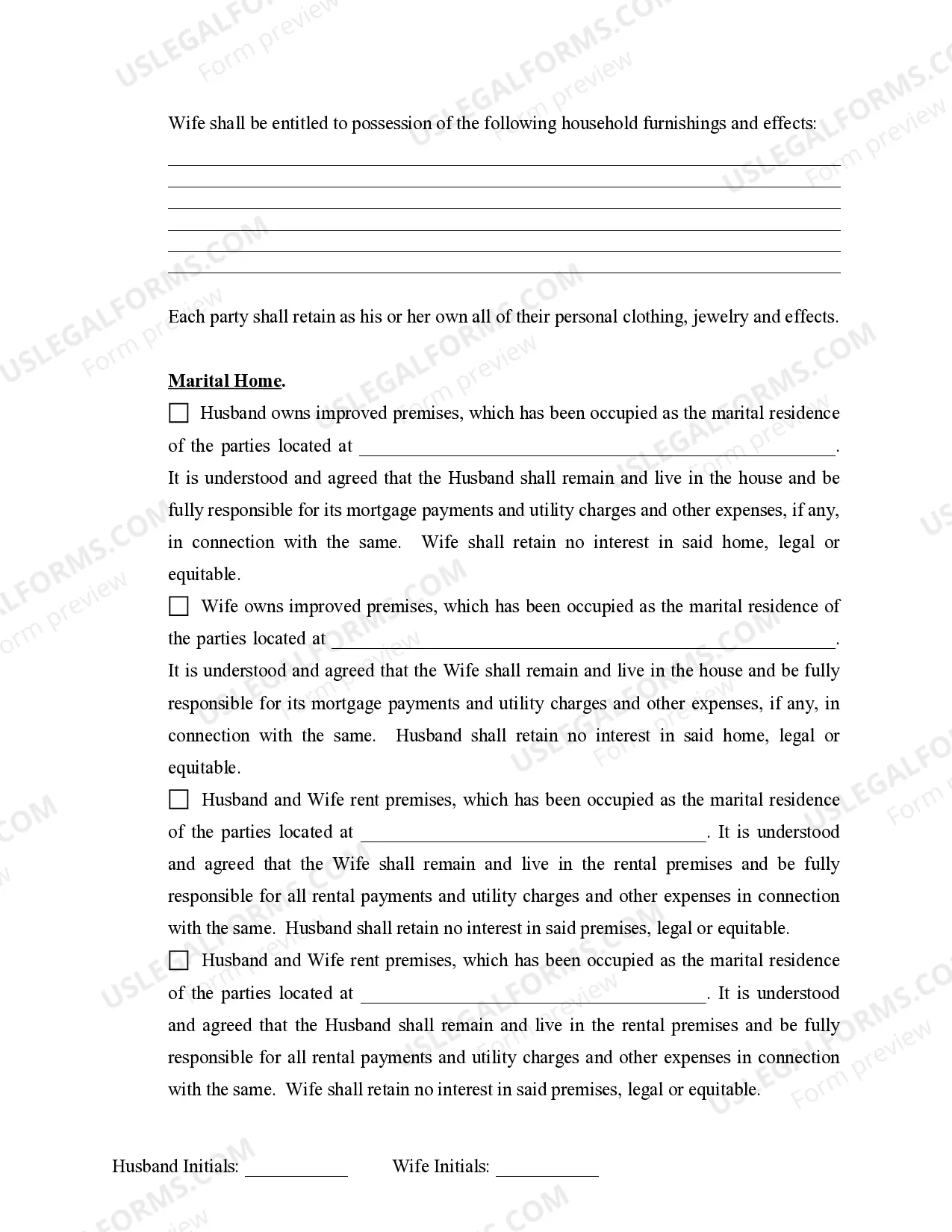
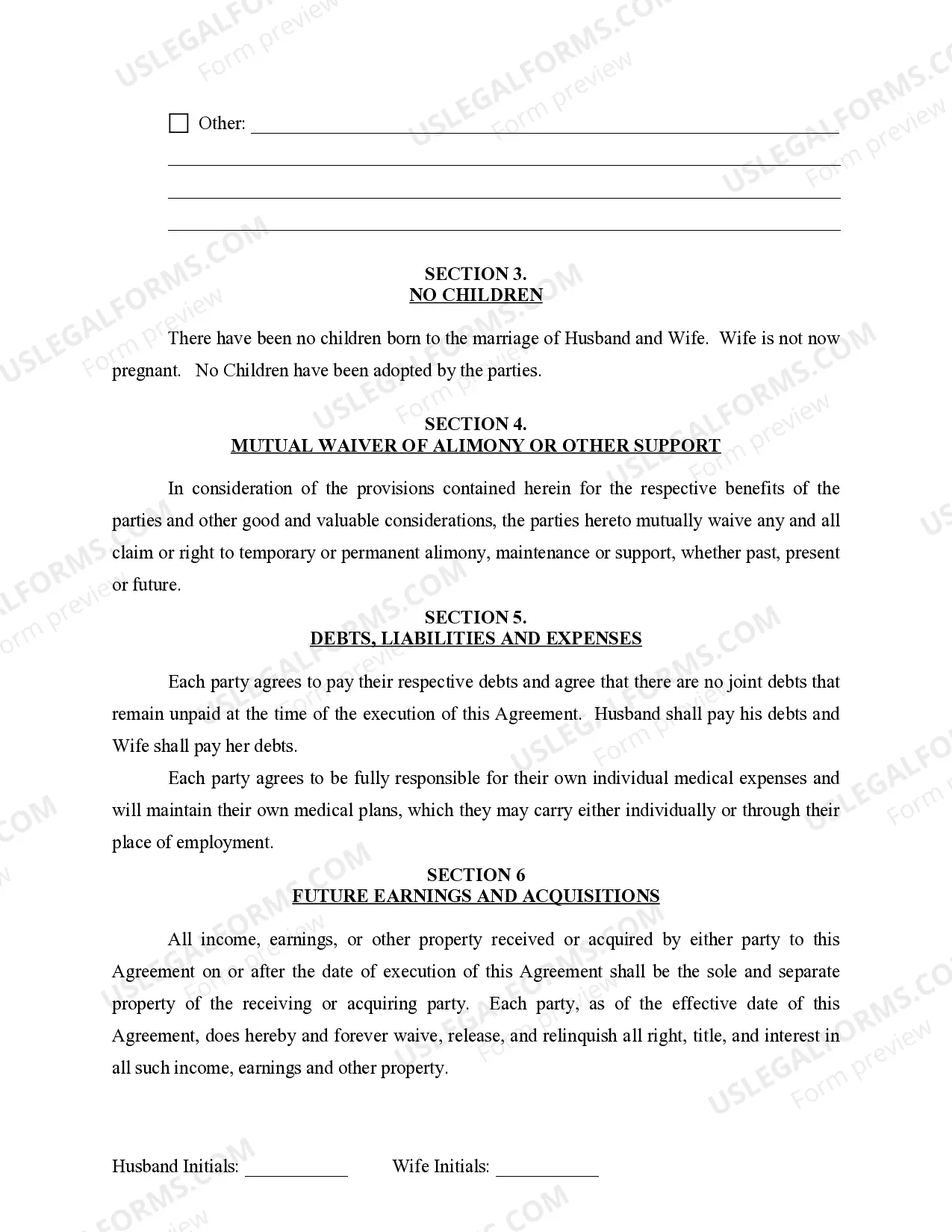
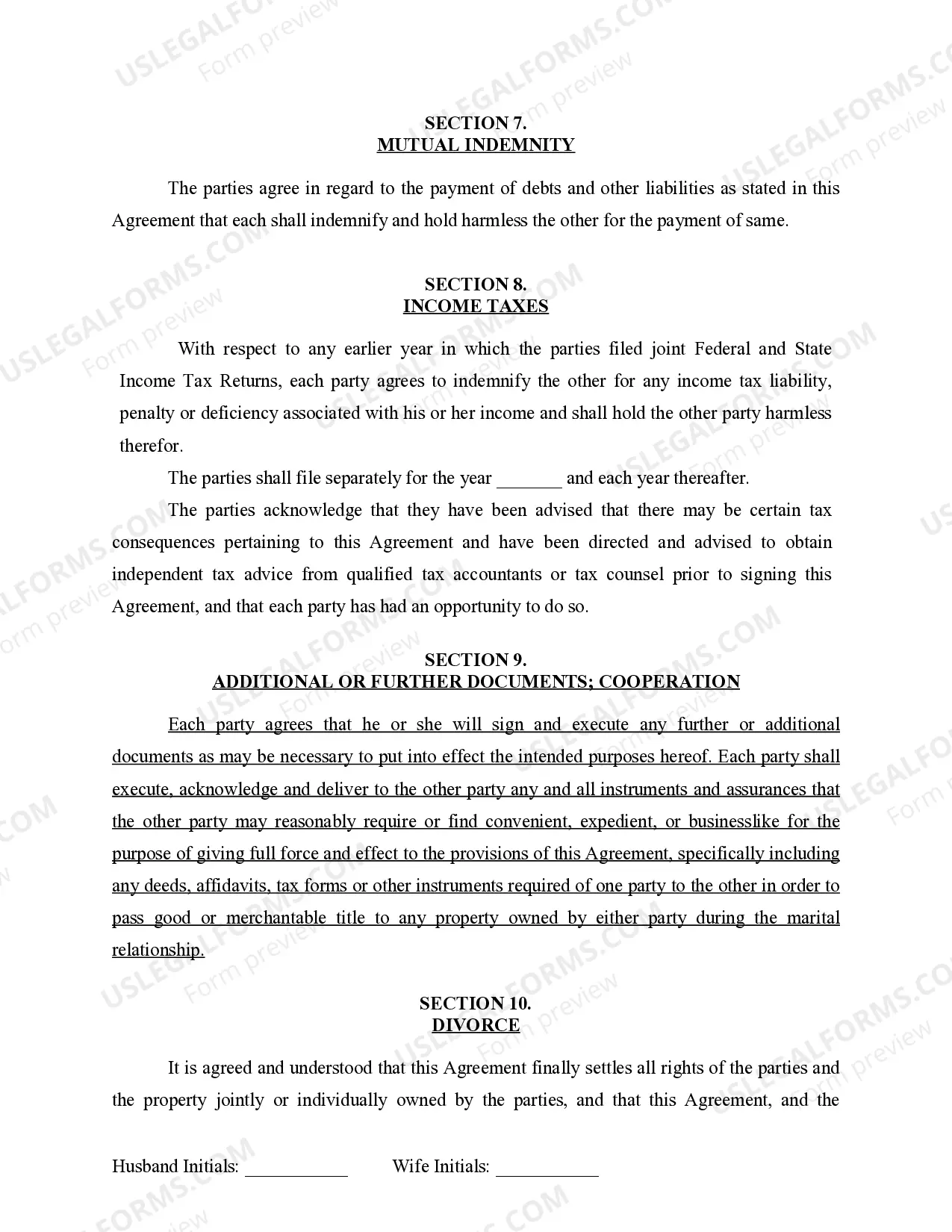
- Separation relinquishment of marital rights, allowing each party to live independently.
- Financial disclosures to ensure transparency regarding assets and liabilities.
- Asset division clauses that specify ownership of personal property.
- A mutual waiver of alimony or spousal support claims.
- Procedures for addressing debts and liabilities incurred during the marriage.
- Modifications and enforcement clauses to ensure binding agreements.


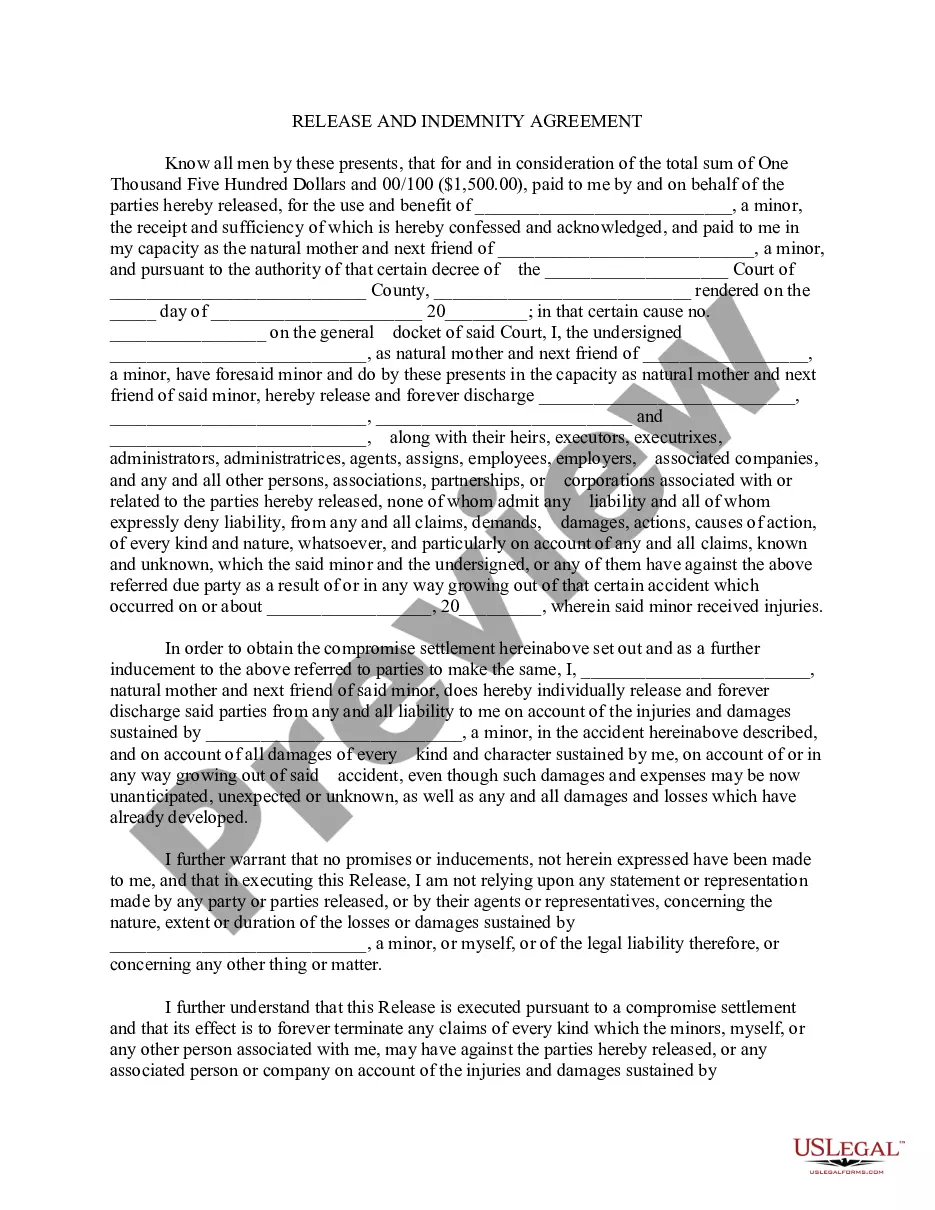
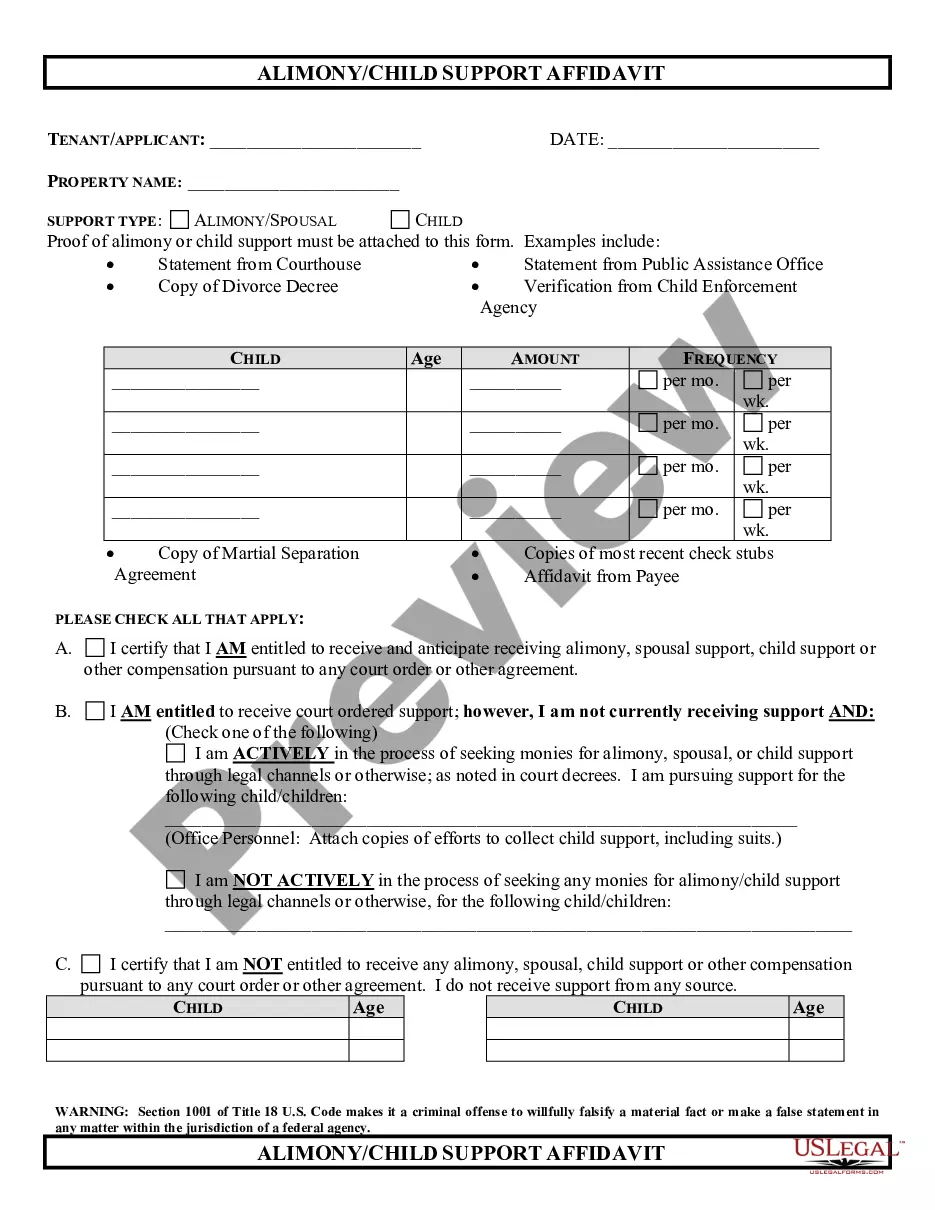
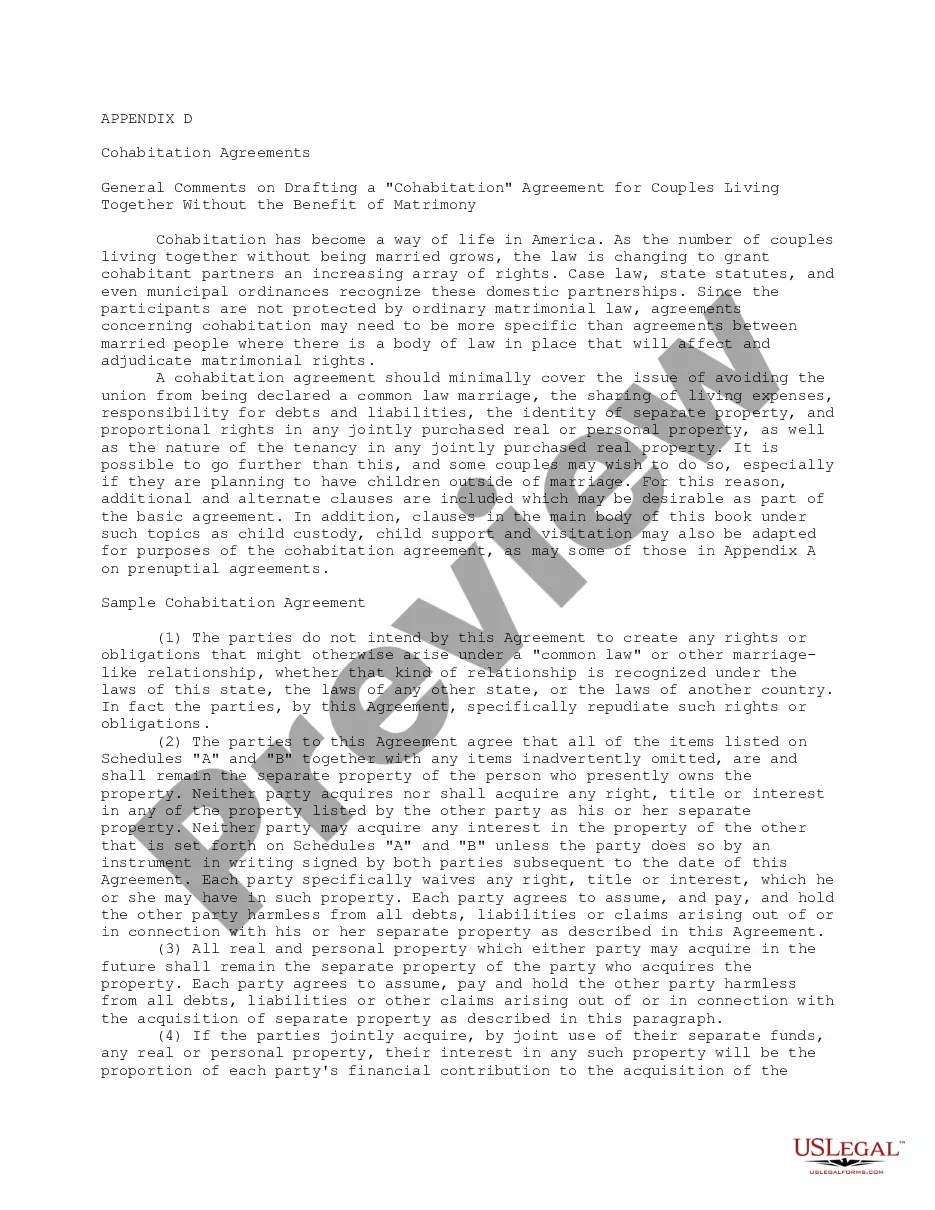
Common use cases
This form should be used when two married individuals, who have no children or joint financial obligations, decide to separate. It is appropriate for couples who wish to clarify their individual responsibilities and rights immediately, without needing to initiate divorce proceedings. By using this agreement, both parties can ensure a smoother transition into their new, separate lives.
Who needs this form
- Married couples in Nevada who are separating.
- Individuals without children from the marriage.
- Couples with no shared property or debts.
- Any party seeking clear terms for asset division and financial responsibilities.
How to complete this form
- Identify the full legal names of both parties involved.
- Fill in the date of marriage and the date of separation.
- Disclose financial information regarding assets and liabilities for both parties.
- Clearly specify any personal property and how it will be divided.
- Both parties should sign the document in the presence of a notary public.
- Consider printing duplicate originals for personal records.
Does this document require notarization?
To make this form legally binding, it must be notarized. Our online notarization service, powered by Notarize, lets you verify and sign documents remotely through an encrypted video session.
Get your form ready online
Our built-in tools help you complete, sign, share, and store your documents in one place.
Make edits, fill in missing information, and update formatting in US Legal Forms—just like you would in MS Word.
Download a copy, print it, send it by email, or mail it via USPS—whatever works best for your next step.
Sign and collect signatures with our SignNow integration. Send to multiple recipients, set reminders, and more. Go Premium to unlock E-Sign.
If this form requires notarization, complete it online through a secure video call—no need to meet a notary in person or wait for an appointment.
We protect your documents and personal data by following strict security and privacy standards.

Make edits, fill in missing information, and update formatting in US Legal Forms—just like you would in MS Word.

Download a copy, print it, send it by email, or mail it via USPS—whatever works best for your next step.

Sign and collect signatures with our SignNow integration. Send to multiple recipients, set reminders, and more. Go Premium to unlock E-Sign.

If this form requires notarization, complete it online through a secure video call—no need to meet a notary in person or wait for an appointment.

We protect your documents and personal data by following strict security and privacy standards.
Mistakes to watch out for
- Failing to provide complete financial disclosures, which can lead to disputes later.
- Not having the Agreement notarized, rendering it potentially unenforceable.
- Neglecting to specify all relevant personal property, leading to misunderstandings.
- Overlooking the need for both parties to retain signed originals of the Agreement.
Benefits of using this form online
- Convenient access to a professionally drafted agreement tailored for specific situations.
- Editability allows for personalization to meet both parties' needs.
- Reliable format ensuring compliance with state requirements.
- Time-saving option as you can complete the form from the comfort of your home.
Looking for another form?
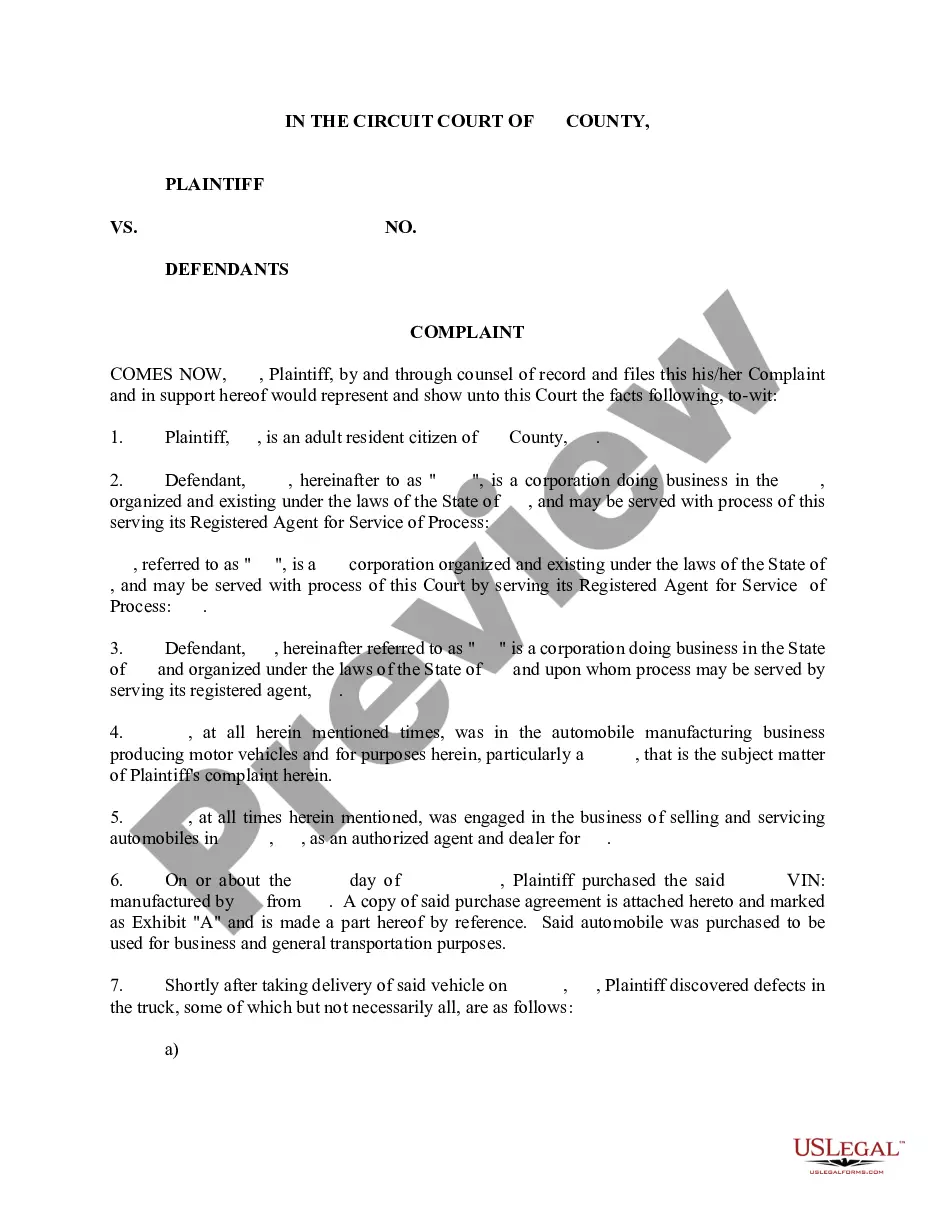
Form popularity
FAQ
Once an agreement has been reached, both parties will sign the settlement, and it will be forwarded to a judge who will incorporate the agreement into the final divorce decree.Usually, an attorney will need to file a motion immediately, and present an argument to the court about why the agreement should be rescinded.
What Is Community Property? Community property refers to a U.S. state-level legal distinction that designates a married individual's assets. Any income and any real or personal property acquired by either spouse during a marriage are considered community property and thus belong to both partners of the marriage.
Even though Nevada has no-fault divorce, any financial misconduct, including money spent on an affair, can be considered in property division. Adultery doesn't usually affect the court's decisions on child custody and visitation, unless the unfaithful spouse's current relationship has a negative impact on the children.
Marital Settlement Agreements, reached between the parties in writing and signed by the parties, become legally binding when approved by the court at the time of the final court hearing.Once approved by the court, such post judgment stipulations do become legally binding and enforceable between the parties.
Key Takeaways. Community property law requires that a divorcing couple split their assets 50/50, but only assets acquired while they were domiciled in the state. Property owned by either spouse prior to the marriage or after the legal separation may not be considered or divided as community property.
Nevada Divorce Rules for Dividing PropertyNevada's community property laws mean that all income earned and property acquired by either spouse during the marriage is community property, unless it's separate property such as a gift, inheritance, or property covered by a premarital agreement.
Nevada Community Property Laws. Nevada is a community property state. This means that each spouse owns 50% of the assets and debts acquired during the marriage. Upon divorce, courts distribute these assets and debts equally between the spouses.
The short answer to the question is NO. Adultery in marriage, while obviously can be very distasteful is not illegal.
California is a community property state.In fact, California law expressly prohibits a spouse from giving away community property for less than fair and reasonable value without the written consent of the other spouse. Failure to follow this rule can lead to complicated litigation after a spouse's death.