Nevada Letter from Tenant to Landlord with Demand that landlord remove garbage and vermin from premises
Understanding this form
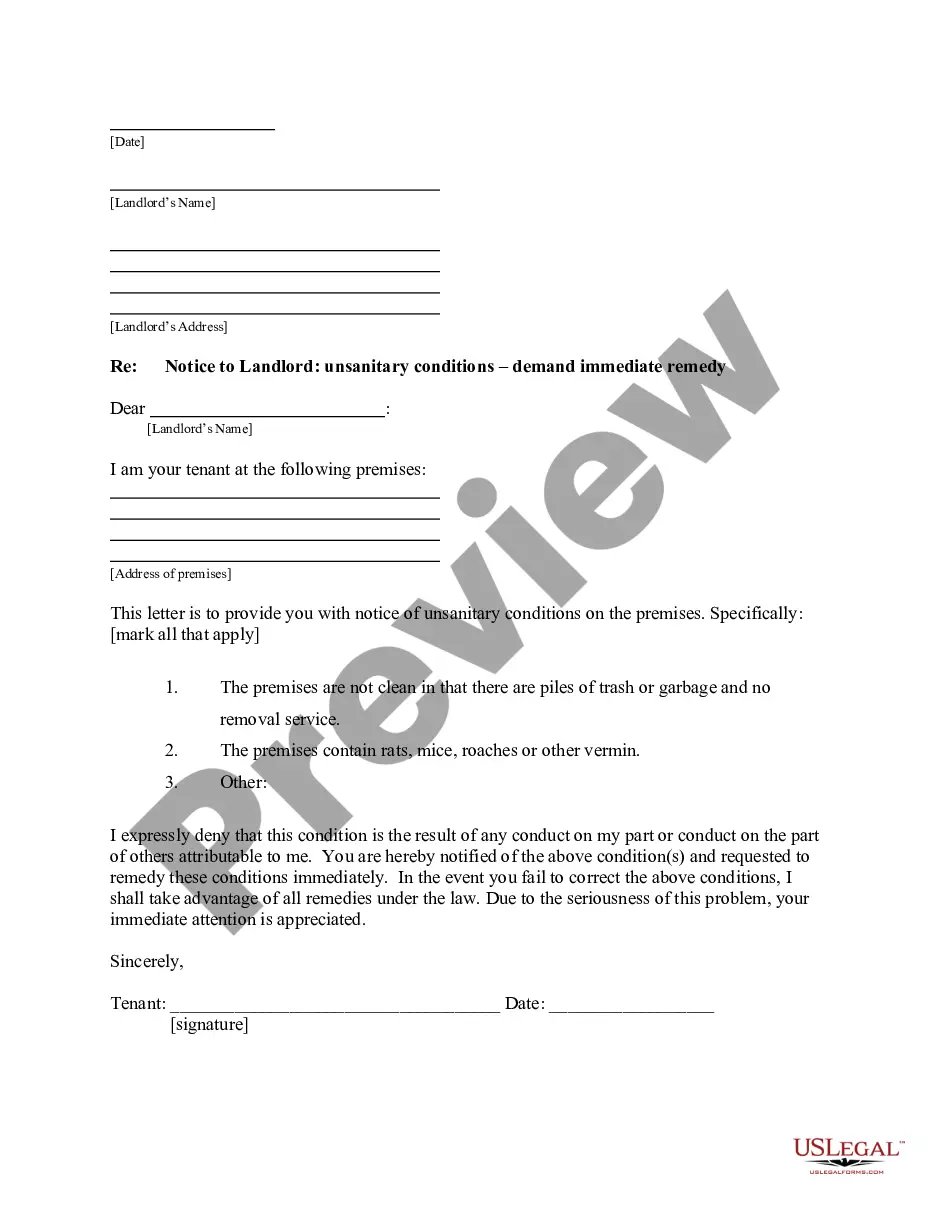
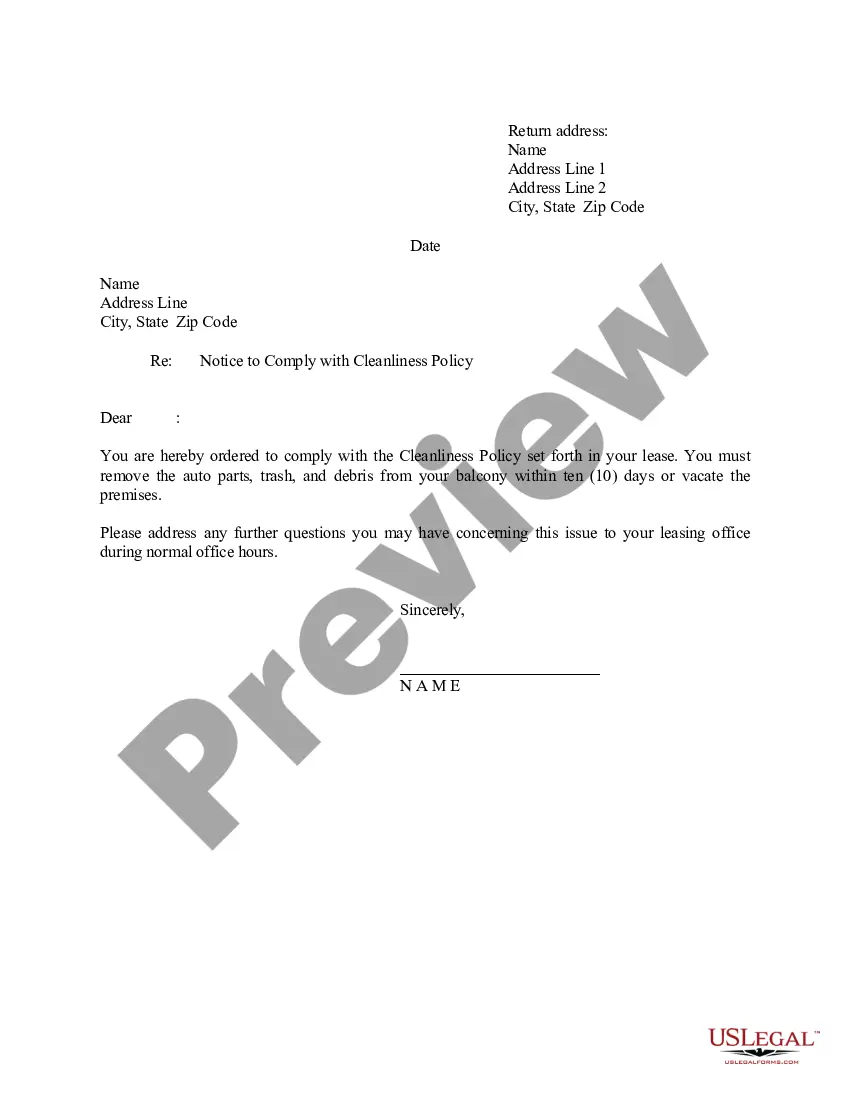
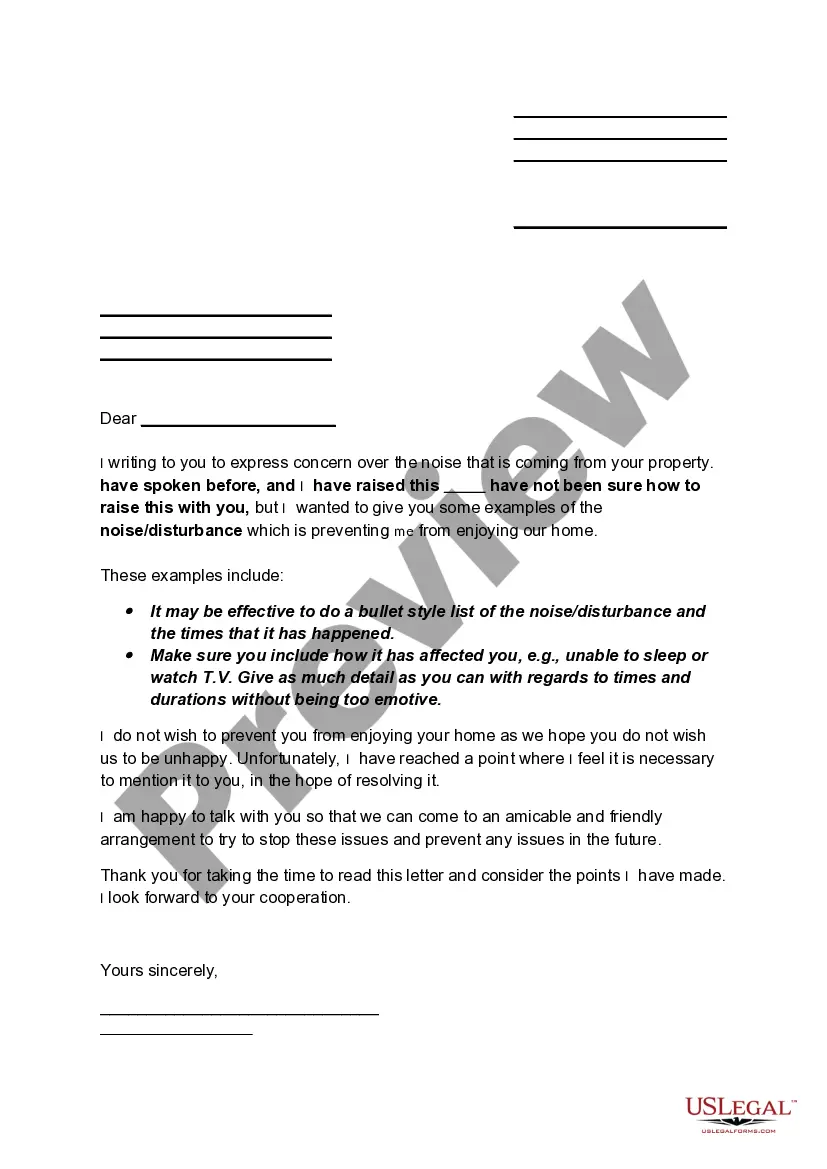
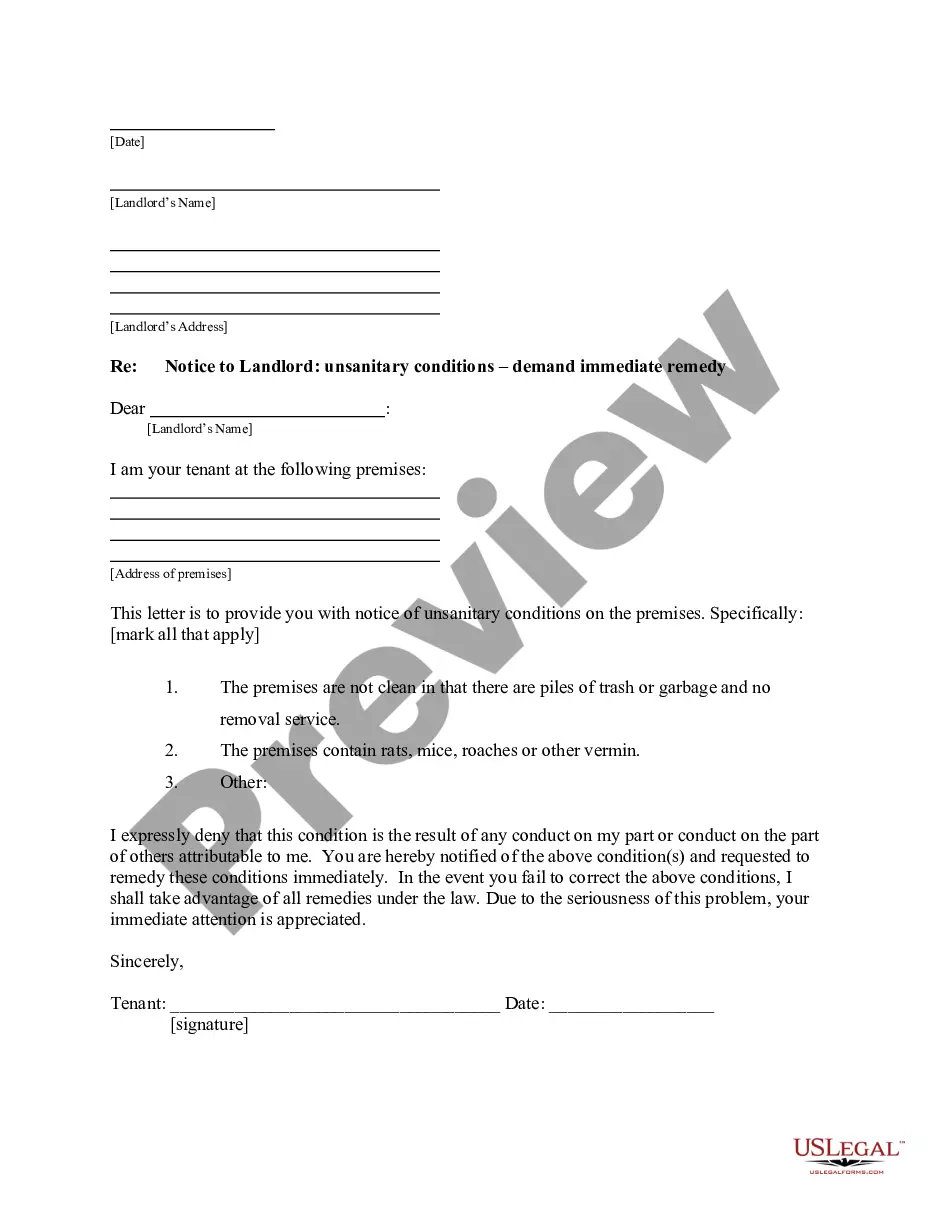
This form is a Letter from Tenant to Landlord with Demand that landlord remove garbage and vermin from premises. It is used by tenants to formally notify their landlord of unsanitary conditions affecting their rental property. This letter establishes that the landlord has breached the lease agreement and demands immediate remedial action. Unlike other tenant forms, this letter focuses specifically on health and safety concerns within the living space.
Main sections of this form
- Tenant's declaration denying responsibility for the unsanitary condition.
- Notification to the landlord about the specific health hazards present.
- Request for immediate action to remedy the issues.
- Statement of potential legal remedies if the issues remain unresolved.
- Space for the tenant's signature and date.

Common use cases
This form should be used when a tenant encounters serious cleanliness issues, such as garbage accumulation and vermin infestations, that violate health and safety standards. It serves as an official written communication to the landlord, highlighting the urgent need for repairs or remediation to ensure a safe and habitable living environment.
Who can use this document
- Tenants experiencing unsanitary conditions in their rental units.
- Individuals who have a lease agreement and require landlord intervention for health and safety issues.
- Renters who wish to formally document their complaint for future legal reference.
Instructions for completing this form
- Identify the specific issues you are facing, such as garbage and vermin.
- Clearly state that these conditions are due to the landlord's negligence.
- Fill in the date of notification and sign the document.
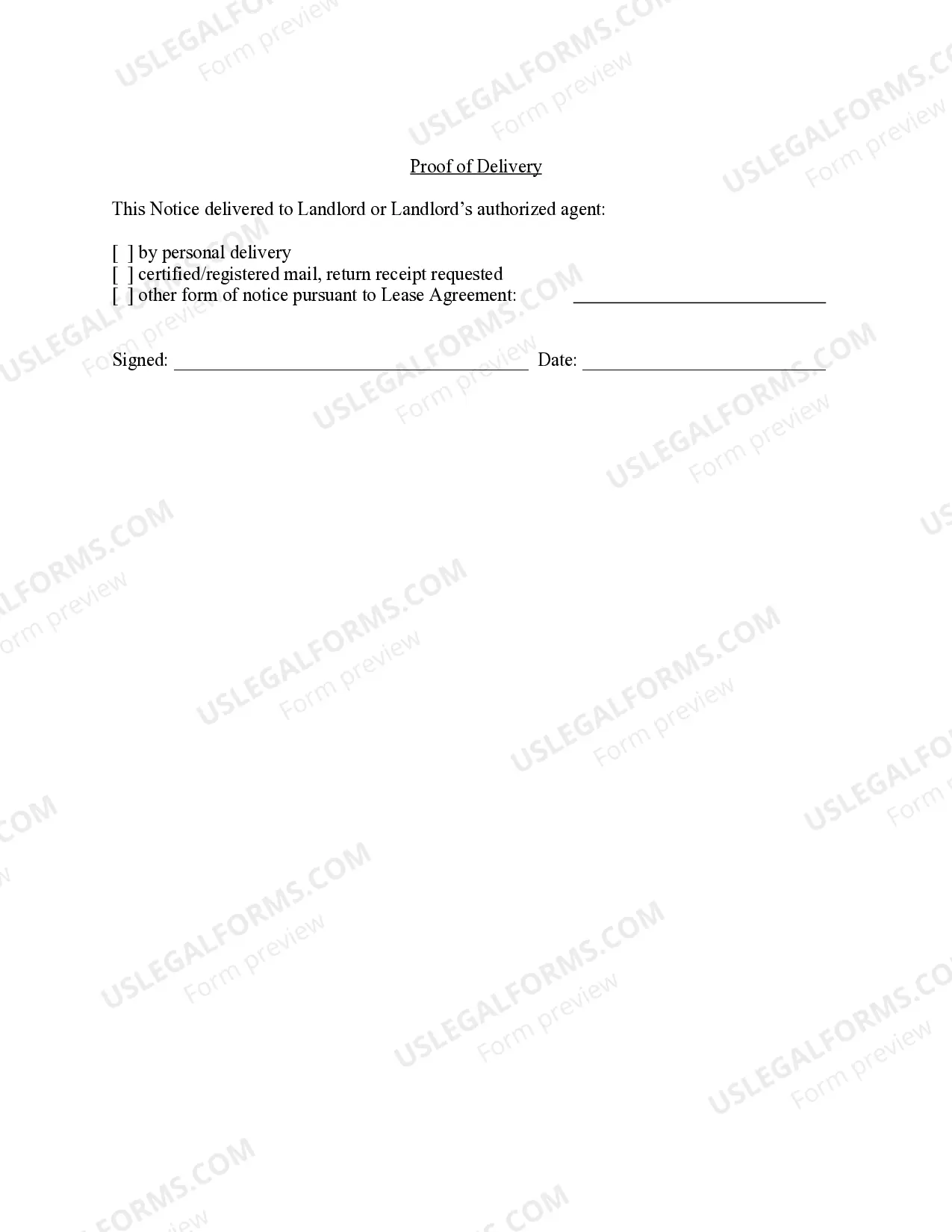
- Choose a delivery method to send the letter to the landlord.
Is notarization required?
This form does not typically require notarization unless specified by local law. It is essential, however, to keep a copy for your records and ensure proper delivery to the landlord.
Get your form ready online
Our built-in tools help you complete, sign, share, and store your documents in one place.
Make edits, fill in missing information, and update formatting in US Legal Forms—just like you would in MS Word.
Download a copy, print it, send it by email, or mail it via USPS—whatever works best for your next step.
Sign and collect signatures with our SignNow integration. Send to multiple recipients, set reminders, and more. Go Premium to unlock E-Sign.
If this form requires notarization, complete it online through a secure video call—no need to meet a notary in person or wait for an appointment.
We protect your documents and personal data by following strict security and privacy standards.
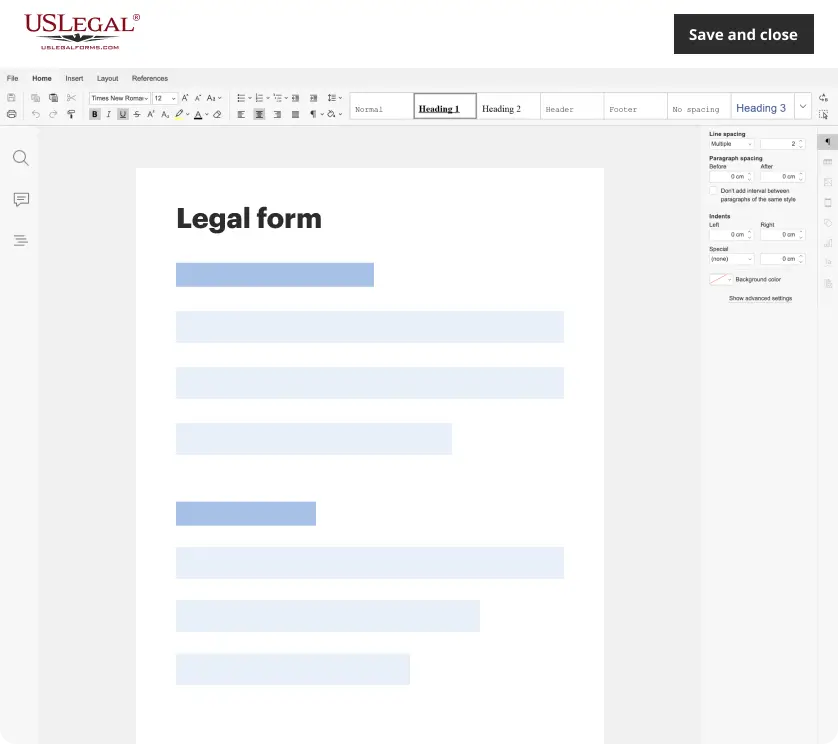
Make edits, fill in missing information, and update formatting in US Legal Forms—just like you would in MS Word.
Download a copy, print it, send it by email, or mail it via USPS—whatever works best for your next step.
Sign and collect signatures with our SignNow integration. Send to multiple recipients, set reminders, and more. Go Premium to unlock E-Sign.
If this form requires notarization, complete it online through a secure video call—no need to meet a notary in person or wait for an appointment.
We protect your documents and personal data by following strict security and privacy standards.
Common mistakes
- Failing to specify the exact nature of the unsanitary conditions.
- Not including a date, which may delay the acknowledgment of the complaint.
- Overlooking the requirement for proof of delivery.
Benefits of using this form online
- Convenience of downloading and completing the form at your pace.
- Editability allows for customization to fit your specific situation.
- Reliably drafted by licensed attorneys, ensuring legal compliance.
Legal use & context
This form legally notifies the landlord of the issues at the rental property, which fulfills the tenantâs responsibilities under landlord-tenant law. Documenting these issues can be critical for pursuing further remedies, such as withholding rent or seeking legal action for a breach of contract.
Key takeaways
- Use this form to formally report unsanitary conditions to your landlord.
- Document your attempts to resolve the issue amicably.
- Familiarize yourself with local laws regarding tenant rights and landlord obligations.
Looking for another form?
Form popularity
FAQ
The landlord can enter the rental property, without the tenant's consent, if there is an emergency. (NRS 118A.Show the unit to potential or actual purchasers, mortgage companies, tenants, workers, contractors, or other people with a true interest in inspecting the property. (NRS 118A.
State law regulates several rent-related issues, including late and bounced-check fees, the amount of notice (at least 45 days in Nevada) landlords must give tenants to raise the rent, and how much time (five days in Nevada) a tenant has to pay overdue rent or move before a landlord can file for eviction.
Indiana. Indiana laws allow landlords to hold on to security deposits for 45 days to give them time to determine any damages caused by tenants. Colorado. Colorado is one of few states that allow landlords to access the rental property without an advance notice requirement. Georgia.
Nevada was named the 11th most renter-friendly state in America in the study that looked at landlord-tenant laws in all 50 states and Washington, D.C. The study did not consider rent prices, but instead examined laws that regulate renting terms such as security deposits, rent increases, warranty of habitability, repair
Nevada Revised Statutes require a seven-day notice to the tenant, instructing the tenant to either pay the rent or "quit" (leave) the rental property. To evict a tenant for nonpayment of rent, the landlord must "serve" (deliver) a Seven-Day Notice to Pay Rent or Quit to the tenant.
The Centers for Disease Control (CDC) residential rental eviction moratorium has been extended through June 30, 2021.
Nevada Revised Statutes require a seven-day notice to the tenant, instructing the tenant to either pay the rent or "quit" (leave) the rental property. To evict a tenant for nonpayment of rent, the landlord must "serve" (deliver) a Seven-Day Notice to Pay Rent or Quit to the tenant.
Livable housing means that the rental meets basic requirements, such as: a roof that keeps out rain and snow. sufficient hot water. reliable heat. sturdy floors and walls that aren't in danger of imminent collapse.
You are legally required to keep rental premises livable in Nevada, under a legal doctrine called the implied warranty of habitability. If you don't take care of important repairs, such as a broken heater, tenants in Nevada may have several options, including the right to withhold rent or to repair and deduct.