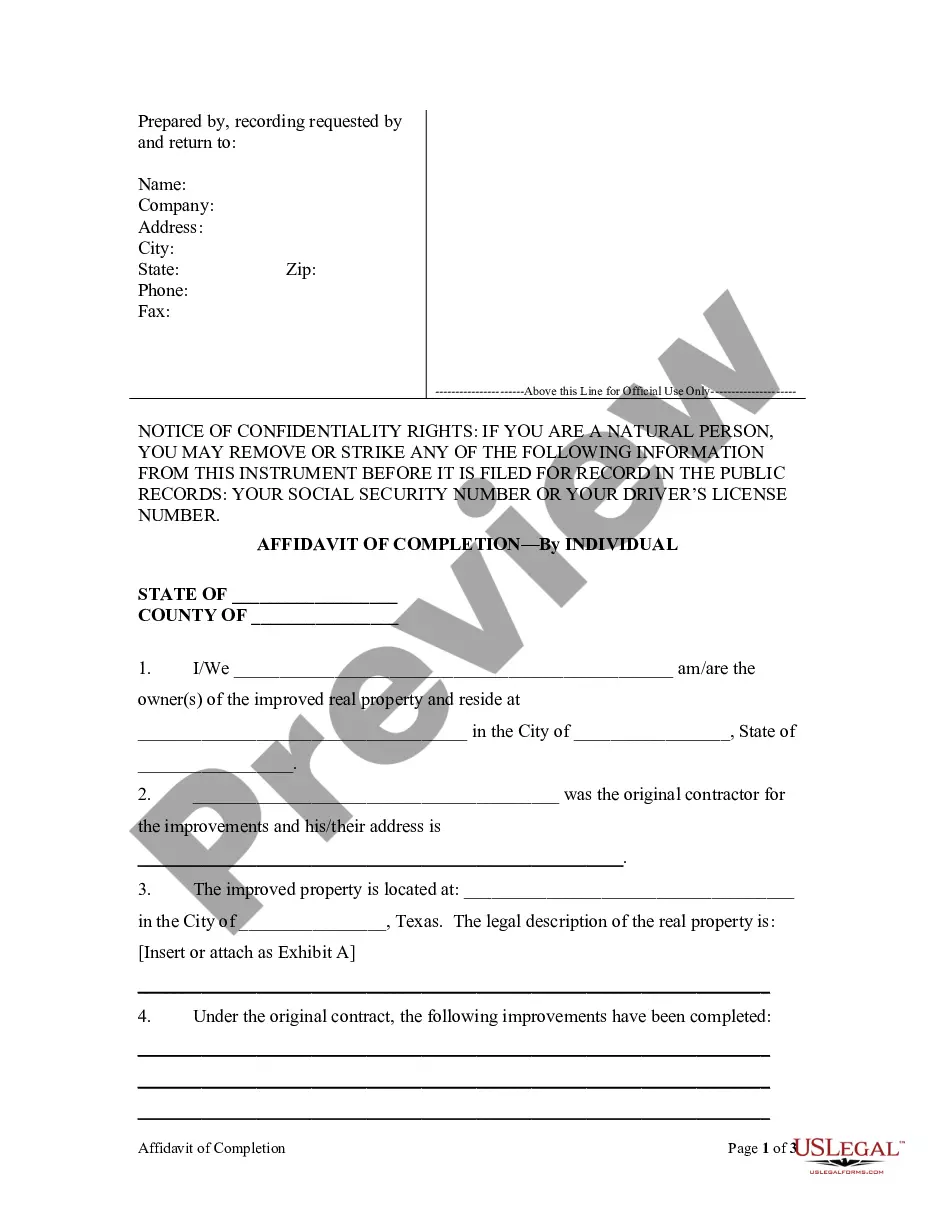
Nevada Notice of Extension of Lien - Corporation
Understanding this form
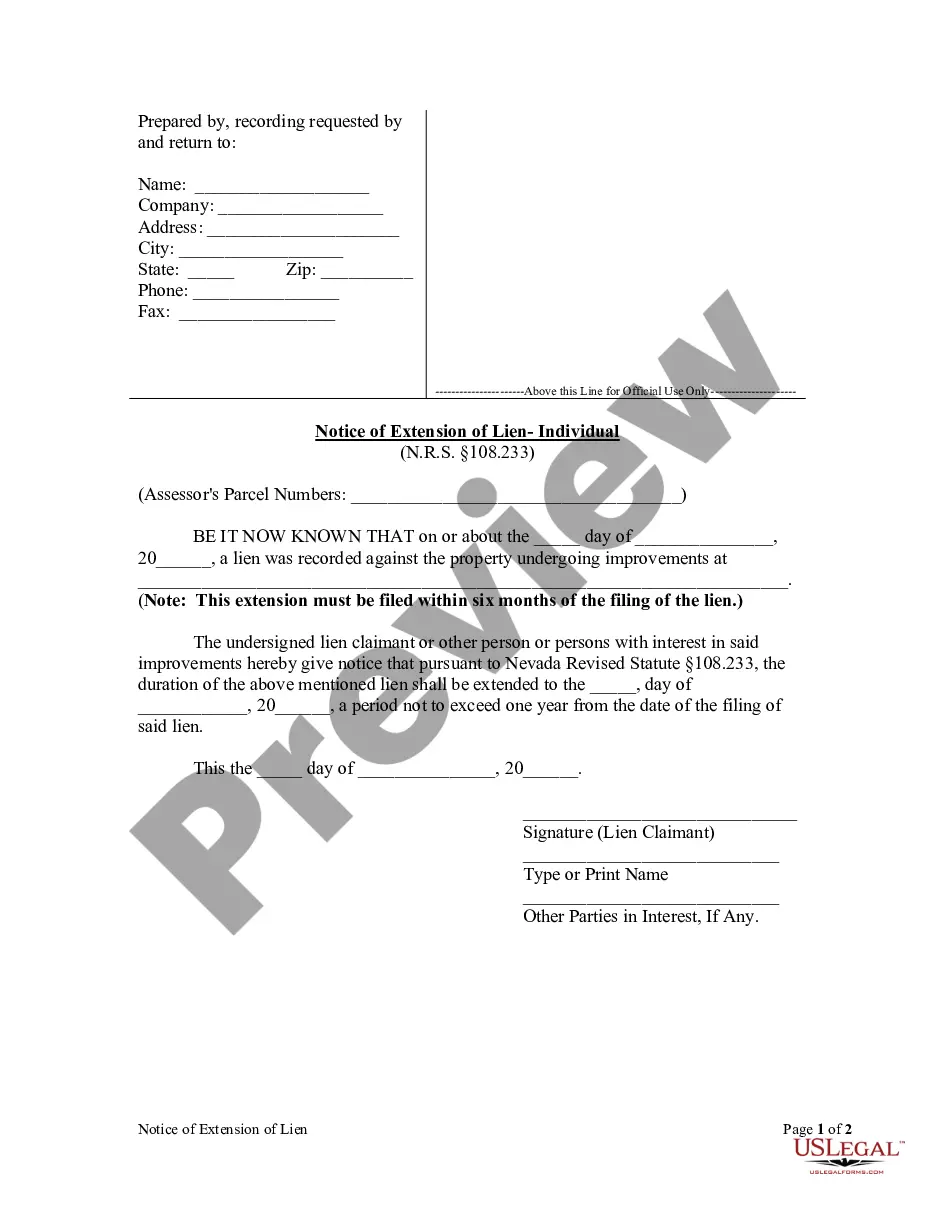
The Notice of Extension of Lien - Corporation is a legal document used in Nevada to extend the duration of a previously filed lien. Under Nevada law, a lien is typically valid for six months unless action is taken. This form allows the lien claimant to file a notice that extends the lien's effectiveness for an additional period, up to one year from the original filing. Unlike the initial lien filing, which establishes the claim, this notice serves as a formal declaration to preserve the lien's enforceability if it is filed within the specified timeframe.
Main sections of this form
- Name and contact information of the lien claimant or corporation.
- Details of the property subject to the lien, including the address and assessors parcel numbers.
- The date when the original lien was recorded.
- New expiration date for the extended lien.
- Signature of the authorized corporate representative.
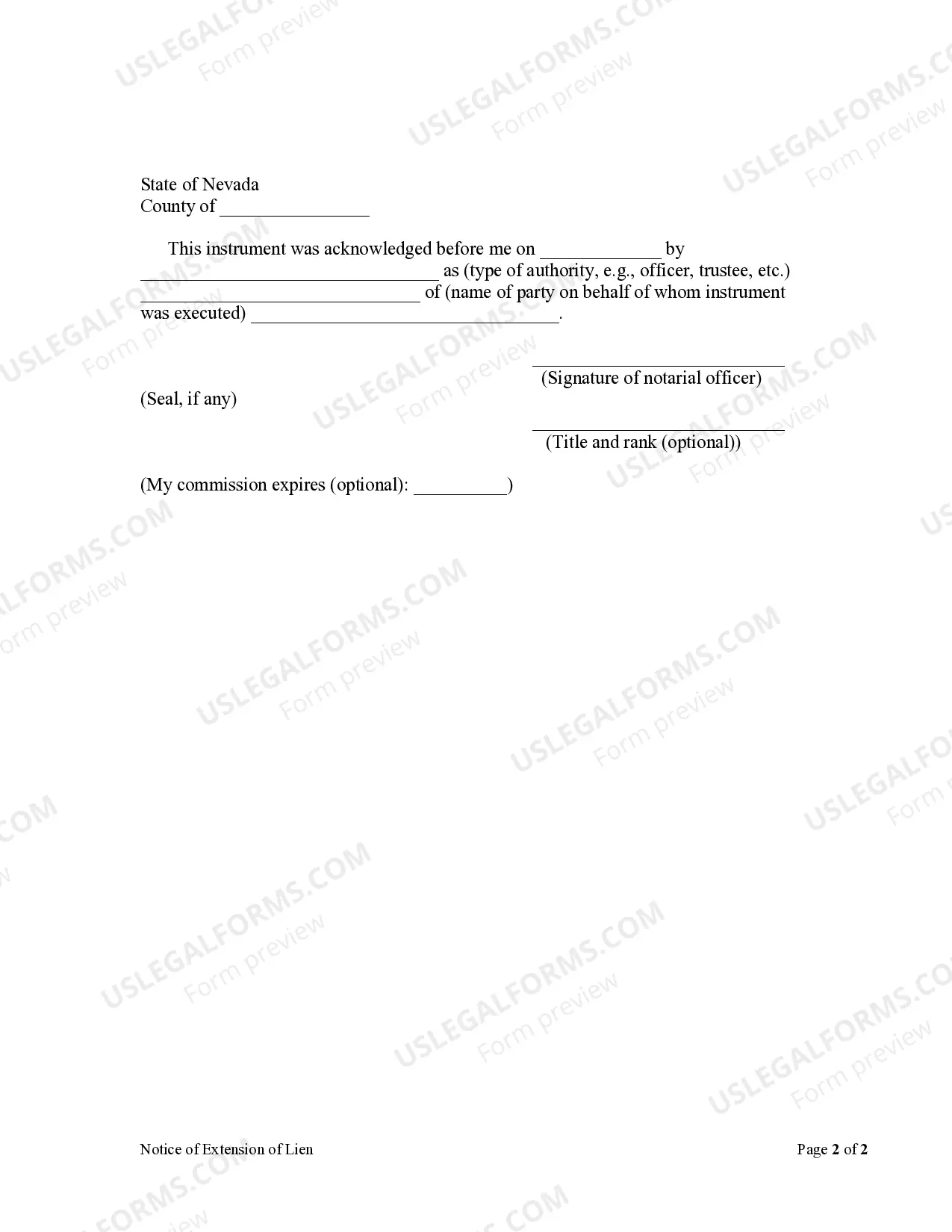
- Notary acknowledgment section to verify the signature.

When to use this form
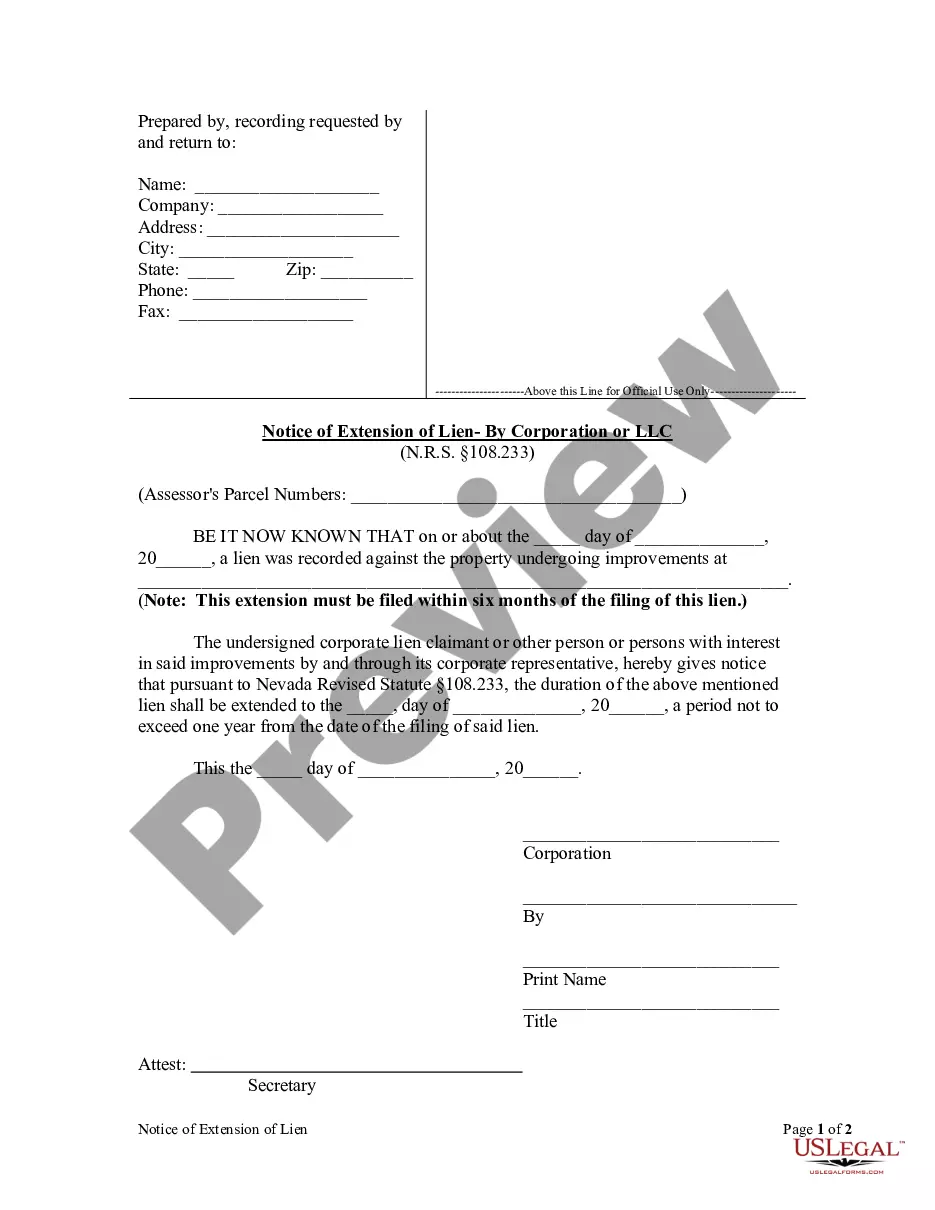
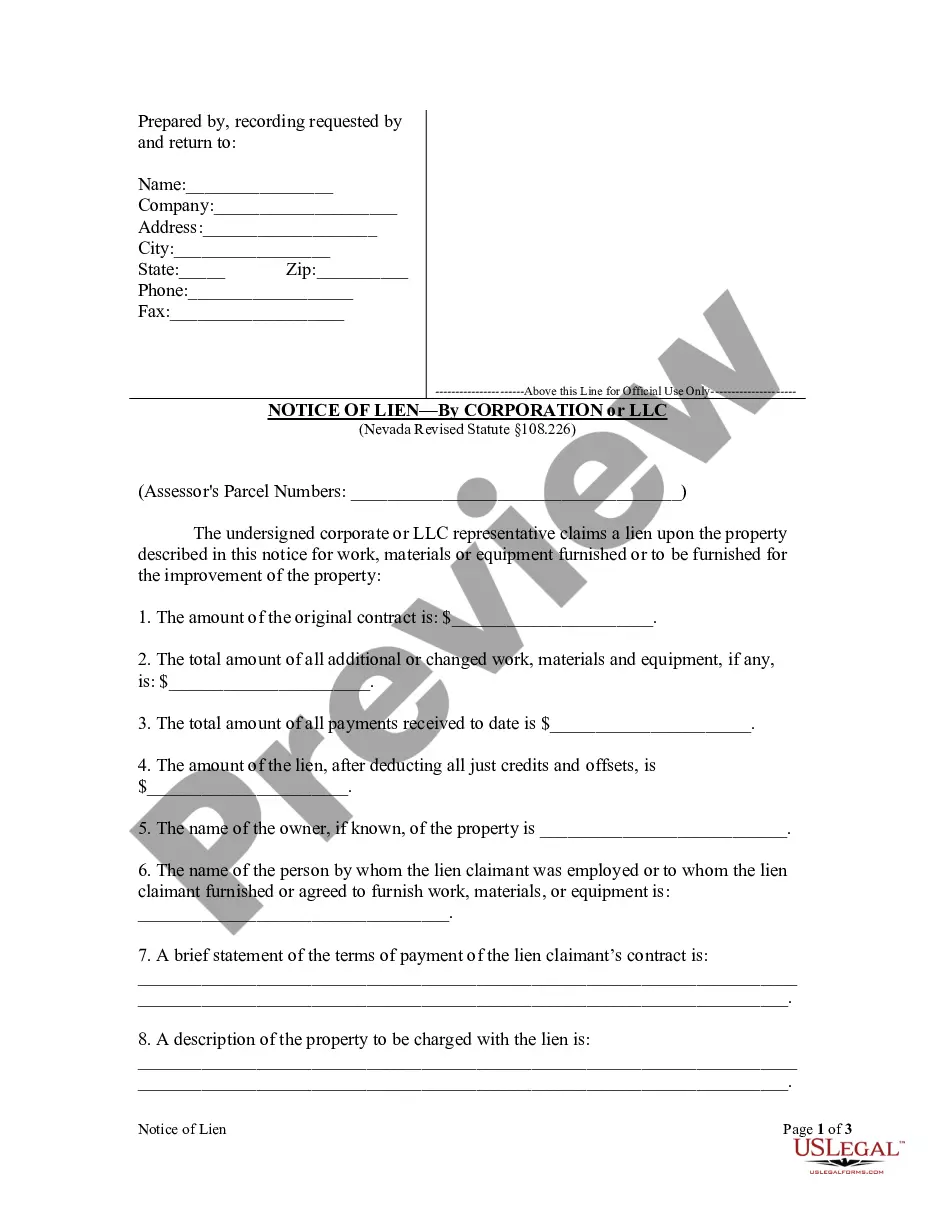
This form is necessary when a corporation wishes to extend the duration of a lien originally filed on a property undergoing improvements. If the initial lien is approaching its six-month expiration and legal action has not been initiated, filing a Notice of Extension is essential for maintaining the claim. This is particularly important for contractors, suppliers, or other parties involved in property improvements who need to ensure their financial interests are protected.
Intended users of this form
- Corporations that have filed a lien on a property in Nevada.
- Parties that have a financial interest in the improvements made to the property.
- Legal representatives of corporations or businesses managing lien claims.
How to prepare this document
- Enter the name and contact details of the corporation making the claim.
- Specify the property address and assessors parcel numbers related to the original lien.
- Fill in the date the original lien was filed.
- Indicate the new expiration date for the extended lien, ensuring it does not exceed one year from the original filing.
- Have an authorized representative of the corporation sign the form and print their name and title.
- Complete the notary acknowledgment section by having it signed and sealed by a notary public.
Does this document require notarization?
To make this form legally binding, it must be notarized. Our online notarization service, powered by Notarize, lets you verify and sign documents remotely through an encrypted video session.
Get your form ready online
Our built-in tools help you complete, sign, share, and store your documents in one place.
Make edits, fill in missing information, and update formatting in US Legal Forms—just like you would in MS Word.
Download a copy, print it, send it by email, or mail it via USPS—whatever works best for your next step.
Sign and collect signatures with our SignNow integration. Send to multiple recipients, set reminders, and more. Go Premium to unlock E-Sign.
If this form requires notarization, complete it online through a secure video call—no need to meet a notary in person or wait for an appointment.
We protect your documents and personal data by following strict security and privacy standards.

Make edits, fill in missing information, and update formatting in US Legal Forms—just like you would in MS Word.

Download a copy, print it, send it by email, or mail it via USPS—whatever works best for your next step.

Sign and collect signatures with our SignNow integration. Send to multiple recipients, set reminders, and more. Go Premium to unlock E-Sign.

If this form requires notarization, complete it online through a secure video call—no need to meet a notary in person or wait for an appointment.

We protect your documents and personal data by following strict security and privacy standards.
Avoid these common issues
- Failing to file the notice within the six-month timeframe.
- Not providing complete property details, including assessors parcel numbers.
- Leaving the signature or date blank, which can render the form invalid.
Advantages of online completion
- Convenience of completing the form at any time without needing to visit a physical location.
- Editable format allows for easy correction of any mistakes before final submission.
- Access to templates drafted by licensed attorneys ensures compliance with legal requirements.
Main things to remember
- The Notice of Extension of Lien - Corporation is essential for preserving a lien's validity for an additional year.
- It must be filed within six months of the original lien filing to be effective.
- Proper notarization and signatures from authorized corporate individuals are crucial for the form's legal standing.
Looking for another form?
Form popularity
FAQ
How Liens Work. A lien provides a creditor with the legal right to seize and sell the collateral property or asset of a borrower who fails to meet the obligations of a loan or contract. The property that is the subject of a lien cannot be sold by the owner without the consent of the lien holder.
A construction lien is a claim made against a property by a contractor or subcontractor who has not been paid for work done on that property. Construction liens are designed to protect professionals from the risk of not being paid for services rendered.
When your efforts to collect a bill from a business that owes you money have been unsuccessful, you can place a lien on the assets of the business. As a lienholder, you gain legal rights to the company's property and the authority to sell the property and use the proceeds to repay what is owed to you.
A contractor's lien (often known as a mechanic's lien, or a construction lien) is a claim made by contractors or subcontractors who have performed work on a property, and have not yet been paid.After all, contractors would rather work out a deal than go through the hassle of filing a lien against your property.
In Minnesota, all mechanics liens must be filed within 120 days from the claimant's last day providing materials or labor. In Minnesota, mechanics liens expire 1 year from the date of the lien claimant's last furnishing of labor or materials to the project.