Nevada Grant, Bargain, Sale Deed from Individual to Individual
What this document covers
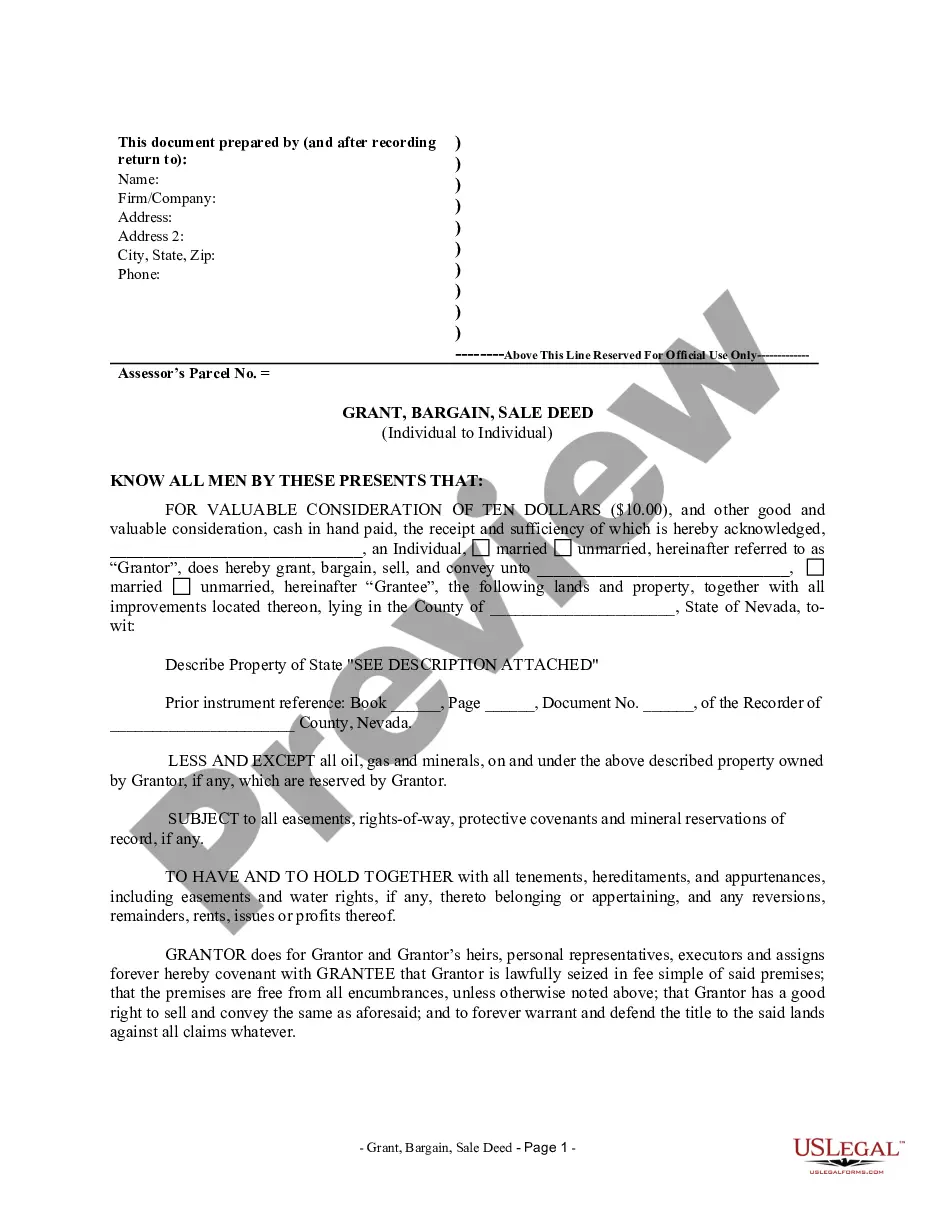
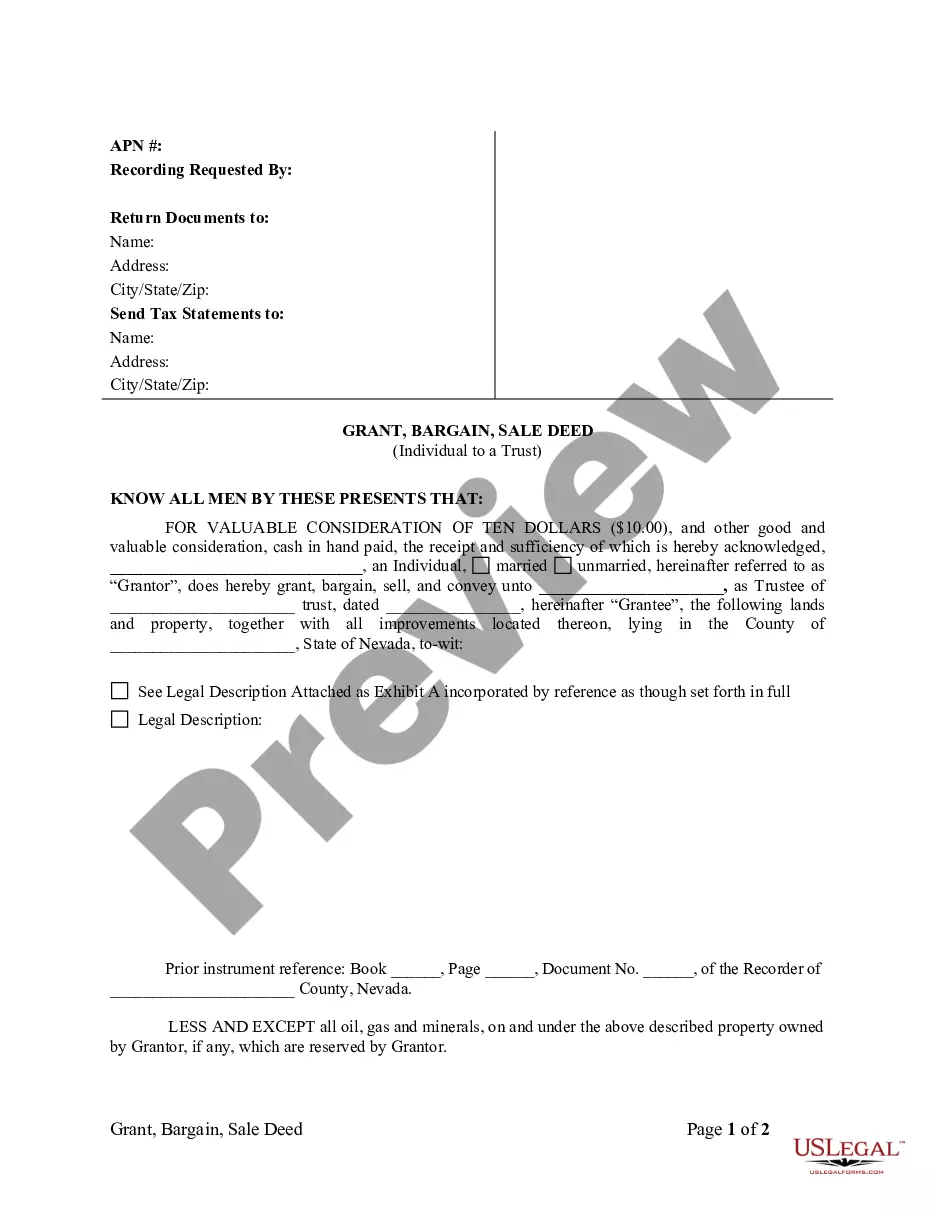
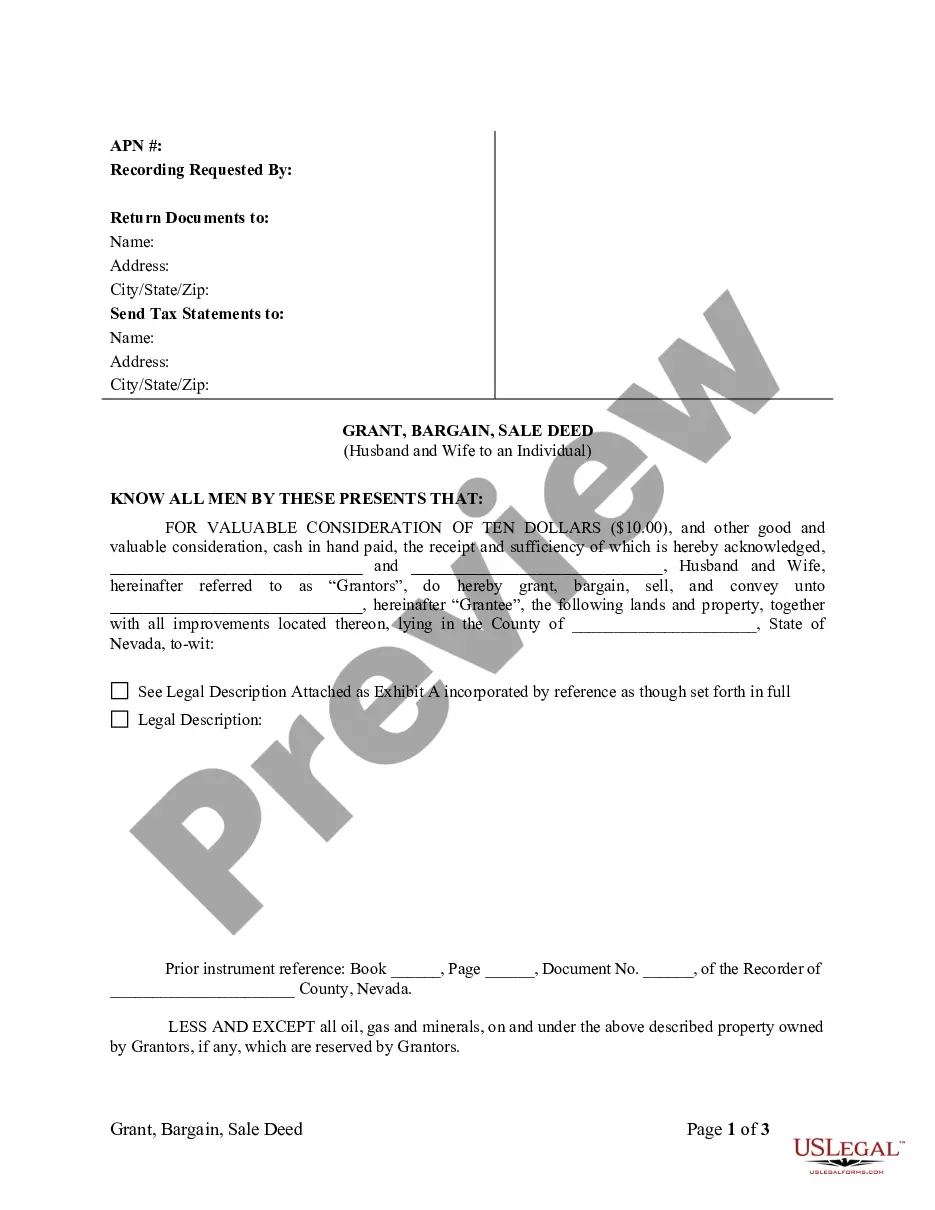
The Grant, Bargain, Sale Deed from Individual to Individual is a legal document used to transfer property ownership between two individuals. This warranty deed ensures that the grantor, the individual conveying the property, provides certain assurances regarding the title and conditions attached to the property, such as the reservation of oil, gas, and minerals. It sets itself apart from other deed types, like a quitclaim deed, by offering more guarantees about the property's title. This form adheres to all relevant state statutory laws.
Main sections of this form
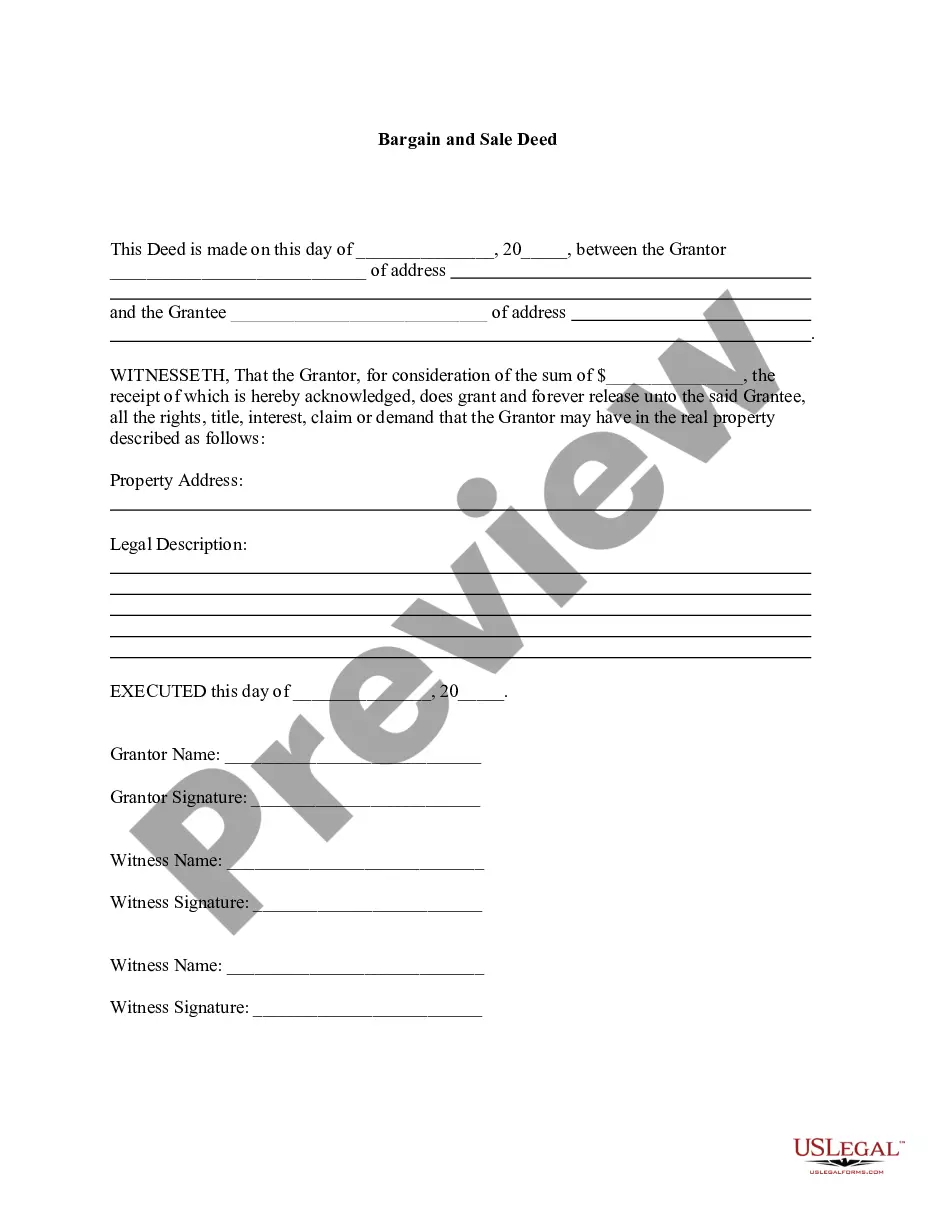
- Grantor Information: Details of the individual transferring the property.
- Grantee Information: Details of the individual receiving the property.
- Property Description: A clear description of the property being conveyed.
- Reservation Clause: Specifies any reservations regarding oil, gas, and minerals by the grantor.
- Easements and Covenants: Any existing easements, rights-of-way, or protective covenants affecting the property.
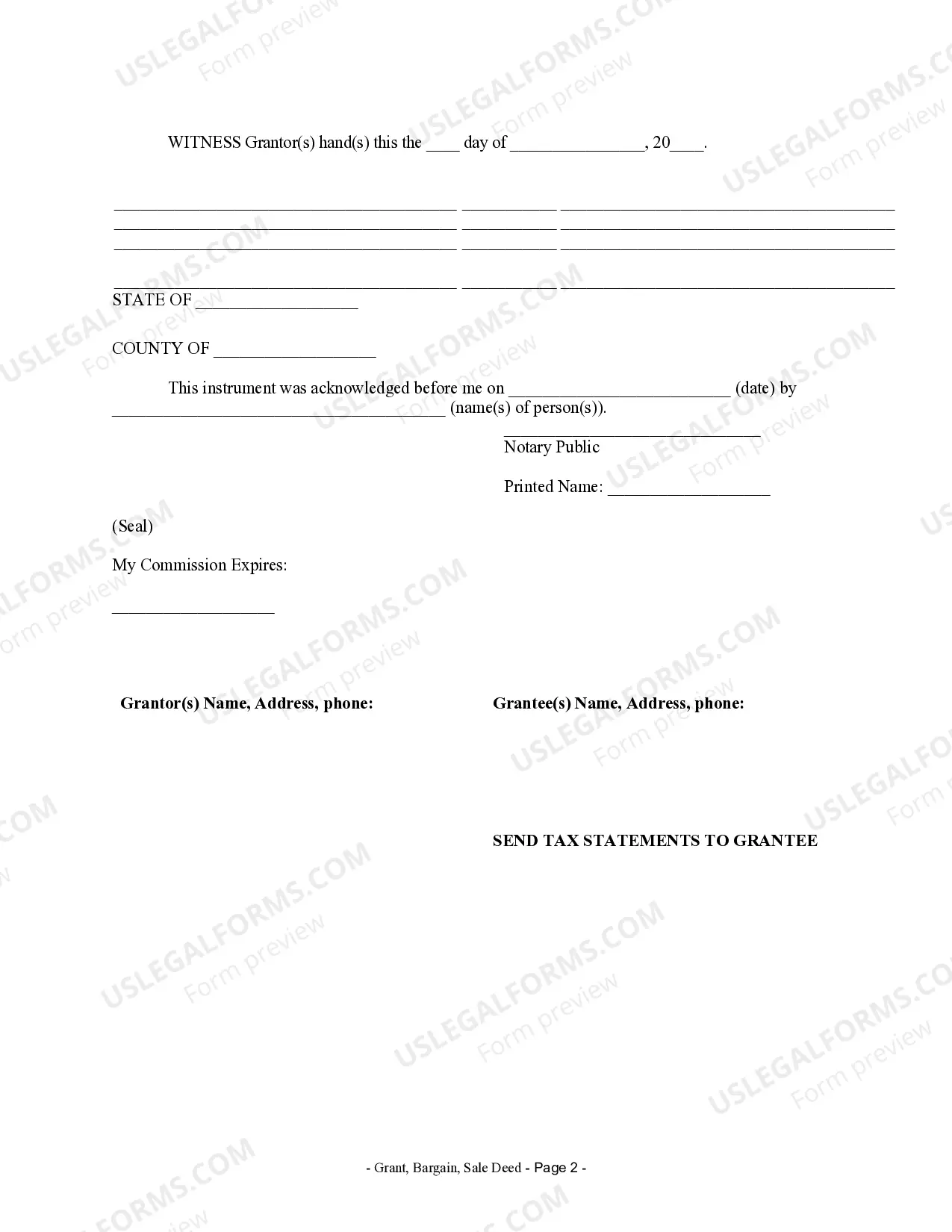
- Execution Section: Signatures required from both parties to finalize the deed.
Common use cases
This form is ideal for individuals who wish to transfer real estate ownership to another individual while ensuring legal protections regarding the title. It can be used in various situations, such as selling property, transferring property as a gift, or family transfers, such as inheriting a property from a parent.
Who can use this document
- Individuals selling their property to another person.
- Family members transferring property to relatives.
- Anyone needing to formalize a property gift or inheritance.
- Individuals looking for a legal assurance regarding the property title during transfer.
How to prepare this document
- Identify the parties involved as grantor (seller) and grantee (buyer).
- Specify the property's legal description, including boundaries and any relevant details.
- Include any reservations, especially regarding oil, gas, and minerals.
- Identify existing easements or covenants attached to the property.
- Sign the form in the presence of a notary public to ensure its legal validity.
Notarization requirements for this form
Yes, this form must be notarized to be legally valid. US Legal Forms offers an integrated online notarization option available 24/7, ensuring a secure video call with a licensed notary, making the process easy and efficient without the need for travel.
Get your form ready online
Our built-in tools help you complete, sign, share, and store your documents in one place.
Make edits, fill in missing information, and update formatting in US Legal Forms—just like you would in MS Word.
Download a copy, print it, send it by email, or mail it via USPS—whatever works best for your next step.
Sign and collect signatures with our SignNow integration. Send to multiple recipients, set reminders, and more. Go Premium to unlock E-Sign.
If this form requires notarization, complete it online through a secure video call—no need to meet a notary in person or wait for an appointment.
We protect your documents and personal data by following strict security and privacy standards.

Make edits, fill in missing information, and update formatting in US Legal Forms—just like you would in MS Word.

Download a copy, print it, send it by email, or mail it via USPS—whatever works best for your next step.

Sign and collect signatures with our SignNow integration. Send to multiple recipients, set reminders, and more. Go Premium to unlock E-Sign.

If this form requires notarization, complete it online through a secure video call—no need to meet a notary in person or wait for an appointment.

We protect your documents and personal data by following strict security and privacy standards.
Common mistakes to avoid
- Forgetting to provide a detailed legal description of the property.
- Not reserving rights to oil, gas, and minerals when necessary.
- Failing to ensure all parties sign the document in front of a notary.
- Omitting information about existing easements or covenants affecting the property.
Why use this form online
- Convenience of downloading instantly from any location.
- Editability allows users to customize the form for their specific transaction.
- Access to forms prepared by licensed attorneys for reliability and compliance.
- No need for in-person visits, saving time and effort.
Key takeaways
- This deed facilitates the transfer of property between individuals with a warranty of clear title.
- Both parties must understand their rights and obligations outlined in the deed.
- Completing this form correctly is crucial to avoid future legal disputes regarding property ownership.
Looking for another form?
Form popularity
FAQ
Bargain and sale deeds are most often used when property is transferred pursuant to a foreclosure, tax sale, or settlement of the estate of a deceased person. They may also be used in the same situations as a quitclaim deed, although they give the grantee a little more protection.
A bargain and sale with covenants against grantor's acts contains only one covenant or promise; that is, that the grantor has done nothing to encumber title with easements, liens, judgements and the like while owing the property. The covenant contained in the deed is considered personal. It does not run with the land.
A grant, bargain, and sale deed is commonly used in Nevada for a conveyance of real property.A certificate of the acknowledgement or proof of execution, signed by the person taking the acknowledgment or proof, and under the seal or stamp of that person, will entitle the deed to be recorded (NRS 111.310).
A grant deed is the instrument used to transfer title to an interest in real property from one owner to someone else.A deed of trust is the security instrument given to a lender to secure a loan or other obligation. Bare naked title is deeded to the trustee, who holds the power of sale or the power to re-convey.
A grant deed ensures that the grantor has a legal interest in the property. A quitclaim deed merely releases any potential interest the signatory may have in a property with no warranties.
Bargain and sale deeds, as the term suggests, is used in a sale. Unlike a quitclaim, the bargain and sale deed indicates that the grantor has the title and can convey it to a buyer.The bargain and sale deed indicates that the grantor has title; but property might come with encumbrances and defects.
Quitclaim deeds are most often used to transfer property between family members. Examples include when an owner gets married and wants to add a spouse's name to the title or deed, or when the owners get divorced and one spouse's name is removed from the title or deed.
Buying property with this type of deed is not necessarily a bad idea, but it is advisable to take some precautions. If possible, a title search should be conducted to look for any clouds on the title and to see how difficult it would be to release them.