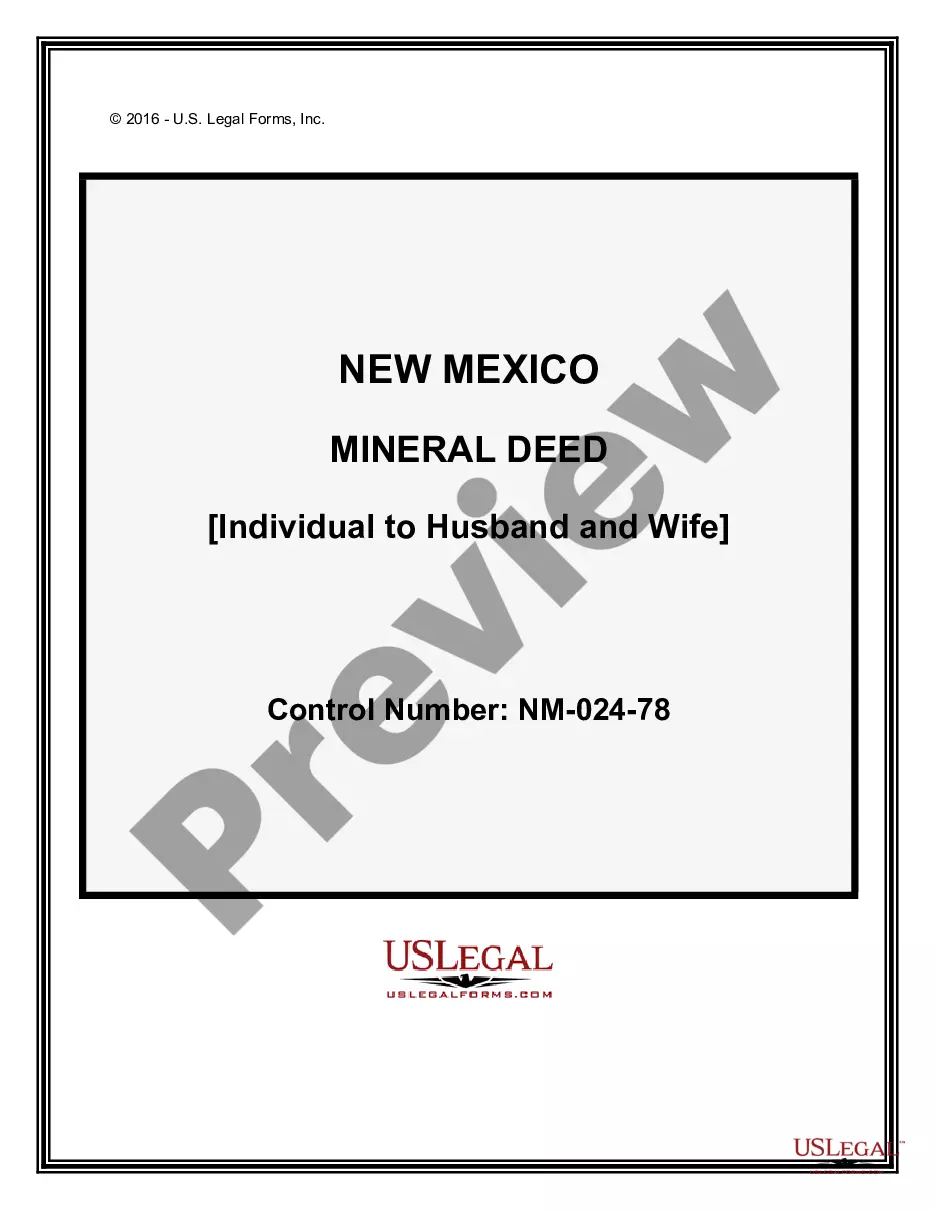
New Mexico Mineral Deed - Individual to Husband and Wife
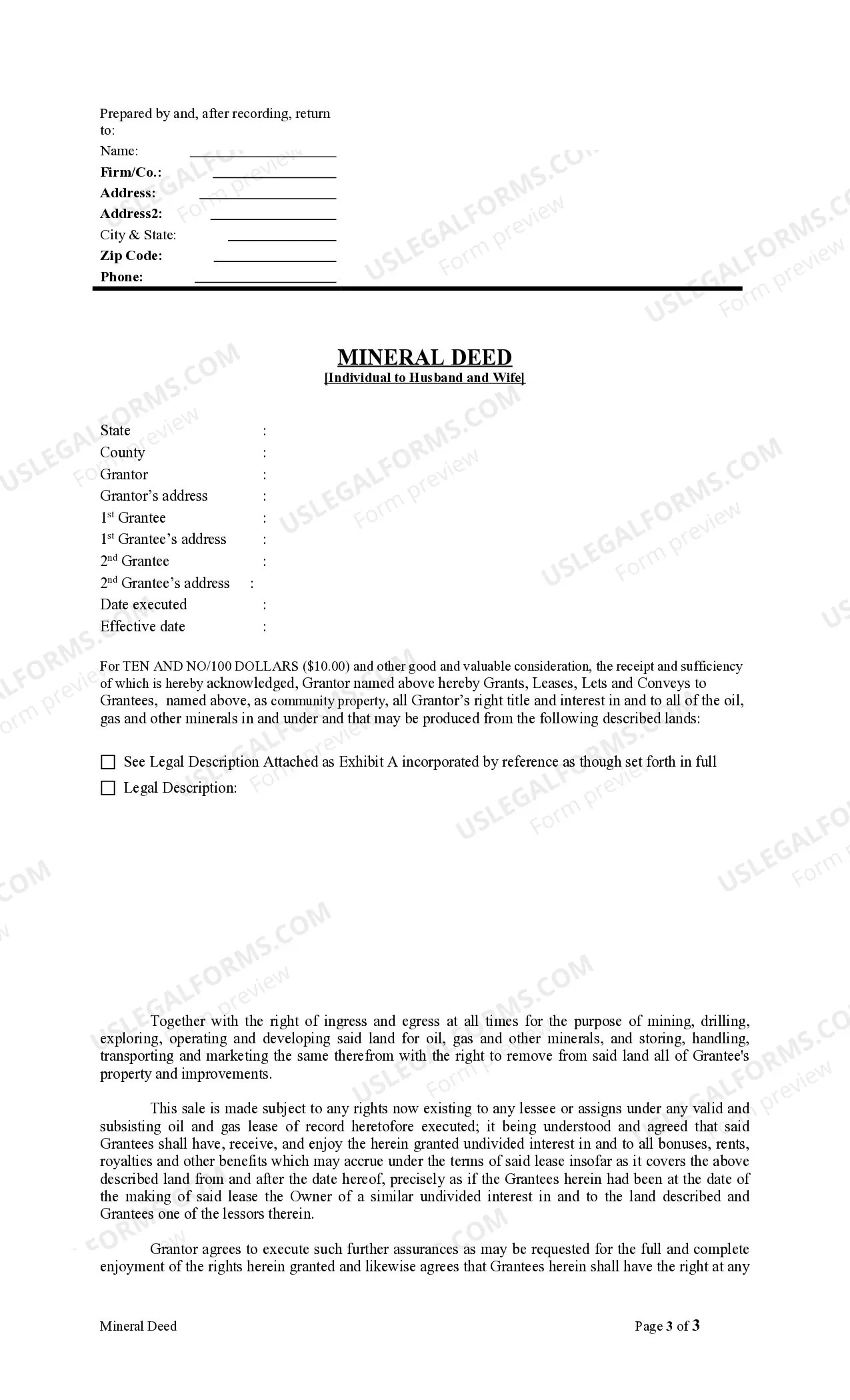
The Mineral Deed - Individual to Husband and Wife is a legal document that facilitates the transfer of mineral rights from an individual (the Grantor) to a married couple (the Grantees). This deed is distinct because it allows the Grantees to hold the rights as community property with various survivorship options, ensuring seamless transfer of ownership in the event of a spouse's passing. It complies with all applicable statutory laws and is essential for properly transferring mineral interests in real estate.
- Grantor and Grantees: Clearly identifies the individual transferring the mineral rights and the married couple receiving them.
- Property Description: A detailed legal description of the mineral property being conveyed.
- Transfer Terms: Specifies how the Grantees will hold the property (community property, joint tenants with rights of survivorship, or tenants in common).
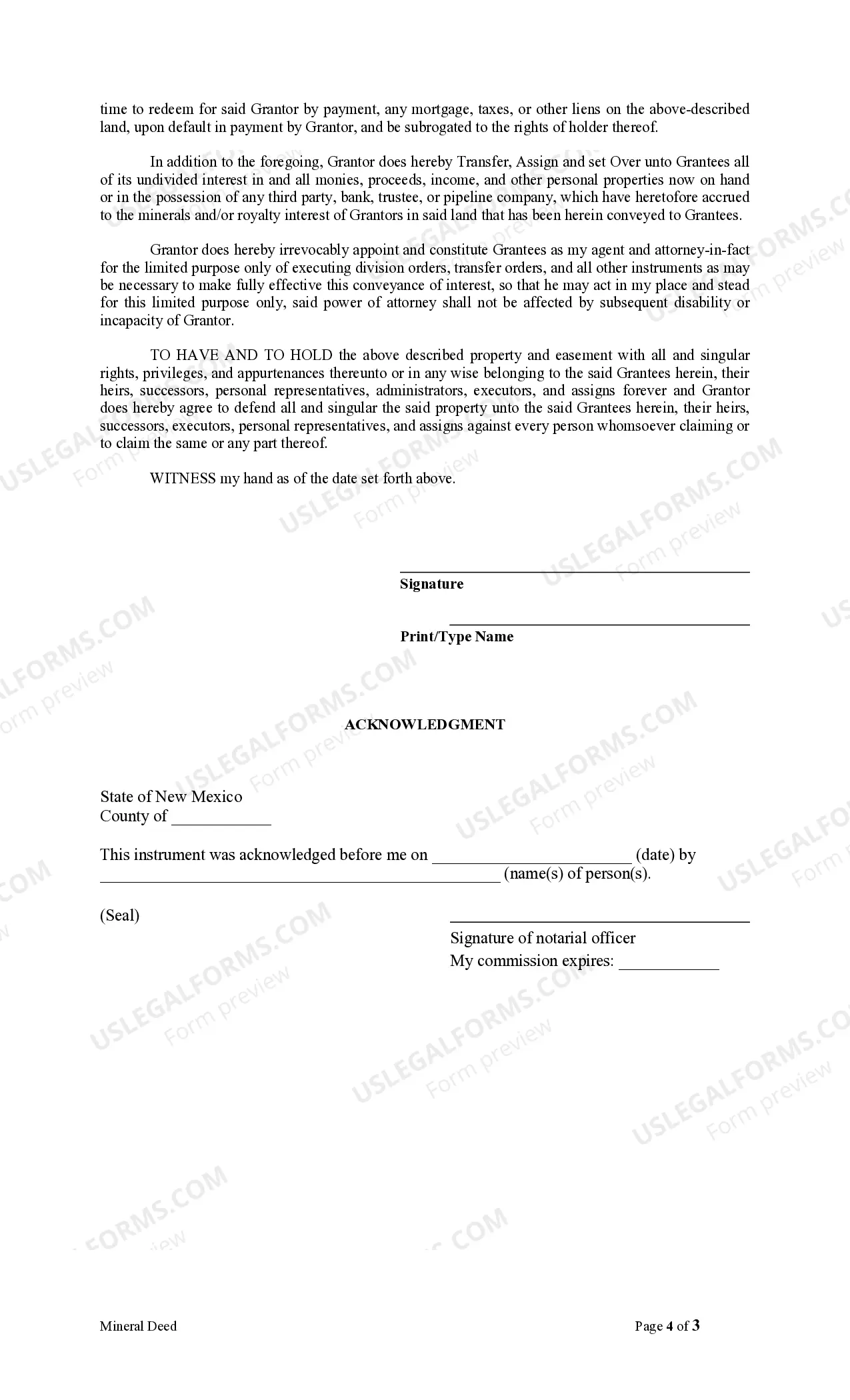
- Warranties: Includes warranties provided by the Grantor concerning the title and rights being conveyed.
- Power of Attorney: Grants the Grantees authority to act on behalf of the Grantor for necessary legal actions regarding the mineral interests.
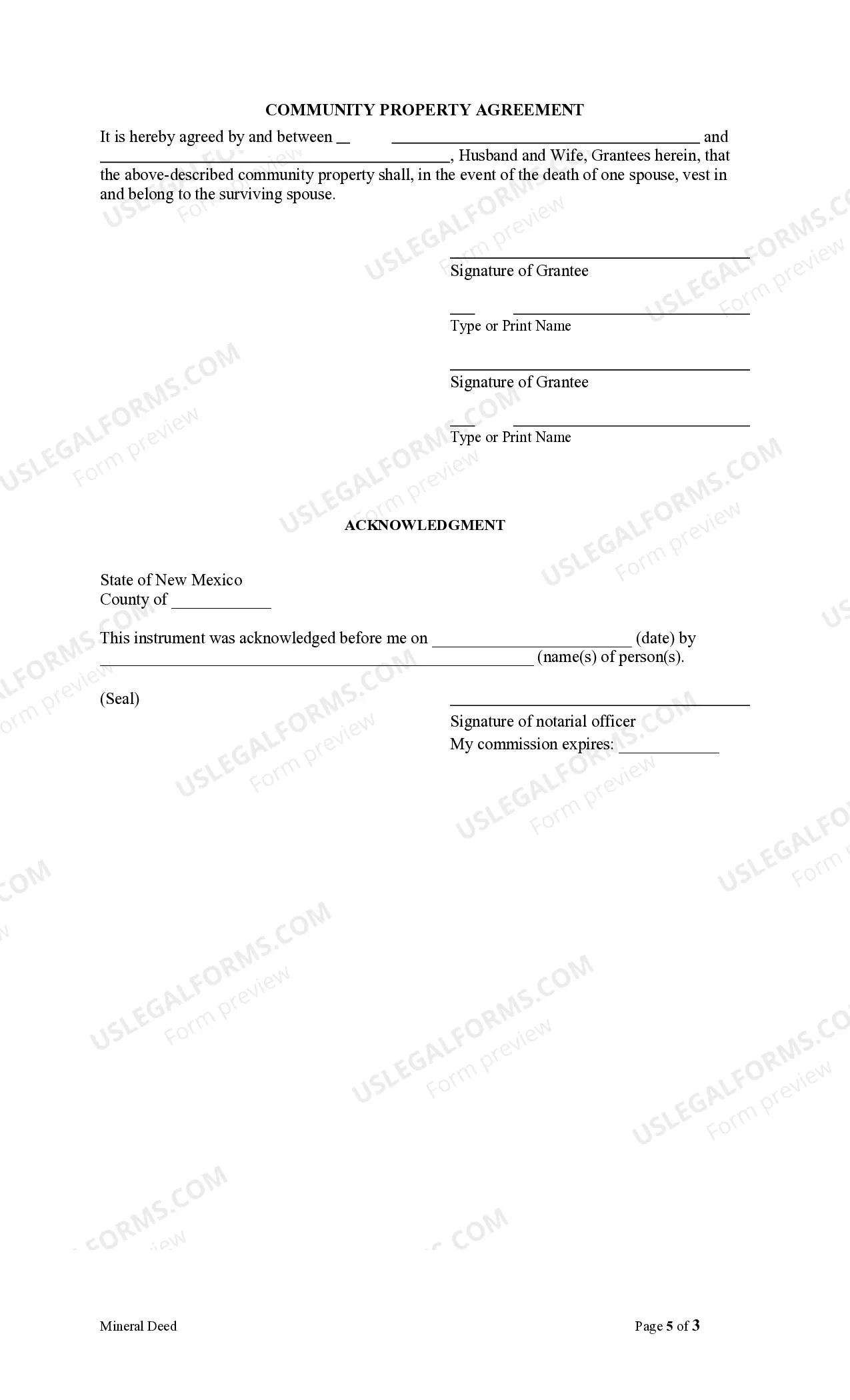

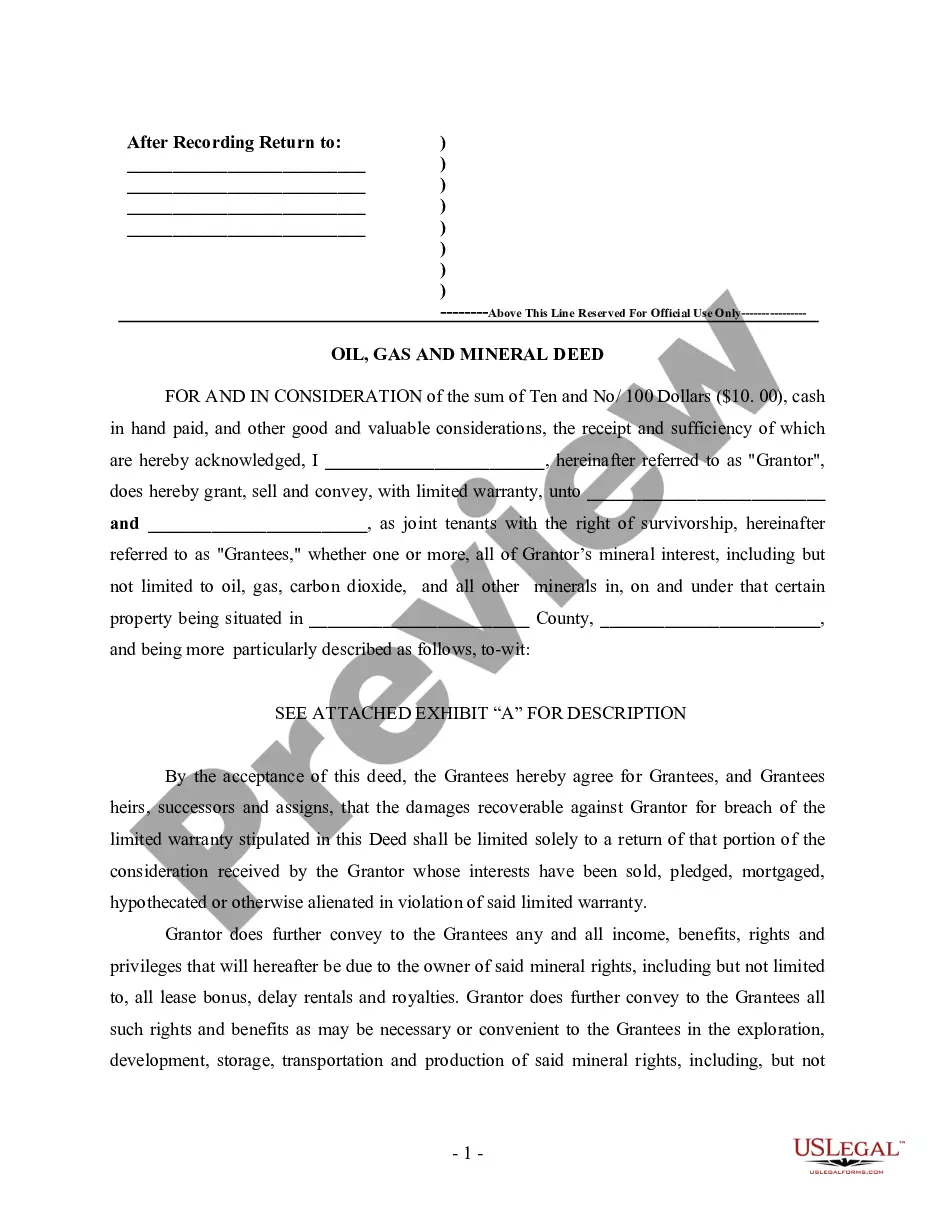




This form should be used when an individual wishes to transfer mineral rights to their spouse or both spouses jointly. Common situations include marriages where one partner owns mineral rights and wants to ensure both parties have equal claims to the rights, or when couples wish to simplify the inheritance process for their mineral interests.
This deed is intended for:
- Individuals who own mineral rights and are married.
- Couples looking to consolidate their mineral interests.
- Property owners who want to ensure the rights are transferred seamlessly upon death.
To complete the Mineral Deed - Individual to Husband and Wife, follow these steps:
- Identify the parties involved: Enter the full names of the Grantor and the Grantees.
- Specify the property: Provide a detailed legal description of the mineral property being conveyed.
- Select the ownership type: Indicate whether the property will be held as community property, joint tenants, or tenants in common.
- Enter the required information: Fill in any additional details required, including dates and signatures.
- Review and notarize: Ensure that all information is correct and consider notarizing the deed as per local requirements.
Does this document require notarization?
To make this form legally binding, it must be notarized. Our online notarization service, powered by Notarize, lets you verify and sign documents remotely through an encrypted video session.
Get your form ready online
Our built-in tools help you complete, sign, share, and store your documents in one place.
Make edits, fill in missing information, and update formatting in US Legal Forms—just like you would in MS Word.
Download a copy, print it, send it by email, or mail it via USPS—whatever works best for your next step.
Sign and collect signatures with our SignNow integration. Send to multiple recipients, set reminders, and more. Go Premium to unlock E-Sign.
If this form requires notarization, complete it online through a secure video call—no need to meet a notary in person or wait for an appointment.
We protect your documents and personal data by following strict security and privacy standards.
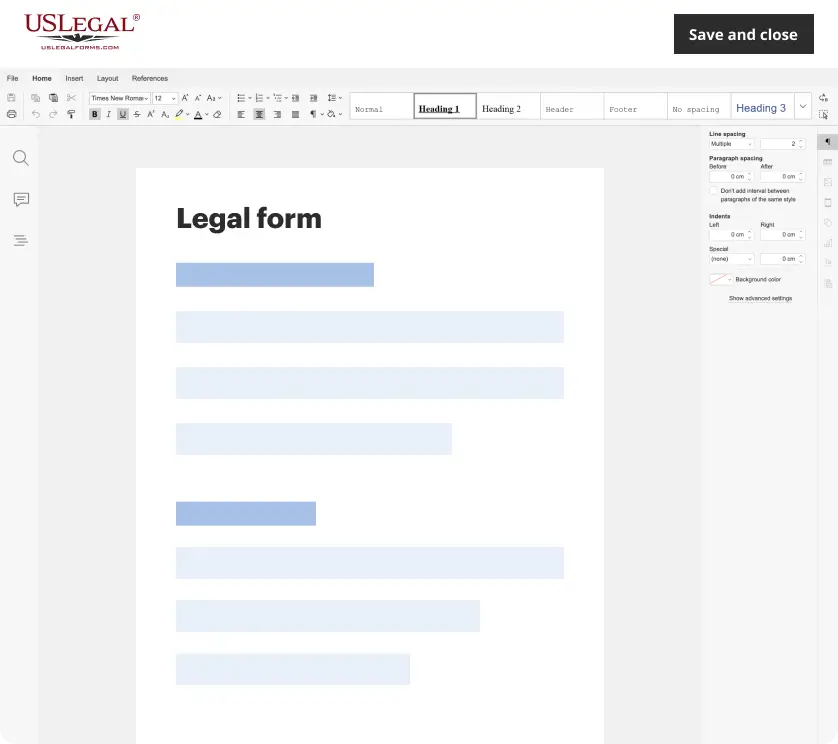
Make edits, fill in missing information, and update formatting in US Legal Forms—just like you would in MS Word.
Download a copy, print it, send it by email, or mail it via USPS—whatever works best for your next step.
Sign and collect signatures with our SignNow integration. Send to multiple recipients, set reminders, and more. Go Premium to unlock E-Sign.

If this form requires notarization, complete it online through a secure video call—no need to meet a notary in person or wait for an appointment.
We protect your documents and personal data by following strict security and privacy standards.
- Not providing a detailed legal description of the mineral property.
- Failing to select the correct ownership type, which can affect future rights and inheritance.
- Omitting signatures or dates, making the deed invalid.
- Neglecting to consider state-specific laws and requirements for mineral deeds.
- Convenience of completing the document online at your own pace.
- Editability allows for quick changes to information before finalizing.
- Reliability of using forms drafted by licensed attorneys to ensure compliance with legal standards.
Legal use & context
- The Mineral Deed is effective for the transfer of mineral rights as stipulated in the terms of the agreement.
- In some jurisdictions, certain formalities may be required for the deed to be enforceable.
- It is essential to understand that transferring mineral rights might be subject to existing leases or agreements.
- The Mineral Deed transfers mineral rights from an individual to a married couple.
- Proper completion and understanding of ownership types are crucial for legal validity.
- Online access to legal forms streamlines the process, ensuring convenience and compliance.
Looking for another form?
Form popularity
FAQ
Call the county where the minerals are located and ask how to transfer mineral ownership after death. They will probably advise you to submit a copy of the death certificate, probate documents (if any), and a copy of the will (or affidavit of heirship if there is no will).
Are inherited mineral rights taxable? The federal government does not consider inherited mineral rights taxable. Still, any income you accumulate from those rights does have to be reported on your tax return.
After a divorce, mineral rights can be transferred by submitting the divorce decree and conveyances to the county (where the minerals are located) for recording. They usually go to the same agency that records titles and property deeds. The county will return the recorded original documents to the new owner.
STATE LAND OFFICE: If the mineral rights are owned by the state, you can contact the State Land Office Minerals Program at (505) 827-5750, and this website for Lease Information - Minerals.
Mineral rights must be transferred to heirs before any transactions related to them can take place. Unlike a home, which can be sold by an estate, mineral rights must be transferred before any sale. Mineral rights can be transferred to rightful heir(s) or to a trust through a mineral deed.
Fill out the "grantor" section of the warranty deed. The grantors are the givers, or current owners, of the property. Use the legal name of each grantor and insert current addresses after each grantor's name.
If you want to sell the mineral rights to another person, you can transfer them by deed. You will need to create a mineral deed and have it recorded. You should check with the county Recorder of Deeds in the county where the land is located and ask if a printed mineral deed form is available to use.
Mineral rights are automatically included as a part of the land in a property conveyance, unless and until the ownership gets separated at some point by an owner/seller.Conveying (selling or otherwise transferring) the land but retaining the mineral rights.