New Mexico Warranty Deed from Husband and Wife to a Trust
What is this form?
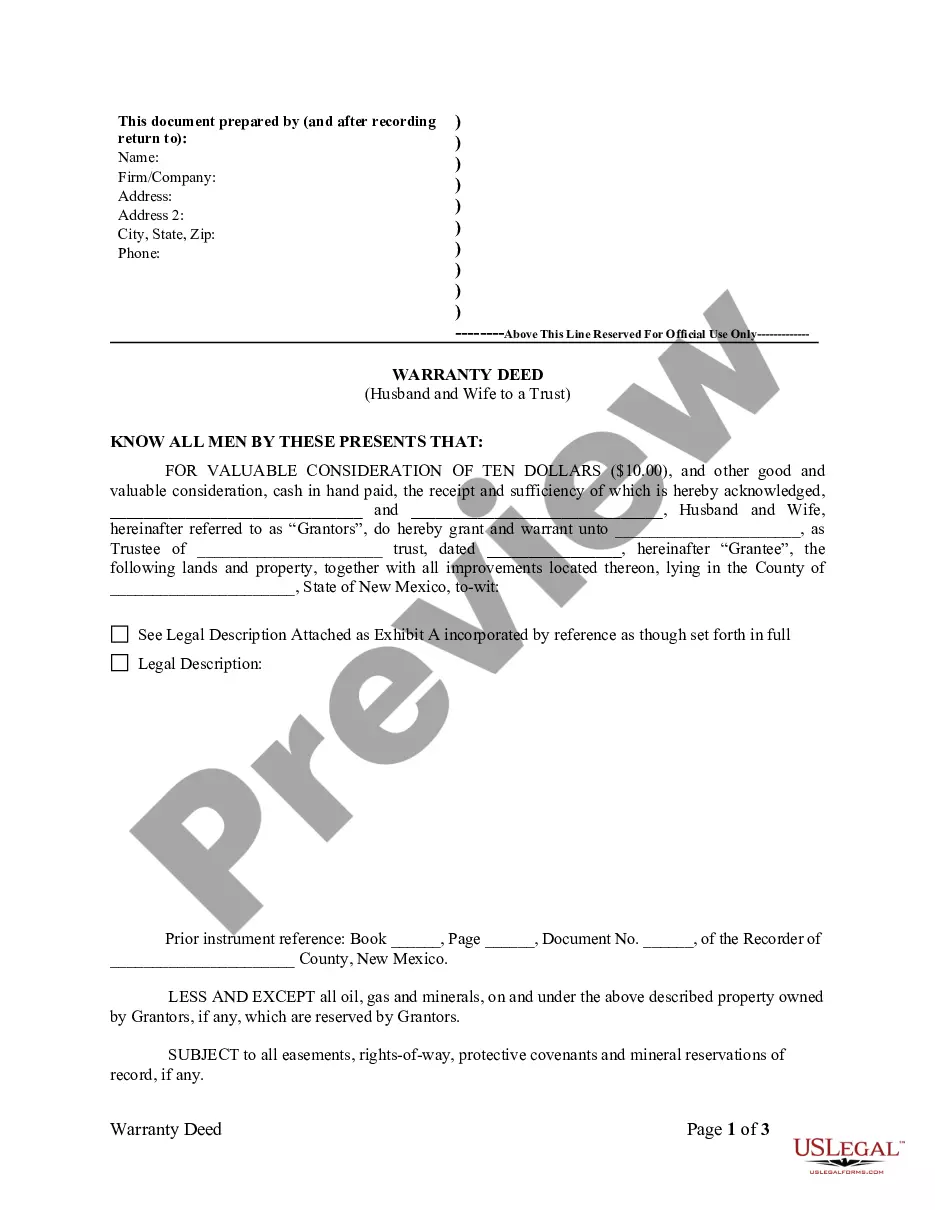
This Warranty Deed from Husband and Wife to a Trust is a legal document that enables a married couple (the grantors) to transfer ownership of their property to a trust (the grantee). This form ensures that the property is conveyed with certain warranties, meaning that the grantors assert they have the legal right to sell the property and that it is free from encumbrances, unless otherwise stated. This deed is specifically designed for transferring property to a trust, distinguishing it from general deeds or quitclaim deeds that may not provide the same level of warranty regarding the title.
What’s included in this form
- Identification of the grantors (husband and wife).
- Identification of the grantee (trust).
- Description of the property being transferred.
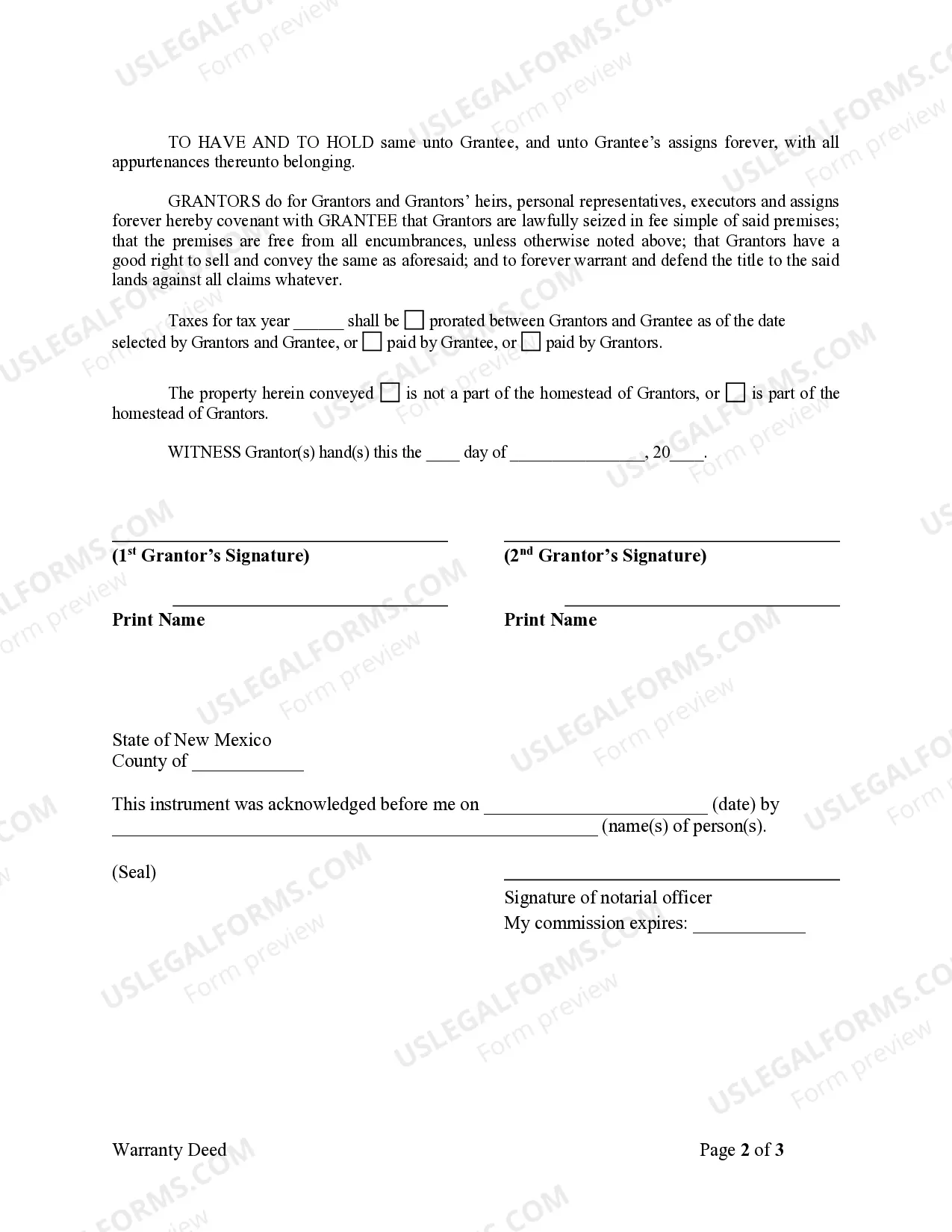
- Warranties and covenants regarding the property title.
- Provisions regarding the reservation of mineral rights.
- Signatures of both grantors and date of execution.






When to use this form
This form is typically used when a married couple wants to transfer their property into a trust. This can be beneficial for estate planning purposes, allowing the couple to manage the property in a trust during their lifetime and dictate its distribution after death. It is especially useful for avoiding probate and ensuring that the property is handled according to the couple's wishes.
Who needs this form
- Married couples looking to transfer property to a trust.
- Individuals engaged in estate planning.
- Trustees managing property on behalf of beneficiaries.
- Property owners wanting to ensure their assets are protected.
How to prepare this document
- Identify the parties: Provide the names of the husband and wife as grantors and the name of the trust as the grantee.
- Specify the property: Include a detailed legal description of the property being transferred.
- Outline the warranties: Make sure to note any mineral rights or encumbrances being reserved.
- Enter the date: Indicate the date when the transfer will be effective.
- Sign the form: Both grantors must sign and date the document to make it legally binding.
Does this document require notarization?
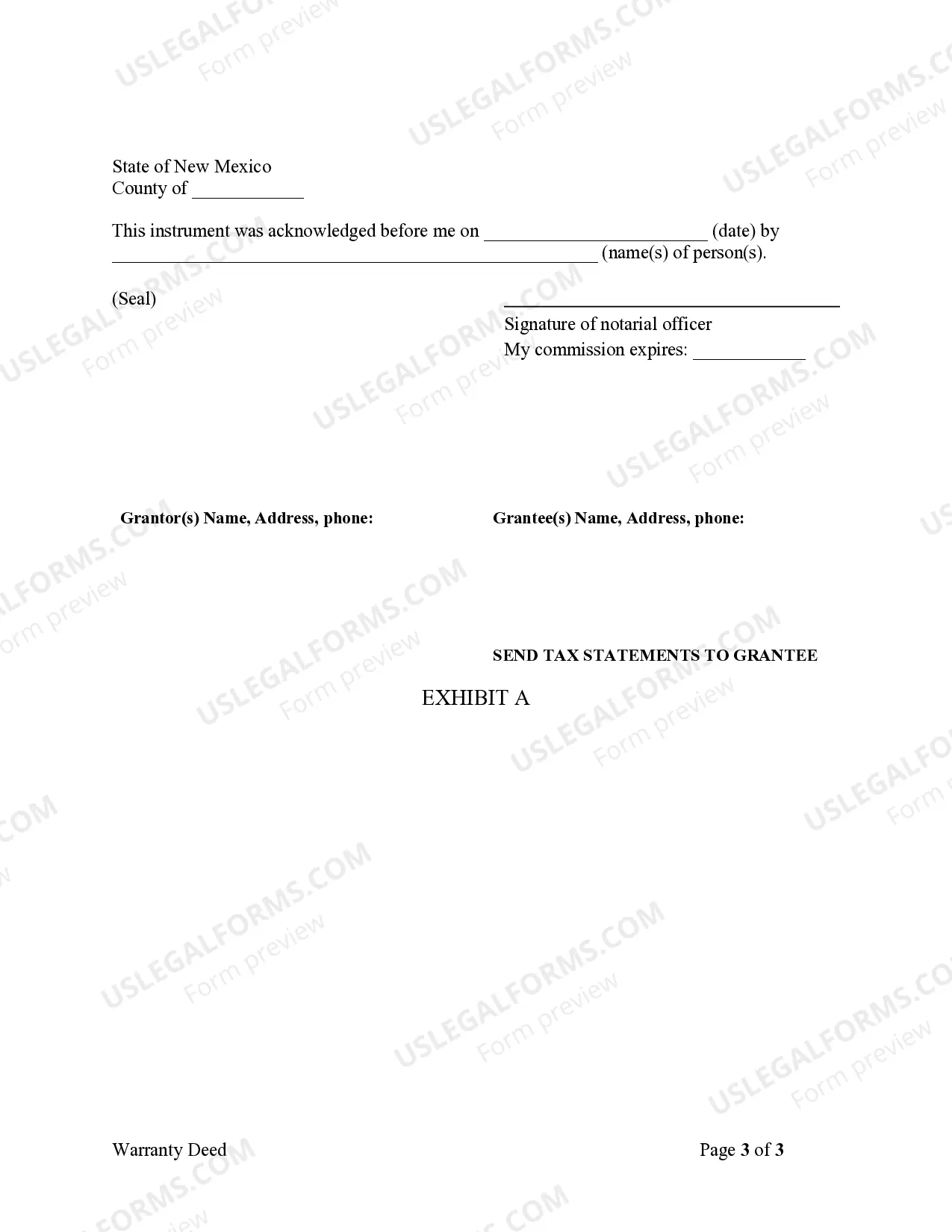
This form needs to be notarized to ensure legal validity. US Legal Forms provides secure online notarization powered by Notarize, allowing you to complete the process through a verified video call, available anytime.
Get your form ready online
Our built-in tools help you complete, sign, share, and store your documents in one place.
Make edits, fill in missing information, and update formatting in US Legal Forms—just like you would in MS Word.
Download a copy, print it, send it by email, or mail it via USPS—whatever works best for your next step.
Sign and collect signatures with our SignNow integration. Send to multiple recipients, set reminders, and more. Go Premium to unlock E-Sign.
If this form requires notarization, complete it online through a secure video call—no need to meet a notary in person or wait for an appointment.
We protect your documents and personal data by following strict security and privacy standards.

Make edits, fill in missing information, and update formatting in US Legal Forms—just like you would in MS Word.

Download a copy, print it, send it by email, or mail it via USPS—whatever works best for your next step.

Sign and collect signatures with our SignNow integration. Send to multiple recipients, set reminders, and more. Go Premium to unlock E-Sign.

If this form requires notarization, complete it online through a secure video call—no need to meet a notary in person or wait for an appointment.

We protect your documents and personal data by following strict security and privacy standards.
Common mistakes to avoid
- Failing to provide a complete legal description of the property.
- Not including all required signatures on the deed.
- Overlooking the reservation of mineral rights, if applicable.
- Using outdated forms that do not comply with current state laws.
Benefits of using this form online
- Convenient access to legally compliant templates that can be downloaded immediately.
- Editability allows customization to meet specific needs.
- Reliability of forms drafted by licensed attorneys ensures proper legal standing.
Quick recap
- This form facilitates the transfer of property from a married couple to a trust.
- Grantors warrant that they hold good title to the property with no undisclosed encumbrances.
- Complete the form with accurate details to avoid legal issues.
Looking for another form?
Form popularity
FAQ
Fill out the "grantor" section of the warranty deed. The grantors are the givers, or current owners, of the property. Use the legal name of each grantor and insert current addresses after each grantor's name.
Notary Public (Section 47-1-44) In New Mexico it must be signed with a Notary Public viewing the Grantor(s) signature(s). Recording A quit claim deed is required to be filed at the County Clerk's Office where the property is located along with the required recording fee(s).
It will not protect against title issues that arose prior to the time the seller took occupancy. Consequently, it offers less protection to buyers, and more protection to sellers, than a general warranty deed, which is the most common option for selling or buying a property.
The New Mexico special warranty deed is a legal document used to convey real estate.A special warranty includes a guarantee from the grantor that there are no hidden interests or encumbrances on the property that arose while he or she owned the property.
A warranty deed guarantees that: The grantor is the rightful owner of the property and has the legal right to transfer the title.The title would withstand third-party claims to ownership of the property. The grantor will do anything to ensure the grantee's title to the property.
Key Takeaways. A property deed is a legal document that transfers the ownership of real estate from a seller to a buyer.General warranty deeds give the grantee the most protection, special warranty deeds give the grantee more limited protection, and a quitclaim deed gives the grantee the least protection under the law
To transfer ownership of a property a new deed must be filed with the County Clerk's Office before the name and address are changed in the Assessor's records. Once the Assessor's records are updated the Treasurer's Office will get the update in the new billing cycle.
Step 1 Write in the name of the grantor or seller. Step 2 Fill in the name and address of the grantee or buyer. Step 3 Specify the property information including county, lot, block and recording information. Step 4 Sign and date in the presence of a notary public.
A special warranty deed to real estate offers protection to the buyer through the seller's guarantee that the title has been free and clear of encumbrances during their ownership of the property. It does not guarantee clear title beyond their ownership.