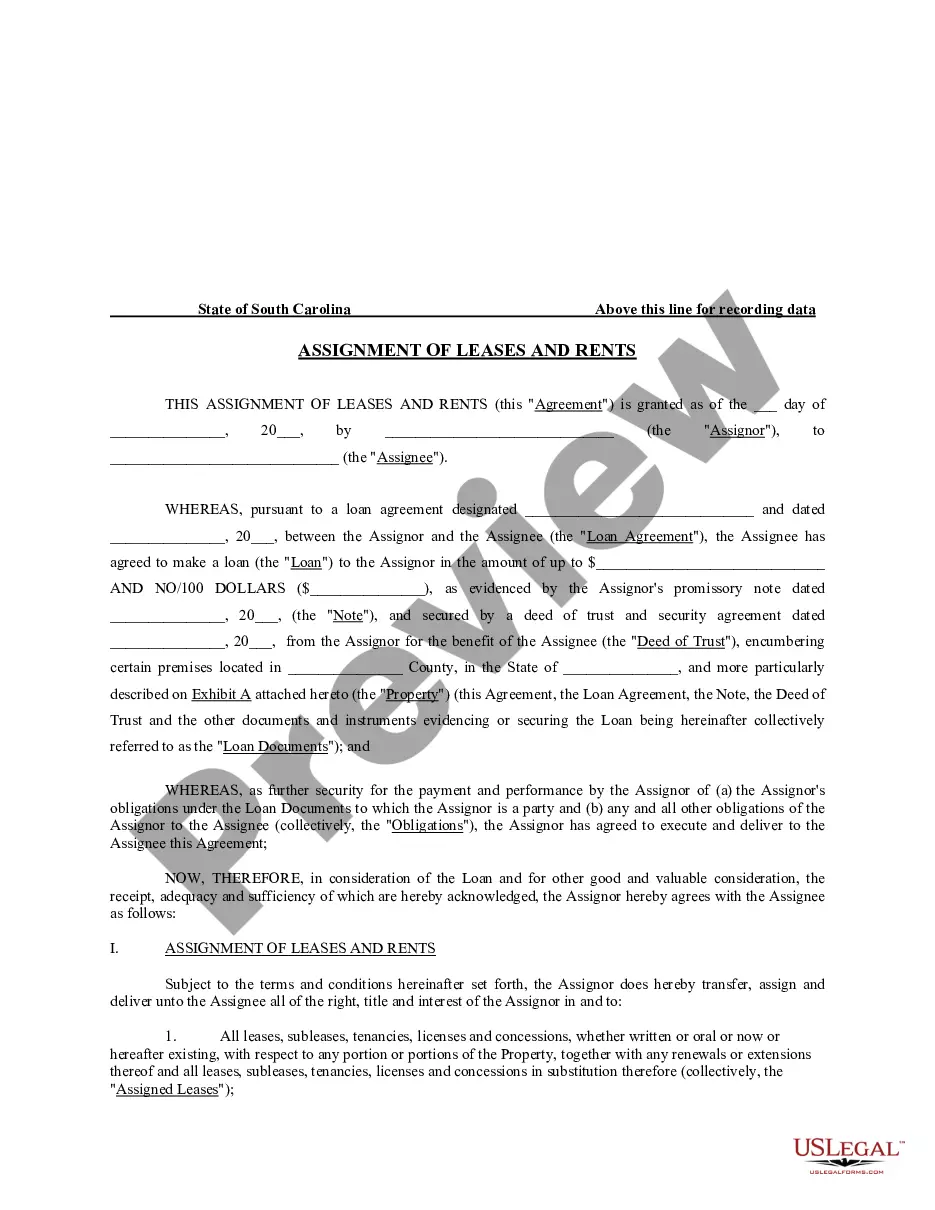
New Jersey Last Will and Testament for other Persons
What this document covers
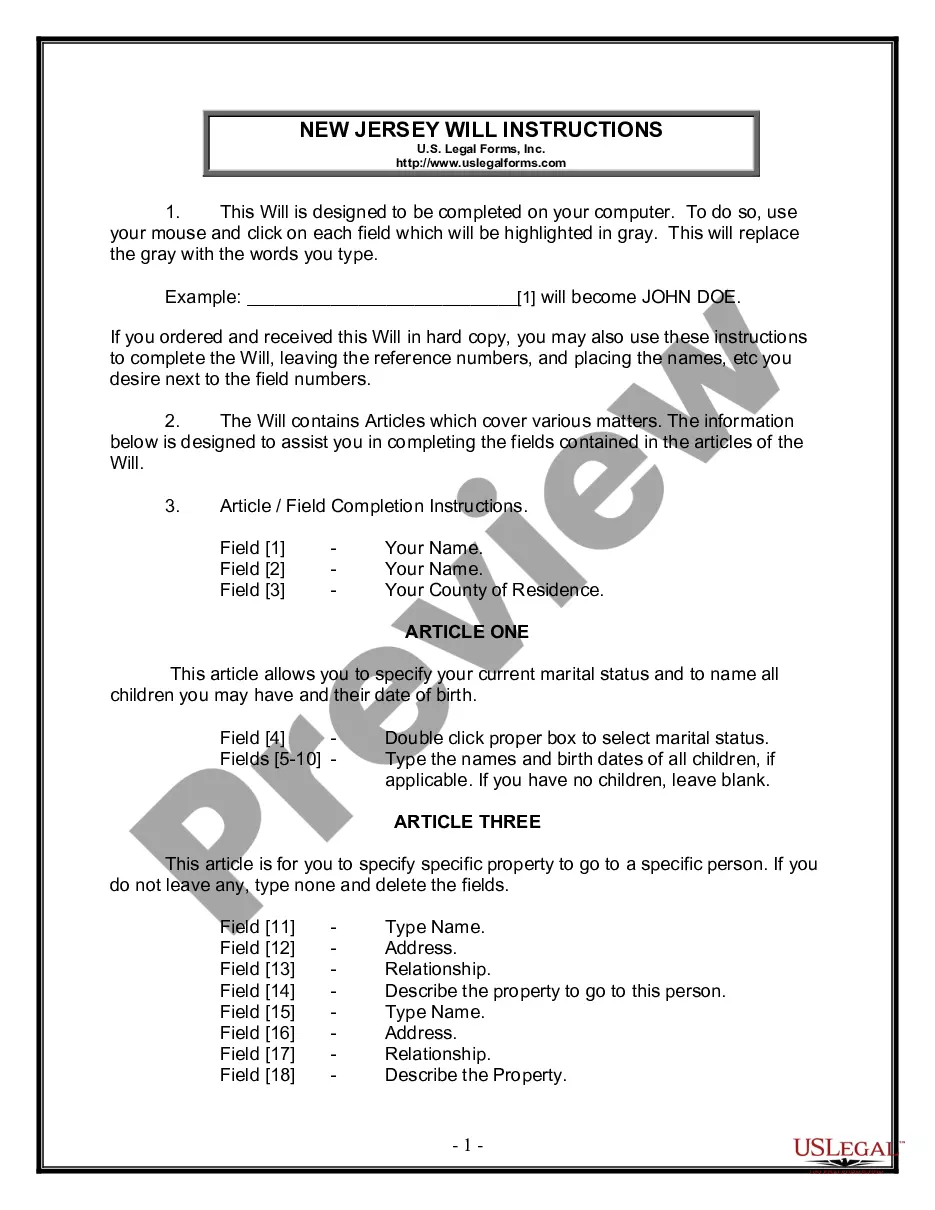
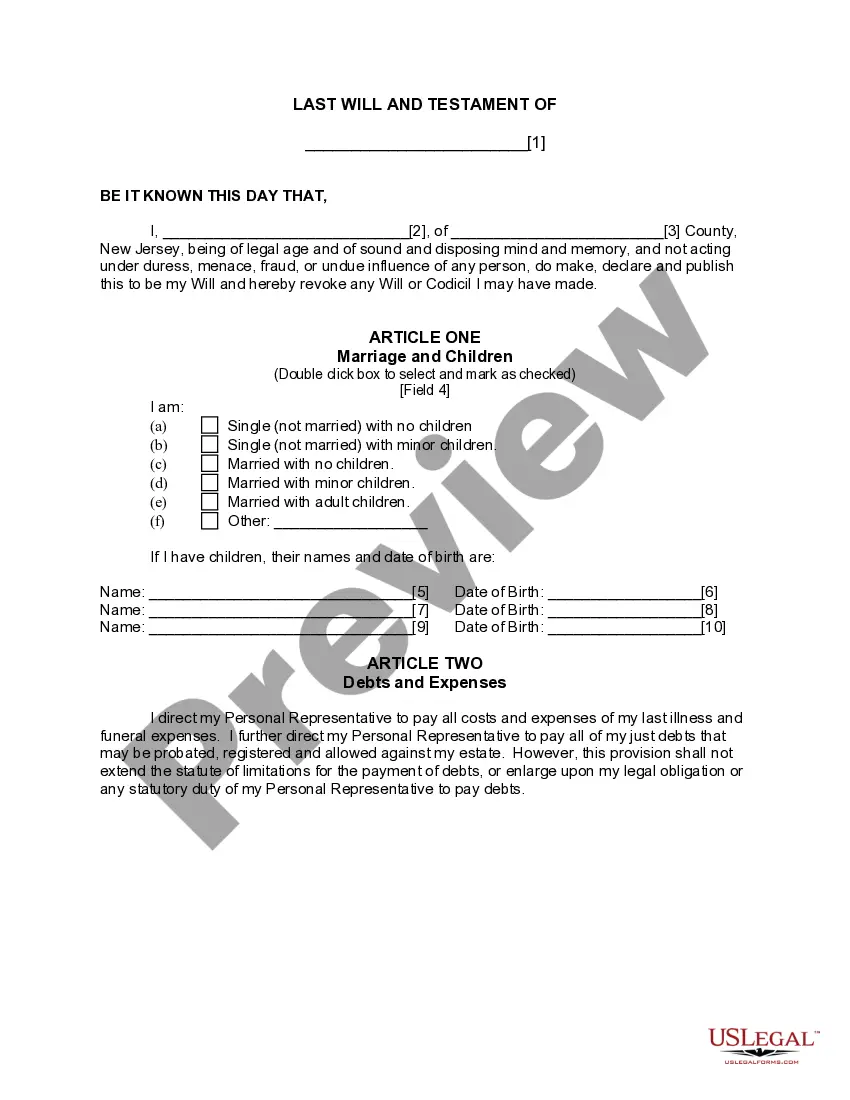
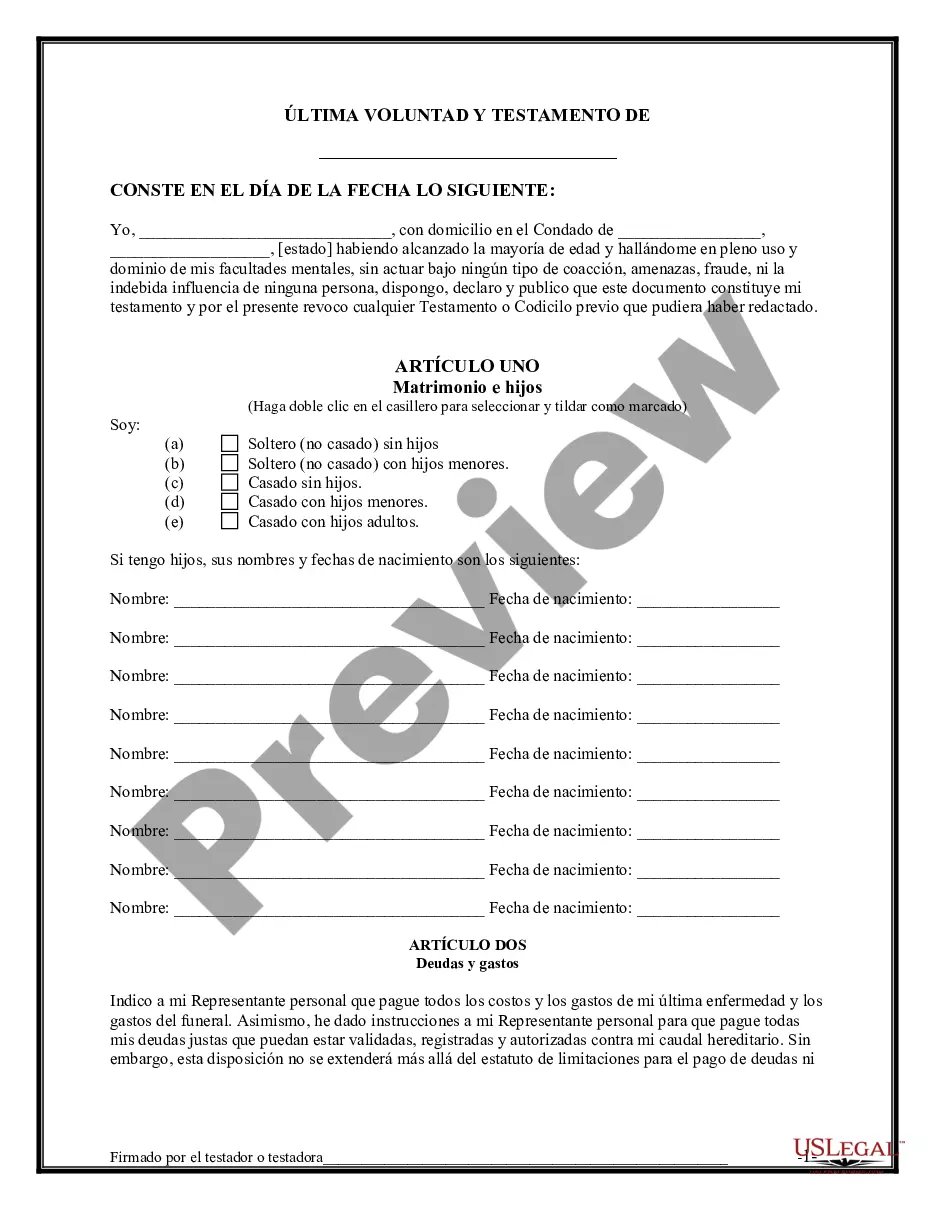
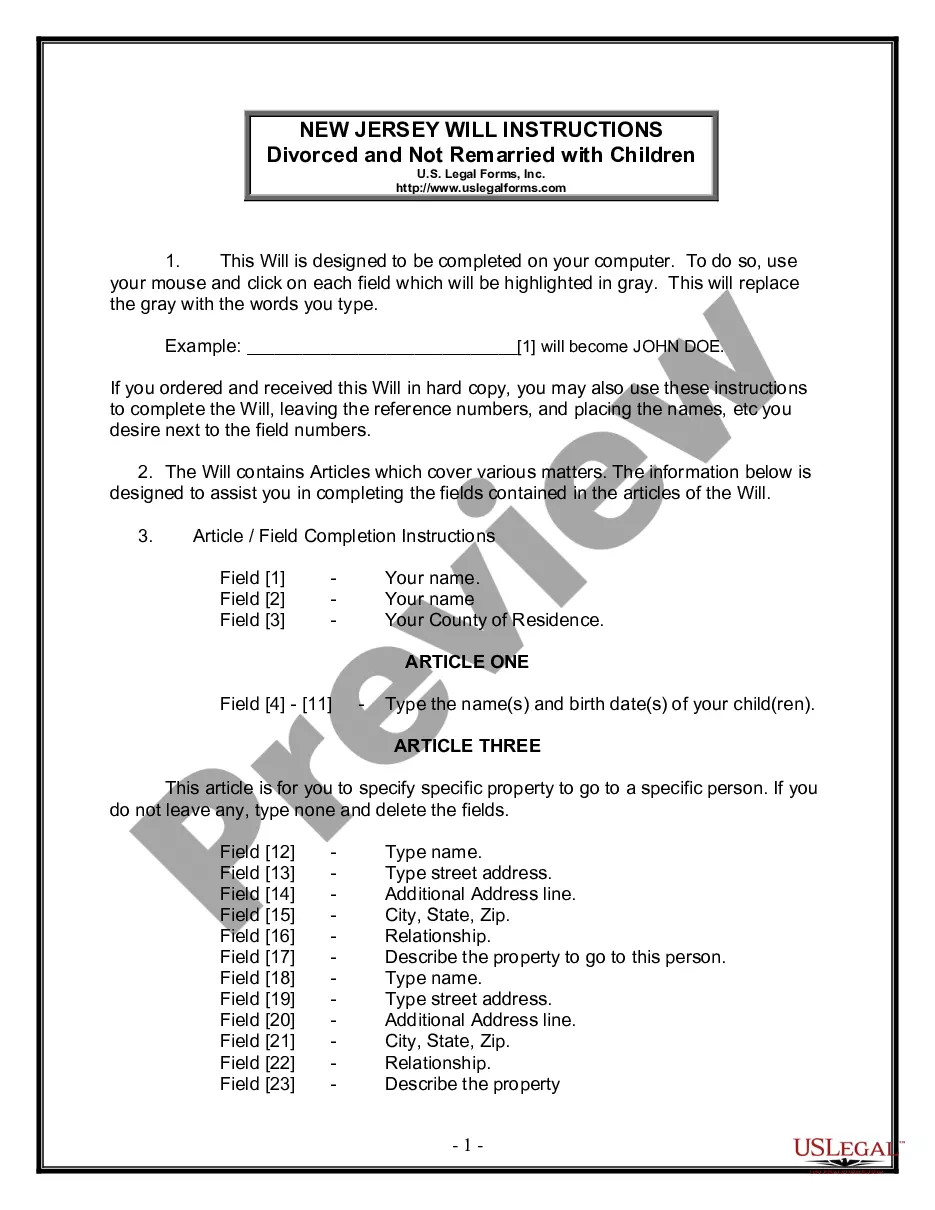
The Last Will and Testament for other Persons is a legal document that expresses your wishes regarding the distribution of your property after death. It allows you to appoint a personal representative to administer your estate, designate guardians for minor children, and make specific bequests to individuals. This form is especially beneficial if you do not have a specific will or cannot find another form that meets your needs, particularly for residents of New Jersey. The Last Will and Testament for other Persons is designed for completion on a computer, streamlining the process of preparing this critical document.
Key components of this form
- Personal information: Includes details about the testator, such as name and county of residence.
- Marital status and children: Specify current marital status and list children with their birth dates.
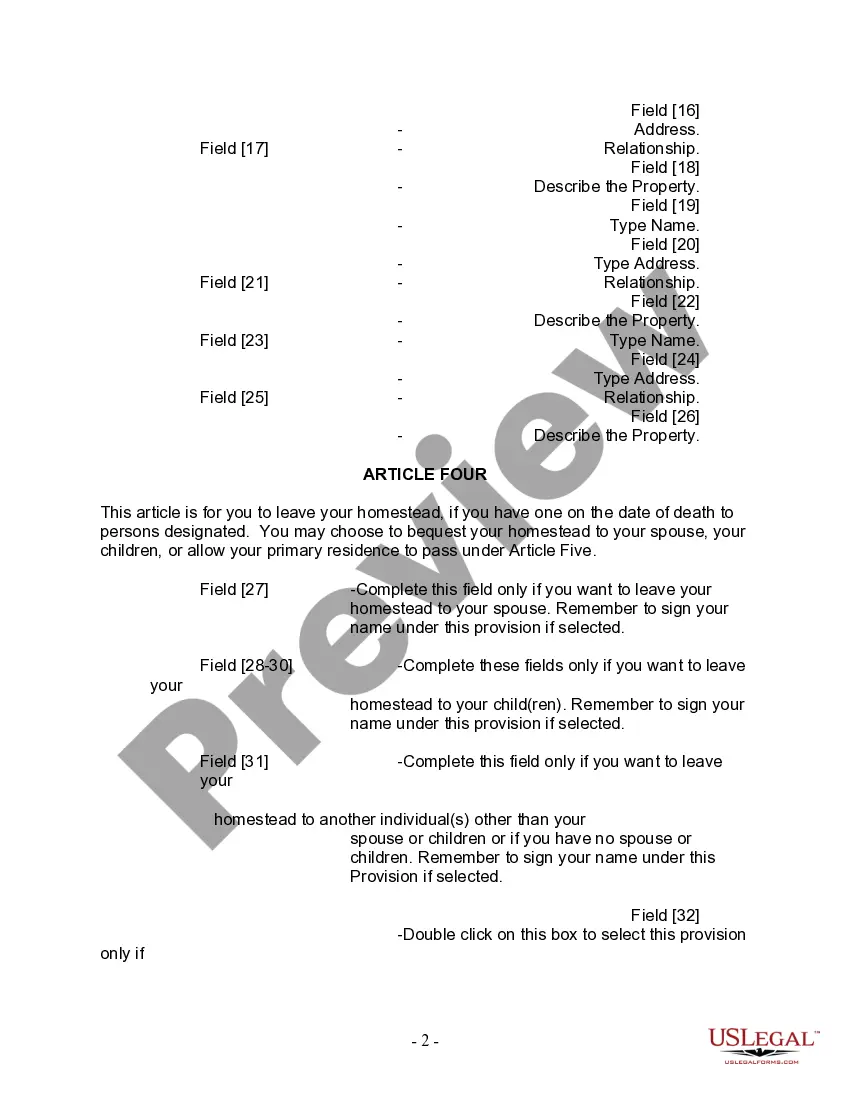
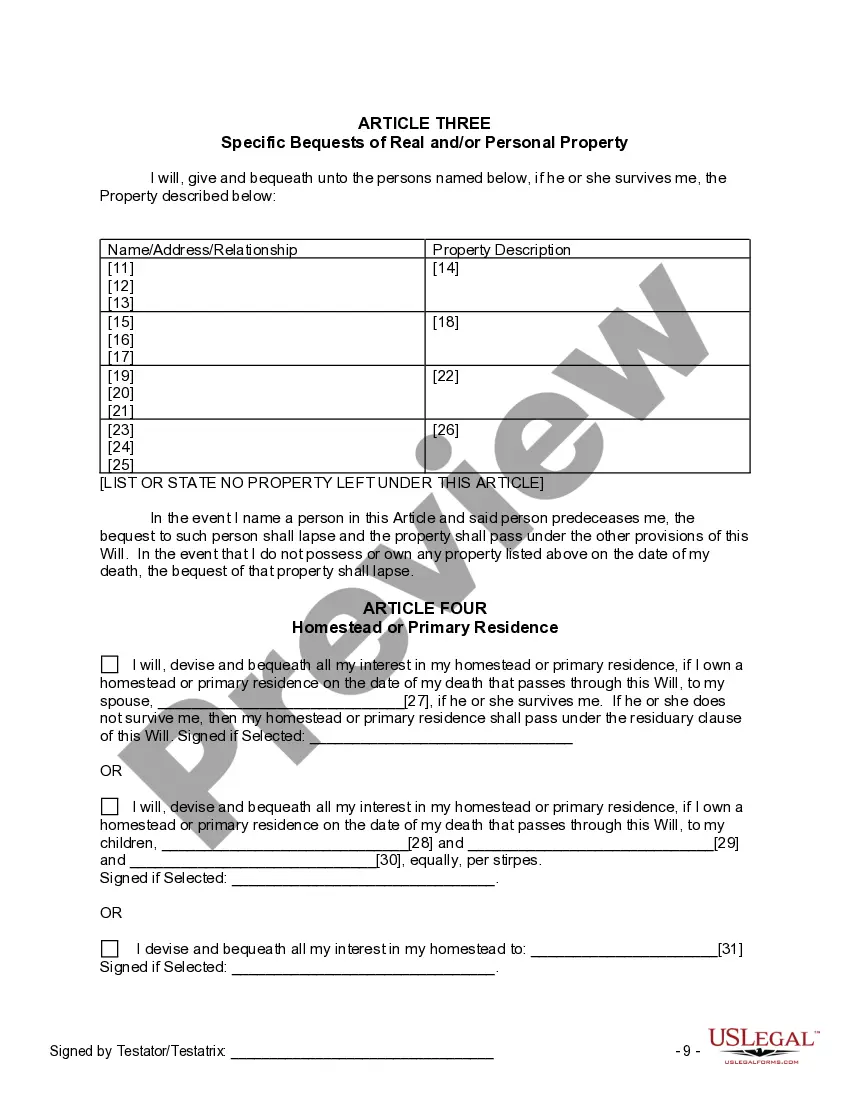
- Specific bequests: Designate specific items of property to specific individuals.
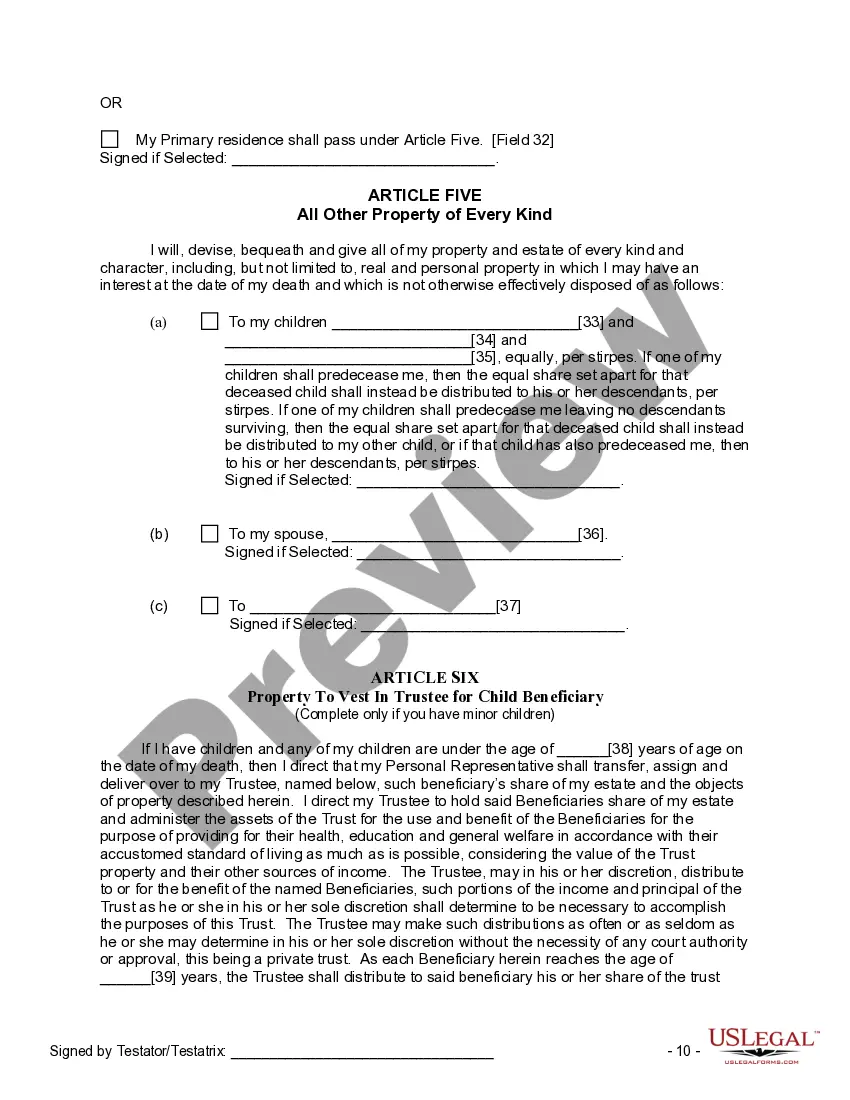
- Homestead provisions: Allocate your primary residence to your spouse, children, or other individuals.
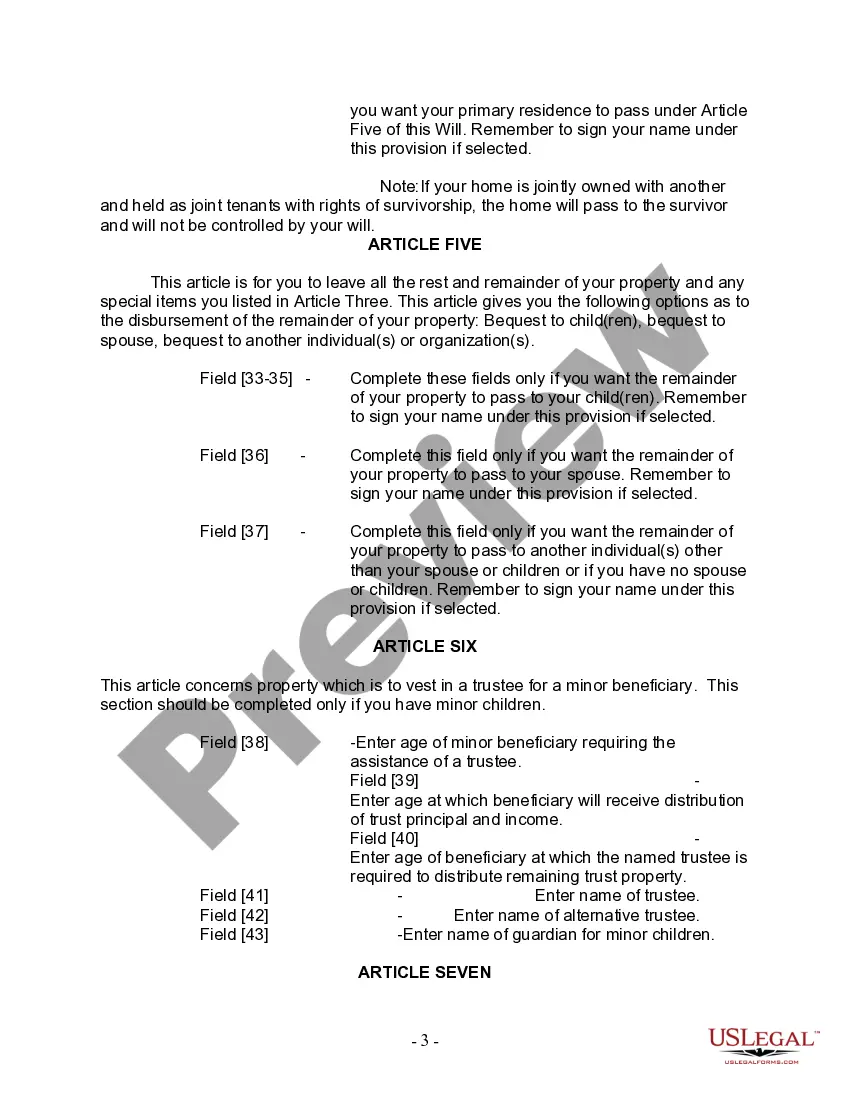
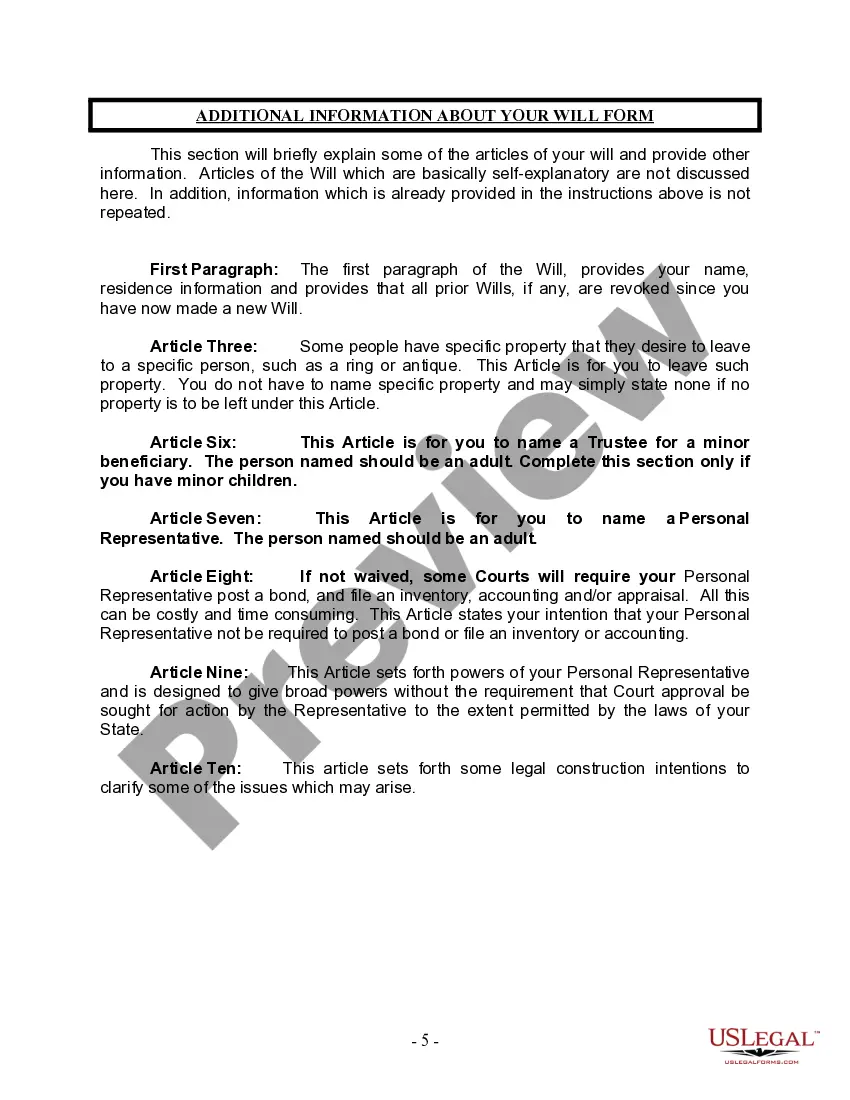
- Trustee designations: Appoint a trustee for any minor beneficiaries.
- Appointment of personal representative: Designate a personal representative to manage your estate.
- Witness and notarization requirements: Signatures of witnesses and potential notarization for validity.




Situations where this form applies
This form is necessary when you want to ensure your estate is distributed according to your wishes after your death. You should use this Last Will and Testament if you have assets to be distributed, minor children requiring guardians, or wish to appoint someone you trust as the executor of your estate. It is also suitable if you do not have another valid will in place.
Who can use this document
- Individuals aged 18 or older who are residents of New Jersey.
- Those with minor children who require guardianship provisions.
- Individuals wishing to specify the distribution of their property upon death.
- People seeking a straightforward and computer-friendly way to create a will.
Steps to complete this form
- Enter your full name and county of residence in the appropriate fields.
- Specify your marital status and list any children along with their birth dates.
- Designate individuals for specific bequests and your homestead property.
- Appoint a personal representative and an alternative representative for your estate.
- Ensure all fields are filled out completely, and review before printing.
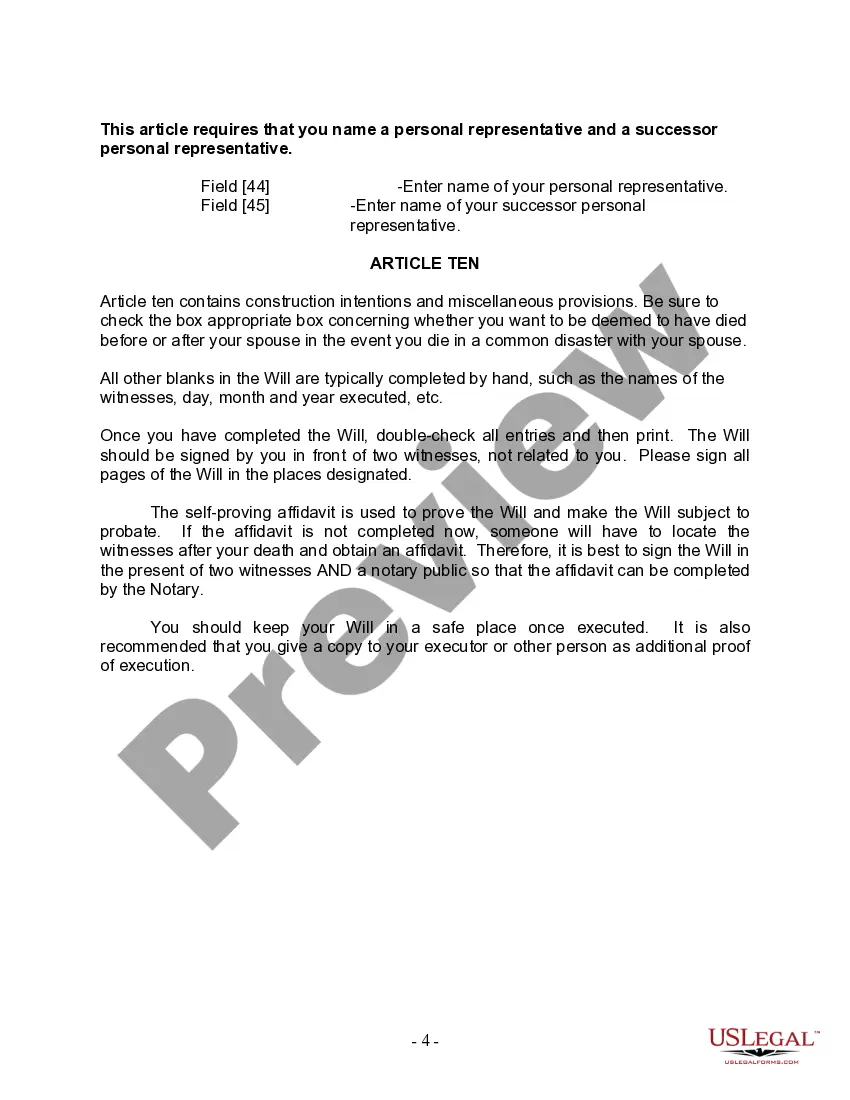
- Sign the document in front of two witnesses, ensuring they also sign the form.
Notarization requirements for this form
This form does not typically require notarization unless specified by local law. However, it is recommended to have the will notarized along with the signatures of witnesses to facilitate the probate process.
Get your form ready online
Our built-in tools help you complete, sign, share, and store your documents in one place.
Make edits, fill in missing information, and update formatting in US Legal Forms—just like you would in MS Word.
Download a copy, print it, send it by email, or mail it via USPS—whatever works best for your next step.
Sign and collect signatures with our SignNow integration. Send to multiple recipients, set reminders, and more. Go Premium to unlock E-Sign.
If this form requires notarization, complete it online through a secure video call—no need to meet a notary in person or wait for an appointment.
We protect your documents and personal data by following strict security and privacy standards.

Make edits, fill in missing information, and update formatting in US Legal Forms—just like you would in MS Word.

Download a copy, print it, send it by email, or mail it via USPS—whatever works best for your next step.

Sign and collect signatures with our SignNow integration. Send to multiple recipients, set reminders, and more. Go Premium to unlock E-Sign.

If this form requires notarization, complete it online through a secure video call—no need to meet a notary in person or wait for an appointment.

We protect your documents and personal data by following strict security and privacy standards.
Avoid these common issues
- Failing to sign the will in front of the required witnesses.
- Not updating the will after significant life changes, such as marriage or the birth of children.
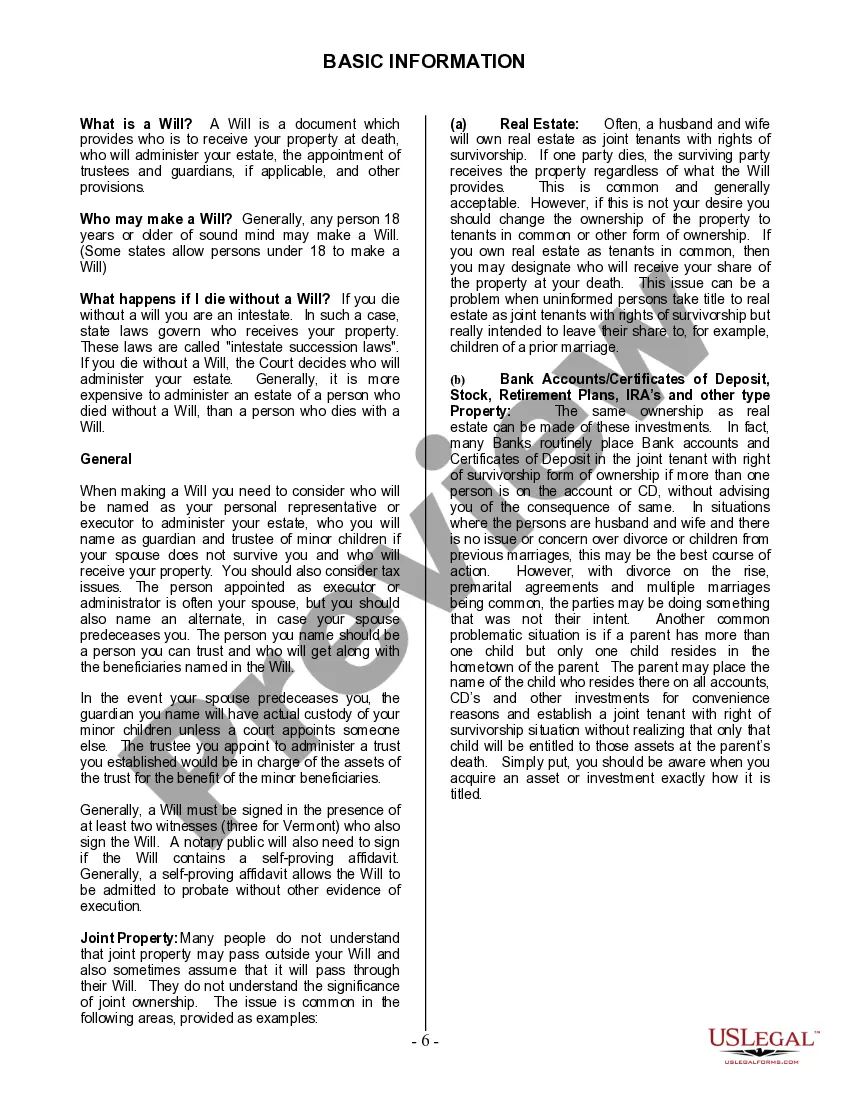
- Neglecting to specify what happens to joint property.
- Leaving blank fields, which can lead to confusion during probate.
Why complete this form online
- Convenience of completing the form electronically from home.
- Editability allows for easier updates to your will as circumstances change.
- Reduction in errors through guided form fields.
- Access to legal templates drafted by professional attorneys.
Legal use & context
- This will serves as a legally binding document that defines how your estate should be managed and distributed upon your death.
- Without a will, state intestacy laws will determine the distribution of your assets, which may not align with your wishes.
- The use of a properly executed will can prevent legal disputes among beneficiaries and streamline the probate process.
Quick recap
- The Last Will and Testament for Other Persons ensures your wishes are legally documented and followed after your death.
- Key components to complete include designating beneficiaries, guardians, and a personal representative.
- Follow state-specific requirements to ensure validity, including proper signing and notarization.
- Utilizing online legal forms can simplify the process and provide flexibility in drafting your will.
Looking for another form?
Form popularity
FAQ
While New Jersey does not require you to notarize a will to make it legal, there are significant benefits of getting it notarized. When a notary signs and stamps your will in New Jersey, this makes it self-proving.
You can read, type, print, and staple at the will maker's direction. But you must not decide or even weigh in on the terms of the will. Do not sway the will maker in any way; you must be a neutral actor. Also, do not not use your own handwriting to fill in a fill-in-the-blanks will.
Under New Jersey law, a handwritten Will can be valid as a writing intended as a Will if the material portions of the document are in the handwriting of the decedent and signed by the decedent.
It must be in writing. Generally, of course, wills are composed on a computer and printed out.The person who made it must have signed and dated it. A will must be signed and dated by the person who made it.Two adult witnesses must have signed it. Witnesses are crucial.
The Probate process is required by the state of NJ whenever someone dies. It is the government's way of making sure the assets of the deceased pass properly to their decedents. And of course to insure that any taxes or lien's owed to the state or other parties are fully paid.You still have to go through probate.
In New Jersey, the will must be in writing. You must sign your own will, witnessed by two individuals over 18 (You must be at least age 18 as well.)Notarized wills are not required, but they do help speed the process, since a probate court doesn't have to track down the two witnesses.
What makes a will valid in New Jersey? A person must be at least 18 years old and mentally competent to create a valid will. Generally, this means they understand the purpose of the will and know what they wish to happen to their property. The testator, as well as two witnesses, must sign a typed will.
While your will should still be valid in the new state, there may be differences in the new state's laws that may make certain provisions of the will invalid. In addition, moving is a good excuse to consult an attorney to make sure your estate plan in general is up to date.