New Jersey Notice of Assignment to Living Trust
What is this form?
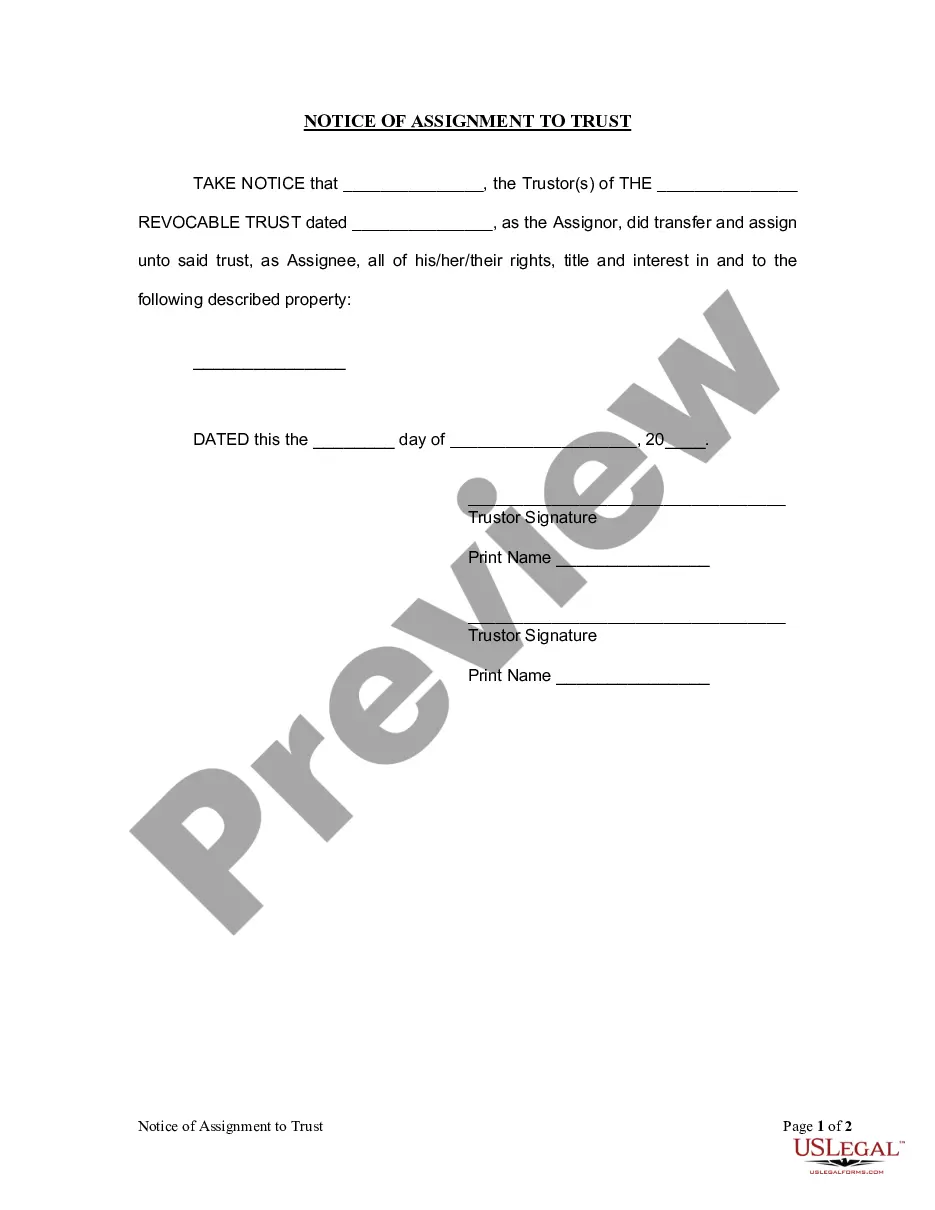
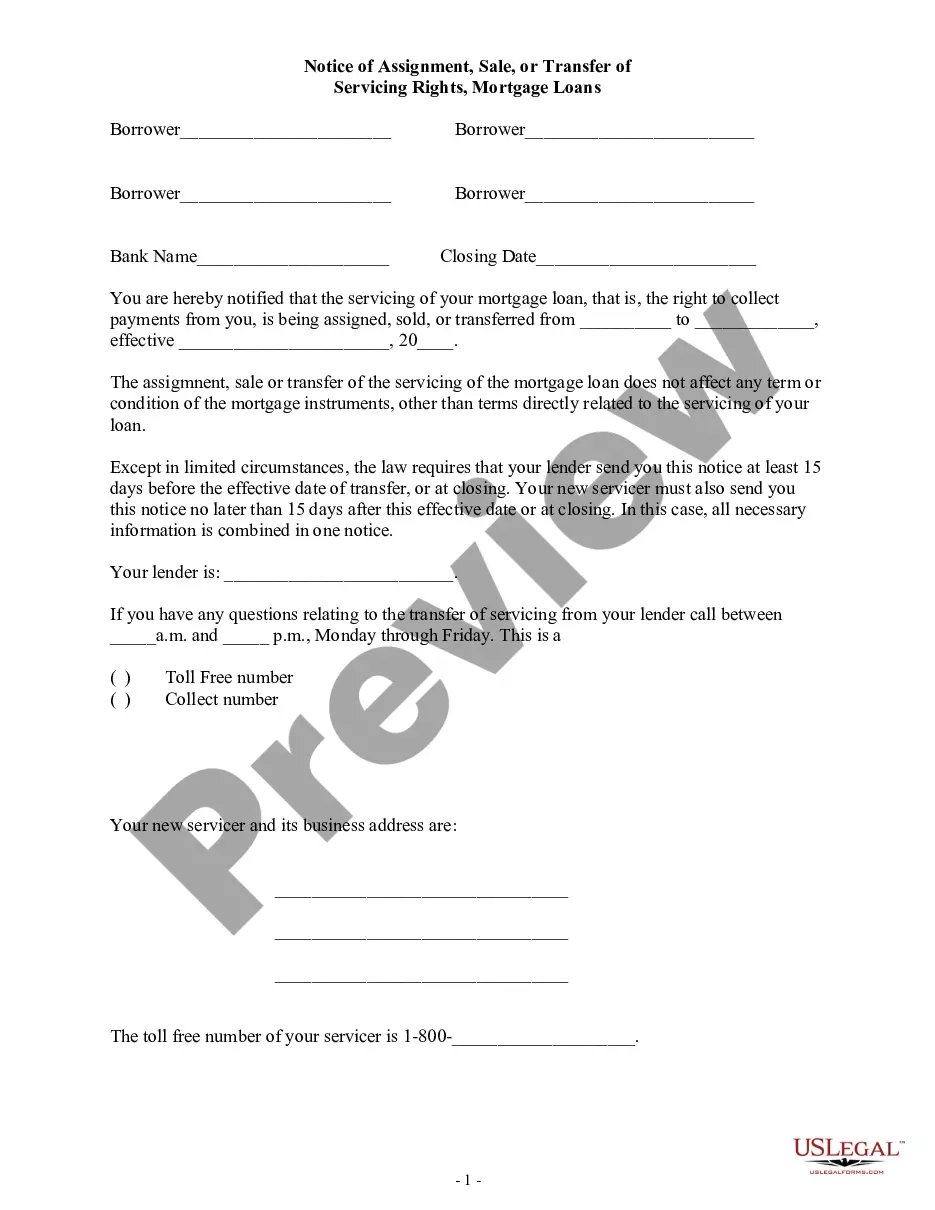
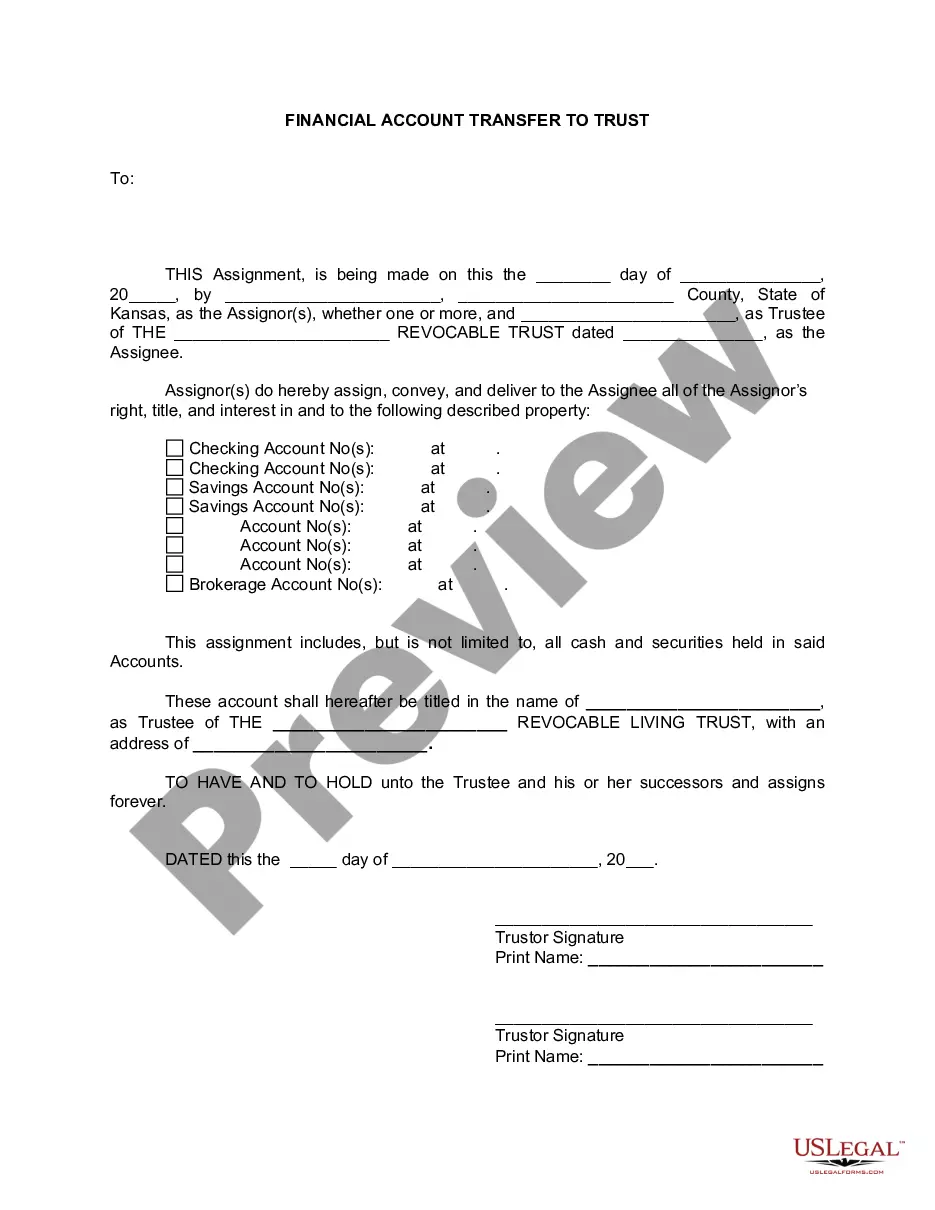
The Notice of Assignment to Living Trust is a legal document that formally declares the transfer of ownership of certain property into a living trust. This form is specifically crafted to fulfill estate planning needs, distinguishing it from other types of assignment notices. By utilizing this form, trustors can ensure their assets are properly managed and distributed according to their wishes upon passing.
Main sections of this form
- Name of the Trustor(s) and the relevant trust details.
- Identification of the property being assigned to the trust.
- Signatures of the Trustor(s) confirming the transfer.
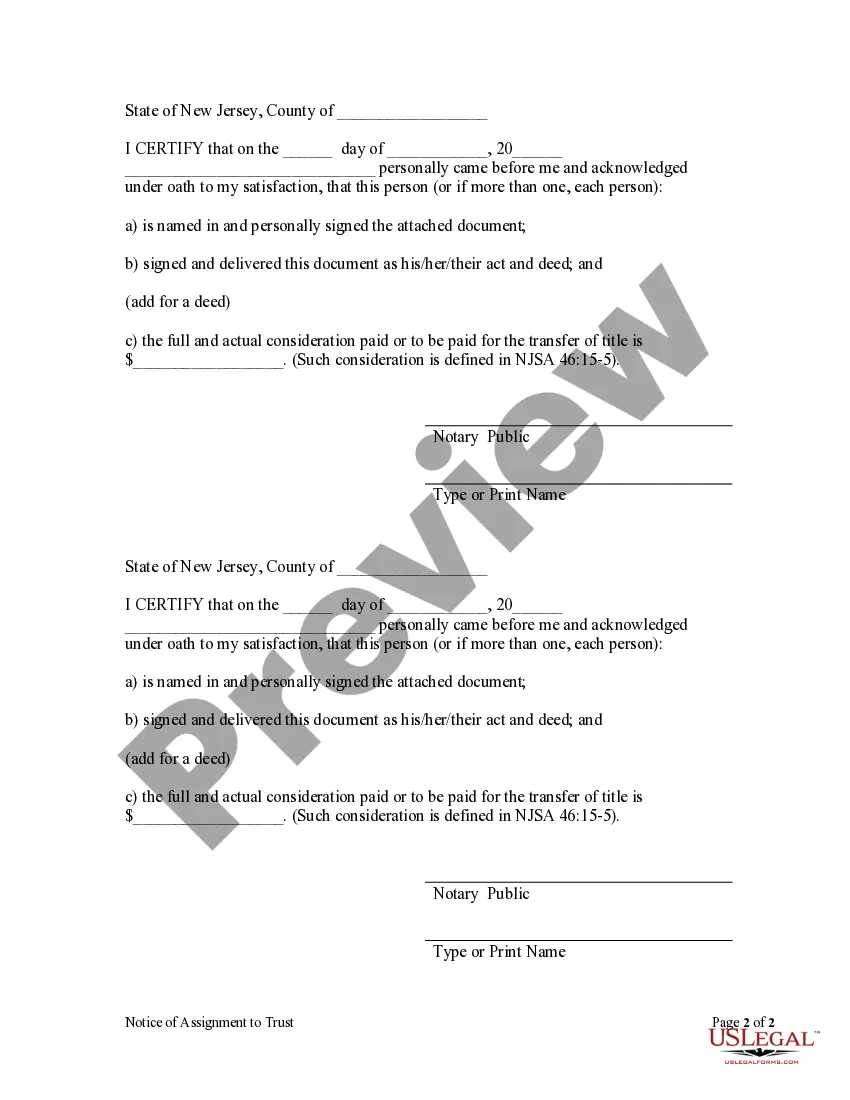
- Notary acknowledgment section for legal validation.
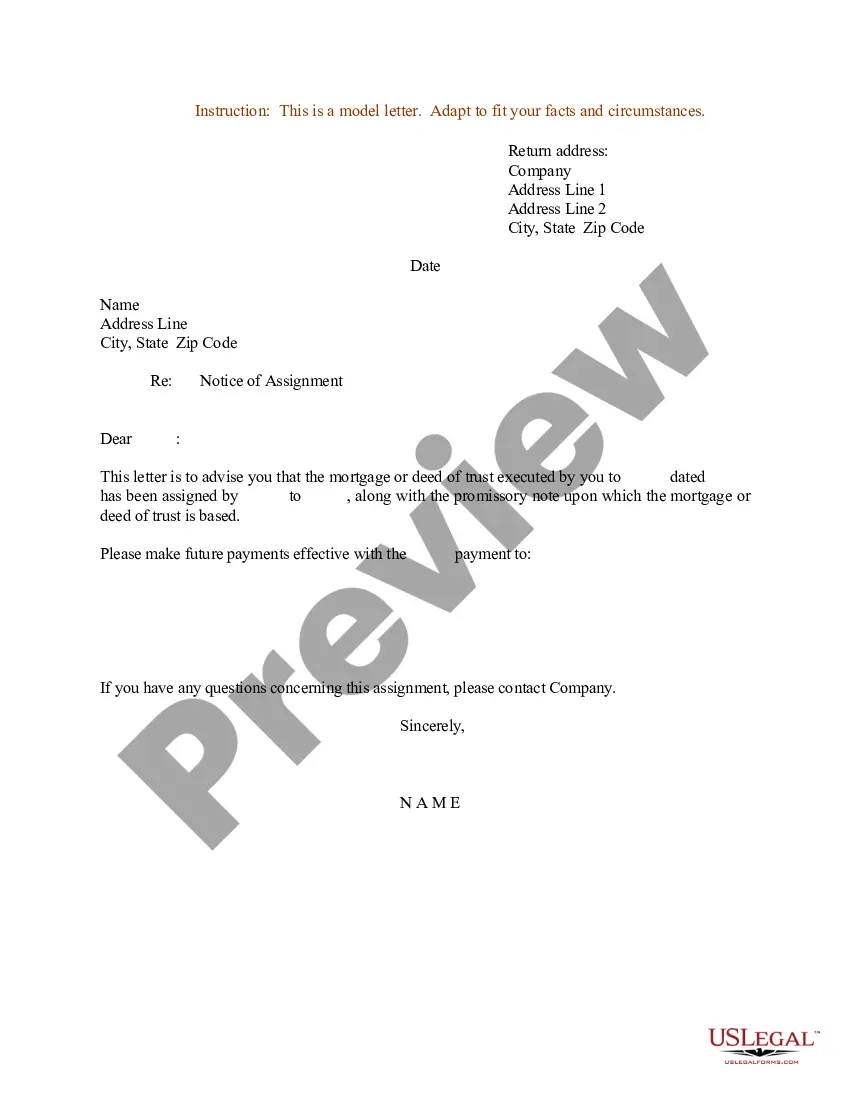
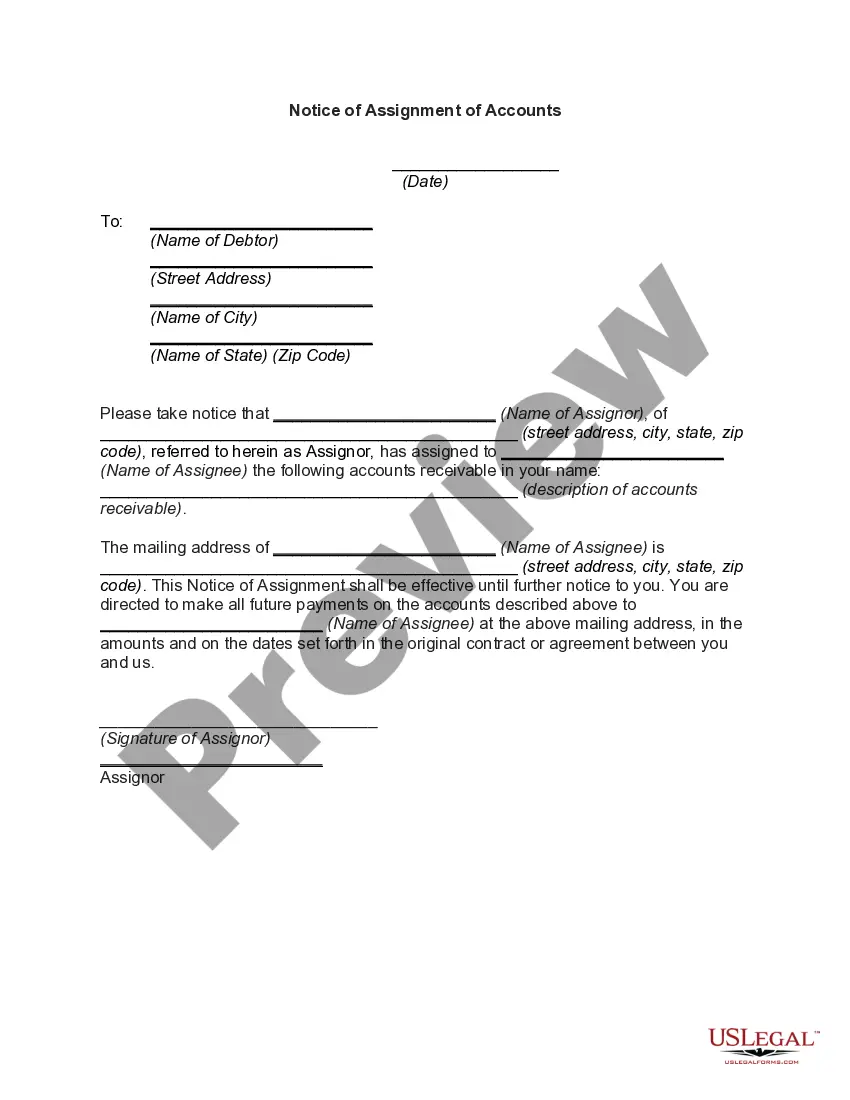
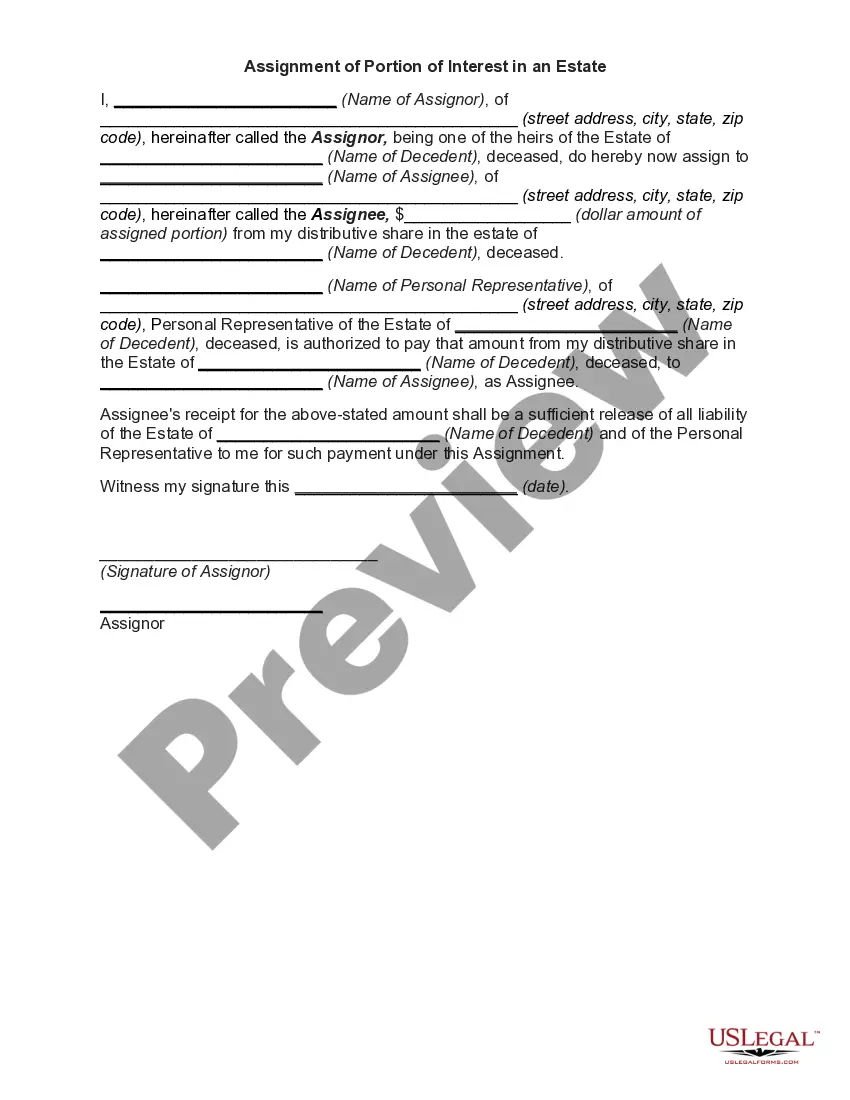
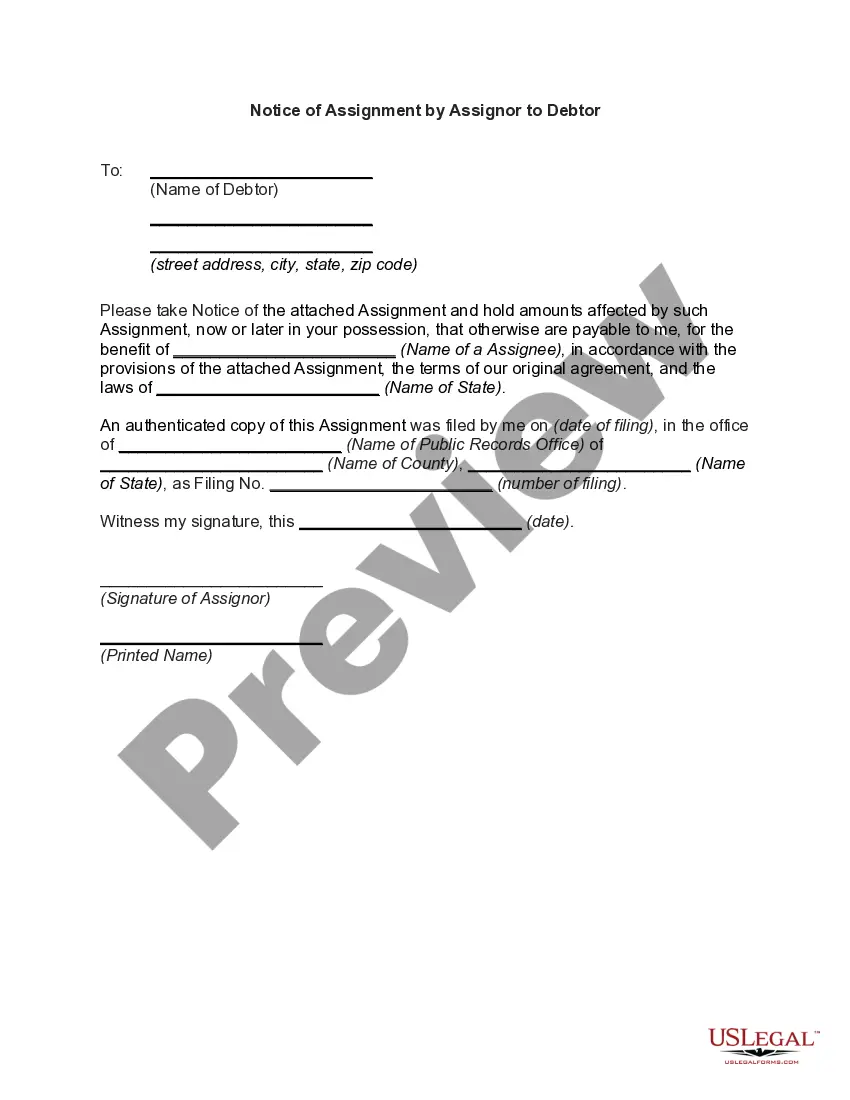
Situations where this form applies
This form should be used when a trustor wishes to transfer ownership of specific assets into their living trust. It is commonly utilized during estate planning to avoid probate, streamline asset management, and ensure that the trust effectively governs the use and distribution of the assets by the appointed trustee.
Who this form is for
- Trustors who have established a living trust.
- Individuals seeking to organize and secure their estate plan.
- Anyone transferring personal property or assets into a trust for management and distribution.
Instructions for completing this form
- Identify the Trustor(s) involved in the transfer and enter their names.
- Specify the details of the living trust, including its name and date of establishment.
- Clearly describe the property being transferred to the trust.
- Enter the date of the transfer and obtain the necessary signatures from the Trustor(s).
- Complete the notary acknowledgment to validate the transfer legally.
Notarization requirements for this form
Notarization is required for this form to take effect. Our online notarization service, powered by Notarize, lets you verify and sign documents remotely through an encrypted video session, available 24/7.
Get your form ready online
Our built-in tools help you complete, sign, share, and store your documents in one place.
Make edits, fill in missing information, and update formatting in US Legal Forms—just like you would in MS Word.
Download a copy, print it, send it by email, or mail it via USPS—whatever works best for your next step.
Sign and collect signatures with our SignNow integration. Send to multiple recipients, set reminders, and more. Go Premium to unlock E-Sign.
If this form requires notarization, complete it online through a secure video call—no need to meet a notary in person or wait for an appointment.
We protect your documents and personal data by following strict security and privacy standards.
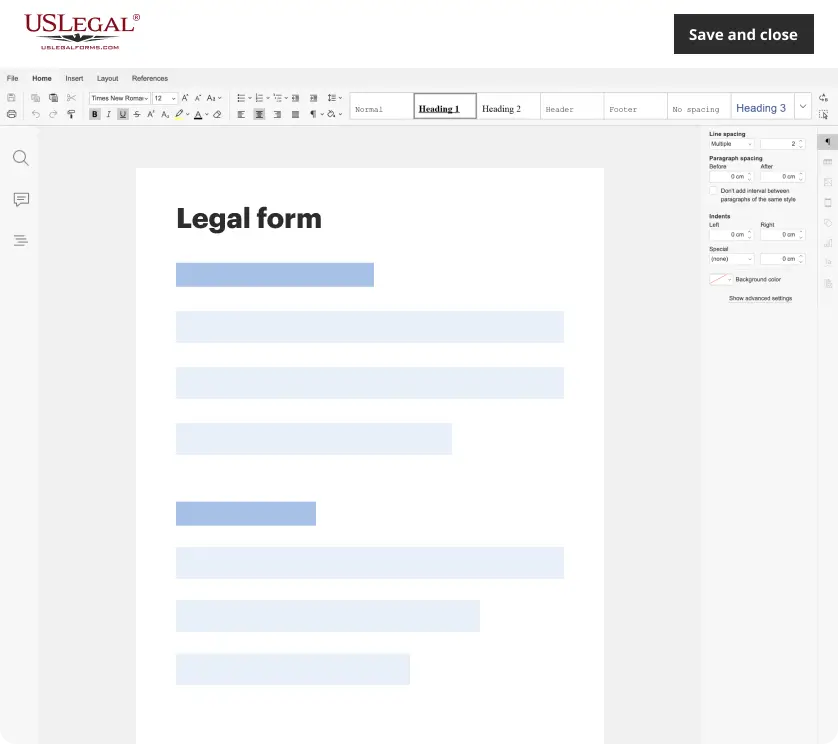
Make edits, fill in missing information, and update formatting in US Legal Forms—just like you would in MS Word.
Download a copy, print it, send it by email, or mail it via USPS—whatever works best for your next step.
Sign and collect signatures with our SignNow integration. Send to multiple recipients, set reminders, and more. Go Premium to unlock E-Sign.

If this form requires notarization, complete it online through a secure video call—no need to meet a notary in person or wait for an appointment.
We protect your documents and personal data by following strict security and privacy standards.
Common mistakes
- Failing to correctly identify the property being transferred.
- Not having the form signed by all necessary Trustor(s).
- Omitting the notary acknowledgment, which could invalidate the form.
Benefits of using this form online
- Convenient access to the form anytime, allowing for easy updates and edits.
- Reliable templates drafted by licensed attorneys, reducing legal risks.
- Efficient digital completion and storage for personal records.
Looking for another form?
Form popularity
FAQ
Assuming you decide you want a revocable living trust, how much should you expect to pay? If you are willing to do it yourself, it will cost you about $30 for a book, or $70 for living trust software. If you hire a lawyer to do the job for you, get ready to pay between $1,200 and $2,000.
Determine the Current Title and Vesting to Your Property. Prepare a Deed. Be Aware of Your Lender and Title Insurance. Prepare a Preliminary Change of Ownership Report. Execute Your Deed. Record Your Deed. Wait for the Deed to be Returned. Keep the Property in the Trust.
Trusts Are Not Public Record. Most states require a last will and testament to be filed with the appropriate state court when the person dies. When this happens, the will becomes a public record for anyone to read. However, trusts aren't recorded.
When you create a DIY living trust, there are no attorneys involved in the process.It is also possible to choose a company, such as a bank or a trust company, to be your trustee. You'll also need to choose your beneficiary or beneficiaries, the person or people who will receive the assets in your trust.
No. Trust does not need to be filed in California. Trusts are private documents and usually there are compelling reasons not to file the trust.
Decide on the type of trust you want to form. Take stock of your property. Pick a trustee. Create the trust document, either using an online program or with the help of a lawyer. Go to a notary public and sign the document. Fund the trust.
A living trust in New Jersey allows you to maintain use and control of your assets during your life and then passes them to beneficiaries after your death, all while providing protection from probate costs and state interference.
Pick a type of living trust. If you're married, you'll first need to decide whether you want a single or joint trust. Take stock of your property. Choose a trustee. Draw up the trust document. Sign the trust. Transfer your property to the trust.