New Jersey Living Trust for Husband and Wife with Minor and or Adult Children
Overview of this form
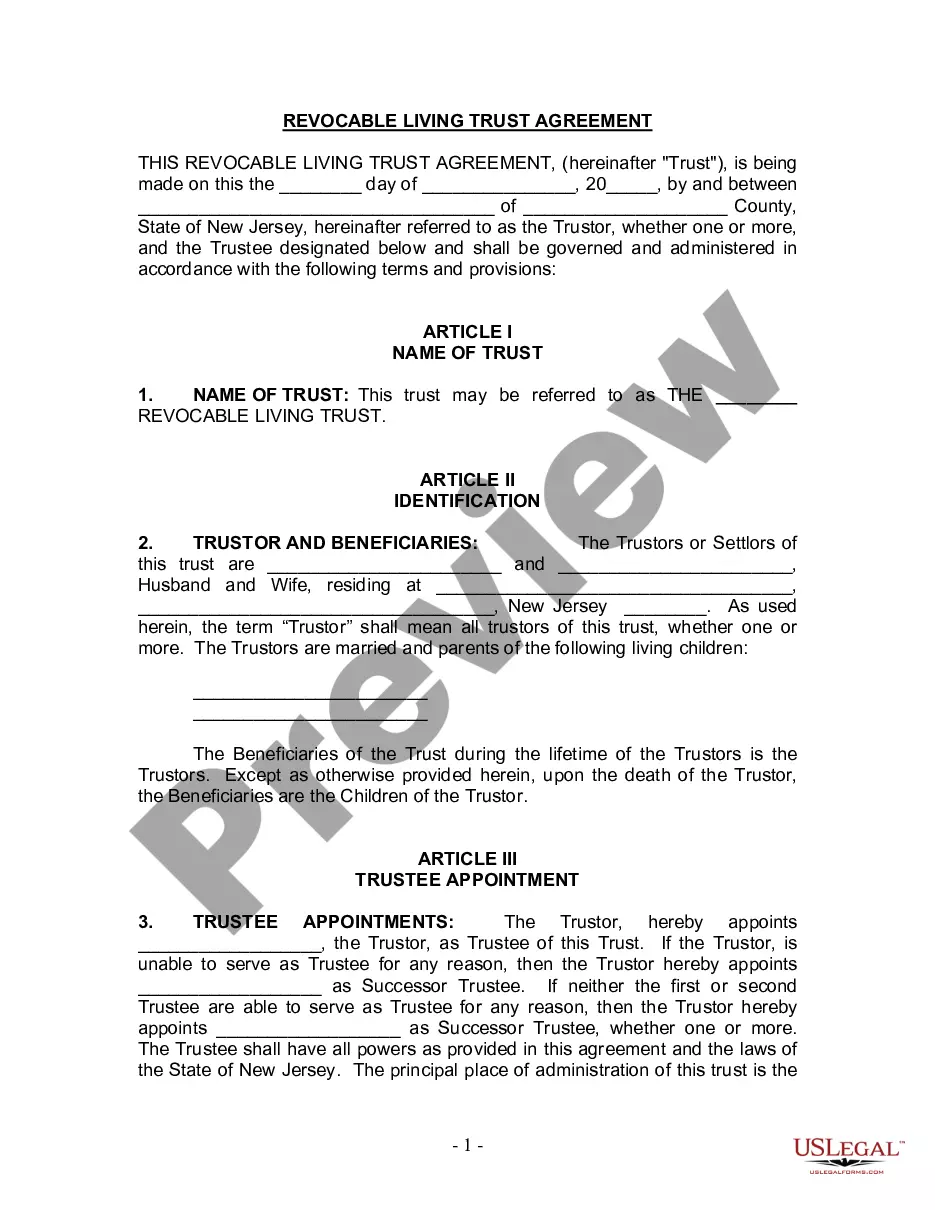
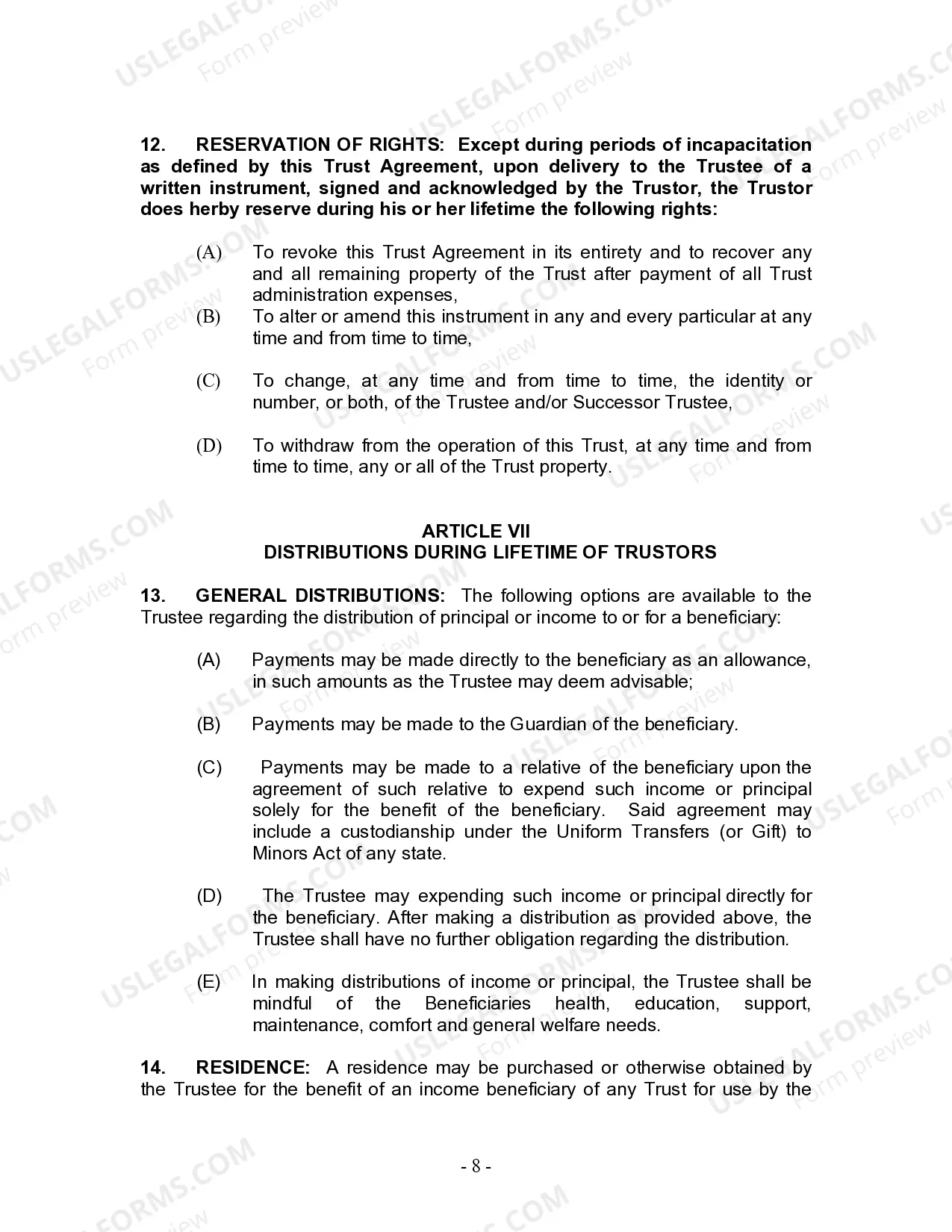
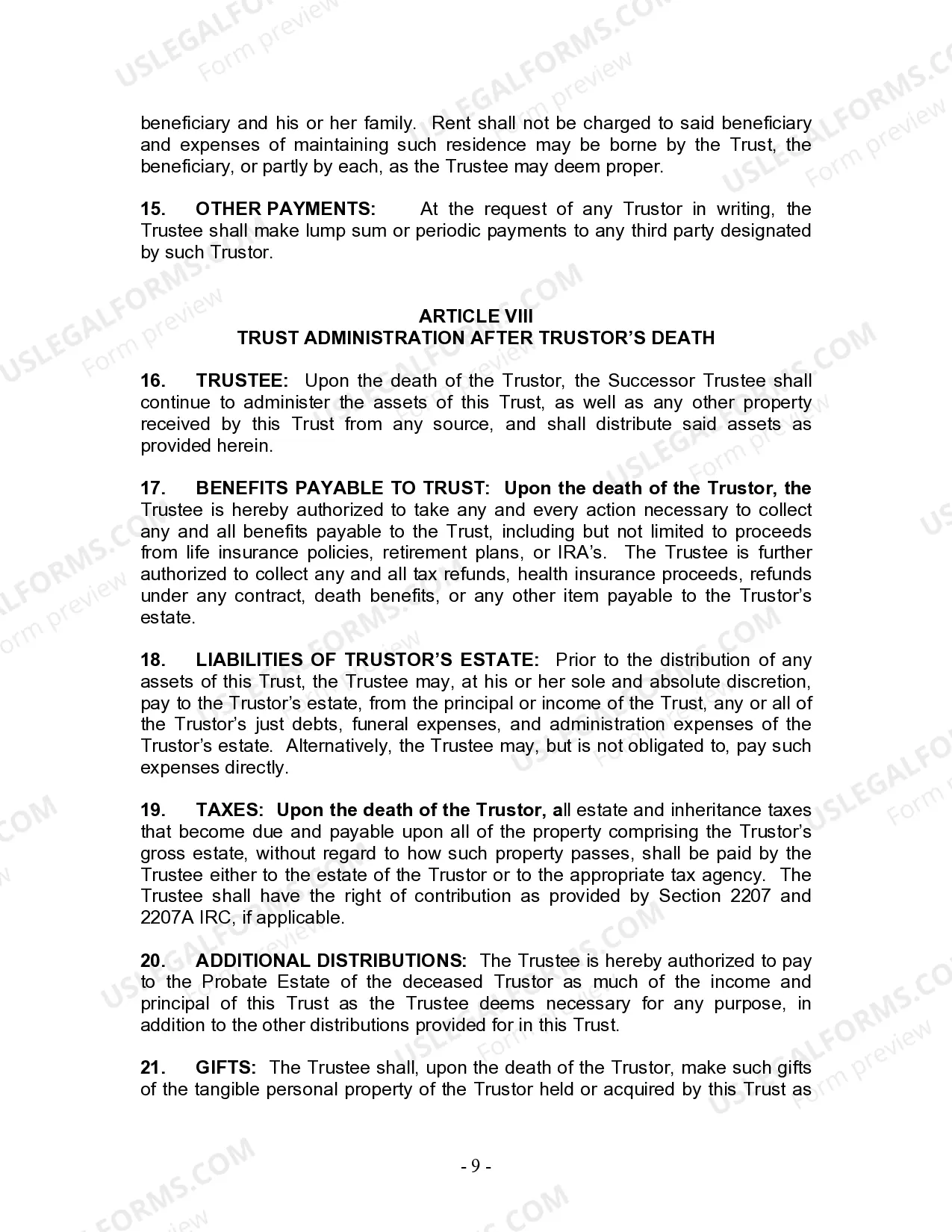
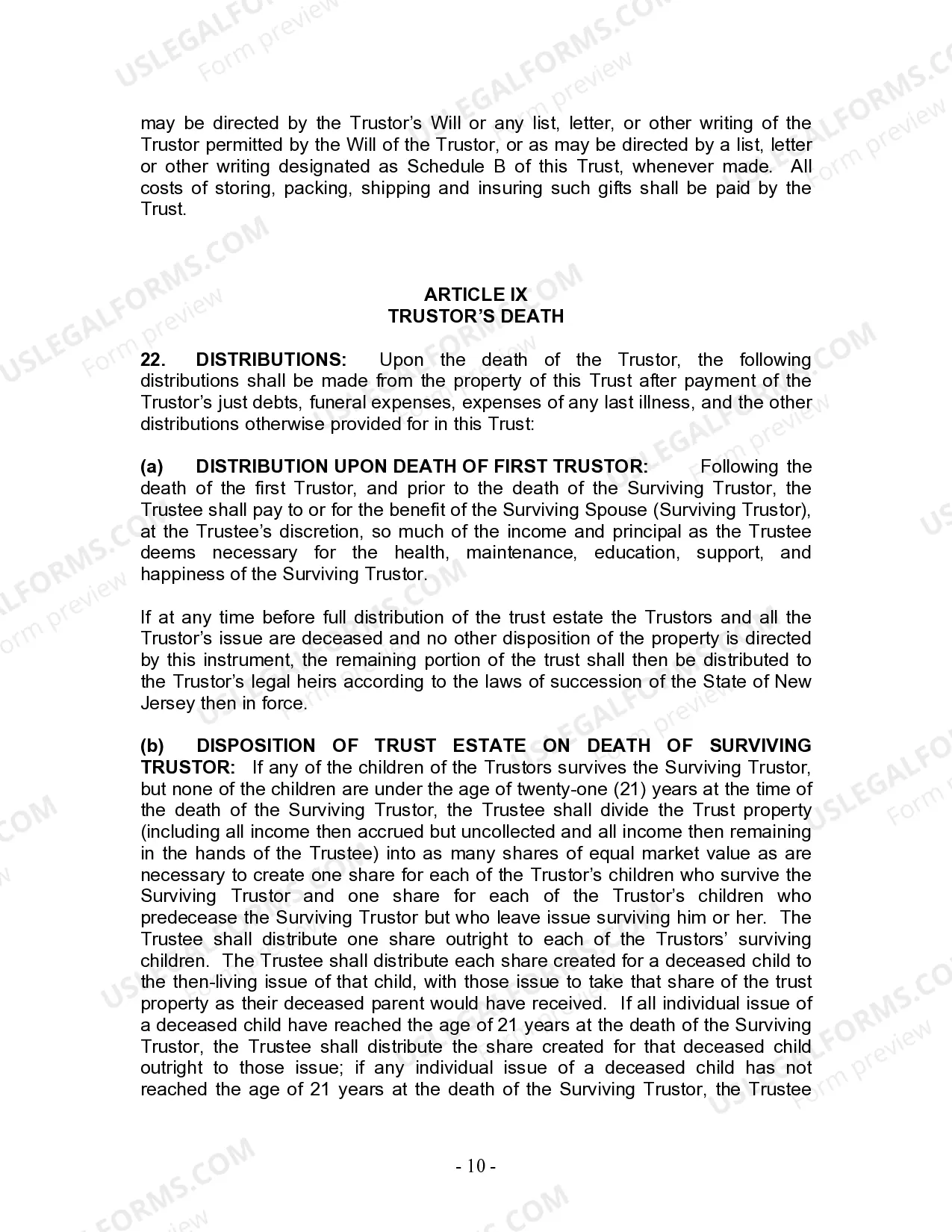
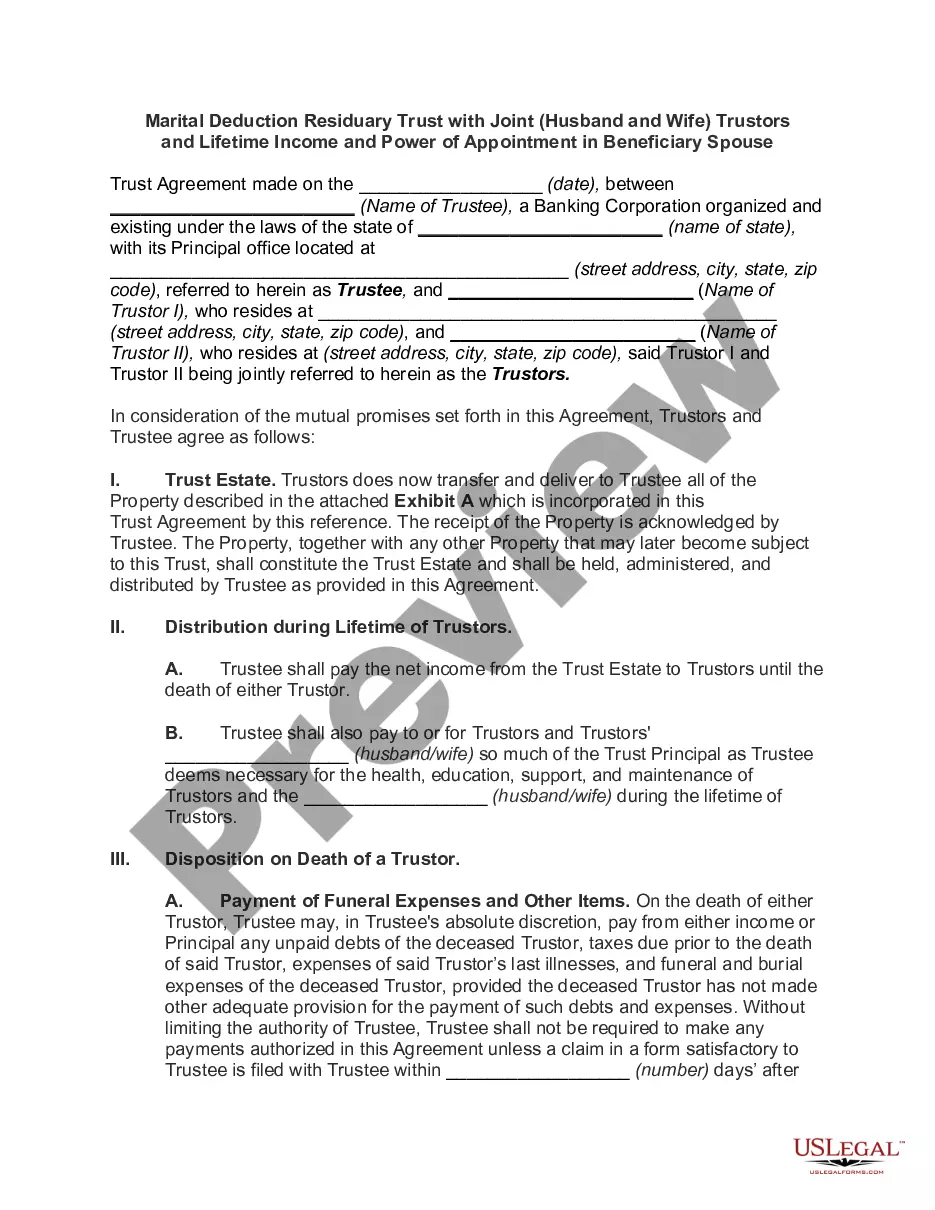
The Living Trust for Husband and Wife with Minor and/or Adult Children is a legally binding document designed for couples wishing to manage their assets and property during their lifetime and facilitate a smooth transfer upon their passing. Unlike a last will, a living trust allows assets to bypass the probate process, ensuring faster and more private distribution. This form ensures that both partners can set up a trust that serves their interests, provides for their children, and outlines the management of assets both during their lifetime and after their death.
Key parts of this document
- Name of Trust: Identify the trust's title.
- Trustor and Beneficiaries: Designate the individuals establishing the trust and the beneficiaries, typically the coupleâs children.
- Trustee Appointment: Assign trustee(s) responsible for managing the trust assets.
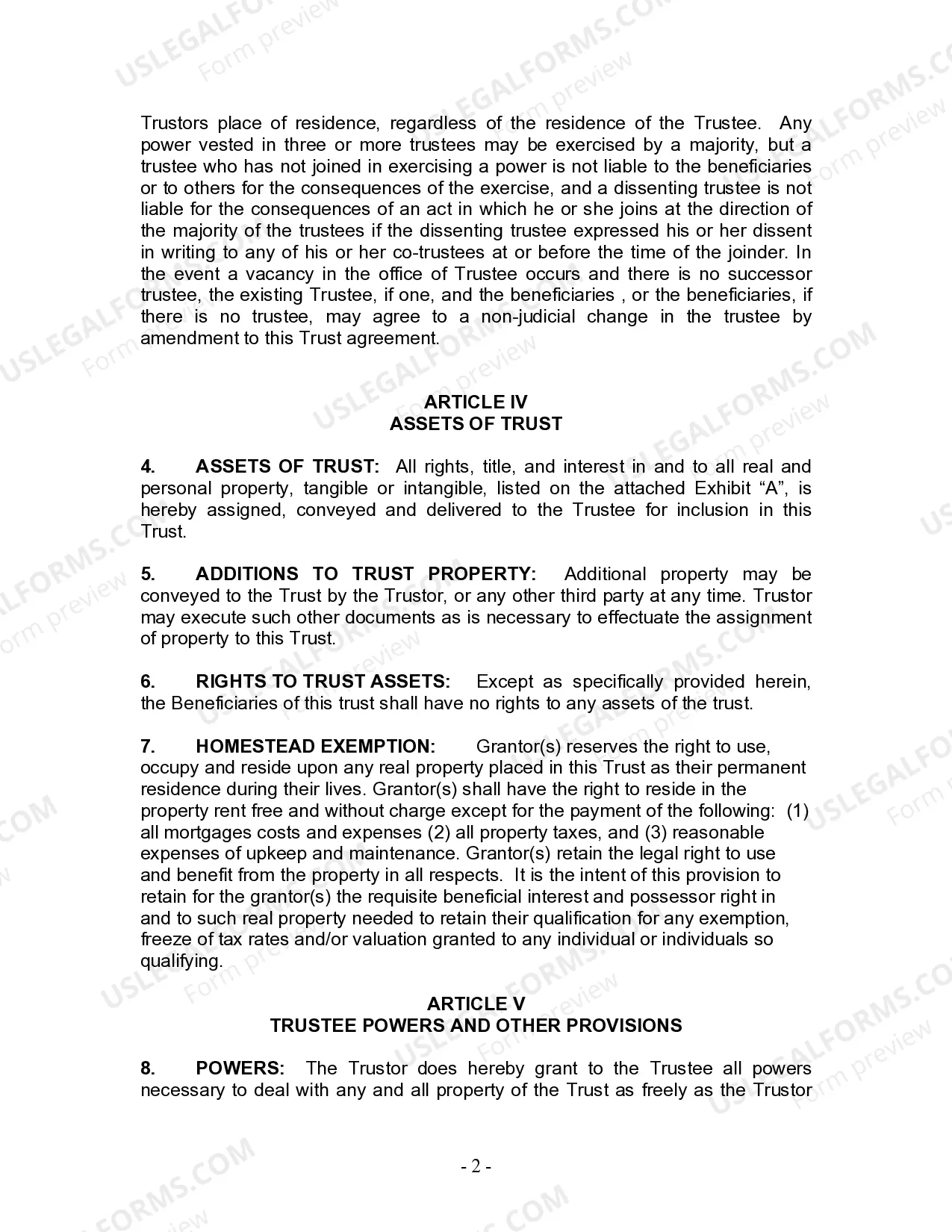
- Assets of Trust: Define what assets are included in the trust.
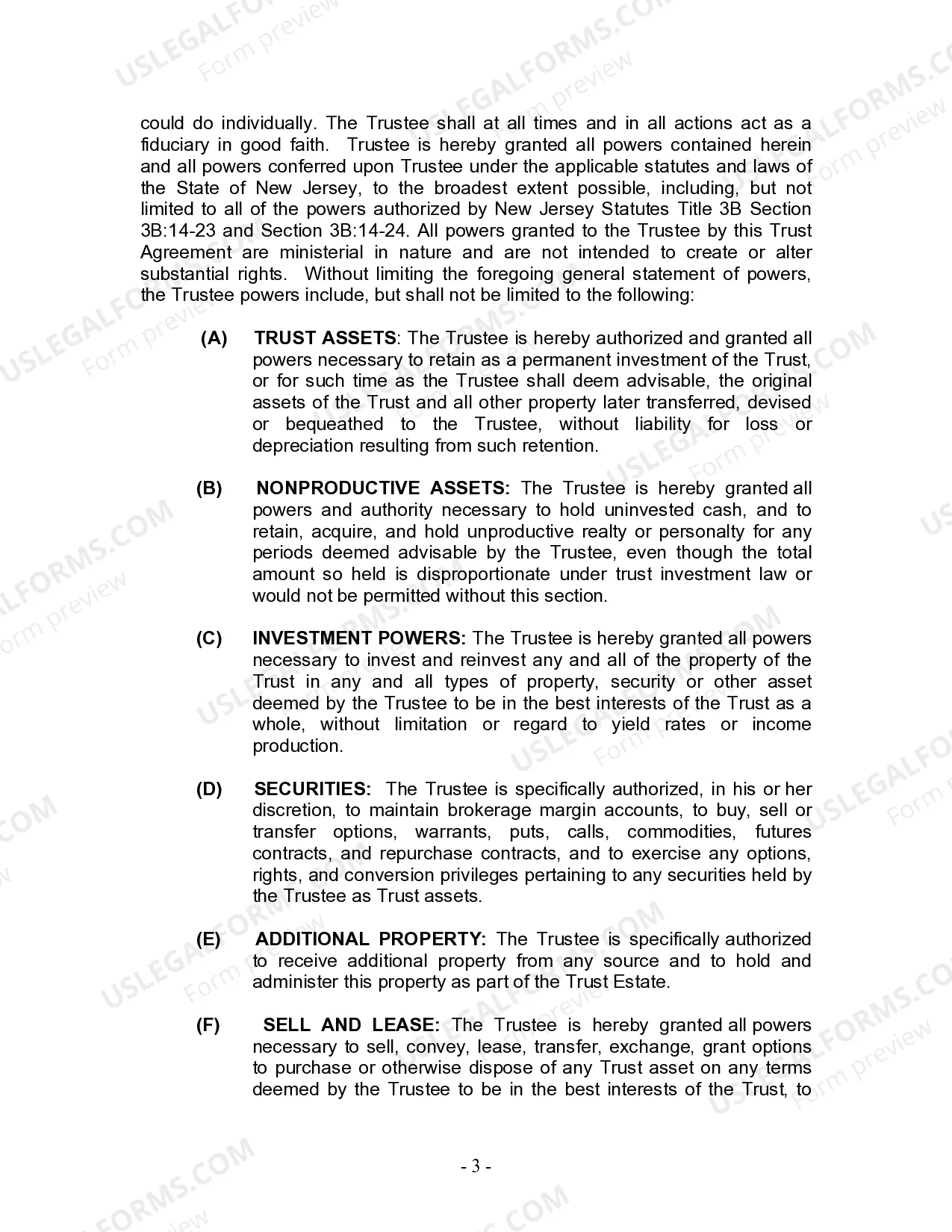
- Trustee Powers: Outline the powers granted to the trustee(s).
- Duties upon Trustor's Death: Specify how assets will be handled after the death of the trustors.




Situations where this form applies
This form is ideal for couples who want to ensure that their assets are managed efficiently during their lifetimes and are distributed according to their wishes after they pass away. It is particularly beneficial for those with minor children, as it allows for protective provisions regarding their upbringing and inheritance. Using a living trust can also help to avoid the lengthy and public probate process, making it a popular choice for estate planning.
Who this form is for
- Couples who are legally married and have minor or adult children.
- Those seeking to manage their assets proactively and avoid probate.
- Individuals wanting to establish a clear plan for asset distribution upon death.
- People who wish to maintain control over their assets while also planning for the future.
Instructions for completing this form
- Identify the parties involved by entering the names of the trustors (the couple).
- Designate a trustee who will manage the trust assets.
- Specify the assets that will be included in the trust by listing them clearly.
- Define the beneficiaries, ensuring you outline who will inherit the assets after the trustors' death.
- Review the document for completeness before signing and dating it.
Does this document require notarization?
This form does not typically require notarization unless specified by local law. It is advisable to check local regulations or consult with a legal professional if unsure.
Get your form ready online
Our built-in tools help you complete, sign, share, and store your documents in one place.
Make edits, fill in missing information, and update formatting in US Legal Forms—just like you would in MS Word.
Download a copy, print it, send it by email, or mail it via USPS—whatever works best for your next step.
Sign and collect signatures with our SignNow integration. Send to multiple recipients, set reminders, and more. Go Premium to unlock E-Sign.
If this form requires notarization, complete it online through a secure video call—no need to meet a notary in person or wait for an appointment.
We protect your documents and personal data by following strict security and privacy standards.

Make edits, fill in missing information, and update formatting in US Legal Forms—just like you would in MS Word.

Download a copy, print it, send it by email, or mail it via USPS—whatever works best for your next step.

Sign and collect signatures with our SignNow integration. Send to multiple recipients, set reminders, and more. Go Premium to unlock E-Sign.

If this form requires notarization, complete it online through a secure video call—no need to meet a notary in person or wait for an appointment.

We protect your documents and personal data by following strict security and privacy standards.
Mistakes to watch out for
- Not clearly defining the assets included in the trust.
- Failing to update the trust as family circumstances change.
- Neglecting to assign a successor trustee in case the original trustee is unable to serve.
- Forgetting to sign the document in front of a notary if required.
Benefits of using this form online
- Convenience of downloading and filling out the form at your own pace.
- Editability allows you to customize the form to meet your specific needs.
- Access to expert-drafted templates ensures legal correctness and suitability.
- Secure storage of your completed documents for future reference.
Quick recap
- The Living Trust allows married couples to manage their assets during their lifetime and pass them on to their children efficiently.
- Clear identification of beneficiaries and asset management is essential for effective estate planning.
- Proper execution of the trust, including notarization, ensures its legality and enforceability.
Looking for another form?
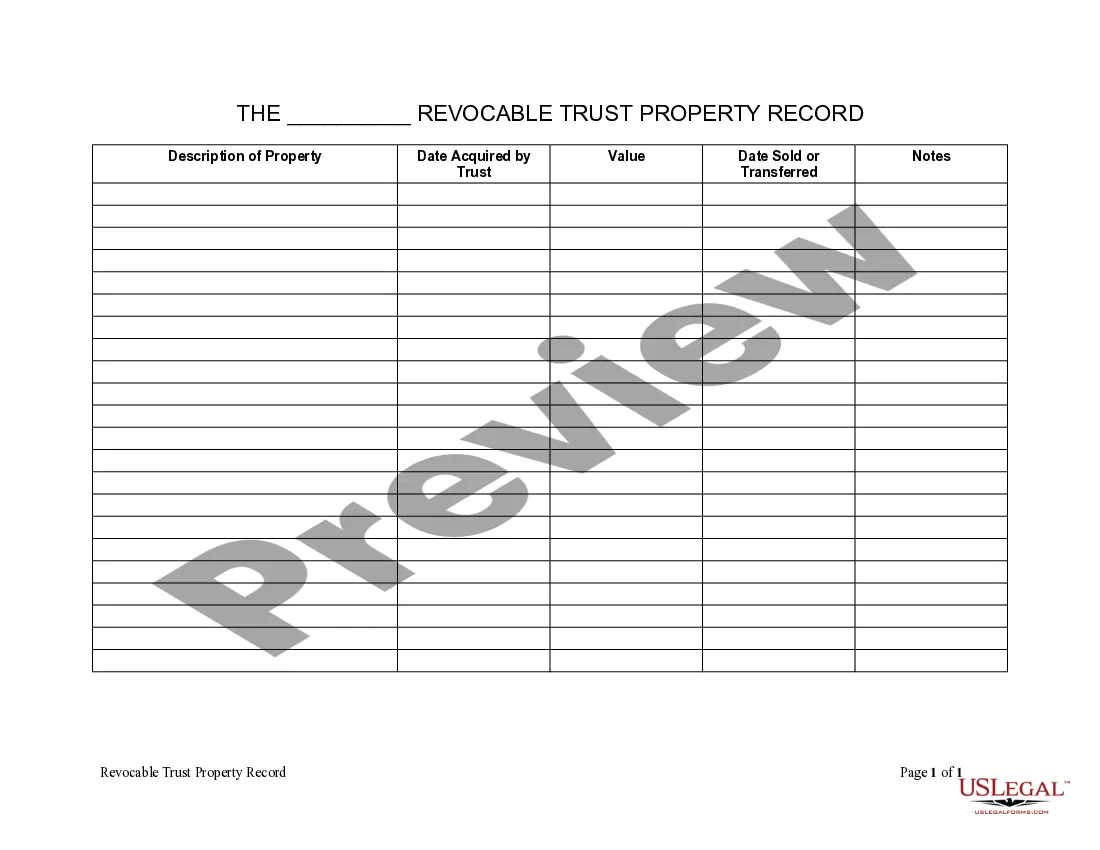
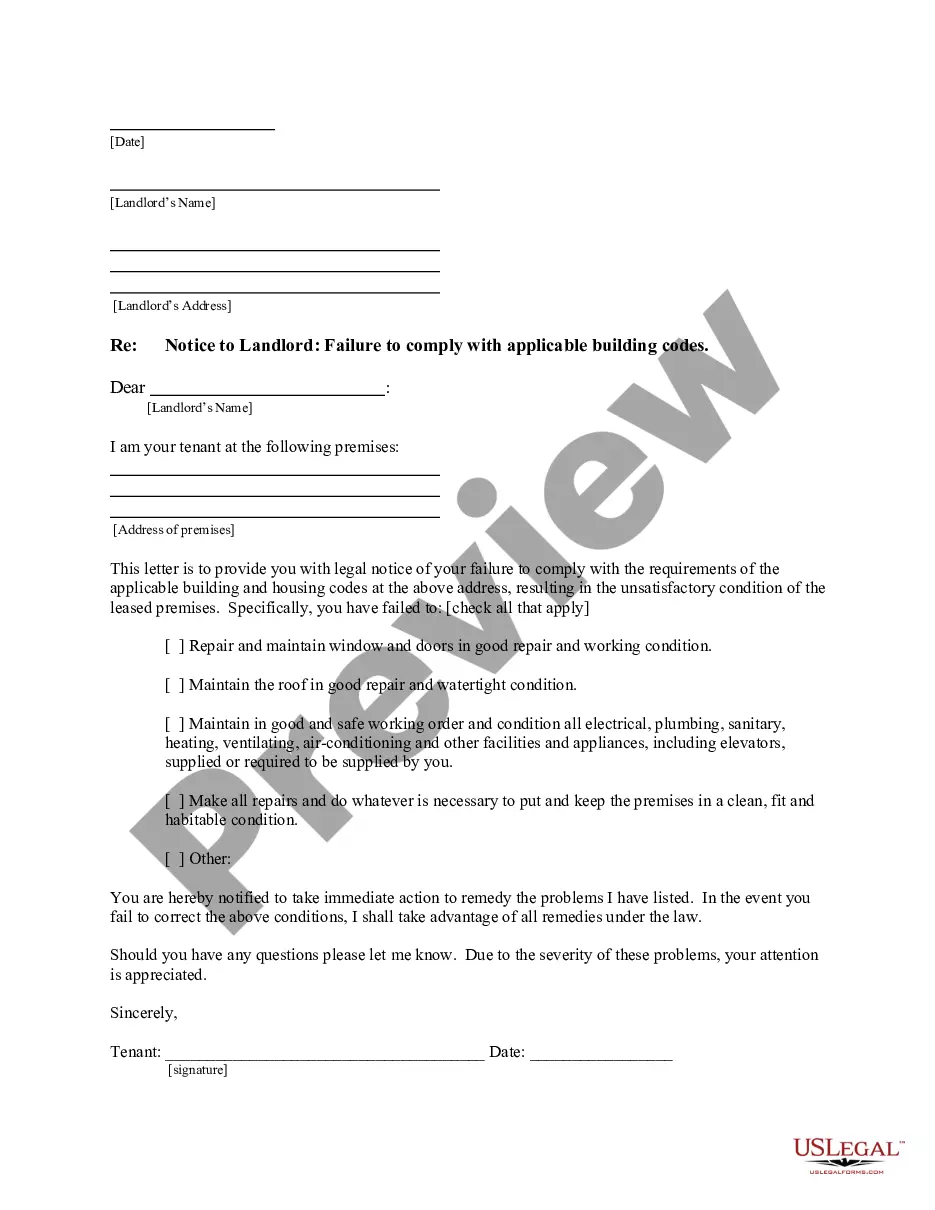
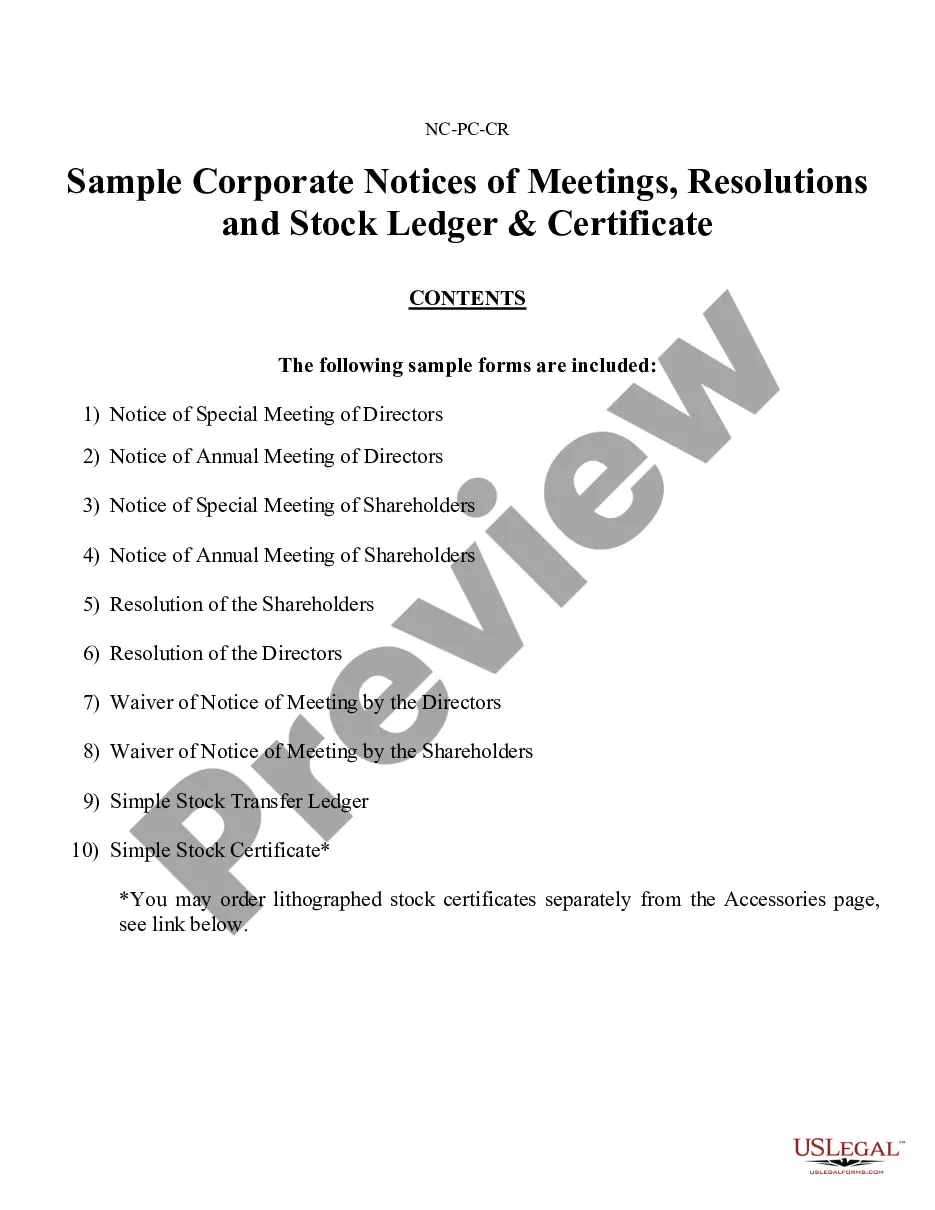
Form popularity
FAQ
Separate trusts provide more flexibility in the event of a death in the marriage. Since the trust property is already divided, separate trusts preserve the surviving spouse's ability to amend or revoke assets held within their own trust, while ensuring that the deceased spouse's trust cannot be amended after death.
At the time of your death, the assets in your family trust are protected by the exemption, and the assets in your marital trust are protected by the marital deduction. No estate taxes are due.
Yes, and no. Yes, a spouse can be disinherited.The laws vary from state to state, but in a community property state like California, your spouse will have a legal right to one-half of the estate assets acquired during the marriage, otherwise known as community property.
A marital trust allows the couple's heirs to avoid probate and take less of a hit from estate taxes by taking full advantage of the unlimited marital deductiona provision that enables spouses to pass assets to each other without tax consequences.
Separate trusts provide more flexibility in the event of a death in the marriage. Since the trust property is already divided, separate trusts preserve the surviving spouse's ability to amend or revoke assets held within their own trust, while ensuring that the deceased spouse's trust cannot be amended after death.
A will must become public record when it is probated. A trust is also more secure than a will because it is more difficult to contest. While a living trust does not technically shield your assets from creditors, in practice, it can help avoid them.
When one spouse dies, the joint trust will continue to operate for the benefit of the surviving spouse as a Survivor's Trust. Any specific gifts of tangible property from the first spouse to beneficiaries (other than the surviving spouse) will be given to those people.
Joint trusts are easier to fund and maintain.In a joint trust, after the death of the first spouse, the surviving spouse has complete control of the assets. When separate trusts are used, the deceased spouses' trust becomes irrevocable and the surviving spouse has limited control over assets.
Generally, trusts are considered the separate property of the beneficiary spouse and the assets in a trust are not subject to equitable distribution unless they contain marital property.Any funds remaining in the trust or in a separate account will continue to be the separate property of the beneficiary spouse.