New Jersey Interrogatories to Defendant for Motor Vehicle Accident
What this document covers
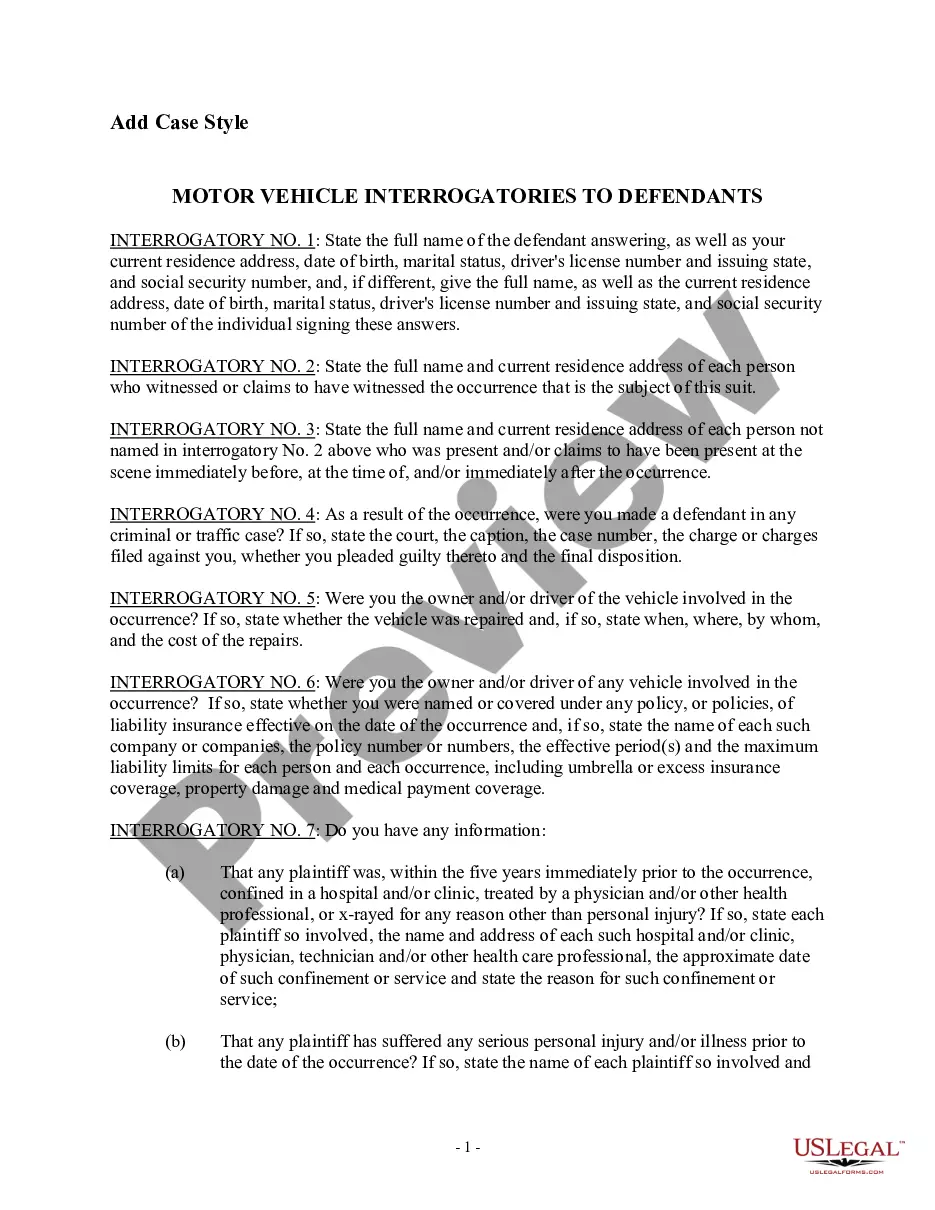
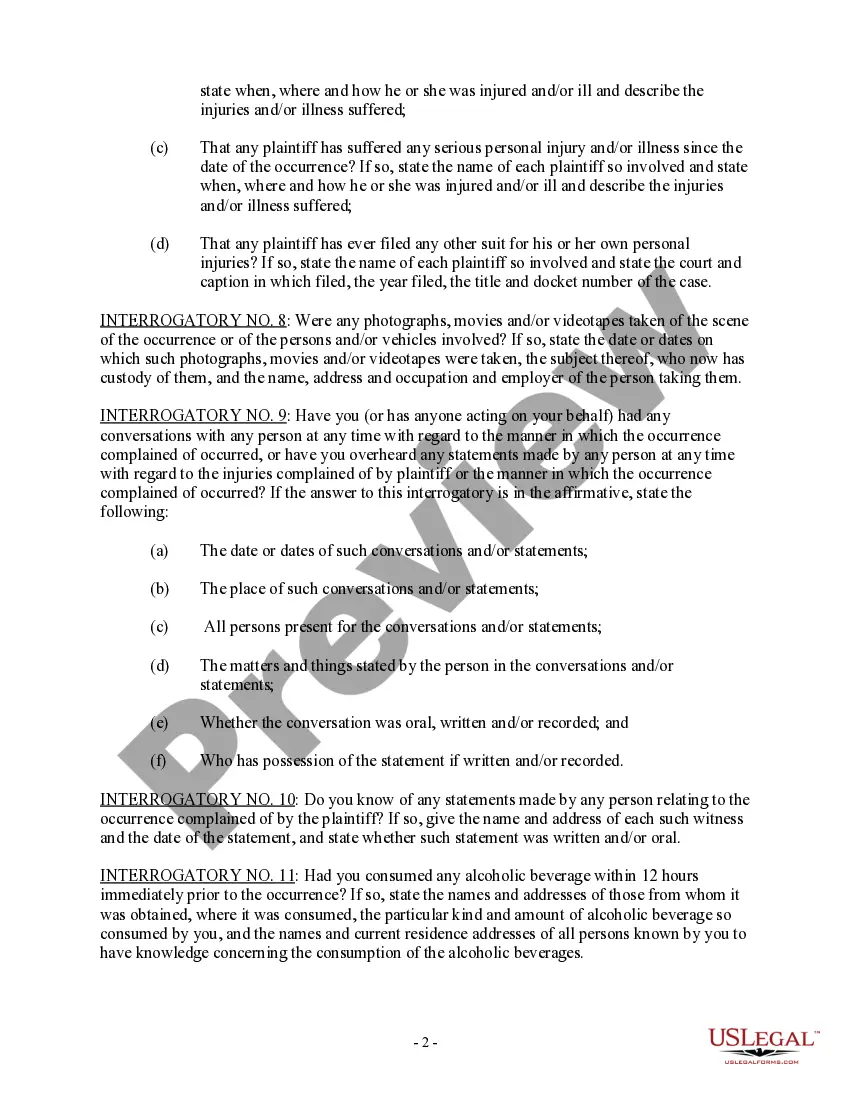
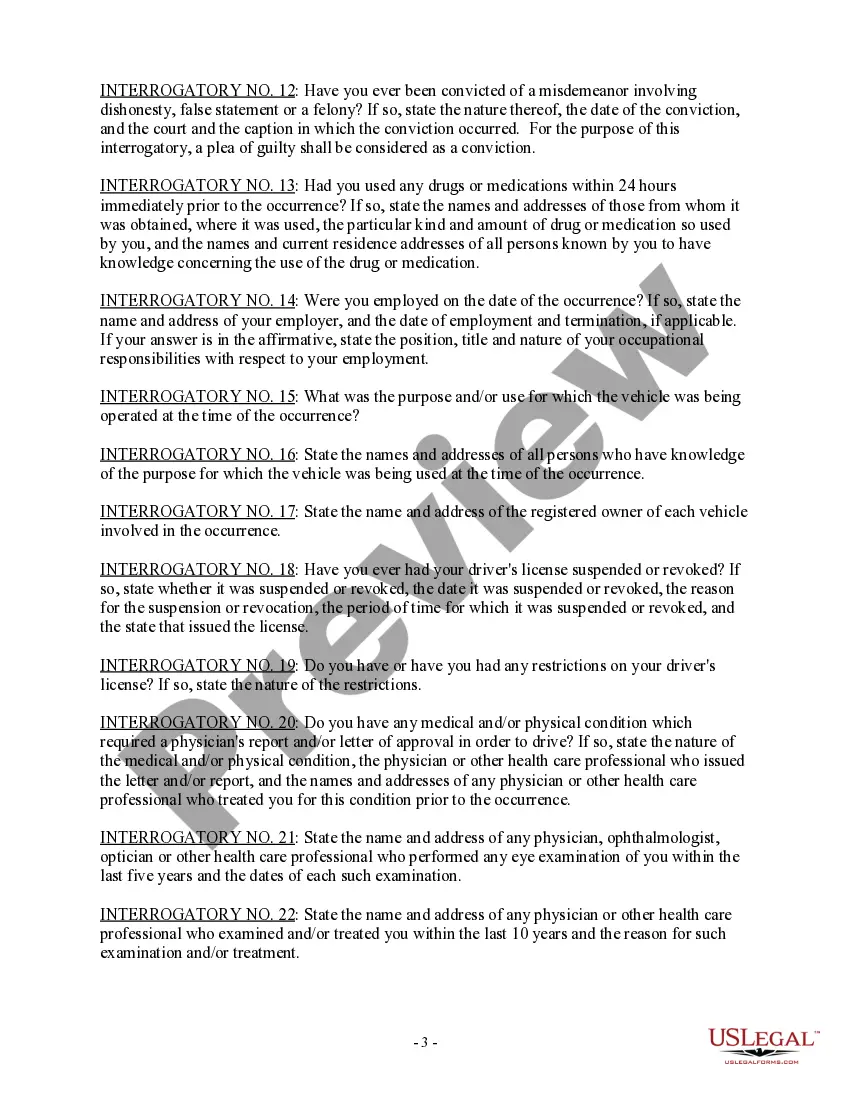
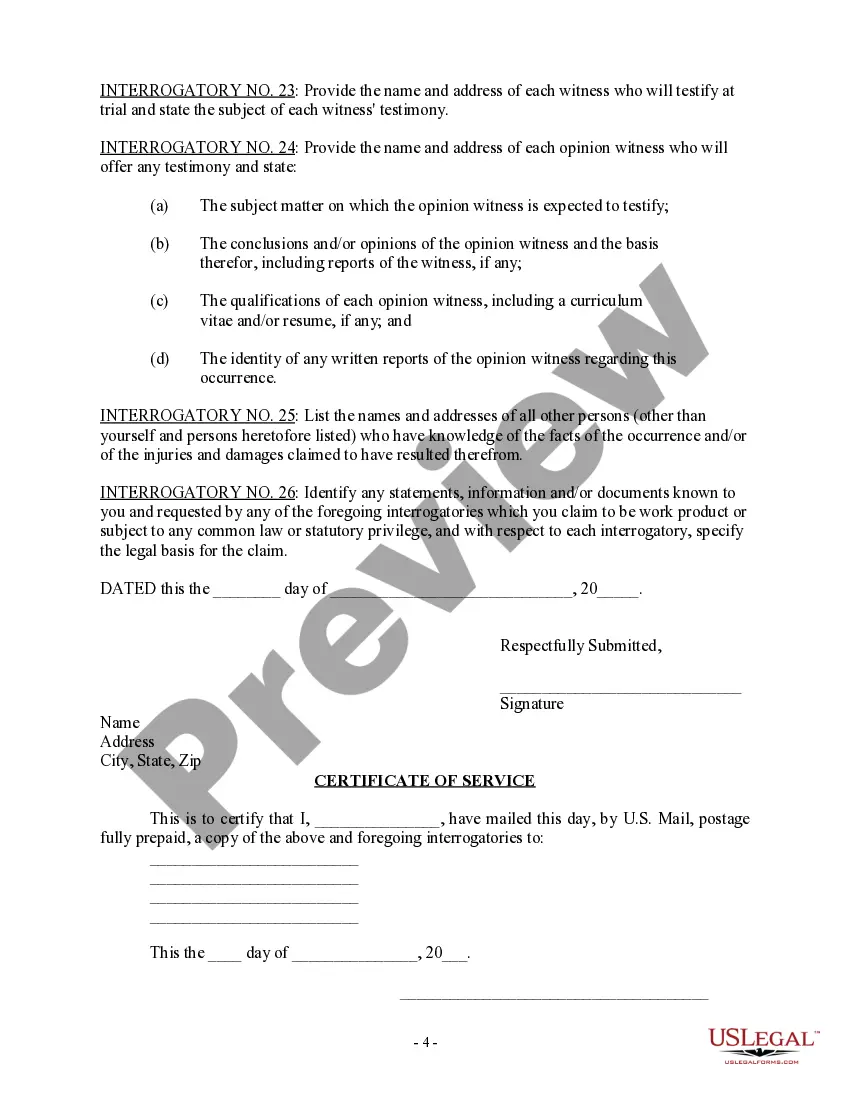
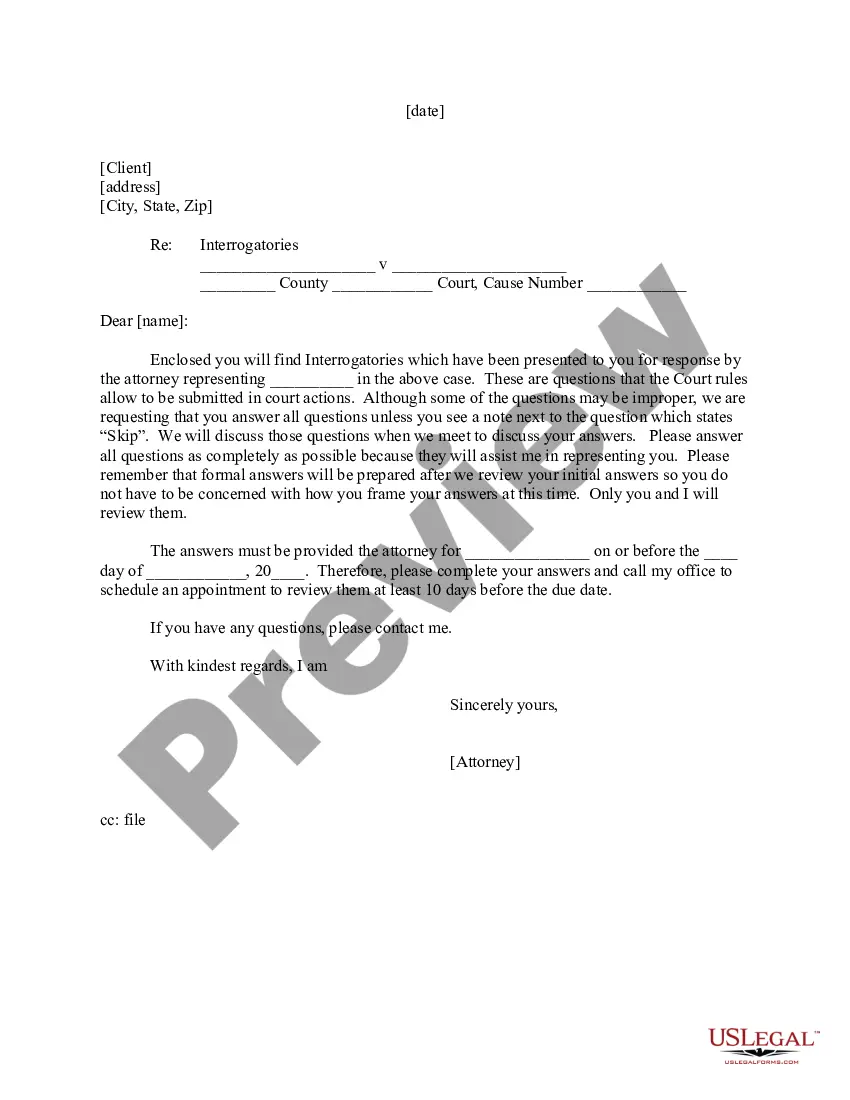
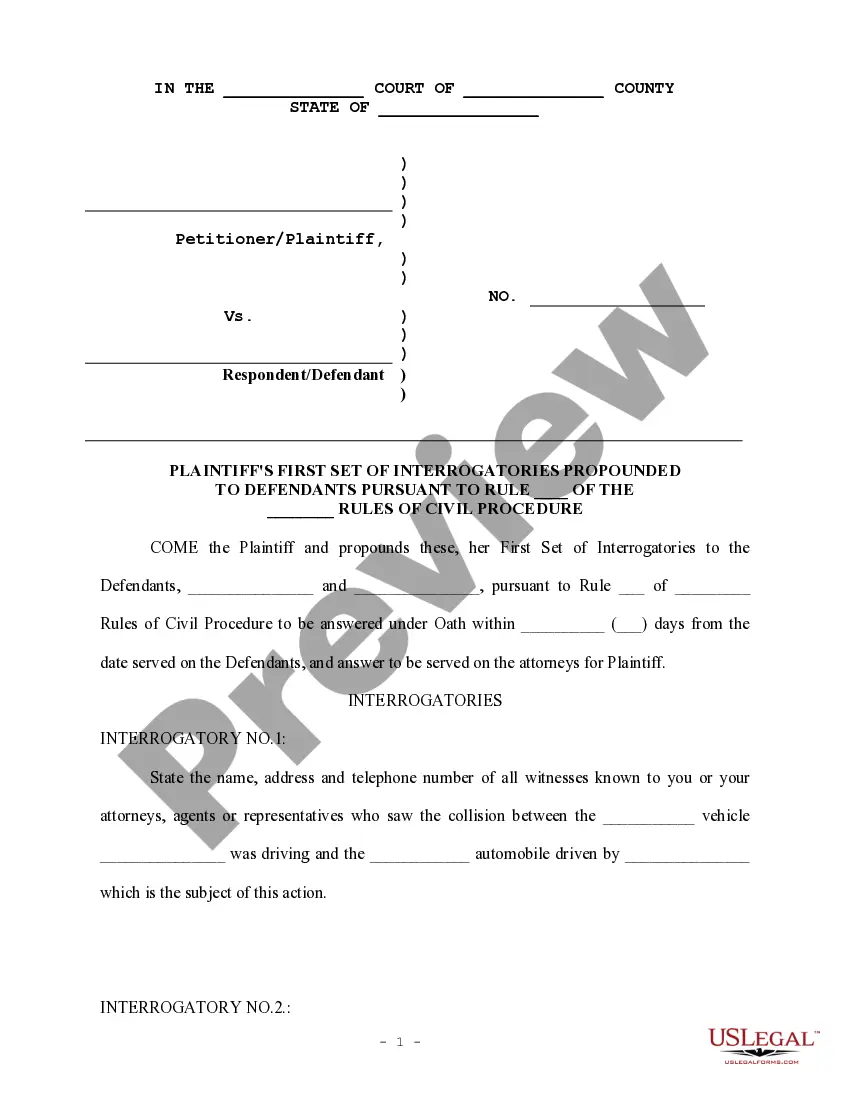
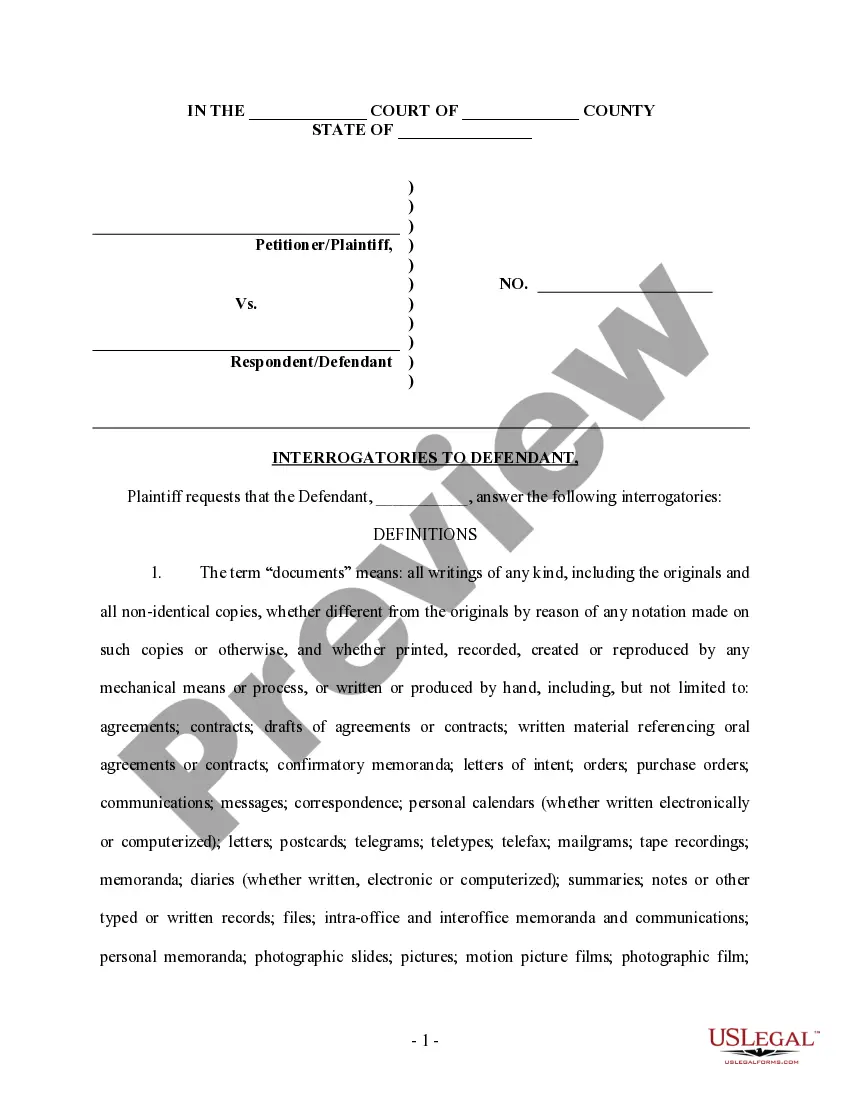
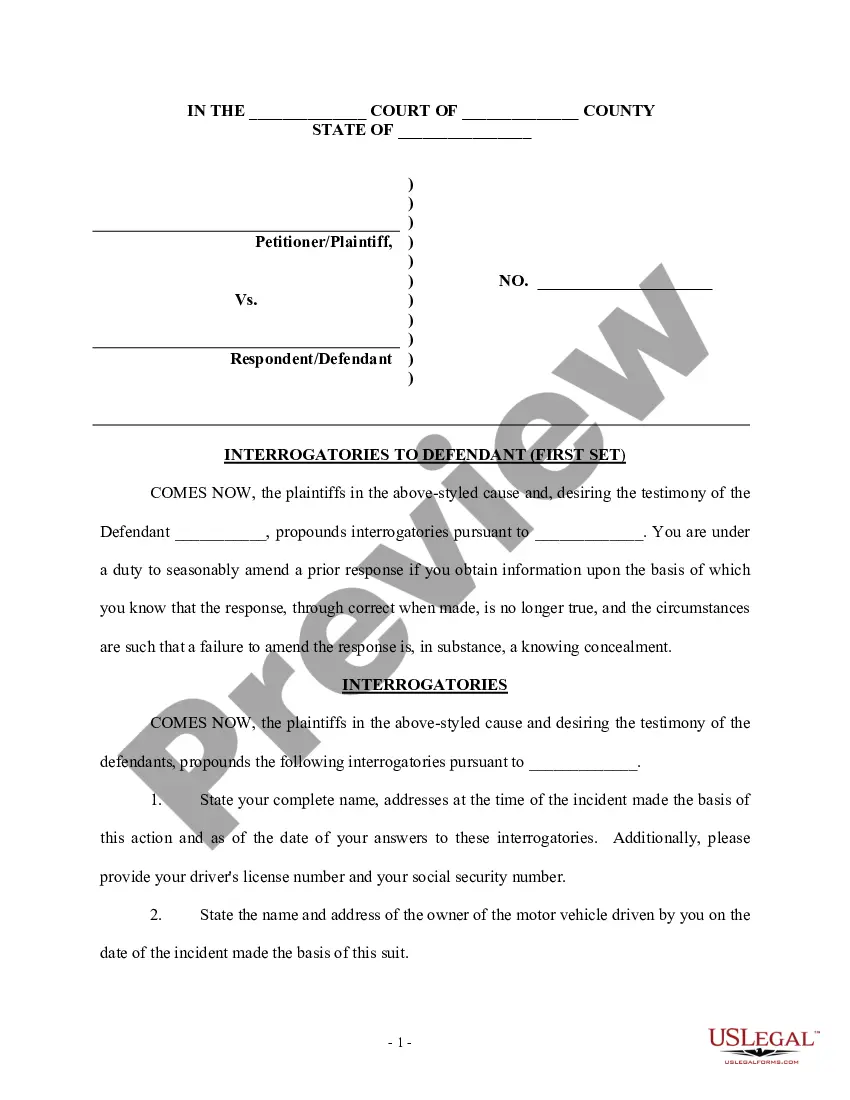
The Interrogatories to Defendant for Motor Vehicle Accident is a legal document designed for plaintiffs in vehicle accident cases. This form contains a sample set of 28 questions that the plaintiff can serve to the defendant, aiming to gather essential information related to the incident. It helps clarify facts, gather witness information, and uncover any evidence pertinent to the case. Unlike basic questionnaires, this form is structured to meet legal standards for formal discovery in litigation.
Form components explained
- Full name and current address details of the defendant
- Witness information related to the vehicle accident
- Details of any criminal or traffic charges arising from the incident
- Vehicle ownership and driver's license information
- Medical history relevant to the plaintiff's claims
- Statements regarding alcohol or drug use at the time of the accident

When to use this form
This form should be used in the aftermath of a motor vehicle accident when the plaintiff needs to collect information from the defendant to support their claims. It is typically employed during the discovery phase of litigation to ensure that both parties have access to essential facts, which aids in preparing for trial or settlement negotiations.
Who can use this document
- Plaintiffs involved in a motor vehicle accident seeking to gather evidence from the defendant
- Attorneys representing plaintiffs in vehicle accident cases
- Individuals preparing for pre-trial discovery related to vehicle incidents
How to complete this form
- Identify the parties involved by entering their full names and addresses at the beginning of the form.
- Answer each interrogatory question clearly and completely, providing factual information as required.
- If applicable, include the name and address of any witnesses or individuals with relevant information.
- Ensure accuracy when detailing any criminal or traffic cases that relate to the accident.
- Sign and date the form, and provide a certificate of service to confirm it has been mailed to the plaintiff.
Is notarization required?
This form does not typically require notarization unless specified by local law. It is advisable to check your jurisdiction for any specific requirements regarding the notarization of interrogatories.
Get your form ready online
Our built-in tools help you complete, sign, share, and store your documents in one place.
Make edits, fill in missing information, and update formatting in US Legal Forms—just like you would in MS Word.
Download a copy, print it, send it by email, or mail it via USPS—whatever works best for your next step.
Sign and collect signatures with our SignNow integration. Send to multiple recipients, set reminders, and more. Go Premium to unlock E-Sign.
If this form requires notarization, complete it online through a secure video call—no need to meet a notary in person or wait for an appointment.
We protect your documents and personal data by following strict security and privacy standards.

Make edits, fill in missing information, and update formatting in US Legal Forms—just like you would in MS Word.

Download a copy, print it, send it by email, or mail it via USPS—whatever works best for your next step.

Sign and collect signatures with our SignNow integration. Send to multiple recipients, set reminders, and more. Go Premium to unlock E-Sign.

If this form requires notarization, complete it online through a secure video call—no need to meet a notary in person or wait for an appointment.

We protect your documents and personal data by following strict security and privacy standards.
Common mistakes
- Failing to answer all interrogatories fully, which may result in delays or additional legal action.
- Not providing accurate witness information or omitting witnesses entirely.
- Missing the deadline for submitting interrogatories, which can affect case timelines.
- Signing the form without reviewing all answers for consistency and correctness.
Benefits of using this form online
- Convenience of accessing and completing the form from anywhere at any time.
- Editability allows users to revise answers as needed before finalizing.
- Reliability of professionally drafted content ensure that the form meets legal standards.
- Streamlined process for submission and documentation creation, saving time and effort.
Main things to remember
- The form collects vital information to support a personal injury case from the defendant.
- Careful completion and accuracy are crucial for the legal process.
- It is essential for gathering evidence and facilitating a fair trial.
Looking for another form?




Form popularity
FAQ
The plaintiff must respond by the deadline. There are different ways to make sure you get each kind of discovery if the plaintiff does not give it to you by the deadline. If the plaintiff does not respond to the court order, then you can file a Motion to Dismiss and you may win your case.
So, can you refuse to answer interrogatories? The answer is, no, you may not. You must answer a Rule 33 interrogatory within 30 days of being served with it. That answer must either permit inspection of the requested information or object to the production of the information for a specific reason.
Responding to Form InterrogatoriesAnswer each question, being careful to answer each subpart, if one exists. Read the question carefully, and answer only what it asks. You may attach exhibits, if necessary. The response must be verified, meaning you must swear that the responses given are true.
Your answers to the interrogatories should usually be short, clear, and direct and should answer only the question that is being asked. This is not the time to set out your entire case or defense to the other side. Take the time to make sure your answers are correct and truthful.
In short, Rule 33 requires that each received interrogatory must be either answered, or objected to, within 30 days of being served with the interrogatory. You might be wondering what sorts of interrogatories are objectionable or what a valid objection would look like.
The defendant shall serve answers to the appropriate uniform interrogatories within 60 days after service by that defendant of the answer to the complaint.
(a) A defendant may propound interrogatories to a party to the action without leave of court at any time. (b) A plaintiff may propound interrogatories to a party without leave of court at any time that is 10 days after the service of the summons on, or appearance by, that party, whichever occurs first.
Motions to Compel If a party doesn't respond to interrogatories or requests for production, then the party seeking those answers must file a motion to compel with the court. If the court grants the motion to compel, then the party who objected or failed to answer must then do so.
You must answer each interrogatory separately and fully in writing under oath, unless you object to it. You must explain why you object. You must sign your answers and objections.