New Jersey Letter from Landlord to Tenant that Sublease granted - Rent Paid by Subtenant, but Tenant Still Liable for Rent and Damages
What this document covers
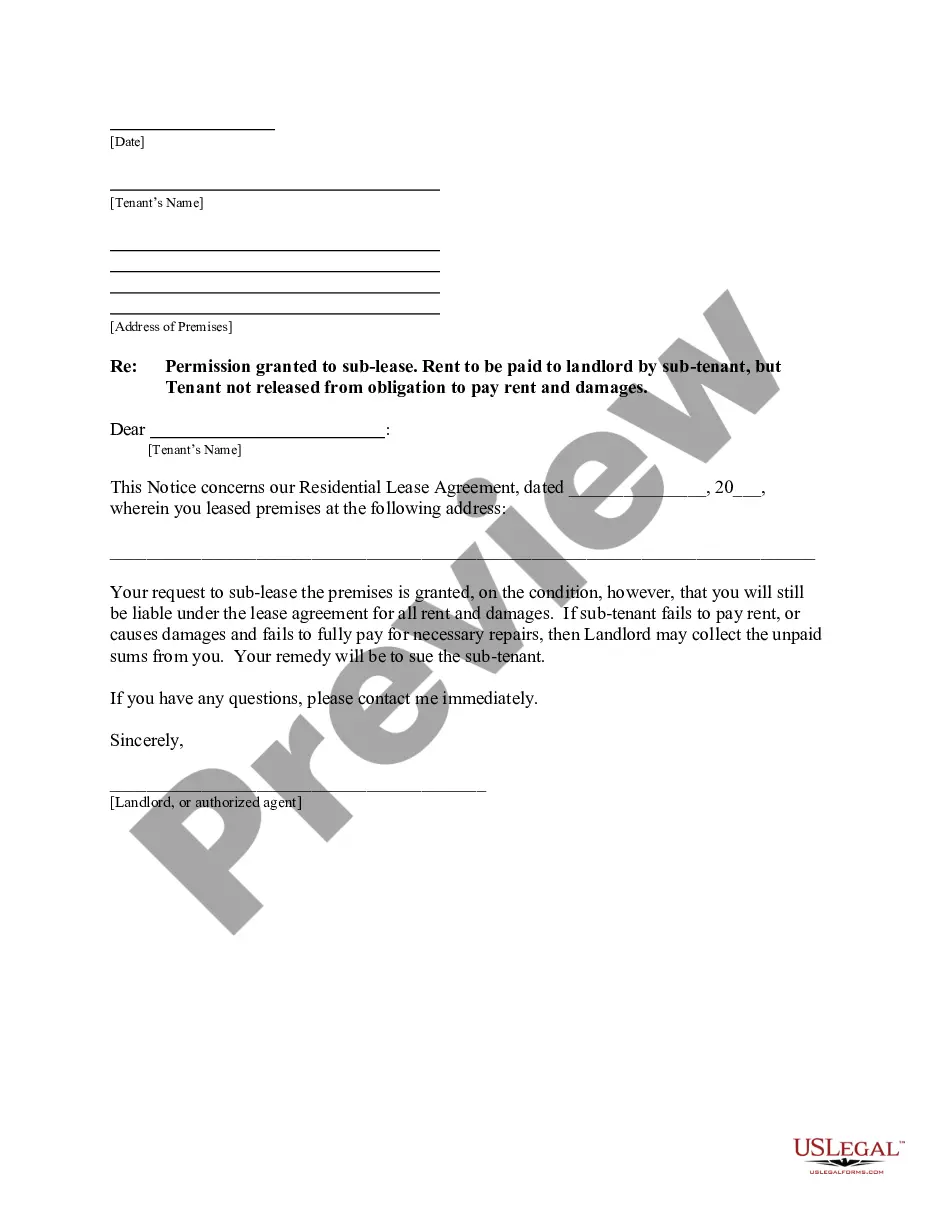
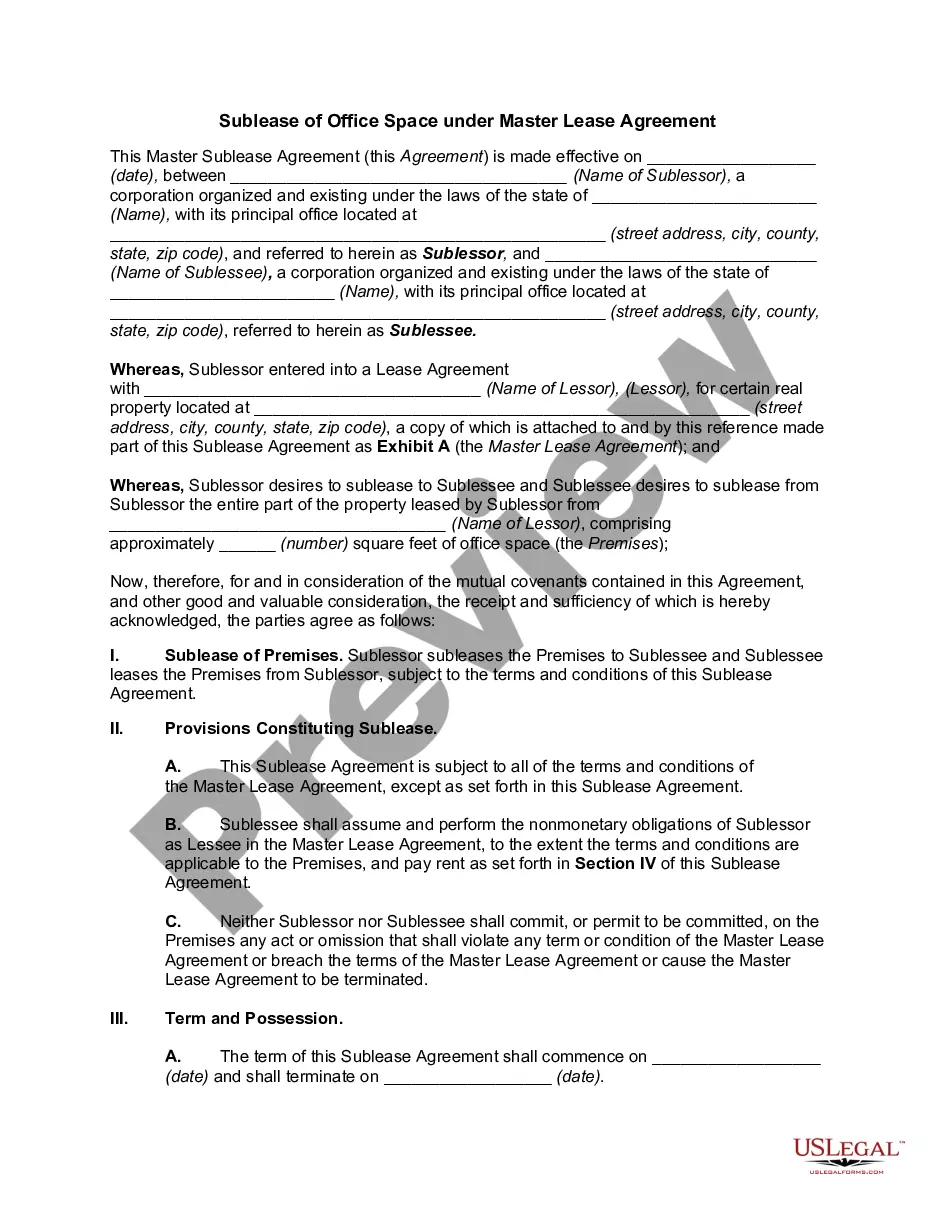
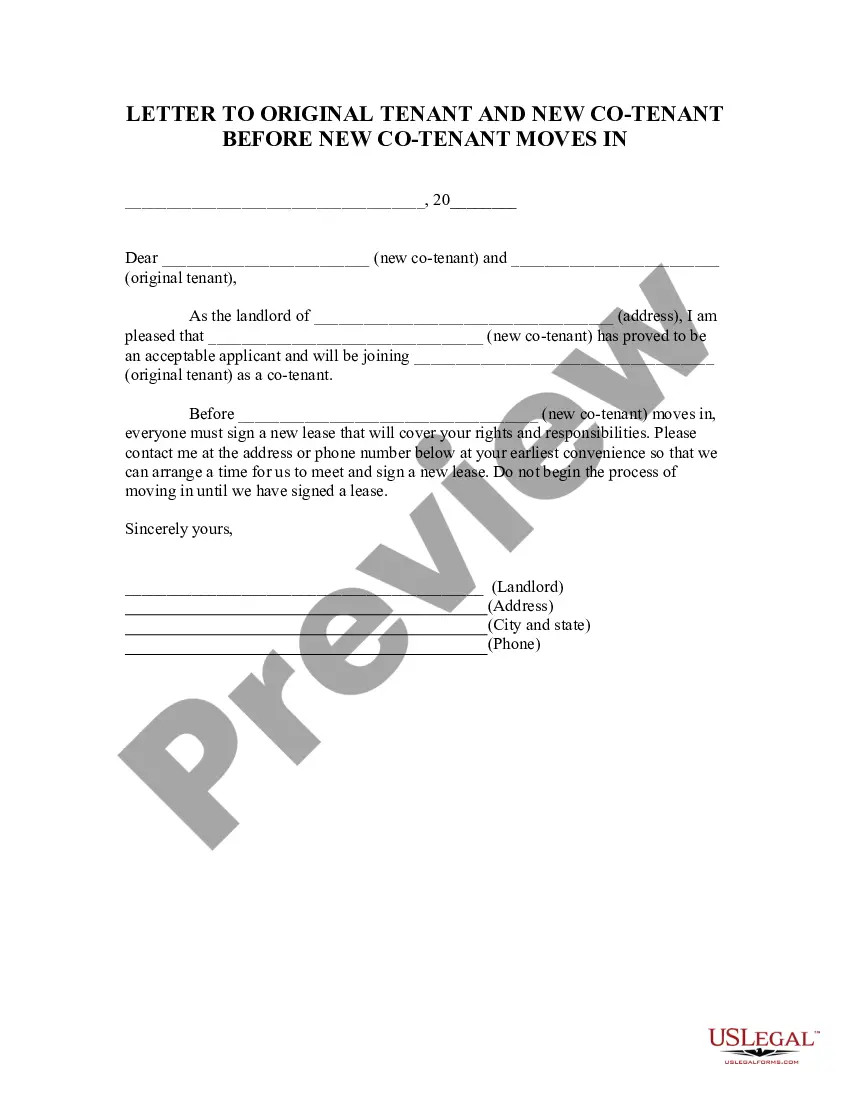
This form is a Letter from Landlord to Tenant that confirms a sublease agreement has been granted. The letter specifies that while the sub-tenant will pay rent, the original tenant remains liable for all rent and any damages incurred. This form is essential to clarify the responsibilities of all parties involved and to protect the landlord's interests in case of any issues with the sub-tenant.
Key components of this form
- Notification of sublease approval
- Clarification of tenant's ongoing liability for rent and damages
- Explanation of what happens if the sub-tenant fails to pay rent or causes damage
- Instructions for contacting the landlord with questions
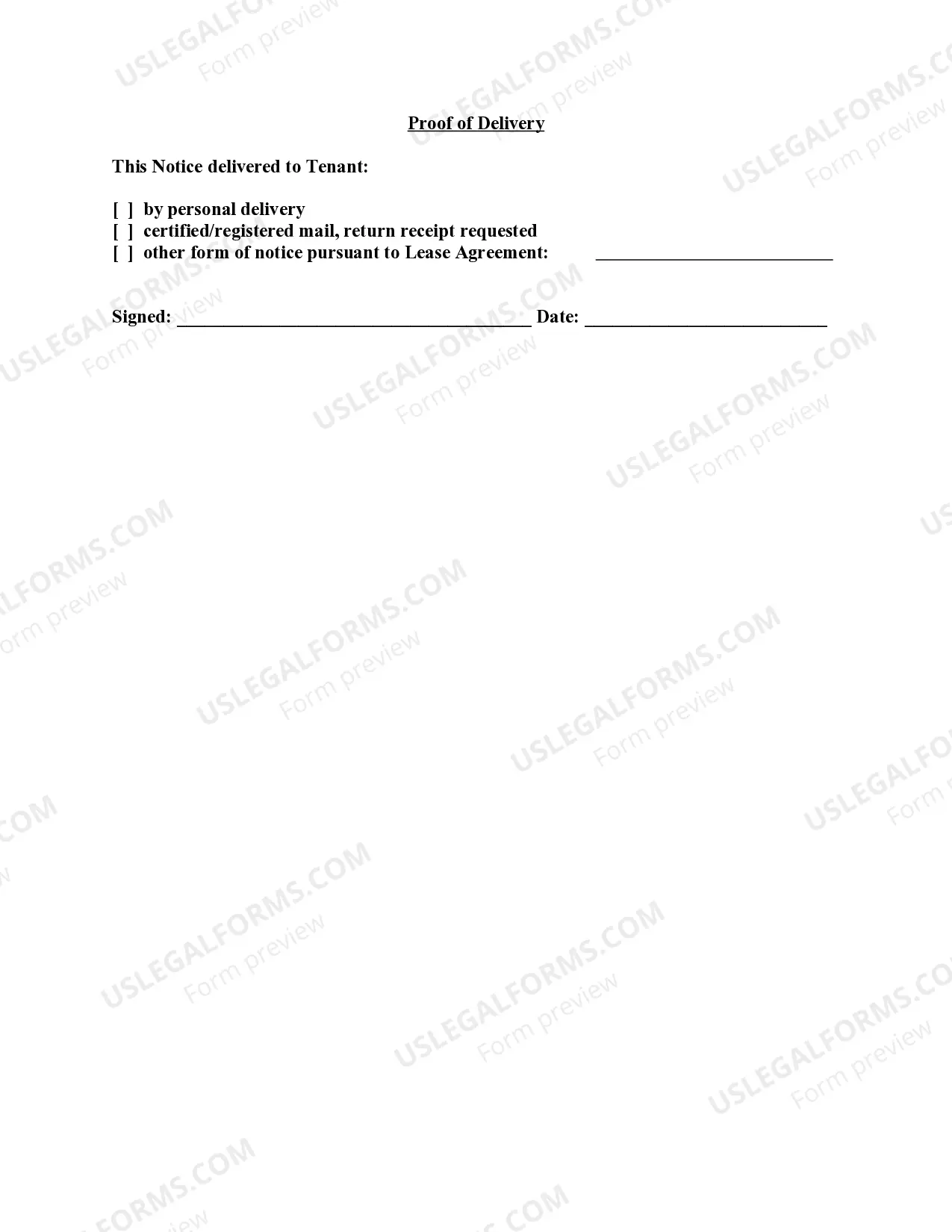
- Proof of delivery methods for the notice

When to use this form
You should use this form when you have approved a sublease for a rental property and need to inform the tenant of their continued responsibilities. This is particularly important to outline the financial obligations in case the sub-tenant defaults on their payments or damages the property. The letter serves as a legal documentation of the agreement and the landlord's rights to claim unpaid rent or repairs from the original tenant.
Who needs this form
- Landlords who approve a sublease to a tenant
- Tenants who are subleasing their rented property
- Property management companies managing rental agreements
Instructions for completing this form
- Enter the name of the tenant receiving the letter.
- Include the details of the sub-tenant and the property being subleased.
- Clearly state that the sublease has been granted and outline the tenant's ongoing liability for rent and damages.
- Provide contact information for any questions regarding the sublease.
- Choose a delivery method to ensure the tenant receives the notice.
Is notarization required?
This form does not typically require notarization unless specified by local law. Always check your jurisdiction's requirements to ensure compliance.
Get your form ready online
Our built-in tools help you complete, sign, share, and store your documents in one place.
Make edits, fill in missing information, and update formatting in US Legal Forms—just like you would in MS Word.
Download a copy, print it, send it by email, or mail it via USPS—whatever works best for your next step.
Sign and collect signatures with our SignNow integration. Send to multiple recipients, set reminders, and more. Go Premium to unlock E-Sign.
If this form requires notarization, complete it online through a secure video call—no need to meet a notary in person or wait for an appointment.
We protect your documents and personal data by following strict security and privacy standards.

Make edits, fill in missing information, and update formatting in US Legal Forms—just like you would in MS Word.

Download a copy, print it, send it by email, or mail it via USPS—whatever works best for your next step.

Sign and collect signatures with our SignNow integration. Send to multiple recipients, set reminders, and more. Go Premium to unlock E-Sign.

If this form requires notarization, complete it online through a secure video call—no need to meet a notary in person or wait for an appointment.

We protect your documents and personal data by following strict security and privacy standards.
Common mistakes to avoid
- Failing to ensure the sub-tenant is properly screened.
- Not clearly defining the tenant's responsibilities in the letter.
- Overlooking local laws regarding subleasing.
Why use this form online
- Convenient and quick access to the legal template.
- Editable format allows for customization based on your specific circumstances.
- Reliable source drafted by licensed attorneys.
Legal use & context
- This letter serves as a legally binding notice between the landlord and tenant regarding the sublease.
- It clarifies the legal responsibilities of both the tenant and subtenant under the lease.
- Ensures that all parties are aware of any consequences related to rent payments or damages.
Looking for another form?
Form popularity
FAQ
State law regulates several rent-related issues, including late fees, the amount of notice (at least 30 days in New Jersey) landlords must give tenants to raise the rent and how much time (30 days in New Jersey) a tenant has to pay overdue rent or move before a landlord can file for eviction.
Unlike the Landlord Registration Statement, a Certificate of Occupancy is not a requirement for evicting a tenant in New Jersey.In towns where certificates of occupancy are required, a dwelling rented without a certificate of occupancy constitutes an illegal contract.
A tenant has signed a lease or rental agreement with a landlord. A subtenant, on the other hand, is someone who subleases or rents all or part of the rental property from a tenant, and does not sign a lease or rental agreement with the landlord.
However, it's important to know that even without a lease your landlord is still required to give you a 30-day notice for ending your lease or for increasing your rent. If you refuse to pay the increase in your rent, the landlord has the right to legally begin the eviction process.
For other tenant/landlord affairs information, residents may contact the NJ Department of Community Affairs, Division of Codes & Standards, Landlord/Tenant Divsion by phone 609-292-7899, on their website at www.nj.gov/dca or by mail at P.O. Box 805, Trenton NJ 08625.
If a tenant is subletting without consent, it's likely they will have broken terms in their tenancy agreement. This breach of contract means that the landlord can take action to evict them from their home. Possession proceedings can be started quickly, but it's important to follow the correct legal process.
A Temporary Certificate of Occupancy (TCO) may be issued if the work is substantially complete, there are no outstanding health or safety issues and the building or space can be occupied safely. A TCO is issued for a defined period of time during which any remaining items are to be completed.
Once the certificate of occupancy is written and issued, it is good for 90 days.
A Certificate of Occupancy is the document which is given at the completion of the project. The Certificate of Occupancy, issued by the Construction Official, permits occupancy of a building or structure.