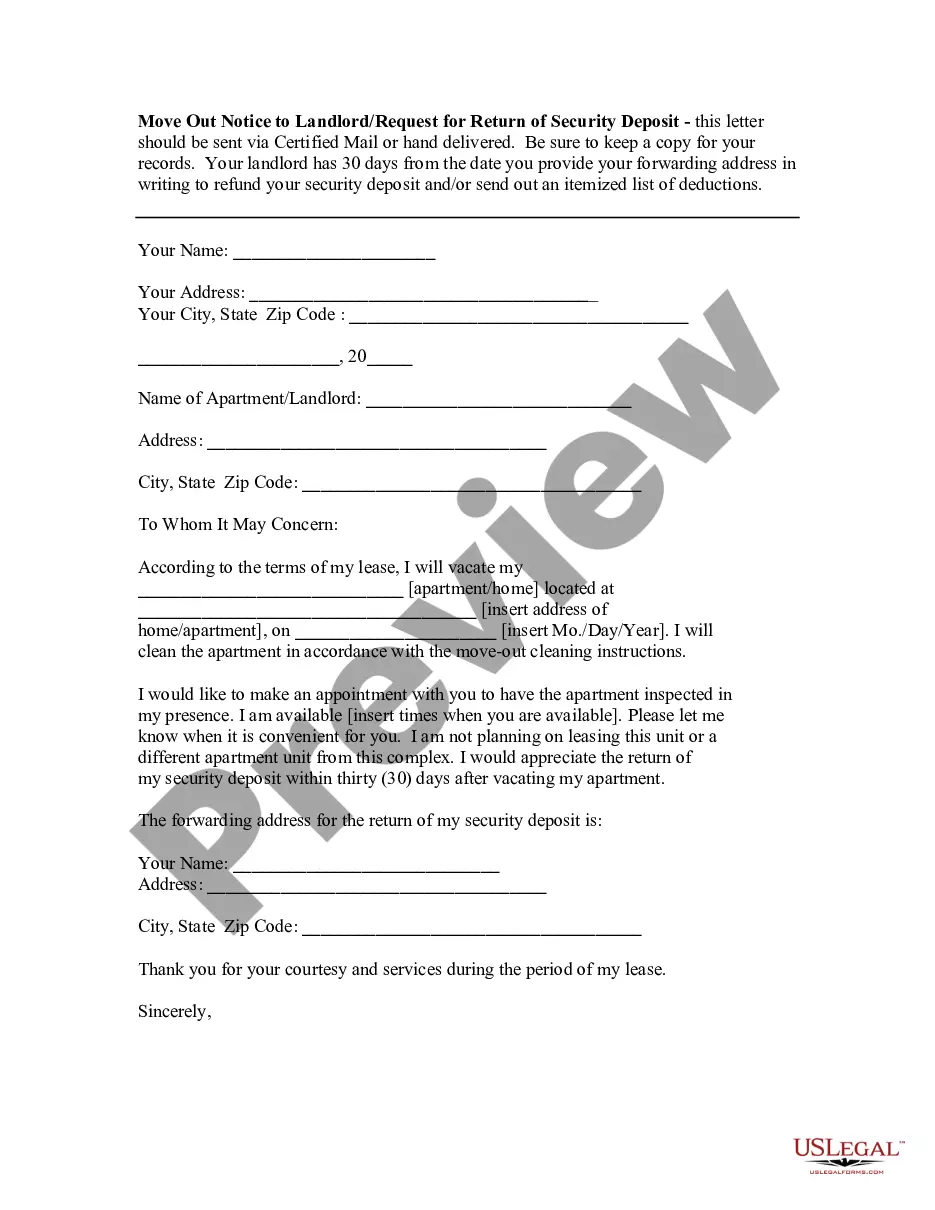
New Jersey Letter from Tenant to Landlord containing Notice of failure to return security deposit and demand for return
About this form
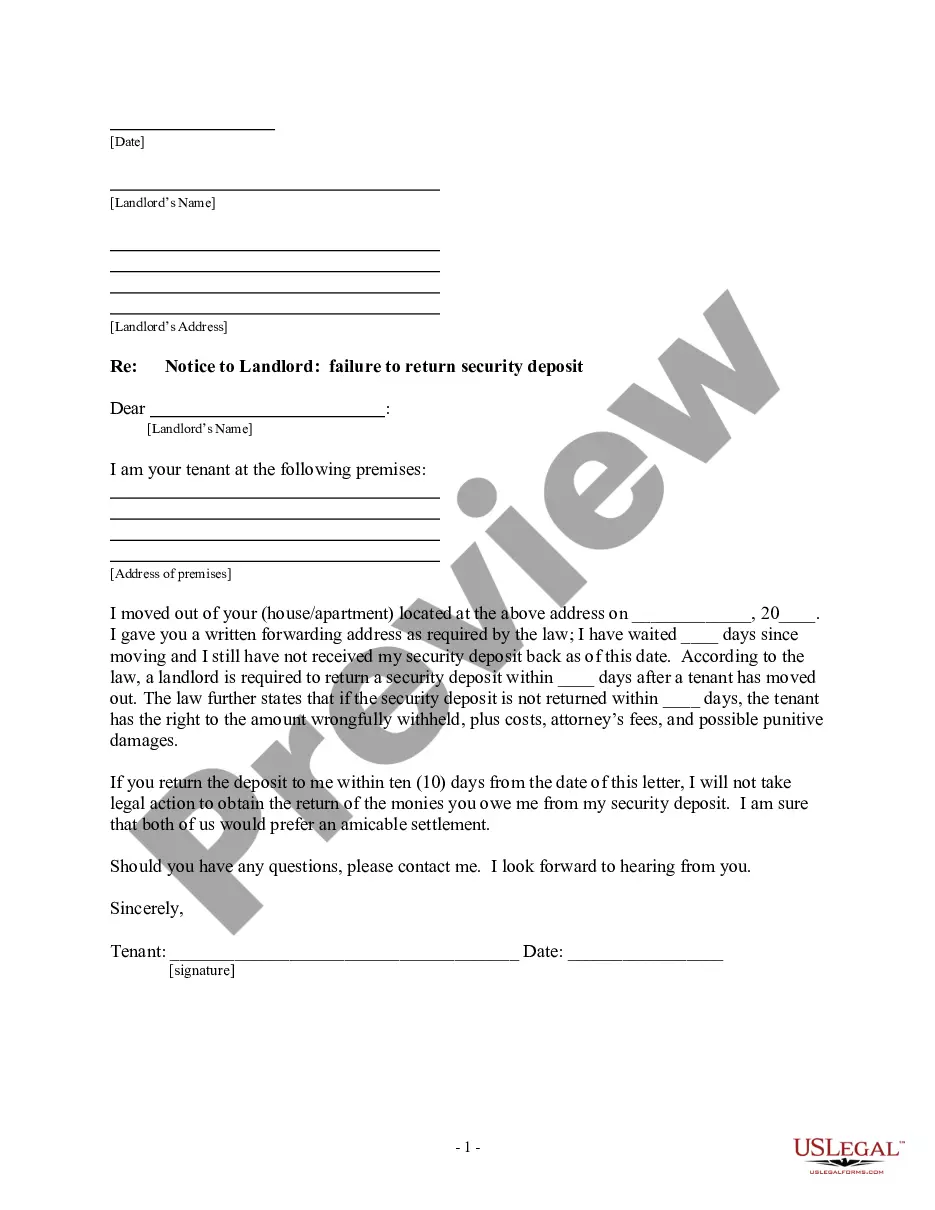
This form is a formal demand letter from a tenant to a landlord, specifically addressing the failure to return the tenant's security deposit after vacating the premises. It serves to inform the landlord of their obligation to refund the deposit within a limited timeframe as dictated by state law. By using this letter, tenants can clearly outline their demand for the return of their security deposit and indicate that legal action may follow if their request is not met promptly. This form is distinct from other tenant-landlord communications due to its focused purpose of demanding a monetary refund.
What’s included in this form
- Tenant's information: Includes the tenant's name and address.
- Landlord's information: Includes the landlord's name and address.
- Statement of demand: A clear request for the return of the security deposit.
- Deadline for action: Specifies a timeframe for the landlord to respond.
- Statement of intent: Indicates that legal action may be pursued if the deposit is not returned by the deadline.
- Tenant's signature and date: Formalizes the demand.



Common use cases
This form should be used when a tenant has vacated a rental property and has not received their security deposit back from the landlord within the timeframe specified by state law. It is appropriate to send this letter when the tenant believes that the landlord has improperly withheld the deposit or failed to communicate about the return. Sending this letter is a crucial step in pursuing the return of funds before escalating the matter to legal proceedings.
Who this form is for
- Tenants who have recently moved out of a rental property.
- Individuals who have not received their security deposit back from their landlord.
- Tenants who suspect that their landlord is unlawfully withholding their deposit.
Completing this form step by step
- Identify the parties: Enter your name and contact information as the tenant and the landlord's name and address.
- Clearly state your demand: Include a brief statement requesting the return of your security deposit.
- Set a deadline: Specify a reasonable timeframe (e.g., ten days) for the landlord to comply with your request.
- Indicate potential legal action: Assert that you may seek legal remedies if the deposit is not returned timely.
- Sign and date the letter: Ensure you sign the letter to formalize your demand.
Notarization requirements for this form
Notarization is not commonly needed for this form. However, certain documents or local rules may make it necessary. Our notarization service, powered by Notarize, allows you to finalize it securely online anytime, day or night.
Get your form ready online
Our built-in tools help you complete, sign, share, and store your documents in one place.
Make edits, fill in missing information, and update formatting in US Legal Forms—just like you would in MS Word.
Download a copy, print it, send it by email, or mail it via USPS—whatever works best for your next step.
Sign and collect signatures with our SignNow integration. Send to multiple recipients, set reminders, and more. Go Premium to unlock E-Sign.
If this form requires notarization, complete it online through a secure video call—no need to meet a notary in person or wait for an appointment.
We protect your documents and personal data by following strict security and privacy standards.

Make edits, fill in missing information, and update formatting in US Legal Forms—just like you would in MS Word.

Download a copy, print it, send it by email, or mail it via USPS—whatever works best for your next step.

Sign and collect signatures with our SignNow integration. Send to multiple recipients, set reminders, and more. Go Premium to unlock E-Sign.

If this form requires notarization, complete it online through a secure video call—no need to meet a notary in person or wait for an appointment.

We protect your documents and personal data by following strict security and privacy standards.
Common mistakes to avoid
- Failing to include accurate contact information for both the tenant and landlord.
- Not specifying a clear deadline for the return of the security deposit.
- Using vague language that does not communicate the urgency of the demand.
- Forgetting to sign and date the letter before sending it.
Benefits of using this form online
- Convenience of downloading the form instantly at any time.
- Editability to customize the form according to specific needs.
- Reliability, as the forms are drafted by licensed attorneys to ensure compliance with applicable laws.
Legal use & context
The letter serves as evidence of the tenant's attempt to reclaim their security deposit, which can be important in any subsequent legal proceedings. It expresses the tenant's intention clearly and documents the timeframe required for action, helping to protect the tenant's rights.
Key takeaways
- This form is essential for tenants seeking the return of their security deposit.
- It outlines the legal obligation of the landlord to respond within a specific timeframe.
- Using this form can help prevent misunderstandings and provide a formal record of communication.
Looking for another form?
Form popularity
FAQ
The security deposit refund letter, sometimes called the return or disposition letter, clarifies for each tenant how the security deposit was used. In the simplest cases, the tenant gets a full return of their security deposit.
Ask for a refund in a polite and formal language. Include details about the productwhat was purchased, when, and what the price was. Explain why you want to return the item. Mention relevant aspects of the transaction such as dates and place of delivery.
When a tenant moves into a rental property, he or she will pay the landlord a security deposit in addition to first month's rent. This deposit will typically be returned to the tenant at the end of the lease term, as long as the tenant follows all the terms of the lease agreement.
Mail your landlord a letter requesting that she return your deposit. Be polite and simply inform the landlord that you have vacated the property and would appreciate the return of your deposit once she has had a chance to complete any checks and paperwork.
If a landlord does not return the entire amount of the tenant's security deposit within the 21 days required by law, and the tenant disputes the deductions from the deposit: The tenant can write a letter to the landlord explaining why he or she believes he or she is entitled to a larger refund.
The date of the letter and the landlord's full name and address. The address of the residence you rented and the date you moved in. A statement that you've been paying your rent timely and that you are current with your payments.
If your deposit didn't need to be protected and your landlord refuses to give it back, you might have to take them to court.You'll need to take your landlord to the small claims court to get your money back.
Under New Jersey law, a landlord must return the tenant's security deposit within 30 days after the tenant has surrendered the rental property to the landlord (that is, returned the keys and vacated the property), but within five days in case of fire, flood, condemnation, or evacuation.
Check Public Ownership Records Search the records for the address of the rental property to find out if the landlord is listed as the owner. If the names don't match, contact the legal owner and ask if she knows the person purporting to be the landlord.