New Hampshire Last Will and Testament for other Persons
Understanding this form
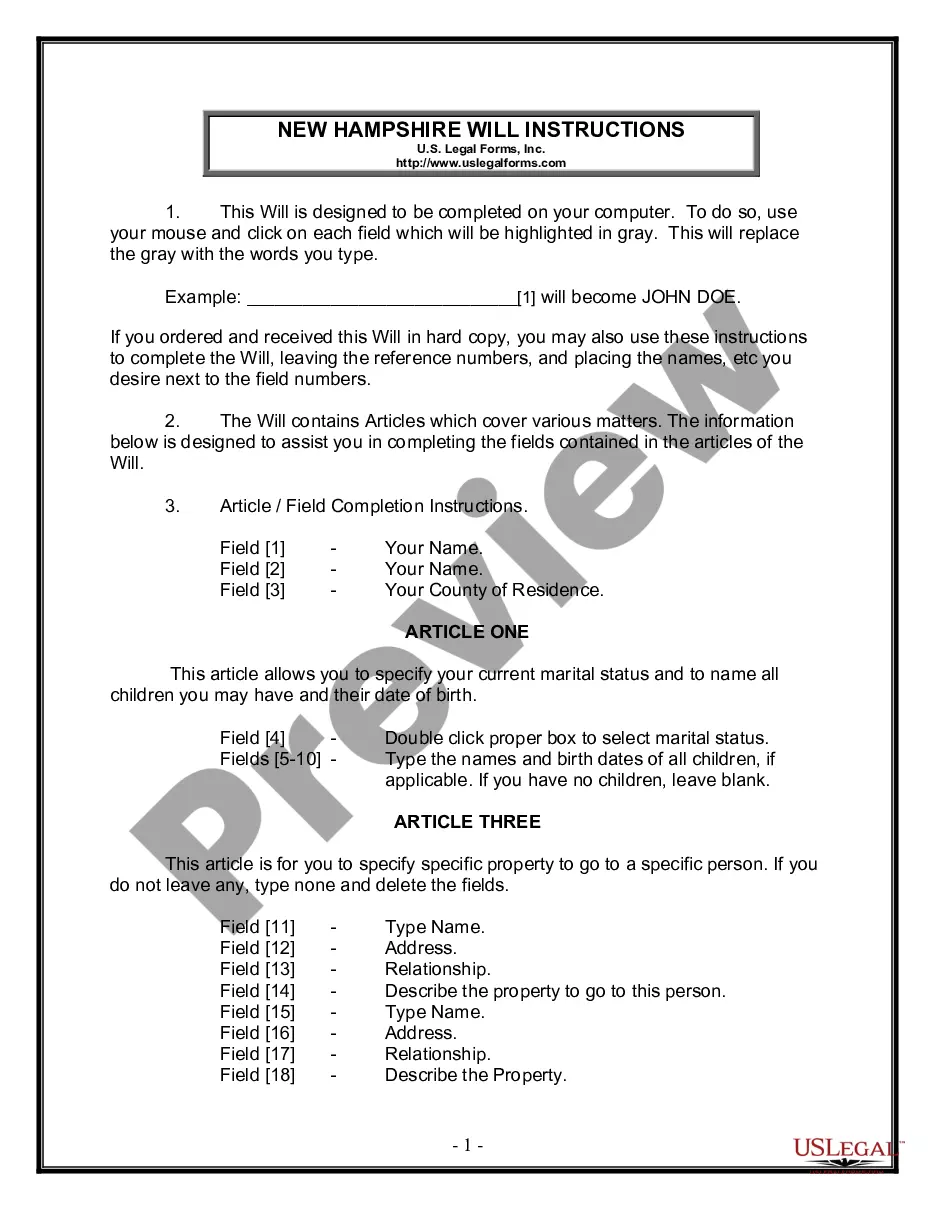
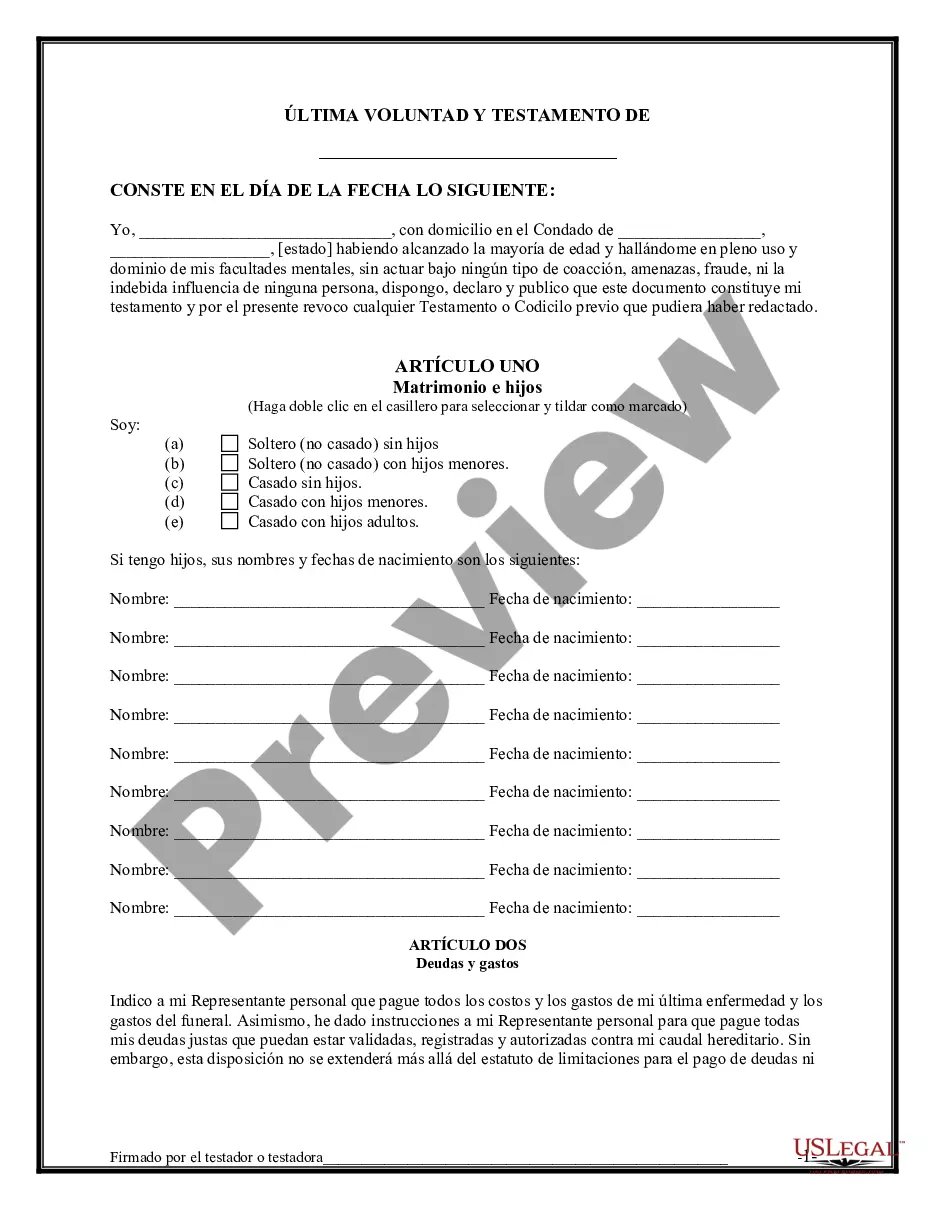
The Last Will and Testament for other persons is a legal document that outlines how your property will be distributed after your death. It serves to specify who will inherit your assets, designate a personal representative for your estate, and appoint guardians for any minor children. This particular form is ideal for individuals who cannot find a suitable existing will template tailored to their specific circumstances and is designed specifically for use in New Hampshire.
Main sections of this form
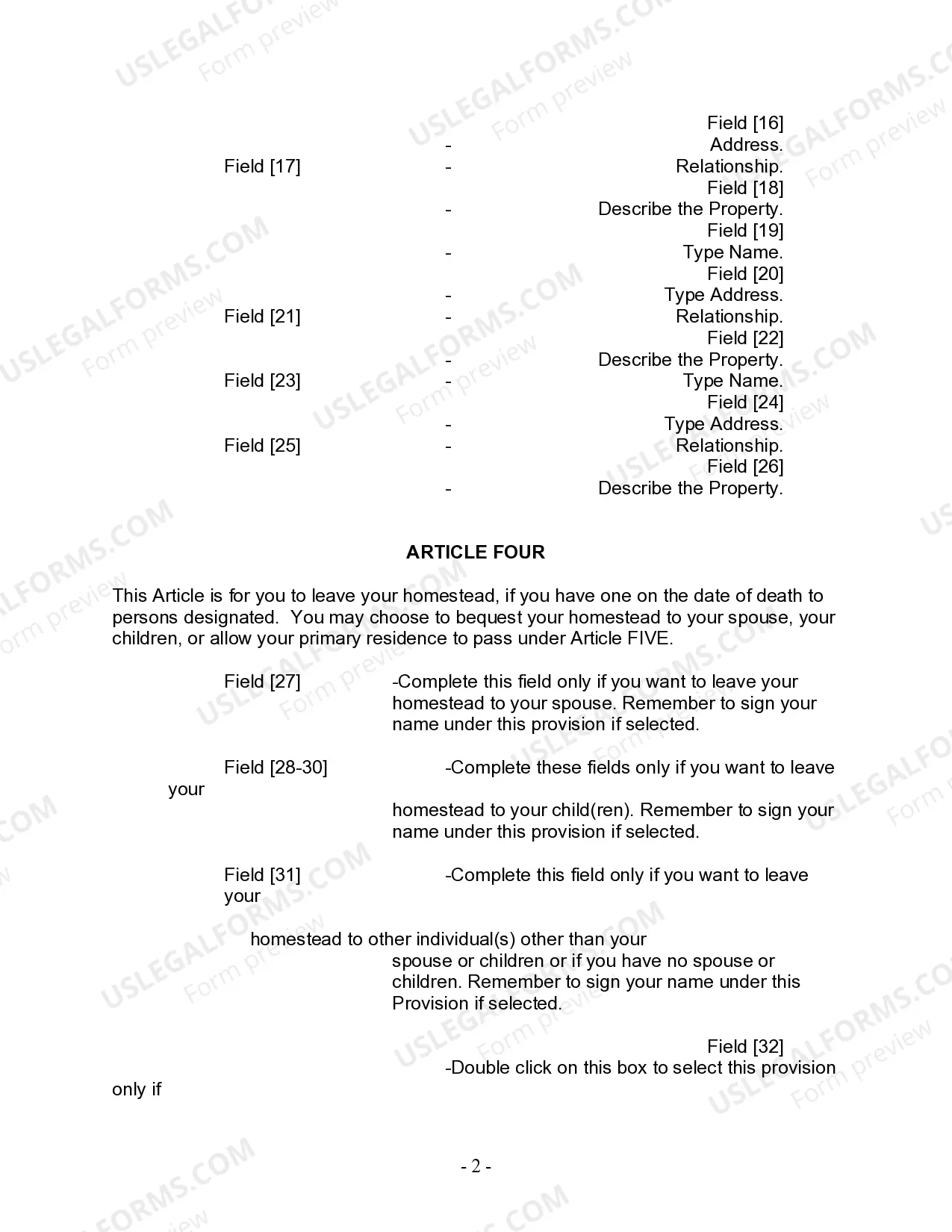
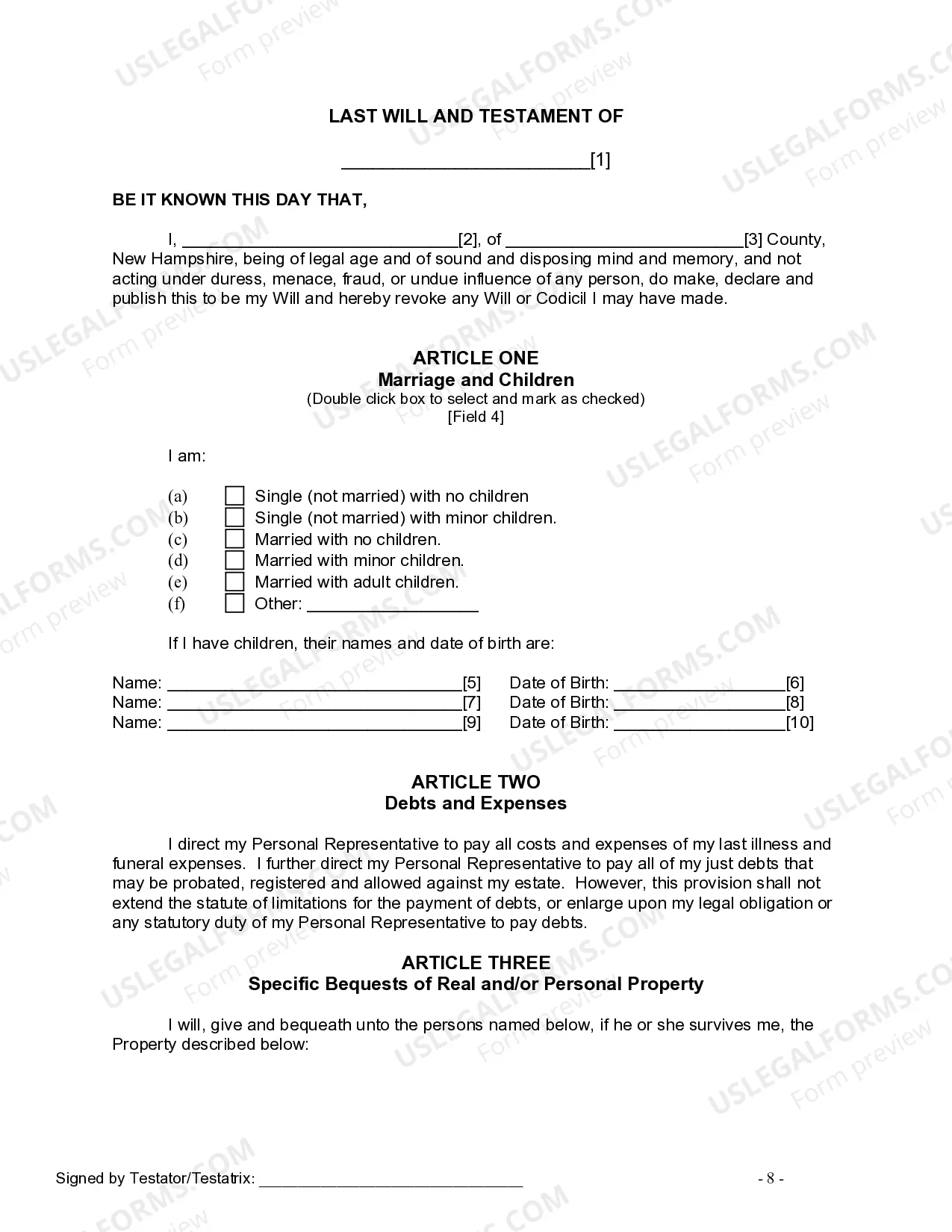
- Article One: States your marital status and names your children with their dates of birth.
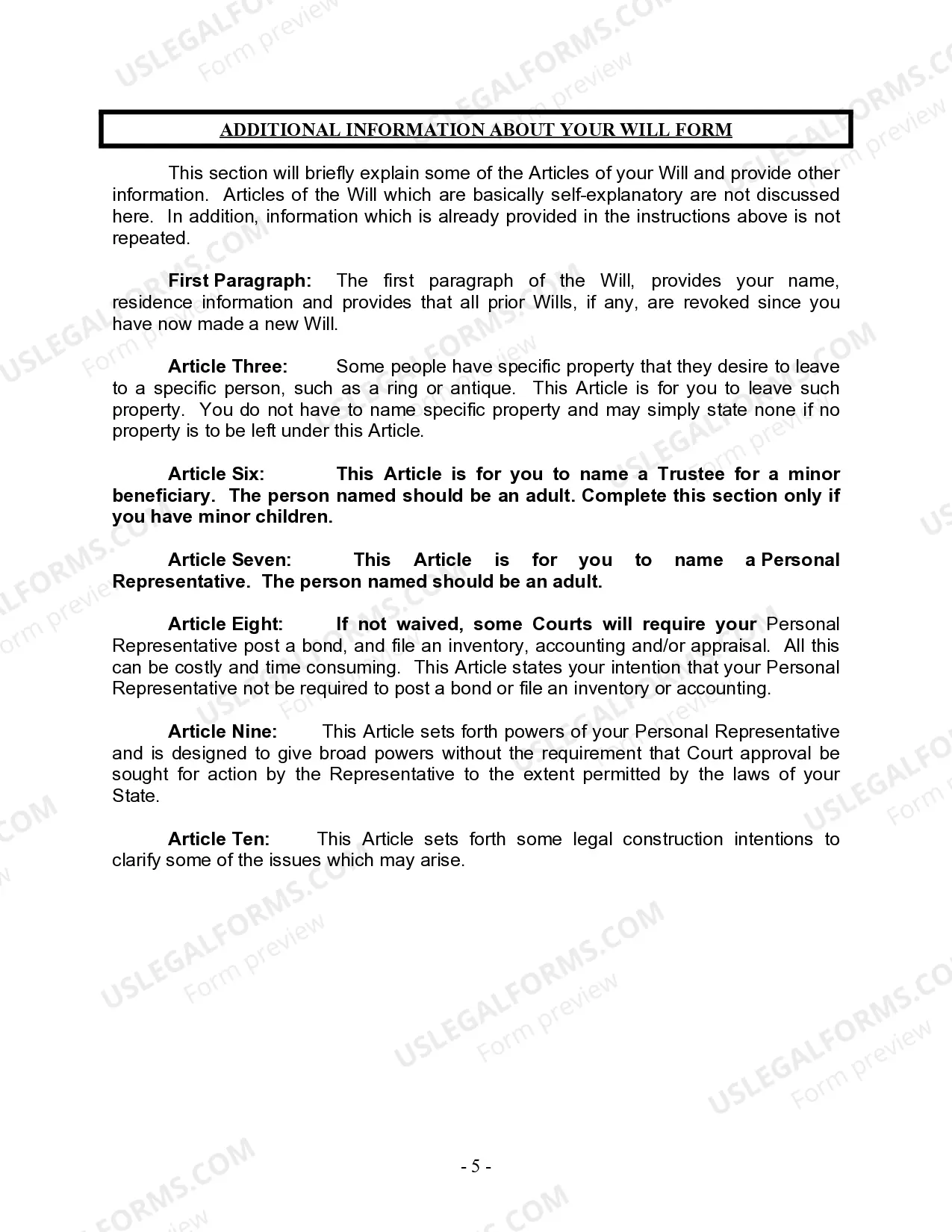
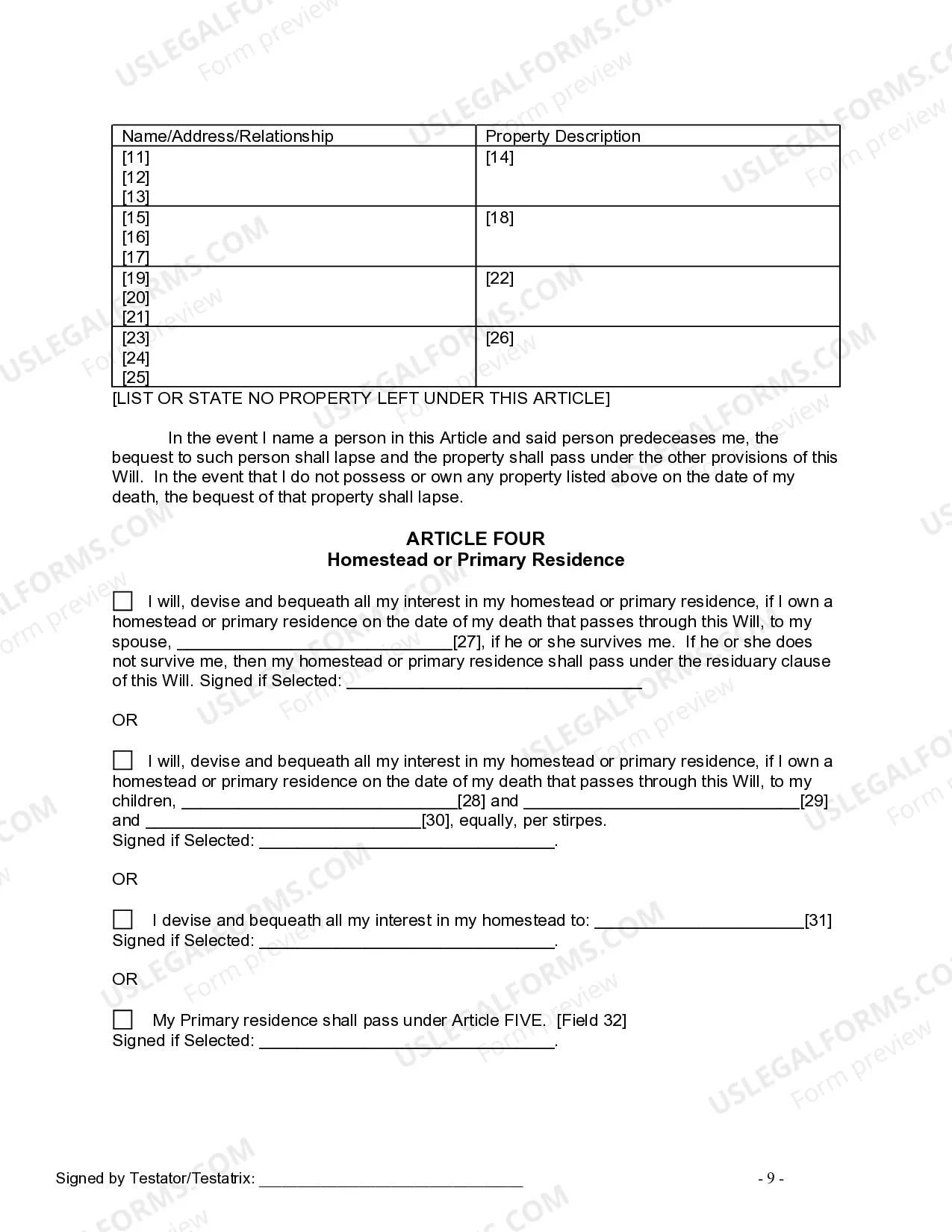
- Article Three: Allows you to bequeath specific property to designated individuals.
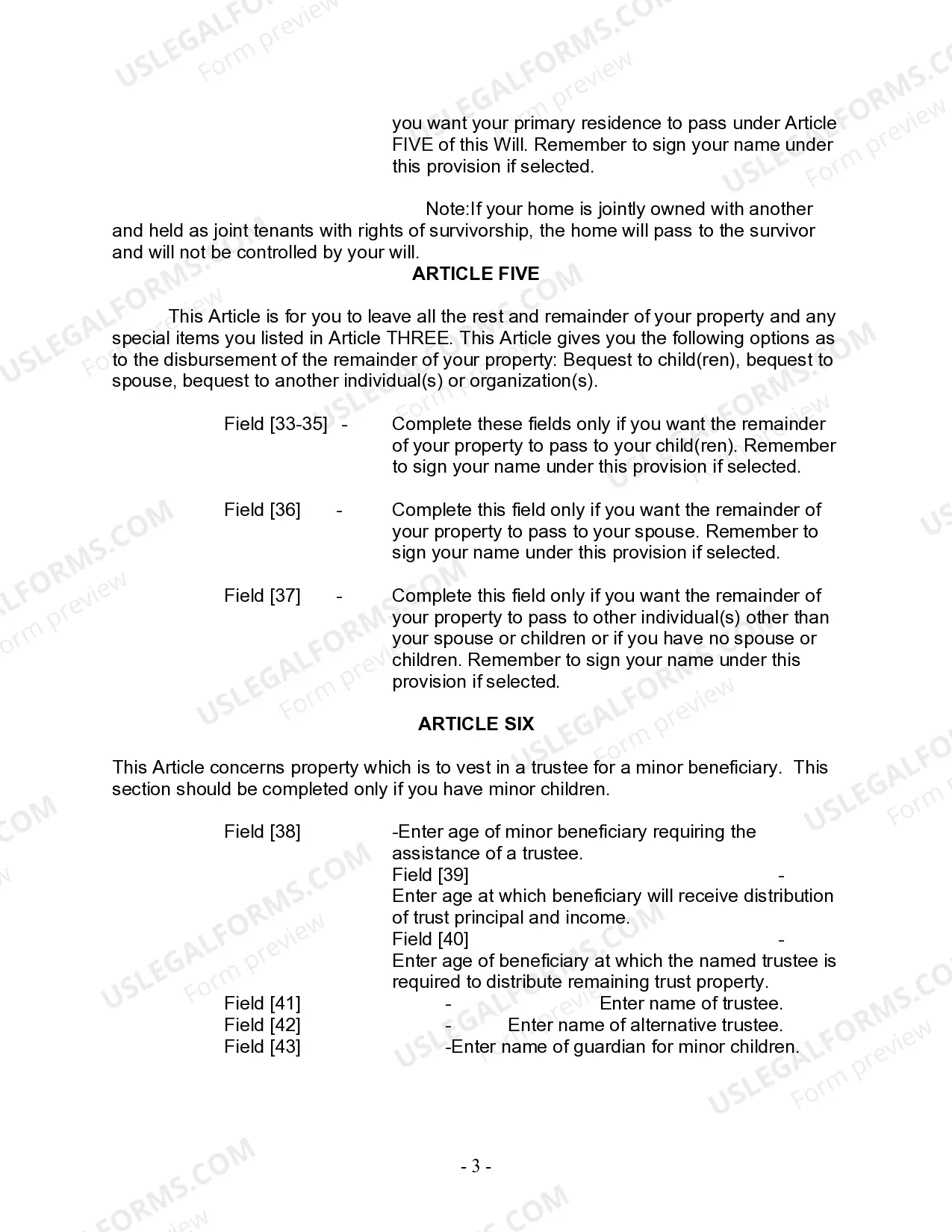
- Article Four: Addresses the distribution of your homestead or primary residence.
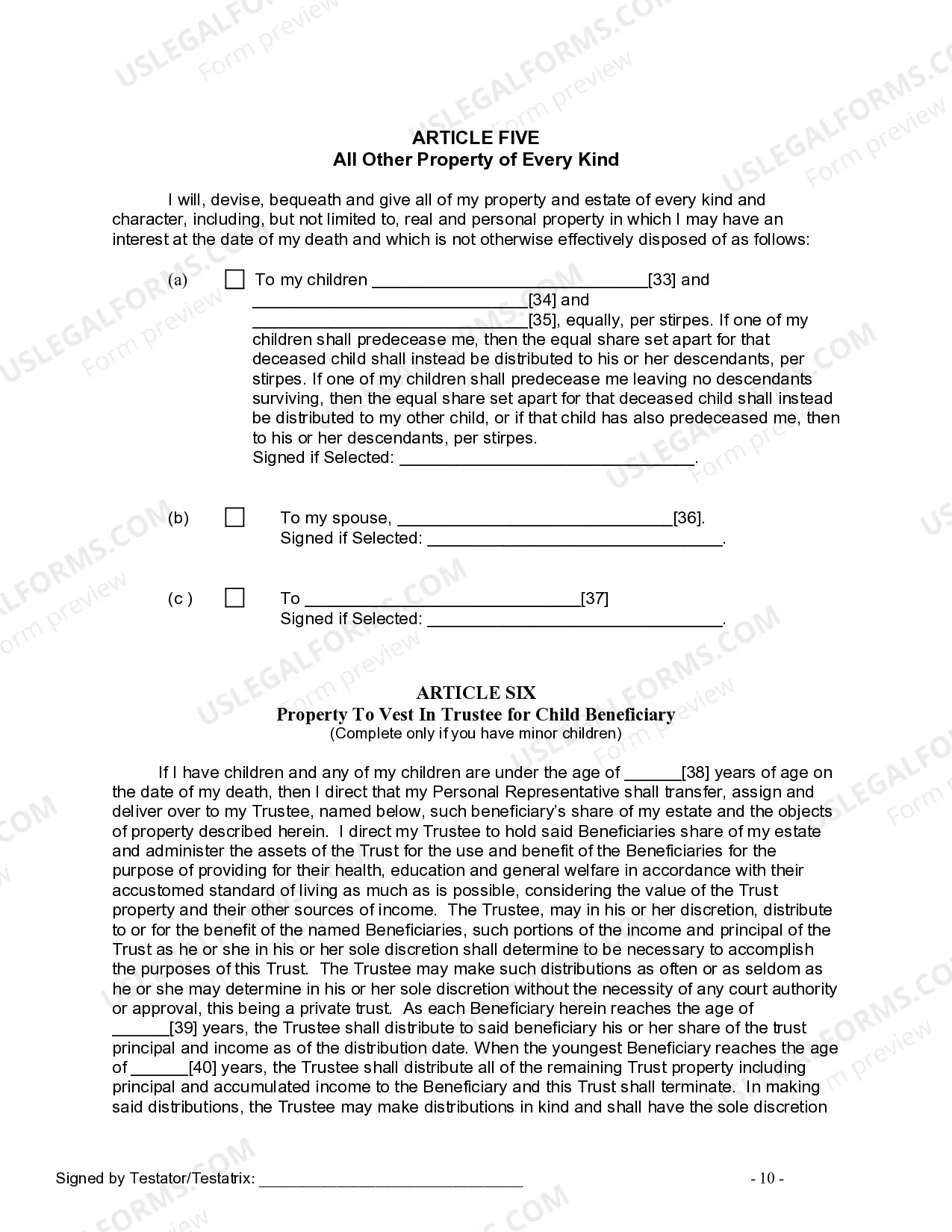
- Article Five: Covers the remainder of your estate not specifically mentioned elsewhere in the will.
- Article Six: Provides for the appointment of a trustee for minor beneficiaries.
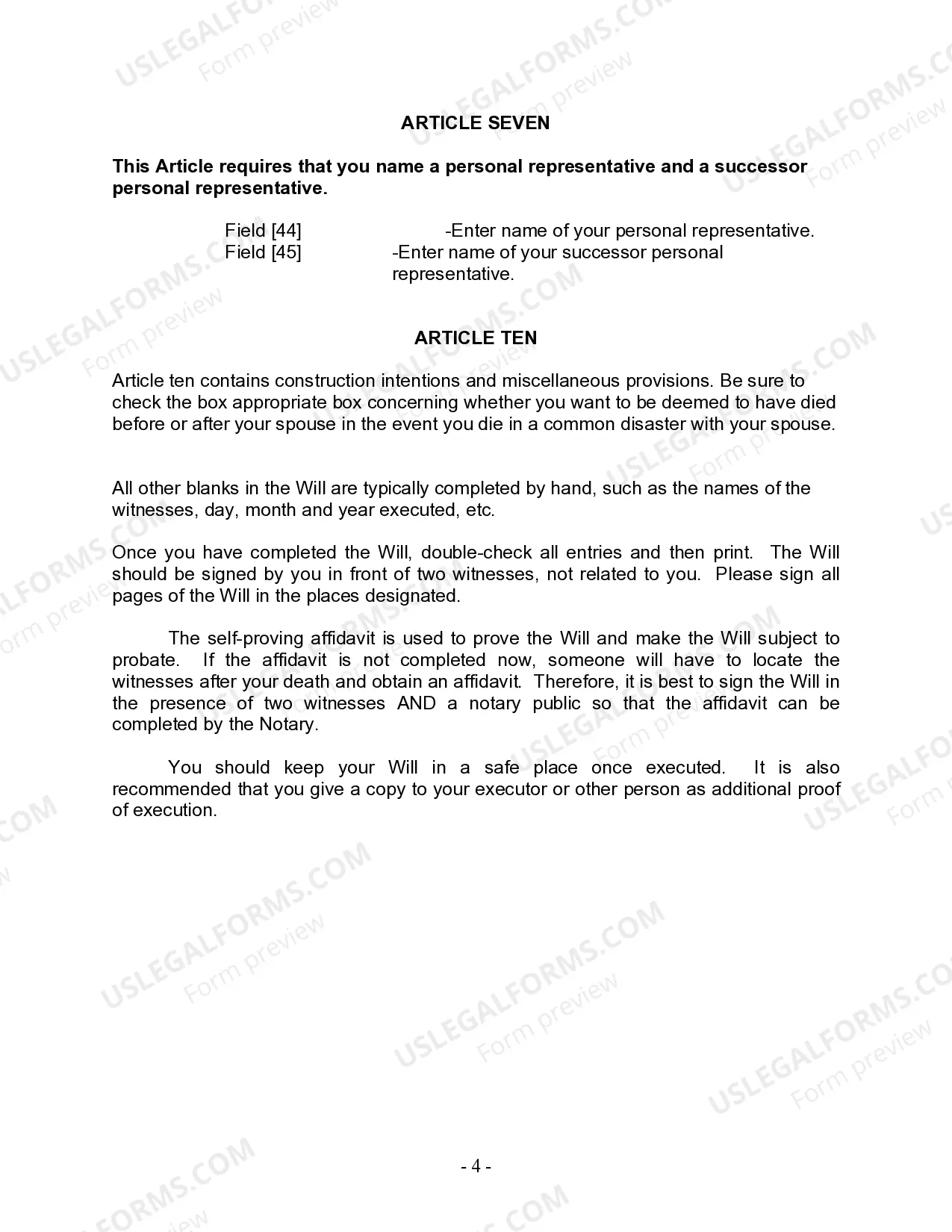
- Article Seven: Names your personal representative and any successors.




When this form is needed
This form is useful when you want to ensure that your wishes are clearly documented regarding the distribution of your property after you pass away. You should consider using this Last Will and Testament if you have dependents, specific assets you wish to bequeath, or if you need to appoint someone to manage your affairs after your death.
Who can use this document
- Individuals aged 18 or older who are residents of New Hampshire.
- Anyone who has specific assets or property to distribute after death.
- Parents who need to name guardians for minor children.
- Those who wish to appoint a personal representative to manage their estate.
How to complete this form
- Enter your personal information, including your full name and county of residence.
- Specify your marital status and provide the names and dates of birth for any children.
- Identify specific bequests for properties and assets, including descriptions and relationships.
- Appoint a personal representative and a successor to handle your estate.
- Ensure you sign the document in the presence of at least two witnesses.
Notarization guidance
Notarization is required for this form to take effect. Our online notarization service, powered by Notarize, lets you verify and sign documents remotely through an encrypted video session, available 24/7.
Get your form ready online
Our built-in tools help you complete, sign, share, and store your documents in one place.
Make edits, fill in missing information, and update formatting in US Legal Forms—just like you would in MS Word.
Download a copy, print it, send it by email, or mail it via USPS—whatever works best for your next step.
Sign and collect signatures with our SignNow integration. Send to multiple recipients, set reminders, and more. Go Premium to unlock E-Sign.
If this form requires notarization, complete it online through a secure video call—no need to meet a notary in person or wait for an appointment.
We protect your documents and personal data by following strict security and privacy standards.

Make edits, fill in missing information, and update formatting in US Legal Forms—just like you would in MS Word.

Download a copy, print it, send it by email, or mail it via USPS—whatever works best for your next step.

Sign and collect signatures with our SignNow integration. Send to multiple recipients, set reminders, and more. Go Premium to unlock E-Sign.

If this form requires notarization, complete it online through a secure video call—no need to meet a notary in person or wait for an appointment.

We protect your documents and personal data by following strict security and privacy standards.
Avoid these common issues
- Failing to update the will after a significant life change, such as marriage or the birth of a child.
- Not signing the will in front of the required witnesses, which can invalidate it.
- Leaving out important details regarding asset distribution or failing to specify who will receive certain properties.
Advantages of online completion
- Convenience of completing the form digitally from your computer.
- Editable fields allow you to customize your will to your specific needs.
- Access to completed examples and guidance throughout the process.
Main things to remember
- The Last Will and Testament allows you to specify asset distribution after death.
- It is essential for individuals with children or significant assets.
- This form must be completed and signed before witnesses and can include notarization.
- Regularly updating your will is crucial to reflect your current wishes and circumstances.
Looking for another form?
Form popularity
FAQ
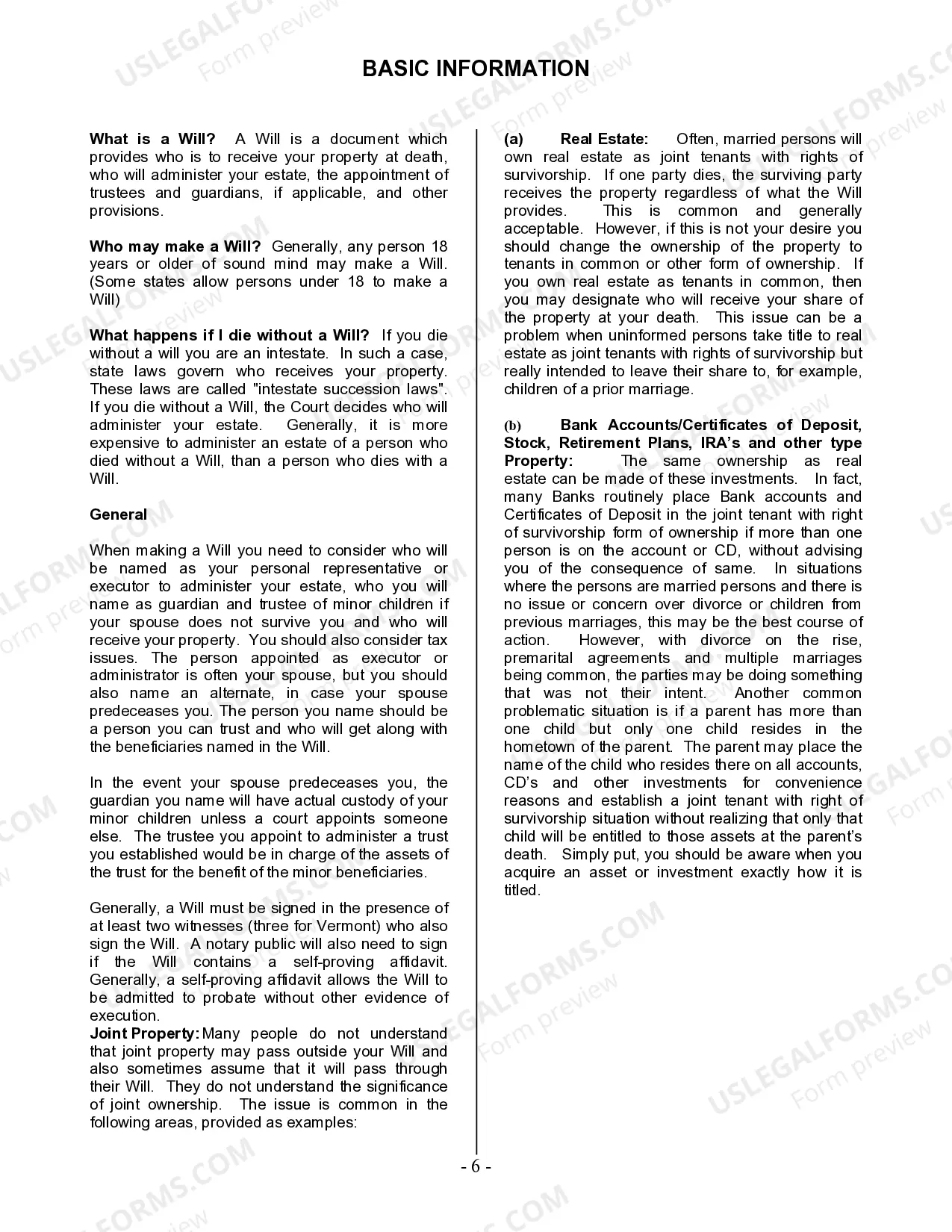
Under probate law, wills can only be contested by spouses, children or people who are mentioned in the will or a previous will.A last will and testament can only be contested during the probate process when there is a valid legal question about the document or process under which it was created.
In New Hampshire, you can make a living trust to avoid probate for virtually any asset you ownreal estate, bank accounts, vehicles, and so on. You need to create a trust document (it's similar to a will), naming someone to take over as trustee after your death (called a successor trustee).
A will doesn't have to be notarized to be valid. But in most states, you'll want to add a self-proving affidavit to your will, which must be signed by your witnesses and notarized.If you sign your will in a lawyer's office, the lawyer will provide a notary public.
No, in New Hampshire, you do not need to notarize your will to make it legal.A self-proving will speeds up probate because the court can accept the will without contacting the witnesses who signed it.
You can read, type, print, and staple at the will maker's direction. But you must not decide or even weigh in on the terms of the will. Do not sway the will maker in any way; you must be a neutral actor. Also, do not not use your own handwriting to fill in a fill-in-the-blanks will.
The short answer is generally yes. When a will is properly executed in accordance with the requirements established under state law, it should be regarded as a valid and executable will in a different state.
Yes, people can write their own wills in New Hampshire.For instance, the will must be in writing, signed by the person whose will it is, and signed by two or more credible witnesses who must swear that the person's signature is genuine. The court does not provide standard forms for writing a will.
A simple will costs between $200-$400 and a trust from $2,000 upwards, depending on how complex it is. High-profile family feuds over money are notorious and New Hampshire has been at the center of at least two of them.
A properly drafted will that you have executed under the laws of one state will generally be valid under the laws of any other state.Estate planning documents must be updated periodically to account for changes in your life circumstances as well as changes in the law.