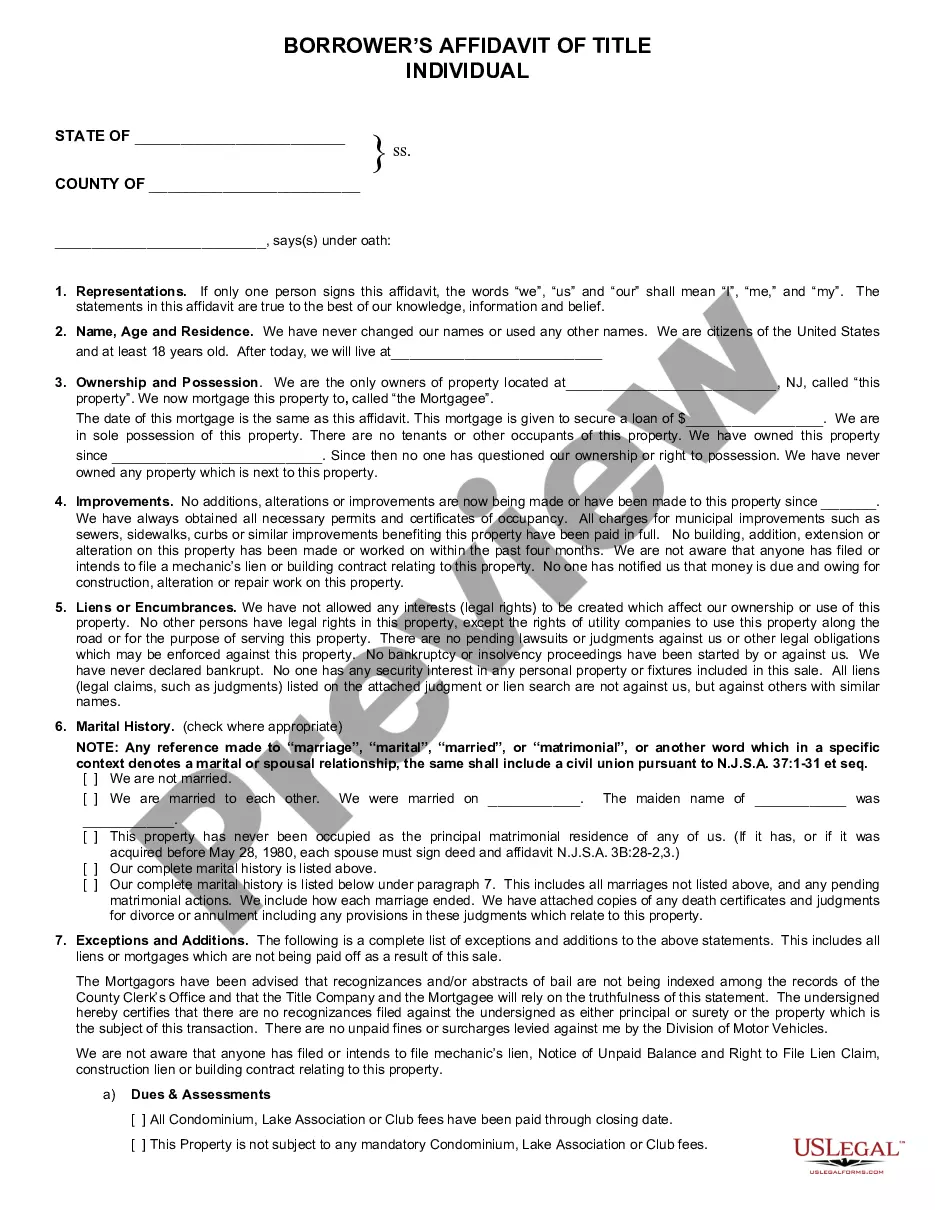
New Hampshire 30 Day Notice to Terminate Lease for Other Than Nonpayment of Rent - Nonresidential
What this document covers
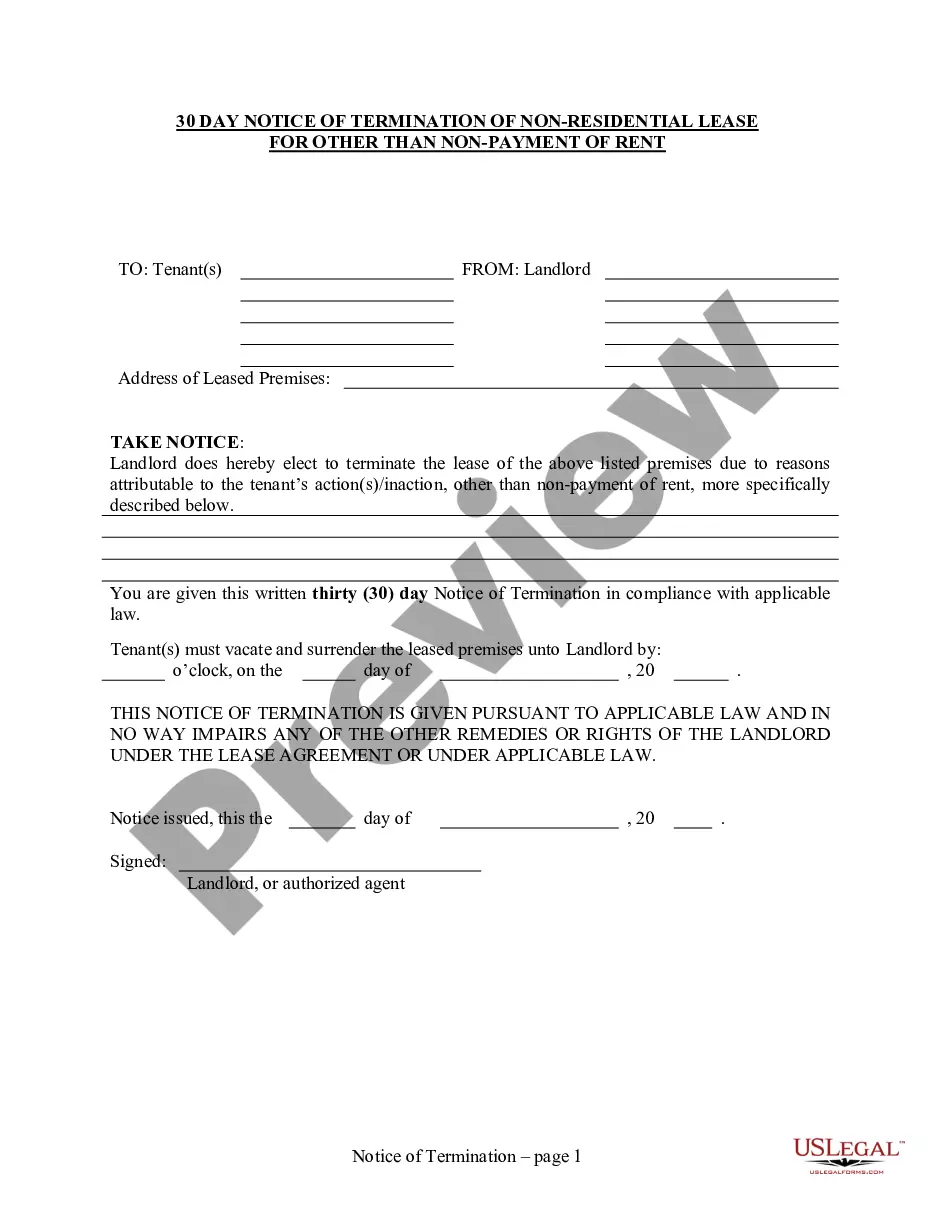
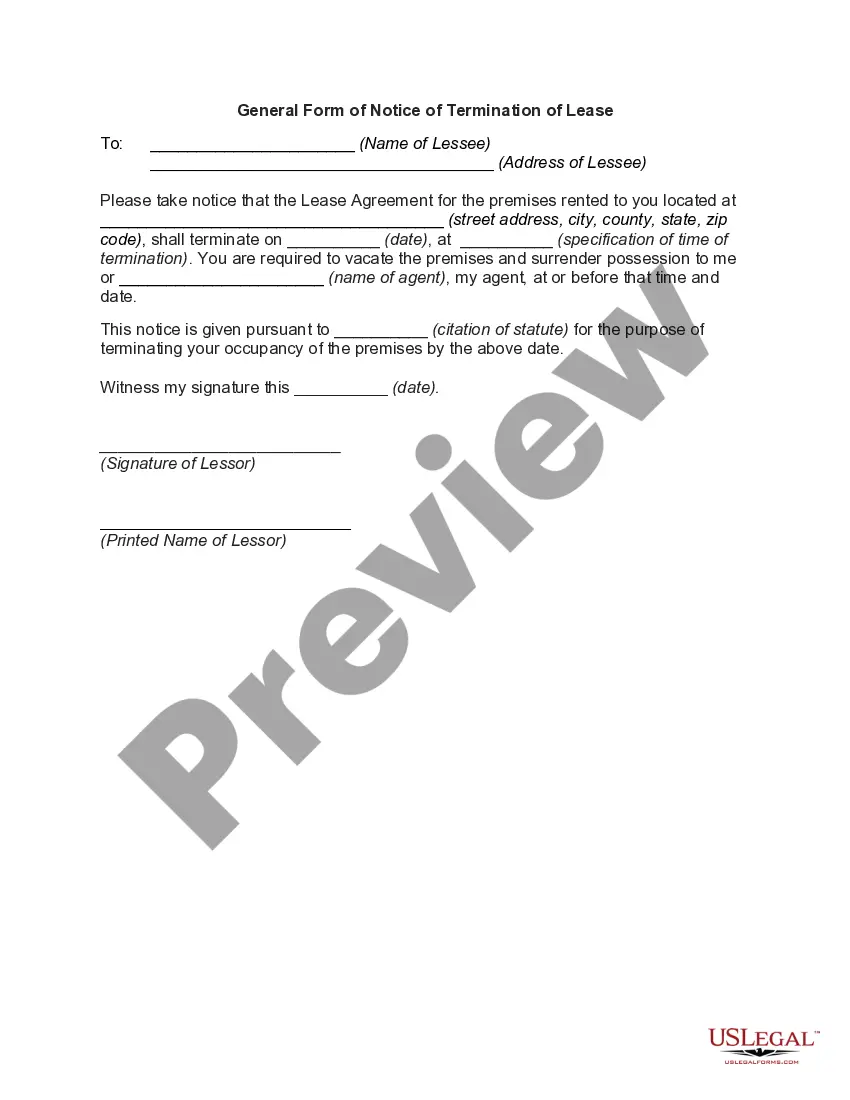
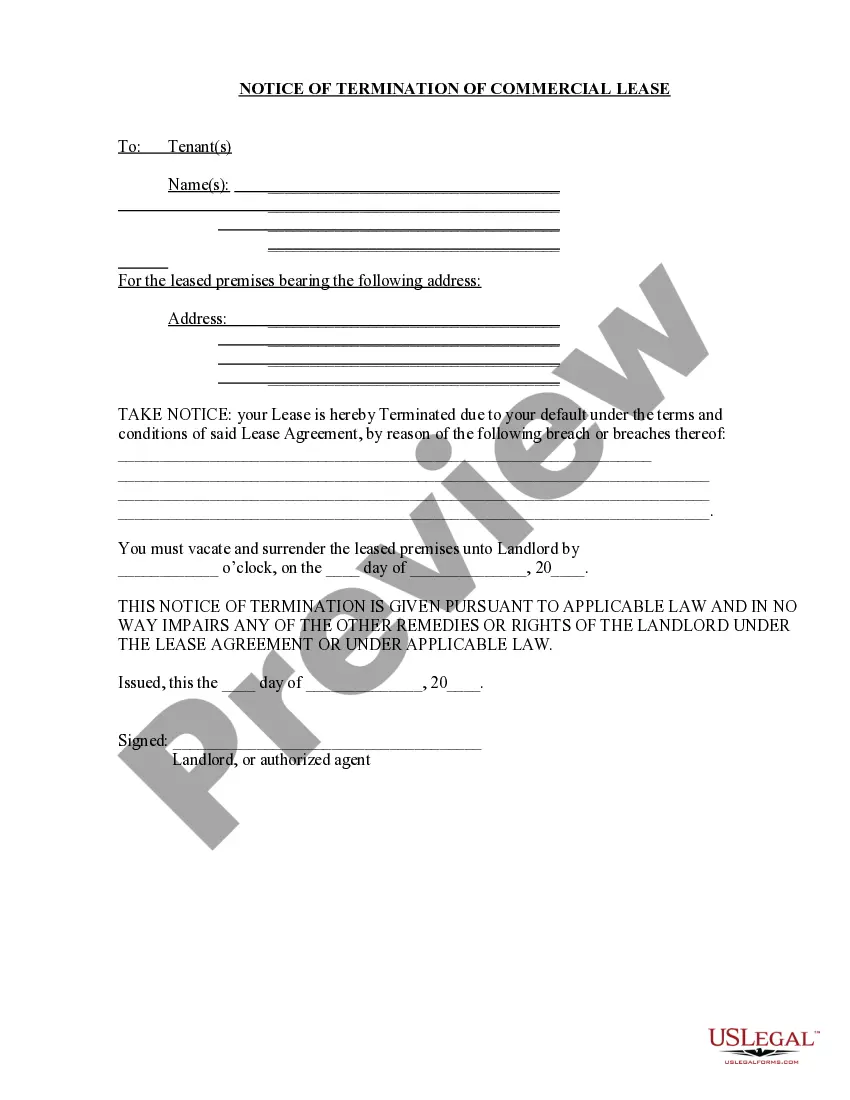
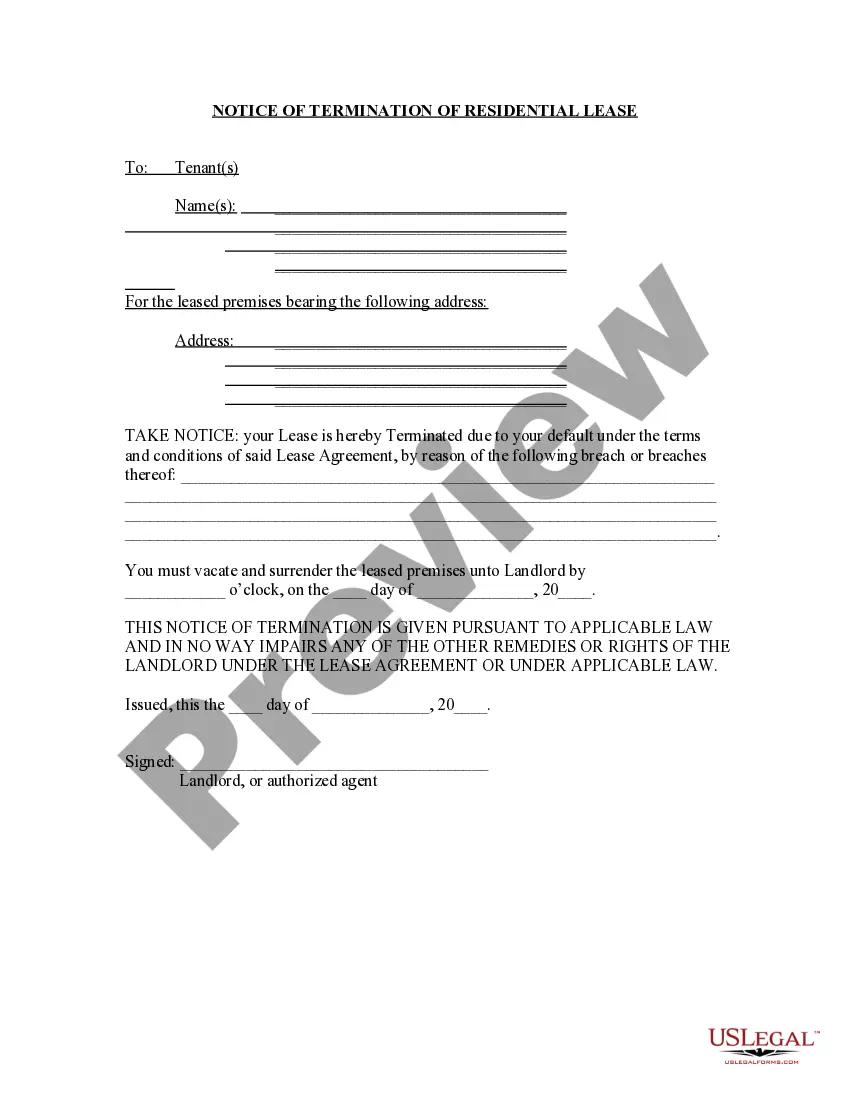
The 30 Day Notice to Terminate Lease for Other Than Nonpayment of Rent - Nonresidential is a legal document used by landlords to formally notify tenants of the termination of a non-residential lease. This form applies in situations where the termination is not due to non-payment of rent, such as violations of lease terms or other tenant actions. It provides the tenant with a 30-day notice period to vacate the premises to avoid eviction proceedings.
Key components of this form
- Identification of the parties involved (landlord and tenant)
- Address of the leased non-residential premises
- Specific reasons for lease termination related to tenant actions
- 30-day notice period for tenants to vacate the premises
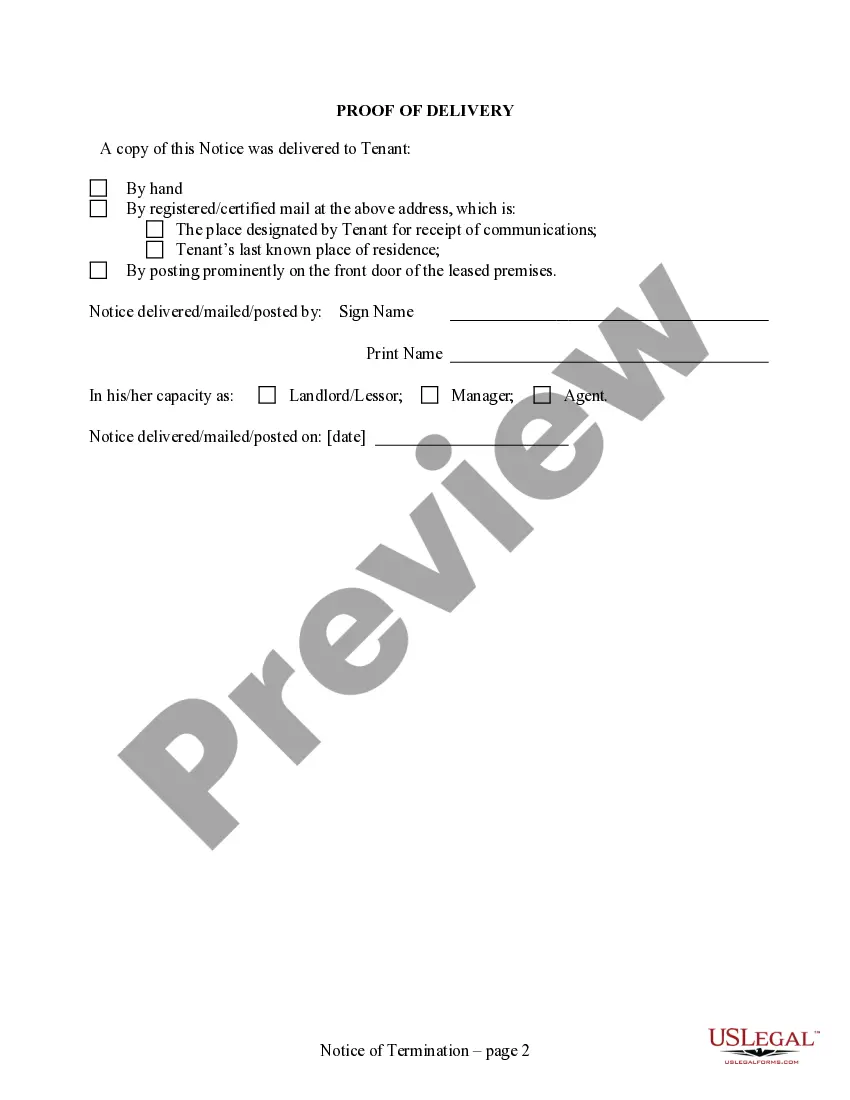
- Proof of delivery options for the notice

When to use this document
This form should be used by landlords when they wish to terminate a lease for non-residential property due to reasons other than the tenant's failure to pay rent. Examples may include breach of lease terms, failure to maintain the premises, or unauthorized use of the property. It's important to provide proper notice to ensure legal compliance before proceeding with eviction actions.
Who should use this form
- Landlords of non-residential properties, such as commercial or industrial spaces
- Property managers acting on behalf of landlords
- Legal representatives handling lease termination matters
Instructions for completing this form
- Identify the landlord and tenant information, including names and addresses.
- Specify the address of the leased non-residential property.
- Clearly outline the reasons for termination of the lease.
- Enter the date by which the tenant must vacate the premises.
- Provide proof of delivery method for the notice (e.g., by mail, hand delivery).
Notarization requirements for this form
This form does not typically require notarization to be legally valid. However, some jurisdictions or document types may still require it. US Legal Forms provides secure online notarization powered by Notarize, available 24/7 for added convenience.
Get your form ready online
Our built-in tools help you complete, sign, share, and store your documents in one place.
Make edits, fill in missing information, and update formatting in US Legal Forms—just like you would in MS Word.
Download a copy, print it, send it by email, or mail it via USPS—whatever works best for your next step.
Sign and collect signatures with our SignNow integration. Send to multiple recipients, set reminders, and more. Go Premium to unlock E-Sign.
If this form requires notarization, complete it online through a secure video call—no need to meet a notary in person or wait for an appointment.
We protect your documents and personal data by following strict security and privacy standards.
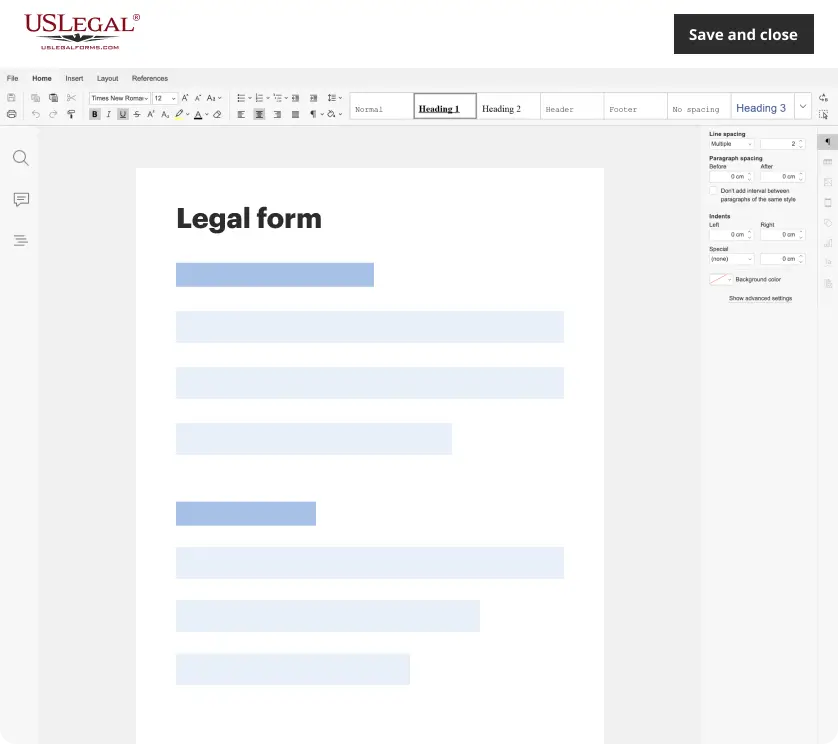
Make edits, fill in missing information, and update formatting in US Legal Forms—just like you would in MS Word.
Download a copy, print it, send it by email, or mail it via USPS—whatever works best for your next step.
Sign and collect signatures with our SignNow integration. Send to multiple recipients, set reminders, and more. Go Premium to unlock E-Sign.
If this form requires notarization, complete it online through a secure video call—no need to meet a notary in person or wait for an appointment.
We protect your documents and personal data by following strict security and privacy standards.
Common mistakes
- Failing to specify the exact reasons for termination.
- Missing to provide proper proof of delivery.
- Not giving the tenant the full 30-day notice period.
- Providing incomplete tenant or property information.
Benefits of using this form online
- Convenient access to legal forms without the need for a lawyer.
- Editable templates allow customization to meet specific needs.
- Reliable and professionally drafted forms ensure compliance with legal standards.
Legal use & context
- The form serves as a formal notice to uphold landlord rights in terminating leases.
- It is important for landlords to document the termination process to avoid legal challenges.
- Proper usage and delivery of this form can mitigate risks of unlawful eviction claims.
Summary of main points
- This form is essential for terminating non-residential leases properly.
- Provide clear reasons for termination to protect your rights as a landlord.
- Ensure compliance with state-specific laws regarding lease termination notices.
Looking for another form?
Form popularity
FAQ
Using a Section 8 notice By failing to pay their rent, your tenant has broken the terms of their tenancy agreement, meaning you can serve them a Section 8 notice at any point in the tenancy. Your tenant may dispute the eviction, so you need to be ready with evidence of unpaid rent and your efforts to resolve the issue.
Under normal circumstances, when tenants don't pay rent, landlords have the option of terminating the tenancy (by serving the tenant with either a pay rent or quit notice or an unconditional quit notice, depending on the applicable laws).
In some circumstances, a tenant can break a fixed-term agreement early without penalty. A tenant can give 14 days' written notice to end an agreement early without penalty if: they have accepted an offer of social housing (e.g. from DCJ Housing)
The best approach is to try to come to an agreement with your landlord; if your landlord agrees, then you have mutually terminated the lease, and you should have no further obligation to pay rent. You should try to get any such agreement in writing.
The landlord can voluntarily agree to let you take back the notice, but would typically only do so if they either had not yet rented your rental unit, or could reach an agreement with the incoming tenant to accept an alternative rental unit.
Fails to pay rent; Violates a clause in the lease or rental agreement; Violates a responsibility imposed by law.
Can I break my lease? You are always able to break a lease; there is little a landlord can do to actually stop you from leaving before the full term specified in the lease. You are violating no law by vacating early, but you are violating the terms of the contract between you and the landlord.
Give the landlord/agent a written termination notice and vacate move out and return the keys according to your notice, and/or. apply to the NSW Civil & Administrative Tribunal (NCAT) for a termination order.
For one thing, it is illegal to lock a tenant not paying rent out of the rental property. You are also not allowed to cut off any utilities for the rental property to get the tenant to leave.If certain services are not provided by the landlord, a tenant has the right to not pay.