New Hampshire Notice to Owner of Furnishing of Labor or Materials - Corporation
Overview of this form
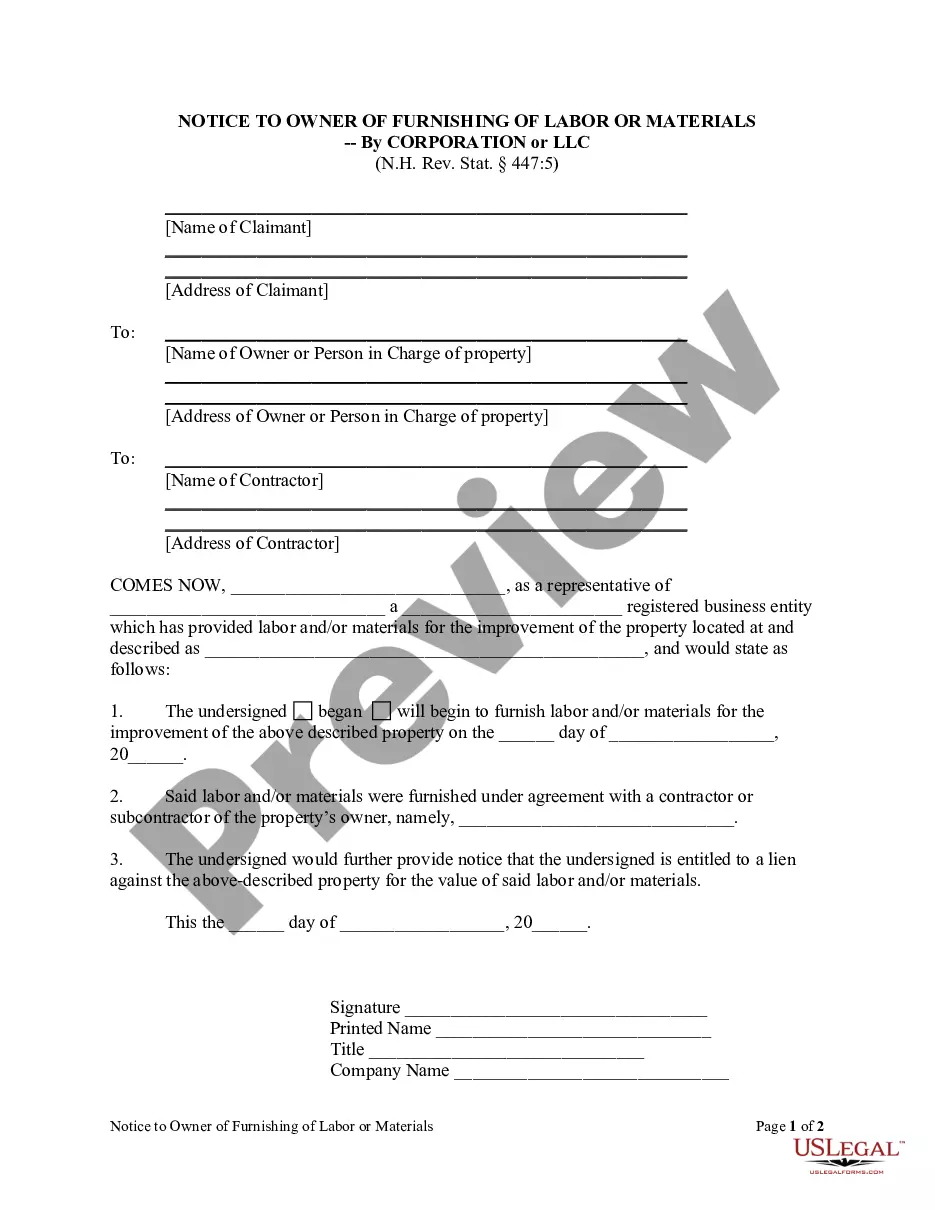
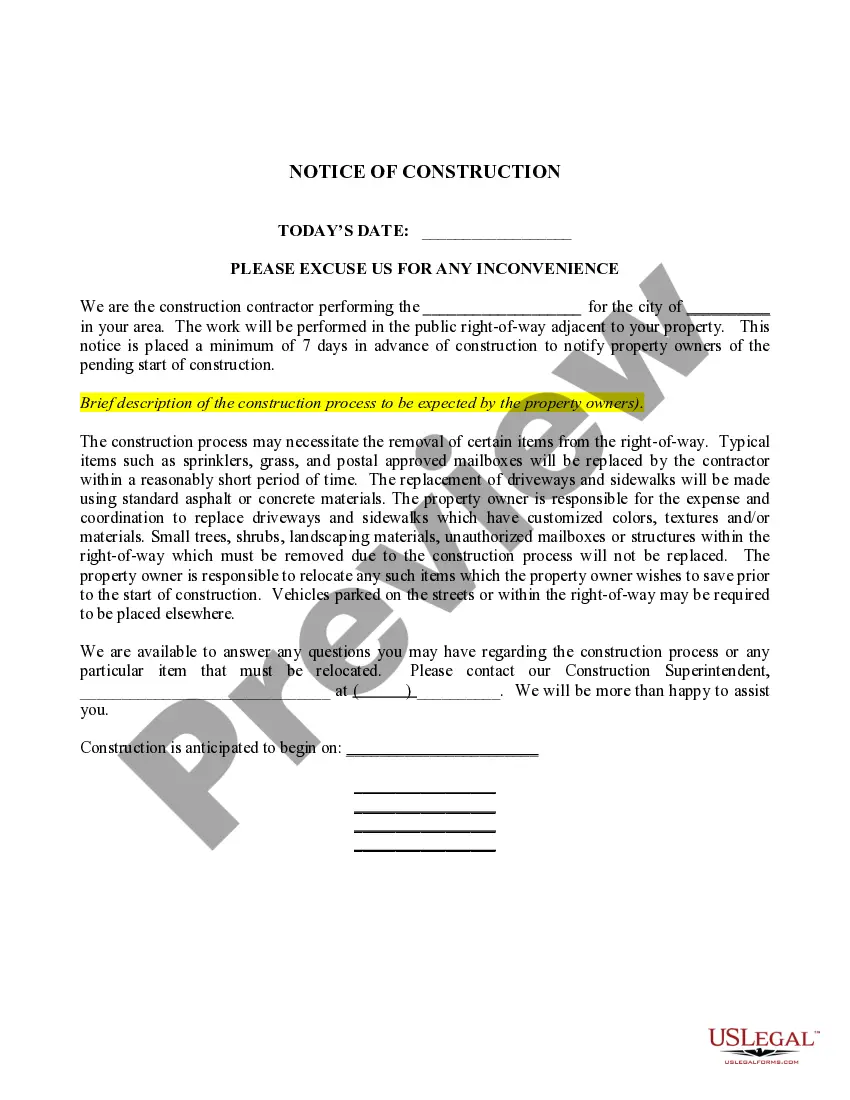
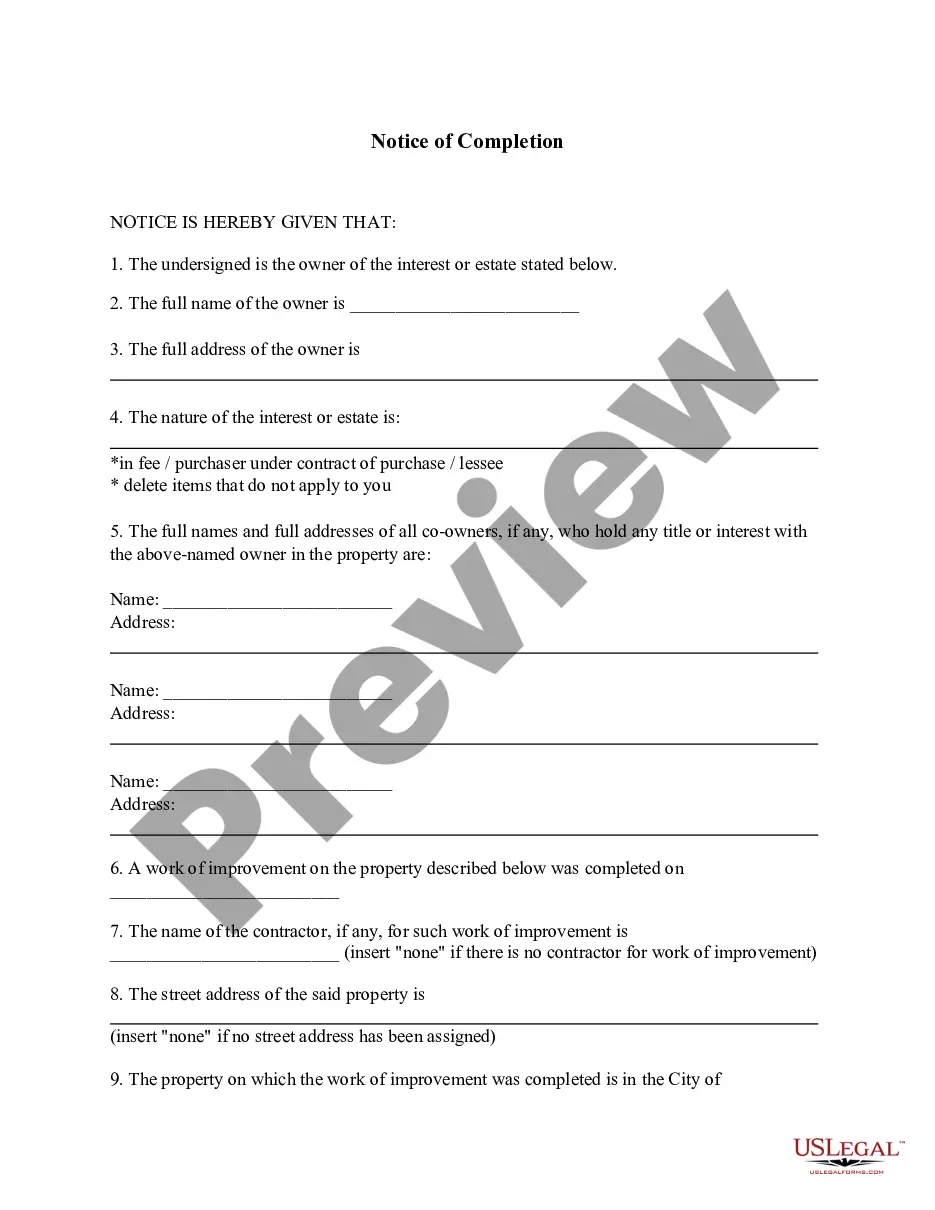
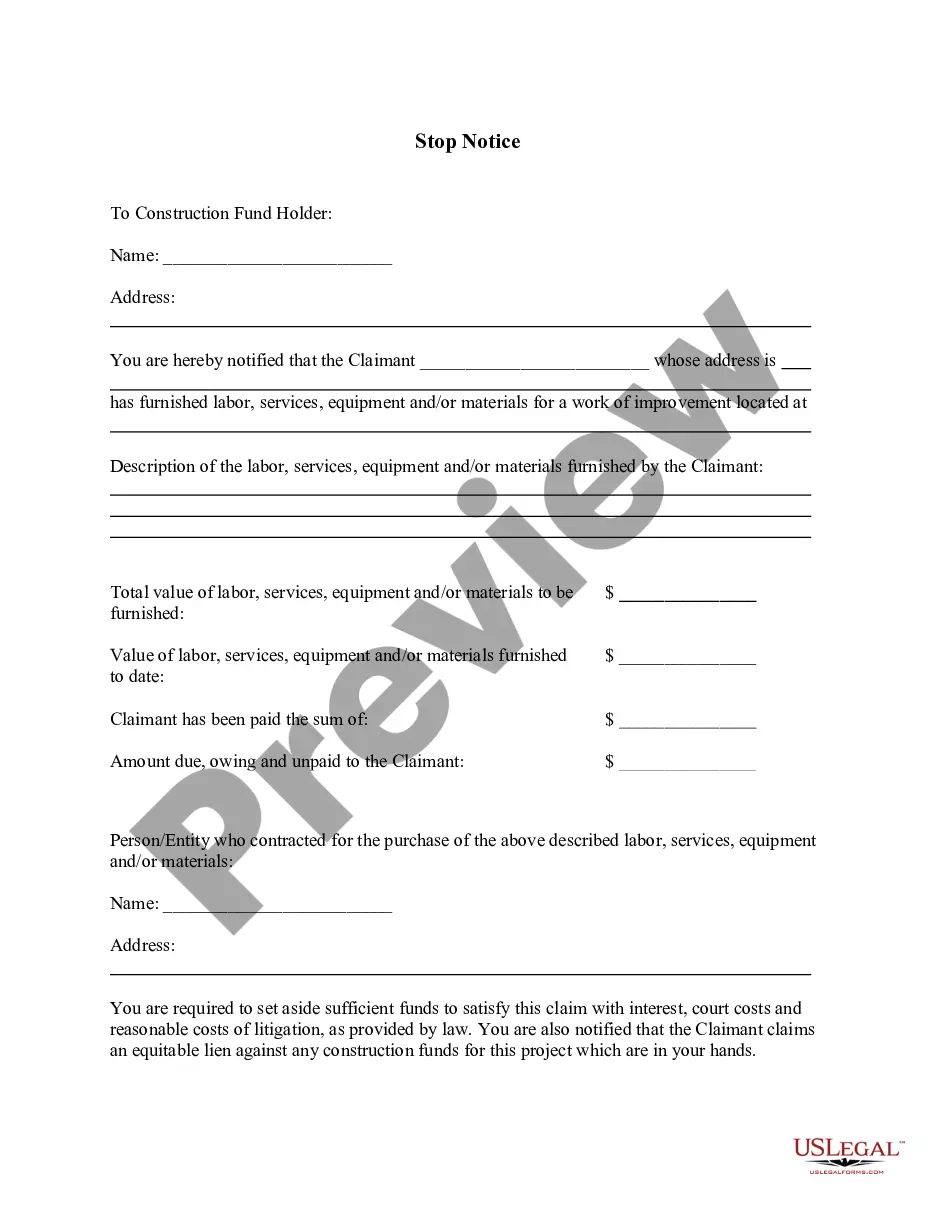
The Notice to Owner of Furnishing of Labor or Materials - Corporation is a legal document used by corporations that provide labor or materials for property improvements. This form serves to officially notify property owners of the beginning date for labor or materials supplied, affirming that these were provided under an agreement with a contractor or subcontractor. It establishes the corporation's right to file a lien against the property for unpaid labor or materials, distinguishing it from other notices related to property liens.
Main sections of this form
- Date of commencement of labor or material supply.
- Name of the contractor or subcontractor engaged by the property owner.
- Statement of entitlement to a lien for the value of labor or materials furnished.
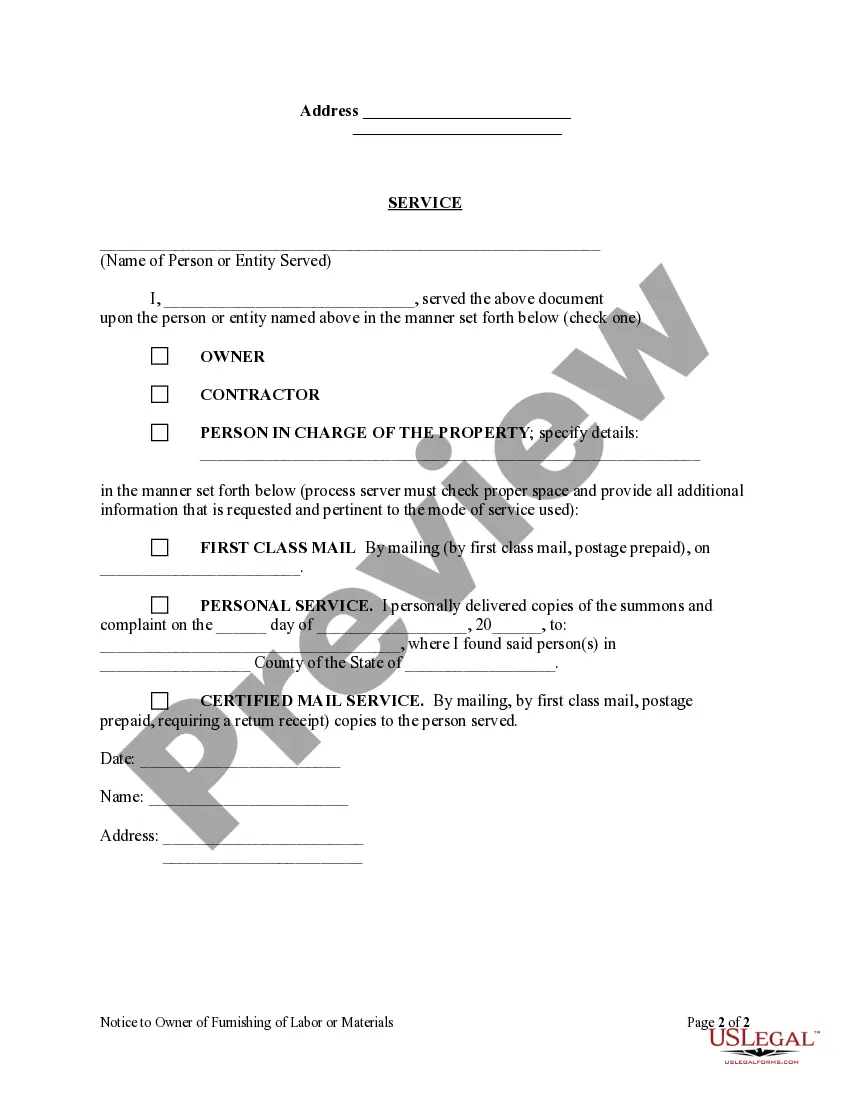
- Notification method to the property owner or contractor.
- Signature and date of delivery.

When this form is needed
This form should be used when a corporation has supplied labor or materials in the improvement of a property and needs to formally notify the property owner. It is essential for protecting the corporation's lien rights in cases of non-payment or disputes over supplied services.
Intended users of this form
- Corporations providing labor or materials for property improvements.
- Contractors needing to notify property owners of work performed.
- Subcontractors who want to secure their lien rights.
Steps to complete this form
- Identify the date when the labor or materials will commence.
- Specify the name of the contractor or subcontractor you are working with.
- Clearly state your entitlement to a lien against the property.
- Select and fill in the method of notifying the property owner or contractor.
- Complete the signature section to validate your notice.
Notarization guidance
This form does not typically require notarization unless specified by local law. It is advisable to verify the notarization requirements within your jurisdiction before finalizing the document.
Get your form ready online
Our built-in tools help you complete, sign, share, and store your documents in one place.
Make edits, fill in missing information, and update formatting in US Legal Forms—just like you would in MS Word.
Download a copy, print it, send it by email, or mail it via USPS—whatever works best for your next step.
Sign and collect signatures with our SignNow integration. Send to multiple recipients, set reminders, and more. Go Premium to unlock E-Sign.
If this form requires notarization, complete it online through a secure video call—no need to meet a notary in person or wait for an appointment.
We protect your documents and personal data by following strict security and privacy standards.

Make edits, fill in missing information, and update formatting in US Legal Forms—just like you would in MS Word.

Download a copy, print it, send it by email, or mail it via USPS—whatever works best for your next step.

Sign and collect signatures with our SignNow integration. Send to multiple recipients, set reminders, and more. Go Premium to unlock E-Sign.

If this form requires notarization, complete it online through a secure video call—no need to meet a notary in person or wait for an appointment.

We protect your documents and personal data by following strict security and privacy standards.
Common mistakes to avoid
- Failing to include the correct start date for the provision of labor or materials.
- Omitting the name of the contractor or subcontractor.
- Not selecting a notification method.
- Leaving the form unsigned.
Benefits of completing this form online
- Convenient access to downloadable templates at any time.
- Editable forms tailored to your specific needs.
- Reliable templates drafted by licensed attorneys.
Legal use & context
- Establishes a formal notice of a lien claim to secure payment.
- Informs property owners of the labor or materials provided, preventing disputes on service provided.
- Supports legal enforceability of lien rights in case of non-payment.
Main things to remember
- This form is essential for corporations providing labor or materials on properties.
- Completing the form accurately is crucial to protect lien rights.
- Using this form can help prevent legal disputes regarding unpaid services.
Looking for another form?
Form popularity
FAQ
Apply to the Tribunal for orders: to stop the landlord/agent entering the premises. (Apply within 3 months after you become aware of the landlord's/agent's breach.) report trespass to the police. complain to NSW Fair Trading.
In all states, a landlord can enter the property in an emergency without notice or permission.Even if your landlord gives you notice, he or she must have a good reason to enter the property. In most cases, your landlord can enter your home: In an emergency.
7 days is required for almost all evictions. 30 days is required for month-to-month leases. The notice must state the specific reason for eviction, and can be delivered in person, or left on their door. When the notice is up, issue a writ of summons.
A landlord can legally evict a tenant only by sending a written notice to the tenant. This written notice must be in the form of a "written notice to quit or leave" which is a legal document. Eviction for not paying rent, damages to the property or danger to the health or safety of others require seven days' notice.
Your landlord or their representatives may be allowed reasonable access to carry out inspections or repairs, but must first get your permission. According to Section 11, from The Landlord and Tenant Act 1985, your landlord needs to give you at least 24 hour notice before they come around and visit for any reason.
The big take-away is that in most circumstances a landlord cannot enter a property without agreement from the tenant. And If the landlord ignores the law and enters the property without permission, the tenant may be able to claim damages or gain an injunction to prevent the landlord doing it again.
One pervasive fiction is that tenants can't be turned out of the rental during cold weather. Is this true? Mostly, no. However, there are actions that a landlord may not take during the eviction process.
A landlord cannot legally evict you without a court order, whether or not you have a lease.) How long does it take for a landlord to evict a tenant? A landlord can evict a tenant only by going through a formal eviction proceeding, which can take a few weeks from start to finish.
It is against the law RSA 540-A for a landlord to:Enter your residence without permission, except to make emergency repairs. (You should not refuse your landlord's reasonable request to enter with enough notice); Take any other action to force you out of your home without going through the eviction process.
7 days is required for almost all evictions. 30 days is required for month-to-month leases. The notice must state the specific reason for eviction, and can be delivered in person, or left on their door. When the notice is up, issue a writ of summons.