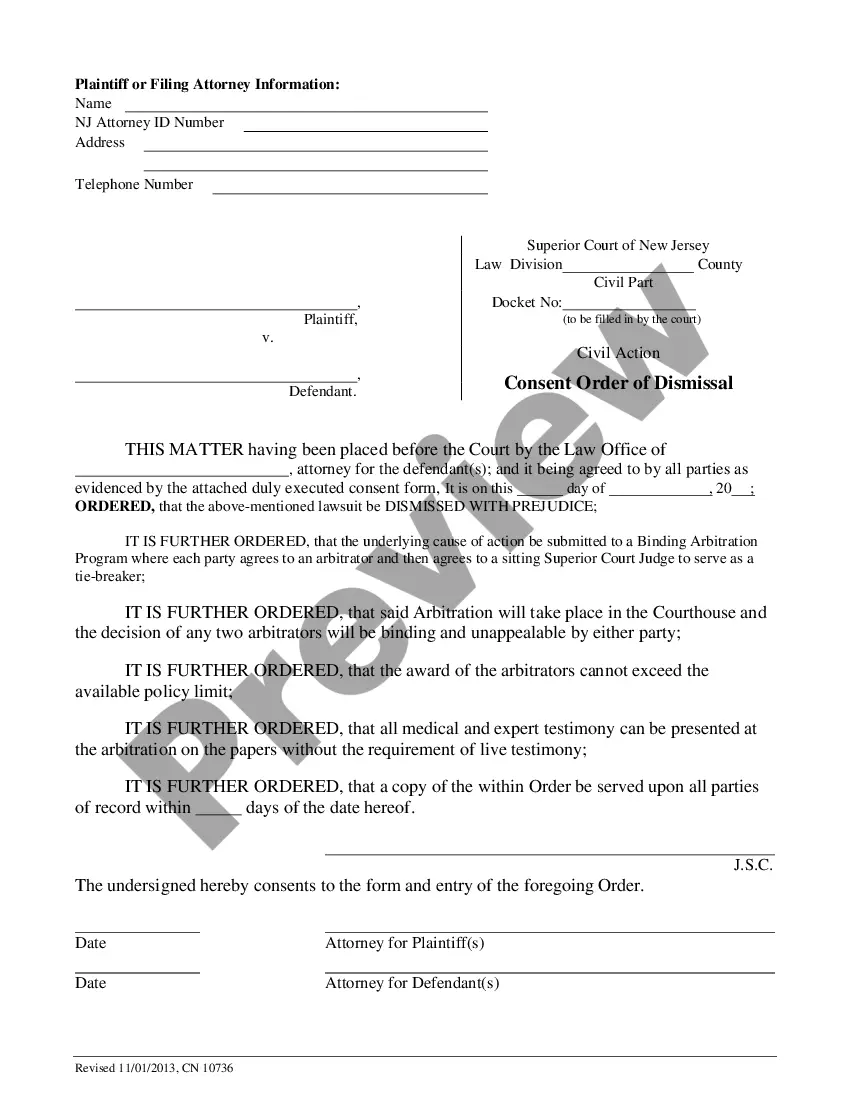
New Hampshire Security Contract for Contractor
Overview of this form
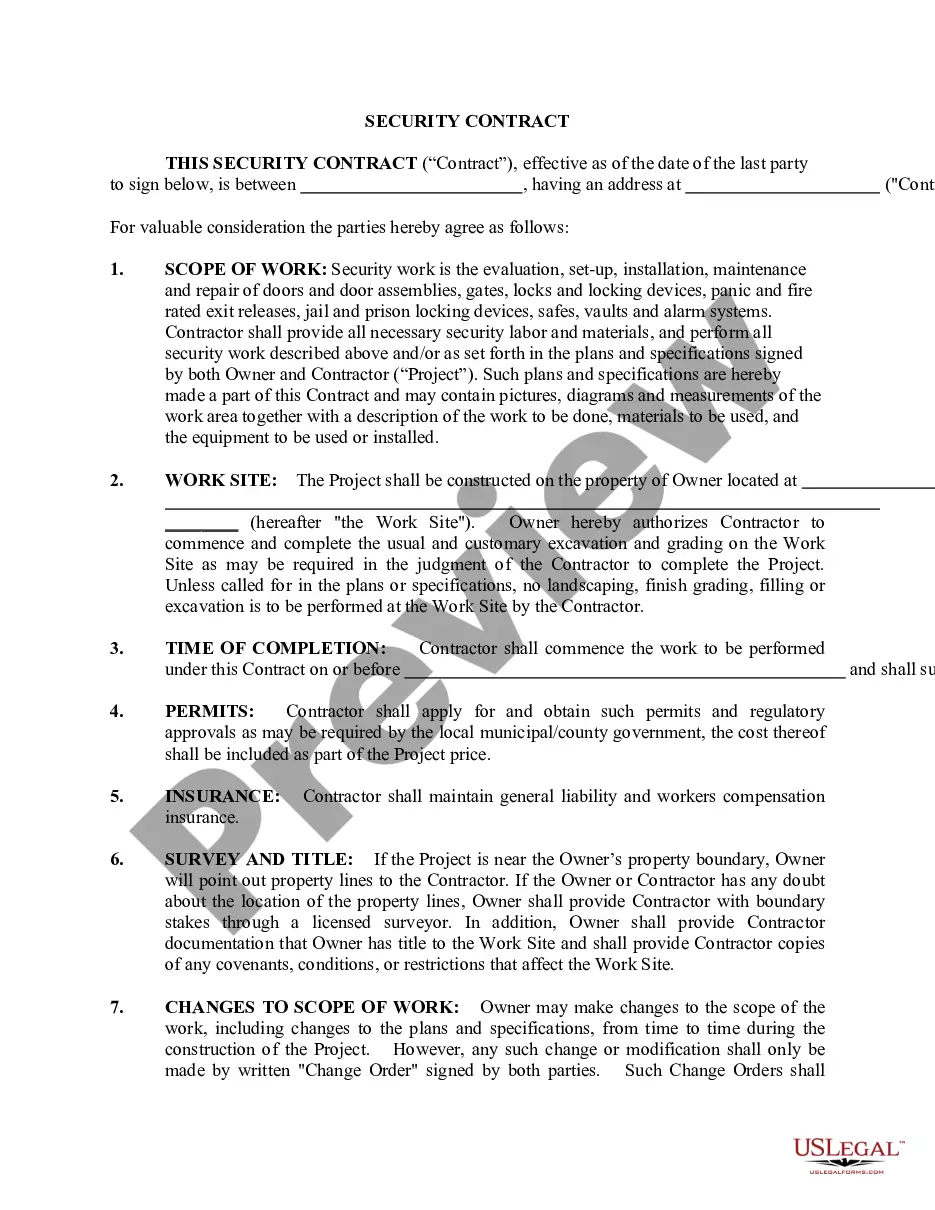
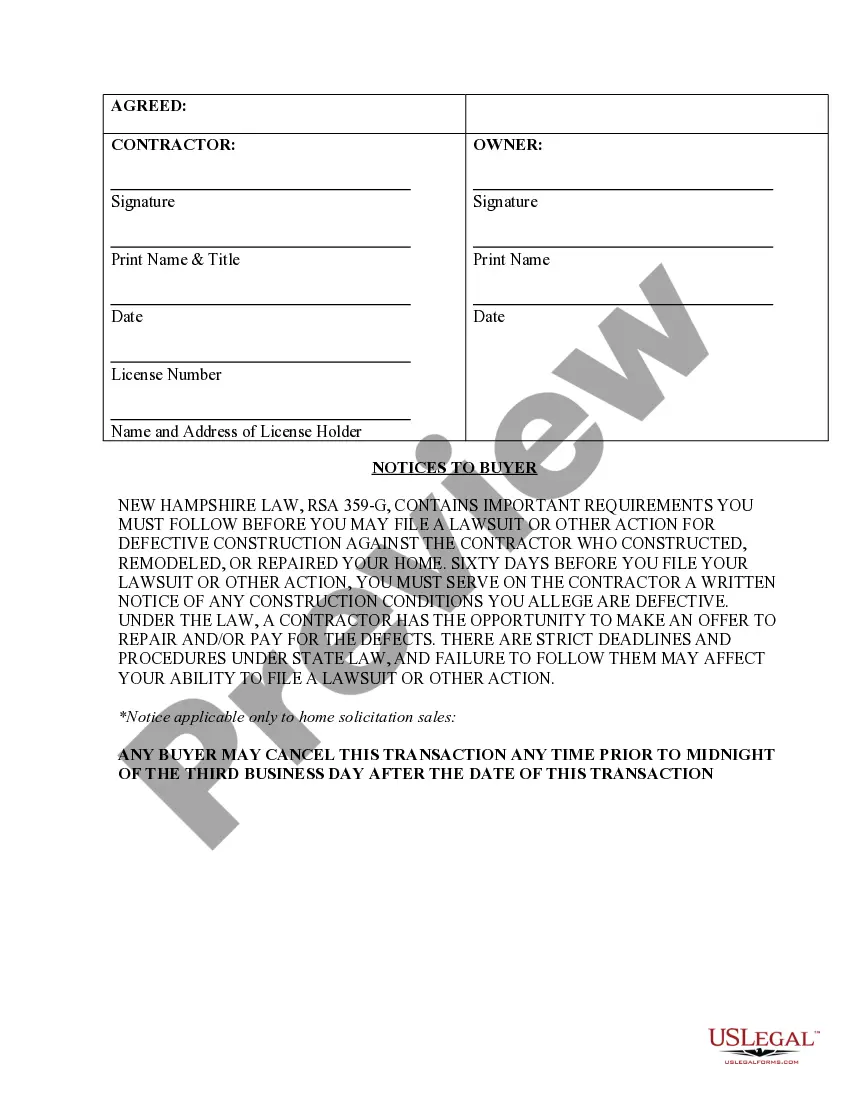
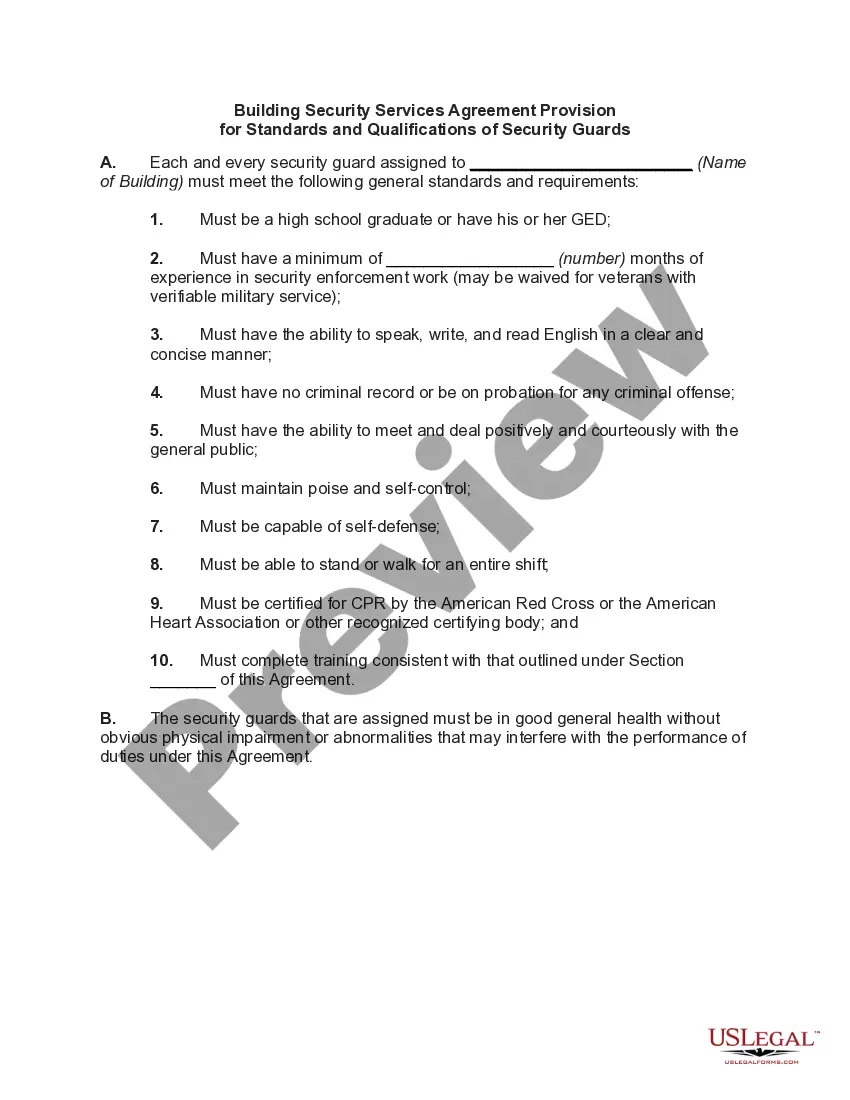
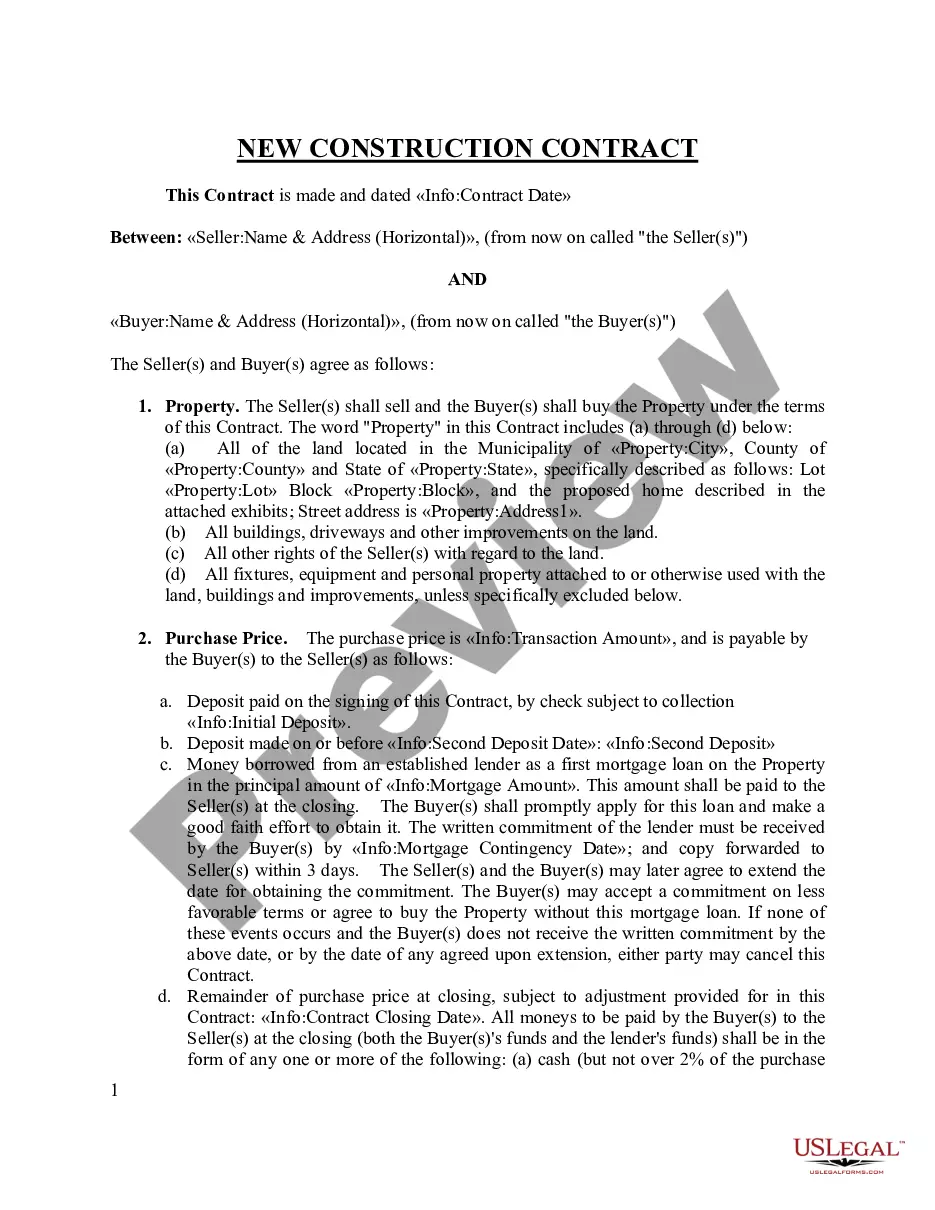
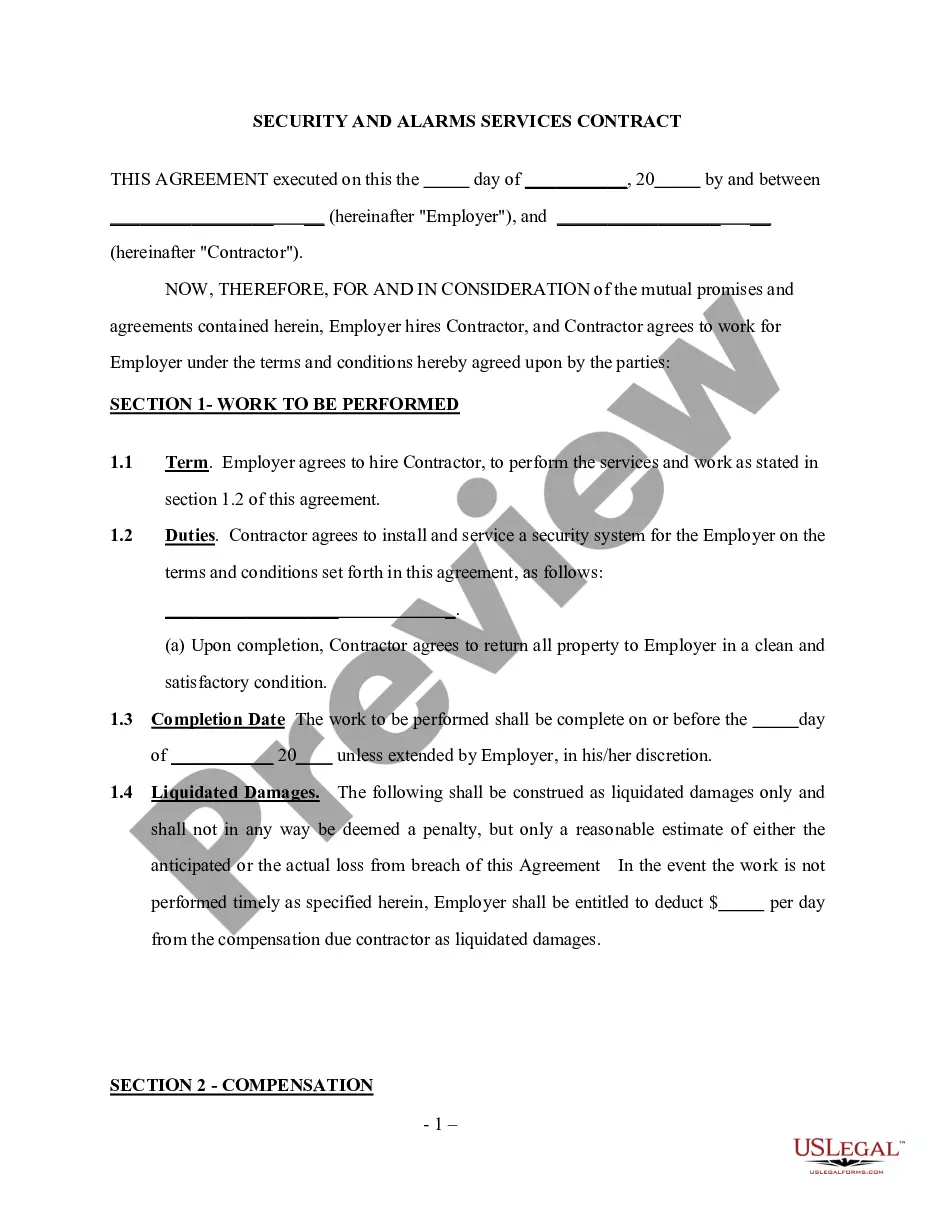
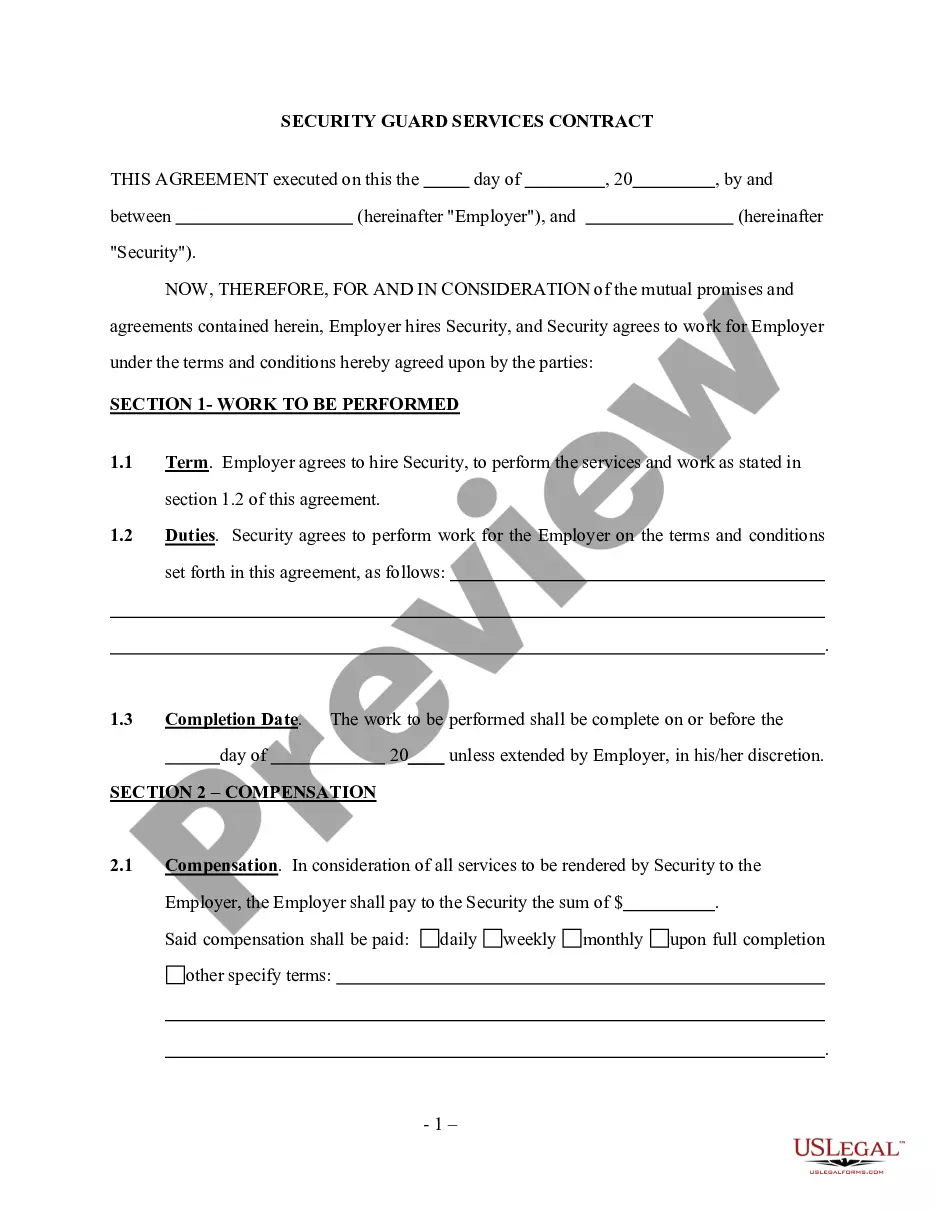
The Security Contract for Contractor is a legal document designed to outline the agreement between security contractors and property owners. This form serves to establish the terms of the security services provided, detailing payment arrangements, responsibilities, and liabilities of both parties. It is crucial for ensuring clarity and compliance with the laws of the State of New Hampshire, distinguishing it from other general contracts or agreements in the construction and security fields.
Key components of this form
- Definition of the project scope and specifications.
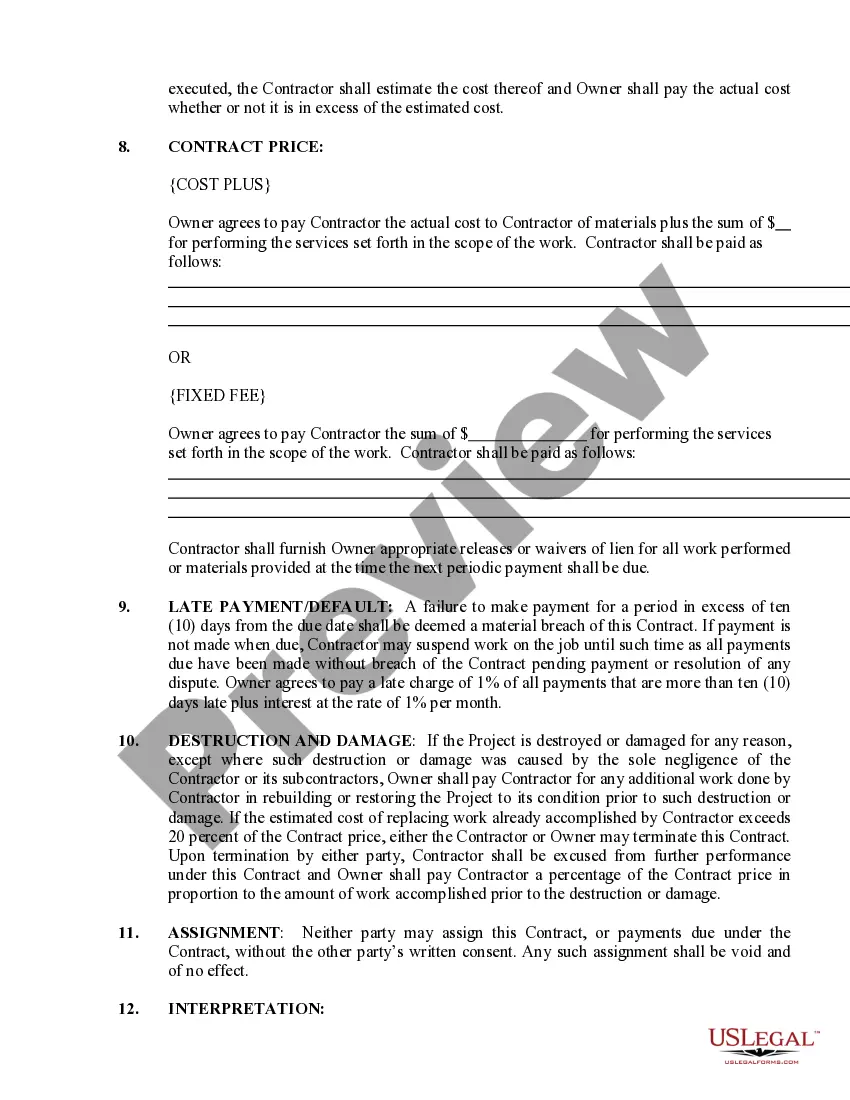
- Payment arrangements, including cost plus or fixed fee options.
- Insurance requirements for the contractor.
- Protocols for obtaining permits and regulatory approvals.
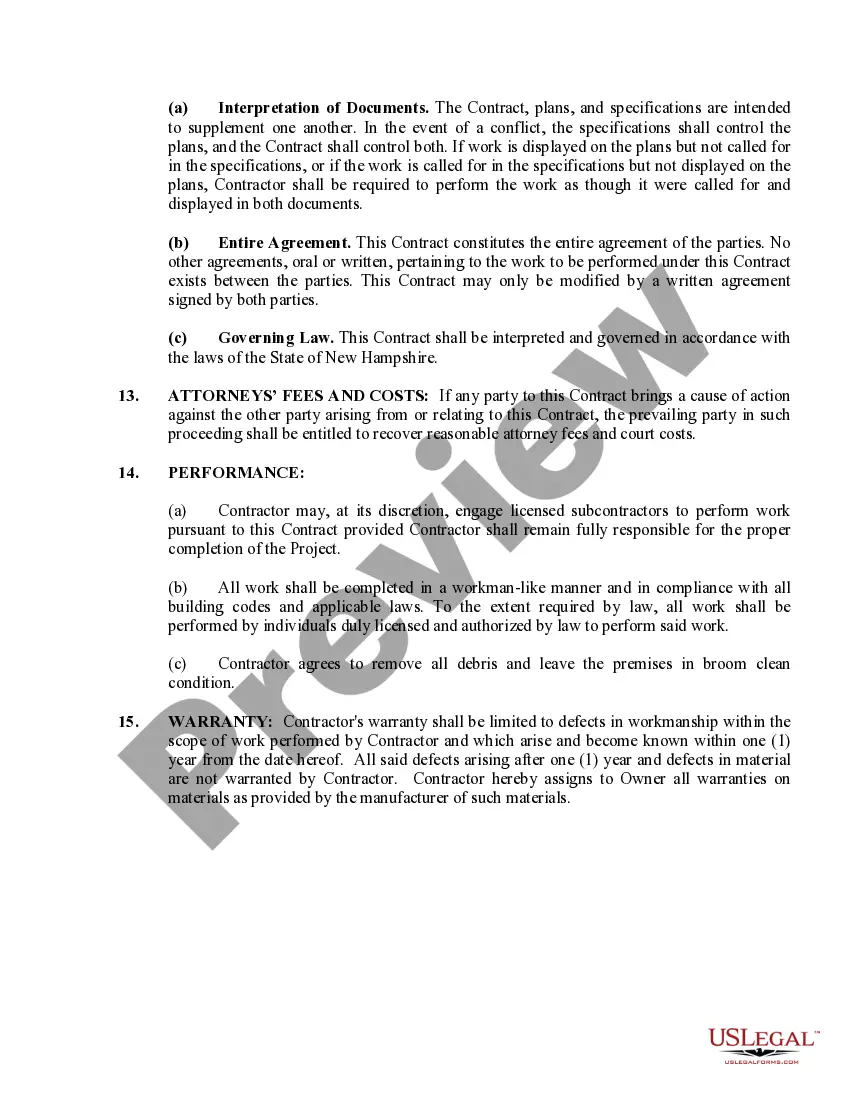
- Conditions for changes in the scope of work and the required documentation for such changes.
- Provisions for handling destruction or damage to the project and related costs.

When to use this document
This contract should be used when a property owner hires a security contractor to provide services on their property. It is applicable in various scenarios, such as securing a construction site, managing safety at an event, or providing ongoing security for a facility. The form is essential for establishing the legal framework around the services being performed, ensuring both parties understand their rights and responsibilities.
Who should use this form
- Property owners seeking to hire security contractors for onsite services.
- Security contractors looking for a formal agreement to protect their interests and outline service terms.
- Legal professionals advising clients in the security or construction industry.
- Businesses requiring security services on their premises.
Completing this form step by step
- Identify the parties involved: list the contractor's name and the property owner's name.
- Define the project scope: outline the services to be provided and any specific safety requirements.
- Specify payment details: indicate whether the payment is cost plus or a fixed fee, along with the contract price.
- List relevant permits: include details on any required permits and who is responsible for obtaining them.
- Outline insurance clauses: detail the types and amounts of insurance the contractor must maintain.
Does this form need to be notarized?
Notarization is not commonly needed for this form. However, certain documents or local rules may make it necessary. Our notarization service, powered by Notarize, allows you to finalize it securely online anytime, day or night.
Get your form ready online
Our built-in tools help you complete, sign, share, and store your documents in one place.
Make edits, fill in missing information, and update formatting in US Legal Forms—just like you would in MS Word.
Download a copy, print it, send it by email, or mail it via USPS—whatever works best for your next step.
Sign and collect signatures with our SignNow integration. Send to multiple recipients, set reminders, and more. Go Premium to unlock E-Sign.
If this form requires notarization, complete it online through a secure video call—no need to meet a notary in person or wait for an appointment.
We protect your documents and personal data by following strict security and privacy standards.

Make edits, fill in missing information, and update formatting in US Legal Forms—just like you would in MS Word.

Download a copy, print it, send it by email, or mail it via USPS—whatever works best for your next step.

Sign and collect signatures with our SignNow integration. Send to multiple recipients, set reminders, and more. Go Premium to unlock E-Sign.

If this form requires notarization, complete it online through a secure video call—no need to meet a notary in person or wait for an appointment.

We protect your documents and personal data by following strict security and privacy standards.
Common mistakes
- Failing to clearly define the scope of work, leading to misunderstandings.
- Not specifying payment arrangements, causing disputes over costs.
- Omitting necessary permits, resulting in potential legal issues.
- Neglecting to address insurance requirements, leaving parties exposed to risk.
- Not documenting changes to the scope of work through signed Change Orders, which can affect contractual enforceability.
Advantages of online completion
- Convenient access to professionally drafted legal forms at any time.
- Edit and customize the document to meet specific project needs.
- Integration of legal requirements ensures compliance with state laws.
- Easy downloading and printing options for quick access.
Main things to remember
- The Security Contract for Contractor is essential for outlining responsibilities between contractors and property owners.
- It provides clarity on payment terms, insurance, and scope of work.
- Using this form can help prevent disputes and ensure compliance with local laws in New Hampshire.
Looking for another form?
Form popularity
FAQ
1. Not Having a Written Contract.The taxing, labor and employment, and insurance authorities expect a written contract that states that the worker is an independent contractor and will be paid as such with no tax withholding, no benefits, etc.
Terms. This is the first section of any agreement or contract and states the names and locations of the parties involved. Responsibilities & Deliverables. Payment-Related Details. Confidentiality Clause. Contract Termination. Choice of Law.
Do employers need to complete employment verification checks for independent contractors? No.However, it is important to note that businesses and individuals may not hire independent contractors if they are aware that the independent contractor is not authorized to work in the United States.
Terms. This is the first section of any agreement or contract and states the names and locations of the parties involved. Responsibilities & Deliverables. Payment-Related Details. Confidentiality Clause. Contract Termination. Choice of Law.
An independent contractor should never fill out an employee application. Each applicant should be provided with a copy of the enclosed document, which indicates that it is for independent contractor use only.
The IRS requires contractors to fill out a Form W-9, request for Taxpayer Identification Number and Certification, which you should keep on file for at least four years after the hiring. This form is used to request the correct name and Taxpayer Identification Number, or TIN, of the worker or their entity.
If you run a small business that hires 1099 contractors, also known as independent contractors, it is vital that you have them sign an independent contractor contract. This is because there is a significant gray area between who is classified as an independent contractor and who is classified as an employee.
For most types of projects you hire an independent contractor (IC) to do, the law does not require you to put anything in writing. You can meet with the IC, agree on the terms of your arrangement, and have an oral contract or agreement that is legally binding. Just because you can doesn't mean you should, however.