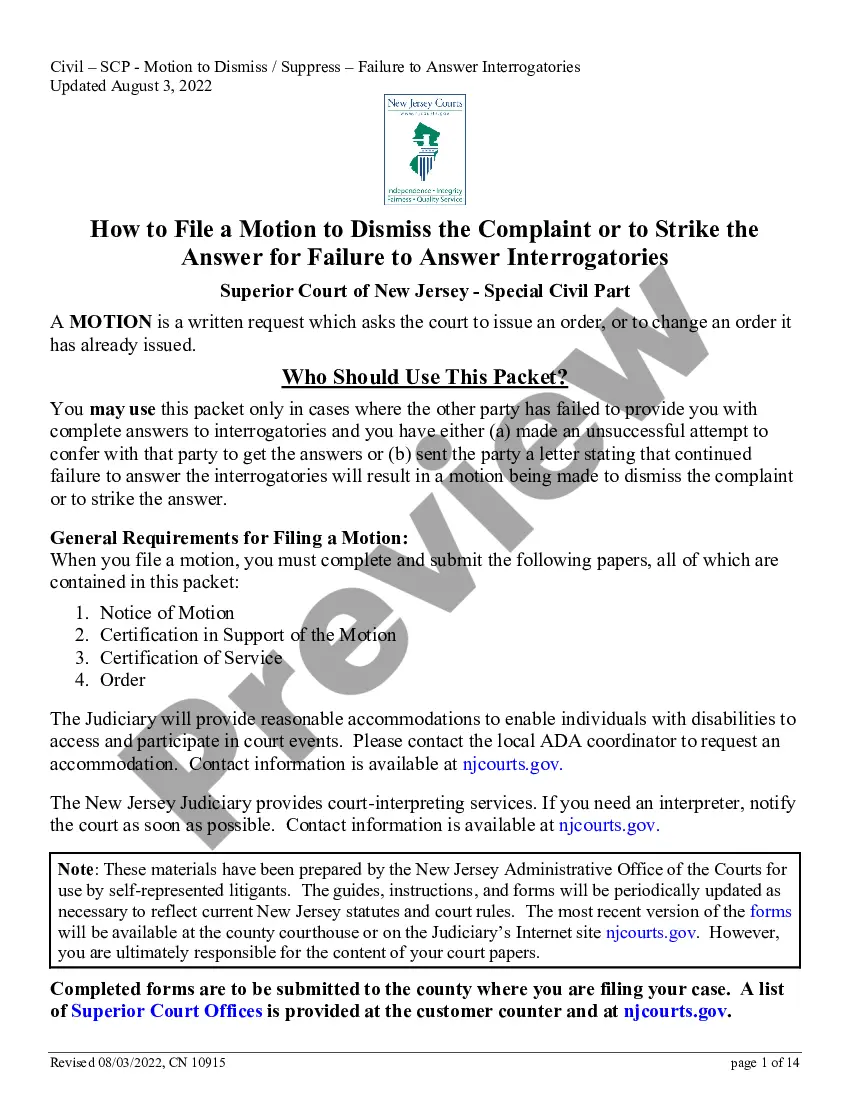
New Hampshire Trim Carpenter Contract for Contractor
Understanding this form
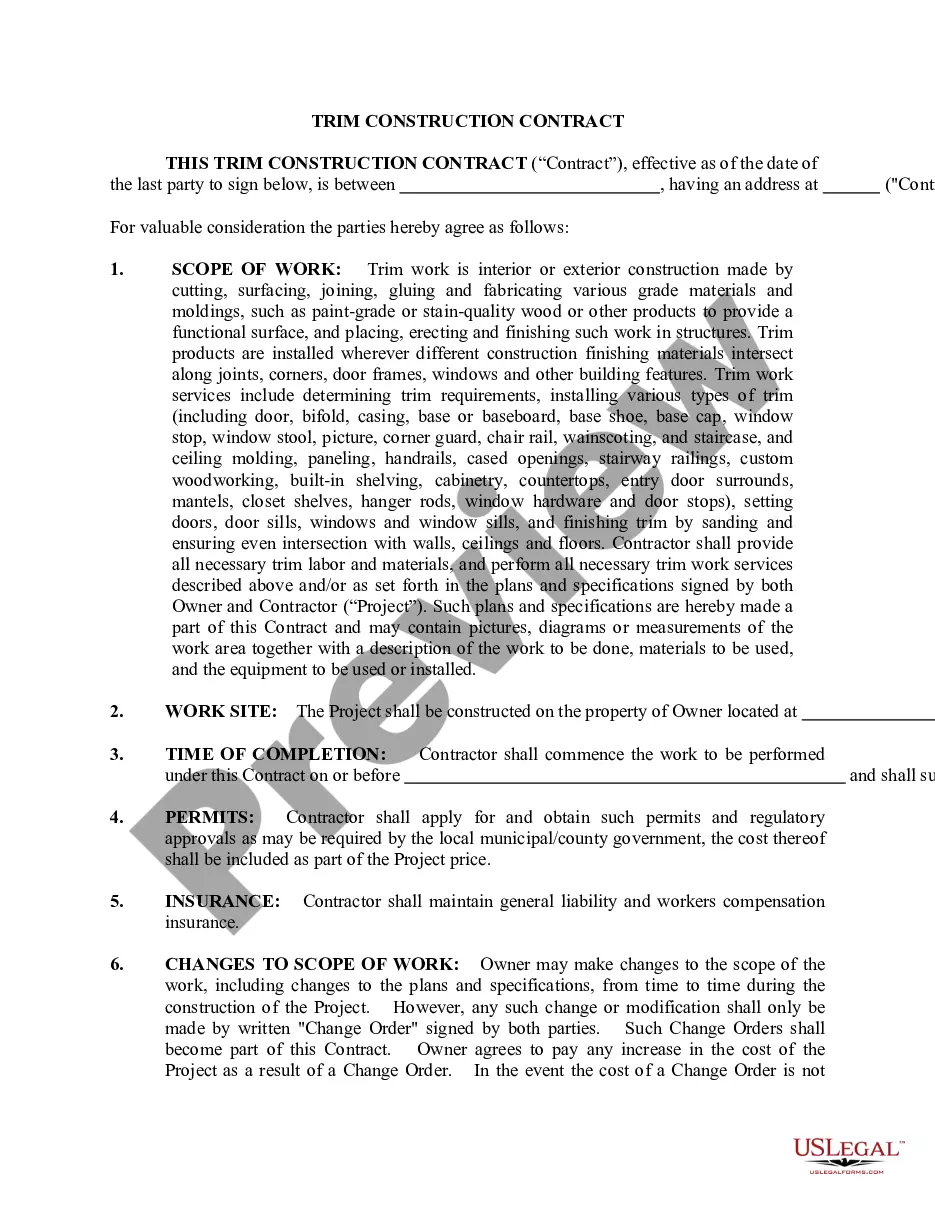
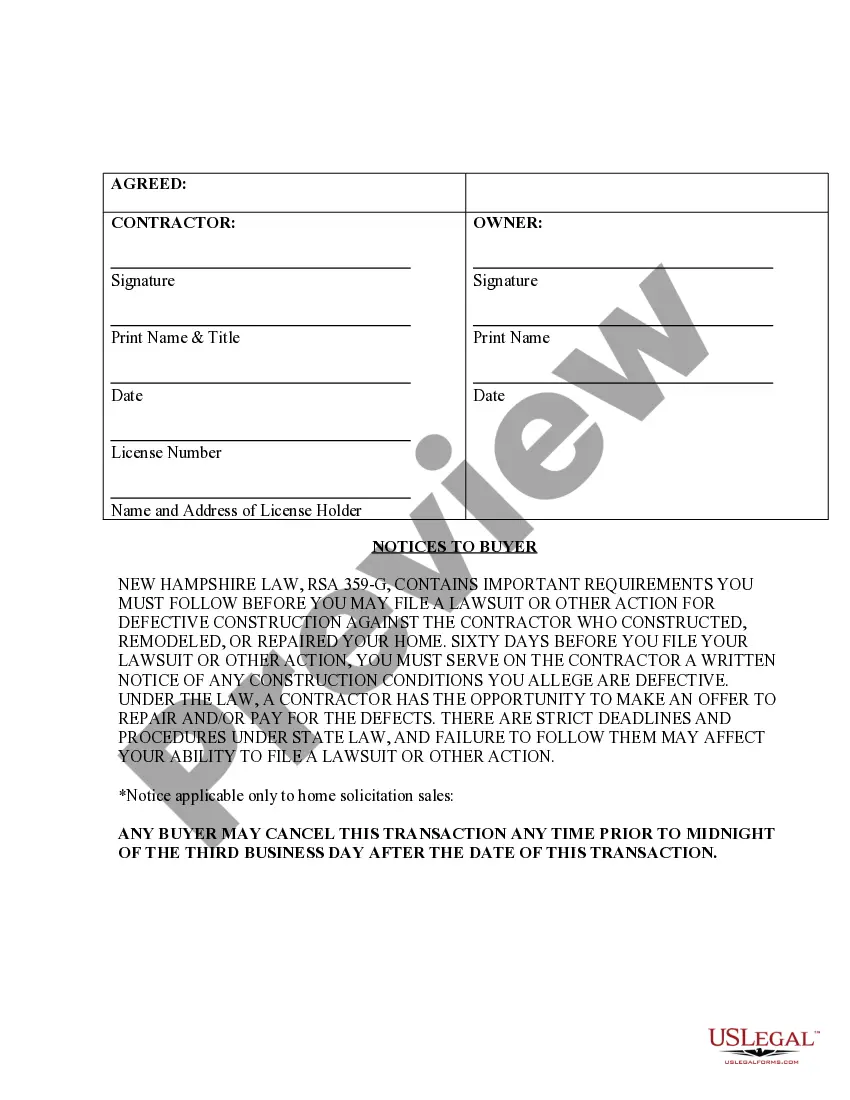
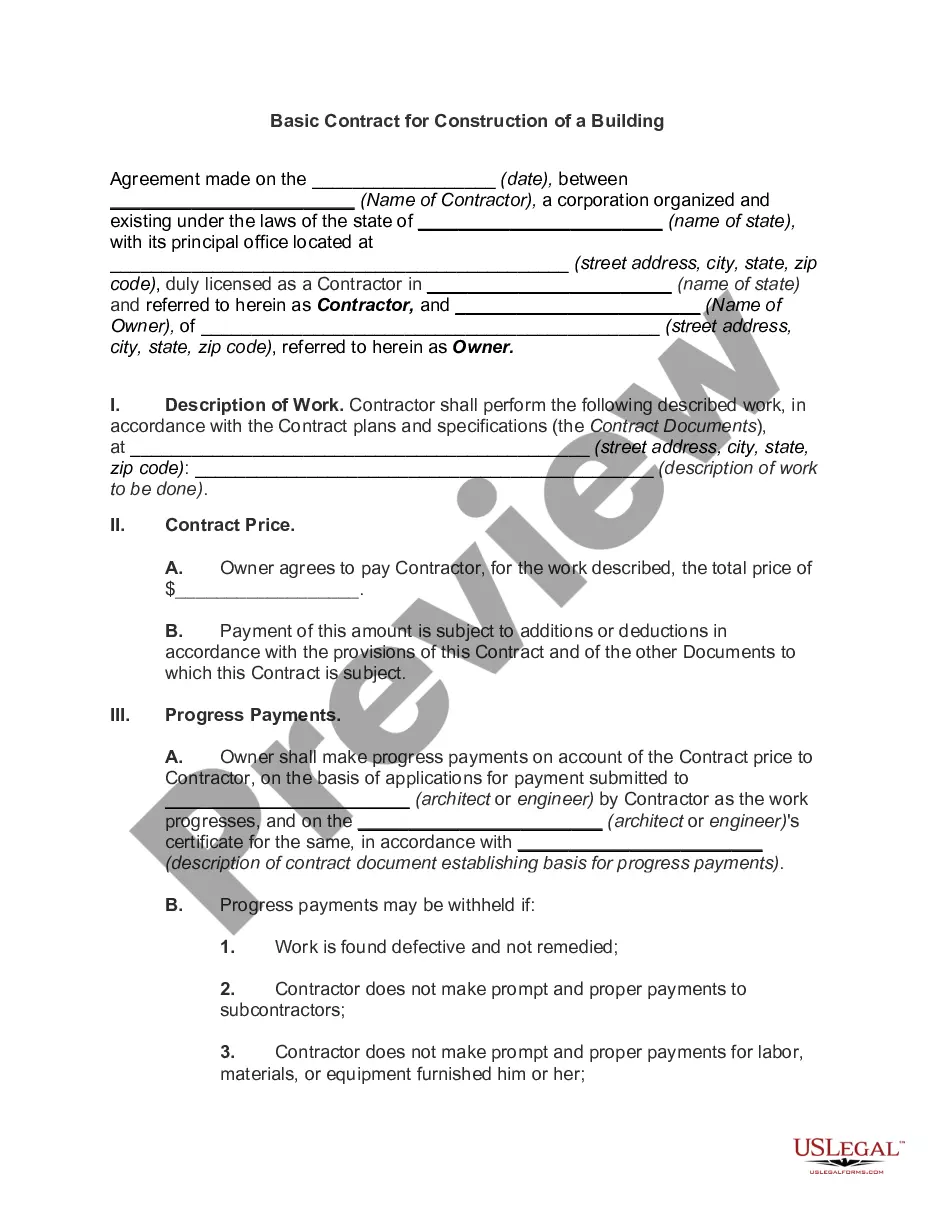
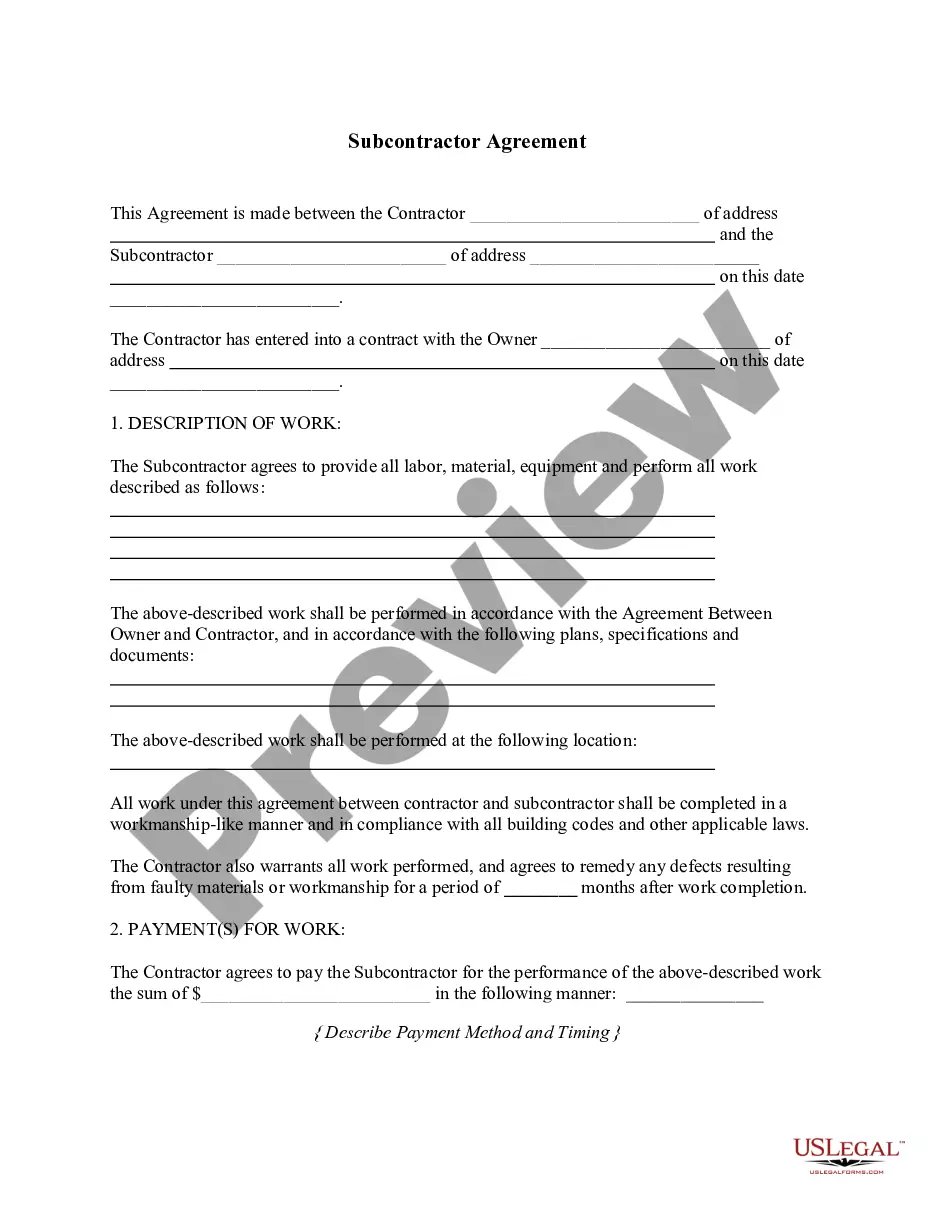
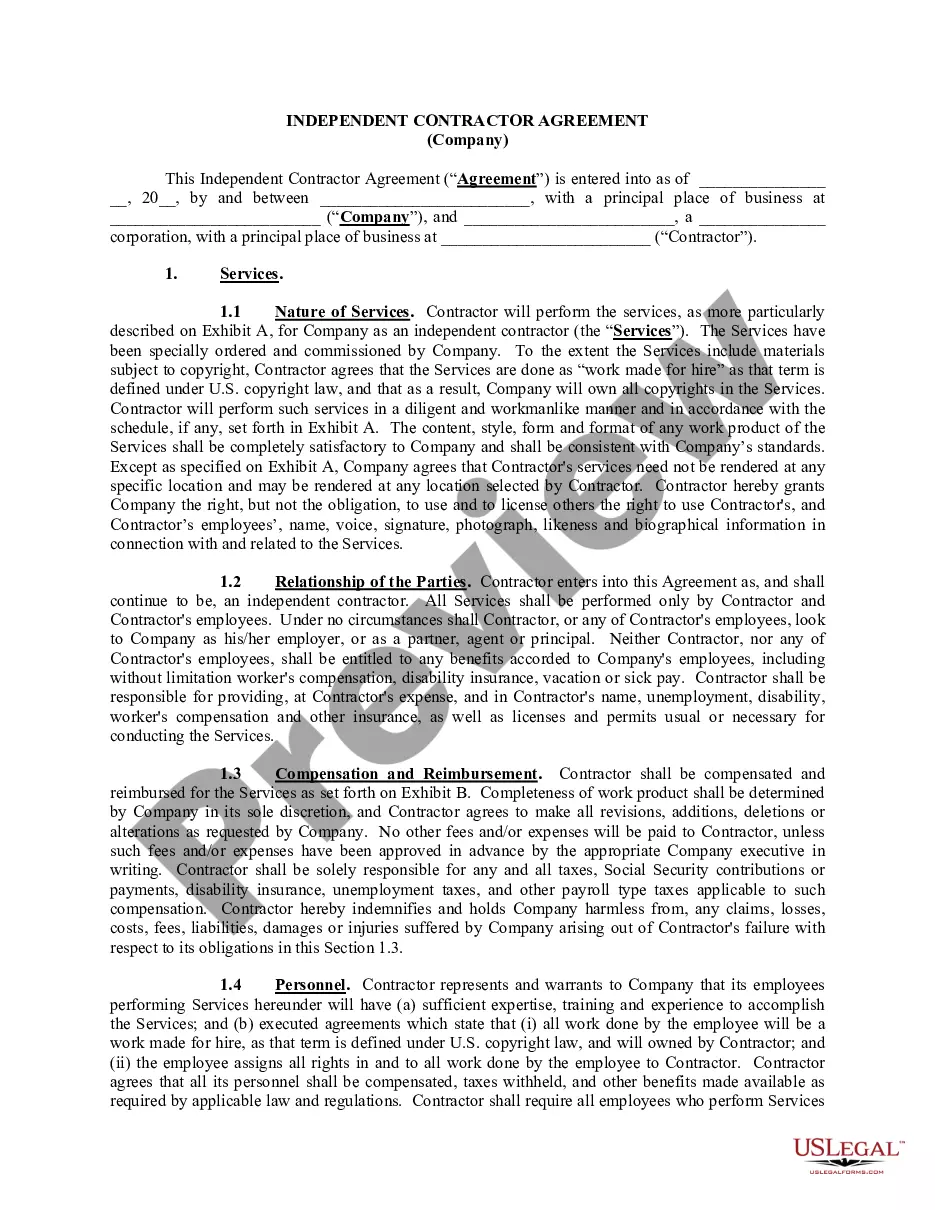
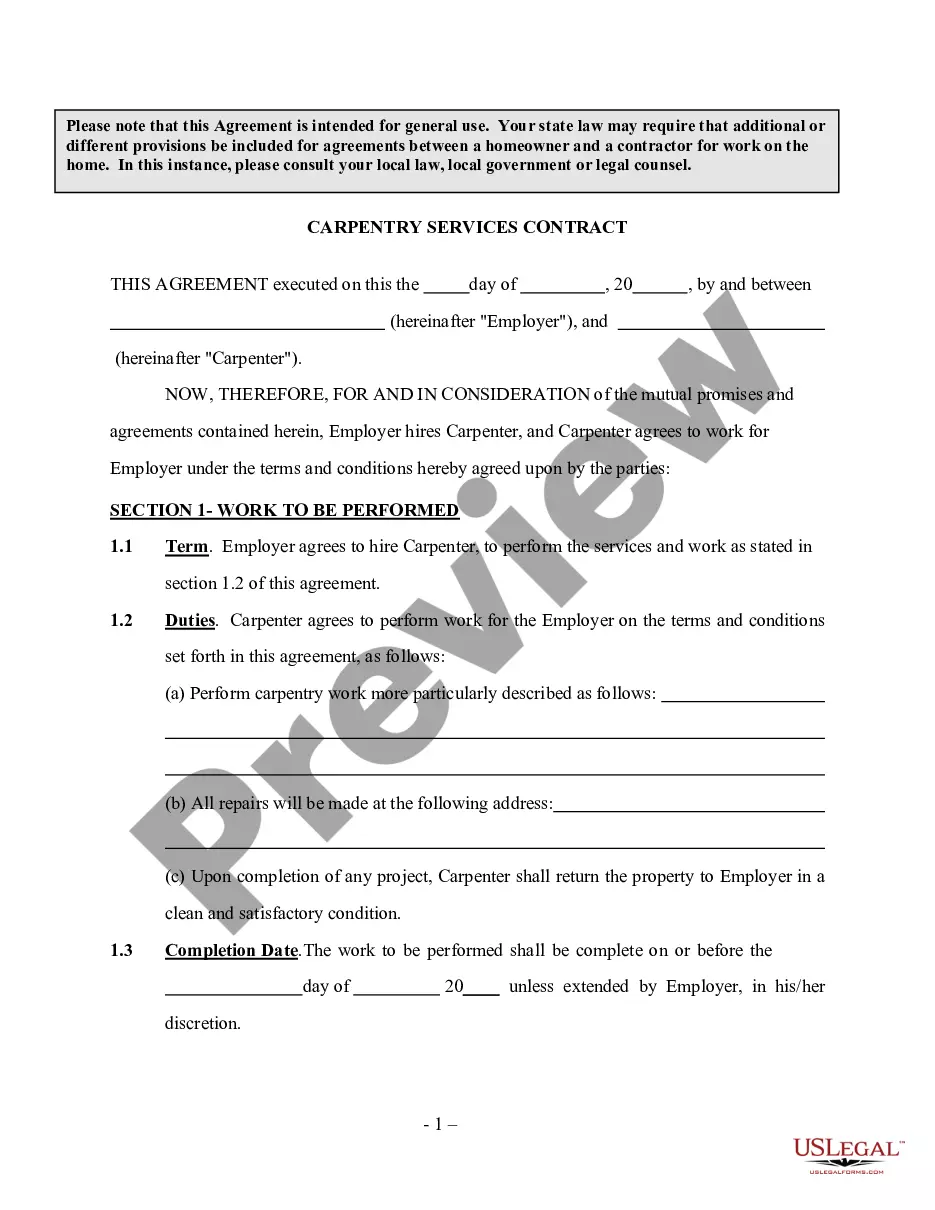
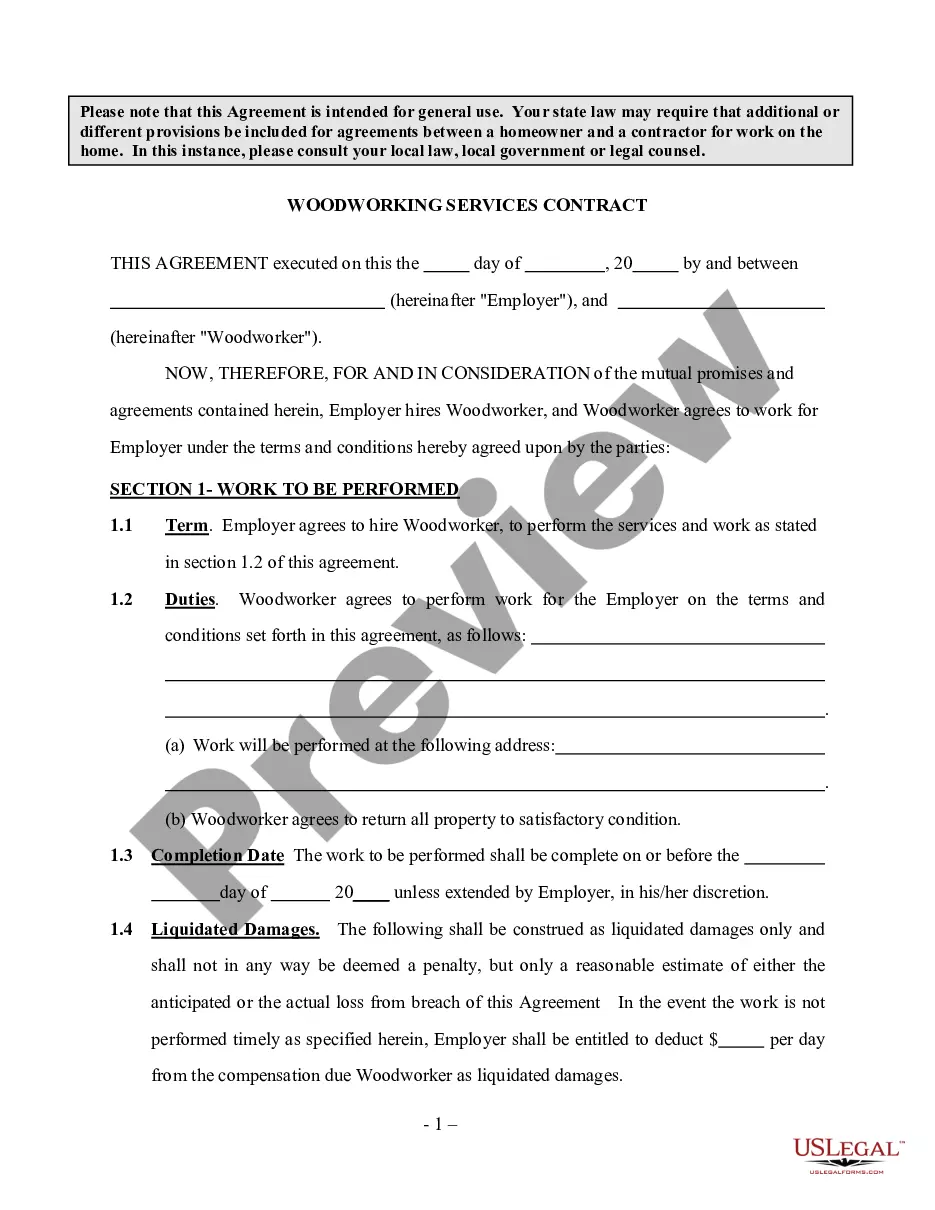
The Trim Carpenter Contract for Contractor is a legal document that outlines the agreement between a trim carpenter contractor and a property owner. This form specifies terms regarding payment arrangements, project details, and responsibilities related to permits, insurance, and changes in scope. This contract is unique as it complies specifically with the laws of New Hampshire, making it a reliable choice for local projects.
Key components of this form
- Permits: Details contractor responsibilities for obtaining necessary permits.
- Insurance: Outlines contractor requirements for general liability and workers' compensation insurance.
- Changes to scope of work: Specifies how changes must be documented and the impact on project costs.
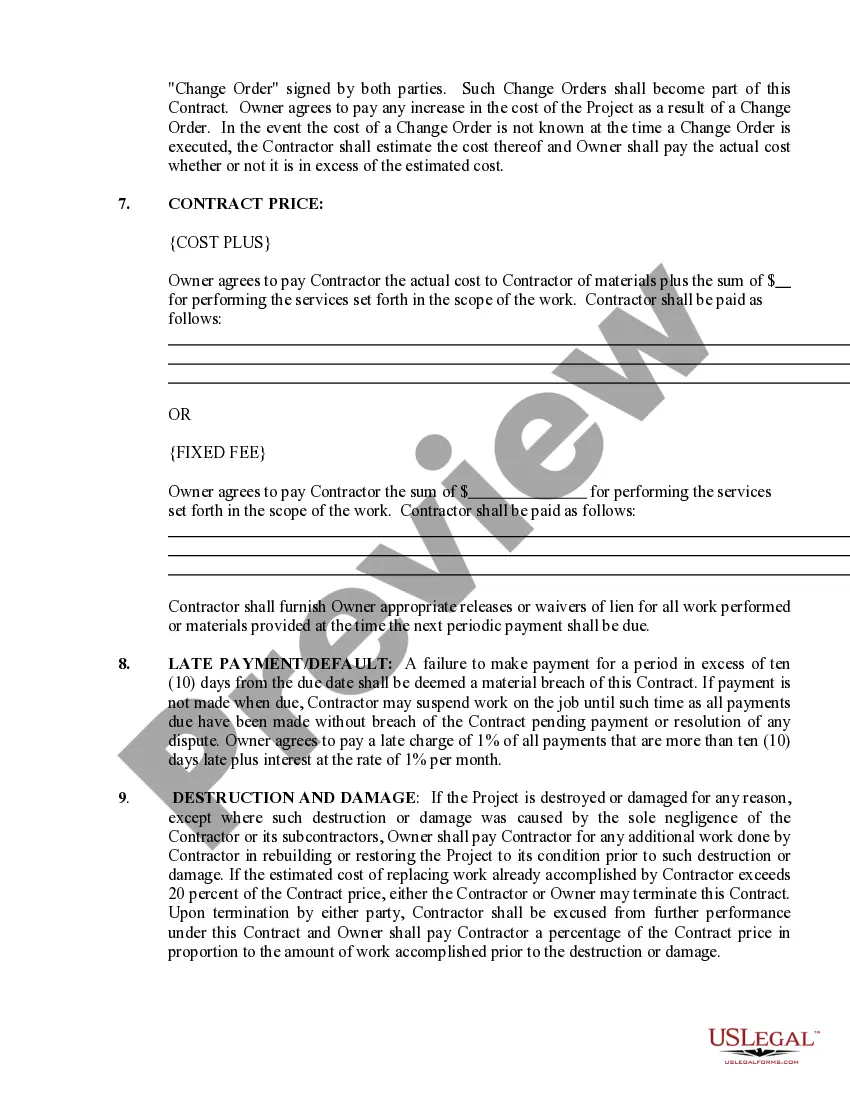
- Contract price: Defines how project costs are structured and adjustments due to changes.
- Destruction and damage: Addresses payment for work needed if the project is damaged.
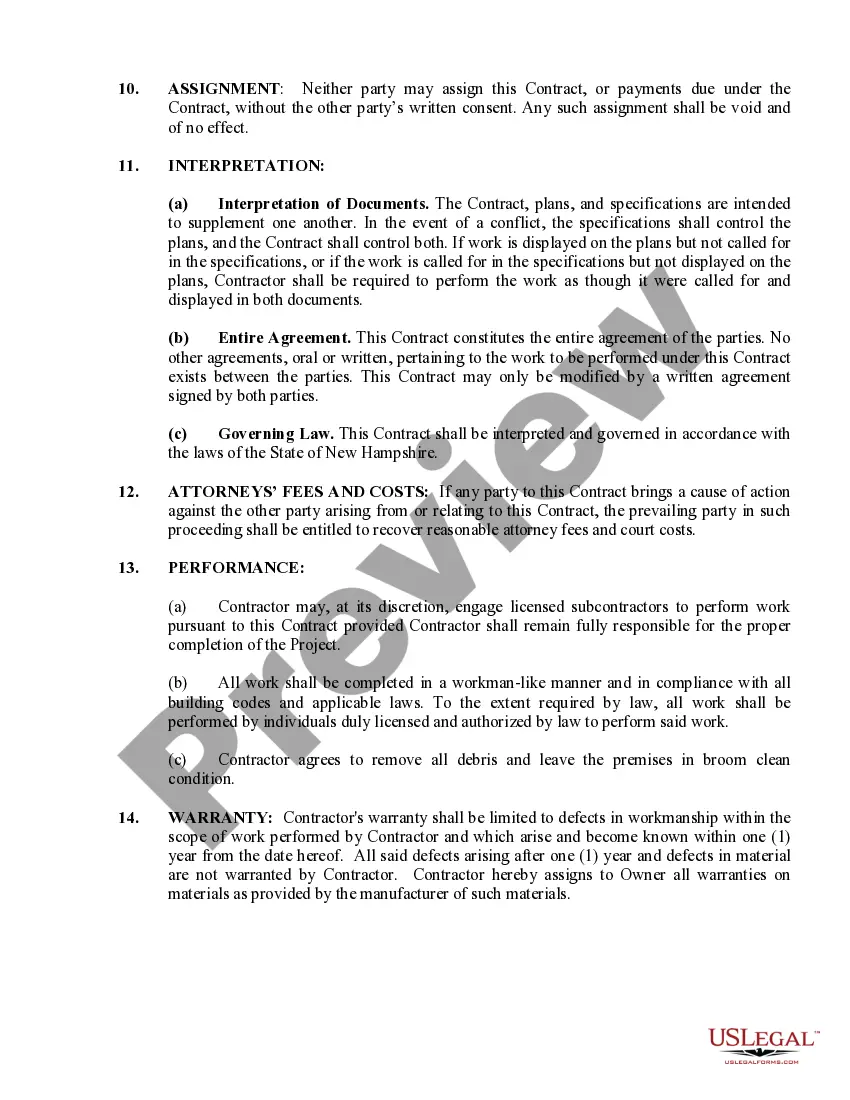
- Entire agreement clause: Confirms that this contract represents the complete agreement between both parties.
When to use this form
This form should be used when a property owner hires a trim carpenter for specific projects such as installing moldings, trims, or other finishing work. It is vital for ensuring that both parties understand their obligations and rights regarding project execution and payment terms. Utilize this contract when you need a clear framework to address potential changes in the scope of work or unforeseen circumstances affecting the project.
Who needs this form
- Property owners looking to hire a trim carpenter for finishing work.
- Trim carpenter contractors wanting to outline project terms with clients.
- Professionals in New Hampshire needing a legally binding contract that complies with local laws.
Instructions for completing this form
- Identify the parties involved: Clearly enter the legal names of the contractor and property owner.
- Specify the project details: Describe the work to be completed, including any relevant plans or specifications.
- Enter payment terms: Choose between cost-plus or fixed fee arrangements, as applicable.
- Document change order procedures: Outline how changes in the scope of work will be handled and paid for.
- Include insurance information: Specify the required insurance coverage for the contractor.
Notarization requirements for this form
This form does not typically require notarization unless specified by local law. However, verifying with a legal professional is advisable to ensure compliance with any specific requirements.
Get your form ready online
Our built-in tools help you complete, sign, share, and store your documents in one place.
Make edits, fill in missing information, and update formatting in US Legal Forms—just like you would in MS Word.
Download a copy, print it, send it by email, or mail it via USPS—whatever works best for your next step.
Sign and collect signatures with our SignNow integration. Send to multiple recipients, set reminders, and more. Go Premium to unlock E-Sign.
If this form requires notarization, complete it online through a secure video call—no need to meet a notary in person or wait for an appointment.
We protect your documents and personal data by following strict security and privacy standards.

Make edits, fill in missing information, and update formatting in US Legal Forms—just like you would in MS Word.

Download a copy, print it, send it by email, or mail it via USPS—whatever works best for your next step.

Sign and collect signatures with our SignNow integration. Send to multiple recipients, set reminders, and more. Go Premium to unlock E-Sign.

If this form requires notarization, complete it online through a secure video call—no need to meet a notary in person or wait for an appointment.

We protect your documents and personal data by following strict security and privacy standards.
Common mistakes
- Failing to specify payment terms clearly, leading to misunderstandings.
- Not documenting changes in writing, which can complicate project management.
- Overlooking insurance requirements, putting both parties at risk.
Benefits of completing this form online
- Convenience: Download the form instantly and fill it out at your own pace.
- Editability: Easily modify the document to suit specific project needs.
- Reliability: Ensure that you are using a contract drafted by licensed attorneys familiar with New Hampshire law.
Main things to remember
- This Trim Carpenter Contract is essential for establishing a clear agreement between contractors and property owners.
- Key components include payment terms, insurance protections, and procedures for changes.
- It complies with New Hampshire law, making it suitable for use in this state.
Looking for another form?

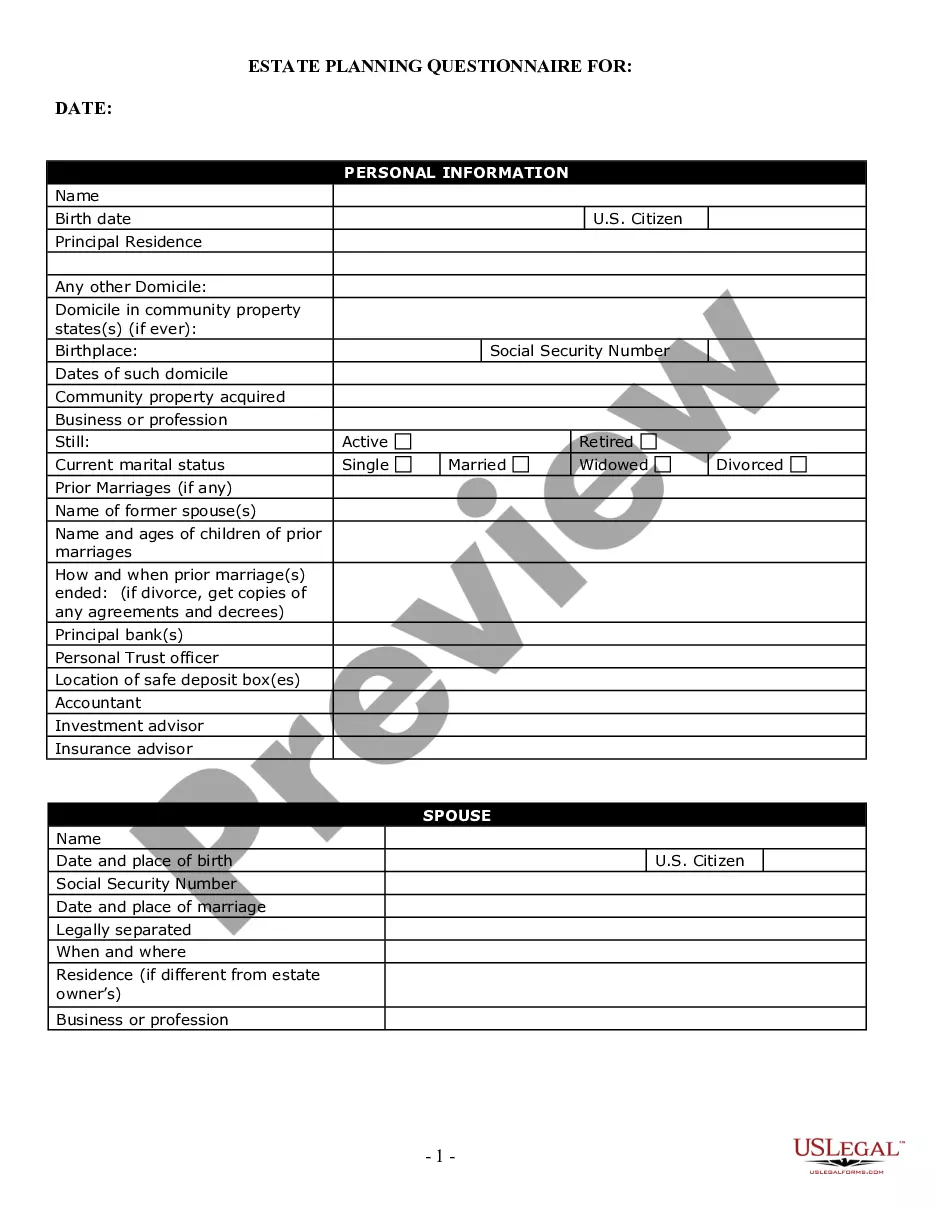
Form popularity
FAQ
Finish carpentry encompasses all work done inside a house after framing, sheathing, wiring, plumbing, insulation and drywall have been installed. This includes door and window installation and trim, fitting interior doors, wood and laminate flooring installation, wainscoting, crown molding and cabinet installation.
Carpentry is a building trade concerned with the constructing, assembling, and repairing of wooden structures.Finish carpentry, as the name implies, entails such activities as putting the trim and casing around joints and openings, hanging doors, attaching hardware, and building in shelves and closets.
Advertise, market and sell themselves. Be organised. Calculate/arrange materials, and price up work. Liaise with architects and building inspectors. Manage accounts. Work within budgets and time frames. Invoice customers. Deal with non-payers.
Establish a workshop. Having a well-designed workshop is an essential, especially when you want to establish a successful craft business. Develop a business plan. Marketing your products. Business organization and license. Get a business insurance. Final words.
STEP 1: Plan your business. STEP 2: Form a legal entity. STEP 3: Register for taxes. STEP 4: Open a business bank account & credit card. STEP 5: Set up business accounting. STEP 6: Obtain necessary permits and licenses. STEP 7: Get business insurance.
The formal agreement should be titled Contract for Carpentry Work or something similar. Add the names of every party who is involved in the contract. Using either a paragraph format or a bulleted list, state all of the items you have agreed on, using the parties' last names as needed.
Finish carpenters work on homes after the structure is fully built, insulated, wired, and plumbed. For this reason, finish carpenters can perform most of their work before or after the homeowner moves into a home. Many homeowners perform DIY finish carpentry in their own homes.
As its name lets on, rough carpentry is more basic, less refined, and more structural than finish carpentry. In other words, rough carpentry refers to the framing and structuring of a house.While rough carpentry is practical, finish carpentry is fashionable, more concerned with aesthetics than function.