Nebraska Deed of Reconveyance Individual Trustee
What is this form?
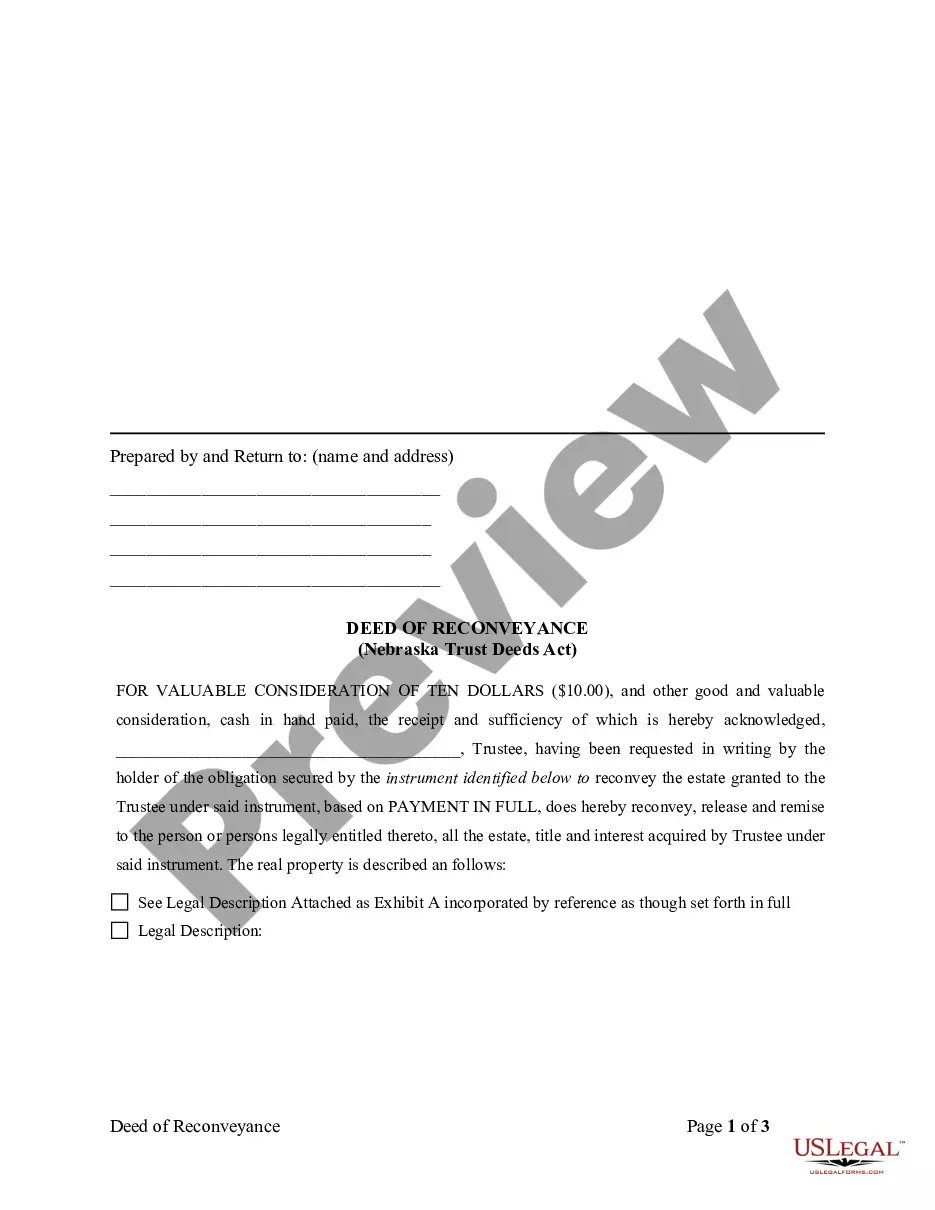
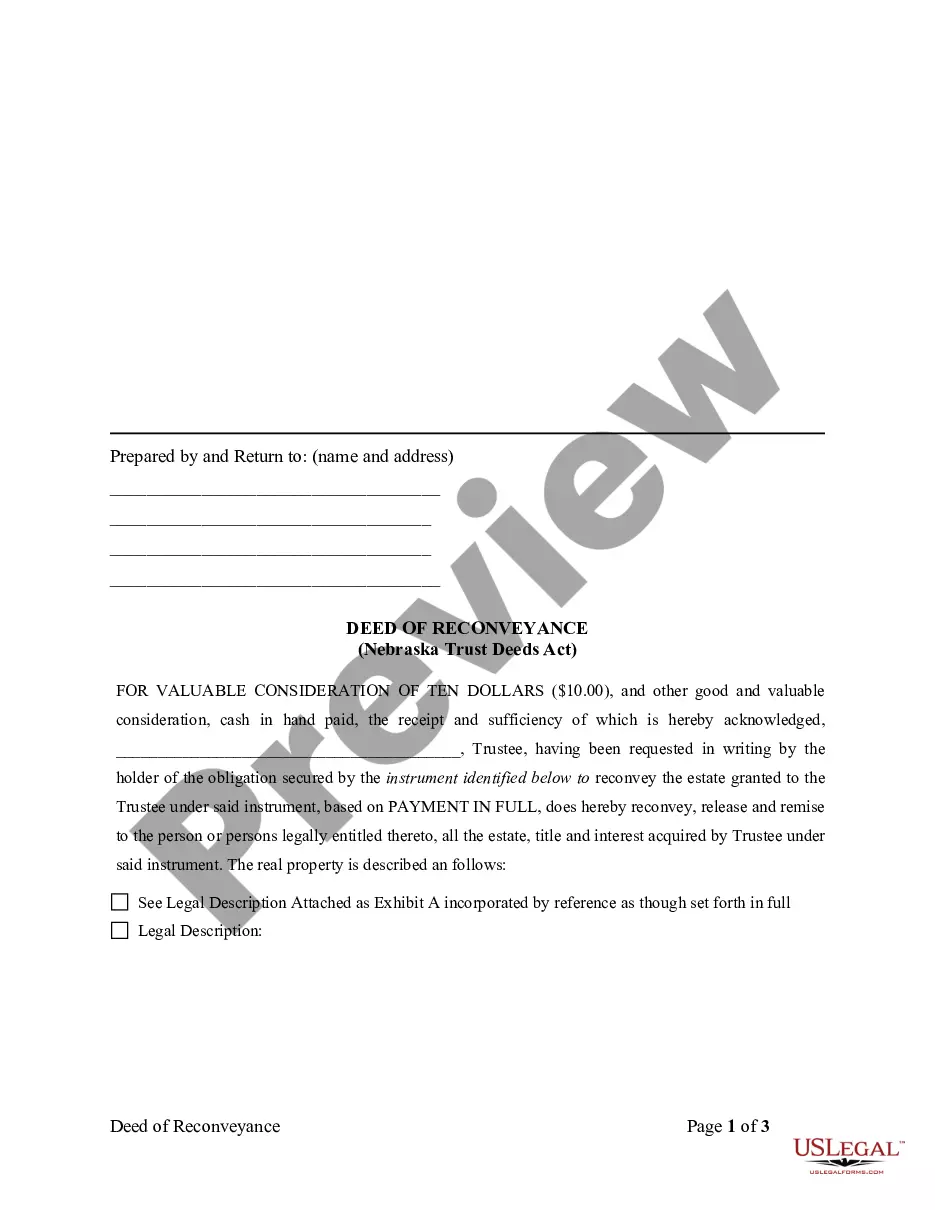
The Deed of Reconveyance is a legal document used in Nebraska to satisfy or release a deed of trust when an individual trustee has fulfilled their obligation. This form serves to clear the title of the property after the associated loan has been repaid. Unlike other forms related to real estate, the Deed of Reconveyance specifically addresses the release of the lien held by the trustee, making it essential when a mortgage is paid off.
Key parts of this document
- Prepared by and Return to: Section to enter the name and address of the party receiving the document.
- Trustee Information: Details identifying the trustee reconveying the title.
- Consideration: A declaration of the valuable consideration exchanged for the reconveyance.
- Property Description: A precise description of the real estate being released from the deed of trust.
- Notary Section: Area for the notary public to acknowledge the signing of the document.




When to use this document
This form should be used when a borrower has paid off a mortgage secured by a deed of trust, and it is necessary to clear the property's title. It is essential in scenarios where property owners want to ensure that the title is free from liens, particularly before selling or refinancing the property.
Who can use this document
- Individuals who have paid off a deed of trust and need to release the lien on their property.
- Trustees holding the deed of trust who are mandated to reconvey the property.
- Homeowners wishing to clear their title before selling their property.
How to complete this form
- Identify the parties involved by entering the names in the "Prepared by and Return to" section.
- Fill in the trustee's information, including name and title.
- Document the valuable consideration exchanged, typically stating "Ten Dollars ($10.00) and other good and valuable consideration."
- Provide a complete legal description of the property being reconveyed.
- Have the trustee sign the document in front of a notary public for acknowledgment.
Does this document require notarization?
Notarization is required for this form to take effect. Our online notarization service, powered by Notarize, lets you verify and sign documents remotely through an encrypted video session, available 24/7.
Get your form ready online
Our built-in tools help you complete, sign, share, and store your documents in one place.
Make edits, fill in missing information, and update formatting in US Legal Forms—just like you would in MS Word.
Download a copy, print it, send it by email, or mail it via USPS—whatever works best for your next step.
Sign and collect signatures with our SignNow integration. Send to multiple recipients, set reminders, and more. Go Premium to unlock E-Sign.
If this form requires notarization, complete it online through a secure video call—no need to meet a notary in person or wait for an appointment.
We protect your documents and personal data by following strict security and privacy standards.
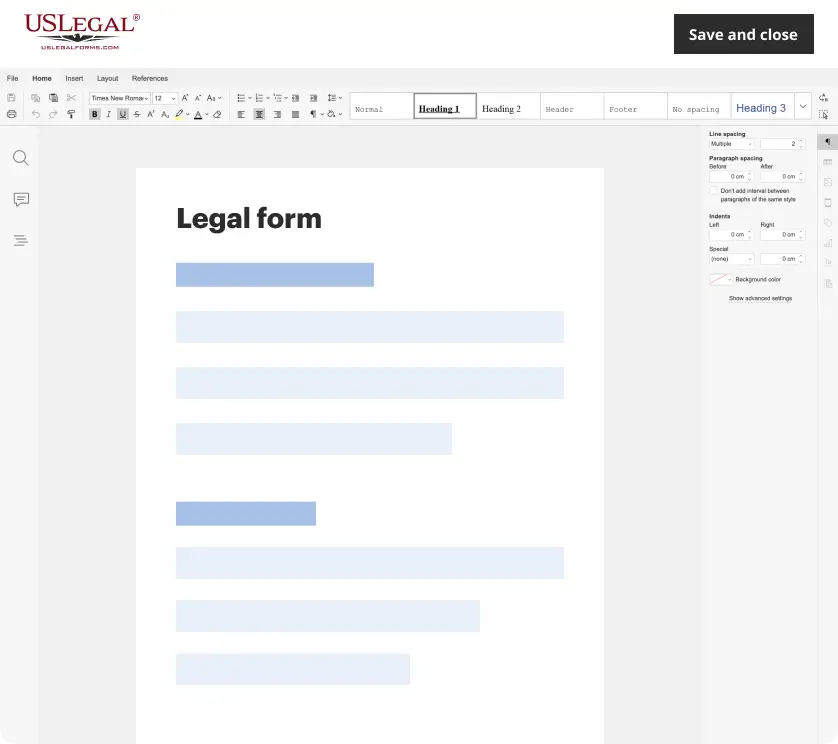
Make edits, fill in missing information, and update formatting in US Legal Forms—just like you would in MS Word.
Download a copy, print it, send it by email, or mail it via USPS—whatever works best for your next step.
Sign and collect signatures with our SignNow integration. Send to multiple recipients, set reminders, and more. Go Premium to unlock E-Sign.

If this form requires notarization, complete it online through a secure video call—no need to meet a notary in person or wait for an appointment.
We protect your documents and personal data by following strict security and privacy standards.
Common mistakes to avoid
- Failing to include a complete and accurate legal description of the property.
- Not obtaining the required notarization, which can invalidate the form.
- Leaving out the names or addresses of the parties involved.
Advantages of online completion
- Easy access to a reliable legal form customized to meet state requirements.
- Convenience of downloading and printing from anywhere at any time.
- The ability to fill out and edit the document to suit specific needs before finalizing.
Main things to remember
- The Deed of Reconveyance is essential for releasing a property from mortgage obligations in Nebraska.
- Notarization is a mandatory step for this form to be legally enforceable.
- Using US Legal Forms provides an efficient way to access, complete, and notarize legal documents.
Looking for another form?

Form popularity
FAQ
Giving the wrong legal address for the property or the wrong amount of the debt can render the deed unenforceable. In some cases, the error is easy to fix, and the court will rule the deed is enforceable.
A reconveyance is the official transfer of the property title after the mortgage has been paid in full. The processing time can vary based on the county in which the property is located and can take up to three months. You will need to contact your county for questions on their specific processing time.
The trustee is a neutral third-party who holds the legal title to a property until the borrower pays off the loan in full. They're called a trustee because they hold the property in trust for the lender.In this case, the trustee would likely sell the property in order to repay the loan.
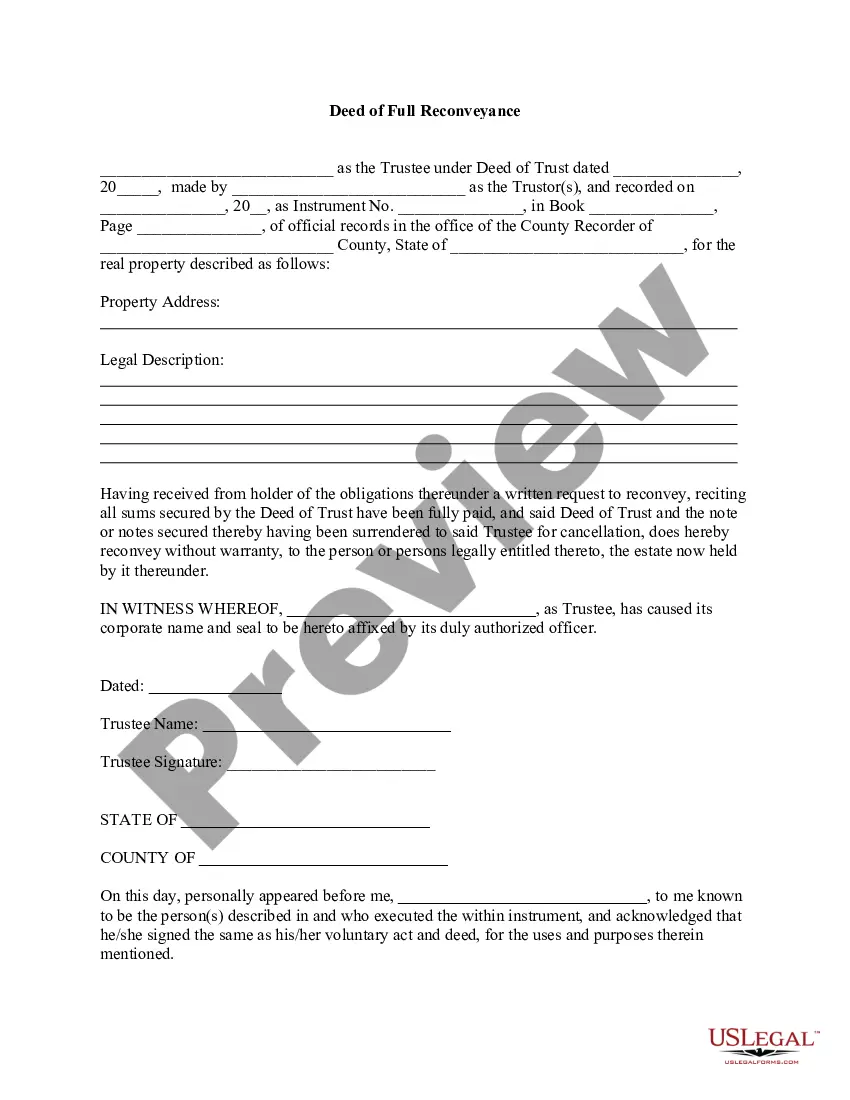
Is completed and signed by the trustee, whose signature must be notarized. Full Reconveyance form can be purchased at most office supply or stationery stores. Usually the trustee named on your Deed of Trust will also have forms available and will issue the Full Reconveyance.
In a deed of trust, the borrower is called the trustor and the lender is the beneficiary. The trustee holds title to the property until the trustor has fully repaid the loan to the beneficiary, at which time the lender notifies the trustee, who then transfers full title of the property to the trustor.
A mortgage holder issues a deed of reconveyance to indicate that the borrower has been released from the mortgage debt. The deed transfers the property title from the lender, also called the beneficiary, to the borrower. This document is most commonly used when a mortgage has been paid in full.
In order to reconvey a deed of trust, the full reconveyance must be recorded within 21 days of receipt of the documents from the Beneficiary. The deed of reconveyance must be recorded in the county where the property is located. Locate the name of the Trustee in the recorded Deed of Trust.
In order to clear the Deed of Trust from the title to the property, a Deed of Reconveyance must be recorded with the Country Recorder or Recorder of Deeds. If the Trustee/Beneficiary fails to record a satisfaction within the set time limits, the Trustee/Beneficiary may be responsible for damages as set out by statute.
Only until the debt is paid off by the borrower can a deed of reconveyance then be used to clear the deed of trust from the title to the property. The document is signed by the trustee, whose signature must be notarized.