Nebraska Deed of Reconveyance - Corporate Trustee
What is this form?
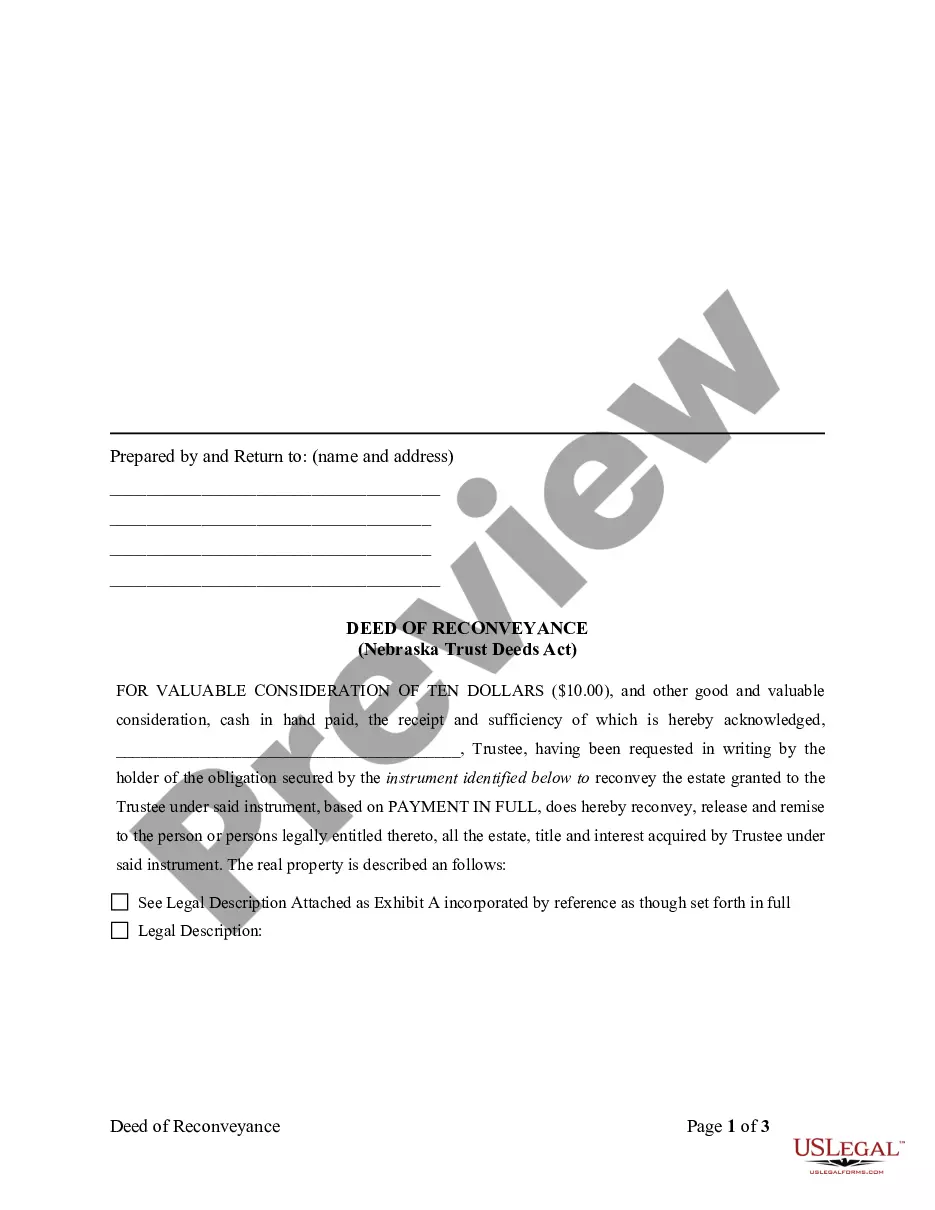
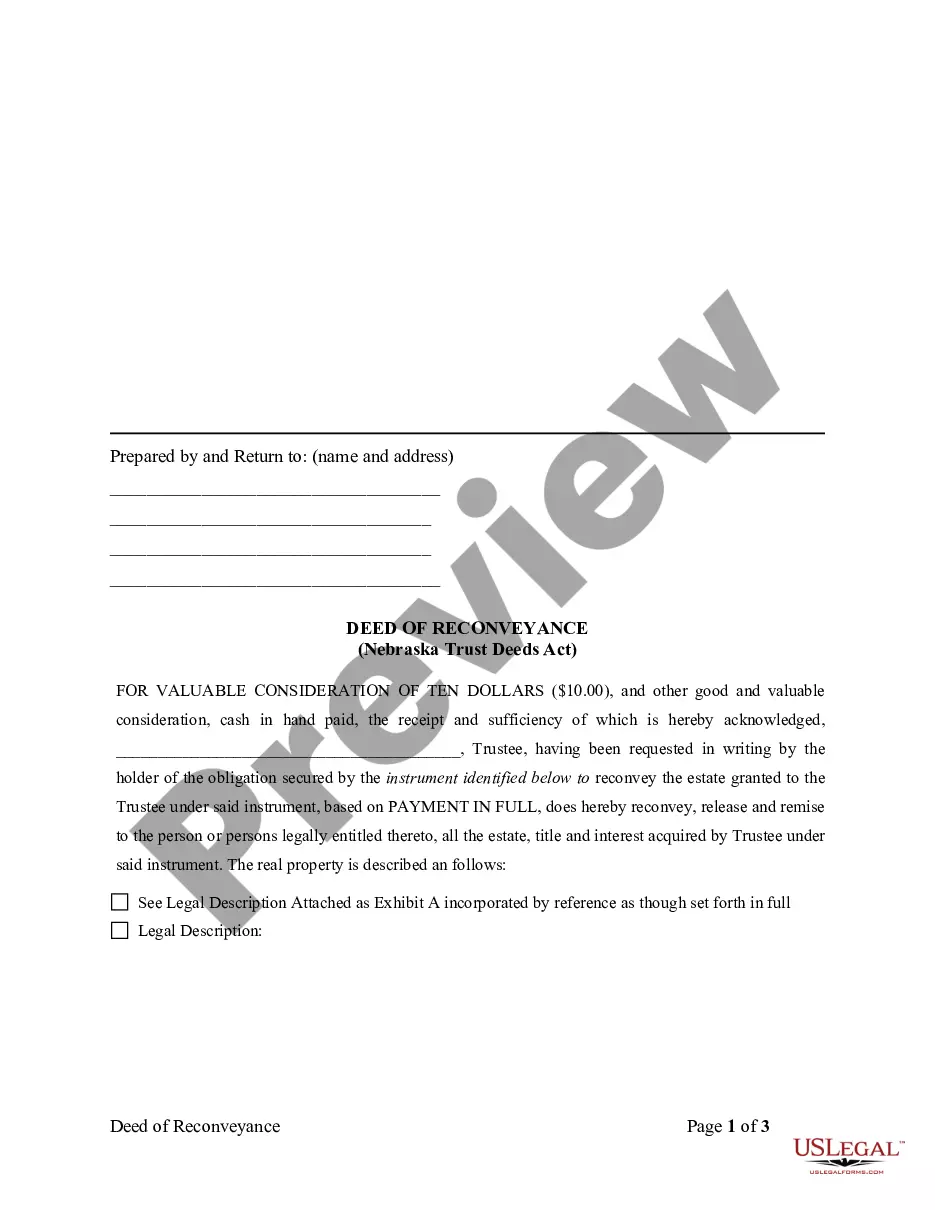
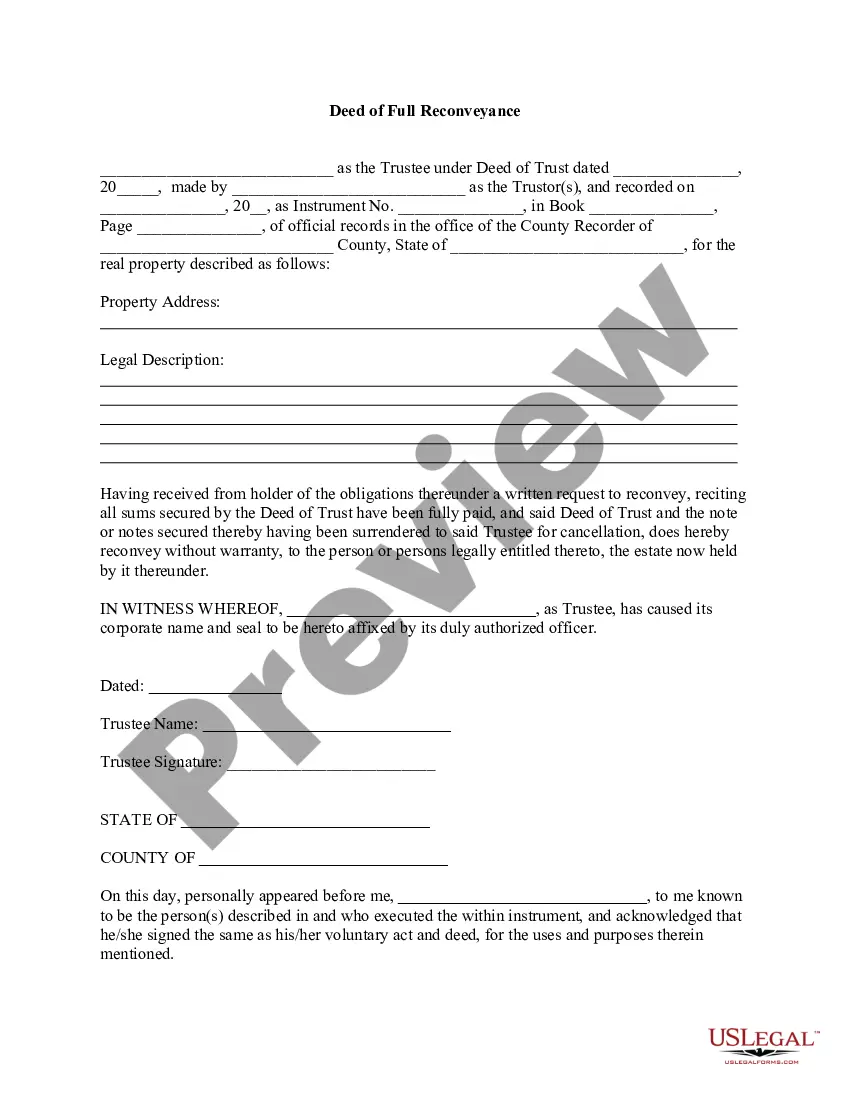
The Deed of Reconveyance - Corporate Trustee is a legal document used to release a property from a mortgage or deed of trust once the obligation has been fulfilled. This specific form is utilized in Nebraska and is drafted to comply with state laws. It signifies that the corporate trustee has been instructed to reconvey the title back to the borrower after the mortgage debt has been fully satisfied, distinguishing it from other forms that might deal with different types of property transfers or obligations.
Key parts of this document
- Prepared by and return to fields for the trustee's name and address.
- Statement acknowledging valuable consideration received for the reconveyance.
- Identification of the trustee who is reconveying the property.
- Description of the real property being reconveyed.
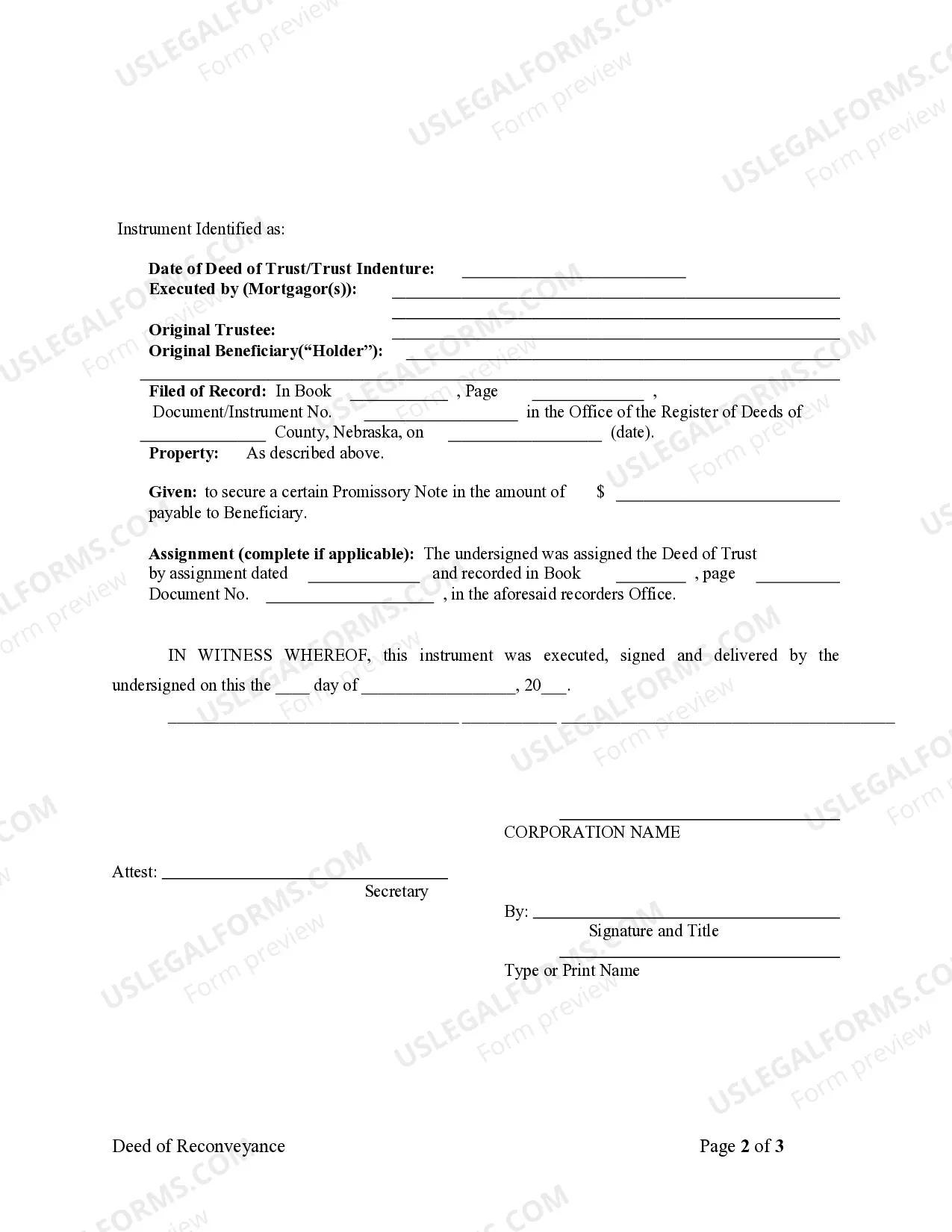
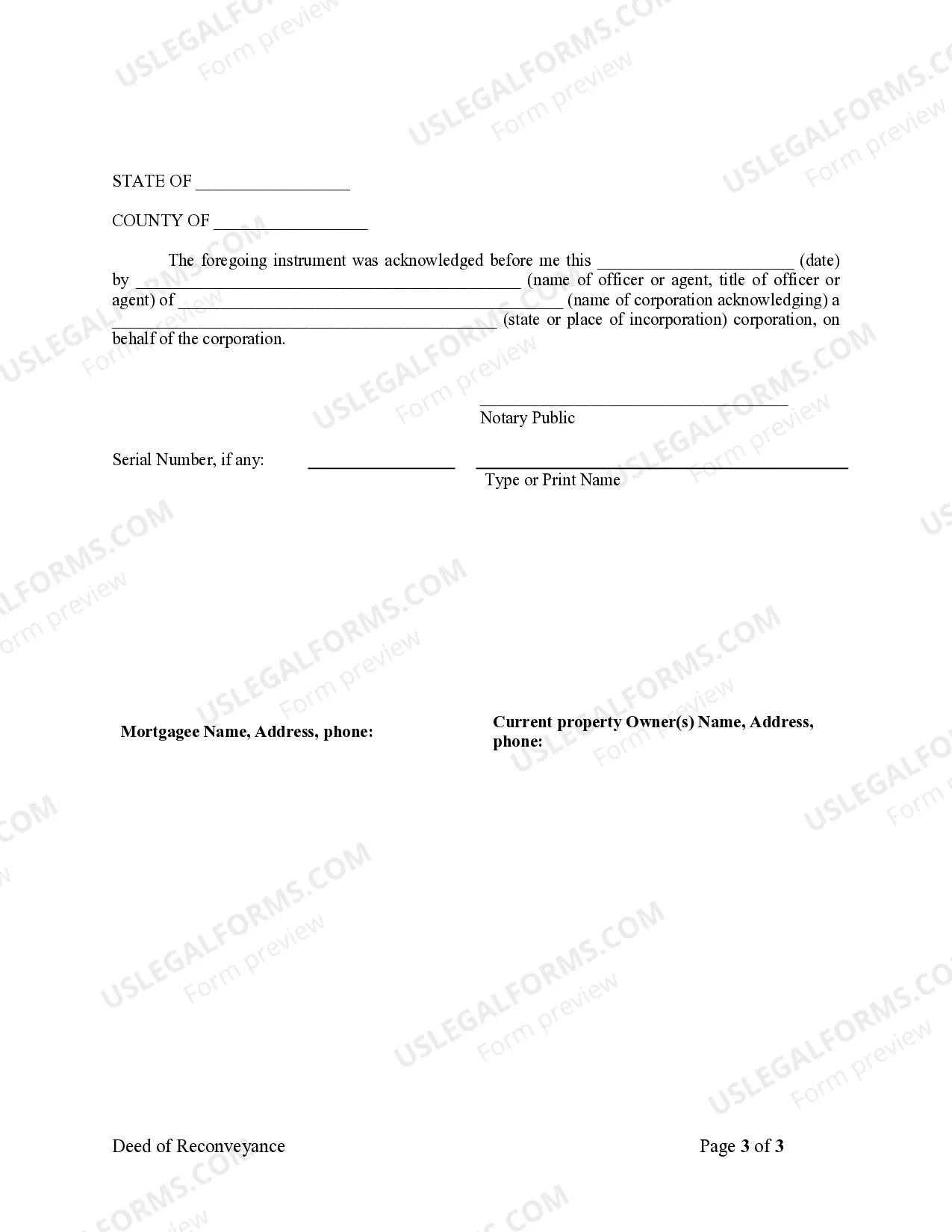
- Signature line for the trustee, as well as notary requirements.

When this form is needed
This form is needed when a mortgage or deed of trust, held by a corporate lender, has been fully paid off. It is used to formally release the lien on the property, allowing the borrower to regain clear title to the property without any remaining obligations to the lender. Common scenarios include completing mortgage payments on a house or commercial property and wanting to eliminate the associated debt's legal claims against the property.
Who can use this document
Eligibility for this form includes:
- Homeowners who have fully paid off their mortgage and need to clear their title.
- Corporate trustees responsible for managing the mortgage documents for a lender.
- Real estate professionals assisting clients with property transfers.
- Individuals involved in real estate transactions requiring title clearance.
Instructions for completing this form
To complete the Deed of Reconveyance, follow these steps:
- Identify the corporate trustee and provide the name and address in the appropriate sections.
- Acknowledge the payment received in exchange for reconveyance.
- Clearly describe the real property being reconveyed, including address and legal description.
- Obtain the authorized signature of the corporate trustee.
- Have the document notarized to ensure its legal validity.
Does this document require notarization?
Yes, this form must be notarized to be legally valid. Notarization ensures that the signatures are authentic and that the document complies with legal requirements. US Legal Forms offers integrated online notarization services, available 24/7 via secure video calls, making the process seamless and convenient.
Get your form ready online
Our built-in tools help you complete, sign, share, and store your documents in one place.
Make edits, fill in missing information, and update formatting in US Legal Forms—just like you would in MS Word.
Download a copy, print it, send it by email, or mail it via USPS—whatever works best for your next step.
Sign and collect signatures with our SignNow integration. Send to multiple recipients, set reminders, and more. Go Premium to unlock E-Sign.
If this form requires notarization, complete it online through a secure video call—no need to meet a notary in person or wait for an appointment.
We protect your documents and personal data by following strict security and privacy standards.

Make edits, fill in missing information, and update formatting in US Legal Forms—just like you would in MS Word.

Download a copy, print it, send it by email, or mail it via USPS—whatever works best for your next step.

Sign and collect signatures with our SignNow integration. Send to multiple recipients, set reminders, and more. Go Premium to unlock E-Sign.

If this form requires notarization, complete it online through a secure video call—no need to meet a notary in person or wait for an appointment.

We protect your documents and personal data by following strict security and privacy standards.
Avoid these common issues
- Leaving the property description incomplete or inaccurate.
- Failing to have the document notarized, which can invalidate the reconveyance.
- Not including the trustee's correct name and address which can lead to confusion.
- Incorrectly acknowledging the payment amount or failing to mention that it has been paid in full.
Why use this form online
- Convenient online access to the form for easy downloading and printing.
- Editability allows users to complete the form accurately before printing.
- Reliability of being drafted and verified by licensed attorneys.
Looking for another form?
Form popularity
FAQ
A mortgage holder issues a deed of reconveyance to indicate that the borrower has been released from the mortgage debt. The deed transfers the property title from the lender, also called the beneficiary, to the borrower. This document is most commonly used when a mortgage has been paid in full.
A deed of trust involves three parties: the borrower, the lender, and the trustee.The trustee holds title to the property until the trustor has fully repaid the loan to the beneficiary, at which time the lender notifies the trustee, who then transfers full title of the property to the trustor.
Is completed and signed by the trustee, whose signature must be notarized. Full Reconveyance form can be purchased at most office supply or stationery stores. Usually the trustee named on your Deed of Trust will also have forms available and will issue the Full Reconveyance.
A deed of trust is a method of securing a real estate transaction that includes three parties: a lender, borrower and a third-party trustee.
The deed must be signed by the party or parties making the conveyance or grant; and 7.
In order to clear the Deed of Trust from the title to the property, a Deed of Reconveyance must be recorded with the Country Recorder or Recorder of Deeds. If the Trustee/Beneficiary fails to record a satisfaction within the set time limits, the Trustee/Beneficiary may be responsible for damages as set out by statute.
A reconveyance is the official transfer of the property title after the mortgage has been paid in full. The processing time can vary based on the county in which the property is located and can take up to three months. You will need to contact your county for questions on their specific processing time.
Only until the debt is paid off by the borrower can a deed of reconveyance then be used to clear the deed of trust from the title to the property. The document is signed by the trustee, whose signature must be notarized.
The property's title remains in the trust until the loan is paid off, or satisfied, then it is released from the trust. To complete the release, the lender prepares a deed of reconveyance. This document states that the conditions of the loan have been met and you have no further financial obligations to the lender.