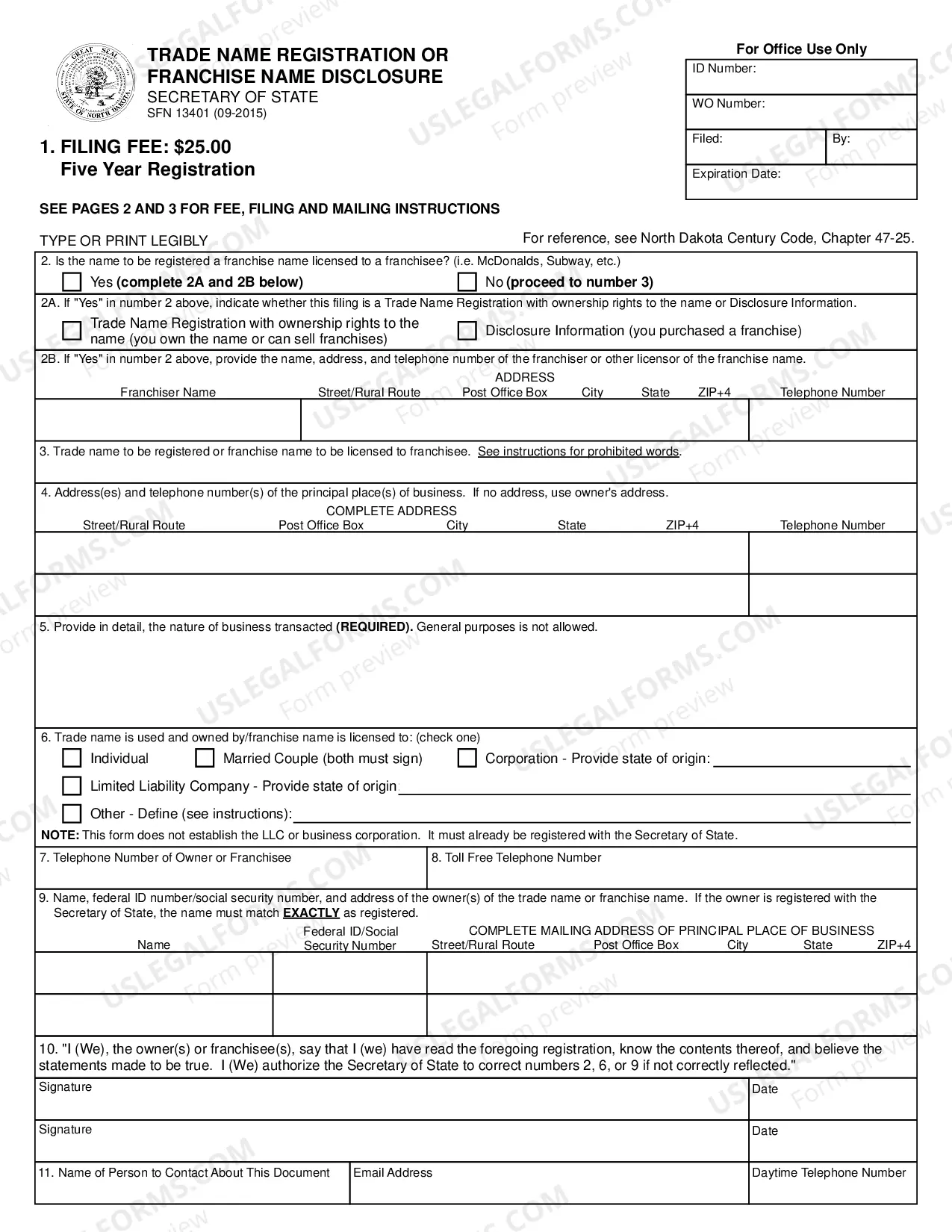
Nebraska Limited Power of Attorney for Stock Transactions and Corporate Powers
About this form
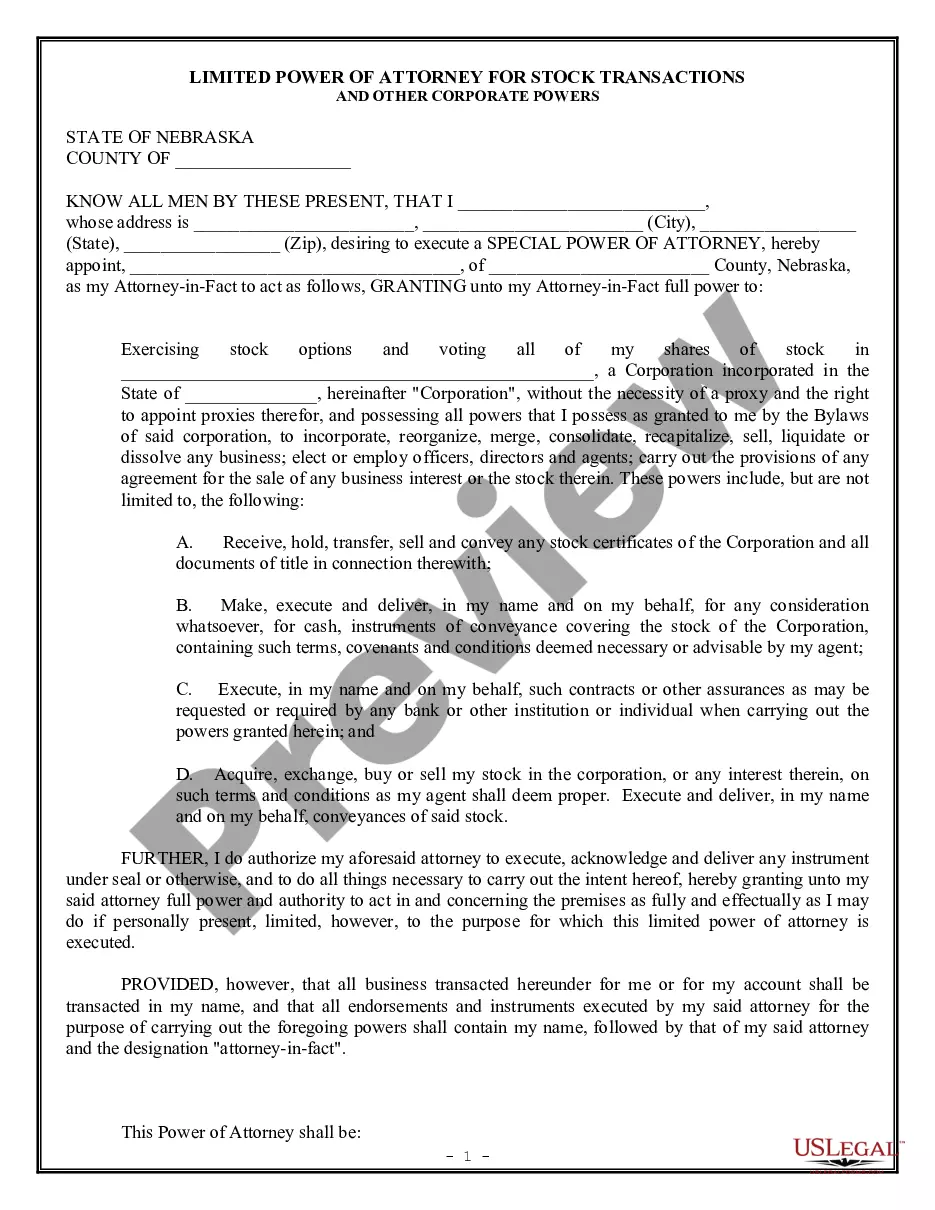
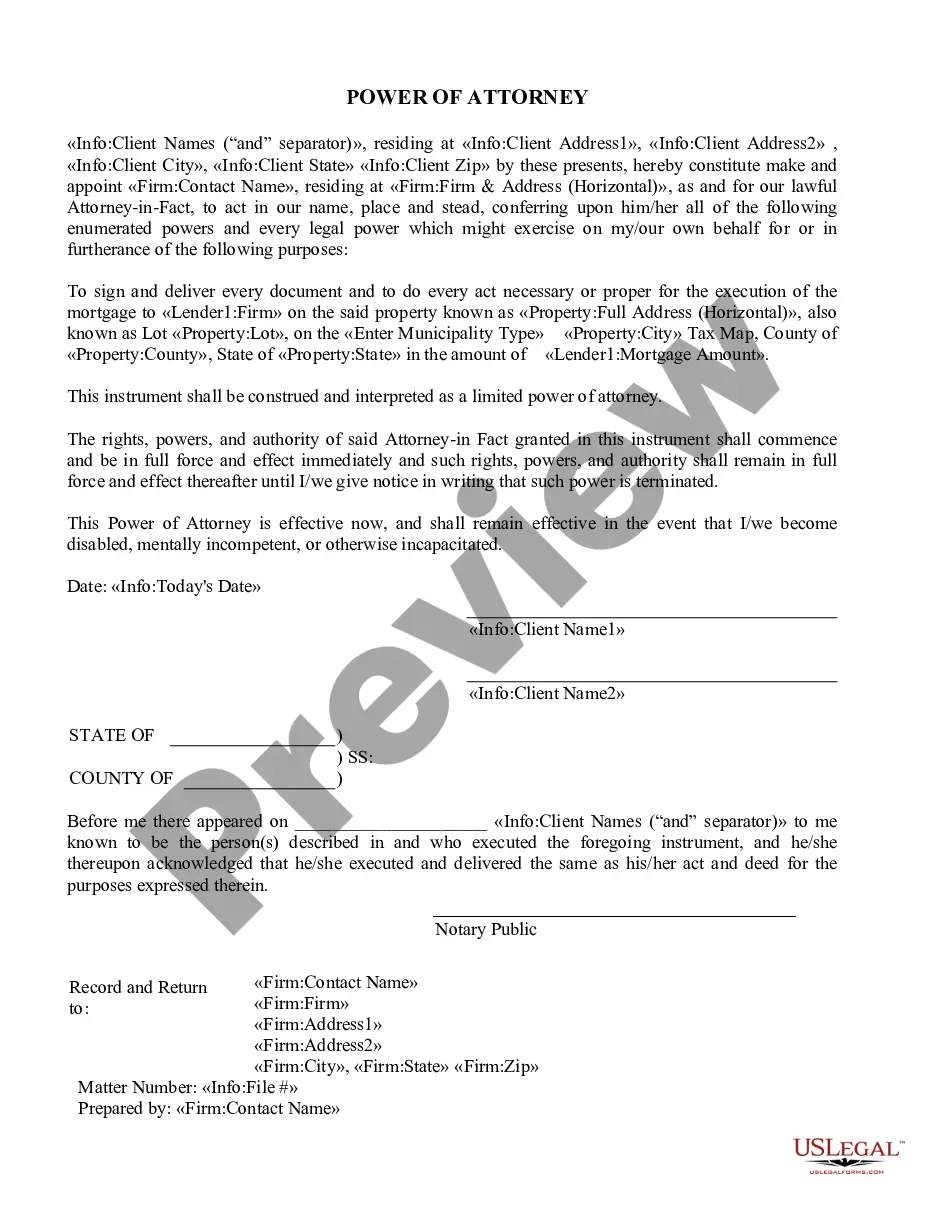
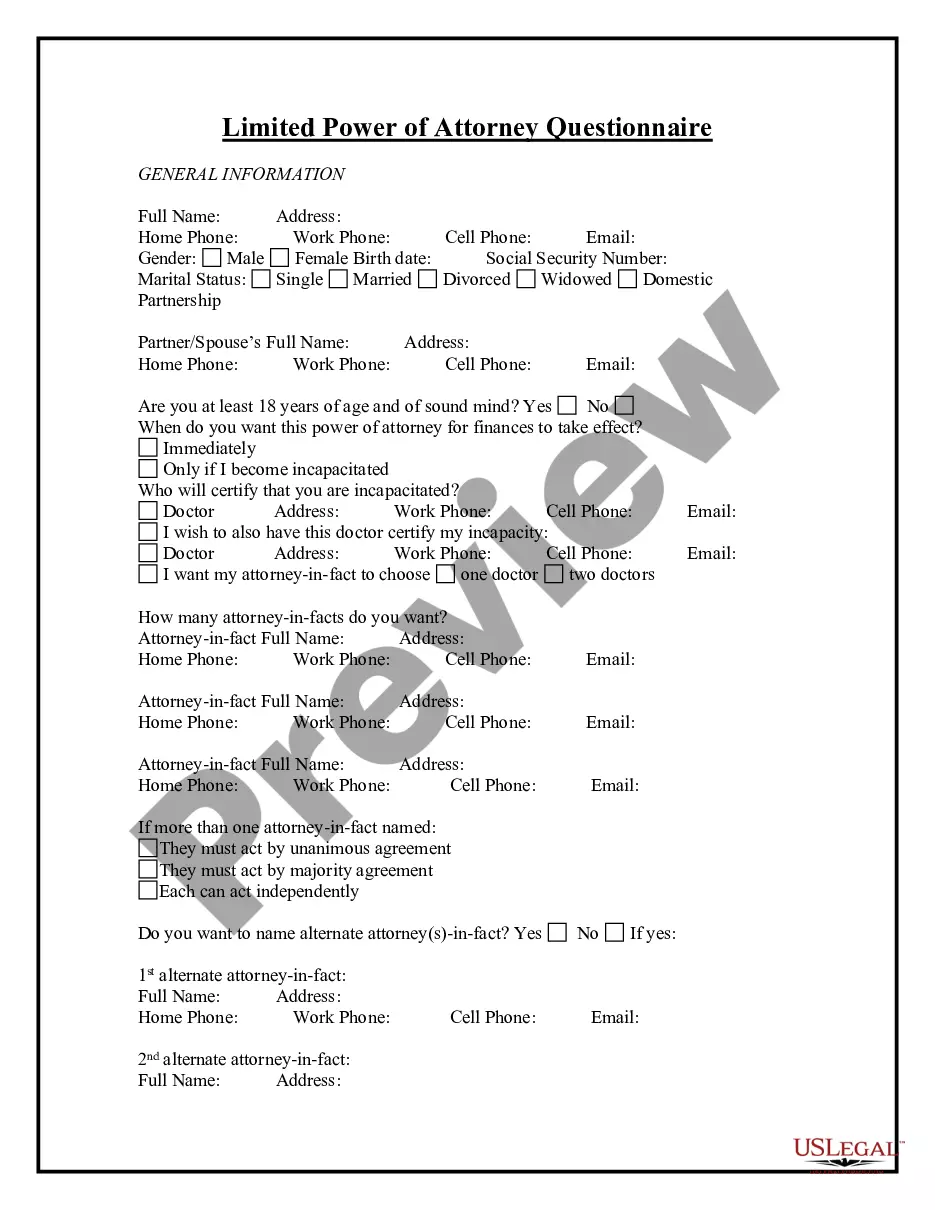
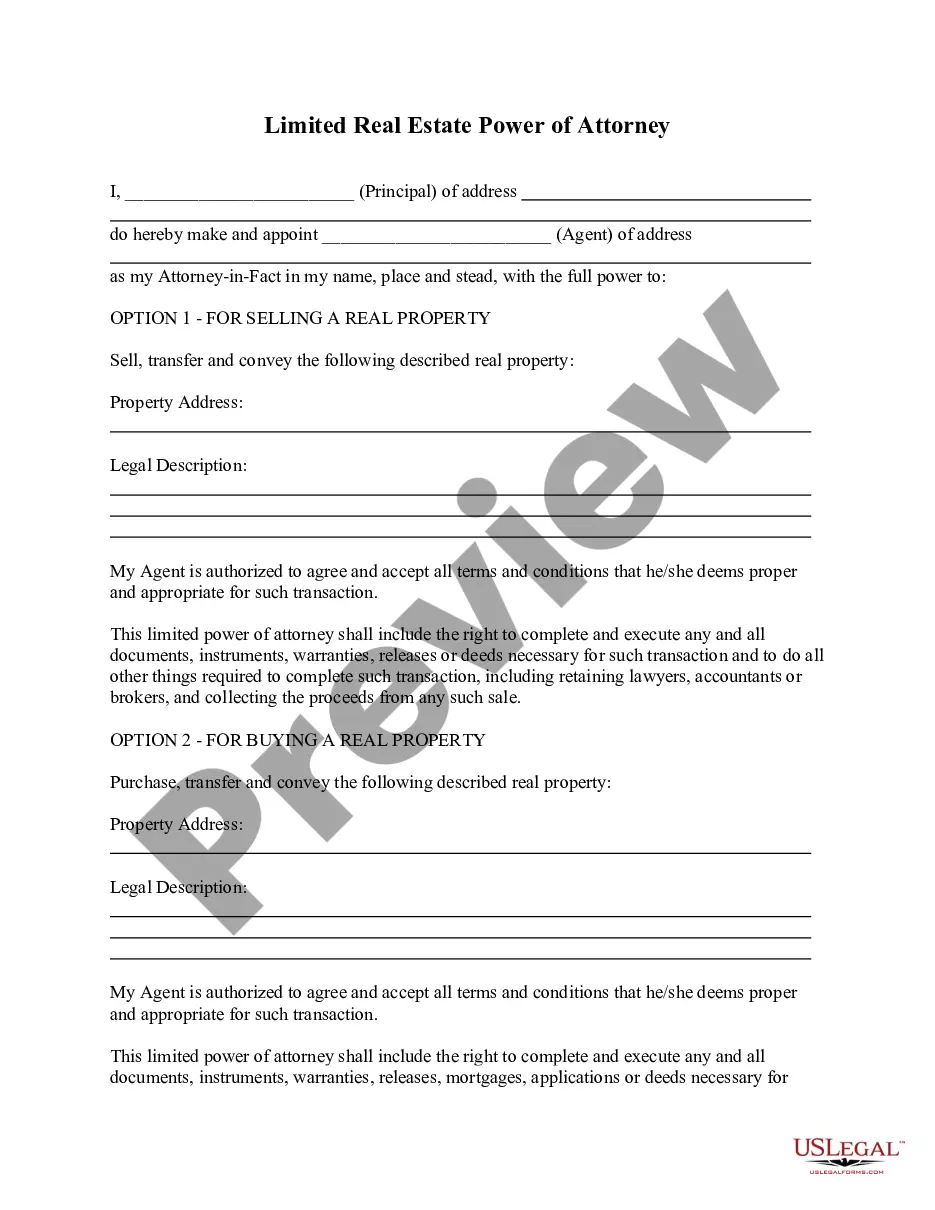
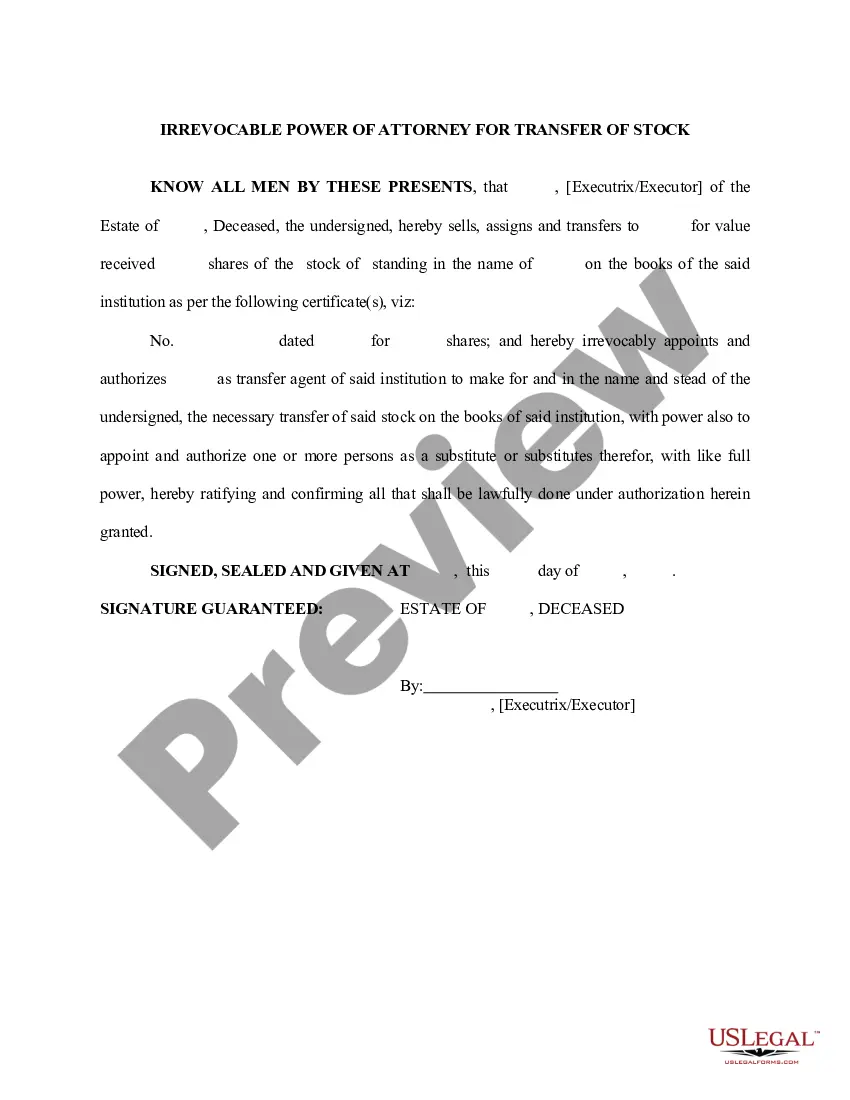
The Limited Power of Attorney for Stock Transactions and Corporate Powers is a legal document that allows a shareholder to authorize another person to manage stock transactions and exercise corporate powers on their behalf. This form specifically limits the agent's powers to stock-related activities, distinguishing it from general power of attorney forms, which cover broader authority. The document must be signed in the presence of two witnesses to be valid.
Main sections of this form
- Principal and Attorney-in-Fact details: Names and addresses of both parties
- Specific powers granted: Authority to vote shares, buy and sell stock, and handle corporate transactions
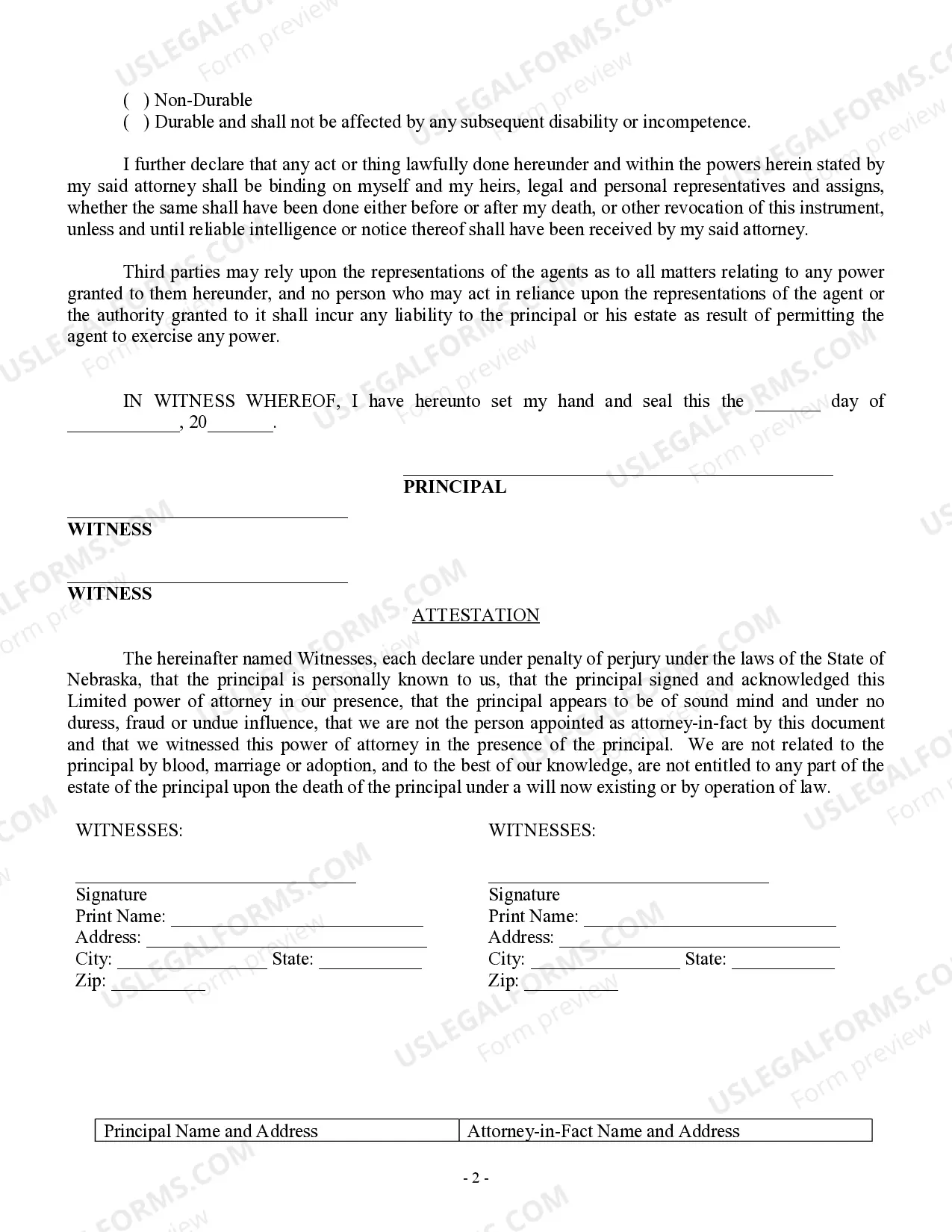
- Durability clause: Option to specify if the power of attorney is durable or non-durable
- Witness signatures: Requirement for two witnesses to sign in the presence of the principal

When this form is needed
This form is essential when a shareholder needs to delegate authority for stock transactions and corporate decisions while they are unavailable or unable to act themselves. It may be used for attending corporate meetings, voting on important corporate matters, or handling the sale or acquisition of company shares.
Who this form is for
- Shareholders who wish to authorize someone else to manage their stock transactions.
- Individuals who may be temporarily unavailable and need to ensure their corporate interests are managed properly.
- Investors looking for a legally binding way to grant limited powers to an agent without giving full authority over all aspects of their affairs.
How to complete this form
- Identify and enter the names and addresses of the principal and the attorney-in-fact.
- Specify the corporation's name and the state of incorporation.
- Outline the specific powers granted to the attorney-in-fact, ensuring clarity and precision.
- Indicate whether the power of attorney is durable or non-durable.
- Obtain two witness signatures, confirming they are not related to the principal.
Notarization requirements for this form
This form must be notarized to be legally valid. US Legal Forms provides secure online notarization powered by Notarize, allowing you to complete the process through a verified video call.
Get your form ready online
Our built-in tools help you complete, sign, share, and store your documents in one place.
Make edits, fill in missing information, and update formatting in US Legal Forms—just like you would in MS Word.
Download a copy, print it, send it by email, or mail it via USPS—whatever works best for your next step.
Sign and collect signatures with our SignNow integration. Send to multiple recipients, set reminders, and more. Go Premium to unlock E-Sign.
If this form requires notarization, complete it online through a secure video call—no need to meet a notary in person or wait for an appointment.
We protect your documents and personal data by following strict security and privacy standards.

Make edits, fill in missing information, and update formatting in US Legal Forms—just like you would in MS Word.

Download a copy, print it, send it by email, or mail it via USPS—whatever works best for your next step.

Sign and collect signatures with our SignNow integration. Send to multiple recipients, set reminders, and more. Go Premium to unlock E-Sign.

If this form requires notarization, complete it online through a secure video call—no need to meet a notary in person or wait for an appointment.

We protect your documents and personal data by following strict security and privacy standards.
Common mistakes
- Not having the form signed by two witnesses as required.
- Leaving key sections incomplete, such as failing to specify the powers granted.
- Failing to indicate whether the power of attorney is durable or non-durable.
- Not using the correct name for the corporation, which can create confusion regarding authority.
Benefits of using this form online
- Convenience of downloading and filling out the form at your own pace.
- Templates are drafted by licensed attorneys, ensuring legal validity.
- Ability to customize the form to fit specific needs and circumstances.
Looking for another form?
Form popularity
FAQ
Can the Power of Attorney be used by the agent to take my money or property without my permission? Unfortunately, you can run the risk that the agent you choose to give your Power of Attorney could abuse the power by spending your money or taking your money without your knowledge or worse without your permission.
The biggest limitation on a power of attorney is that it can only be signed when the principal is of sound mind.If the principal is unable to make decisions, the principal's family will need to go to court to become a court appointed guardian before they can make financial or medical decisions.
When you give someone the POA, there are important limitations to the power the agent has. First, your agent must make decisions within the terms of the legal document and can't make decisions that break the agreement, and the agent can be held liable for any fraud or negligence.
Limited Power of Attorney (LPOA) is an authorization that permits a portfolio manager to perform specific functions on behalf of the account owner. In general, the LPOA allows the manager to execute an agreed-upon investment strategy and take care of routine related business without contacting the account holder.
Limited Power of Attorney (LPOA) is an authorization that permits a portfolio manager to perform specific functions on behalf of the account owner. In general, the LPOA allows the manager to execute an agreed-upon investment strategy and take care of routine related business without contacting the account holder.
General Power of Attorney. Durable Power of Attorney. Special or Limited Power of Attorney. Springing Durable Power of Attorney.
If the agent is acting improperly, family members can file a petition in court challenging the agent. If the court finds the agent is not acting in the principal's best interest, the court can revoke the power of attorney and appoint a guardian. The power of attorney ends at death.
A limited power of attorney grants the representative that you choose (the agent or attorney-in-fact) the power to act on your behalf under limited circumstances.Under a general power of attorney, the agent or attorney-in-fact can do anything that you can do.