Nebraska Amendment to Prenuptial or Premarital Agreement
What this document covers
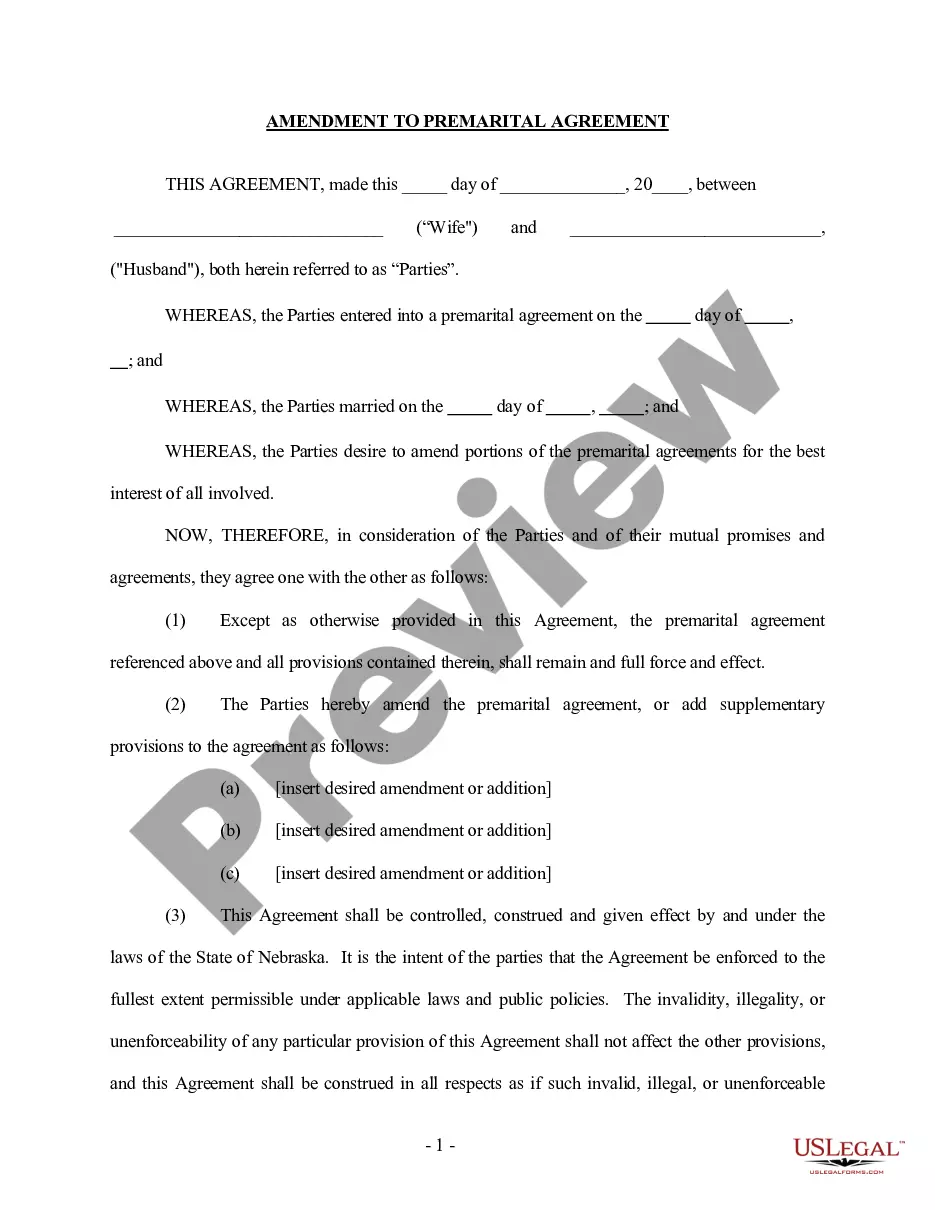
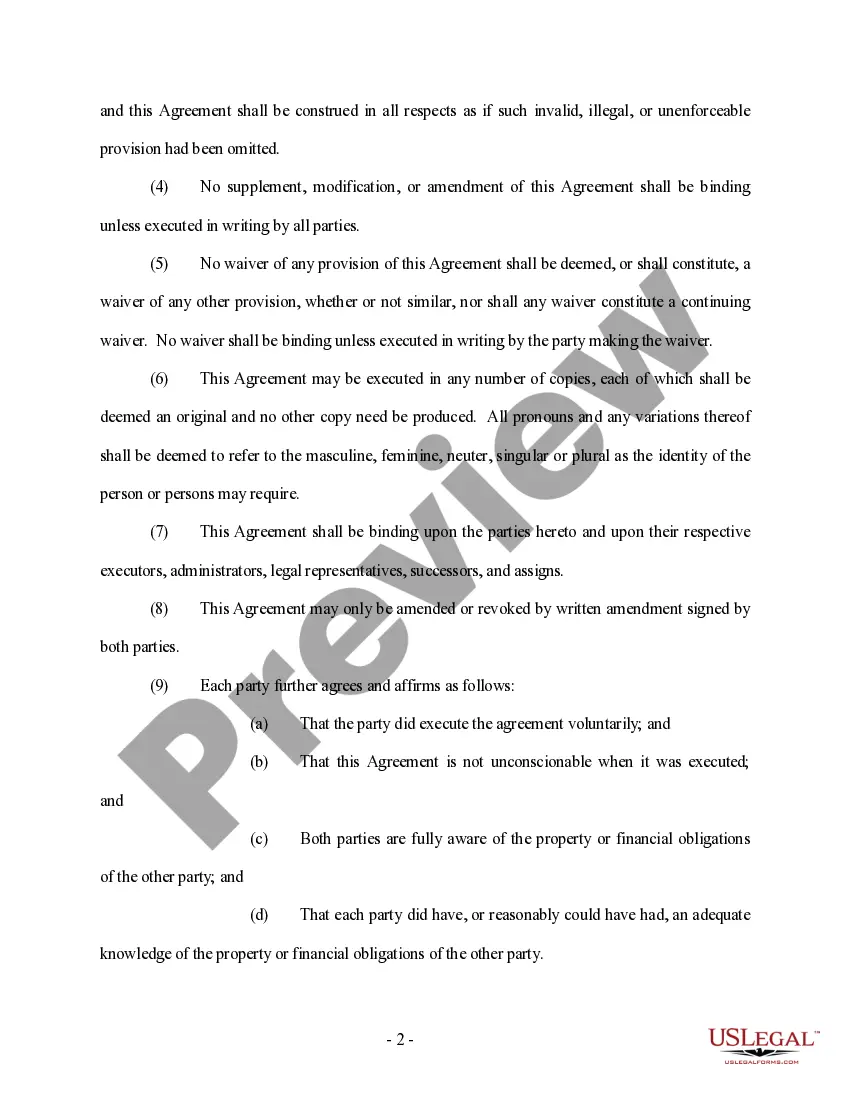
The Amendment to Prenuptial or Premarital Agreement is a legal document used to modify an existing premarital agreement in Nebraska. This form allows couples to update terms or add new provisions, ensuring that their agreement accurately reflects their intentions over time. Unlike a new agreement, this amendment enhances the original without requiring a complete overhaul of the existing contract.
What’s included in this form
- Date of the amendment.
- Names of both parties involved.
- Specific amendments or additions to the original premarital agreement.
- Legal language confirming the binding nature of the agreement.
- Signatures of both parties.
- Notary acknowledgement for validation.
When to use this document
This amendment should be used when couples wish to make changes to their premarital agreement, such as altering financial provisions, redefining asset division, or updating terms to accommodate new circumstances in their relationship. It is particularly relevant after major life events like the birth of a child, significant financial changes, or shifts in personal circumstances that necessitate an update to the original agreement.
Who should use this form
- Married couples who have previously signed a premarital agreement.
- Couples seeking to clarify or change any terms of their existing agreement.
- Individuals wanting to ensure mutual understanding and legality in their amended agreement.
How to prepare this document
- Identify the parties by entering their full names and roles as Husband and Wife.
- Specify the date of the amendment at the top of the form.
- Clearly outline each amendment or addition to the original premarital agreement in the designated section.
- Ensure both parties sign the amendment in the presence of a notary public.
- Maintain copies of the signed amendment for your records.
Notarization requirements for this form
Notarization is required for this form to take effect. Our online notarization service, powered by Notarize, lets you verify and sign documents remotely through an encrypted video session, available 24/7.
Get your form ready online
Our built-in tools help you complete, sign, share, and store your documents in one place.
Make edits, fill in missing information, and update formatting in US Legal Forms—just like you would in MS Word.
Download a copy, print it, send it by email, or mail it via USPS—whatever works best for your next step.
Sign and collect signatures with our SignNow integration. Send to multiple recipients, set reminders, and more. Go Premium to unlock E-Sign.
If this form requires notarization, complete it online through a secure video call—no need to meet a notary in person or wait for an appointment.
We protect your documents and personal data by following strict security and privacy standards.
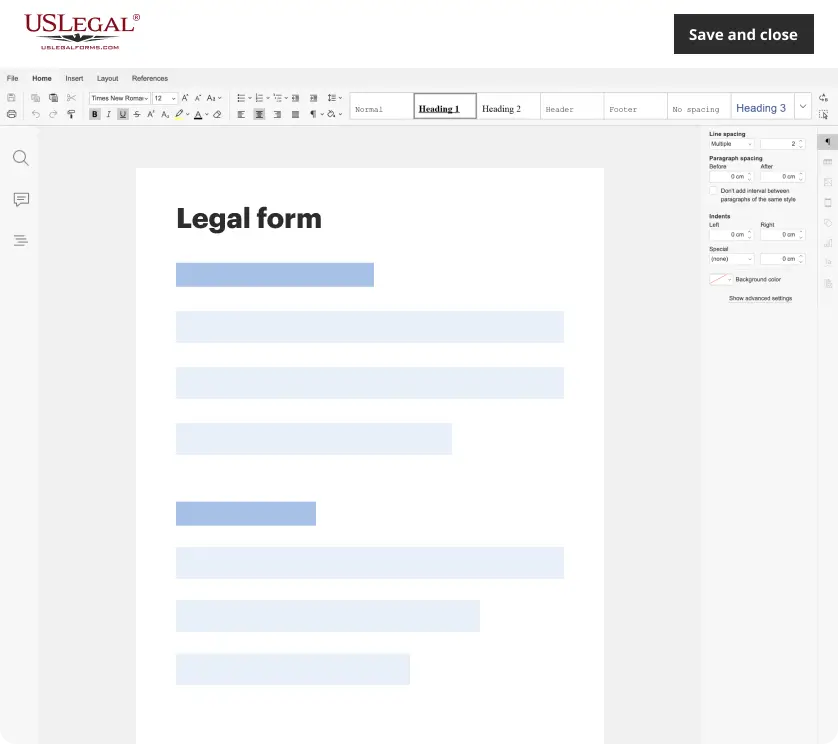
Make edits, fill in missing information, and update formatting in US Legal Forms—just like you would in MS Word.
Download a copy, print it, send it by email, or mail it via USPS—whatever works best for your next step.
Sign and collect signatures with our SignNow integration. Send to multiple recipients, set reminders, and more. Go Premium to unlock E-Sign.
If this form requires notarization, complete it online through a secure video call—no need to meet a notary in person or wait for an appointment.
We protect your documents and personal data by following strict security and privacy standards.
Mistakes to watch out for
- Failing to include specific changes or amendments clearly.
- Not obtaining notarization, which can render the amendment invalid.
- Assuming that verbal agreements or informal additions are enforceable.
Benefits of completing this form online
- Convenient access to legal documents anytime, anywhere.
- Edit and customize the form to fit your specific needs.
- Reliable templates drafted by licensed attorneys to ensure legal compliance.
Summary of main points
- This amendment allows for legally recognized changes to a premarital agreement.
- It must be notarized to be valid in Nebraska.
- Clear communication and specificity are vital when detailing amendments.
Looking for another form?

Form popularity
FAQ
You cannot amend your prenuptial agreement after marriage. What you can do is prepare a post-nuptial agreement to make the necessary amendments. A post-nuptial agreement requires similar disclosure so you again will need to exchange full financial disclosures with your husband.
What Could Invalidate a Prenup? Failing to fulfill any of California's prenuptial agreement requirements could result in a prenup the courts will not enforce. Examples include having a verbal contract, forcing one spouse to sign involuntarily, skipping legal requirements and including unfair terms in the agreement.
The amendment is typically written by a lawyer because of its legal nature. You'll have to have the entire agreement signed and notarized to make the changes valid. If, for whatever reason, you and your spouse decide to cancel your prenuptial agreement, you can use a document called a Release of Marital Agreement.
Reasons a Judge Can Overturn a Prenuptial Agreement There are no specific rules that state what will overturn a prenup.A written agreement should be reviewed by an experienced family law attorney prior to completion of the agreement. Premarital agreements must be signed in front of witnesses and must be notarized.
Any indication of coercion or lack of willingness can give way for a divorce judge to overturn the agreement. A written agreement should be reviewed by an experienced family law attorney prior to completion of the agreement. Premarital agreements must be signed in front of witnesses and must be notarized.
A premarital agreement must be in writing and signed by both parties. The agreement is enforceable without consideration. The agreement becomes effective on marriage of the parties.
Prenuptial agreements do not expire, unless they have a specific clause in them stating the agreement expires after a certain length of marriage (very uncommon).
The court stated that, "An agreement is unconscionable if it is one which no person in his or her senses and not under delusion would make on the one hand, and no honest and fair person would accept on the other, the inequality being so strong and manifest as to shock the conscience and confound the judgment of any
The three most common grounds for nullifying a prenup are unconscionability, failure to disclose, or duress and coercion.Duress and coercion can also invalidate a prenup. If the prenup was signed the day before your wedding, it may appear that the parties didn't have much time to fully review the agreement.