North Dakota Assignment to Living Trust
Overview of this form
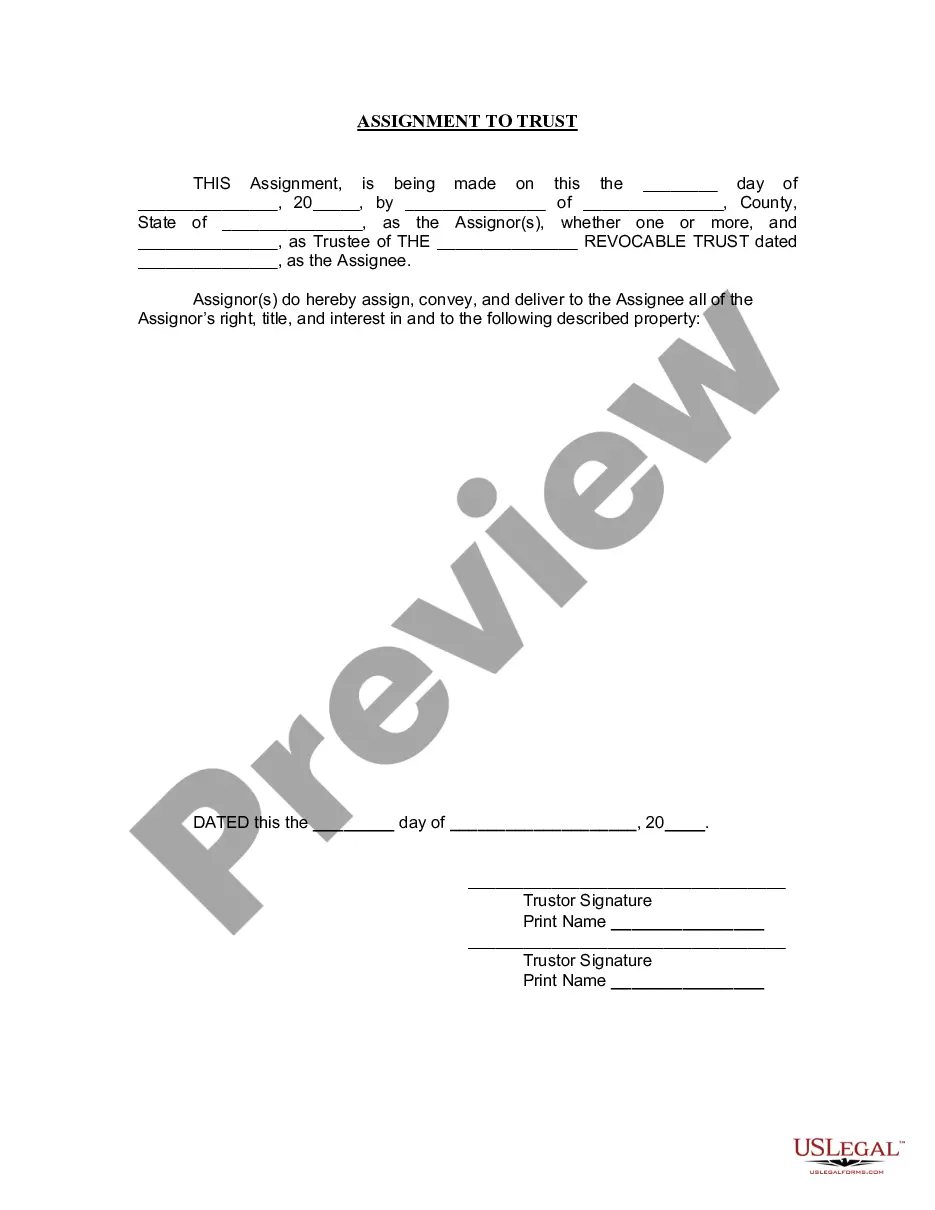
The Assignment to Living Trust form is a legal document used to transfer ownership of specific property into a living trust. A living trust is established during a personâs lifetime and allows individuals to manage their assets and property for estate planning purposes. This form ensures that the property is assigned correctly, which can help avoid probate and facilitate a smoother transition of assets upon death.
Form components explained
- The date of assignment.
- The names and addresses of the Assignor (the person assigning the property).
- The name of the Trustee managing the trust.
- A description of the specific property being assigned.
- The signature of the Assignor.
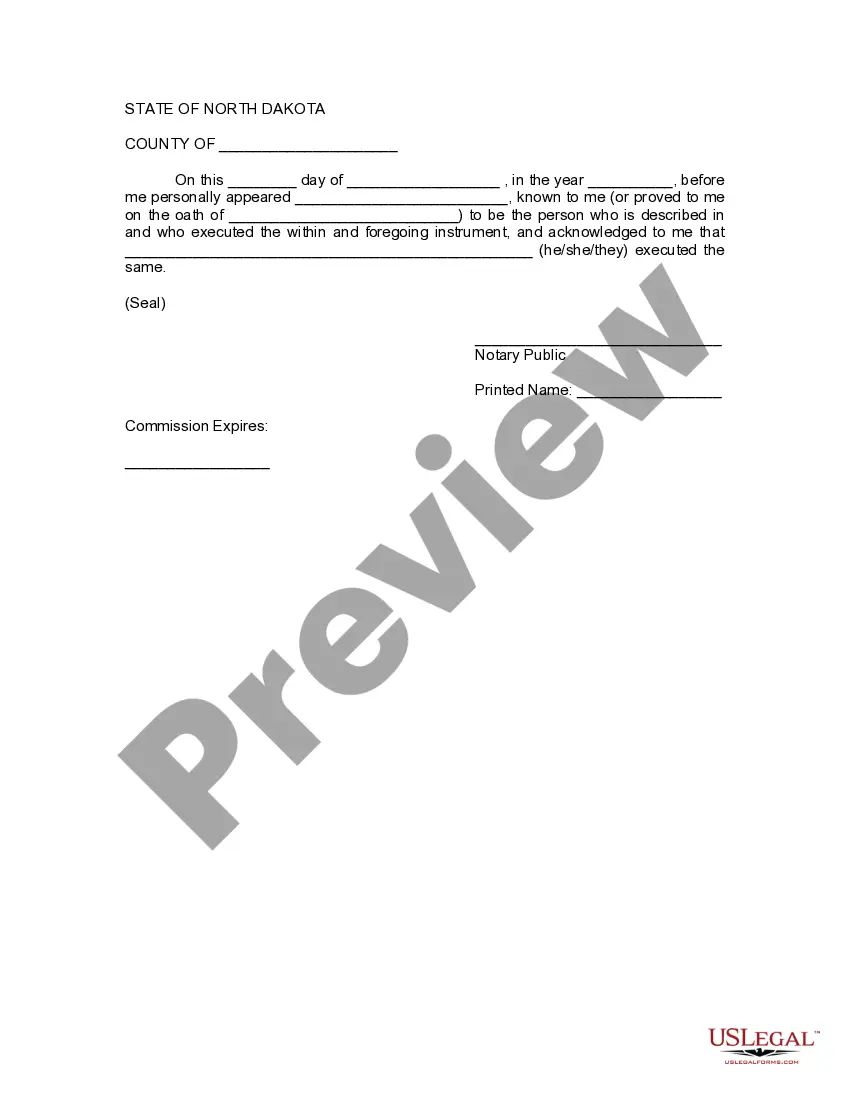
- The notary acknowledgment to verify the authenticity of the signature.


Common use cases
This form is typically used when an individual wishes to place their assets into a living trust to manage their estate effectively. It can be used in scenarios such as transferring real estate, bank accounts, or valuable personal property into the trust to ensure these assets are appropriately managed and distributed according to the trustâs terms.
Intended users of this form
- Individuals creating a living trust.
- Family members tasked with managing estate plans.
- Trustees who must formally accept property into a trust.
- Estate planners or individuals looking to simplify probate processes.
How to prepare this document
- Identify the date of the assignment.
- Fill in the names and addresses of the Assignor and Trustee.
- Describe the property being assigned to the trust.
- Have the Assignor sign the form in the presence of a notary public.
- Complete the notary acknowledgment section, including the notaryâs signature and stamp.
Does this document require notarization?
Yes, this form must be notarized to be legally valid. Having the form notarized ensures that the assignment is authentic and recognized by legal authorities. US Legal Forms offers integrated online notarization through secure video calls, available 24/7, making the notarization process simple and efficient.
Get your form ready online
Our built-in tools help you complete, sign, share, and store your documents in one place.
Make edits, fill in missing information, and update formatting in US Legal Forms—just like you would in MS Word.
Download a copy, print it, send it by email, or mail it via USPS—whatever works best for your next step.
Sign and collect signatures with our SignNow integration. Send to multiple recipients, set reminders, and more. Go Premium to unlock E-Sign.
If this form requires notarization, complete it online through a secure video call—no need to meet a notary in person or wait for an appointment.
We protect your documents and personal data by following strict security and privacy standards.

Make edits, fill in missing information, and update formatting in US Legal Forms—just like you would in MS Word.

Download a copy, print it, send it by email, or mail it via USPS—whatever works best for your next step.

Sign and collect signatures with our SignNow integration. Send to multiple recipients, set reminders, and more. Go Premium to unlock E-Sign.

If this form requires notarization, complete it online through a secure video call—no need to meet a notary in person or wait for an appointment.

We protect your documents and personal data by following strict security and privacy standards.
Common mistakes
- Failing to provide a detailed description of the property being assigned.
- Not having the form signed in front of a notary public.
- Leaving out the date of the assignment.
- Incorrectly identifying the trustee or assignorâs names.
Why use this form online
- Convenience of completing the form from home.
- Easy access to legal paperwork without needing to visit an attorney.
- The ability to fill in and edit the form at your own pace.
- Secure storage of completed documents for future reference.
Quick recap
- The Assignment to Living Trust facilitates the transfer of property into a trust.
- Proper notarization is required for the form to be valid.
- Using this form helps streamline estate planning and asset management.
Looking for another form?


Form popularity
FAQ
List Your Assets and Decide Which You'll Include in the Trust. Gather the Paperwork. Decide Whether You Will Be the Sole Grantor. Choose Beneficiaries. Choose a Successor Trustee. Choose Someone to Manage Property for Minor Children. Prepare the Trust Document. Sign and Notarize.
Transferring Real Property to a Trust You can transfer your home (or any real property) to the trust with a deed, a document that transfers ownership to the trust. A quitclaim deed is the most common and simplest method (and one you can do yourself).
The process of funding your living trust by transferring your assets to the trustee is an important part of what helps your loved ones avoid probate court in the event of your death or incapacity. Qualified retirement accounts such as 401(k)s, 403(b)s, IRAs, and annuities, should not be put in a living trust.
When signing anything on behalf of the trust, always sign as John Smith, Trustee. By signing as Trustee, you will not be personally liable for that action as long as that action is within the scope of your authority under the trust.
Determine the Current Title and Vesting to Your Property. Prepare a Deed. Be Aware of Your Lender and Title Insurance. Prepare a Preliminary Change of Ownership Report. Execute Your Deed. Record Your Deed. Wait for the Deed to be Returned. Keep the Property in the Trust.
Transferring Real Property to a Trust You can transfer your home (or any real property) to the trust with a deed, a document that transfers ownership to the trust. A quitclaim deed is the most common and simplest method (and one you can do yourself).
An assignment of mortgage gives the loan seller's rights under the mortgage, including the right to foreclose if the borrower doesn't make payments, to the new owner of the loan.
An assignment of trust deed is a document that lenders use when they sell loans secured by trust deeds. While they can freely sell the promissory notes between themselves, the trust deeds that give them the right to foreclose have to be assigned with a legal document.
Usually, a trust prohibits beneficiaries from assigning their interest in the trust before distribution. The anti-assignment provision protects undistributed trust assets from claims by a beneficiary's creditors.