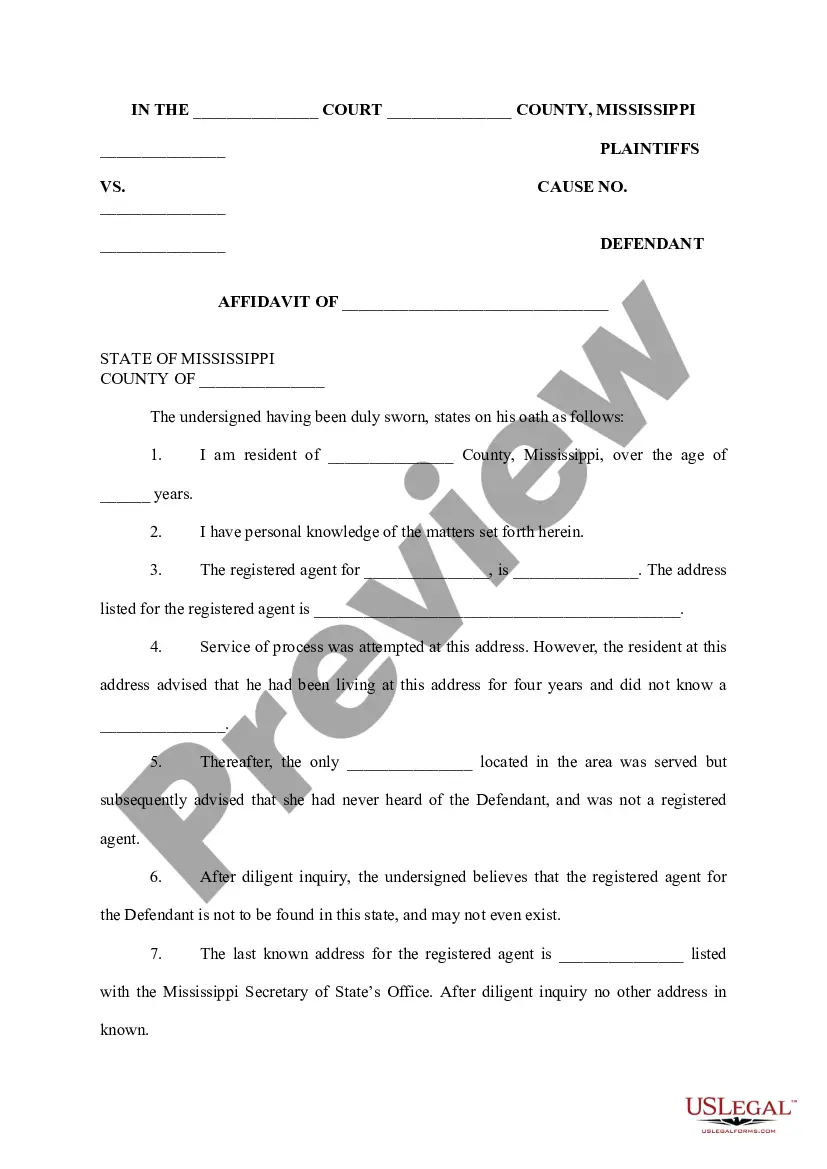
North Dakota Warranty Deed from Husband and Wife to Corporation
Understanding this form
This Warranty Deed from Husband and Wife to Corporation is a legal document that enables a married couple to transfer their property ownership to a corporation. This form includes a warranty clause ensuring that the property is free from encumbrances. Unlike other types of deeds, such as quitclaim deeds, this warranty deed provides more security to the grantee by guaranteeing the title against claims.
Form components explained
- Grantors: The husband and wife transferring the property.
- Grantee: The corporation receiving the property.
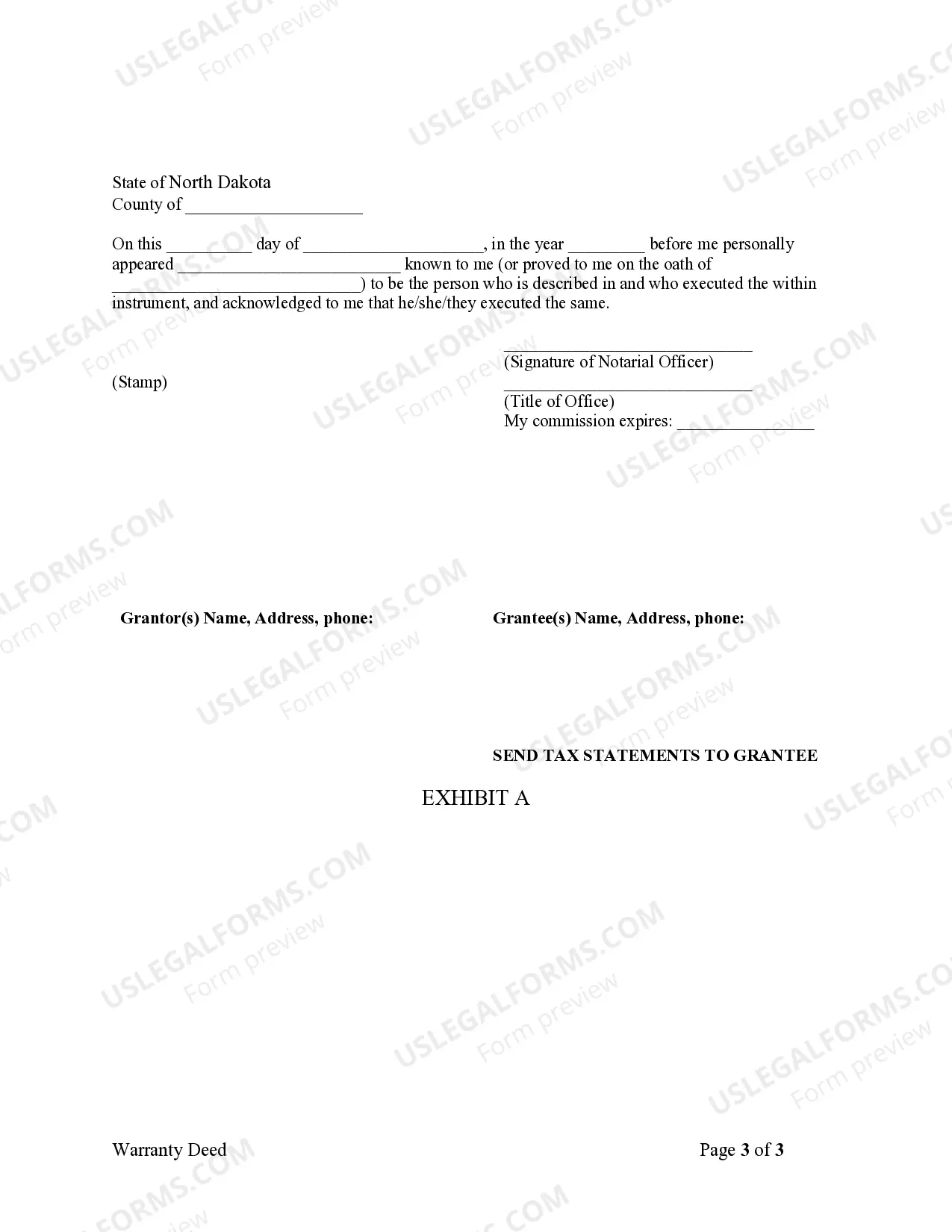
- Description of property: Legal description of the property being conveyed.
- Warranty clause: Assurance that the property title is free from encumbrances.
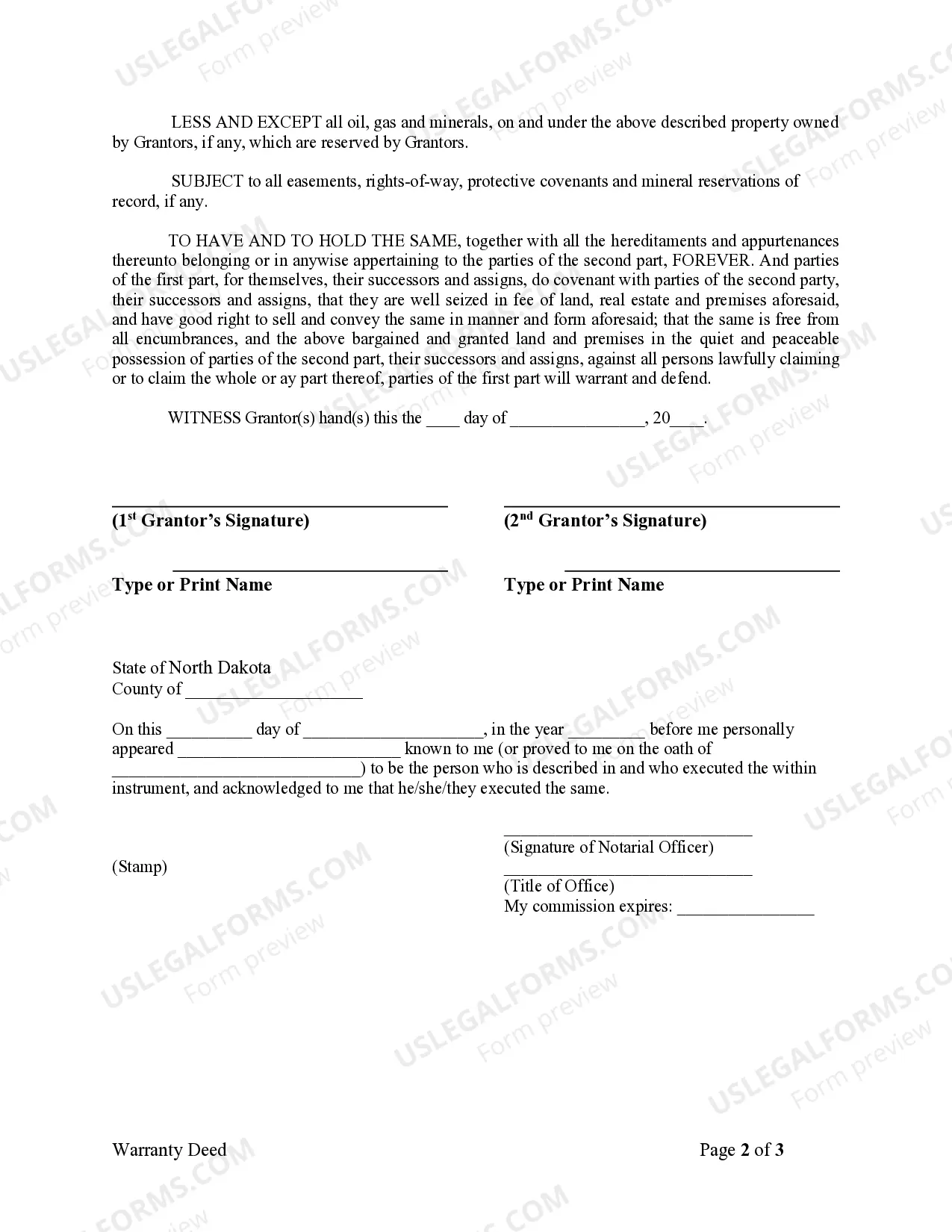
- Notary section: Space for notarization to validate the deed.
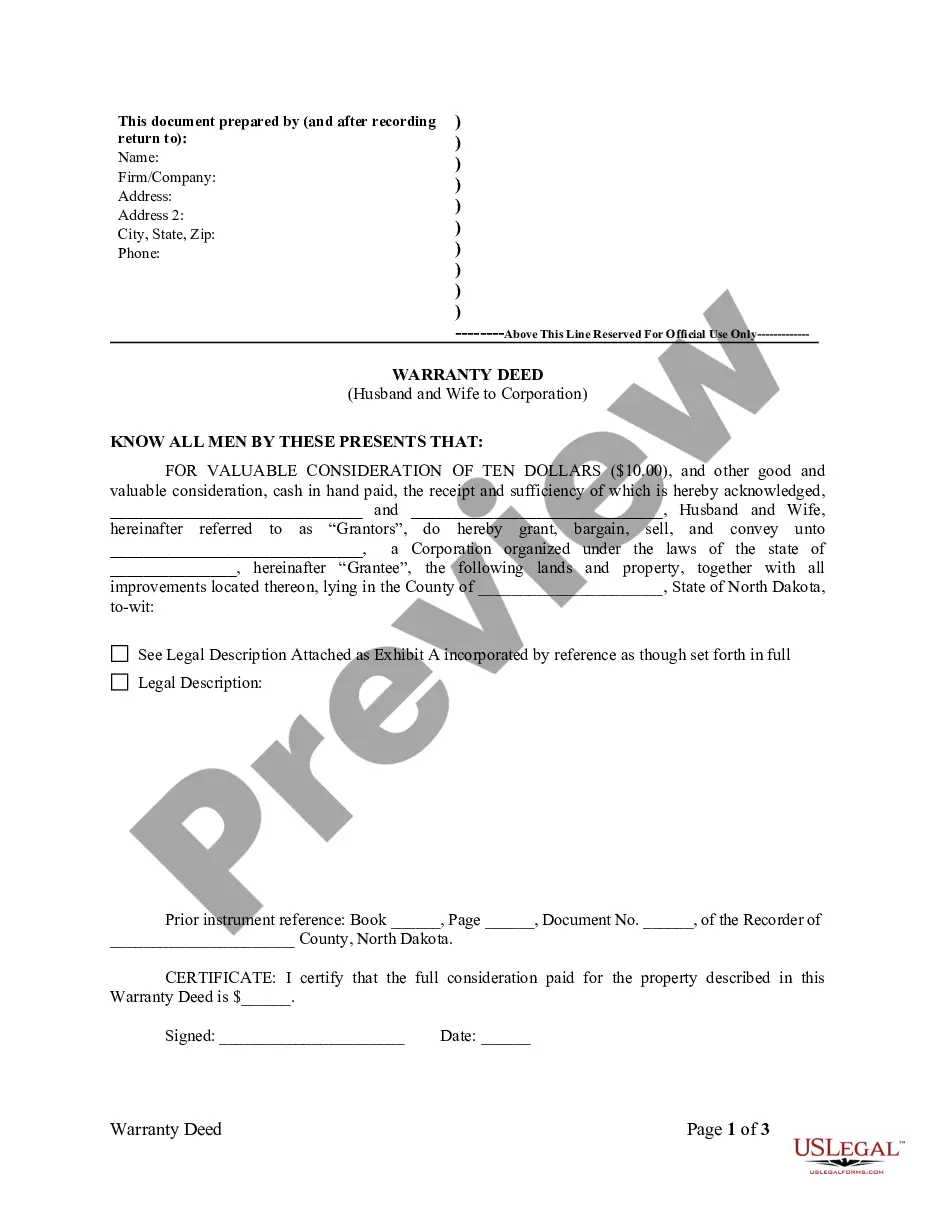
- Reservation clause: States that any oil, gas, and minerals are excluded from the transfer.



When to use this form
This form is appropriate when a married couple wishes to transfer their property to a corporation, whether for business reasons or estate planning. It is essential when there is a need for a legally binding assurance of title as the couple wants to ensure the business operates without complications related to the property ownership.
Intended users of this form
- Married couples looking to transfer property ownership to a corporate entity.
- Property owners seeking to provide legal protection to the grantee against future claims.
- Individuals involved in real estate planning or business transactions involving property.
How to prepare this document
- Identify the parties: Clearly state the full names of the husband and wife as grantors, and the corporation as the grantee.
- Specify the property: Include the legal description of the property being transferred.
- Complete the reservation clause: Note any oil, gas, and mineral rights being excluded from the transfer.
- Sign the document: Both spouses must sign the warranty deed in the designated areas.
- Notarize the deed: A notary public must witness the signatures to validate the deed legally.
Notarization guidance
This form needs to be notarized to ensure legal validity. US Legal Forms provides secure online notarization powered by Notarize, allowing you to complete the process through a verified video call, available anytime.
Get your form ready online
Our built-in tools help you complete, sign, share, and store your documents in one place.
Make edits, fill in missing information, and update formatting in US Legal Forms—just like you would in MS Word.
Download a copy, print it, send it by email, or mail it via USPS—whatever works best for your next step.
Sign and collect signatures with our SignNow integration. Send to multiple recipients, set reminders, and more. Go Premium to unlock E-Sign.
If this form requires notarization, complete it online through a secure video call—no need to meet a notary in person or wait for an appointment.
We protect your documents and personal data by following strict security and privacy standards.

Make edits, fill in missing information, and update formatting in US Legal Forms—just like you would in MS Word.

Download a copy, print it, send it by email, or mail it via USPS—whatever works best for your next step.

Sign and collect signatures with our SignNow integration. Send to multiple recipients, set reminders, and more. Go Premium to unlock E-Sign.

If this form requires notarization, complete it online through a secure video call—no need to meet a notary in person or wait for an appointment.

We protect your documents and personal data by following strict security and privacy standards.
Common mistakes to avoid
- Failing to include a complete legal description of the property.
- Not having both spouses sign the document.
- Ignoring the notarization requirement, which is crucial for legal validity.
- Overlooking the reservation clause, potentially leading to disputes over mineral rights.
Benefits of completing this form online
- Convenience: Easily fill out and download the form from anywhere.
- Editability: Allows for quick adjustments and updates before finalization.
- Reliability: Forms are drafted by licensed attorneys to ensure legal compliance.
Summary of main points
- This warranty deed is specifically designed for married couples transferring property to a corporation.
- Ensure all necessary sections are completed accurately to avoid future disputes.
- Notarization is required, providing an additional layer of legal protection.
Looking for another form?
Form popularity
FAQ
Quitclaim Deeds are used when the transfer of ownership in the property does not occur as the result of a traditional sale.Under a warranty deed, if it turns out that the property is not what the seller promised or there's an uncleared lien or other block to the title, the buyer can sue the seller and recover damages.
Get the free contract for deed north dakota form A Contract for Deed is used as owner financing for the purchase of real property. The Seller retains title to the property until an agreed amount is paid. After the agreed amount is paid, the Seller conveys the property to Buyer.
A warranty deed contains a guarantee that the grantor has legal title and rights to the real estate. A quitclaim deed offers little to no protection to the grantee.Warranty deeds ensure that the grantor has the right to sell the property, and guarantees that there are no liens or encumbrances against the land.
A warranty deed guarantees that: The grantor is the rightful owner of the property and has the legal right to transfer the title.The title would withstand third-party claims to ownership of the property. The grantor will do anything to ensure the grantee's title to the property.
It is also crucial that a spouse know about the loan, even if he or she is not on the mortgage. In general, the spouse must sign a deed of trust, the Truth in Lending and Right to Cancel documents. By signing these documents, they are simply acknowledging the existence of the mortgage.
Quitclaim deeds are most often used to transfer property between family members. Examples include when an owner gets married and wants to add a spouse's name to the title or deed, or when the owners get divorced and one spouse's name is removed from the title or deed.
A warranty deed, also known as a general warranty deed, is a legal real estate document between the seller (grantor) and the buyer (grantee). The deed protects the buyer by pledging that the seller holds clear title to the property and there are no encumbrances, outstanding liens, or mortgages against it.
The drawback, quite simply, is that quitclaim deeds offer the grantee/recipient no protection or guarantees whatsoever about the property or their ownership of it. Maybe the grantor did not own the property at all, or maybe they only had partial ownership.
In order to transfer ownership of the marital home pursuant to a divorce, one spouse is going to need to sign a quitclaim deed, interspousal transfer deed, or a grant deed, in order to convey the title to the property.