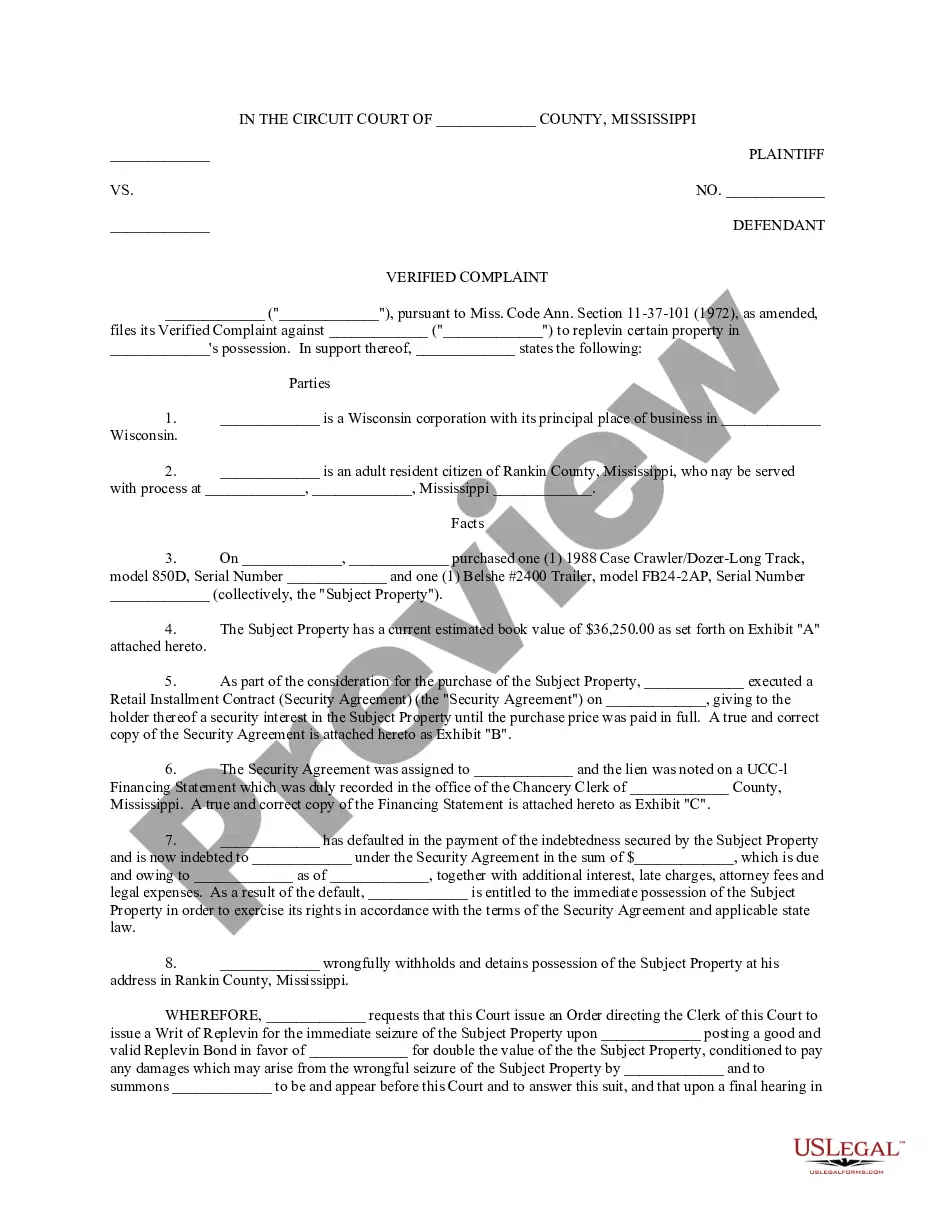
North Dakota Warranty Deed from Husband and Wife to a Trust
What is this form?
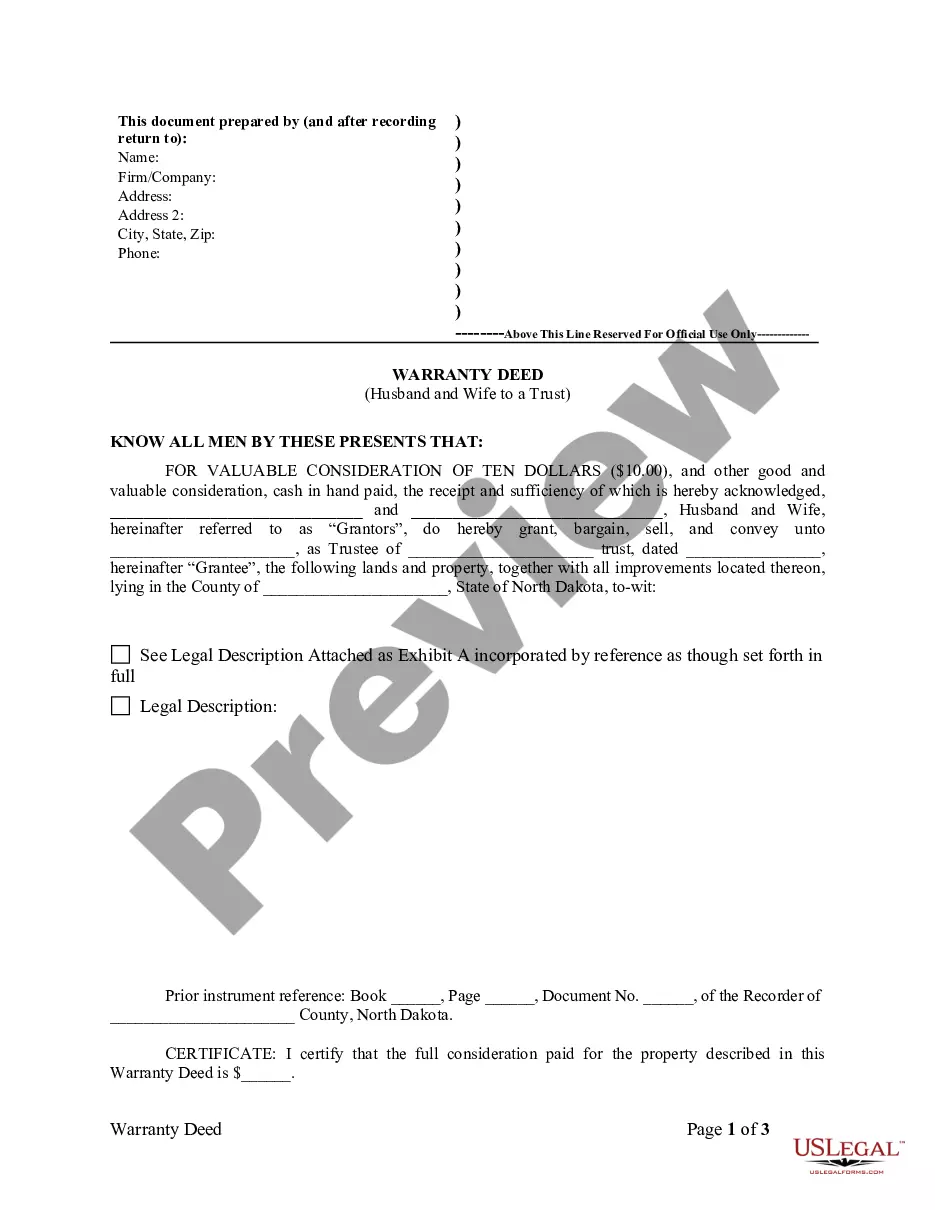
This Warranty Deed from Husband and Wife to a Trust is a legal document that allows a married couple to convey property ownership to a trust. Unlike other forms of property transfer, this deed specifically includes warranties regarding the title and reserves certain rights, such as mineral rights. This ensures that the trust takes ownership with a guarantee against claims, making it an essential tool for estate planning and property management.
Key parts of this document
- Identification of grantors (husband and wife) and the grantee (the trust).
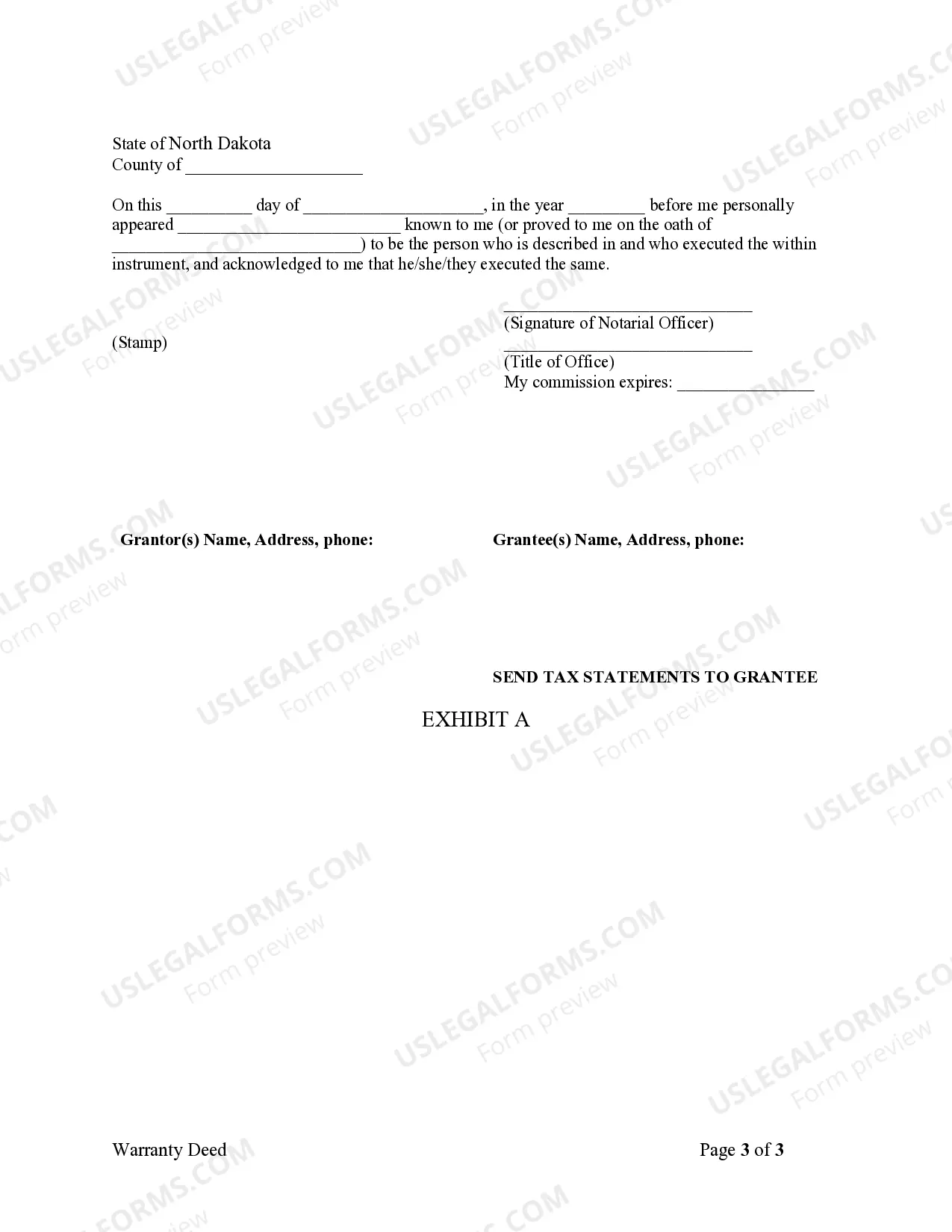
- Legal property description to be conveyed.
- Reservation of oil, gas, and minerals by the grantors.
- Covenant of clear title and freedom from encumbrances.
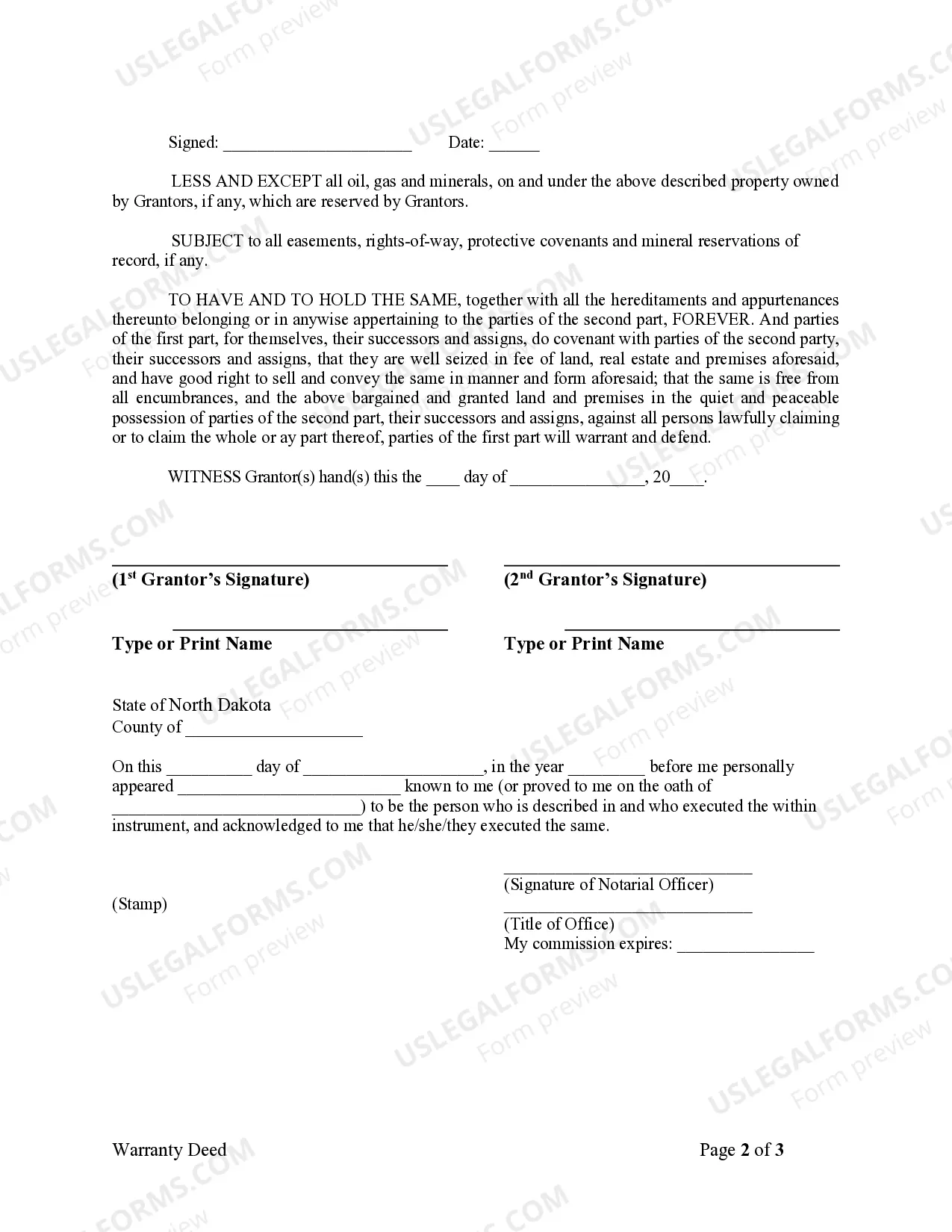
- Signatures of the grantors and acknowledgment by a notary public.





Situations where this form applies
This form should be used when a married couple wishes to transfer real estate into a trust, often for estate planning purposes. Situations may include transferring property for asset protection, avoiding probate, or managing family wealth for future generations. It is particularly useful when the couple has specific intentions regarding property and estate management.
Intended users of this form
- Married couples looking to establish a trust for their property.
- Individuals planning their estate and minimizing probate challenges.
- Trustees who need to formalize property transfers to the trust.
How to prepare this document
- Identify the parties involved: enter the names of the husband and wife as grantors and the name of the trust as the grantee.
- Provide a detailed description of the property being transferred.
- Specify any reservations, such as oil, gas, and mineral rights.
- Sign the document in the presence of a notary public to ensure validity.
- Include the date of the signature and the notary's information.
Is notarization required?
This form must be notarized to be legally valid. US Legal Forms provides secure online notarization powered by Notarize, allowing you to complete the process through a verified video call.
Get your form ready online
Our built-in tools help you complete, sign, share, and store your documents in one place.
Make edits, fill in missing information, and update formatting in US Legal Forms—just like you would in MS Word.
Download a copy, print it, send it by email, or mail it via USPS—whatever works best for your next step.
Sign and collect signatures with our SignNow integration. Send to multiple recipients, set reminders, and more. Go Premium to unlock E-Sign.
If this form requires notarization, complete it online through a secure video call—no need to meet a notary in person or wait for an appointment.
We protect your documents and personal data by following strict security and privacy standards.

Make edits, fill in missing information, and update formatting in US Legal Forms—just like you would in MS Word.

Download a copy, print it, send it by email, or mail it via USPS—whatever works best for your next step.

Sign and collect signatures with our SignNow integration. Send to multiple recipients, set reminders, and more. Go Premium to unlock E-Sign.

If this form requires notarization, complete it online through a secure video call—no need to meet a notary in person or wait for an appointment.

We protect your documents and personal data by following strict security and privacy standards.
Avoid these common issues
- Not including a complete property description.
- Failing to reserve rights on mineral resources when applicable.
- Not signing in front of a notary public, which may render the deed invalid.
- Omitting one of the grantor's signatures.
Benefits of using this form online
- Convenience of completing the form from home at any time.
- Editability to customize the form to precise needs.
- Access to legal reviews ensuring reliability and compliance with state laws.
What to keep in mind
- This Warranty Deed is essential for transferring property from a married couple to a trust.
- It includes important legal protections and reservations.
- Properly completing and notarizing the form ensures its validity.
Looking for another form?
Form popularity
FAQ
In order to transfer ownership of the marital home pursuant to a divorce, one spouse is going to need to sign a quitclaim deed, interspousal transfer deed, or a grant deed, in order to convey the title to the property.
When you're ready to transfer trust real estate to the beneficiary who is named in the trust document to receive it, you'll need to prepare, sign, and record a deed. That's the document that transfers title to the property from you, the trustee, to the new owner.
Quitclaim Deeds are used when the transfer of ownership in the property does not occur as the result of a traditional sale.Under a warranty deed, if it turns out that the property is not what the seller promised or there's an uncleared lien or other block to the title, the buyer can sue the seller and recover damages.
A warranty deed contains a guarantee that the grantor has legal title and rights to the real estate. A quitclaim deed offers little to no protection to the grantee.Warranty deeds ensure that the grantor has the right to sell the property, and guarantees that there are no liens or encumbrances against the land.
Discuss property ownership interests. Access a copy of your title deed. Complete, review and sign the quitclaim or warranty form. Submit the quitclaim or warranty form. Request a certified copy of your quitclaim or warranty deed.
California Property TaxesTransferring real property to yourself as trustee of your own revocable living trust -- or back to yourself -- does not trigger a reassessment for property tax purposes. (Cal. Rev. & Tax Code § 62(d).)
Yes, a quit claim deed supercedes the trust. The only thing that can be done is to file a suit in court challenging the deed as the product of fraud and undue influence. A court action like that will cost thousands of dollars, but might be worth it if the house was owned free and clear.
In the context of a California mortgage transaction, a trust deed also transfer ownership. Only this time, the title is being placed in the hands of a third-party trustee, who holds the property on behalf of the lender and the homeowner-borrower until the mortgage is paid.
A quitclaim deed can be used to transfer property from a trust, but a Special Warranty Deed seems to be a more common way to do this.