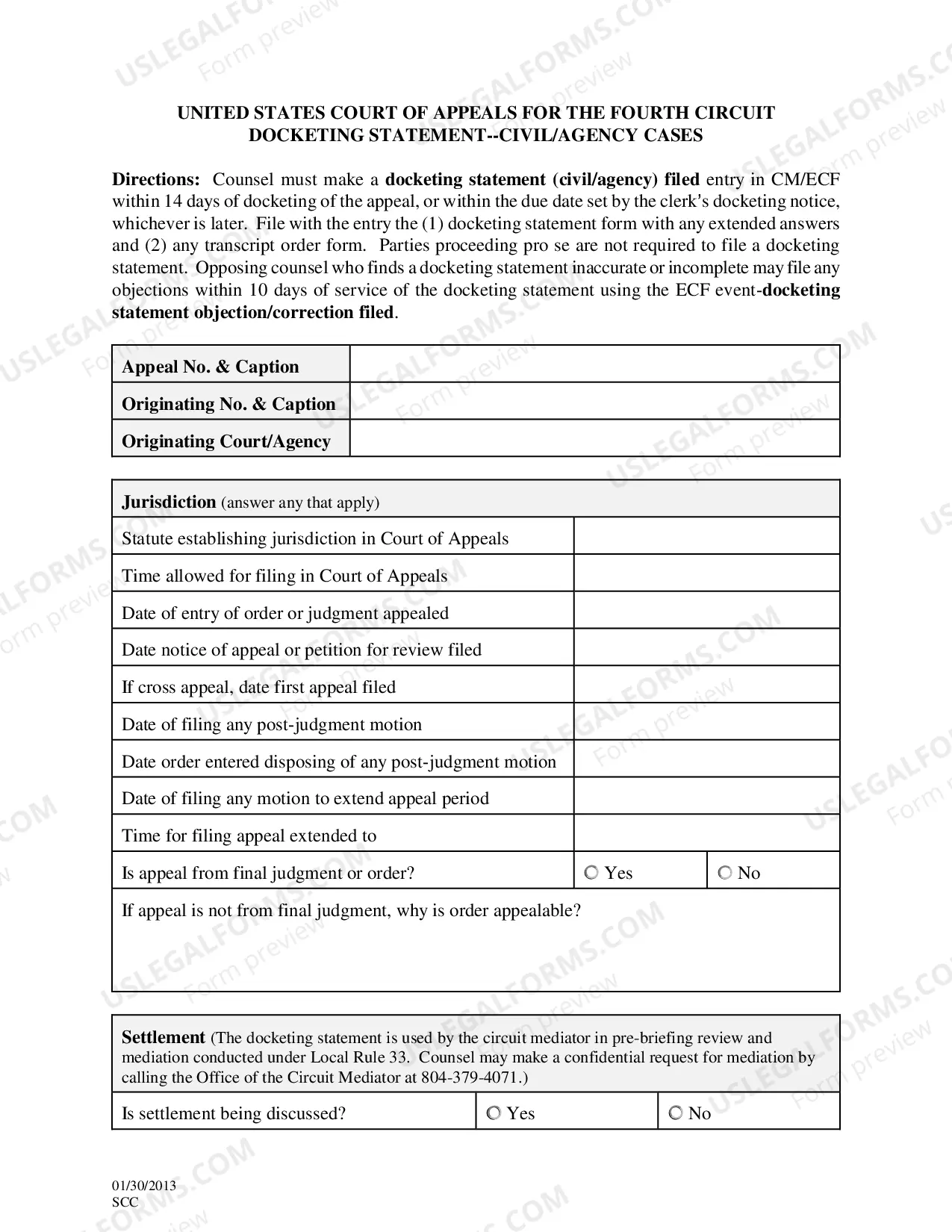
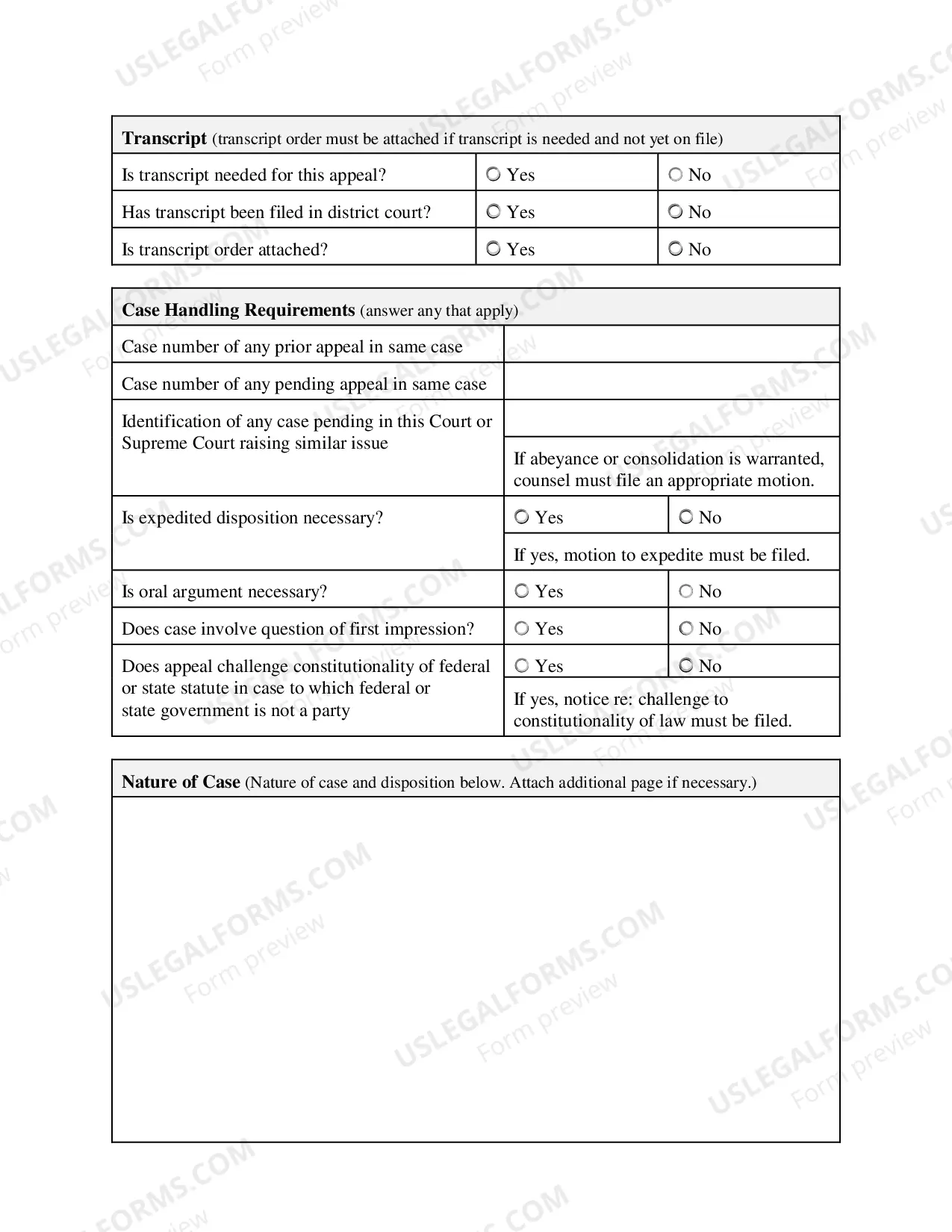
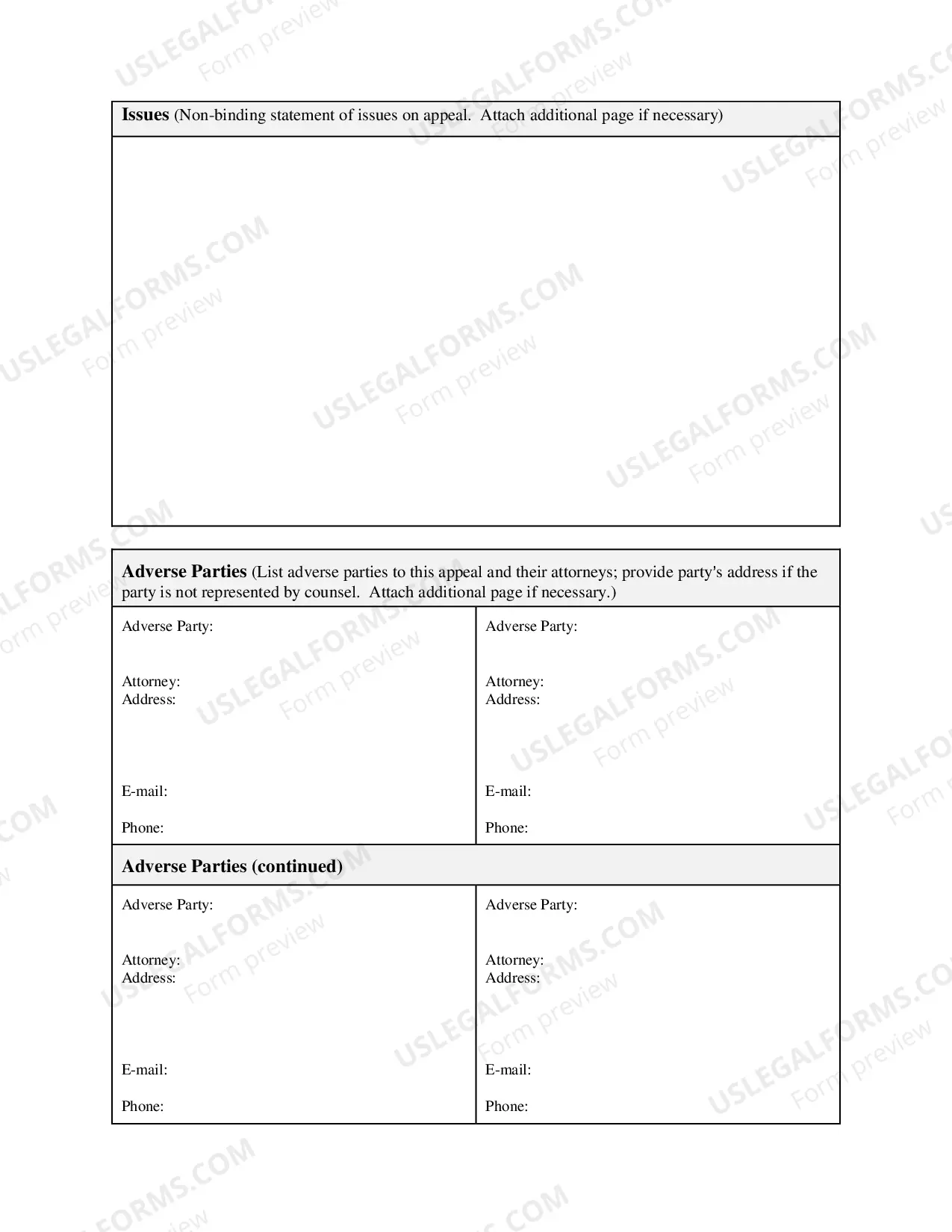
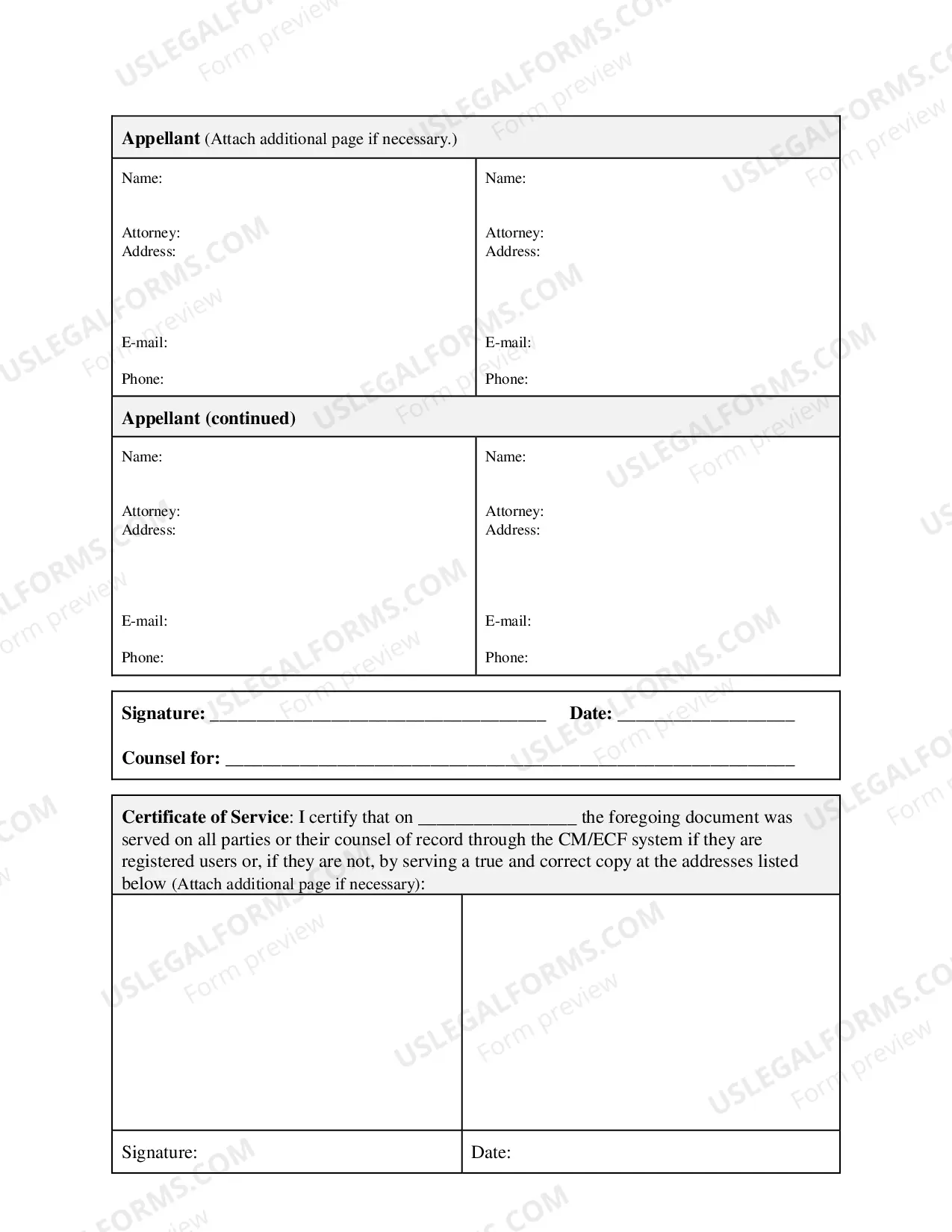
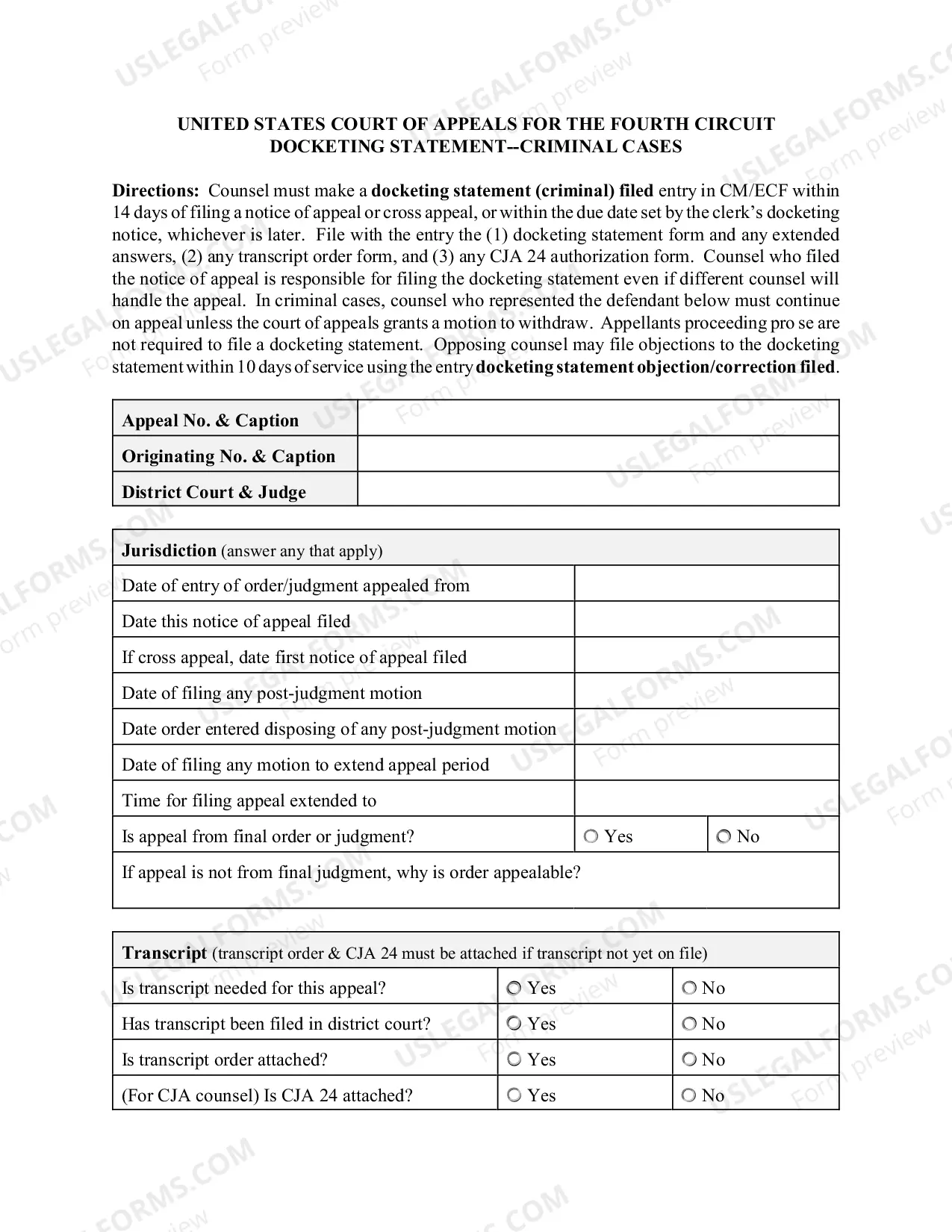
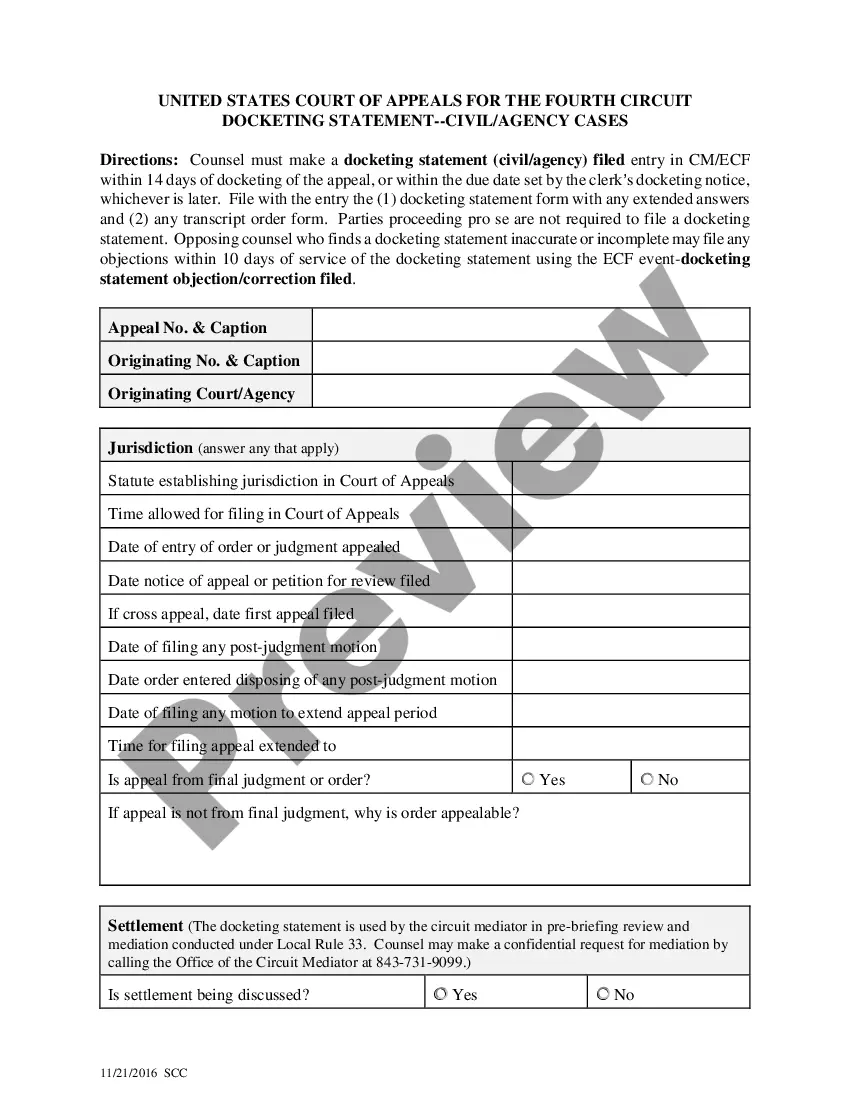
A North Carolina Docketing Statement is a document that is filed with the Clerk of Court in North Carolina in order to initiate a civil action. It is used to notify the Clerk of Court of the filing of a complaint, summons, or other document. The North Carolina Docketing Statement also serves as an index of all filings related to the case. It includes information such as the parties involved in the case, the filing date, and the case number. There are two types of North Carolina Docketing Statements: a Regular Docketing Statement and a Simplified Docketing Statement. The Regular Docketing Statement is more detailed and includes information such as the nature of the action, the claims in the complaint, and the relief requested. The Simplified Docketing Statement is used when there are fewer than five claims in the complaint. It contains fewer details than the Regular Docketing Statement, but is still used to index the case.
North Carolina Docketing Statement
Description


Get your form ready online
Our built-in tools help you complete, sign, share, and store your documents in one place.
Make edits, fill in missing information, and update formatting in US Legal Forms—just like you would in MS Word.
Download a copy, print it, send it by email, or mail it via USPS—whatever works best for your next step.
Sign and collect signatures with our SignNow integration. Send to multiple recipients, set reminders, and more. Go Premium to unlock E-Sign.
If this form requires notarization, complete it online through a secure video call—no need to meet a notary in person or wait for an appointment.
We protect your documents and personal data by following strict security and privacy standards.

Make edits, fill in missing information, and update formatting in US Legal Forms—just like you would in MS Word.

Download a copy, print it, send it by email, or mail it via USPS—whatever works best for your next step.

Sign and collect signatures with our SignNow integration. Send to multiple recipients, set reminders, and more. Go Premium to unlock E-Sign.

If this form requires notarization, complete it online through a secure video call—no need to meet a notary in person or wait for an appointment.

We protect your documents and personal data by following strict security and privacy standards.
Looking for another form?
How to fill out North Carolina Docketing Statement?
US Legal Forms is the simplest and most cost-effective method to locate appropriate legal templates.
It’s the most comprehensive online collection of business and personal legal documents prepared and verified by attorneys.
Here, you can discover printable and fillable templates that adhere to federal and local laws - just like your North Carolina Docketing Statement.
Review the form description or preview the document to ensure you’ve found the one that meets your needs, or search for another using the tab above.
Click Buy now when you’re confident of its alignment with all the criteria, and select the subscription plan that suits you best.
- Acquiring your template involves just a few straightforward steps.
- Users who already possess an account with an active subscription only need to Log In to the site and download the document onto their device.
- Subsequently, they can locate it in their profile under the My documents section.
- And here’s the process to obtain a professionally drafted North Carolina Docketing Statement if you are using US Legal Forms for the first time.
Form popularity
FAQ
To properly write a statement for court, start with a clear introduction stating your purpose. Use straightforward language and present your facts logically. Be concise, stay relevant to the case, and conclude with a strong closing statement. Following these steps can enhance the clarity and effectiveness of your court statement.
To write a good character statement for court, focus on specific examples that highlight the individual's positive traits. Discuss your relationship with the person and provide context for your observations. A well-structured character statement can support the case by presenting the individual in a positive light.
A docketing statement is a legal document that outlines the essential details of a case for the court's records. It typically includes information about the parties, the nature of the case, and pertinent dates. In North Carolina, filing a docketing statement can help streamline court processes and keep all parties aligned.
In Texas, a docketing statement is a document that provides essential case information to the appellate court. It includes details such as the parties involved, the nature of the appeal, and relevant deadlines. This statement helps the court manage cases effectively and ensures all parties are informed about the proceedings.
In North Carolina, you can file articles of dissolution online through the Secretary of State's website. This online service simplifies the process, allowing businesses to complete dissolution paperwork efficiently. Make sure to follow the guidelines provided to ensure your submission is accurate and complete.
Yes, you can file a motion online in North Carolina through the North Carolina Judicial Branch's e-filing system. This convenient option allows you to submit documents electronically, streamlining the process. Ensure you have the required information and documents ready before starting your filing.
To write a North Carolina Docketing Statement, begin by clearly identifying the case title and number. Include the names of all parties involved, and summarize the nature of the case. Additionally, provide relevant dates and any pending motions. This structured format helps courts quickly understand the case details.
The appeal process in North Carolina follows five essential steps. First, you must file a notice of appeal with the appropriate court. Next, prepare the North Carolina Docketing Statement, which outlines your case details. The third step involves compiling the record on appeal, followed by submitting your written brief. Finally, you will present your arguments in a hearing, where the court will make its decision based on the submitted materials.
Filing a motion in North Carolina court is a straightforward process. You begin by drafting your motion, which should clearly state your request and the reasons behind it. After preparing the North Carolina Docketing Statement, you file both documents with the court clerk. It’s also important to serve a copy to the opposing party, ensuring everyone is informed about your motion.
The purpose of a North Carolina Docketing Statement is to provide crucial information about a pending appeal. It outlines the details of the case, including parties involved, the nature of the appeal, and the issues at stake. By submitting this statement, you help the court understand your case better and streamline the appeal process. This document is essential for ensuring that your appeal is properly considered.