North Carolina Identity Theft Recovery Package
Understanding this form package
The North Carolina Identity Theft Recovery Package is a comprehensive set of legal forms designed specifically for victims of identity theft in North Carolina. This package empowers individuals to effectively communicate with creditors and government agencies after their identification has been lost or stolen. By using this package, you can clear your name, protect your credit, and mitigate the financial and emotional burdens associated with identity theft. Unlike other generic recovery kits, this package is tailored to the specific needs and legal requirements of North Carolina residents.
Forms provided in this package
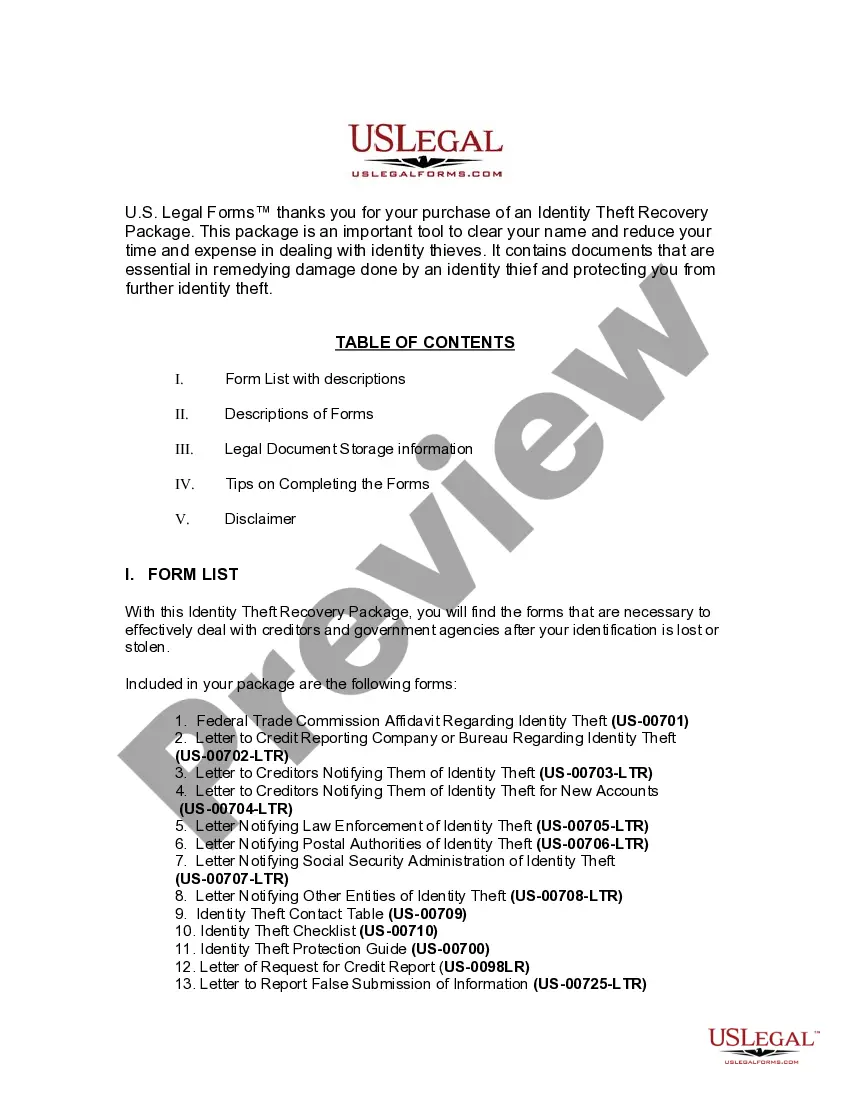
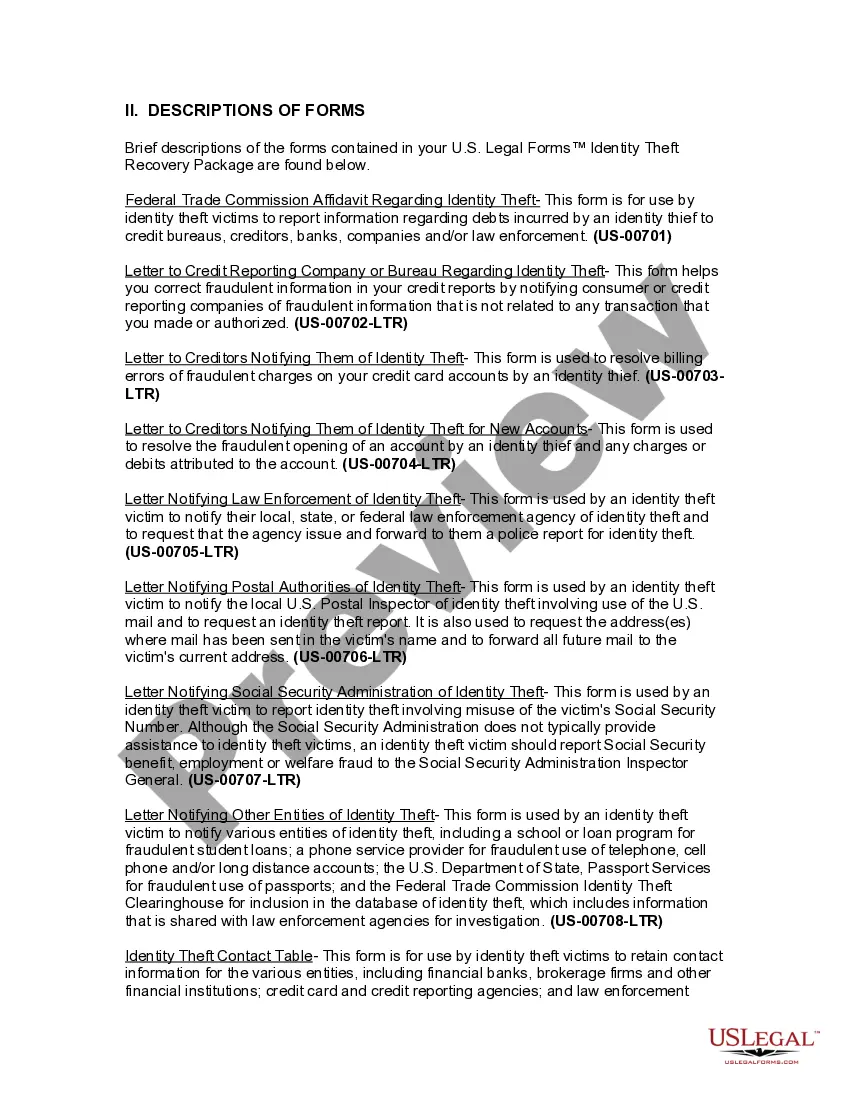
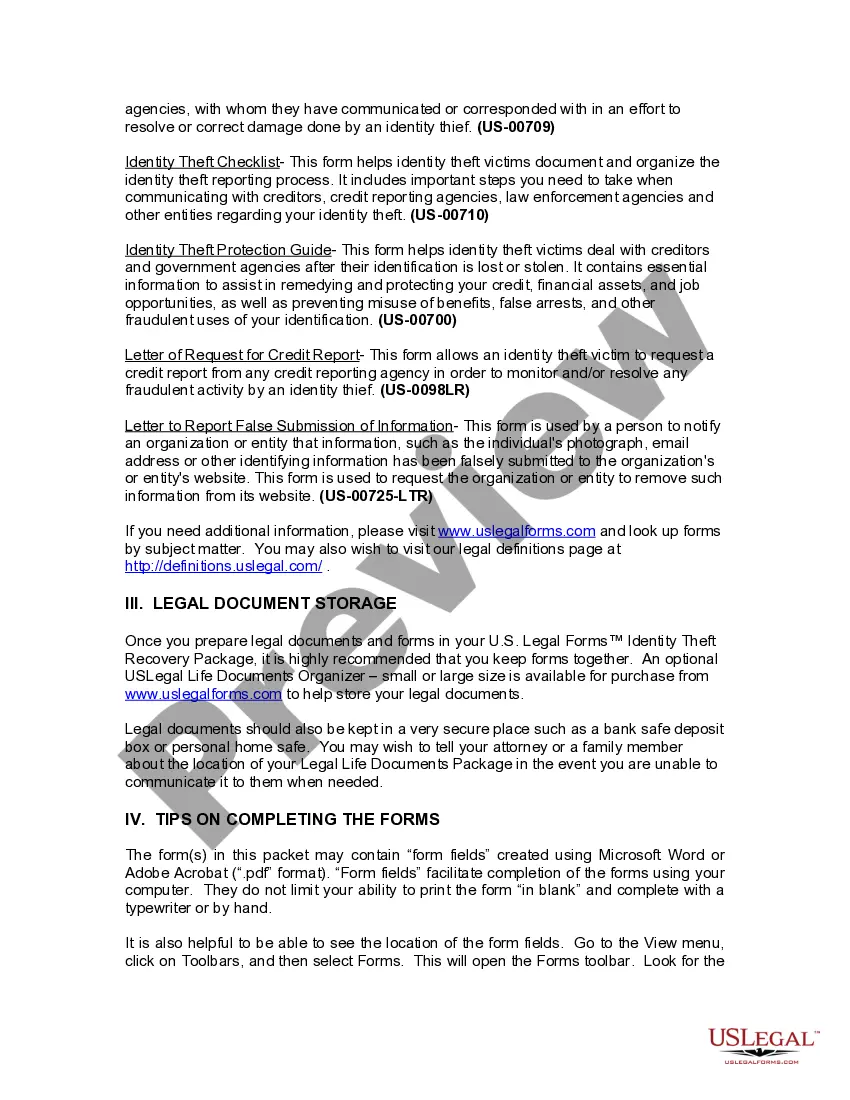
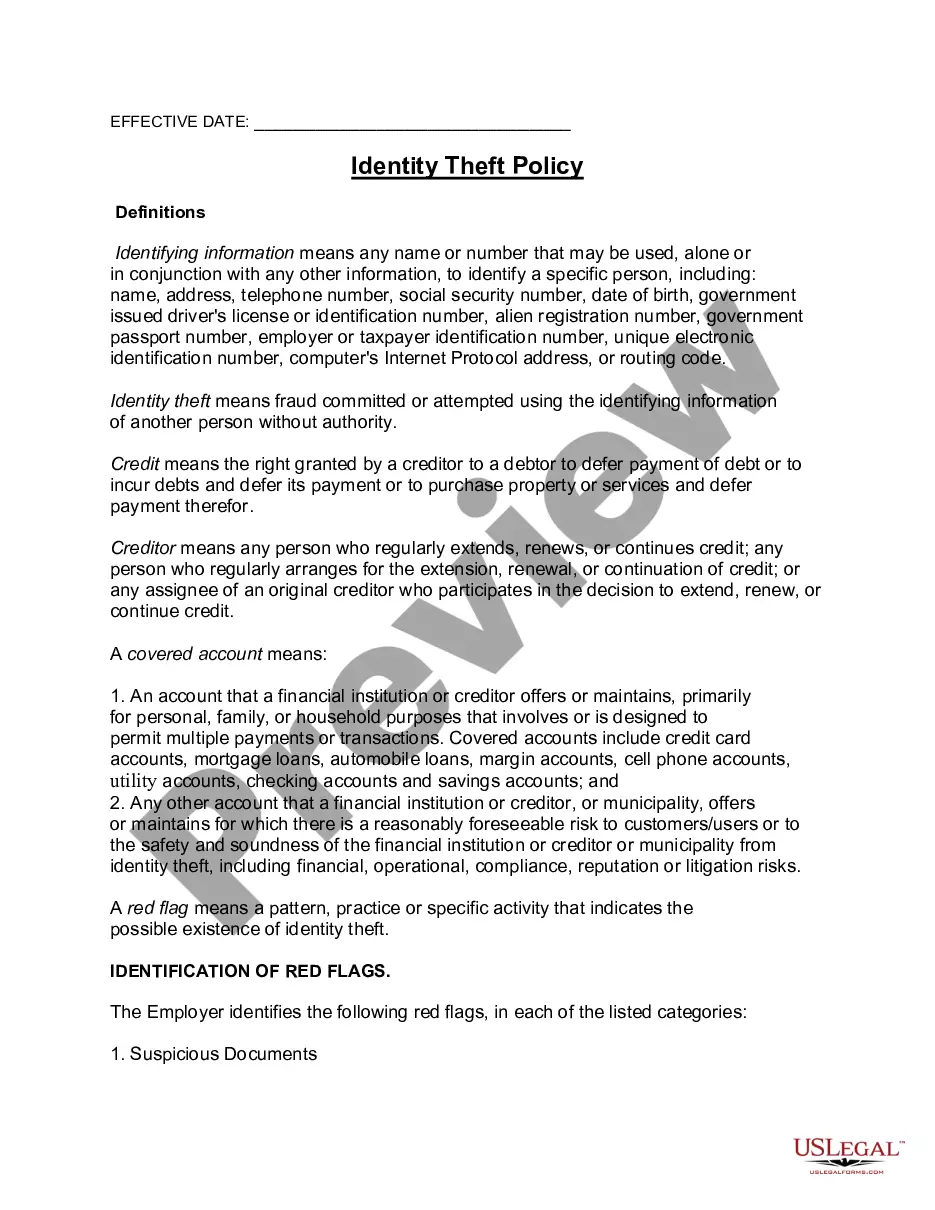
- Identity Theft Protection Guide
- Federal Trade Commission Affidavit regarding Identity Theft
- Letter to Credit Reporting Company or Bureau regarding Identity Theft
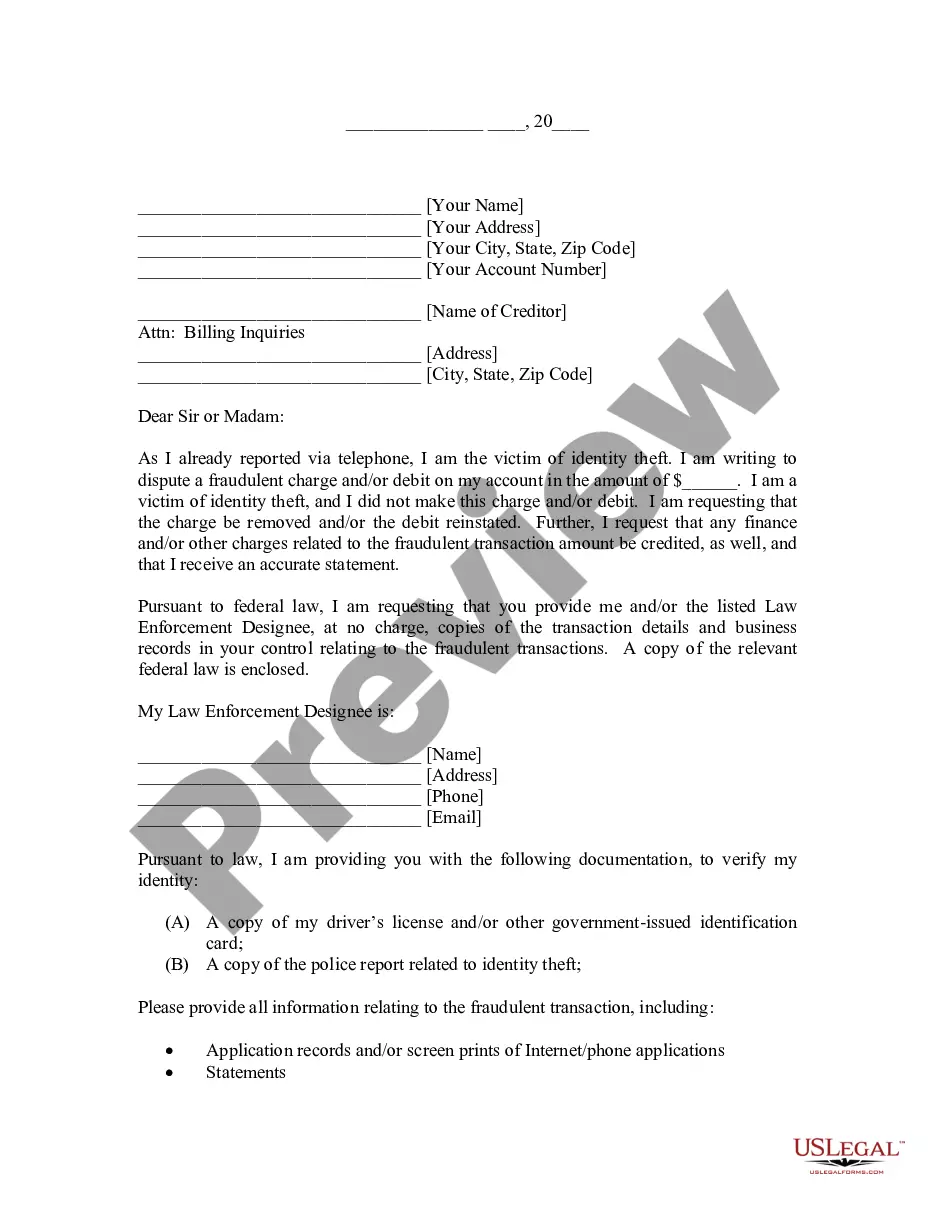
- Letter to Creditors notifying them of Identity Theft
- Letter to Creditors Notifying Them of Identity Theft for New Accounts
- Letter Notifying Law Enforcement of Identity Theft
- Letter Notifying Postal Authorities of Identity Theft
- Letter Notifying Social Security Administration of Identity Theft
- Letter to Other Entities Notifying Them of Identity Theft
- Identity Theft Contact Table
- Identity Theft Checklist
- Sample Letter to Report False Submission of Information
- Sample Letter for Request for Free Credit Report Allowed by Federal Law
When to use this form package
This identity theft recovery package should be used in situations such as:
- If you discover unauthorized charges on your credit card.
- When you learn that someone has opened a new account in your name without your permission.
- If you receive notifications from creditors regarding accounts or debts you did not incur.
- When your personal information, like your social security number, has been compromised.
- If you need to report identity theft to law enforcement or other entities.
Who this form package is for
- Individuals who have been victims of identity theft in North Carolina.
- People needing to communicate with creditors or government agencies regarding fraudulent activities linked to their identification.
- Those looking to reclaim their identity and repair damage to their credit history.
- Anyone requiring guidance through the recovery process and preventive measures to safeguard their identity.
How to complete these forms
- Review the included forms to understand their specific purposes and requirements.
- Gather the necessary personal information and documentation related to the identity theft incident.
- Complete each form clearly and accurately, ensuring all required fields are filled.
- Send the completed forms to the respective creditors, law enforcement, or agencies as instructed.
- Keep copies of all submitted forms and correspondence for your records.
Do forms in this package need to be notarized?
Notarization is not commonly needed for forms in this package. However, if your state’s laws require it, our notarization service, powered by Notarize, allows you to finalize documents online 24/7 without in-person visits.
Get your form ready online
Our built-in tools help you complete, sign, share, and store your documents in one place.
Make edits, fill in missing information, and update formatting in US Legal Forms—just like you would in MS Word.
Download a copy, print it, send it by email, or mail it via USPS—whatever works best for your next step.
Sign and collect signatures with our SignNow integration. Send to multiple recipients, set reminders, and more. Go Premium to unlock E-Sign.
If this form requires notarization, complete it online through a secure video call—no need to meet a notary in person or wait for an appointment.
We protect your documents and personal data by following strict security and privacy standards.

Make edits, fill in missing information, and update formatting in US Legal Forms—just like you would in MS Word.

Download a copy, print it, send it by email, or mail it via USPS—whatever works best for your next step.

Sign and collect signatures with our SignNow integration. Send to multiple recipients, set reminders, and more. Go Premium to unlock E-Sign.

If this form requires notarization, complete it online through a secure video call—no need to meet a notary in person or wait for an appointment.

We protect your documents and personal data by following strict security and privacy standards.
Common mistakes to avoid
- Failing to include all necessary documentation with your forms.
- Not sending forms to the correct addresses or agencies.
- Neglecting to keep copies of all communication for future reference.
- Assuming that one report to law enforcement is sufficient without informing all affected parties.
Why complete this package online
- Convenience of accessing all necessary documents in one easily downloadable package.
- Editability allows for quick adjustments to personalize each form.
- Reliable information crafted by licensed attorneys ensures compliance with legal standards.
- Immediate access to forms means you can start the recovery process without delays.
Looking for another form?

Form popularity
FAQ
Theft is a felony of the first degree if the value of the stolen property or services is $300,000 or more. The punishment for a first-degree felony is a fine of not more than $10,000, imprisonment ranging from five to 99 years, or both.
Petty theft vs. grand theft. Robbery. Robbery is a theft that involves using violence, intimidation, or threats to obtain property. Armed robbery. When a gun, knife, or other weapon is used during a theft it is called an armed robbery. Embezzlement. Fraud. Shoplifting. Receiving stolen property. Writing bad checks.
Theft is defined by section 1 of the 1968 Act as dishonestly appropriating property belonging to another with the intention of permanently depriving the other of it.
Theft is the taking of another person's property or services or scrap money without that person's permission or consent with the intent to deprive the rightful owner of it.In some jurisdictions, theft is considered to be synonymous with larceny; in others, theft has replaced larceny.