North Carolina Landlord Agreement to allow Tenant Alterations to Premises
What is this form?
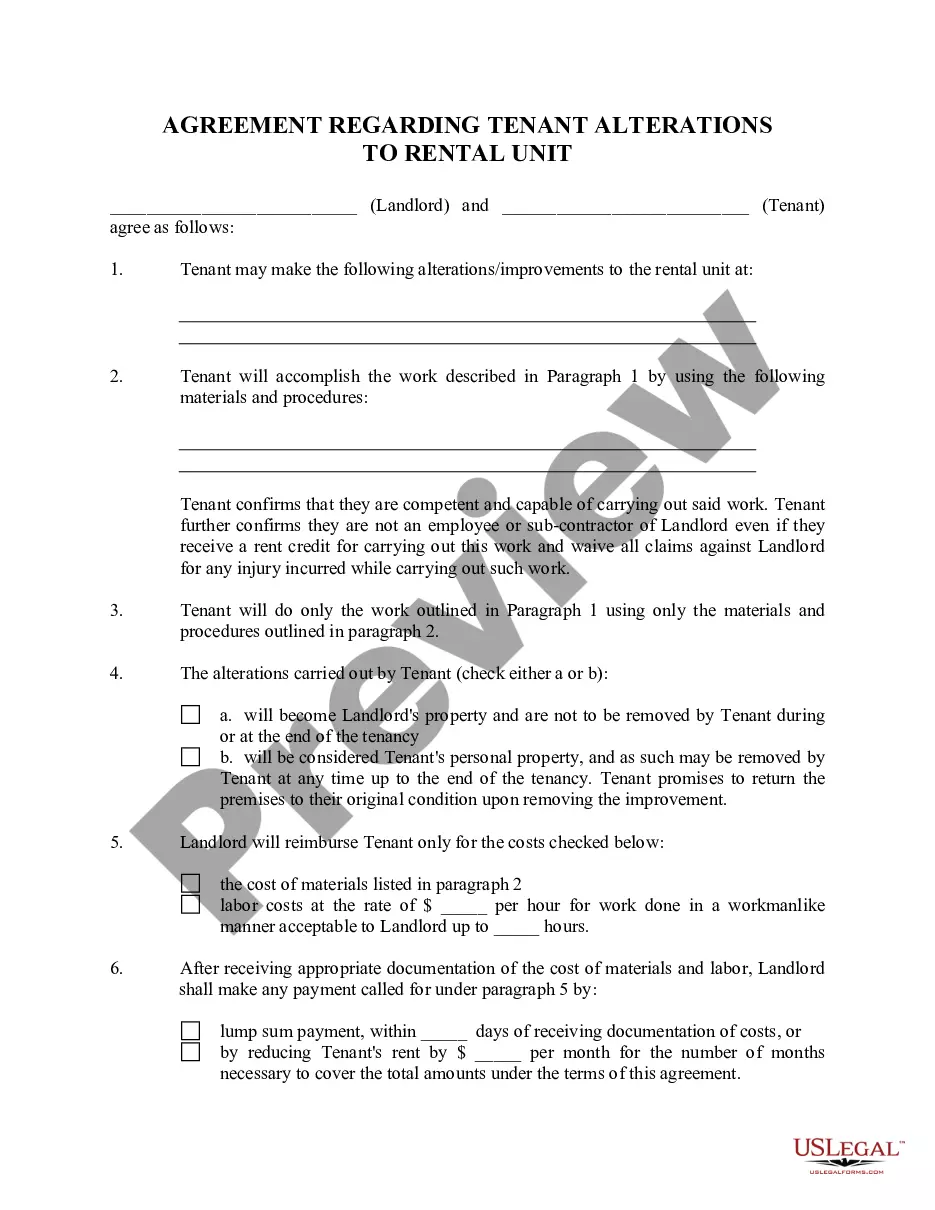
The Landlord Agreement to allow Tenant Alterations to Premises is a legal contract that outlines the terms under which a tenant can make alterations or improvements to a rented property. This form helps define the responsibilities and rights of both the landlord and tenant, thus preventing misunderstandings. Unlike a standard lease agreement, this document specifically addresses modifications the tenant wishes to carry out on the premises, including ownership of improvements and financial obligations related to them.
Key parts of this document
- Identification of the landlord and tenant.
- Details of permitted alterations and improvements.
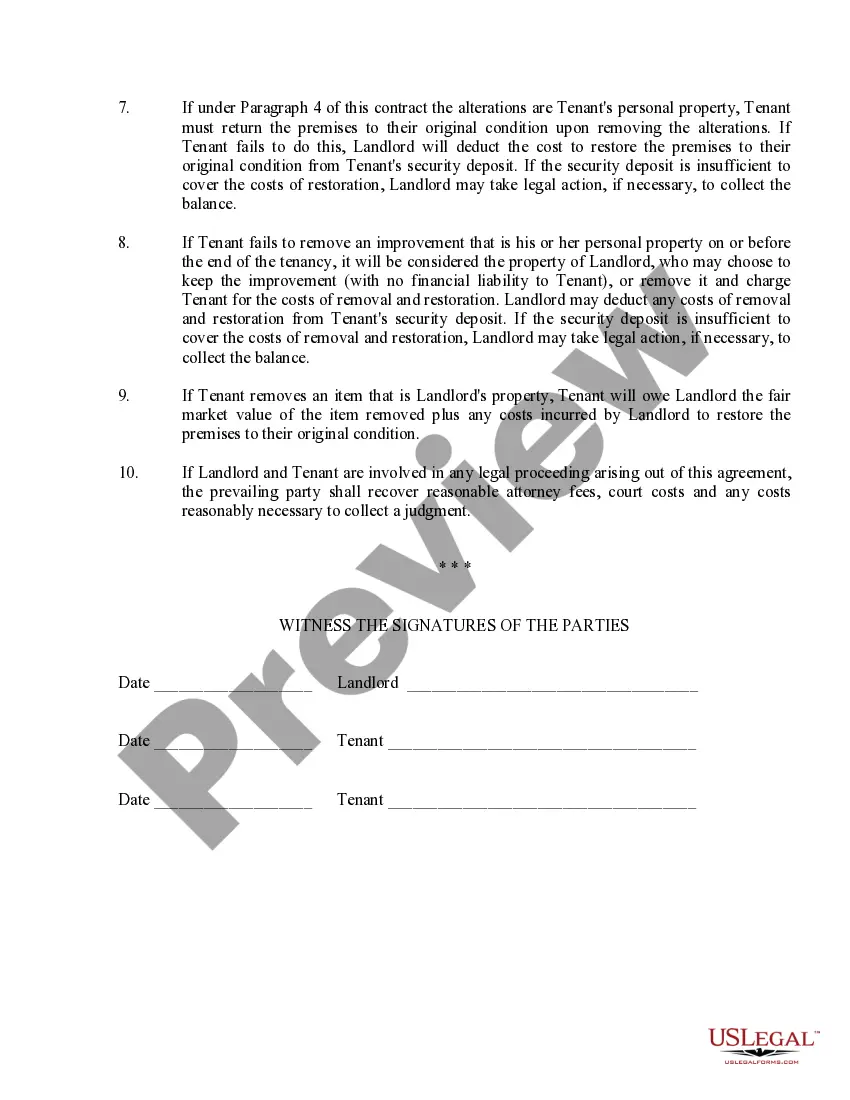
- Clarification of property ownership regarding improvements.
- Reimbursement terms for costs incurred by the tenant.
- Conditions for restoration of the premises upon removal of improvements.
- Provisions for legal action concerning disputes.
When to use this document
This form should be used when a tenant seeks to make changes to their rented apartment or house, such as remodeling a kitchen, installing new fixtures, or painting walls. A written agreement ensures that both parties are aware of their responsibilities regarding costs, removal, and the property's condition upon move-out, which helps prevent conflicts and protects both parties' interests.
Who needs this form
Eligibility for this form includes:
- Landlords who wish to allow tenants to make alterations to their rental properties.
- Tenants who want to improve or modify their rental units in a legally sound manner.
- Property managers overseeing rental agreements and tenant modifications.
Instructions for completing this form
- Identify and enter the names of the landlord and tenant.
- Specify the alterations or improvements the tenant wishes to make.
- Clarify who will bear the cost of materials and labor.
- Include payment terms for reimbursement by the landlord.
- Outline the conditions under which alterations may be removed.
- Sign and date the agreement by both parties to make it legally binding.
Does this form need to be notarized?
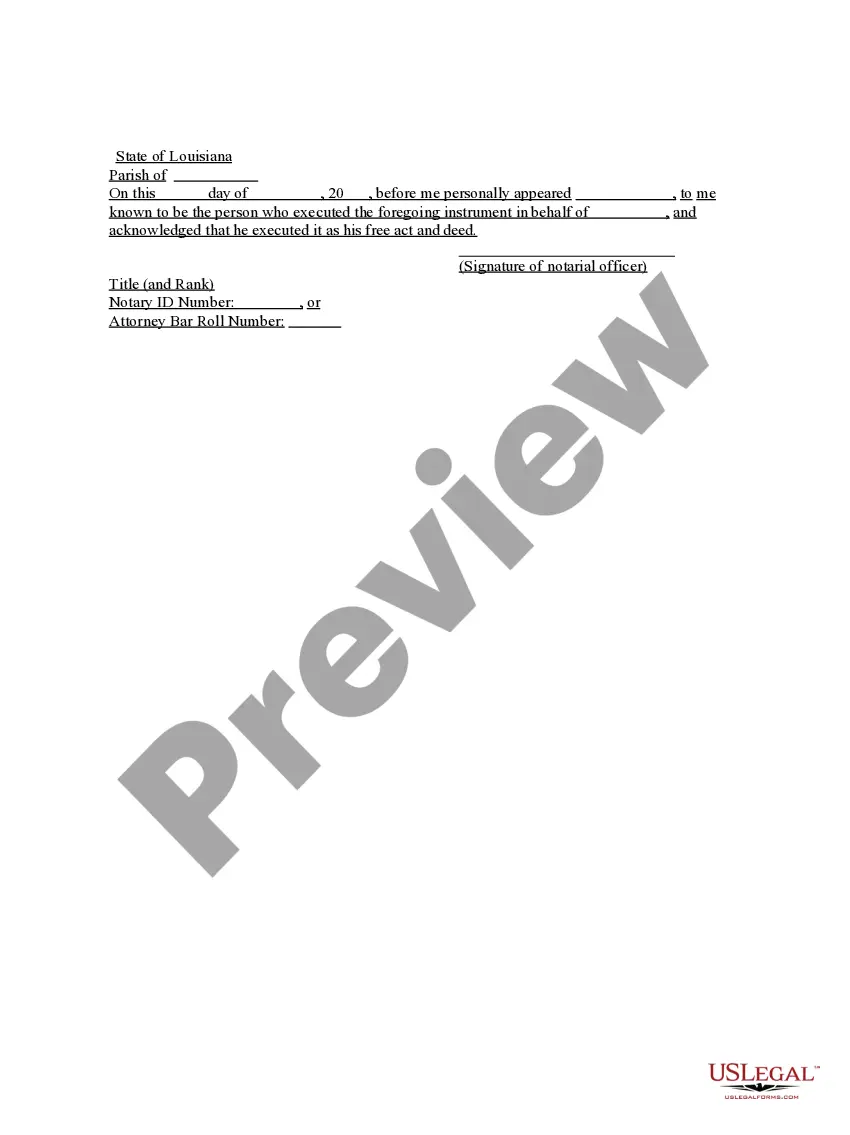
Notarization is generally not required for this form. However, certain states or situations might demand it. You can complete notarization online through US Legal Forms, powered by Notarize, using a verified video call available anytime.
Get your form ready online
Our built-in tools help you complete, sign, share, and store your documents in one place.
Make edits, fill in missing information, and update formatting in US Legal Forms—just like you would in MS Word.
Download a copy, print it, send it by email, or mail it via USPS—whatever works best for your next step.
Sign and collect signatures with our SignNow integration. Send to multiple recipients, set reminders, and more. Go Premium to unlock E-Sign.
If this form requires notarization, complete it online through a secure video call—no need to meet a notary in person or wait for an appointment.
We protect your documents and personal data by following strict security and privacy standards.
Make edits, fill in missing information, and update formatting in US Legal Forms—just like you would in MS Word.
Download a copy, print it, send it by email, or mail it via USPS—whatever works best for your next step.
Sign and collect signatures with our SignNow integration. Send to multiple recipients, set reminders, and more. Go Premium to unlock E-Sign.
If this form requires notarization, complete it online through a secure video call—no need to meet a notary in person or wait for an appointment.
We protect your documents and personal data by following strict security and privacy standards.
Mistakes to watch out for
- Failing to specify the materials and methods to be used in alterations.
- Not clearly defining whether improvements are the landlord's or tenant's property.
- Omitting the terms for reimbursement, including timelines and amounts.
- Neglecting to include conditions for returning the premises to original condition.
Why use this form online
- Convenience of accessing and downloading the form anytime, anywhere.
- Editability allows for customization to meet specific needs and circumstances.
- Reliable templates drafted by licensed attorneys ensure legal compliance.
Legal use & context
- The agreement provides a clear framework for alterations, reducing future disputes.
- In the case of a dispute, the agreement may be used in legal proceedings to support claims.
- Following local laws and regulations ensures enforceability and protects both parties' interests.
Quick recap
- This form outlines tenant alterations and improvements clearly to avoid disputes.
- It clarifies payment responsibilities regarding costs of improvements.
- Completion requires signatures from both landlord and tenant to ensure validity.
Looking for another form?
Form popularity
FAQ
Changing the tenancy agreement A tenancy agreement can normally only be changed if both you and your landlord agree. If you both agree, the change should be recorded in writing, either by drawing up a new written document setting out the terms of the tenancy or by amending the existing written tenancy agreement.
Your landlord can change a rental agreement at any time during the term of the agreement, with or without your consent. Changes must be made with adequate notice; notice periods are 30 days in most states. Changing a lease is harder because both parties must consent to almost any change.
In cases like this, landlords are entitled to deduct the remaining tax basis in capitalized leasehold improvements made for a particular tenant upon termination of the lease if such improvements are irrevocably disposed of or abandoned and won't be used by a subsequent tenant.
An addendum must include the basic elements of any landlord/tenant agreement. You should include the date, the address of the rental property and the names of each party just as you would in the original lease.
If the tenant pays for leasehold improvements, the capital expenditure is recorded as an asset on the tenant's balance sheet. Then the expense is recorded on income statements as amortization over either the life of the lease or the useful life of the asset, whichever is shorter.
Often, landlords will provide a 'leasehold improvement allowance' for their tenants which is merely a set amount they agree to pay for. If the improvements you want cost more than the allowance, you will be responsible for those extra costs.
Tenant can claim for: Necessary improvements to protect or preserve the property (costs expended),The claim arises only once the lease is terminated and lessee returned the property. The court has discretion to disallow a claim for useful improvements.
Who Can Amend the Lease? When a landlord and tenant sign a lease agreement it forms a legally binding contract. The lease cannot be altered except through another written agreement signed by both parties unless the original lease specifically gives a party the power to change something on their own.
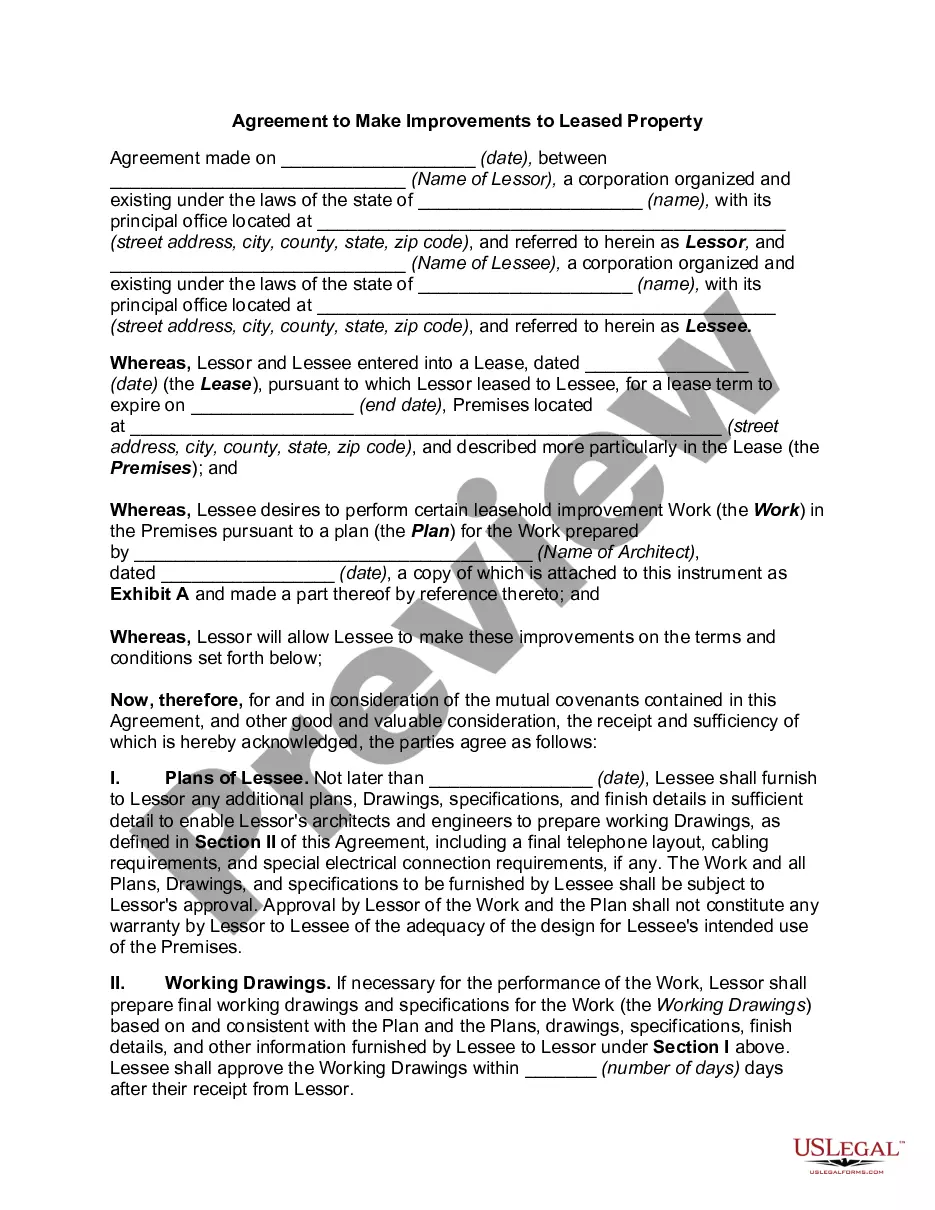
Leasehold improvements are any changes made to a rental property in order to customize it for the particular needs of a tenant. These can include alterations such as painting, installing partitions, changing the flooring, or putting in customized light fixtures.