Assignment of Deed of Trust by Individual Mortgage Holder
Assignments Generally:
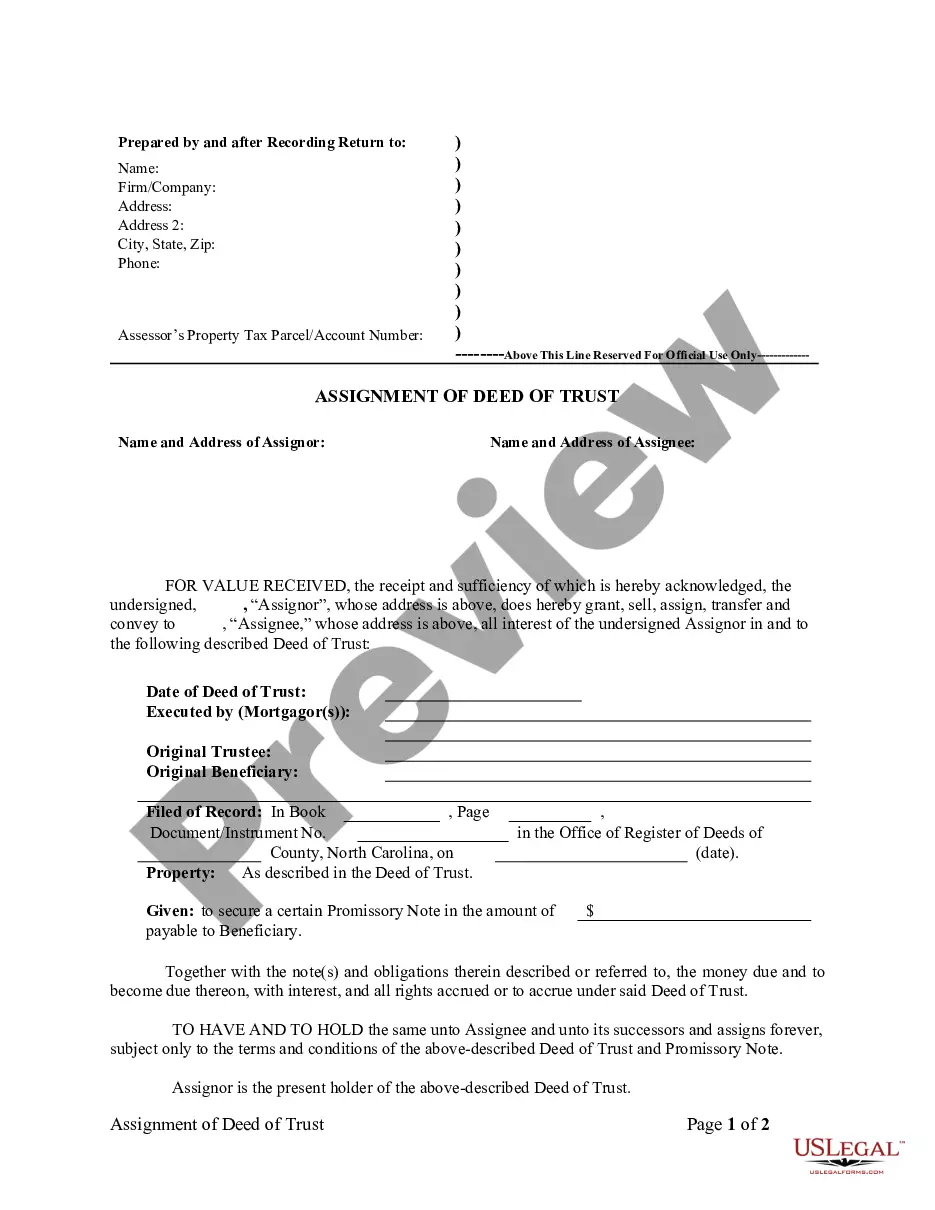
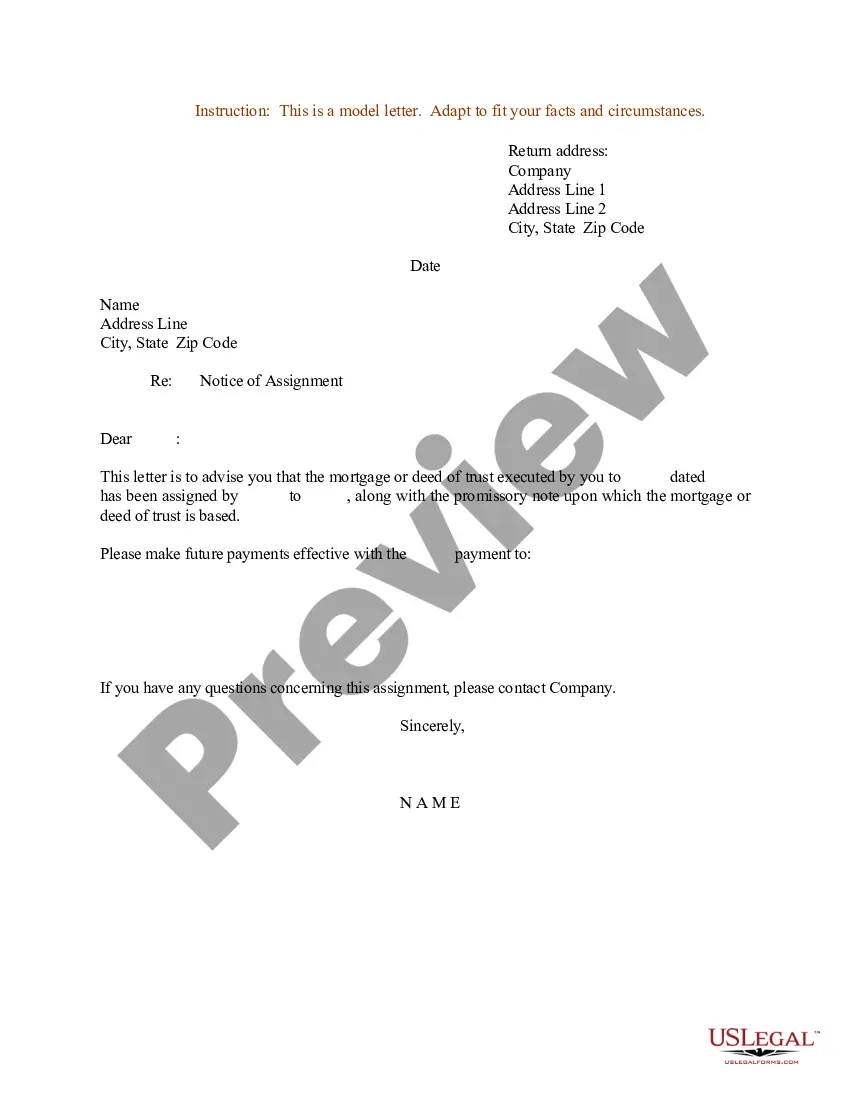
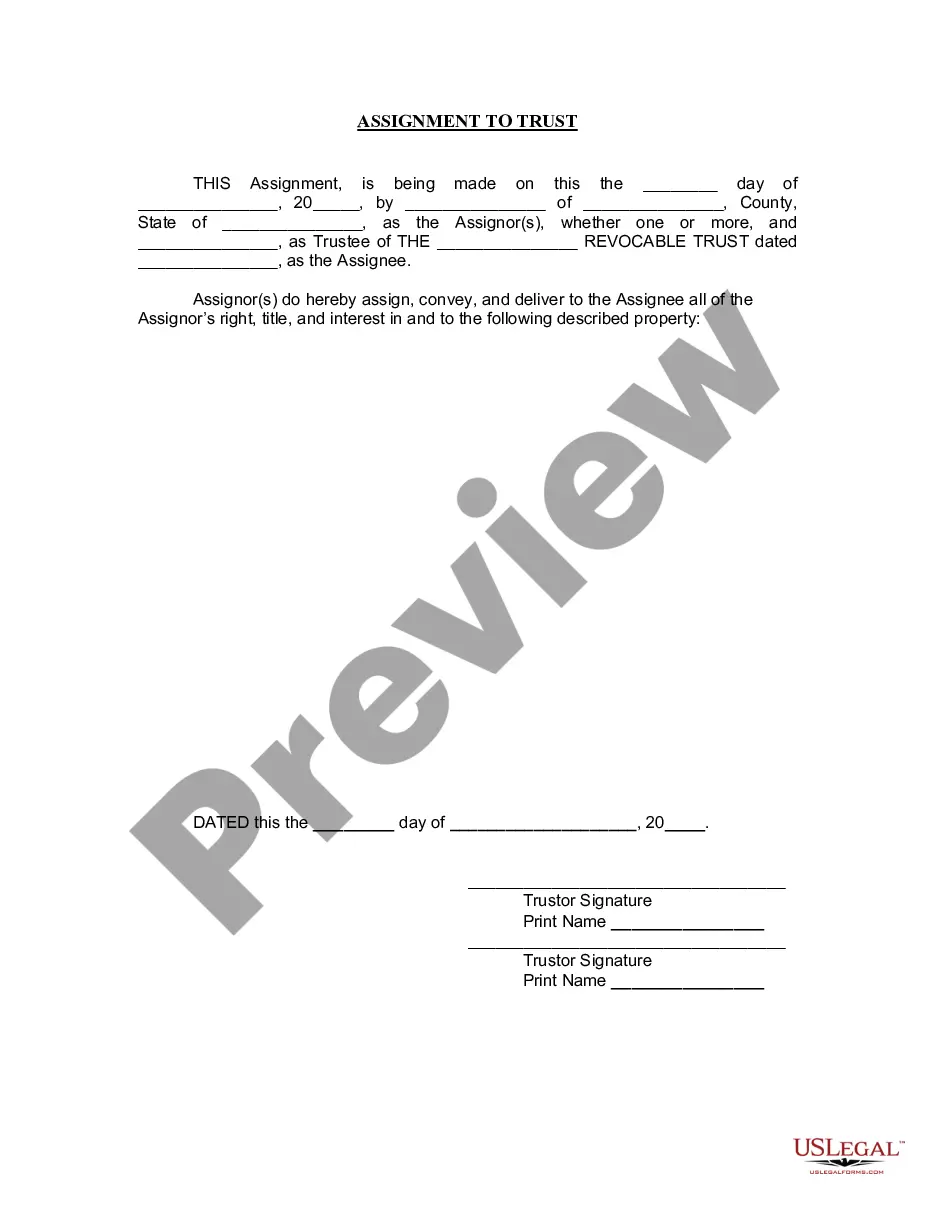
Lenders, or holders of mortgages or deeds of trust, often assign mortgages or deeds of trust
to other lenders, or third parties. When this is done the assignee
(person who received the assignment) steps into the place of the original
lender or assignor. To effectuate an assignment, the general rule
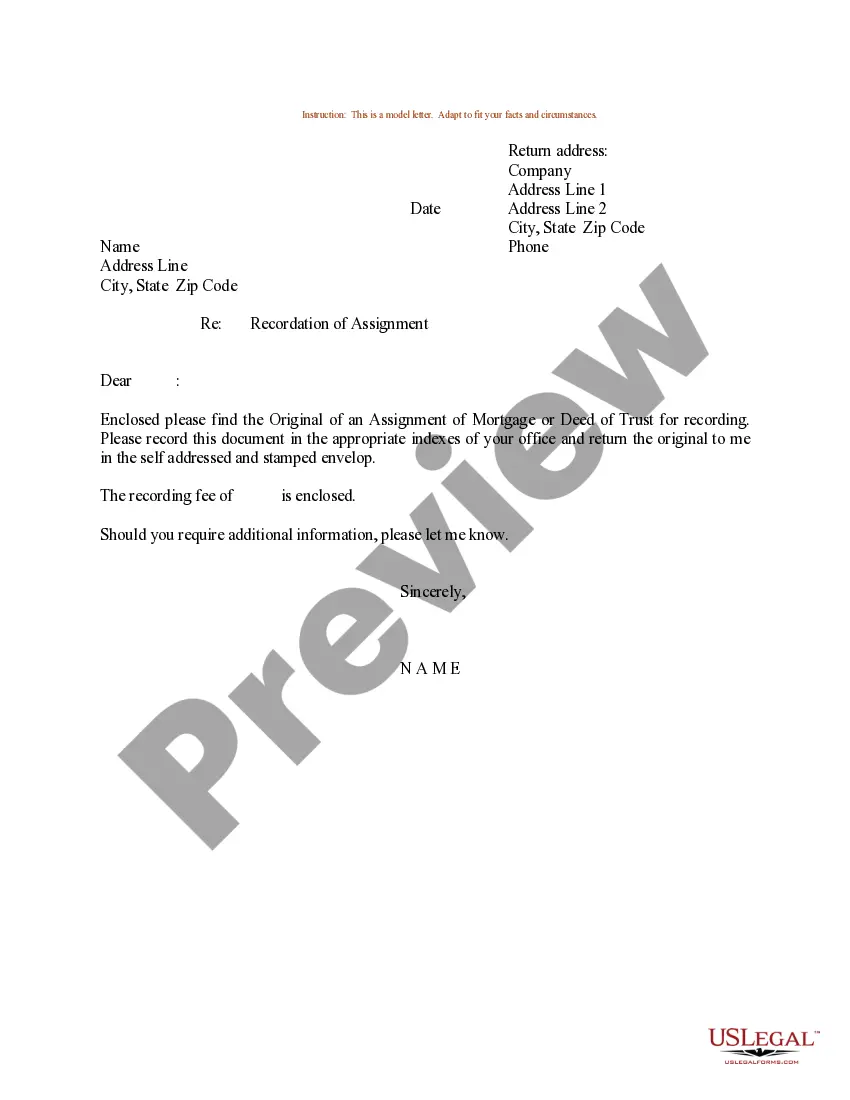
is that the assignment must be in proper written format and recorded to
provide notice of the assignment.
Satisfactions Generally:
Once a mortgage or deed of trust is paid, the holder of the mortgage is required to satisfy
the mortgage or deed of trust of record to show that the mortgage or deed
of trust is no longer a lien on the property. The general rule is that
the satisfaction must be in proper written format and recorded to provide
notice of the satisfaction. If the lender fails to record a satisfaction
within set time limits, the lender may be responsible for damages set by
statute for failure to timely cancel the lien. Depending on your state,
a satisfaction may be called a Satisfaction, Cancellation, or Reconveyance.
Some states still recognize marginal satisfaction but this is slowly being
phased out. A marginal satisfaction is where the holder of the mortgage
physically goes to the recording office and enters a satisfaction on the
face of the the recorded mortgage, which is attested by the clerk.
North Carolina Law
Assignment:
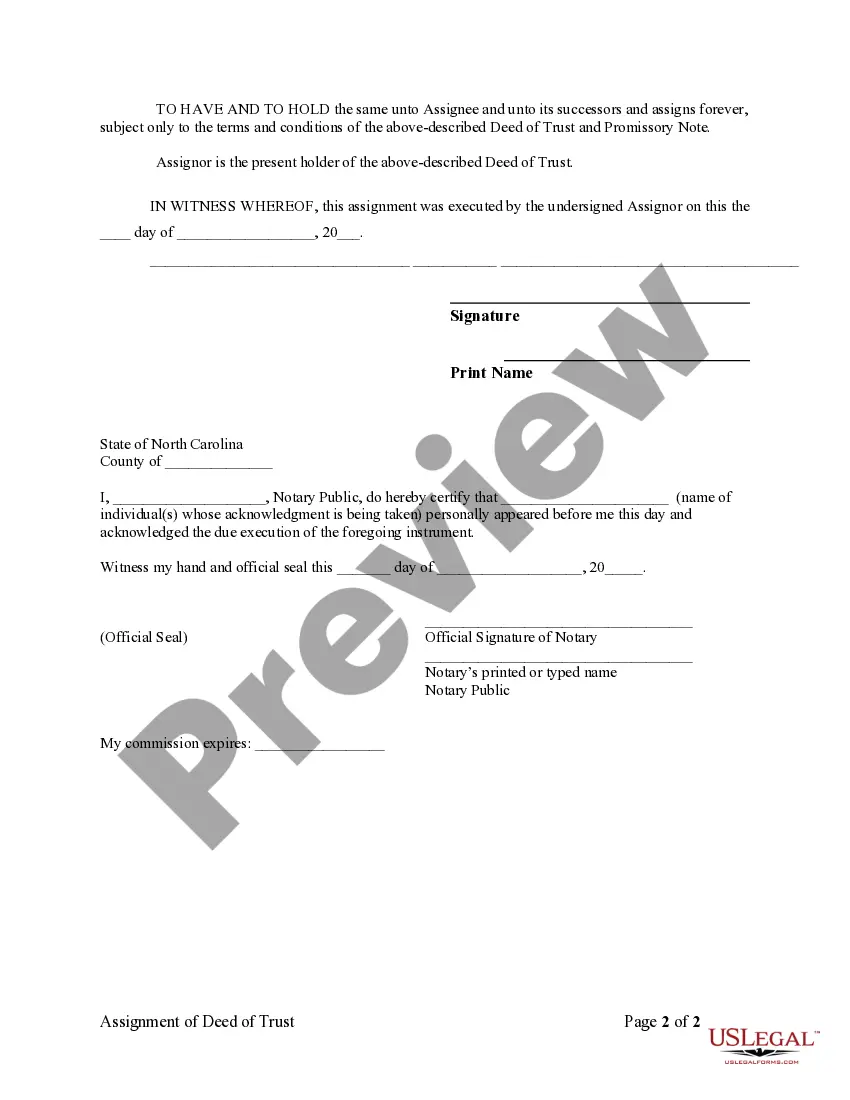
An assignment must be in writing and recorded.
Demand to Satisfy:
A petitioner may recover damages under this section only if he has given the mortgagee, obligee,
beneficiary or other responsible party written notice of his intention
to bring an action pursuant to this section. Upon receipt of this notice,
the mortgagee, obligee, beneficiary or other responsible party shall have
30 days, in addition to the initial 60-day period, to fulfill the requirements
of this section. See code section 45-36.3(2)(b), below.
Recording Satisfaction:
Upon full payoff, within 60 days the lender must either forward the satisfaction document to the borrower,
or have the satisfaction recorded of record. See, 45-36.3, below.
Marginal Satisfaction:
A marginal satisfaction may be done in addition to recording the satisfaction document. See 45-37, below.
Penalty:
Any person, institution or agent who fails to comply with this section may be required to pay a civil penalty
of not more than one thousand dollars ($1,000) in addition to reasonable
attorneys' fees and any other damages awarded by the court to the grantor,
trustor or mortgagor, or to a subsequent purchaser of the property from
the grantor, trustor or mortgagor. See code section 45-36.3(2)(b)
below.
Acknowledgment:
An assignment or satisfaction must contain a proper North Carolina acknowledgment, or other acknowledgment
approved by Statute.
North Carolina Statutes
§45-36.2. Register of deeds includes assistants and deputies.
The words "register of deeds" appearing in this Article shall be interpreted to mean "register of deeds, assistant
register of deeds, or deputy register of deeds." (1953, c. 848.)
§ 45-36.3. Notification by mortgagee of satisfaction
of provisions of deed of trust or mortgage, or other instrument; civil
penalty.
(a) After the satisfaction of the provisions
of any deed of trust or mortgage, or other instrument intended to secure
with real property the payment of money or the performance of any other
obligation and registered as required by law, the holder of the evidence
of the indebtedness, if it is a single instrument, or a duly authorized
agent or attorney of such holder shall within 60 days:
(1)
Discharge and release of record such documents and forward the cancelled
documents to the grantor, trustor or mortgagor; or,
(2)
Alternatively, the holder of the evidence of the indebtedness or a duly
authorized agent or attorney of such holder, at the request of the grantor,
trustor or mortgagor, shall forward said instrument and the deed of trust
or mortgage instrument, with payment and satisfaction acknowledged in accordance
with the requirements of G.S. 45-37, to the grantor, trustor or mortgagor.
(b) Any person, institution or agent who
fails to comply with this section may be required to pay a civil penalty
of not more than one thousand dollars ($1,000) in addition to reasonable
attorneys' fees and any other damages awarded by the court to the grantor,
trustor or mortgagor, or to a subsequent purchaser of the property from
the grantor, trustor or mortgagor. A five hundred dollar ($500.00)
civil penalty may be recovered by the grantor, trustor or mortgagor,
and a five hundred dollar ($500.00) penalty may be recovered by the purchaser
of the property from the grantor, trustor or mortgagor. If that purchaser
of the property consists of more than a single grantee, then the civil
penalty will be divided equally among all of the grantees. A petitioner
may recover damages under this section only if he has given the mortgagee,
obligee, beneficiary or other responsible party written notice of
his intention to bring an action pursuant to this section. Upon receipt
of this notice, the mortgagee, obligee, beneficiary or other responsible
party shall have 30 days, in addition to the initial 60-day period, to
fulfill the requirements of this section.
(c) Should any person, institution or agent
who is not the present holder of the evidence of indebtedness be required
to pay a civil penalty, attorneys' fees, or other damages under this section,
they will have an action against the holder of the evidence of indebtedness
for all sums they were required to pay.
§ 45-37. Discharge of record of mortgages,
deeds of trust and other instruments.
(a) Subject to the provisions of
G.S. 45-73 relating to secured instruments which secure future advances,
any deed of trust or mortgage or other instrument intended to secure the
payment of money or the performance of any other obligation registered
as required by law may be discharged and released of record in the following
manner:
(1)
By acknowledgment of the satisfaction of the provisions of such deed of
trust, mortgage or other instrument in the presence of the register of
deeds by:
The register of deeds is not required to verify or make inquiry concerning
the authority of the person acknowledging the satisfaction to do so. Upon
acknowledgment of satisfaction, the register of deeds shall record a record
of satisfaction as described in G.S. 45-37.2, and may forthwith make upon
the margin of the record of such deed of trust, mortgage or other instrument
an entry of such acknowledgment of satisfaction which shall be signed by
the trustee, mortgagee, legal representative, agent or attorney and witnessed
by the register of deeds, who shall also affix his name thereto.
(2)
By exhibition of any deed of trust, mortgage or other instrument accompanied
with the bond, note, or other instrument thereby secured to the register
of deeds, with the endorsement of payment and satisfaction appearing thereon
and made by:
e. Any chartered banking institution, or savings
and loan association, national or state, or credit union, qualified to
do business in and having an office in the State of North Carolina, when
so endorsed in the name of the institution by an officer thereof.
The register of deeds is not required to verify or make inquiry concerning
the authority of the person making the endorsement of payment and satisfaction
to do so. Upon exhibition of the instruments, the register of deeds shall
cancel the mortgage, deed of trust or other instrument by recording a record
of satisfaction as described in G.S. 45-37.2, and may make an entry of
satisfaction on the margin of the record. The person so claiming satisfaction,
performance or discharge of the debt or other obligation may retain possession
of all of the instruments exhibited. The exhibition of the mortgage, deed
of trust or other instrument alone to the register of deeds, with endorsement
of payment, satisfaction, performance or discharge, shall be sufficient
if the mortgage, deed of trust or other instrument itself sets forth the
obligation secured or the performance of any other obligation and does
not call for or recite any note, bond or other instrument secured by it.
c. An agent, attorney or successor in title of
the grantor or mortgagor of any mortgage, deed of trust or other instrument
intended to secure the payment of money or the performance of any other
obligation, together with the bond, note or other instrument secured thereby,
or by exhibition of the mortgage, deed of trust or other instrument alone
if such instrument itself sets forth the obligation secured or other obligation
to be performed and does not call for or recite any note, bond or other
instrument secured by it, if at the time of exhibition, all such instruments
are more than 10 years old counting from the maturity date of the last
obligation secured. If the instrument or instruments so exhibited have
an endorsement of partial payment, satisfaction, performance or discharge
within the said period of 10 years, the period of 10 years shall be counted
from the date of the most recent endorsement.
The register of deeds shall
cancel the mortgage, deed of trust, or other instrument by recording a
record of satisfaction as described in G.S. 45-37.2, and may make proper
entry of cancellation and satisfaction of said instrument on the margin
of the record where the same is recorded, whether there be any such entries
on the original papers or not.
(4)
By exhibition to the register of deeds of any deed of trust given to secure
the bearer or holder of any negotiable instruments transferable by delivery,
together with all the evidences of indebtedness secured thereby, marked
paid and satisfied in full and signed by the bearer or holder thereof.
Upon exhibition of the deed of trust, and the evidences of indebtedness
properly marked, the register of deeds shall cancel such deed of trust
by recording a record of satisfaction as described in G.S. 45-37.2, and
may make an entry of satisfaction upon the margin of the record, which
record, or entry if made, shall be valid and binding upon all persons,
if no person rightfully entitled to the deed of trust or evidences of indebtedness
has previously notified the register of deeds in writing of the loss or
theft of the instrument or evidences of indebtedness and has caused the
register of deeds to record the notice or loss or theft in a separate document,
as required by G.S. 161-14.1.
Upon receipt of written notice of loss or theft of the deed of trust or
evidences of indebtedness the register of deeds shall record a record of
satisfaction, as described in G.S. 45-37.2, which in this case shall consist
of a rerecording of the record of the deed of trust containing the marginal
entry and may make on the record of the deed of trust concerned a marginal
entry in writing thereof, with the date of receipt of the notice. The deed
of trust shall not be canceled after such recording of a record of satisfaction
or marginal entry until the ownership of said instrument shall have been
lawfully determined. Nothing in this subdivision (4) shall be construed
to impair the negotiability of any instrument otherwise properly negotiable,
nor to impair the rights of any innocent purchaser for value thereof.
Every entry of acknowledgment of satisfaction or of satisfaction made or
witnessed by the register of deeds as provided in subdivision (a)(1) shall
operate and have the same effect to release and discharge all the interest
of such trustee, mortgagee or representative in such deed or mortgage as
if a deed of release or reconveyance thereof had been duly executed and
recorded.
(5)
By exhibition to the register of deeds of a notice of satisfaction of a
deed of trust, mortgage, or other instrument which has been acknowledged
by the trustee or the mortgagee before an officer authorized to take acknowledgments.
The notice of satisfaction shall be substantially in the form set out in
G.S. 47-46.1. The notice of satisfaction shall recite the names of all
parties to the original instrument, the amount of the obligation secured,
the date of satisfaction of the obligation, and a reference by book and
page number to the record of the instrument satisfied. The notice of satisfaction
shall be accompanied by the deed of trust, mortgage, or other instrument,
or a copy of the instrument, for verification and indexing purposes, which
shall not be recorded with the notice.
Upon exhibition of the notice of satisfaction, the register of deeds shall
record the notice of satisfaction and cancel the deed of trust, mortgage,
or other instrument as required by G.S. 45-37.2. No fee shall be charged
for recording any documents or certifying any acknowledgments pursuant
to this subdivision. The register of deeds shall not be required to verify
or make inquiry concerning the authority of the person executing the notice
of satisfaction to do so.
(6)
By exhibition to the register of deeds of a certificate of satisfaction
of a deed of trust, mortgage, or other instrument that has been acknowledged
before an officer authorized to take acknowledgments by the owner of the
note, bond, or other evidence of indebtedness secured by the deed of trust
or mortgage. The certificate of satisfaction shall be accompanied by the
note, bond, or other evidence of indebtedness, if available, with an endorsement
of payment and satisfaction by the owner of the note, bond, or other evidence
of indebtedness. If such evidence of indebtedness cannot be produced, an
affidavit, hereafter referred to as an "affidavit of lost note", signed
by the owner of the note, bond, or other evidence of indebtedness, shall
be delivered to the register of deeds in lieu of the evidence of indebtedness
certifying that the debt has been satisfied and stating: (i) the date of
satisfaction; (ii) that the note, bond, or other evidence of indebtedness
cannot be found; and (iii) that the person signing the affidavit is the
current owner of the note, bond, or other evidence of indebtedness. The
certificate of satisfaction shall be substantially in the form set out
in G.S. 47-46.2 and shall recite the names of all parties to the original
instrument, the amount of the obligation secured, the date of satisfaction
of the obligation, and a reference by book and page number to the record
of the instrument satisfied. The affidavit of lost note, if necessary,
shall be substantially in the form set out in G.S. 47- 46.3. The certificate
of satisfaction shall be accompanied by the deed of trust, mortgage, or
other instrument, or a copy of the instrument, for verification and indexing
purposes, which shall not be recorded with the certificate.
Upon exhibition of the certificate of satisfaction and accompanying evidence
of indebtedness endorsed paid and satisfied, or upon exhibition of an affidavit
of lost note, the register of deeds shall record the certificate of satisfaction
and either the accompanying evidence of indebtedness or the affidavit of
lost note, and shall cancel the deed of trust, mortgage, or other instrument
as required by G.S. 45-37.2. No fee shall be charged for recording any
documents or certifying any acknowledgments pursuant to this subdivision.
The register of deeds shall not be required to verify or make inquiry concerning
the authority of the person executing the certificate of satisfaction to
do so.
(b) It shall be conclusively presumed
that the conditions of any deed of trust, mortgage or other instrument
securing the payment of money or securing the performance of any other
obligation or obligations have been complied with or the debts secured
thereby paid or obligations performed, as against creditors or purchasers
for valuable consideration from the mortgagor or grantor, from and after
the expiration of 15 years from whichever of the following occurs last:
(1)
The date when the conditions of such instrument were required by its terms
to have been performed, or
(2)
The date of maturity of the last installment of debt or interest secured
thereby; provided that the holder of the indebtedness secured by such instrument
or party secured by any provision thereof may file an affidavit with the
register of deeds which affidavit shall specifically state:
Whenever practical, the register of deeds may also enter the information
contained in the separate instrument on the margin of the record of the
instrument. The effect of the filing of the affidavit or of the instrument
recorded made as herein provided shall be to postpone the effective date
of the conclusive presumption of satisfaction to a date 15 years from the
filing of the affidavit or from the recording of the instrument or the
making of the notation. There shall be only one postponement of the effective
date of the conclusive presumption provided for herein. The register of
deeds shall record the affidavit provided for herein and shall record a
separate instrument, as required by G.S. 161-14.1, making reference to
the filing of such affidavit and to the book and page where the affidavit
is recorded. Whenever practical, the register of deeds may also make such
a reference on the margin of the record of the deed of trust, mortgage,
or other instrument referred to. This subsection shall not apply to any
deed, mortgage, deed of trust or other instrument made or given by any
railroad company, or to any agreement of conditional sale, equipment trust
agreement, lease, chattel mortgage or other instrument relating to the
sale, purchase or lease of railroad equipment or rolling stock, or of other
personal property.
(c) Repealed by Session Laws 1991,
c. 114, s. 4.
(d) For the purposes of this section
"register of deeds" means the register of deeds, his deputies or assistants
of the county in which the mortgage, deed of trust, or other instrument
intended to secure the payment of money or performance of other obligation
is registered.
(e) Any transaction subject to the
provisions of the Uniform Commercial Code, Chapter 25 of the General Statutes,
is controlled by the provisions of that act and not by this section.
(f) Whenever this section requires
a signature or endorsement, that signature or endorsement shall be followed
by the name of the person signing or endorsing the document printed, stamped,
or typed so as to be clearly legible. The register of deeds may refuse
to accept any document when the provisions of this subsection have not
been met.
§ 45-37.2. Recording satisfactions of
deeds of trusts and mortgages.
(a) When a notice of satisfaction is recorded pursuant to
G.S. 45-37(a)(5) or a certificate of satisfaction is recorded pursuant
to G.S. 45-37(a)(6), the register of deeds shall make an entry of satisfaction
on the notice or certificate and record and index the instrument.
(b) When a deed of trust, mortgage, or other instrument is
satisfied by a method other than by means of a notice of satisfaction or
certificate of satisfaction, the register of deeds shall record a record
of satisfaction consisting of either a separate instrument or all or a
portion of the original deed of trust or mortgage rerecorded, and shall
make the appropriate entry of satisfaction as provided in G.S. 45-37 on
each record of satisfaction. A separate instrument or original deed of
trust or mortgage rerecorded pursuant to this subsection shall contain
(i) names of all parties to the original instrument, (ii) the amount of
the obligation secured, (iii) the date of satisfaction of the obligation,
(iv) a reference by book and page number to the record of the instrument
satisfied, and (v) the date of recording the notice of satisfaction.
(c) Whenever it is practical to do so, the register of deeds
may make a marginal notation of satisfaction in addition to making the
recordation required by this section.
§45-41. Recorded deed of release of mortgagee's representative.
The personal representative of any mortgagee or trustee in any mortgage
or deed of trust which has heretofore or which may hereafter be registered
in the manner required by the laws of this State may discharge and release
the same and all property thereby conveyed by deed of quitclaim, release
or conveyance executed, acknowledged and recorded as is now prescribed
by law for the execution, acknowledgment and registration of deeds and
mortgages in this State.
§ 45-42. Satisfaction of corporate mortgages
by corporate officers.
All mortgages and deeds in trust executed to a corporation may be
satisfied and so marked of record as by law provided for the satisfaction
of mortgages and deeds in trust, by any officer of the corporation indicating
the office held. For the purposes of recordation and cancellation,
such signature shall be deemed to be a certification by the signer that
he is an officer and is authorized to execute the satisfaction on behalf
of such corporation. Where mortgages or deeds in trust were marked
"satisfied" on the records before the twenty-third day of February, 1909,
by any president, secretary, treasurer or cashier of any corporation by
such officer writing his own name and affixing thereto the title of his
office in such corporation, such satisfaction is validated, and is as effective
to all intents and purposes as if a deed of release duly executed by such
corporation had been made, acknowledged and recorded.