North Carolina Letter from Tenant to Landlord with Demand that landlord remove garbage and vermin from premises
What this document covers
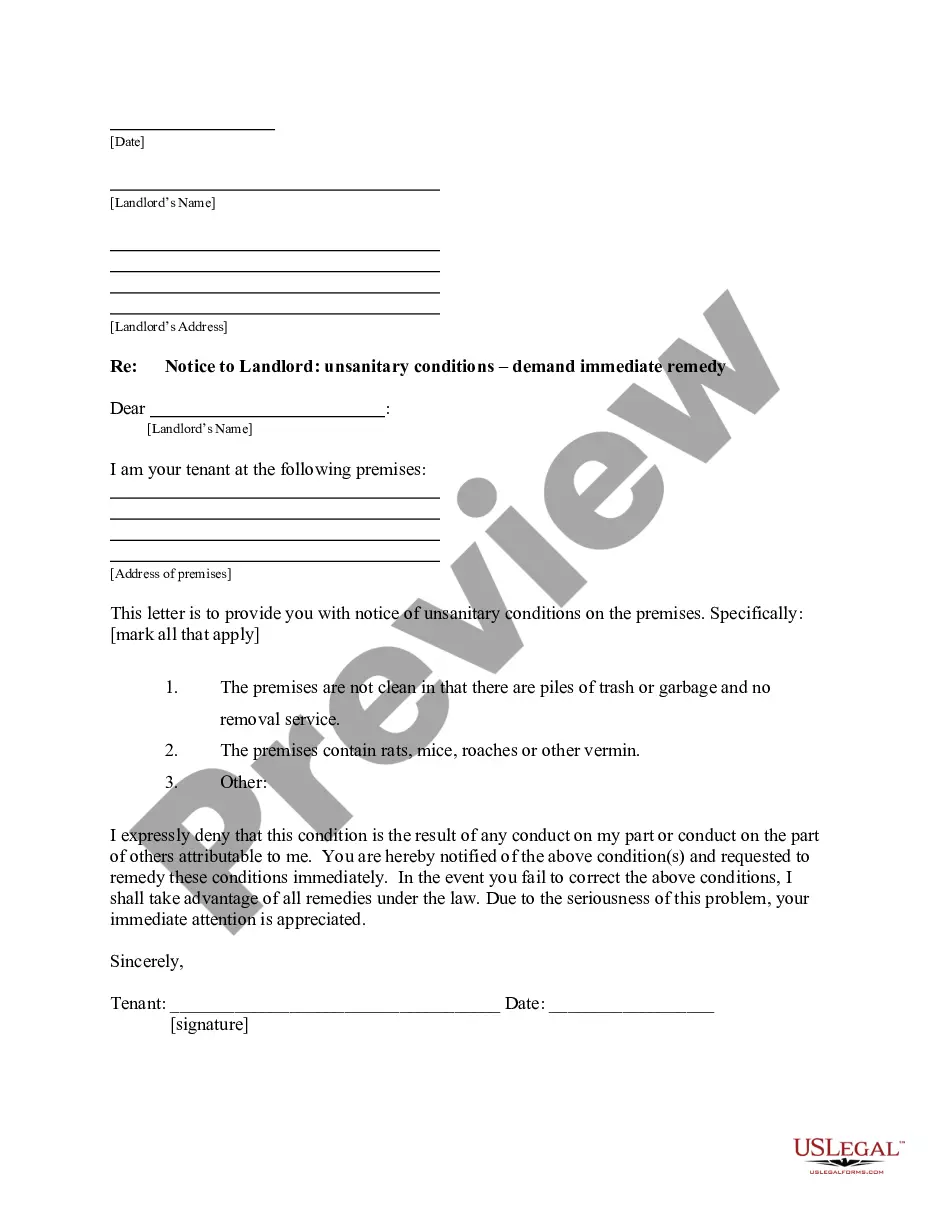
This form, known as the Letter from Tenant to Landlord with Demand that landlord remove garbage and vermin from premises, is used by a tenant to formally notify a landlord about unsanitary conditions in the rental property. Its purpose is to inform the landlord of their breach of the lease agreement and to demand immediate repairs. This form is essential for tenants facing unhealthy living conditions, setting it apart from other tenant-landlord communications.
What’s included in this form
- Identification of the tenant and the landlord.
- Clear description of the unsanitary conditions (garbage and vermin).
- Statement denying responsibility for the condition.
- Request for immediate action to remedy the unsanitary conditions.
- Notification of potential further actions if conditions are not addressed.
- Signature and date for verification of delivery.

When to use this form
This form should be used by tenants when they encounter unsanitary living conditions in their rental property, such as the presence of garbage or vermin. If the landlord has not addressed these issues within a reasonable time frame after previous requests, this letter acts as a formal demand for necessary repairs, ensuring that the tenant's concerns are documented and recognized legally.
Who can use this document
- Tenants who are experiencing unsanitary conditions in their rental unit.
- Individuals who have previously notified their landlord about the issues but have not seen any improvement.
- Renters seeking to document their formal request for repairs to protect their rights under the lease agreement.
Steps to complete this form
- Enter your name and the name of the landlord.
- Provide the address of the rental property.
- Clearly describe the unsanitary conditions you are facing.
- State that you deny responsibility for these conditions.
- Sign and date the letter to validate your request.
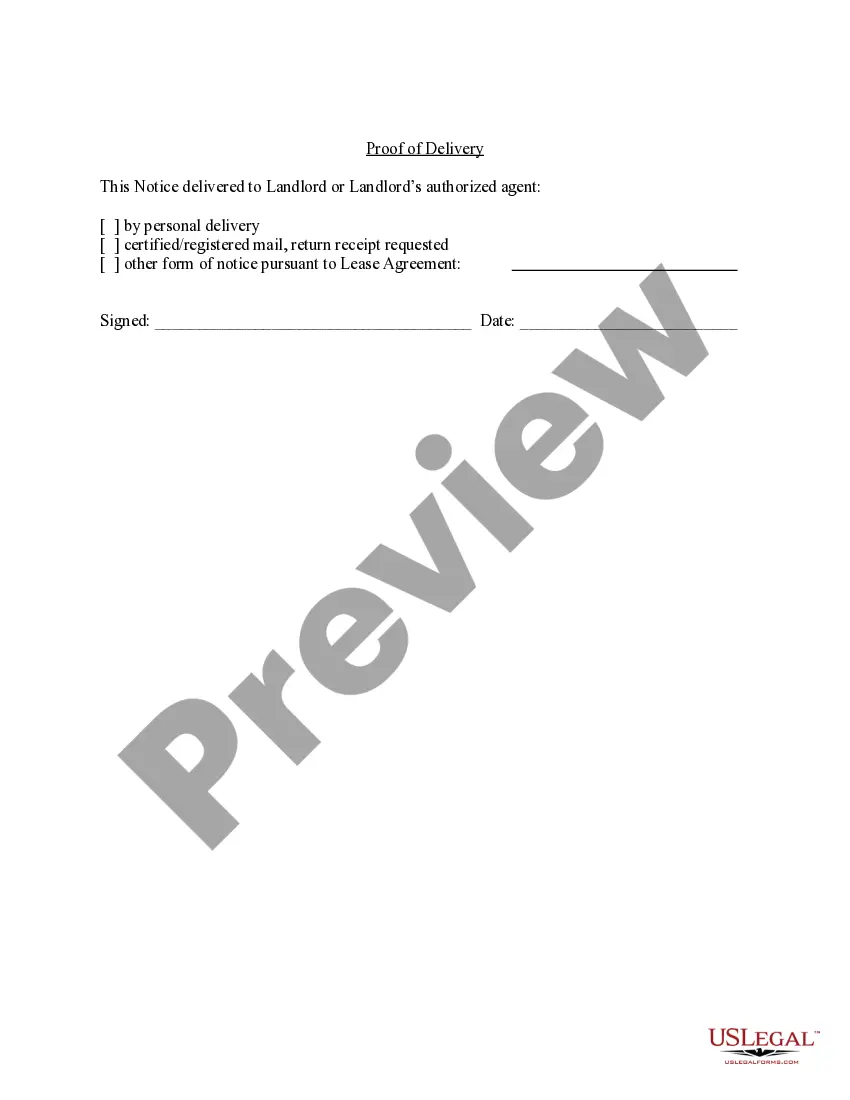
- Deliver the letter by personal delivery or certified mail for proof of receipt.
Is notarization required?
This form does not typically require notarization unless specified by local law. However, delivering the letter through certified mail or in-person provides necessary proof of delivery to your landlord.
Get your form ready online
Our built-in tools help you complete, sign, share, and store your documents in one place.
Make edits, fill in missing information, and update formatting in US Legal Forms—just like you would in MS Word.
Download a copy, print it, send it by email, or mail it via USPS—whatever works best for your next step.
Sign and collect signatures with our SignNow integration. Send to multiple recipients, set reminders, and more. Go Premium to unlock E-Sign.
If this form requires notarization, complete it online through a secure video call—no need to meet a notary in person or wait for an appointment.
We protect your documents and personal data by following strict security and privacy standards.

Make edits, fill in missing information, and update formatting in US Legal Forms—just like you would in MS Word.

Download a copy, print it, send it by email, or mail it via USPS—whatever works best for your next step.

Sign and collect signatures with our SignNow integration. Send to multiple recipients, set reminders, and more. Go Premium to unlock E-Sign.

If this form requires notarization, complete it online through a secure video call—no need to meet a notary in person or wait for an appointment.

We protect your documents and personal data by following strict security and privacy standards.
Typical mistakes to avoid
- Failing to provide a detailed description of the unsanitary conditions.
- Not signing or dating the letter, which may invalidate the request.
- Overlooking to send the letter through a traceable method of delivery.
Why complete this form online
- Convenient download ensures you have an official document ready for use.
- Editability allows you to customize the form to fit your specific situation.
- Reliability, knowing the format and language comply with legal standards.
Legal use & context
- This form serves as formal notice to the landlord, establishing a record of the tenant's complaints.
- It may be used as evidence in potential disputes if the landlord fails to address the issues.
- Tenants have the right to pursue further legal action if the landlord does not respond appropriately.
Main things to remember
- Tenants can use this form to demand attention to unsanitary living conditions.
- Prompt delivery and documentation are vital for legal protection.
- Understanding local laws can enhance the effectiveness of the demand.
Looking for another form?
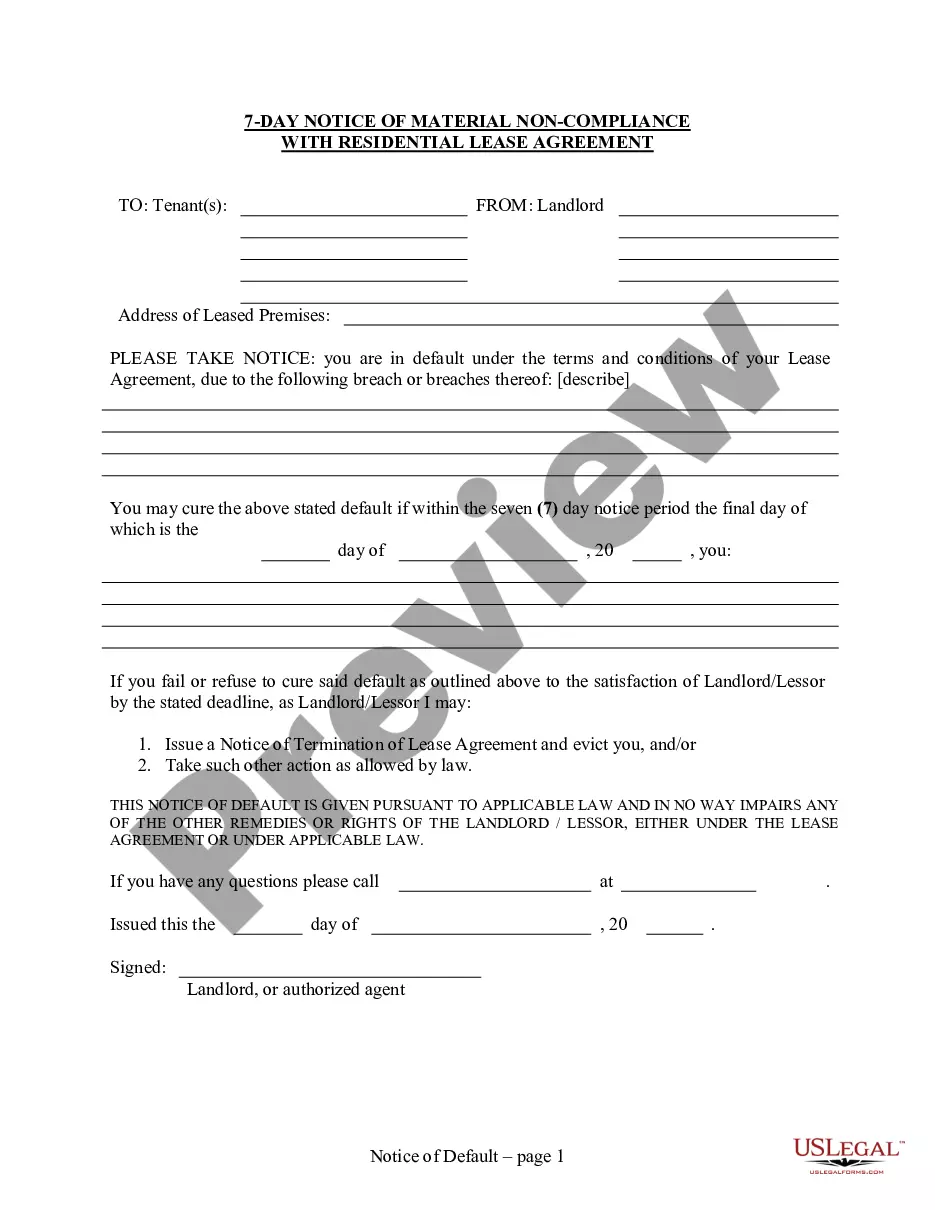
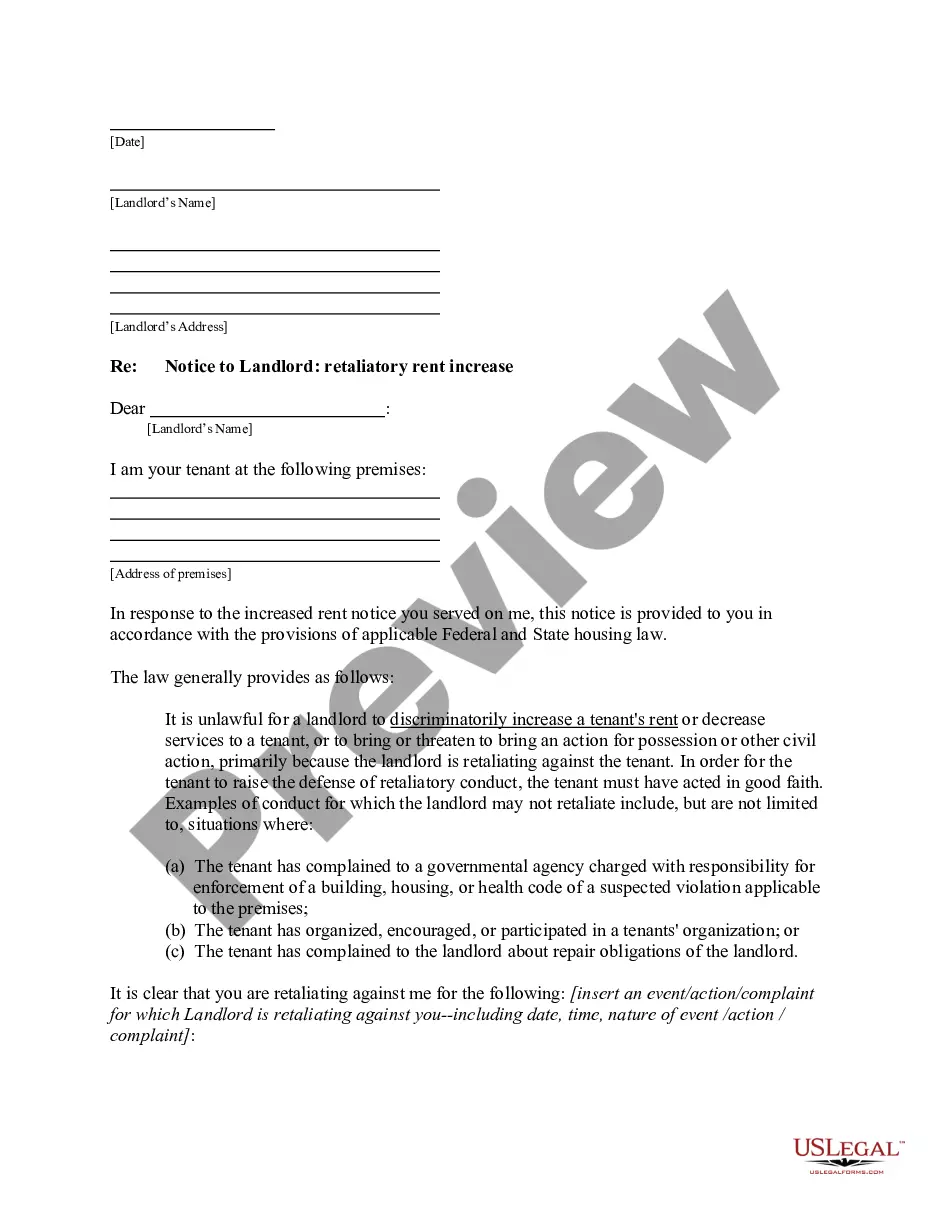
Form popularity
FAQ
In short, nothing in the CARES Act or Governor Cooper's Order prohibits evictions for reasons other than late payment or nonpayment of rent, such as evictions related to health, safety, or criminal activity. These types of evictions by a landlord would not violate the Order.
A landlord cannot evict a tenant without an adequately obtained eviction notice and sufficient time. A landlord cannot retaliate against a tenant for a complaint. A landlord cannot forego completing necessary repairs or force a tenant to do their own repairs.A landlord cannot remove a tenant's personal belongings.
North Carolina law says that your landlord must keep your housing fit and safe. It also says that you, the tenant, must pay your rent, keep your home clean, and not damage your home. To make the law work, both the tenant and the landlord must do their part.
Tenant Rights to Withhold Rent in North Carolina Tenants may withhold rent or exercise the right to repair and deduct if a landlord fails to take care of important repairs, such as a broken heater.
Notice Requirements for North Carolina Landlords A landlord can simply give you a written notice to move, allowing you seven days as required by North Carolina law and specifying the date on which your tenancy will end.
North Carolina law says that your landlord must keep your housing fit and safe. It also says that you, the tenant, must pay your rent, keep your home clean, and not damage your home. To make the law work, both the tenant and the landlord must do their part.
North Carolina law says that your landlord must keep your housing fit and safe. It also says that you, the tenant, must pay your rent, keep your home clean, and not damage your home. To make the law work, both the tenant and the landlord must do their part.
If you think your landlord is violating the Fair Housing Act, you can get that landlord in trouble by filing a complaint at HUD.gov. Your remedy for breach of quiet enjoyment is to terminate the lease and move or sue in small claims court.