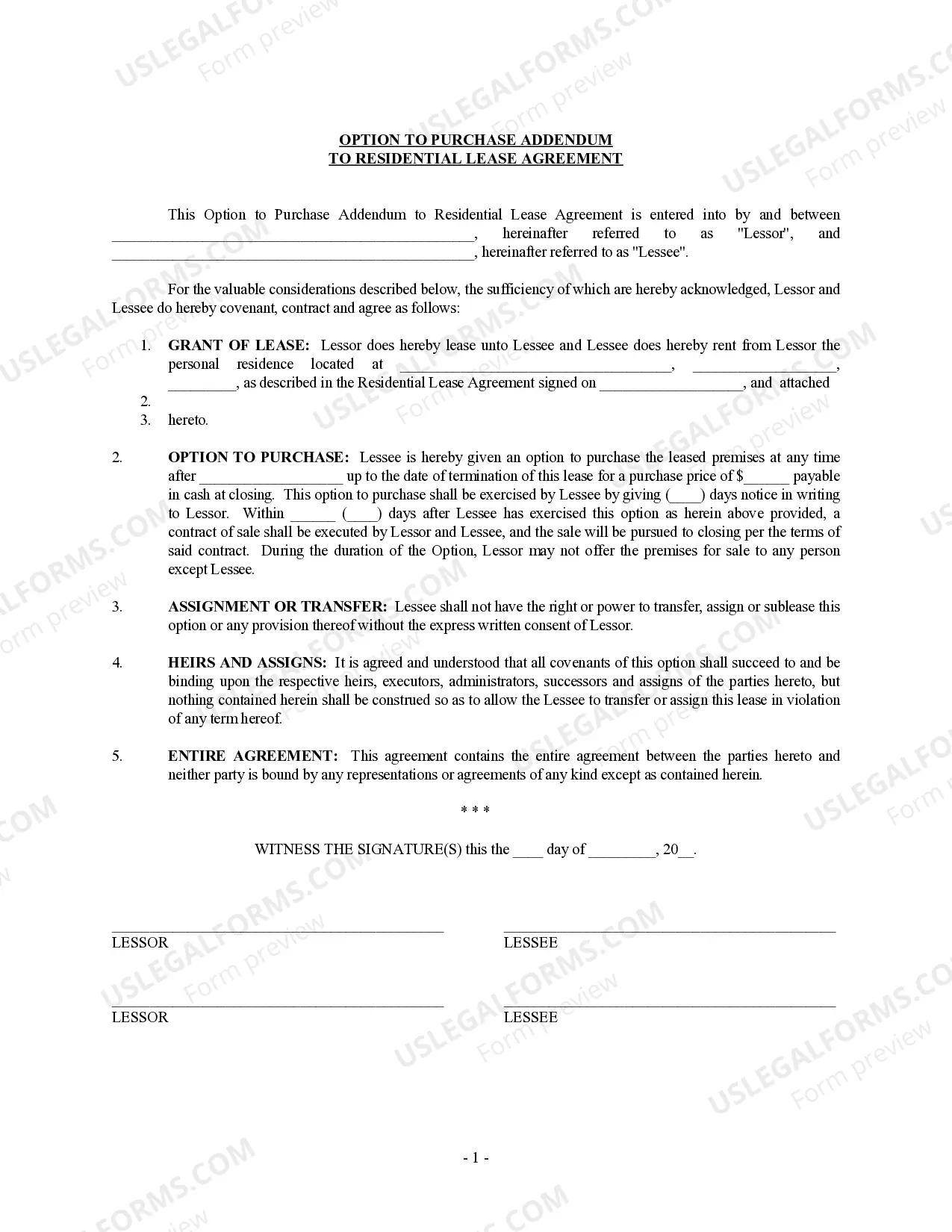
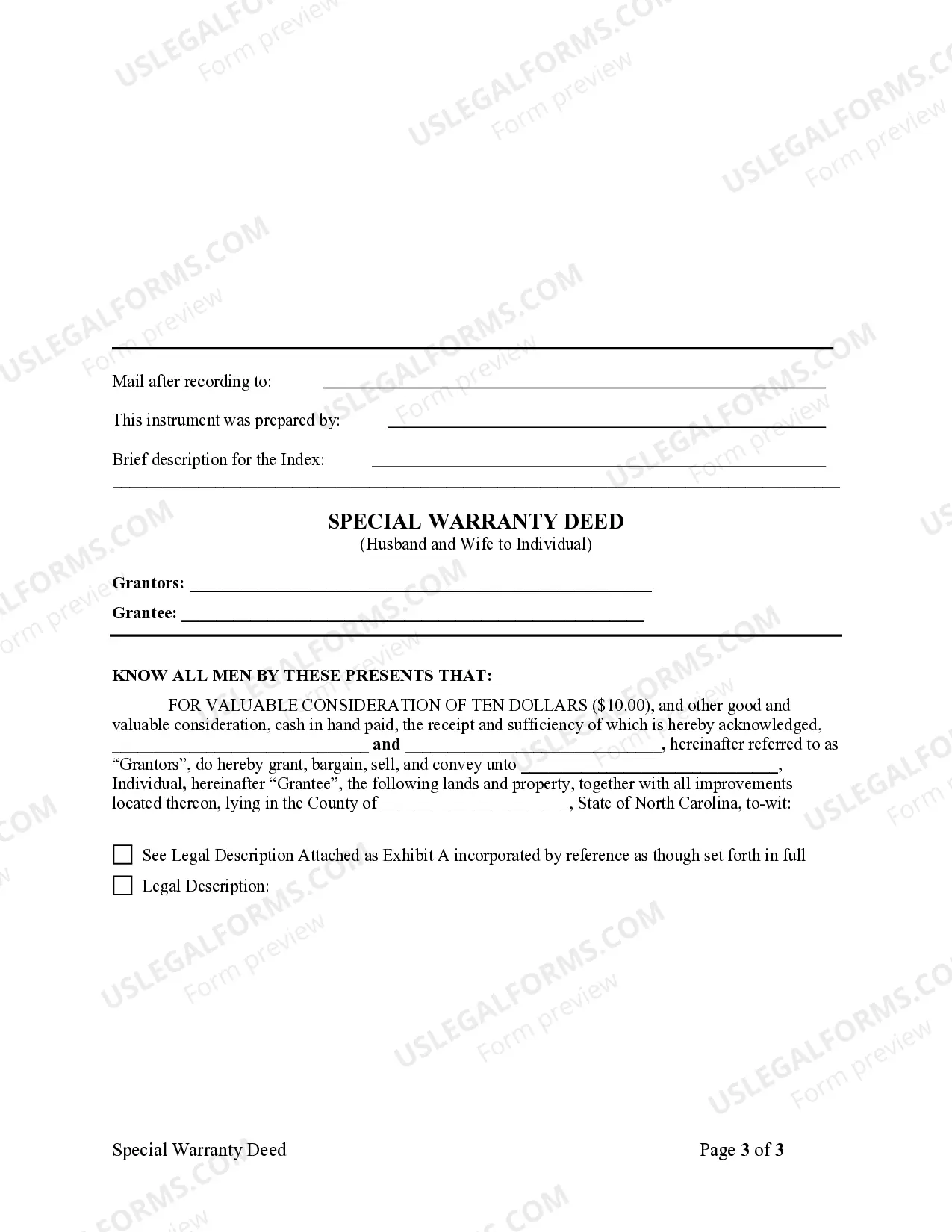
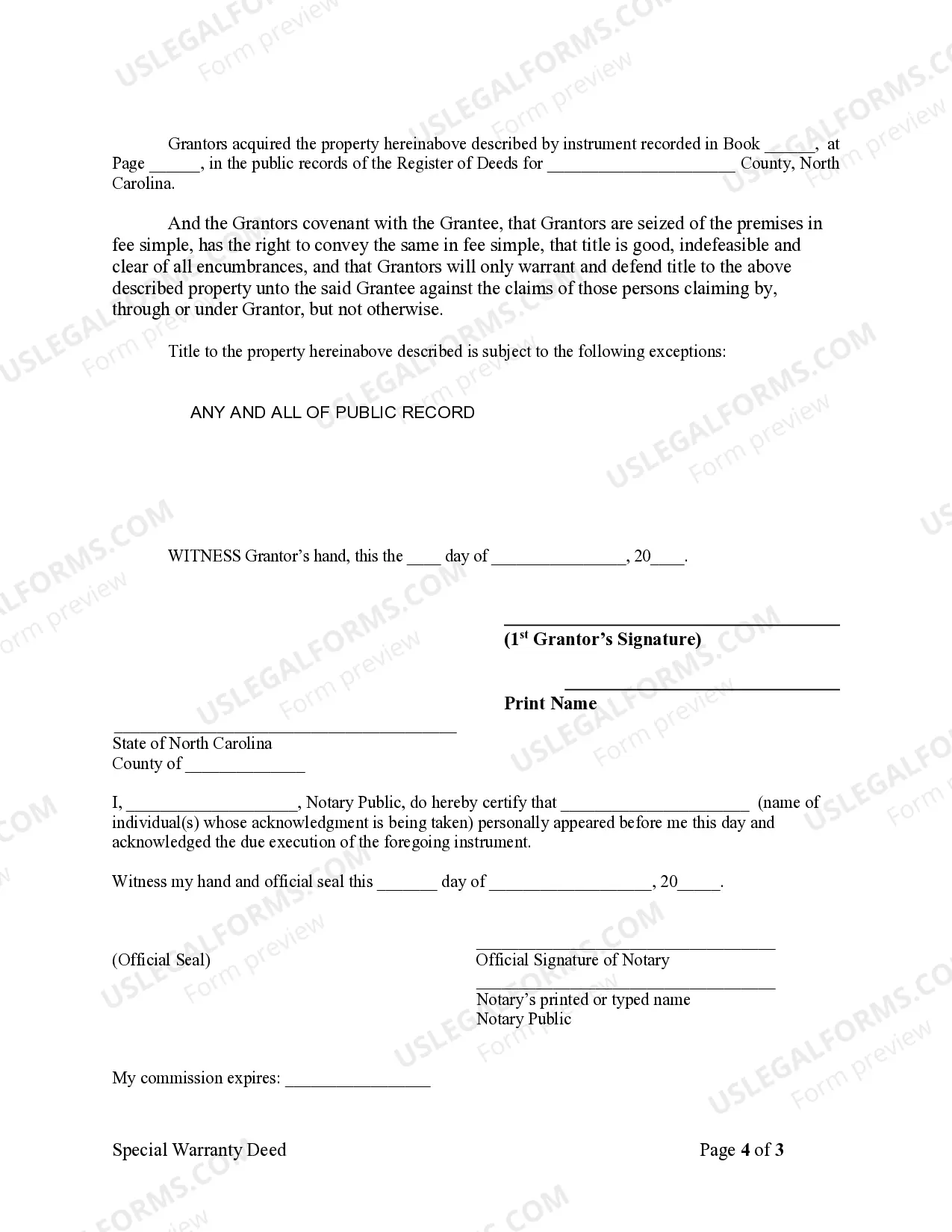
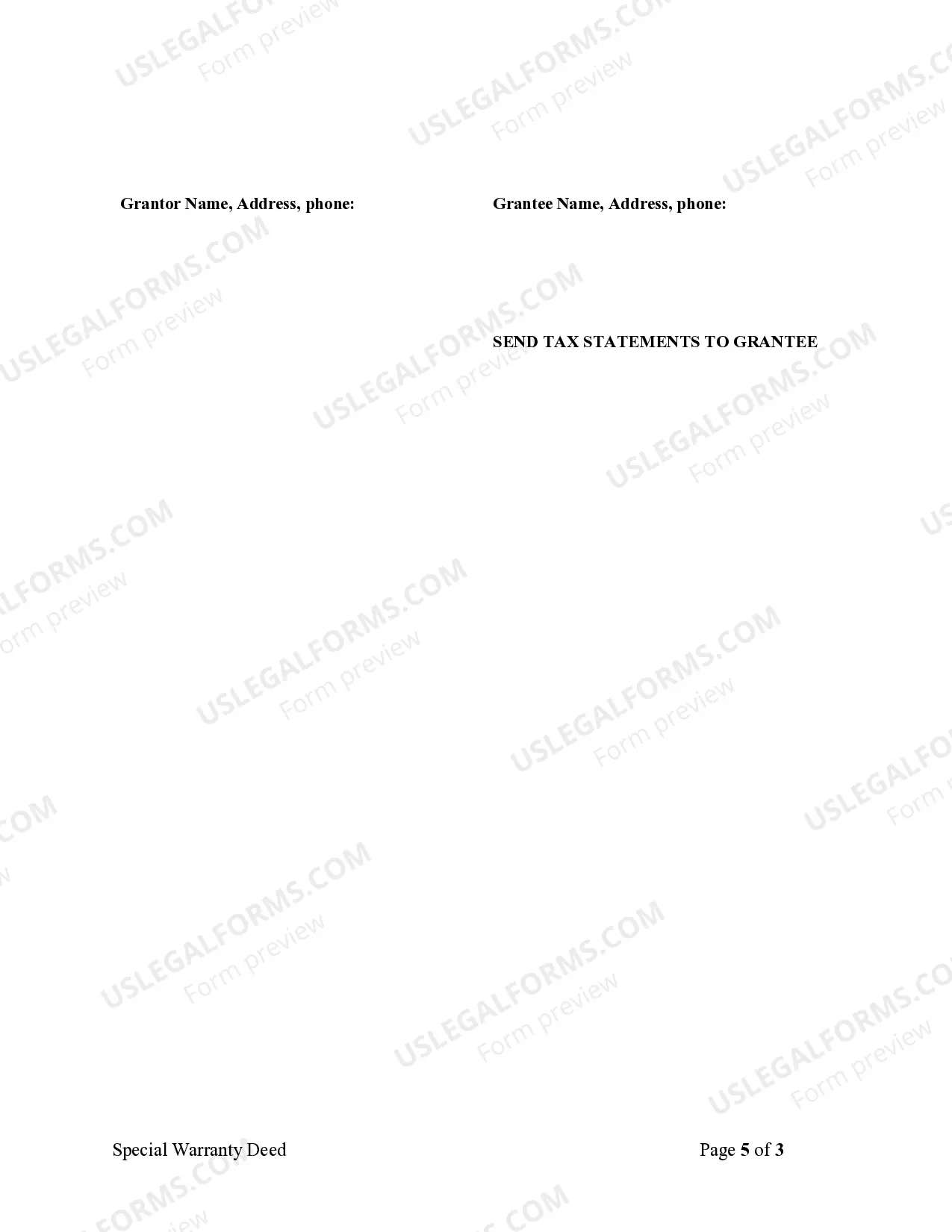
This form is a Special Warranty Deed where the grantors are husband and wife and the grantee is an individual. Grantors convey and specially warrant the described property to the grantee. The grantors only warrant and will defend the property only as to claims of persons claiming by, through or under grantors, but not otherwise. This deed complies with all state statutory laws.
North Carolina Special Warranty Deed - Husband and Wife to Individual
Category:
State:
North Carolina
Control #:
NC-022-78
Format:
Word;
Rich Text
Instant download
Description
Free preview





How to fill out North Carolina Special Warranty Deed - Husband And Wife To Individual?
Avoid costly lawyers and find the North Carolina Special Warranty Deed - Husband and Wife to Individual you need at a reasonable price on the US Legal Forms website. Use our simple categories function to look for and obtain legal and tax forms. Read their descriptions and preview them just before downloading. Additionally, US Legal Forms provides users with step-by-step instructions on how to download and fill out each and every template.
US Legal Forms clients merely have to log in and obtain the specific form they need to their My Forms tab. Those, who haven’t got a subscription yet must stick to the guidelines below:
- Ensure the North Carolina Special Warranty Deed - Husband and Wife to Individual is eligible for use in your state.
- If available, look through the description and make use of the Preview option prior to downloading the templates.
- If you are sure the document suits you, click Buy Now.
- In case the template is wrong, use the search engine to find the right one.
- Next, create your account and choose a subscription plan.
- Pay out by credit card or PayPal.
- Select obtain the form in PDF or DOCX.
- Click on Download and find your template in the My Forms tab. Feel free to save the form to your gadget or print it out.
After downloading, it is possible to complete the North Carolina Special Warranty Deed - Husband and Wife to Individual manually or by using an editing software program. Print it out and reuse the form many times. Do more for less with US Legal Forms!
Form popularity
FAQ
A In order to make your partner a joint owner you will need to add his name at the Land Registry, for which there is a fee of £280 (assuming you transfer half the house to him). You won't, however, have to pay capital gains tax, as gifts between civil partners (and spouses) are tax free.
Adding someone to your house deed requires the filing of a legal form known as a quitclaim deed. When executed and notarized, the quitclaim deed legally overrides the current deed to your home. By filing the quitclaim deed, you can add someone to the title of your home, in effect transferring a share of ownership.
If you've recently married and already own a home or other real estate, you may want to add your new spouse to the deed for your property so the two of you own it jointly. To add a spouse to a deed, all you have to do is literally fill out, sign and record a new deed in your county recorder's office.
Joint Tenancy Two or more people, including spouses, may hold title to their jointly owned real estate as joint tenants. There is a so-called right of survivorship, which means that when one dies, the property automatically transfers to the survivor without the necessity of probating the estate.
Special warranties allow the transfer of property title between seller and buyer. The purchase of title insurance can mitigate the risk of prior claims to the special warranty deed.
A special warranty deed to real estate offers protection to the buyer through the seller's guarantee that the title has been free and clear of encumbrances during their ownership of the property. It does not guarantee clear title beyond their ownership.
In California, all property bought during the marriage with income that was earned during the marriage is deemed "community property." The law implies that both spouses own this property equally, regardless of which name is on the title deed.
If you live in a common-law state, you can keep your spouse's name off the title the document that says who owns the property.You can put your spouse on the title without putting them on the mortgage; this would mean that they share ownership of the home but aren't legally responsible for making mortgage payments.